Drawing from the insights of Worship Matters by Bob Kauflin, they explore 9 essential tensions that every church must navigate when it comes to worship and music.
What does it look like to be:
Spirit-led and Scripture-rooted?
Emotionally expressive and doctrinally grounded?
Skilled and sincere?
Rather than choosing one side or the other, healthy worship holds these tensions together in a way that honors God and serves the church.
Whether you’re a pastor, worship leader, musician, or church member, this conversation will help you think more clearly about what worship is—and what it’s for.
👉 Topics include:
The purpose of music in gathered worship
Balancing excellence and authenticity
Choosing songs that shape theology
Leading people, not just performing for them
Why tension is not a problem—but a necessity
If you care about Christ-centered, congregational worship, this episode is for you.
In this episode of Theology for the People, host Nick Cady sits down with Michael Payne, Worship Pastor at White Fields Community Church, to talk about what makes worship in the church both biblical and healthy.Drawing from the insights of "Worship Matters" by Bob Kauflin, they explore 9 essential tensions that every church must navigate when it comes to worship and music.What does it look like to be:Spirit-led and Scripture-rooted?Emotionally expressive and doctrinally grounded?Skilled and sincere?Rather than choosing one side or the other, healthy worship holds these tensions together in a way that honors God and serves the church.Whether you're a pastor, worship leader, musician, or church member, this conversation will help you think more clearly about what worship is—and what it’s for.👉 Topics include:The purpose of music in gathered worshipBalancing excellence and authenticityChoosing songs that shape theologyLeading people, not just performing for themWhy tension is not a problem—but a necessityIf you care about Christ-centered, congregational worship, this episode is for you.
This episode is audio only for the safety of the people to whom Matt ministers, but the audio can be found on YouTube here:
What does persecution actually look like in the places where the gospel is least known? And how should Christians think about persecution in relation to missions?
In this episode of the Theology for the People Podcast, I speak with Matt Rhodes. Matt is a missionary and author, who has been serving for 15 years as a church planter in North Africa among a Muslim-majority tribals communities. Matt shares stories from the field and discusses the central thesis of his book Persecution and Missions: A Practical Theology.
One of Matt’s key insights is that persecution is not merely an occasional obstacle to mission—it is often a structural reality in places where the gospel is advancing. In many communities, the greatest barrier to faith in Christ isn’t intellectual objections but the social and familial cost of conversion. Whereas many people espouse the benefits that persecution has on the church, Matt points out that the threat of persecution does keep many from even considering the claims of Christ out of fear of reprisal.
In this episode Matt and I discuss:
Why persecution often prevents people from even exploring Christianity
The immense social cost faced by converts from Muslim backgrounds
Common mistakes Western missionaries make when discipling persecuted believers
The tension between contextualization and compromise in missions
How the New Testament frames persecution through the lens of the Exodus and the Promised Land
Why missionaries must be honest about the cost of following Jesus
The dangers of wealth, financial incentives, and dependency in missions
Matt also shares practical wisdom from his experience serving in a village context in North Africa and offers specific ways listeners can pray for believers who face intense pressure for their faith.
This conversation offers an important reminder: following Jesus has always come with a cost—but the hope of resurrection and eternal reward makes that cost worthwhile.
What does persecution actually look like in the places where the gospel is least known? And how should Christians think about persecution in relation to missions?In this episode of Theology for the People, Nick Cady speaks with missionary and author Matt Rhodes about his 15 years serving as a church planter in North Africa among a Muslim-majority tribal community. Matt shares stories from the field and discusses the central thesis of his book Persecution and Missions: A Practical Theology.One of Matt’s key insights is that persecution is not merely an occasional obstacle to mission—it is often a structural reality in places where the gospel is advancing. In many communities, the greatest barrier to faith in Christ isn’t intellectual objections but the social and familial cost of conversion.Nick and Matt discuss:Why persecution often prevents people from even exploring ChristianityThe immense social cost faced by converts from Muslim backgroundsCommon mistakes Western missionaries make when discipling persecuted believersThe tension between contextualization and compromise in missionsHow the New Testament frames persecution through the lens of the Exodus and the Promised LandWhy missionaries must be honest about the cost of following JesusThe dangers of wealth, financial incentives, and dependency in missionsMatt also shares practical wisdom from his experience serving in a village context in North Africa and offers specific ways listeners can pray for believers who face intense pressure for their faith.This conversation offers an important reminder: following Jesus has always come with a cost—but the hope of resurrection and eternal reward makes that cost worthwhile.📘 Matt’s book: Persecution and Missions: A Practical Theology
This episode is audio only for the safety of the people to whom Matt ministers, but the audio can be found on YouTube here:
In this episode of the Theology for the People Podcast, I speak with Shane Angland to explore a question that I have thought about for a long time: Did the early church fathers view Scripture the way Protestants do today—or is the Protestant view of the Bible a Reformation novelty?
Shane and I walk through patristic theology and discuss how figures like Irenaeus, Athanasius, Chrysostom, Jerome, and Augustine spoke about the inspiration, authority, sufficiency, and clarity of Scripture. We also examine the “rule of faith” and whether it functioned like a controlling magisterium—or more like a summary of Scripture’s core teaching that guided interpretation.
Along the way, we discuss:
What “patristics” are, and where the patristic era generally begins and ends
Whether the fathers believed Scripture could contain errors
How early Christians handled difficult passages (textual issues, translation, and humility)
The unity of Scripture and the Christ-centered reading of the whole Bible
The Reformation’s claims about Sola Scriptura and the perspicuity (clarity) of Scripture
Augustine’s On Christian Doctrine and why it’s really about how to interpret the Bible
Whether the church creates Scripture’s authority or recognizes it
How medieval developments changed the relationship between Scripture and tradition
If you’ve ever wondered whether the Reformation recovered an earlier Christian approach to the Bible—or introduced something new—this conversation is for you.
The Bible in Patristic Thought: Authority, Clarity, and the Rule of Faith – with Shane Angland –
Theology for the People
In this episode of Theology for the People, Nick Cady is joined by recurring guest Shane Angland to explore the question: Did the early church fathers view Scripture the way Protestants do today—or is the Protestant view of the Bible a Reformation novelty?Nick and Shane walk through patristic theology and discuss how figures like Irenaeus, Athanasius, Chrysostom, Jerome, and Augustine spoke about the inspiration, authority, sufficiency, and clarity of Scripture. They also examine the “rule of faith” and whether it functioned like a controlling magisterium—or more like a summary of Scripture’s core teaching that guided interpretation.Along the way, they discuss:What “patristics” are, and where the patristic era generally begins and endsWhether the fathers believed Scripture could contain errorsHow early Christians handled difficult passages (textual issues, translation, and humility)The unity of Scripture and the Christ-centered reading of the whole BibleThe Reformation’s claims about sola Scriptura and the perspicuity (clarity) of ScriptureAugustine’s On Christian Doctrine and why it’s really about how to interpret the BibleWhether the church creates Scripture’s authority or recognizes itHow medieval developments changed the relationship between Scripture and traditionIf you’ve ever wondered whether the Reformation recovered an earlier Christian approach to the Bible—or introduced something new—this conversation is for you.
I have recently started posting more on the Theology for the People YouTube channel. You can watch this interview on video here:
In this episode of the Theology for the People Podcast, I speak with Bruce Zachary, founding and teaching pastor of Calvary Nexus in Camarillo, California, to explore the Passover Seder meal—what it is, why it matters, and how it points powerfully to Jesus the Messiah.
Bruce shares his story of growing up in an observant Jewish home and later coming to faith in Christ after visiting Calvary Chapel of Costa Mesa and encountering the Book of Hebrews.
From there, the conversation dives into the biblical foundation of Passover in Exodus 12, the symbolism of the Seder plate, the meaning of the afikomen, and the significance of the four cups from Exodus 6:6–7—especially the “cup of redemption” connected to Jesus’ words at the Last Supper.
We also discuss how Christians should approach the Seder respectfully, how it helps connect the Old and New Testaments, and why Passover is one of the richest pictures of God’s redemptive plan—from Exodus to the cross and beyond.
📍 Upcoming Event: Bruce will be leading a Passover Seder at White Fields Community Church in Longmont, Colorado on March 27, 2026. The event is open to the public. Register here.
More from Bruce: Messages and free resources, including several ebooks, are available at calvarynexus.org
Nick and Bruce help lead a global church planting network called Cultivate. Visit: cultivatechurchplanting.com
In this episode of Theology for the People, Nick Cady sits down with Bruce Zachary, founding and teaching pastor of Calvary Nexus (Camarillo, California), to explore the Passover Seder meal—what it is, why it matters, and how it points powerfully to Jesus the Messiah.Bruce shares his story of growing up in an observant Jewish home and later coming to faith in Christ after visiting Calvary Chapel of Costa Mesa and encountering the Book of Hebrews. From there, the conversation dives into the biblical foundation of Passover in Exodus 12, the symbolism of the Seder plate, the meaning of the afikomen, and the significance of the four cups from Exodus 6:6–7—especially the “cup of redemption” connected to Jesus’ words at the Last Supper.Nick and Bruce also discuss how Christians should approach the Seder respectfully, how it helps connect the Old and New Testaments, and why Passover is one of the richest pictures of God’s redemptive plan—from Exodus to the cross and beyond.📍 Upcoming Event: Bruce will be leading a Passover Seder at White Fields Community Church in Longmont, Colorado on March 27, 2026. The event is open to the public. Register here.More from Bruce: Messages and free resources, including several ebooks, are available at calvarynexus.orgNick and Bruce help lead a global church planting network called Cultivate. Visit: cultivatechurchplanting.com
I have recently started posting more on the Theology for the People YouTube channel. You can watch this interview on video here:
In this episode of the Theology for the People Podcast, I speak with Murray Smith of Christ College in Sydney, Australia about one of Jesus’ most debated teachings: the Olivet Discourse (Mark 13, Matthew 24-25, Luke 21).
Murray gives us his take on the state of evangelical Christianity in Australia, and then we turn to discussing Murray’s recent book: Jesus’ Speech on the Mount of Olives: a 12-Week Study, which is designed to help Christians read this passage with clarity and hope.
Murray lays out the three major interpretive approaches(preterist / futurist / “both-and”), he explains why “full preterism” is outside of orthodox Christian confession, and then he walks us through why he believes Jesus speaks about both the destruction of Jerusalem and the final return of Christ.
Additionally, we discuss:
Why this passage is so debated—and yet so important
How Jesus’ cosmic “signs” function as accompanying realities of His coming
What it means to “be ready” according to the parables in Matthew 24-25
Why healthy eschatology produces hope, urgency, discipleship, and mission
Though Murray and I have differences in how we interpret this passage, we both hope that studying it will help believers recover a living, formative, and practical hope in the return of Jesus.
Passages referenced: Mark 13; Matthew 24–25; Luke 21; Daniel 7; 1 Thessalonians 4; 2 Peter 3; Revelation 21–22
Links to my recent messages on the Olivet Discourse:
The Olivet Discourse: Jesus’ Most Debated Sermon, and Why It Matters – with Murray Smith –
Theology for the People
In this episode of Theology for the People, Nick Cady speaks with Murray Smith (Christ College, Sydney) to talk about one of Jesus’ most debated teachings: the Olivet Discourse (Mark 13, Matthew 24–25, Luke 21).Murray gives a candid snapshot of the state of evangelical Christianity in Australia, and from there, the conversation turns to Murray’s book Jesus’ Speech on the Mount of Olives, a 12-week study designed to help Christians read this passage with clarity and hope. Murray lays out the three major interpretive approaches (preterist / futurist / “both-and”), he explains why “full preterism” is outside orthodox Christian confession, and then walks us through why he believes Jesus speaks about both the destruction of Jerusalem and the final return of Christ.Nick and Murray also discuss:Why this passage is so debated—and yet so importantHow Jesus’ cosmic “signs” function as accompanying realities of His comingWhat it means to “be ready" according to the parables in Matthew 24–25Why healthy eschatology produces hope, urgency, discipleship, and missionThough Nick and Murray have differences in how they view this passage, they both hope that studying it will help believers recover a living, formative, practical hope in the return of Jesus.Passages referenced: Mark 13; Matthew 24–25; Luke 21; Daniel 7; 1 Thessalonians 4; 2 Peter 3; Revelation 21–22Links to Nick's recent messages on the Olivet Discourse:The Great Tribulation & the King's ReturnLiving Ready for Jesus' ReturnHow to Prepare for the End of the WorldWhat to Expect on Judgment Day
I have recently started posting more on the Theology for the People YouTube channel. You can watch this interview on video here:
What does it really mean to be an apprentice of Jesus in a fragmented world?
In this episode of the Theology for the People Podcast, Pastor Heath Hardesty shares how his years as an apprentice plumber shaped his vision for discipleship and following Jesus.
Heath is originally from Longmont, Colorado, where I pastor, and he now serves as Lead Pastor of Valley Community Church (VCC) in Pleasanton, California.
Prior to moving to California, when Heath lived in Longmont, he worked as a plumber, training as an apprentice under his father, a master plumber. From his time as a plumbing apprentice, Heath has seen many parallels between apprenticeship and being a disciple of Jesus.
In this episode, we discuss: • Why apprenticeship is a better paradigm for following Jesus than “just” discipleship classes • The four pillars of apprenticeship: union, abiding, obeying, and imaging • How sin fragments our lives and how Jesus reintegrates us • Practical spiritual practices for ordinary Tuesdays • Why following Jesus is a fully embodied way of life—not just information in our heads
Whether you are feeling spiritually stagnant or longing for a more integrated faith, this conversation will challenge and encourage you.
Click here to listen to the episode, or listen in the embedded player below.
Why Apprenticeship is the Truest Form of Discipleship – with Heath Hardesty –
Theology for the People
What does it really mean to be an apprentice of Jesus in a fragmented world? In this episode of Theology for the People, Pastor Heath Hardesty shares how his years as an apprentice plumber shaped his vision for discipleship and following Jesus.Heath is the Lead Pastor of Valley Community Church (VCC) in Pleasanton, California, and the author of the recent book, All Things Together: How Apprenticeship to Jesus Is the Way of Flourishing in a Fragmented World.In this episode, we discuss:Why apprenticeship is a better paradigm for following Jesus than “just” discipleship classesThe four pillars of apprenticeship: union, abiding, obeying, and imagingHow sin fragments our lives and how Jesus reintegrates usPractical spiritual practices for ordinary TuesdaysWhy following Jesus is a fully embodied way of life—not just information in our headsWhether you’re feeling spiritually stagnant or longing for a more integrated faith, this conversation will challenge and encourage you.📖 All Things Together releases October 14 and is available wherever books are sold.
I have recently started posting more on the Theology for the People YouTube channel. You can watch this interview on video here:
As a preacher, I’ve often been impressed with stand-up comedians, especially those who are master communicators. I think that preachers can learn a lot from comedians when it comes to timing, surprise, story telling, and understanding your audience.
A few years ago, I stumbled upon Shayne Smith, when he did his first special for Dry Bar Comedy – an Utah-based clean comedy company. I enjoyed his cadence and style, so I searched for other videos of his comedy, and looked him up on social media.
What I found wasn’t great. His comedy outside of Dry Bar was raunchy, and from his social media I realized that he lived a very hedonistic bisexual lifestyle. As a result, I unfollowed him online.
However, a few months later, a new Shayne Smith special came out on Dry Bar (“Alligator Boys”), which I knew would be clean, and I really enjoyed it. I shared with my friend Mike, who leads Expositors Collective, a group that trains preachers, that these specials were masterclasses in communication that preachers could glean from – but, I also warned him that I didn’t recommend any of Shayne’s stuff outside of Dry Bar.
A few years later, much to my surprise, Mike sent me a podcast episode, in which Shayne was the guest, and he was talking about how he had converted to Roman Catholicism. In that episode, he shared that he was a singer in a hardcore band, talked about his love of punk rock, and about his newfound faith in Jesus.
Since that time, Shayne has been talking more and more about his faith in Jesus, which is particularly remarkable considering his previous lifestyle.
Last week, my wife and I went to see Shayne live here in Denver; the tickets a gift from Mike. Prior to the show, I came across this video, which I watched, and then shared with several friends. In it, Shayne tells the story of his journey into progressive ideology and lifestyle, and what it was that cause him to see the cracks in its foundations, and how he came to believe in Jesus. I highly recommend the video; it’s incredible!
I’m not Catholic, and I disagree with Shayne’s broad-brushing of “non-denominational” Christians. He strikes me as a young Christian, who isn’t yet overly familiar with Roman Catholicism, nor robust theology, or conservative Protestantism. I do appreciate the charitable work of the Roman Catholic Church, and the fact that they have refused to budge on issues such as marriage and sexuality, and abortion and the sanctity of life. It also strikes me that the way Shayne talks about Jesus as his “Lord and Savior” sounds very evangelical! Personally, I hope he will make that step! And yet, I rejoice to see Shayne believing in and seeking Jesus, and that he has clearly repented of his sins. At the show we went to, he mentioned three times that he had converted to “Christianity.”
One part of Shayne’s testimony that sticks out to me the most is how he realized that Christians are the people who actually do things like loving their neighbors and forgiving those who sin, and that those who follow Jesus tend to be happier and more content.
A Broader Trend
Much has been said in recent months about the changing trends in church attendance, with young men (Gen Z in particular) coming to church in large numbers. We have seen some of this trend in our church, especially in our online offerings, which are consumed mostly by young men. We’ve also seen many coming in person and seeking the Lord.
Anecdotally, friends of mine who are pastors, have reported similar trends. I have also seen it amongst my teenage son’s friends. It seems that many young people, particularly young men, have become fed up with, and seen the hypocrisy and flaws of the progressive policies which have been pushed on them from schools and public institutions for years, and they are pushing back and seeking for something that tells the truth, is based in really, and calls and challenges them to transform and become better.
From Doubt to Faith: The Quiet Revival – with Justin Brierley –
The CGN Podcast
In this episode, hosts Nick Cady and Brian Brodersen talk with Justin Brierley — author, broadcaster, and longtime host of the Unbelievable? show and podcast from Premier Christian Radio in the UK. Justin shares about how, after decades of hosting debates between Christians and skeptics, he sees signs that belief in God is growing — especially among young people. We talk about the decline of the New Atheist movement, stories of unexpected conversions, and the surprising hunger for faith in today’s culture.📚Discover Justin’s books: The Surprising Rebirth of Belief in God and Why I’m Still a Christian🎧 Listen to his podcast: The Surprising Rebirth of Belief in GodLearn more about CGN: cgn.org
Justin Brierley recently stepped down from hosting the “Unbelievable?” show, which he hosted for 17 years, to start this new project, which also involves a podcast and social media videos. Check out The Surprising Rebirth Podcast to hear more discussions and stories about this phenomenon.
How about you – are you seeing this trend where you are?
Let’s pray that God draws many young people to himself! Just as we rejoice in the current surge, we also desire to see a prolonged revival! May the Lord bring more people into churches, and may churches be prepared to make disciples!
What does faithful, biblical care for widows look like, and why does the Bible say that it is at the heart of “pure religion”?
In this episode of the Theology for the People Podcast, I speak with Susan VandePol. Susan became a widow when her husband—a Los Angeles City firefighter—died following a line-of-duty exposure. Out of her own grief the Lord led her to create practical protocols for fire departments and churches, and to host deeply healing widows’ retreats.
In this conversation we cover:
Why you don’t “stop” being a widow—even after remarriage
How Scripture frames widowhood (the “quartet of the vulnerable,” James 1:27, Luke 18)
“Pruning” grief: letting God move grief toward health and fruit
Presence over platitudes: what helps, what harms
A simple, sustainable church protocol (care that intentionally extends to two years)
How ministering to widows purifies the whole church
Widow, author, and founder of Matters of Life and Breath, Susan equips churches and first-responder communities to care wisely and biblically for widows. She and her husband (a trauma specialist) also serve internationally with grief and trauma care.
Click here to listen to the episode, or listen in the embedded player below.
The Gospel in the Midst of Grief: Lessons from Widowhood – with Susan VandePol –
Theology for the People
What does faithful, biblical care for widows look like, and why does the Bible say that it is at the heart of "pure religion"?Susan VandePol became a widow when her husband—a Los Angeles City firefighter—died following a line-of-duty exposure. Out of her own grief the Lord led her to create practical protocols for fire departments and churches, and to host deeply healing widows’ retreats.In this conversation we cover:• Why you don’t “stop” being a widow—even after remarriage• How Scripture frames widowhood (the “quartet of the vulnerable,” James 1:27, Luke 18)• “Pruning” grief: letting God move grief toward health and fruit• Presence over platitudes: what helps, what harms• A simple, sustainable church protocol (care that intentionally extends to two years)• How ministering to widows purifies the whole churchResources mentioned:• Church Protocol for Widow Care – Matters of Life and Breath (download free)• Fire Department Widow Protocol – Matters of Life and Breath (free)• Widows’ Retreat (West Michigan, Oct 17–19) – registration details via the Matters of Life and Breath websiteAbout Susan VandePolWidow, author, and founder of Matters of Life and Breath, Susan equips churches and first-responder communities to care wisely and biblically for widows. She and her husband (a trauma specialist) also serve internationally with grief and trauma care.⏩ If this helped you, please share it with a friend and subscribe for more conversations that bring theology to the people!
I have recently started posting more on the Theology for the People YouTube channel. You can watch this interview on video here:
Together, we explore the fascinating story of the conversion of the Vikings to Christianity. Stephen shares how his personal heritage sparked an interest in Viking history and mythology, and how he approaches it from a Christian perspective.
Together we discuss: • What the Viking Age was and how it ended • The political and spiritual dynamics behind Viking conversion to Christianity • The concept of the monomyth and how stories across cultures point to the true story of Jesus • Parallels between Norse mythology and biblical truth • Lessons for engaging neo-paganism and modern spiritual seekers
This conversation blends history, theology, and mission — showing how God’s truth reaches across cultures and centuries.
📌 Subscribe for more episodes of Theology for the People where we bring theological conversations down to earth in a way that is understandable, practical, and engaging.
Click here to listen to the episode, or listen in the embedded player below.
The Conversion of the Vikings: Finding Bridges to the Gospel for Missionary Encounters –
Theology for the People
In this episode of Theology for the People, Pastor Nick Cady is joined by Pastor Stephen Pomeroy from White Fields Community Church to explore the fascinating story of the conversion of the Vikings.Stephen, who also hosts the Viking Legacy and Lore podcast, shares how his personal heritage sparked an interest in Viking history and mythology, and how he approaches it from a Christian perspective. Together we discuss:What the Viking Age was and how it endedThe political and spiritual dynamics behind Viking conversion to ChristianityThe concept of the monomyth and how stories across cultures point to the true story of JesusParallels between Norse mythology and biblical truthLessons for engaging neo-paganism and modern spiritual seekersThis conversation blends history, theology, and mission — showing how God’s truth reaches across cultures and centuries.📌 Subscribe for more episodes of Theology for the People where we bring theological conversations down to earth in a way that is understandable, practical, and engaging.Visit TheologyforthePeople.com for more helpful articles and many topics related to Theology.
I have recently started posting more on the Theology for the People YouTube channel. You can watch this interview on video here:
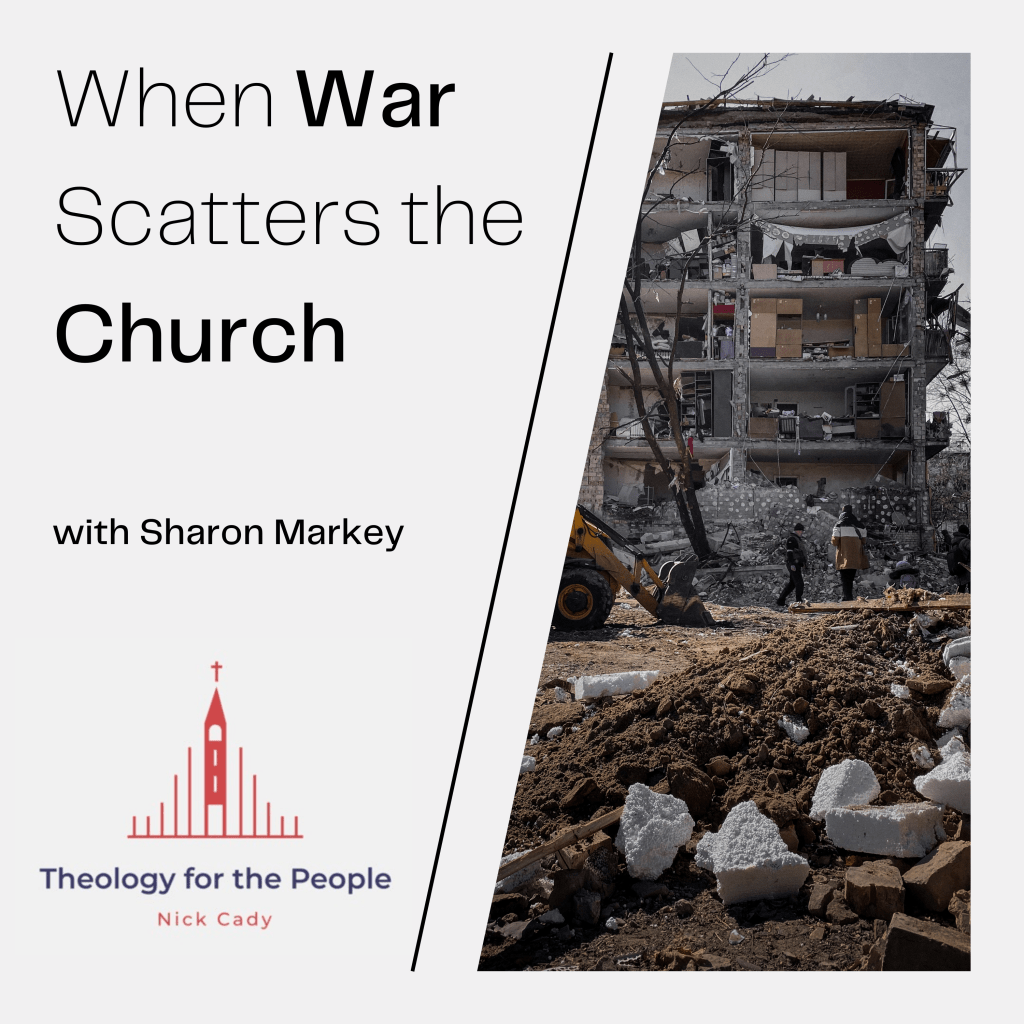
In this episode of the Theology for the People Podcast, I speak with Sharon Markey — missionary, pastor’s wife, and author of the forthcoming book Finding Home Again.
Sharon shares her family’s story of serving in Ukraine for nearly two decades, planting churches in Kyiv, and how the war suddenly uprooted their lives.
We discuss: • What it means to be a refugee and how displacement affects faith and identity • The church’s role in caring for hurting and displaced people • How Ukrainians are bringing gospel light into post-Christian Europe • The reality of life in Ukraine today and how Christians can pray and help • Sharon’s hope for her new book and how it can inspire compassion and faith
In this episode of Theology for the People, Nick Cady talks with Sharon Markey — missionary, pastor’s wife, and author of the forthcoming book Finding Home Again. Sharon shares her family’s story of serving in Ukraine for nearly two decades, planting churches in Kyiv, and how the war suddenly uprooted their lives.We discuss:What it means to be a refugee and how displacement affects faith and identityThe church’s role in caring for hurting and displaced peopleHow Ukrainians are bringing gospel light into post-Christian EuropeThe reality of life in Ukraine today and how Christians can pray and helpSharon’s hope for her new book and how it can inspire compassion and faith👉 Learn more about Sharon’s book at sharontmarkey.com👉 Support their ministry: bridgeua.orgNew episodes release every Monday. Subscribe so you don’t miss future conversations!
I have recently started posting more on the Theology for the People YouTube channel. You can watch this interview on video here:


 Theology for the People