Upcoming at White Fields

We’ve got a few things happening at White Fields Church in Longmont, Colorado that I wanted to let you know about:

Tomorrow we will be starting a new series called “Church Matters” in which we will be taking four weeks to talk about church: why it matters to God, to us and to the world. We’ll be studying the Bible to see God’s vision for the church, and what therefore we should be about.

White Fields Community Church fényképe.

There is a great local company that helps us with some of our graphic designs: CryBaby Design. Check them out and hit them up if you’re looking for someone to help with graphic design, branding or web design.

We also have a great administrative assistant on our staff who does some design and media work for us, like the following graphic for our upcoming Outdoor Worship Service on August 13, 2017 at 10 a.m.

download_20170805_142709

If you are in or around Longmont, we’d love to have you join us!

Finally, here is a video preview of what’s happening tomorrow at White Fields. Our mission team we recently sent to Hungary to work with the church that we planted years ago is now back and will be giving an update about what God did through them.

We also have some friends in town who are missionaries in Athens, Greece: Travis and Kristen Spencer, who will be giving a presentation after service about their ministry there.

Here’s that video:

Want to Join a Korean Doomsday Cult?

This past Sunday I received a message from someone who attends White Fields. She said that she was in Alta Park in Longmont when a couple approached her who were from the Worldwide Mission Society Church of God, seeking to evangelize her.

When she told them that she is a Christian, they questioned her salvation and told her that Jesus had claimed that he would come again as a man, give his church a new name, and that in order to be saved, one needs to be part of this church, and adhere to several “new covenant requirements” including keeping all of the feasts mentioned in the Book of Leviticus.

They mentioned that they belonged to a branch of this church which had recently started in Boulder, and that they were planning to start a Longmont branch soon as well.

I had never heard of this group before, so I looked them up. Turns out they have some pretty crazy doctrines, which, unsurprisingly, they kept quiet about in this interaction in the park.

Who are they and what do they believe?

The Worldwide Mission Society Church of God (WMSCOG) was founded by Ahn Sahng-Hong in South Korea in 1964. He was a long-time Seventh-day Adventist, until he split off to establish his own religion.

They believe in God the Father and God the Mother, and they believe that their founder, Ahn Sahng-Hong (deceased) was the reincarnation of Jesus Christ (this is what the people in Alta Park were talking about when they said Jesus came back as a man and gave his church a new name), and that his wife (still alive) is the incarnation of God the Mother.

Ahn Sahng-Hong’s wife, Jang Gil-ja, is not only considered to be divine as God the Mother, but she is also known as “The Bride of Christ” – because she was married to Ahn Sahng-Hong, whom they believe to be the reincarnation of Christ.

Along with referring to him as “Christ Ahn Sahng-Hong,” they also believe that he is the Holy Spirit and they baptize and pray in the name of the Father, Son and Ahn Sahng-Hong.

I just threw up a little bit in my mouth as I wrote that…

They teach that all people were originally created as angels in Heaven, but then sinned against God and were sent to Earth as a second chance to return to God. The only way for humans to be saved and return to heaven is by keeping the Levitical feasts and following the teachings of Ahn Sahng-Hong, which includes believing in God the Mother, AKA Jang Gil-ja, Ahn Sahng-Hong’s wife, who gives everlasting life.

When you lay it out like this, it’s pretty clear how crazy this is. Not only is it a cult of personality, it is a radical deviation from Biblical doctrine. It’s not surprising that they keep most of this stuff to themselves when they go out preaching in parks.

And yet, the WMSCOG is growing very rapidly. They boast of 450 churches in Korea and 3000 around the world.

The member of our church who met them concluded her message to me by saying that this whole experience made her realize how unprepared she was to explain and, if necessary, defend what she believes and why.

How should you respond if you are approached by the WMSCOG? Or by any other pseudo-Christian group that has their own heterodox interpretation of the Bible?

There is one thing which is common to every religion in the world, other than Christianity: they teach that salvation is something that you have to earn. The gospel message of Jesus Christ, on the other hand, teaches that salvation is something that Jesus earned for you, and which is given to you by God as a free gift.

Notice that the soteriology (doctrine of salvation) of the WMSCOG is one of salvation by works.

Here’s what the Bible has to say:

“for it is by grace that you have been saved, through faith; and that not of yourselves, it is the gift of God; not as a result of works, so that no one may boast,” (Ephesians 2:8-9).

On the matter of feasts and Sabbaths:

“Therefore no one is to act as your judge in regard to food or drink or in respect to a festival or a new moon or a Sabbath day— things which are a mere shadow of what is to come; but the substance belongs to Christ” (Colossians 2:16-17).

“But now that you have come to know God, or rather to be known by God, how is it that you turn back again to the weak and worthless elemental things, to which you desire to be enslaved all over again? You observe days and months and seasons and years. I fear for you, that perhaps I have labored over you in vain” (Galatians 4:9-11).

The gospel is not a call to celebrate feast days and Sabbaths in order to obtain salvation, it is the good news of who Jesus is and what He has done for you, in order to save you. Anyone who teaches that such things are necessary for salvation is not only wrong, they are creating a different gospel.

Jesus said that when he would return again, he would come to judge the living and the dead. The teachings of the WMSCOG are not only incorrect and dangerous, they are heretical; both in their deification of Ahn Sahng-Hong and Jang Gil-ja and in their teaching of salvation by works, which goes contrary to the clear teaching of the Bible that we are justified by God through faith in Christ and his finished work on the cross.

In the big picture, this is just another re-branding of an old, and widespread lie: that you can (and must) work your way to God. The good news of the gospel is that salvation is not earned by your performance being good enough, but on the sufficient sacrifice of Jesus on the cross. Rest in that, and be on guard against those who teach otherwise.

For more on the Worldwide Mission Society Church of God and sources for this article, check out these sites:

Easter Weekend Recap

This past Saturday White Fields had our annual Easter Outreach, an Easter egg hunt and festival that we do in Roosevelt Park, right next to where our church meets at the St. Vrain Memorial Building in downtown Longmont. We had a lot of great volunteers who made the event a success both in terms of hosting a fun event for our community and sharing the message of the hope that we have because Jesus Christ died for our sins so that we can be forgiven and justified, and rose from the dead so we can have everlasting life. We estimate that 1500-1700 people attended this year.

A crowd watches the puppet show at our Easter Outreach which shares the meaning and message of the Resurrection

We want to say thank you to the Longmont Times-Call and Boulder Daily Camera for covering the event once again this year. When we saw the article come out on Saturday night, we were disappointed that it failed to mention that White Fields was the sponsor and host of the event. In past coverage of the event, White Fields has always been mentioned. Several members of our church and others who attended the event wrote the Times-Call about this, and yesterday morning the editor called our church  to let us know the online version of the article had been updated. We were impressed with the quick and gracious way they handled it.

Our daughter made the paper.

Sunday morning we had two services at White Fields. We broke attendance records, we had visitors from the outreach on Saturday, and we had people respond to the gospel for the first time to become Christians.

After lunch our family (minus one who had to work) headed up to Winter Park for a family get-away. Yesterday my son and I snowboarded.

Right next to Winter Park ski area is the western portal of the Moffat Tunnel, a train tunnel built through the Continental Divide in the 1920’s. My family is actually part of this tunnel’s history: my great-grandfather worked in it as a welder during its construction and his brother died in it in a dynamite explosion.

I hope you had a great weekend celebrating Jesus’ resurrection!  He is risen indeed!

4 Strategies for Families Divided by Politics

636070480073674241164334377_political-incivility-color

We live in a highly charged political climate, where many people see those on the opposite side of the political divide as being “what’s wrong with America.”

But what about when this touches your family? How can you have a family get-together without it deteriorating into arguments, awkwardness, alienation and hurt feelings? Is the only solution to just ignore the “elephant in the room” and not talk about politics?

This week I did an interview for the Longmont Times-Call newspaper on this subject. The article will come out on November 20. At the same time, a family I’m connected to is dealing with this exact scenario: their family is divided politically and it is straining their relationships.

Here are 4 simple strategies that can help families divided by politics:

1. Establish ground rules

In almost any mediation situation, the mediator will begin by establishing some ground rules for the discussion. This can be done in a family setting as well.

Here are some examples:

– No accusations allowed, only perception-based statements.

Rather than, “You people are ________” say something like, “This stance comes across to me as __________”.

– Discuss issues, not identities.

Rather than “Trump supporters are  ________” say, “I disagree with this policy because __________”.

– When it starts to feel negative, stop.

Take a break. Politicians come and go, and even they are willing to work together. Don’t let politics divide your family. It’s not worth it.

2. Zoom out to see the big picture

A political campaign is a marketing campaign. Each side is trying to get you to buy what they’re selling. To do this, they employ many strategies, particularly hyperbole and portraying the other side as dangerous and evil. But as soon as the campaign is over, they change their tone drastically. Why? Because they understand the nature of political campaigns. The problem is, many people don’t understand this the way politicians themselves do.

For example: In the final weeks of the campaign, President Obama said that Donald Trump was “very dangerous” and “a threat to democracy.” Trump called Obama “a disaster”, “the founder of ISIS” and “the most ignorant president in our history.” But then this week, the tone changed completely. Obama said Trump will be his president, that they were on the same team and that he was committed to helping Trump succeed. Trump said of Obama that “he is a very good man”.

It’s a game, a contest – and each side wants to win. But when it’s over, they know how to turn off the personas and work together.
It’s similar to a football game: for 60 minutes the players on each side try to crush each other. They use intimidation tactics, they hit each other as hard as they can – but when the game is over, they exchange jerseys and hug.

It’s often been noted that in congress, after heated partisan discussions, they all go eat lunch together in the cafeteria, and people from different parties who were at each other’s throats in the negotiating room, sit down and eat together.

Here’s the point: Politicians themselves understand campaigns for what they are. It would help us to do the same.

3. Affirm the noble values of the other person’s position

People who care about politics generally do so because they genuinely care about other people. They want to make things better. They’re passionate, interested and thoughtful. Most people who hold political views consider themselves to be heroic and compassionate. In other words, people all across the political spectrum believe that they are opposing evil and advocating for the good of others. In the end, we all want many of the same things, we just differ on how we believe those things can be achieved.

To take the teeth and the animosity out of a political discussion, it helps to affirm the noble values inherent to the other person’s position, and acknowledge that you hold those same values yourself.

For example: someone might say, “I support this political party because I care about the poor” or “…because I believe that all people are created equal” or “…because I consider life sacred.” Rather than take that as an insinuation that people who differ from them politically don’t care about those things, simply affirm that you do. Affirm all of the noble values that the other person cares about – and explain that you also want those same end goals. Then you can begin talking about strategies to achieve those goals, having taken many of the accusations and value judgments out of the equation and creating a less emotional, more rational discussion, because you’ve shown that you’re both interested in achieving the same ultimate goals.

4. Diffuse the tension by inviting the other person to tell you their views without argument

Love, the Bible teaches, is not a feeling, it is an action: a self-sacrifical, giving action. Because people love to talk about themselves, one of the greatest expressions of love you can give a person is to invite them to explain their views to you, and you only listen. No arguing. No interrupting. Just listening.

Maybe that would feel like a small death to you, and it may very well be an exercise in dying to yourself – but that is how God expressed His love for us: by suffering and dying for our sake.

Hebrews 12:2 tells us that it was for the joy that was set before him that Jesus endured the cross. So, in the end, there was something in it for him, but it wasn’t a selfish motive – it was for the sake of us (him and us together) that he did it. He subjected himself to suffering for the sake of repairing our broken relationship with him — which was, by the way, our fault alone. But yet, he reached out, he offered to suffer and die for the sake of the joy of a restored relationship with us.

Even if it feels like a small death, or you suffer through listening to your family member share their views with you – one of the greatest acts of love you can give them is to listen intently without saying a word, then affirming the good values and principles in their views. You might just find that the other person is so surprised and honored that you took the time to hear them out that they are most open to listening to you in return. And rather than being toxic and divisive, your discussion can be healthy and amiable – even if you still agree to disagree on the methods and strategies.

Have you experienced a similar situation?  Do you have any other suggestions or strategies?
Leave a comment below!

2 Thoughts for U.S. Christians in the Wake of the Election

forecast-grid

Someone needs to take 2016’s keys away, because it’s not acting normal.

The Denver Broncos won the Super Bowl without an offense. Brexit happened. The Chicago Cubs won the World Series. And now Donald Trump just won the presidential election. What kind of bizarro world are we living in?

Here are 2 thoughts for Christians to consider in light of the election:

1. Our country is divided and we are called to be peacemakers

Here in Boulder County, voters overwhelmingly voted Democrat. 71% voted for Hillary Clinton. The majority of the City of Longmont went for Hillary. Republicans took control of the House and Senate nationally, but Democratic candidates won almost every seat they ran for here in this area.

Nationally, as of right now Hillary Clinton won the popular vote. Right before the election 61% of people said that they considered Donald Trump unfit to hold the office of president, which means that most people in our country are deeply concerned with the results, including some of the people who voted for Trump themselves.

Furthermore, this election was very divisive. I read a post on social media from a young woman today that said, “Every vote for Trump was a direct assault against me, my friends and my loved ones. I will not forget it.”

For Christians, no matter what your political stance, I think we must avoid the “us and them” mentality. Such a mentality encourages people to make value judgments about other people which are often not fair, such as “Liberals think that __________” or “Trump supporters condone __________.” Those generalizations are often, if not usually, untrue, and the reason for a person’s decision for how they vote is usually much more nuanced than people on the other side make it out to be.

I liked what President Obama said during his speech today, “This was an intramural scrimmage; we are all on the same team.”

Jesus taught his disciples, “Blessed (literally: “Happy”) are the peacemakers, for they will be called sons of God” (Matthew 5:9). Helping people make peace with God is at the core of what it means to be a follower of Jesus. An “us and them” mentality which divides people over political issues will only hinder that from happening.

Whoever loves God must also love his brother. – 1 John 4:21

Furthermore, resentment towards others hinders people from having a relationship with God. 1 John 4:20-21 says: If anyone says, “I love God,” and hates his brother, he is a liar; for he who does not love his brother whom he has seen cannot love God whom he has not seen. And this commandment we have from him: whoever loves God must also love his brother. Yes, even someone who holds different political views than you.

We are called to be peacemakers, between God and people and between people and people. Let us not be those who perpetuate divisions, but those who encourage reconciliation.

2. Getting caught up in politics can hinder your true mission

President Obama said to the nation today, “Whether you are a Democrat or a Republican, we are all Americans first.” As Christians, we go one very big step beyond that: We are not Americans first, we are Christians first.

As Christians, we have a calling to be ministers of the gospel. Jesus said to his disciples, “Just as the Father sent me, so I also send you.” (John 20:21) When people think of Christians, we don’t want them to associate us with a politician or a political affiliation or party, we want them to associate us with Jesus and the gospel message of the love and grace of God.

In a country as divided as ours is right now, it is very possible for politics to become a stumbling block and a hindrance to people being willing to hear the message of the gospel from those they disagree with politically. We can’t allow that. Our mission is so much more important.

Christians need to strive to be known not for alignment with a particular party or stances on economic policy or gun rights, but for our concentrated focus on the mission of God and the message of the gospel. This is not to say that Christians should not have opinions on such matters, it is to say that we must not allow these things to be associated with what it means to be a Christian.

May God bless our nation and help us who call ourselves Christians to faithfully follow Jesus, communicate his heart and carry out his mission.

If then you have been raised with Christ, seek the things that are above, where Christ is, seated at the right hand of God. Set your minds on things that are above, not on things that are on earth. For you have died, and your life is hidden with Christ in God. When Christ who is your life appears, then you also will appear with him in glory. (Colossians 3:1-4)

In Longmont We Met a Refugee from a Muslim Country. Here’s Her Story.

Pew Research Center reports that the United States admitted a record number of Muslim refugees in 2016. 38,901 Muslim refugees entered the U.S. in fiscal year 2016, making up almost half (46%) of the nearly 85,000 refugees who entered the country in that period, based on data from the State Department’s Refugee Processing Center.

In a previous post, I mentioned what I would do if refugees moved into our neighborhood. This past week, we met someone who lives in our neighborhood who came to the United States as a refugee from a muslim country.

Last Friday, our kids were invited to 2 birthday parties on the same night. I took one kid to the one party, my wife took the others to the other party.

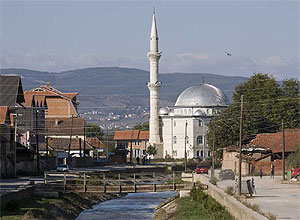
binladen_mosque_kosovo
Kosovo

At the party my wife went to, she got to talking with one of the parents and came to find out that she was born into a muslim family from a muslim country, who had come to the US as refugees. The country? Kosovo.

After growing up in New York City, this woman married an American man, and together, the two of them became Christians.

This woman’s parents, at that point, refused to speak to her, but once she had children, her parents started coming around more often.

This woman and her husband now live in Longmont and they are involved in supporting various Christian ministries, churches and missionaries in Kosovo and travel there from time to time.

Here’s the point: this is what happens to good number of muslims who come to the United States: they meet Christians, they hear the Gospel, they become Christians, and then they begin to reach out and support Christian missions in their country of origin.

08-21-14_the_green_prince_mainIf you haven’t yet, check out the movie The Green Prince. It’son Netflix. It’s about Mosab Hassan Yousef, a Palestinian and the eldest son of Sheik Hassan Yousef, one of the founders of Hamas. The Green Prince, is the film adaption of the book, Son of Hamas: A Gripping Account of Terror, Betrayal, Political Intrigue, and Unthinkable Choices, tells the true story of how Mosab was recruited by Israeli intelligence to work against Hamas.

But what is particularly interesting about Mosab’s story, as is documented in the book and the movie, is how in 2007, Mosab left the West Bank and came to the United States. Living in San Diego, he was invited by some acquaintances to come visit their church. There he heard the gospel, the message of God’s love, and he met Christian people who embraced him. In 2008, Mosab publicly announced his conversion to Christianity, putting himself at risk by doing so.

Now guess what he does: He reaches out to Arabic speakers with the message of the gospel. Talk about legit: a son of Hamas speaking in Arabic about Jesus and the hope of the Gospel. That’s powerful for people in that culture, and in ours as well.

“Religion steals freedom, kills creativity, turns us into slaves and against one another. Religion can’t save mankind. Only Jesus could save mankind through his death and resurrection. And Jesus is the only way to God.” – Mosab Hassan Yousef

With all of these refugees from muslim countries coming to the United States, there is an incredible opportunity: for the first time, many of these people will be able to hear the Gospel, to meet and be embraced by Christian believers, and to choose for themselves what they will believe.

May we who call ourselves Christians be found faithful to act towards them as Jesus would, and may we be used by God to help them find love, liberty and salvation in Christ. Lives and destinies will be changed, and maybe even the world as we know it.

Peaked Out Weekend

This past weekend was a busy one for us, full of many good things.

It began on Saturday with the Longmont Sunrise Stampede. My wife and 8 year old son ran the 2 mile race, and I ran the 10k. On the one hand, we were excited to run a race here in Longmont, but an added bonus was that the race went to support a great cause: proceeds went to help fund special education in the St Vrain Valley School District.

I was proud of my son for finishing his first race, and getting a time he could be proud of.

wp-1471379365344.jpg
Before the 2 mile race

I finished my 10k race in 54:51 which was a personal record time for that distance and even better than I had hoped to do.

wp-1471379626026.png
At 9.5 km of the 10k race which ended at Silver Creek HS

We then went up to Bailey, to a picnic for pastors and their families put on by Crossroads Church of Denver, my old church which sent me to Hungary.

We then went to Denver for the Lego BrickFest, which our kids loved, and then finished the day by having dinner with family and friends.

wp-1471379912162.jpg

On Sunday we had church. I taught on Colossians 3:1-11 in a message titled “A New You”, about which I got a surprising amount of positive feedback. One of the key concepts I discussed was the “Already… but Not Yet” nature of the gospel. If you’d like to listen to it, you can find the audio of that message here.

I got an email after church that a couple from Texas had been at church that day, and that they had come because they read this blog and were in the area! That encouraged me to be writing here more.

Right after church at White Fields, we went down to Littleton, where the Colorado Hungarian community was having their annual picnic for Szent István (St. Stephen) Day. István was the first king of Hungary, who after converting to Christianity as an adult, established Hungary as a Christian kingdom in 1000. He was declared a saint on August 20, 1083 and because of that, August 20 is the national holiday of Hungary.

wp-1471380135628.jpg
Hungarian language church service in Littleton

At this picnic, I lead a church service in Hungarian for the Hungarian Reformed Church of Denver, at which I preached on one of my favorite scriptures, Matthew 13:44 – “The kingdom of heaven is like treasure hidden in a field, which a man found and covered up. Then in his joy he goes and sells all that he has and buys that field.” I really enjoyed preaching in Hungarian again! I get to do it sometimes when I visit Hungary, but felt great to do it here in Colorado.

On Sunday night, I left home at 11pm with two friends from church to climb Longs Peak.

wp-1471377631837.jpg
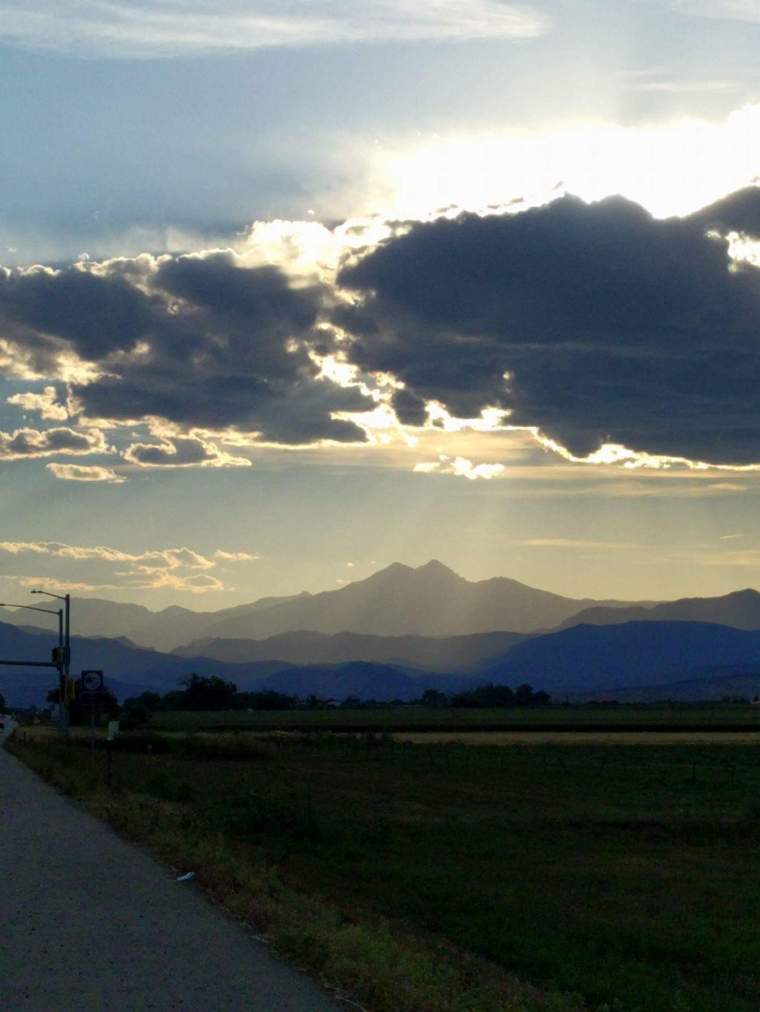
My wife took this picture of Longs Peak and Mt Meeker as we drove into Longmont Saturday evening. We love when the light highlights the layers in the mountains.

It was the 2nd time I’ve climbed it, and it was just as beautiful and difficult of a climb as I remember it being! It’s a 15 mile round trip hike, with 5100 feet of elevation gain. The most difficult part of the hike, mentally, is the last 2.5 miles, when you descend back into the forest and it feels like it will never end. The most technically difficult part is probably “The Trough.” Here’s a description of the route.

wp-1471377684896.jpg
The view from the top of Longs Peak looking South-West towards the Indian Peaks. The lake on the left is Barker Reservoir in Nederland.
wp-1471377684881.jpg
The Twin Peaks – Longs and Meeker, from the split off to Chasm Lake

Today the kids went back to school, which is bittersweet for us as parents. On the one hand, we are going to miss having them around, but on the other hand, it was a lot of work keeping them occupied and on task at home, and we see how good it is for them to be with the other kids and learning.

We took a trip last week up to the Mount Evans as a family to celebrate the end of summer vacation. It was my wife and kids’ first time up above 14,000 feet.

wp-1471379398701.jpg
Mt Evans summit (14,270 ft)

I can’t get enough of these Rocky Mountains…


The IOC on Religion: Nothing New Under the Sun


One of the things we do at White Fields Church every week is invite people to text or tweet questions during the sermon and then I respond to them on our members’ website called The City. I really enjoy this aspect of it, and I think that such engagement aides in the learning process.

For the past several weeks I have been teaching through Paul’s letter to the Colossians, and what I have found most interesting about it is that the core message of the book is something which is incredibly relevant to our day, which is the uniqueness of the Christian gospel as it relates to every other religion and philosophy in the world.

When you look into the culture of the Roman Empire, interestingly what you find is a society which was very similar to modern Western society in many ways. It was a pluralistic society, a multi-cultural, multi-ethnic society, in which there was freedom of religion – and yet… the prevailing notion was that in order for there to be peace in a mixed society, no one should say that their tradition or religion was any better or more true than anyone else’s – only that it was different. Furthermore, a person’s religion or tradition was considered to be something they were born into rather than something they had a responsibility to choose for themselves, and therefore it was considered taboo, rude and even wrong to try to “convert” someone to another religion than that which they were born into or brought up in.

Now, if that doesn’t sound familiar to our day and age, then you should check your pulse.

I discussed this in more detail this past Sunday. If you’re interested, check out the audio of that message here.

In response to that teaching, a member of our church texted in:

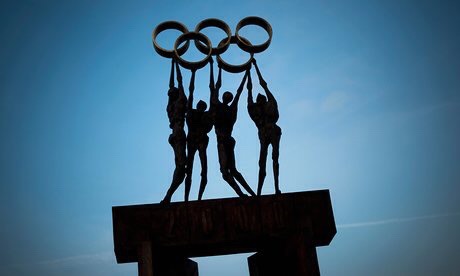
The unifying/melting pot of religions that Paul is warning the Colossians about in today’s passage is the same message delivered by the president of the IOC at the opening of the Olympic Games. It’s clear that making exclusive claims about right or wrong in regard to religion is frowned upon internationally.

I unfortunately missed the opening ceremony of the Rio Olympics, and have not been able to find a way to watch the whole thing online – if anyone knows a way, please let me know!

Although I am not surprised by this, I am surprised by the naivety in thinking which it represents. For educated people to say that no one should make exclusive claims is to ignore the fact that EVERYONE makes exclusive claims, including the people who say that you should not make exclusive claims. For example, if you say that it is wrong to say that something is wrong, you are doing the same thing which you are claiming should not be done. I only wonder if this overlooking of the obvious is sincere/naive in nature, or it is it a willful ignorance for the sake of pragmatism; in this case that everyone would just get along. Either way, to make such a claim reveals a sort of patronizing disregard for the validity of the claims of any and all religious beliefs, which is itself a form of judgment about them… Oh the irony…

Don’t fall for this underdeveloped, recycled logic. We can absolutely live in a free society where honest and open dialogue of the validity of certain ideas, traditions, practices and beliefs exists.

What Makes Someone a Missionary?

I spent 10 years in Hungary as a missionary. I had a visa and several legal papers for my residence there which stated on them that I was a missionary. Furthermore, I was sent out and supported by a number of churches who supported as a missionary.

This having been the case, I have put a lot of thought over the years into what it is that makes someone a “missionary”. 

I remember working alongside Hungarians in Hungary, doing the same work – and yet I carried the title of missionary, and they were just Christians who were serving the Lord. Every now and then, some of them would say that they too were missionaries then, since they were doing the same work. But what about the other Christians in Hungary who were not with our organization, who did similar work? Were they also missionaries? They didn’t seem to covet that title, but were content to consider their service simply completely normal Christian behavior.  Some Hungarians we worked with received financial support from churches in the West so that they could serve full time at a church. Did that make them missionaries, even though they were serving in their home country or culture?

Some missions organizations use the term “native missionaries” and raise funds in wealthier countries to support national workers who already know the culture and language of a place. The idea is that with the proper training and some financial support to free them up to do the work, these local Christian workers will be able to reach the places where they live more effectively than foreign missionaries. This is especially popular in countries which do not give visas to foreign missionaries. Is the word “missionary” appropriate in this case? 

What makes someone a missionary?

One time when my wife and I had come back from Hungary to visit family and supporters, we were in Carlsbad, CA, and at the beach some young people, probably in their early 20’s,  approached us and started talking about Jesus. They were evangelizing – and when we told them we were Christians, they told us that they had come from somewhere in the Midwest as missionaries to California. They hadn’t been sent by any church community, but believed they were called and so they had come. Does that make you a missionary?

When I moved to Longmont I knew some people who said that they were missionaries to Longmont, and raised support for their living expenses and various ministry endeavors, so that they could be free to pursue these things full-time. These particular people had grown up in Longmont and felt called to serve God in their hometown. 

What makes someone a missionary?

Something that has often been proclaimed in evangelical circles is that all Christians are called to be “missionaries” and that the work of missionaries is not something which only needs to happen in far off places with developing economies, there is need for evangelism and outreach in wealthy countries, including the United States as well. One bookmark I saw said: “You don’t have to cross the ocean to be a missionary, you just have to cross the street.”

So what are we to make of all of this? What makes someone a missionary?

A little etymology helps to sort things out:

Missio = send. Thus, to be a missionary is to be someone who is sent.

There is a sense in which all Christians have been sent by Jesus to carry out his mission, which he received from the Father, in his mission field, which is the entire world.

“”For God so loved the world, that he gave his only Son, that whoever believes in him should not perish but have eternal life.” – John‬ ‭3:16‬ ‭ESV‬‬

“As you sent me into the world, so I have sent them into the world.” – ‭John‬ ‭17:18‬ ‭ESV‬‬

“Jesus said to them again, “Peace be with you. As the Father has sent me, even so I am sending you.” – ‭‭John‬ ‭20:21‬ ‭ESV‬‬

However, some are sent and supported by a local body of believers, led by a sense of calling from God, like Paul and Barnabas in Acts ch 13. It is clear from the Book of Acts, that Paul had an ongoing relationship with his “sending church” in Antioch, returning there after each of his missionary journeys. It seems there there was an accountability, and probably some degree of financial support from the church there which had sent Paul out. 

Here’s how I sort it out: All Christians are called by be “on mission” with God, in his mission field, which is the entire world. In fact, to be on mission is an essential and inherent part of what it means to be a Christian. Therefore, it should be normal for all Christians to do the work of a missionary wherever they live, whether it is their home or not. This is the NORMAL Christian life.

And yet, I feel that we should preserve the significance of the word “missionary” for those who are sent out on a mission by a local body of believers to another place, following the leading of God. There is a way in which to use the word missionary to loosely diminishes the sacrifices and the unique challenges faced by those who leave home and country and follow God’s leading to go to another place, having had a local body of believers confirm this by sending them out. Similarly, there is a way in which the concept of the priesthood of all believers can be taken to a degree which detracts from the significance of a calling to be a pastoral overseer. While we are all called to minister and we are all called to be on mission, these titles point to particular roles.

There is an interesting place in Paul’s second letter to Timothy, where Paul tells Timothy: “Do the work of an evangelist.” (2 Timothy 4:5)  Paul, in Ephesians 4, mentions the “office” or official role in the church of “evangelist” – in other words, it seems that there were some people in the church who had this title. However, it would seem that even though this was not Timothy’s official title or role, Paul was encouraging him to do the work of an evangelist nonetheless. 

I believe the same applies in regard to the discussion of the term “missionary” or “pastor”. If you are a Christian, you may not be an officially sanctioned “missionary” – but you are called to do the work of a missionary nevertheless! You may not be a pastor, but you are still called to do the work of a pastor in your interactions with other people.

The Pursuit of Happiness

bible.jpg

The Declaration of Independence contains this famous phrase:

We hold these truths to be self-evident, that all men are created equal, that they are endowed by their Creator with certain unalienable Rights, that among these are Life, Liberty and the pursuit of Happiness.

Happiness is what all people are ultimately seeking.  Including you. Including me. You want to be happy. So do I.

If you really think about it, everything we do is, in one way or another, a pursuit of happiness.

The pursuit of happiness is what motivates people to get married – or not to get married, to have children or not to have children, to choose certain careers or paths in life and not others. It is the reason people abuse substances – and even, as strange as it may sound at first, to commit suicide.

Philosopher and scientist Blaise Pascal said:

All people seek happiness. This is without exception. Whatever different means they employ, they always tend towards this end. The cause of some going to war and of others avoiding it is the same desire in both, attended with different views. The will never takes the least step but to this object (happiness). This is the motive of every action of every man, even of those who hang themselves.
Suicide is the (very misguided!) belief, that one can escape unhappiness here in this life and hopefully find happiness wherever they end up. Still, even this terrible and tragic act is part of the pursuit of happiness.
Sometimes Christians have made a false distinction between happiness and joy. Here is what Joni Eareckson Tada has to say about that:
We are often taught to be careful of the difference between joy and happiness. ‘Happiness,’ it is said, ‘is an emotion which depends on what happens to you (a false etymology).’ Joy, by contrast is supposed to be enduring, stemming from deep within our soul, and which is not affected by circumstances surrounding us. I don’t think God had any such hairsplitting in mind. Scripture uses the terms interchangeably along with words such as “delight” “Gladness” “blessing” – There is no scale of relative spiritual values applied to any of these. Happiness is not relegated to fleshly minded sinners nor joy to heaven-bound saints.

If you ask the average person what they want more than anything else, they will reply:  “I want to be HAPPY!”   “It’s not the only thing I want — but it is at the core of the other things I want.”

If you ask people: “What do you really want for your kids?”  They will say: “I want them to be polite, respectful, successful, responsible” — but why?  Because what they really want is for them to be happy.  The reason they want all those other things for them, is because they believe those things will result in their greater happiness in the long run.
C.H. Spurgeon said this:
My dear brothers, if anyone in the world ought to be happy, we are those people. How boundless our privileges, how brilliant our hopes.
As Christians, in and through Jesus Christ, we have the keys to the happiness we desire and the joy we were made for.
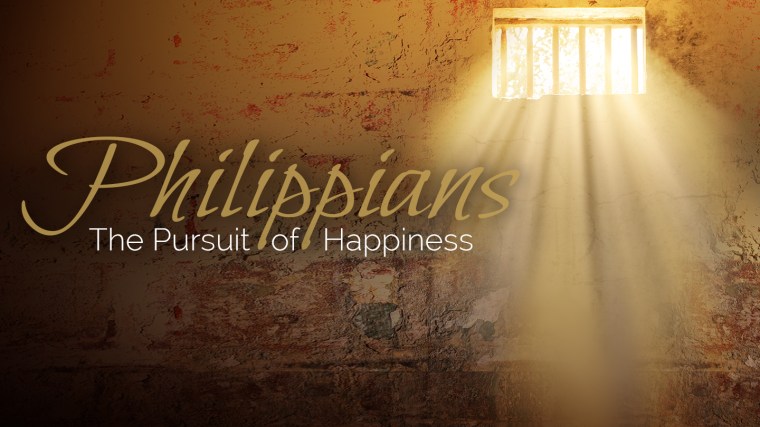
Starting this Sunday at White Fields Church, I will be teaching a series titled: The Pursuit of Happiness, in which we will be studying Paul’s letter to the Philippians with a view of how Paul had the keys to happiness and an indomitable joy even in the midst of dark circumstances.
The graphic art above was done by CryBabyDesign. Check them out for all your graphic design needs.