Some time ago, I addressed some common, but incorrect claims that the origins of Easter are pagan: “Does Easter Come from Ishtar?”
But what about Christmas? Does Christmas have pagan origins?
Saturnalia and the Winter Solstice
Did Christians simply take over the Roman pagan festival of Saturnalia and repurpose it as a celebration of Jesus’ birth Is that why we celebrate Christmas around the same time as the winter solstice?
I used to believe this one myself. However, upon further investigation, it would seem this is not how the celebration of Christmas on December 25 came about. Here’s why:
We don’t actually know what time of year Jesus was born. The one thing we know is that it was almost certainly not in late December. The reason for this is because Luke’s Gospel tells us that the shepherds were watching their flocks by night, sleeping in the fields. In Israel it gets too cold in the winter for that; shepherds sleep outside from about March-September. Clement of Alexandria wrote that some believed May 20 was Jesus’ birthday, others believed it was April 19 or 20, still others believed it was in late March. [1]
Early Christians, along with the majority of ancient cultures, did not celebrate birthdays in the same way we do today. Only two of the four Gospels talk about Jesus’ birth. The early Christian writer Origen dismissed birthdays as something only celebrated by tyrants, such as Pharaoh and Herod in the Bible. [2]
Things changed in the early 300’s AD with the beginning of the celebration of Epiphany, which commemorated the revealing of the Messiah to the Gentiles at the coming of the Magi to see Jesus after his birth. This was celebrated in early January in the Eastern church, not because they believed this to be the birthday of Jesus, but because of how it fit into the liturgical calendar which gave a plan for teaching through key events in the Gospels every year.
The Western (Latin speaking) part of the church wanted to have a festival similar to Epiphany, and decided that since they did not know when exactly Jesus was born, they would have their festival of the celebration of the incarnation and the birth of Jesus in late December, before Epiphany – since the Magi would have arrived after the birth of Jesus.
Again, the decision of this date was based on liturgical calendars, not on the taking over of pagan festivals. It was considered significant, however, that the coming of “the light of the world” should be celebrated at the time of the year which is darkest in the Northern Hemisphere. After this date, the days get longer and the darkness wanes. This symbolism was not lost on early Christians, but rather considered to be a great symbol of the effect of Jesus’ entrance into the world.
Here’s what’s so interesting: there is a document from about 350 AD which tells us that Romans celebrated the festival of Sol Invictus Natali (the birth of the unconquered sun) on December 25, and that same document also tells us that Christians celebrated the birth of Jesus on this same day. There is no earlier evidence or report of a Roman pagan festival on December 25. In other words, it is just as likely that the pagan Romans chose this day for their pagan festivals because Christians were already celebrating the birth of Jesus on this day, and wanted to have their own counter-festival, than that Christians chose this day because of an existing pagan festival.
Furthermore, there is nothing particularly pagan about celebrating anything at the darkest part of year, right before the days start getting brighter. Judaism, for example, celebrates Chanukah – the Festival of Lights, in which they light candles in the darkness to celebrate God’s faithfulness at this same time of year. Pagans don’t own the symbolism inherent to the orbit of the Earth.
Are Christmas Trees Pagan?
There is some evidence that Roman pagans liked to decorate their homes with greenery during winter festivals, and that early Christians decorated their houses with greenery during Epiphany as well.
It should be remembered that in the ancient world, decorating with greenery in the winter was also common because it was bleak outside and they didn’t have Wayfair.com to depend on for affordable home decor.
Some people claim that these verses in Jeremiah are speaking about the practice of Christmas trees:
“Learn not the way of the nations…for the customs of the peoples are vanity. A tree from the forest is cut down and worked with an axe by the hands of a craftsman. They decorate it with silver and gold; they fasten it with hammer and nails so that it cannot move.
Jeremiah 10:1-5
Sounds like a Christmas tree, right? Except that’s not what it’s describing. What Jeremiah is describing is the creation of a household idol out of wood. Isaiah talks about a similar practice in which people would fashion an idol out of wood, stone, or metal, and then worship the very object they had just created.
The history of the Christmas tree dates back to medieval Europe, in the 14th and 15th centuries, during which December 24 was celebrated as “Adam and Eve Day” which was celebrated with the decorating of “paradise trees” by attaching apples to them (think how much bulbs look like apples) – a rarity during the winter, so they were considered treats. Because it was winter, and especially in Northern Europe, evergreen trees were popular to use for this. [3]
Modern Pagan Christmas?
Perhaps of bigger concern is the way in which our modern consumeristic Christmas traditions can detract from the celebration of Jesus and the incarnation which Christmas is meant to celebrate.
May we, even in the joys and the fun of our modern celebrations, not lose sight of what it is that we are celebrating this season: that to people like us who live in deep darkness, a light has shone; the promised Messiah has come to save us from our sins and give us the light of life forever! That is certainly something worth celebrating.
Aaron Damiani is a pastor and the author of the book: Earth Filled with Heaven — Finding Life in Liturgy, Sacraments and other Ancient Practices of the Church.
In this episode, Aaron and I discuss some of the practices that Christians have traditionally done in their worship services, and how Christians today can benefit from incorporating some of those formative practices.
Additionally, we discussion some of the pitfalls or potential downsides of a liturgical approach to worship and discipleship, and some ways that High Church and Low Church Protestants can learn from each other in order to create an intentional order or service which helps develop healthy disciples of Jesus.
Aaron Damiani is a pastor and the author of the book: Earth Filled with Heaven — Finding Life in Liturgy, Sacraments and other Ancient Practices of the Church.
In this episode, Aaron and I discuss some of the practices that Christians have traditionally done in their worship services, and how Christians today can benefit from incorporating some of those formative practices.
Additionally, we discussion some of the pitfalls or potential downsides of a liturgical approach to worship and discipleship, and some ways that High Church and Low Church Protestants can learn from each other in order to create an intentional order or service which helps develop healthy disciples of Jesus.
If you benefited from this episode, please share it with others, and if you would like to help the podcast, the best way to do that is by leaving a rating or review on your podcast app.
Gluttony is one of the “Seven Deadly Sins” – but why is gluttony a sin? And what constitutes gluttony? Is calling gluttony a sin actually a form of “fat-shaming” – or it is actually a danger to your soul?
In this episode, Mike and I talk about the origin of the Seven Deadly Sins and what the Bible has to say about gluttony.
Gluttony is one of the "Seven Deadly Sins" – but why is gluttony a sin? And what constitutes gluttony? Is calling gluttony a sin actually a form of "fat-shaming" – or it is actually a danger to your soul?
In this episode I speak with Mike Neglia about the origin of the Seven Deadly Sins and what the Bible has to say about gluttony.
Mike is the Lead Pastor of Calvary Cork in Cork, Ireland. He is also the leader of Expositors Collective, and the host of the Expositors Collective Podcast.
For more articles and content, visit the Theology for the People blog at nickcady.org
Mason is a graduate of Calvary Chapel Bible College and has worked in the financial services industry for 17 years.
In this episode we discuss what the Bible has to say about money, wealth, and poverty. How should we think biblically about financial matters, including investments and retirement?
We discuss how Christians have related to money historically, such as those who take vows of poverty. Finally, Mason gives us some very practical advice about stewardship, investment, and financial planning.
If you find this episode interesting or helpful, please share it with others and leave a rating and review on your podcast app, as that helps other people discover this podcast and its content.
Mason Mortimer is a graduate of Calvary Chapel Bible College and has worked in the financial services industry for 17 years.
In this episode we discuss what the Bible has to say about money, wealth, and poverty. How should we think biblically about financial matters, including investments and retirement?
We discuss how Christians have related to money historically, such as those who take vows of poverty. Finally, Mason gives us some very practical advice about stewardship, investment, and financial planning.
If you find this episode interesting or helpful, please share it with others and leave a rating and review on your podcast app, as that helps other people discover this podcast and its content.
Make sure to visit the Theology for the People blog at nickcady.org
On this week’s episode of the Theology for the People podcast, I speak with Michael Payne, worship pastor at White Fields Community Church, about Jesus’ ascension into Heaven.
Is the ascension simply something that happened, which we acknowledge, or did it actually accomplish something which could not have happened otherwise? How did the early Christians and the Church Fathers understand the ascension? What difference should the ascension make for our lives today?
In 2021, I asked Mike to teach on the Ascension, as part of our Eastertide series, “The Risen Life,” in which we looked at the appearances of Jesus in the Gospels after His resurrection. As Mike studied and prepared for that teaching, he found that the ascension really deserves more attention than it generally gets in most churches today.
In this episode, I speak with Michael about his discoveries, and he explains what the church has lost by not focusing enough on Jesus ascension, and he explains why Jesus’ ascension matters for the gospel and for us.
If you find this episode interesting or helpful, please share it with others and leave a rating and review on your podcast app, as that helps other people discover this podcast and its content.
Does the Ascension Deserve More Attention? – Why Does Jesus' Ascension Matter for the Gospel and for Us? –
Theology for the People
In this episode, Nick Cady and Michael Payne discuss Jesus' ascension into Heaven and why it matters for the gospel and for us.
Is the ascension simply something that happened, which we acknowledge, or did it actually accomplish something which could not have happened otherwise? How did the early Christians and the Church Fathers understand the ascension? What difference should the ascension make for our lives today?
If you find this episode interesting or helpful, please share it with others and leave a rating and review on your podcast app, as that helps other people discover this podcast and its content.
Make sure to visit the Theology for the People blog at nickcady.org
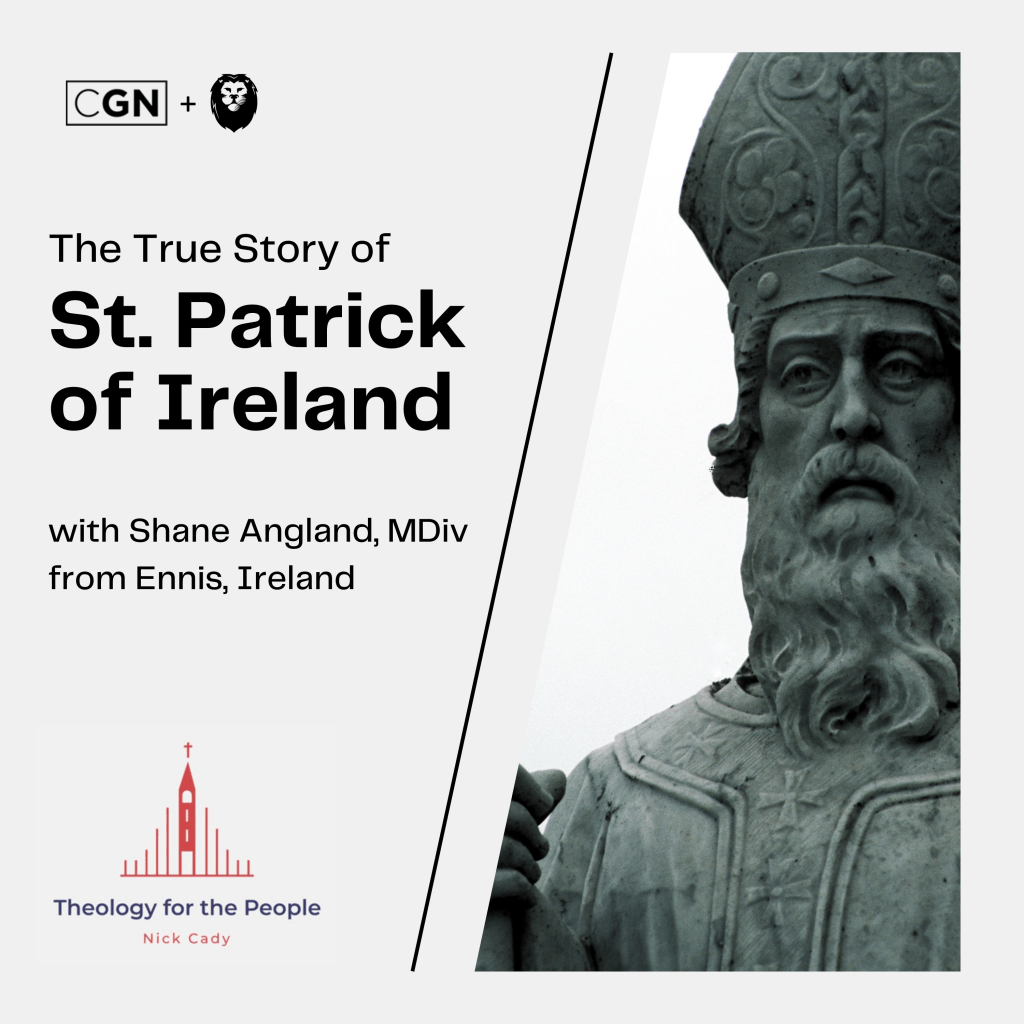
March 17 is St. Patrick’s Day, and on this week’s episode of the Theology for the People podcast I speak with Shane Angland (Mdiv, Dallas Theological Seminary) about the true story of St. Patrick, and how we can know the difference between what is myth and what is historically true when it comes to him.
Did Patrick really drive the snakes out of Ireland? Did he face off with druids? Did he use the shamrock as a teaching tool to explain the Trinity? Did you know that Patrick wasn’t actually Irish – and that he fought against human trafficking?
Shane explains how the true story of Patrick is actually much better than the legends, and that there are actually writings from Patrick which are available today. He also shares about the ongoing legacy of Patrick in Ireland and beyond.
If you find this episode interesting or helpful, please share it with others and leave a rating and review on your podcast app, as that helps other people discover this podcast and its content.
The True Story of Saint Patrick of Ireland – with Shane Angland, MDiv from Ennis, Ireland –
Theology for the People
March 17 is St. Patrick's Day. What is the true story of St. Patrick? Shane Angland (MDiv, Dallas Theological Seminary) joins the podcast today to help us know the difference between what is myth and what is historically true when it comes to St. Patrick.
Did Patrick really drive the snakes out of Ireland? Did he face off with druids? Did he use the shamrock as a teaching tool to explain the Trinity?
Shane explains how we can know the difference between what is true about Patrick and what is fable, and how the true story of Patrick is much better than the legends.
Here is a link to the article Shane wrote, which is mentioned in this episode: St. Patrick, Grey Wolves, and the Cimbid King
If you find this episode interesting or helpful, please share it with others and leave a rating and review on your podcast app, as that helps other people discover this podcast and its content.
Make sure to visit the Theology for the People blog at nickcady.org
This week’s episode of the Theology for the People podcast is a discussion I recorded in Budapest, Hungary this week with Pastor George Markey of Kyiv, Ukraine.
This was originally recorded for KWAVE Radio in Southern California, but I am putting it out here as well, so more people can hear it.
George has lived in Ukraine for the past 30 years, and is the overseer for the Calvary Chapel churches in the country.
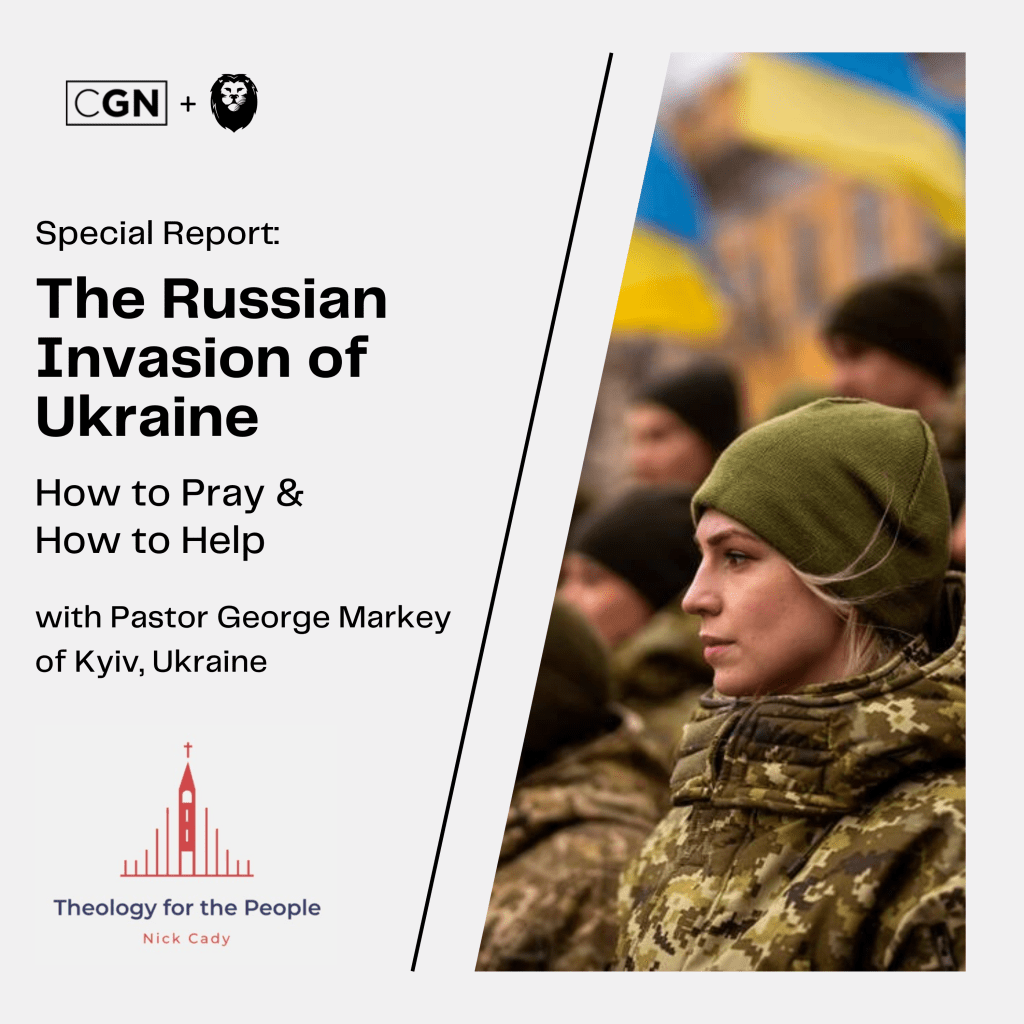
In this episode, George shares his perspective on what is going on as Russia is attacking Ukraine, as well as stories of how God is working in the midst of it. We also discuss needs, what is currently being done, and how you can get involved and help. Finally, George shares how he personally prays for Ukraine during this time.
The Russian Invasion of Ukraine: How to Help & How to Pray – with George Markey –
Theology for the People
Recorded in Budapest, Hungary this week with Pastor George Markey of Kyiv, Ukraine, originally for KWAVE Radio in Southern California. George has lived in Ukraine for the past 30 years, and is the overseer for Calvary Chapel churches in Ukraine.
In this episode, George shares his perspective on what is going on as Russia is attacking Ukraine, as well as stories of how God is working in the midst of it.
We also discuss needs, what is currently being done, and how you can get involved and help.
Finally, George shares how he personally prays for Ukraine right now.
Please share this episode with others, subscribe to the podcast, and check out the Theology for the People blog at nickcady.org
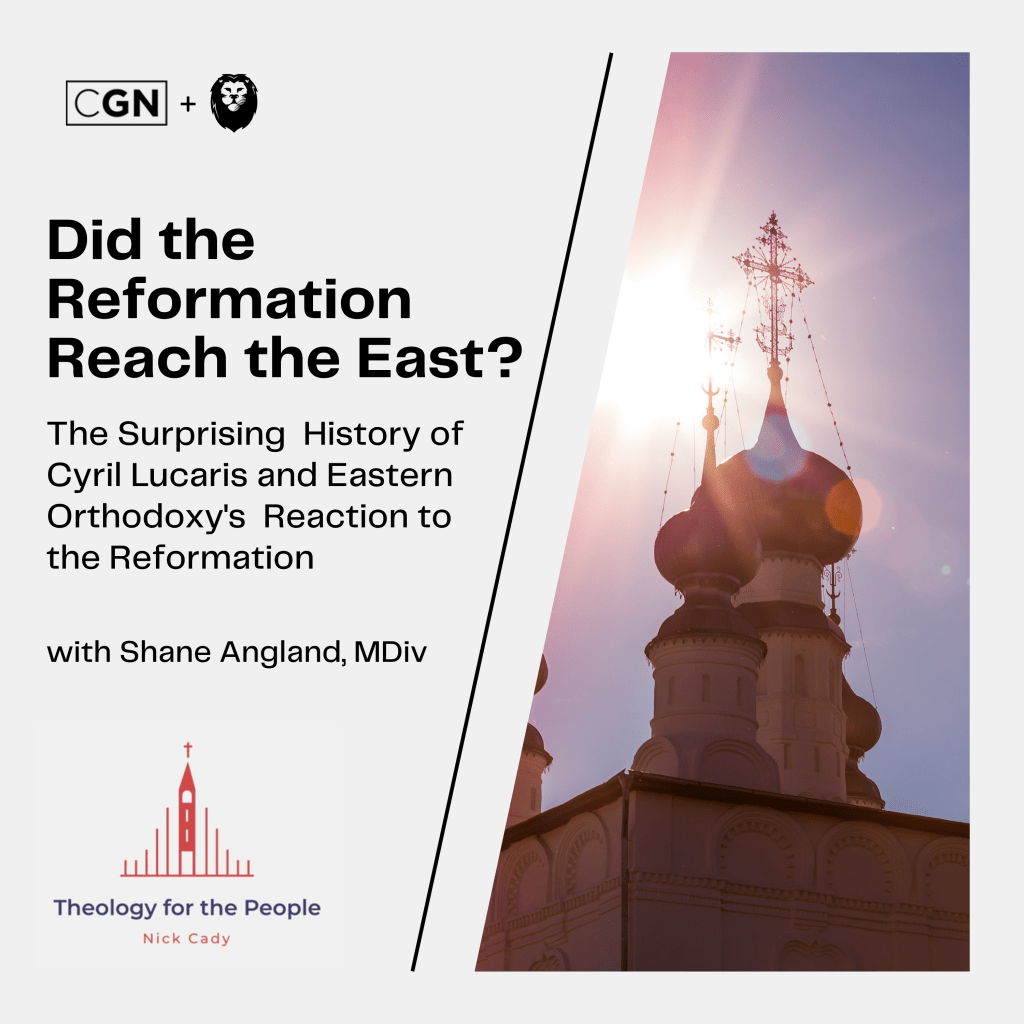
Many people assume that the Protestant Reformation was something that only affected the Western, or Roman Catholic Church, but in this week’s episode of the Theology for the People podcast, Shane Angland (Mdiv, Dallas Theological Seminary) shares the incredible story of how the Reformation reached the East.
Shane explains how Martin Luther actually referenced the Eastern Orthodox churches as examples of Christianity which were not subject to the dictates of Roman papal authority, and he tells the story of Cyril Lucaris, the Greek Orthodox theologian and patriarch of Constantinople, who was highly influenced by the Reformation and its principles.
Shane resides in Ennis, Ireland. He spent years working in Ukraine as a missionary with IFES and serving in a Calvary Chapel church in the city of Kharkiv, before going to Dallas for seminary.
Next month, Shane will be back on the podcast, sharing the true history of Saint Patrick of Ireland, explaining which parts of the commonly-told stories about Patrick are myth, and which parts of the story are often not told, but deserve to be. Stay tuned and keep an eye out for that!
Did the Reformation Reach the East? The Surprising History of Cyril Lucaris and Eastern Orthodoxy's Reaction to the Reformation – with Shane Angland –
Theology for the People
Many people assume that the Protestant Reformation was something that only affected the Western, or Roman Catholic Church, but in this episode, Shane Angland (Mdiv, Dallas Theological Seminary) shares the incredible story of how the Reformation reached the East.
Shane explains how Martin Luther actually referred to the Eastern Orthodox churches as examples of Christianity which were not subject to the dictates of Roman papal authority, and he tells the story of Cyril Lucaris, the Greek Orthodox theologian and patriarch of Constantinople, who was highly influenced by the Reformation and its principles.
Shane Angland resides in Ennis, Ireland. He spent years working in Ukraine as a missionary with IFES and serving in a Calvary Chapel church in the city of Kharkiv, before going to Dallas for seminary.
At the end of the episode, listen for a preview of my forthcoming book, The God I Won't Believe In: Facing Nine Common Barriers to Embracing Christianity.
Visit the Theology for the People blog site for articles and more.
Today is the day in the United States when we set aside to give thanks and reflect on all the Lord has done in our lives over this past year.
Other countries, like Canada and Ukraine also have national holidays dedicated to giving thanks, but days of thanksgiving have a rich history in Christian groups all over the world, going back before the pilgrims held their famous thanksgiving feast in Plymouth.
In the Old Testament, God instructed his people to hold several days of thanksgiving every year: Passover and the Feast of Unleavened Bread in early Spring, thanking God for delivering them from slavery and for the beginning of the barley harvest; the Feast of Weeks in early Summer, thanking God for the beginning of the wheat harvest; and the Feast of Tabernacles in the Fall, thanking God for the end of the harvest season. God told them to “Be joyful at your festival…because the Lord your God will bless you” (Deuteronomy 16:14-15).
For us as Christians, Thanksgiving is not only a day we celebrate, but a way of life. Colossians 2:6-7 says: : “Therefore, as you received Christ Jesus the Lord, so walk in him, rooted and built up in him and established in the faith, just as you were taught, abounding in thanksgiving.”
Thanksgiving Shapes Us
Spending time reflecting on what God has done for us and giving thanks not only honors Him, it also shapes us. The Thanksgiving meal obviously shapes us into certain kinds of people: slightly rounded than we were before! But the practice of giving thanks also shapes us: the more we give thanks, the more our eyes are opened to see the things God is doing and has done – which builds our faith and trust in Him!







 Theology for the People