In this episode, Dr. Ryken and I discuss the role of beauty in theology. Dr. Ryken points out that Beauty is not a topic that is often discussed in theological circles, but it should be, both as a lens through which we view theological topics such as forgiveness, or atonement, or justice, and even as an attribute of God and the end result of God’s work of redemption in our lives and in the world.
Dr. Philip Ryken is the President of Wheaton College in Wheaton, Illinois. He has a Doctorate in Philosophy from Oxford University, and he is the author of over 50 books. His latest book is called Beauty is Your Destiny: How the Promise of Splendor Changes Everything.
In this episode, Dr. Ryken and I discuss the role of beauty in theology. Dr. Ryken points out that Beauty is not a topic that is often discussed in theological circles, but it should be, both as a lens through which we view theological topics such as forgiveness, or atonement, or justice, and even as an attribute of God and the end result of God’s work of redemption in our lives and in the world.
Jeremy Treat is the Pastor for Preaching and Vision at Reality LA, a church in Los Angeles, California. He is also an Adjunct Professor of theology at BIOLA University, and he has his PhD from Wheaton College.
On this episode of the Theology for the People podcast, I spoke with Jeremy about the doctrine of the Atonement, including what it means, and why it is so central to Christianity.
We also discuss some common errors that people commit when thinking about the atonement, and how many of these errors are due to a view of the atonement which is reductionistic. Further, we talk about the practical implications of those different reductionist views.
Jeremy believes that the best narrative in which to understand the atoning work of Jesus is that of the Kingdom of God, in light of the entire story that the Bible tells.
Jeremy Treat is the Pastor for preaching and vision at Reality LA, a church in Los Angeles, California. He is also an Adjunct Professor of theology at BIOLA University, and he has his PhD from Wheaton College.
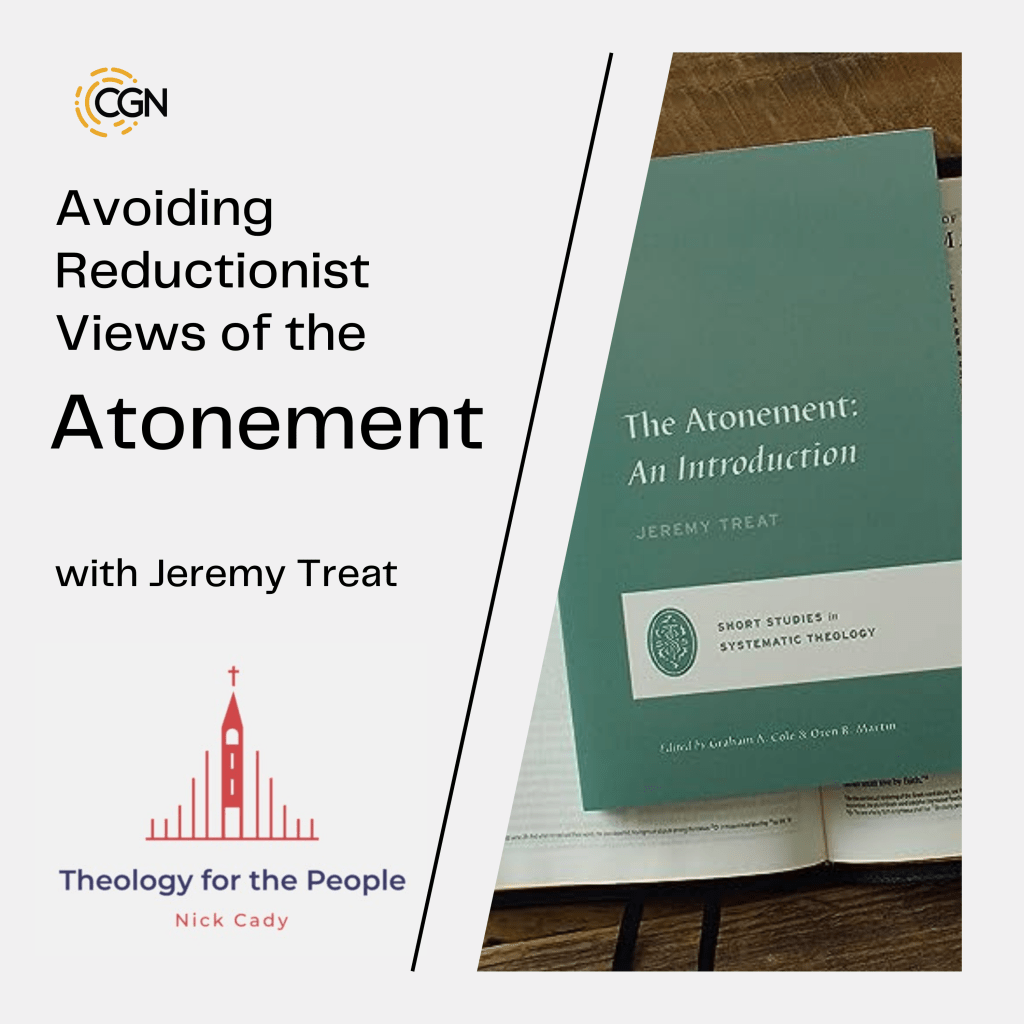
Jeremy is the author of several books. His latest book is The Atonement: an Introduction, published by Crossway Publishing as part of their series of Short Studies in Systematic Theology.
In this episode, Jeremy speaks with Nick Cady about the doctrine of the Atonement, including what it means, and why it is so central to Christianity.
They also discuss some common errors that people commit when thinking about the atonement, and how many of these errors are due to a view of the atonement which is reductionistic. Further, they talk about the practical implications of those different reductionist views.
Jeremy believes that the best narrative in which to understand the atoning work of Jesus is that of the Kingdom of God, in light of the entire story that the Bible tells.
Earlier this year I traveled to Ukraine to help lead a conference for Christians who had been providing aid for people in their country since the full-scale Russian invasion began in February 2022.
While I was there, I heard stories from many people of tragedy and loss, but I also heard stories of heroism, faith, and spiritual revival.
I also had the opportunity to record a few interviews with members of different churches, in which they got to share their experiences in the early days of the war, how things look now, and how God has been working and using them to share his love to hurting people.
These interviews are being released on the CGN Voices Podcast. There will be four episodes in this mini-series, and they will be released every Friday for the next few weeks.
The first episode came out last week, and it is one which was particularly meaningful to me. You can listen to it here, or in the embedded player below.
Ukraine: Resilience, Resolve and Refuge – A Testimony from Tanya Kotelenets –
CGN Voices
Welcome to "Voices from Ukraine", a mini-series inside look at the resilience, faith, and service of Calvary Chapel believers in Ukraine during the difficult months since Russia's full-scale invasion began in February 2022.
In this special edition, we sit down with Tanya Kotelenets from a church in eastern Ukraine. Kotelenets shares her harrowing experiences from the first days of the war – the fear, uncertainty and eventual decision to flee the city with her church community. Despite difficult conditions, God's provision and grace sustained them.
Though she returned home months later, the impact of war remains. Kotelenets’s husband ministers at funerals almost daily, including that of a coworker who recently died in combat. Our listeners are reminded that all parts of the body of Christ feel the suffering of others.
Kotelenets asks for prayers for the children enduring so much change and loss, and for strength to continue living through this conflict with hope. If you'd like to support relief efforts in Ukraine, donations can be made through calvaryglobalnetwork.com/relief
Join us next time for another firsthand account of courage, sacrifice and faith continuing to burn bright within the Calvary Chapel family amidst the darkness of war.
One of my favorite quotes about preaching comes from Richard Baxter, the 17th century English Puritan pastor and writer. He described his mode of preaching like this:
I preached as if never to preach again; as a dying man to dying men.
That quote conveys the sense of weight and urgency that a Christian sermon must have. This sense of weight and urgency can be seen in the preaching of the prophets, of Jesus himself, and in the preaching of the Apostles, recorded in the Book of Acts.
“Knowing the fear of the Lord, we persuade others“
In 2 Corinthians 5, the Apostle Paul is writing about the incredible hope that we have because of the gospel. It is a hope that enables us to live free from the fear of death, because we know that eternal life awaits us as a result of what Jesus accomplished for us.
And then, in 2 Corinthians 5:11, Paul declares: “Therefore, knowing the fear of the Lord, we persuade others.”
To persuade means to convince someone to accept or adopt a certain point of view, belief, opinion, or course of action. It involves presenting arguments, evidence, or appeals that are designed to change someone’s mind or motivate them to take a particular action.
What is it then, that we are called to persuade people to do? In 2 Corinthians 5:20, Paul says that it is as if God is appealing to people through us: “We implore you, on behalf of Christ: be reconciled to God!”
“I have written these things so that you may believe”
At the end of the Gospel of John, the Apostle John lays his cards on the table and says,
Now Jesus did many other signs in the presence of the disciples, which are not written in this book; but these are written so that you may believe that Jesus is the Christ, the Son of God, and that by believing you may have life in his name.
John 20:30-31
In other words, John was trying to do something more than just convey true information. He was seeking to convey true information in a way that would compel and persuade people to believe.
Persuasion Versus Manipulation
There’s a difference between persuasion and manipulation.
Paul the Apostle, in 1 Corinthians 1-2, says that when he came to Corinth, he did not seek to manipulate the Corinthians in any way by use of rhetorical techniques. Rather, he preached Christ, and Him crucified, and he did so with a demonstration of the Spirit and of power.
So, while we do seek to persuade, we must never be manipulative. How does that work out practically?
The Power of Expository Preaching
John Scott explains the power of expository preaching in this way:
The skillful expositor allows the text to open itself up before our eyes, like a rose unfolding to the morning sun and displaying its previously hidden beauty.
John Scott, Between Two Worlds
So, the job of a faithful Bible teacher is to help people to see what the Bible is saying in a way that is clear, and in a way that helps them see that it is not only true, but why it matters for them.
It is not our job to make the Bible “seem” compelling, rather it is our job to help people understand why it is compelling, by helping them understand and even feel the importance and urgency of what the text is saying and how it pertains to their lives.
Our goal is to help people understand the badness of sin, the hopelessness of the curse — and the greatness of Jesus, and the goodness of the gospel, in a way that compels them to believe and to act.
Augustine’s Preaching Manual
Augustine of Hippo, the famed church father, wrote a manual, to instruct other preachers how to preach.
In that manual, Augustine said that the duty of a preacher is not only to instruct and teach, but also to “rivet and delight” – and to “stir and move people to action.”
The goal of preaching, therefore, is not only to pass on true information about the Bible, but to affect the beliefs, actions, and even emotions of those who are listening.
Ultimately, we want to be used by God to reshape the foundations of our listeners’ hearts; to change what they most fundamentally love, desire, hope in, and trust in — so that by seeing what God’s Word says they are compelled to love, desire, hope and trust in Him, rather than in idols of this world.
Compelling Preaching is Born Out of Two Loves
Compelling preaching is born out of two loves: love for God, and love for people.
Because we want to honor God by rightly dividing His Word, and because we care about the fate and destiny of people, we don’t just want our sermons to be informative lectures, but we desire to bring the “words of life,” the Holy Scriptures, to bear on people’s lives in such a way that they are compelled to respond by trusting in and worshiping Jesus.
Jesus’ last week in Jerusalem, known as Holy Week and Passion Week (from the Latin passio = to endure suffering), is the most significant and well-documented period of Jesus’ life. The Gospels all spend more time talking about this one week of Jesus’ life, along with the build up to it, than any other period in Jesus’ life or ministry.
Here is a timeline of the events which took place during this week:
Palm Sunday – The Triumphal Entry
The week begins with Jesus’ triumphal entry into Jerusalem on a donkey, fulfilling the prophecy of Zechariah 9:9. The people of Jerusalem lay down their cloaks and palm branches as a sign of honor and welcome. Jesus enters the city to the cheers and acclamations of the people, who cry out, “Hosanna! Blessed is he who comes in the name of the Lord!” (Matthew 21:9).
Monday – Cleansing the Temple
On Monday, Jesus returns to the temple and cleanses it of the merchants and moneychangers who had set up shop there. He teaches in the temple, and the religious leaders challenge his authority. Jesus responds with a series of parables, including the Parable of the Tenants and the Parable of the Wedding Banquet.
Tuesday – The Olivet Discourse
On Tuesday, Jesus continues to teach in the temple, and his opponents attempt to trap him with questions about paying taxes and the resurrection. Jesus responds with his famous declaration, “Render unto Caesar the things that are Caesar’s, and unto God the things that are God’s” (Mark 12:17). He also delivers his Olivet Discourse (Matthew 24-25), in which he prophesies about the destruction of the temple and the signs of his coming and of the end of the age.
Spy Wednesday
Wednesday is traditionally known as “Spy Wednesday” because it is believed to be the day on which Judas Iscariot agrees to betray Jesus to the authorities. This event is not recorded in the Gospels, but it is mentioned in Matthew 26:14-16, Mark 14:10-11, and Luke 22:3-6.
Maundy Thursday
On Thursday evening, Jesus shares a Passover meal with his disciples in the Upper Room. During this meal, he institutes the sacrament of the Eucharist and washes his disciples’ feet, giving them a powerful example of humility and service. After the meal, they go to the Garden of Gethsemane, where Jesus prays and his disciples fall asleep. Judas arrives with a crowd of soldiers and betrays Jesus with a kiss, leading to his arrest.
The word maundy comes from the Old French mande, in turn from the Latin mandātum, which means “mandate or command.” After washing the feet of his disciples during the Last Supper, John 13:34 tells us that Jesus told his disciples: “A new commandment (mandate) I give you, that you love one another; even as I have loved you, that you also love one another.”
Good Friday
On Friday, Jesus is brought before the High Priest and the Sanhedrin. They accuse him of blasphemy and condemn him to death. He is then taken to Pontius Pilate, the Roman governor of Judea, who finds no fault in him but is pressured by the crowd to have him crucified. Jesus is beaten, mocked, and forced to carry his own cross to a hill outside the city walls called Golgotha, where he is crucified alongside two criminals. He dies in the afternoon and is buried in a nearby tomb.
Holy Saturday
On Saturday, Jesus’ body lies in the tomb, and his followers observe the Sabbath in mourning and prayer.
Resurrection Sunday
On Sunday morning, several women go to Jesus’ tomb to anoint his body with spices. They discover that the tomb is empty, and they encounter angels who tell them that Jesus has risen from the dead. Jesus appears to his disciples throughout the day, including to the women at the tomb, to two disciples on the road to Emmaus, and to the disciples gathered in a locked room. He commissions them to go and make disciples of all nations, and he ascends into Heaven forty days later.
A Possible Alternative Timeline
Along with this traditionally held timeline, is a popular and plausible view which sees some of the events of Monday-Wednesday being combined, and has Jesus actually being crucified on Thursday rather than Friday, since John’s Gospel tells us that it took place on a “special Sabbath.”
Shane Angland is a teaching elder at Ennis Evangelical Church in County Clare, Ireland. He is a graduate of Dallas Theological Seminary (Th.M.) and holds a B.A. in History and Politics from the University of Limerick. Shane also served for several years as a missionary in Kharkiv, Ukraine.
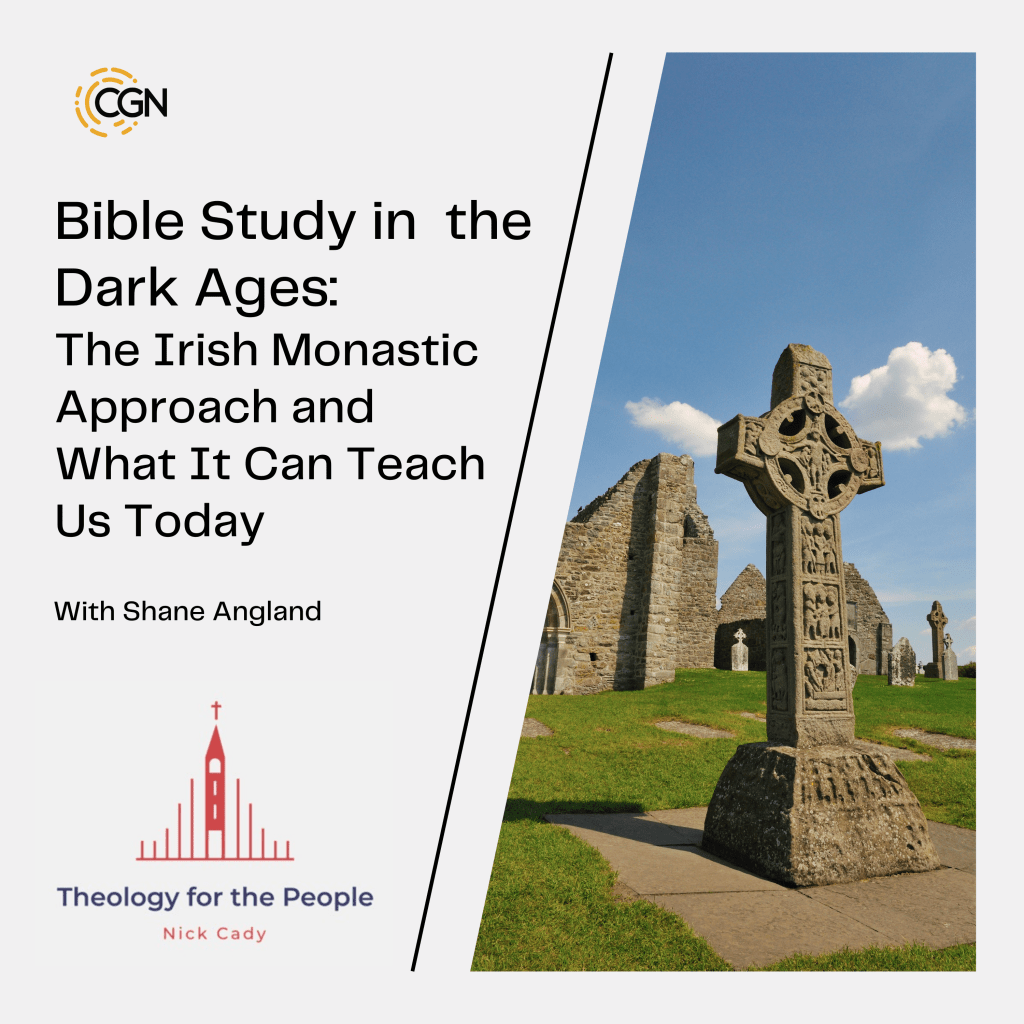
On this episode of the Theology for the People podcast, Shane shares some of his research about the Irish monastic approach to Bible study in the “Dark Ages” and what made it unique, as well as what we today can learn from their practices.
Bible Study in the Dark Ages: The Irish Monastic Approach and What It Can Teach Us Today – with Shane Angland –
Theology for the People
Shane Angland is a teaching elder at Ennis Evangelical Church in County Clare, Ireland. He is a graduate of Dallas Theological Seminary (Th.M.) and holds a BA in History and Politics from the University of Limerick. Shane also served for several years as a missionary in Kharkiv, Ukraine.
On this episode, Shane shares some of his research about the Irish monastic approach to Bible study in the "Dark Ages" and what made it unique, as well as what we today can learn from their practices.
Check out Shane's blog here: http://anglandicus.blogspot.com/
Visit the Theology for the People blog at nickcady.org, where you can read articles and suggest topics for future episodes.
Earlier this month, I travelled to Hungary and Ukraine with a small team of pastors and leaders to put on a retreat for Ukrainian leaders who have been involved in providing aid over the past year since the full-scale invasion of their country.
On the way, I had the opportunity to visit some friends in Hungary, including my friend László (Laci), who pastors in Budapest.
In addition to pastoring a local church, he leads a ministry which helps those caught in human trafficking to escape prostitution and experience lasting freedom.
The south side of Budapest, where Laci ministers, is a working class area, known for high levels of crime and prostitution.
While I was in town, I had the opportunity to sit down with Laci to discuss we discuss the theological foundations for “mercy ministries” and how Laci got involved in practical ministry to the poor and oppressed.
Applied Theology: Ministering to Victims of Human Trafficking in Budapest, Hungary – The Theological Foundations of "Mercy Ministry" –
Theology for the People
László (Laci) is a pastor in Budapest, Hungary. In addition to pastoring a local church, he leads a ministry which helps those caught in human trafficking to escape prostitution and experience lasting freedom.
The south side of Budapest, where Laci ministers, is a working class area, known for high levels of crime and prostitution.
In this episode, we discuss the theological foundations for "mercy ministries" and how Laci got involved in practical ministry to the poor and oppressed.
For more information, visit: Servants Anonymous Foundation
In this episode of the Theology for the People podcast I speak with Jeff Gipe about what the Bible says about wealth, why it is that so many wealthy people are not “whole,” and what the solution is to this problem.
Jeff Gipe is a pastor in Franklin, Tennessee. Previously, he was a successful businessman in Southern California, who left the business world to plant a church in the area where he lived, which happens to be one of the most affluent communities in the world.
Jeff is a graduate of Western Seminary, and has put in a lot of work theologically and practically into thinking biblically about the topic of money and how it relates to God’s vision for human flourishing.
What does the Bible say about wealth? Why is it that so many wealthy people are not "whole" – and what is the solution?
Jeff Gipe is a pastor in Franklin, Tennessee. He was a successful businessman in Southern California, who left the business world to plant a church in the area where he lived, which happened to be one of the most affluent communities in the world.
He is a graduate of Western Seminary, and has put in a lot of work theologically and practically into thinking biblically about the topic of money and how it relates to God's vision for human flourishing.
Visit the Theology for the People blog at nickcady.org, where you can read articles and suggest topics for future episodes.
A few weeks ago, I had the pleasure of traveling to Chisinau, Moldova, to visit Steven and Teresa Yeats, friends of mine who have been missionaries in Eastern Europe for many years.
Steven is a pastor and a church planter, but a few years ago he started a business in Moldova, and in this episode of the Theology for the People podcast, he talks about the spirituality of money and the reasons for considering doing business as a form of mission.
We talk about sustainable church planting and unique needs that exist in the developing (majority) world for jobs to be created so that Christian people who want to be part of what God is doing in their home countries can stay without feeling the need to emigrate.
Additionally, Steven and Teresa share about how the war in Ukraine has affected their lives and their ministry, and how we can be praying for them and for the church in Moldova.
Business as Mission – with Steven and Teresa Yeats, Missionaries in Moldova –
Theology for the People
Steven and Teresa Yeats have been missionaries in Eastern Europe for many years. They currently live in Chisinau, Moldova. Steven is a pastor and a church planter, but a few years ago he started a business in Moldova, and in this episode he talks about the spirituality of money and the reasons for considering doing business as a form of mission. We talk about sustainable church planting and unique needs that exist in the developing (majority) world.
Additionally, Steven and Teresa share about how the war in Ukraine has affected their lives and their ministry in Moldova. Finally, they share how we can be praying for their ministry and the church in Moldova.
Make sure to check out the Theology for the People blog at nickcady.org
In this episode, we discuss the topic of prayer and the Lord’s Prayer specifically.
The Lord’s Prayer is a beautiful, subversive prayer given to the church by Jesus. It forms our imaginations and—given time—transforms us. Dan explains how what you pray shapes what you believe, which in turn shapes how you live.
What was Jesus’ intention in giving us this prayer? Was it to give us a model of how to pray, or was it intended to be given to us as what to pray? Dan and I discuss the historical usage of the Lord’s Prayer, as well as the value and dangers of both praying written prayers and praying extemporaneously.
Dan is a graduate of Denver Seminary, and we discuss some of the cultural uniquenesses of different parts of the United States, and how those affect the way we minister to others.
Dan Marotta is the founding Rector of Redeemer Anglican Church in Richmond, Virginia, and the author of Liturgy in the Wilderness: How the Lord's Prayer Shapes the Imagination of the Church in a Secular Age.
In this episode, we discuss the topic of prayer and the Lord's Prayer specifically.
The Lord’s Prayer is a beautiful, subversive passage of words given to the church by Jesus. It forms our imaginations and—given time—transforms us. Dan explains how what you pray shapes what you believe, which in turn shapes how you live.
Visit the Theology for the People blog at nickcady.org, where you can read articles and suggest topics for future episodes.





 Theology for the People