
The Fat Belongs to the Lord

This Sunday at White Fields I taught 1 Samuel 2 and the story of Hophni and Phineas, the priests who were doing shameful things in the Tabernacle. (Click here for audio of that sermon: “Messed-Up Ministry”). There was a detail of that story that at first seems a bit odd and obscure, but is worth serious consideration.

In 1 Samuel 2:15-17 we read about how the Law required that the fat be burned off the meat before it was eaten. The law about this is found in the Book of Leviticus – and as I mentioned on Sunday, the reason for this is because at that time, the fat of the meat was considered the best, most luxurious part. But God required that when a sacrifice was made as an act of worship, the fat be burned, which would create a lot of smoke and it would be a “fragrant offering” unto the Lord.  Any of you who like the smell of bacon cooking know what I’m talking about. Those of you who are vegans, well, you can eat your tofu bacon and pretend you know what I’m talking about!  

The fat belongs to the Lord

But the idea that the fat belonged to the Lord represented a fundamental belief that we should give the best to God. Many people are in the habit of doing just the opposite – keeping the best for themselves, and giving the rest (the left-overs) to God. Rather than making their offering check the first check they write every month, they wait until the end of the month to see if they have anything left over. God asks that we give him the best, not the rest.

But there’s something else worth taking note of here: when the people in those days gave the fat of the meat to the Lord, they thought they were really giving up a lot – they were really “sacrificing” something, in obedience to God. They were giving up luxury and “the good life”. However, what we now know is that fat kills. At our last men’s prayer breakfast, one man brought a creation called the “bacon explosion” made of various lard extracts which I am convinced reduced my life span by 2 months per bite!
But here’s the point: by telling them to sacrifice the fat on the altar, not only was God teaching them an important values lesson, but he was also sparing them from something which was bad for them, even though they couldn’t possibly know that yet! It would only be thousands of years later that people would realize that God wasn’t only asking them to give something up, he was actually protecting them – even though they didn’t understand it yet, much like all of us parents do with our children.

God is good and all his ordinances – the things he tells you to do and what he tells you to steer clear of – each and every one flows out of his love and care for you.

Ga BleshU

Do you remember that Seinfeld episode where they talked about why we say “God bless you” when someone sneezes? One of them – I can't remember if it was Elain or Jerry – suggested was that instead we should say, “You're so good looking!”, because that would really make people feel better.

I saw this display at Sprouts in Longmont today:

Ga Ble Shu: You know, for when you're not really into God, but you feel like you should say something when people sneeze.

What do you think? Harmless advertising gimmick or a sign of the spiritual climate?


Atheist Mega-churches: What they mean and what we can learn from them

Image
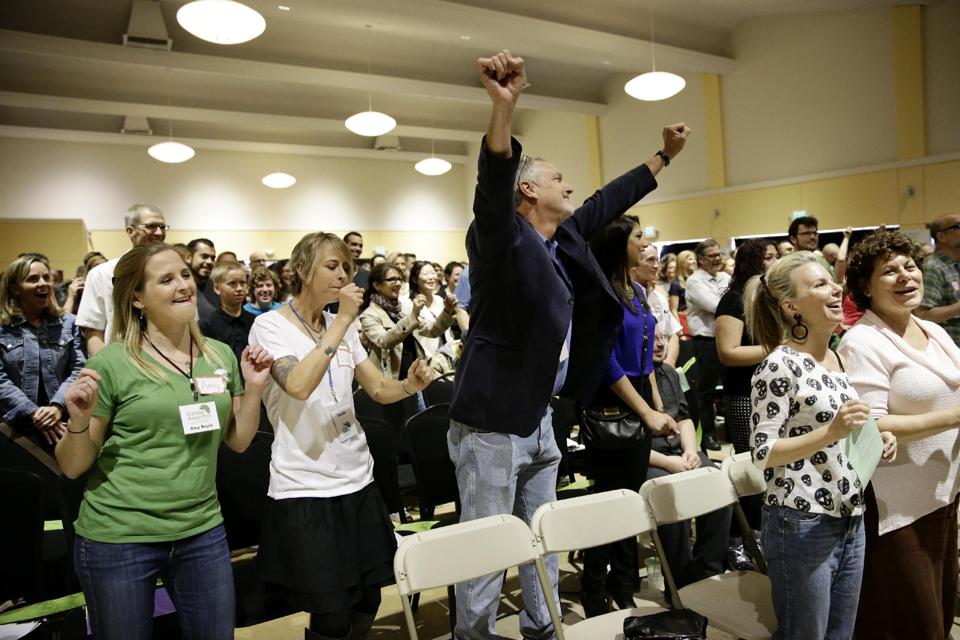
Sunday Assembly in Los Angeles

Recently a new movement has been getting a lot of publicity. Dubbed “atheist mega-churches” – the movement is being spearheaded by two British comedians. They call their meetings “sunday assemblies,” and they have all of the look and feel of a contemporary Christian church service, without one key factor: God.

Co-founders, Sanderson Jones and Pippa Evans have stated that their goal is to export the original concept, first started in London, around the world. They are currently on tour visiting 40 major cities; right now they are in the US, going from New York to Los Angeles, trying to establish Sunday Assemblies and propagating their message of humanist community gatherings.

At these Sunday assemblies, they do everything that your average Christian church does: they sing songs, they drink tea and coffee and chat in the lobby, they raise money for humanitarian causes – they take offerings, and they have a sermon each week! In an interview, Sanderson Jones answered the obvious question of what they preach on if they don’t have the Bible or another “sacred text”. His answer was astounding and something that should cause Christians everywhere some serious consideration. He said that ‘preaching without God isn’t hard at all – after all, most preaching in churches these days is basically tips and strategies about how to be a kinder, more balanced, well-rounded person; we embrace that whole heartedly, and we don’t believe we need God to do that.’

‘preaching without God isn’t hard at all – after all, most preaching in churches these days is basically tips and strategies about how to be a kinder, more balanced, well-rounded person; we embrace that whole heartedly, and we don’t believe we need God to do that.’

Here are my thoughts on these “atheist mega-churches”:

1. Mega-churches? Hardly.

Although they have been dubbed “mega-churches” by the media, if you look at the pictures, you will notice that if this were a Christian church, it would not be qualify as a “mega-church”. Furthermore, let’s not forget that the gatherings getting the most press are the ones in which Jones and Evans are present and leading the meetings – two British celebrities, who have been getting a lot of press attention lately for these Sunday Assemblies. This is a special event, not a church – not a committed community of people, and certainly not a mega-church. Even the original Sunday Assembly is not all that big. I understand that “mega-church” pops out on a page – but let’s make sure we’re not blowing this all out of proportion.

2. Novelty = Media Hype

“Atheist Mega-church” is a novelty of a phrase that grabs people’s attention. Perfect for the media. Is there much substance to it? Will we see this as a growing movement for years to come? I don’t think so. I don’t believe it is sustainable. In fact, if it hadn’t been started by two celebrities, I don’t think it would have ever gotten off the ground. I see this fizzling out in the weeks, months and years to come as media hype wears off and moves on to the next amusing story. The reason why “Christian music and movies” are never as good as the original is simply this: they are not original – they are trying to copy someone else’s idea and put a Christian twist on it. It is often second-rate as a result. This smacks of the same thing, only more so.

3. A Very Important Critique

The quote from Sanderson Jones above is a VERY important critique for Christians, and particularly church leaders. Because here’s the deal: ANYBODY can “do church”! And Sanderson is right – you don’t need God to just get together, drink some bad coffee, sing a few songs and hear an inspiring talk about 10 ways to have your best life now. YOU DON’T NEED GOD FOR THAT! He’s right!

ALL that we have as Christians is the Gospel of Jesus Christ. If we get away from that, then we have become nothing more than a community gathering – in which it doesn’t matter if God is there or not.

Recently I had someone come to our church, and they told me that they had been attending another church previously, but came to realize that the sermons that were being preached could have easily been speeches given at a high school graduation or by a politician. God’s name was mentioned, but if it hadn’t been, it wouldn’t have changed the substance of the message. In other words: it didn’t matter if God was there or not. They were giving tips and strategies for how to be a kinder, more-balanced, well-rounded person – and the fact is, that you don’t need God to do that.

The Gospel of Jesus Christ and the Word of God are what we have as Christians. They are what we should major on, and never neglect in an effort to give practical advice. The Gospel is life-changing and transforming, and we must crank it up rather than water it down. Only then will people really be transformed.

What do you think of these atheist mega-churches and my estimation of them?  Are they just a flash in the pan, or are they here to stay?  And what does this mean for Christianity and society in general?