
Shayne Smith, the Problems with Progressivism, & the Quiet Revival

As a preacher, I’ve often been impressed with stand-up comedians, especially those who are master communicators. I think that preachers can learn a lot from comedians when it comes to timing, surprise, story telling, and understanding your audience.

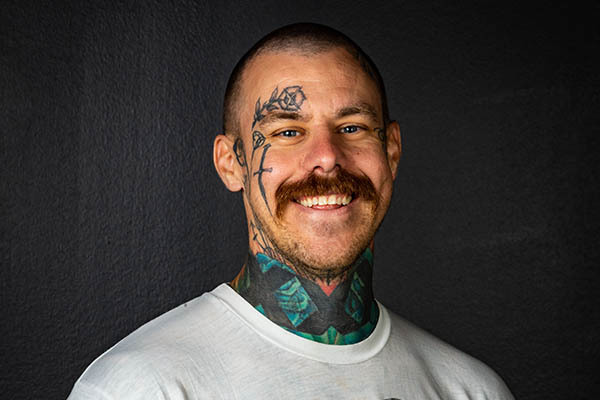
A few years ago, I stumbled upon Shayne Smith, when he did his first special for Dry Bar Comedy – an Utah-based clean comedy company. I enjoyed his cadence and style, so I searched for other videos of his comedy, and looked him up on social media.

What I found wasn’t great. His comedy outside of Dry Bar was raunchy, and from his social media I realized that he lived a very hedonistic bisexual lifestyle. As a result, I unfollowed him online.

However, a few months later, a new Shayne Smith special came out on Dry Bar (“Alligator Boys”), which I knew would be clean, and I really enjoyed it. I shared with my friend Mike, who leads Expositors Collective, a group that trains preachers, that these specials were masterclasses in communication that preachers could glean from – but, I also warned him that I didn’t recommend any of Shayne’s stuff outside of Dry Bar.

A few years later, much to my surprise, Mike sent me a podcast episode, in which Shayne was the guest, and he was talking about how he had converted to Roman Catholicism. In that episode, he shared that he was a singer in a hardcore band, talked about his love of punk rock, and about his newfound faith in Jesus.

Since that time, Shayne has been talking more and more about his faith in Jesus, which is particularly remarkable considering his previous lifestyle.

Last week, my wife and I went to see Shayne live here in Denver; the tickets a gift from Mike. Prior to the show, I came across this video, which I watched, and then shared with several friends. In it, Shayne tells the story of his journey into progressive ideology and lifestyle, and what it was that cause him to see the cracks in its foundations, and how he came to believe in Jesus. I highly recommend the video; it’s incredible!

I’m not Catholic, and I disagree with Shayne’s broad-brushing of “non-denominational” Christians. He strikes me as a young Christian, who isn’t yet overly familiar with Roman Catholicism, nor robust theology, or conservative Protestantism. I do appreciate the charitable work of the Roman Catholic Church, and the fact that they have refused to budge on issues such as marriage and sexuality, and abortion and the sanctity of life. It also strikes me that the way Shayne talks about Jesus as his “Lord and Savior” sounds very evangelical! Personally, I hope he will make that step! And yet, I rejoice to see Shayne believing in and seeking Jesus, and that he has clearly repented of his sins. At the show we went to, he mentioned three times that he had converted to “Christianity.”

One part of Shayne’s testimony that sticks out to me the most is how he realized that Christians are the people who actually do things like loving their neighbors and forgiving those who sin, and that those who follow Jesus tend to be happier and more content.

A Broader Trend

Much has been said in recent months about the changing trends in church attendance, with young men (Gen Z in particular) coming to church in large numbers. We have seen some of this trend in our church, especially in our online offerings, which are consumed mostly by young men. We’ve also seen many coming in person and seeking the Lord.

Anecdotally, friends of mine who are pastors, have reported similar trends. I have also seen it amongst my teenage son’s friends. It seems that many young people, particularly young men, have become fed up with, and seen the hypocrisy and flaws of the progressive policies which have been pushed on them from schools and public institutions for years, and they are pushing back and seeking for something that tells the truth, is based in really, and calls and challenges them to transform and become better.

Recently, I got to interview Justin Brierley of Premiere Christian Radio in the United Kingdom for the CGN Podcast, about his new book, The Surprising Rebirth of Belief in God: Why New Atheism Grew Old and Secular Thinkers are Considering Christianity Again, and the anecdotes and research behind it. You can listen to that episode here:

From Doubt to Faith: The Quiet Revival – with Justin Brierley The CGN Podcast

In this episode, hosts Nick Cady and Brian Brodersen talk with Justin Brierley — author, broadcaster, and longtime host of the Unbelievable? show and podcast from Premier Christian Radio in the UK. Justin shares about how, after decades of hosting debates between Christians and skeptics, he sees signs that belief in God is growing — especially among young people. We talk about the decline of the New Atheist movement, stories of unexpected conversions, and the surprising hunger for faith in today’s culture.📚Discover Justin’s books: The Surprising Rebirth of Belief in God and Why I’m Still a Christian🎧 Listen to his podcast: The Surprising Rebirth of Belief in GodLearn more about CGN: cgn.org

This trend has been dubbed by some as “The Quiet Revival,” based on a report from the UK Bible Society.

Justin Brierley recently stepped down from hosting the “Unbelievable?” show, which he hosted for 17 years, to start this new project, which also involves a podcast and social media videos. Check out The Surprising Rebirth Podcast to hear more discussions and stories about this phenomenon.

How about you – are you seeing this trend where you are?

Let’s pray that God draws many young people to himself! Just as we rejoice in the current surge, we also desire to see a prolonged revival! May the Lord bring more people into churches, and may churches be prepared to make disciples!

When War Scatters the Church: Lessons from Ukraine – with Sharon Markey

In this episode of the Theology for the People Podcast, I speak with Sharon Markey — missionary, pastor’s wife, and author of the forthcoming book Finding Home Again.

Sharon shares her family’s story of serving in Ukraine for nearly two decades, planting churches in Kyiv, and how the war suddenly uprooted their lives.

We discuss:
• What it means to be a refugee and how displacement affects faith and identity
• The church’s role in caring for hurting and displaced people
• How Ukrainians are bringing gospel light into post-Christian Europe
• The reality of life in Ukraine today and how Christians can pray and help
• Sharon’s hope for her new book and how it can inspire compassion and faith

👉 Learn more about Sharon’s book at sharontmarkey.com
👉 Support their ministry: bridgeua.org

Follow Theology for the People on YouTube⁠https://www.youtube.com/@theologyforthepeople

Click here to listen to the episode, or listen in the embedded player below.

When War Scatters the Church: Lessons from Ukraine – with Sharon Markey Theology for the People

In this episode of Theology for the People, Nick Cady talks with Sharon Markey — missionary, pastor’s wife, and author of the forthcoming book Finding Home Again. Sharon shares her family’s story of serving in Ukraine for nearly two decades, planting churches in Kyiv, and how the war suddenly uprooted their lives.We discuss:What it means to be a refugee and how displacement affects faith and identityThe church’s role in caring for hurting and displaced peopleHow Ukrainians are bringing gospel light into post-Christian EuropeThe reality of life in Ukraine today and how Christians can pray and helpSharon’s hope for her new book and how it can inspire compassion and faith👉 Learn more about Sharon’s book at sharontmarkey.com👉 Support their ministry: bridgeua.orgNew episodes release every Monday. Subscribe so you don’t miss future conversations!

I have recently started posting more on the Theology for the People YouTube channel. You can watch this interview on video here:

Colorado Bill Takes Aim at Christian Parents

Here in Colorado a piece of legislation—House Bill 25-1312—is moving through the State Legislature under the banner of protecting transgender individuals. However, this bill poses significant risks to parental rights, especially for parents who hold a biblical view of human identity, design, and flourishing.

The bill has already passed the Colorado House of Representatives and is now before the State Senate. If it passes that, it will go to the desk of Governor Polis to be signed into law.

The Centennial Institute at Colorado Christian University strongly urges the Colorado Senate to vote ‘No’ on the proposed bill. “HB25-1312 sets a dangerous precedent by punishing those who live out their biblical convictions,” said Greg Schaller, Centennial Institute director.[1]

What the Bill Says

Among other things, HB25-1312:

  • Directs courts in child custody cases to consider behaviors such as deadnaming (addressing someone using their birth name) or misgendering (referring to someone by their biological pronouns) as forms of “coercive control.”
  • Prohibits Colorado courts from recognizing laws from other states that restrict access to “gender-affirming care” (hormone treatment and surgery) for minors without parental consent.
  • Frames a parent’s hesitance or objection to gender transitions as potentially harmful conduct in custody disputes.

What Does This Mean?

1. Loving Parents Could Lose Custody of Their Kids for Holding Biblical Convictions
A Christian parent who lovingly urges their child to embrace the gender which aligns with their biological sex, or does not sign off on making irreversible decisions like hormone therapy or surgery, could be accused of “coercive control” for upholding their biblical convictions, and have their children taken away.

2. Parental Disagreement Could Be Treated as Abuse
HB25-1312 equates disagreement with harm, if parents do not affirm the child’s new name or identity. These legislators are trying to define what constitutes a child’s “best interest,” taking that decision away from parents – not to mention that they are defining the child’s best interest based on a particular ideology. If someone doesn’t share their ideology, they are deemed to be abusive and not acting in the child’s “best interest.”

3. It Sets a Precedent Against Religious Belief
Christians believe biological sex is part of God’s design. To force parents to affirm something that they believe to be untrue puts them in a moral bind: give up their convictions or lose custody of their kids.

What Can Christians Do?

1. Read the bill

2. Contact State Senators
You can find your Colorado State Senator’s email address here.

3. Sign this Petition for the State Senate and Governor Polis to veto the bill

4. Pray that this bill does not get passed

Israel at War: How to Pray and How to Help

Recently, in light of the October 7 attack in Israel by Hamas terrorists, many people have been curious how to think about these events from a biblical perspective, as well as how they should pray, and if there are any ways that they can help.

How to Pray

These are just a few of the many ways to pray:

  • Pray for the peace of Jerusalem (Psalm 122:6)
  • Pray for the victims of the terrorist attacks, the injured, those taken hostage, the families of those killed or held captive, and those who live in fear of attack or injury
  • Pray for the innocent civilians who are being impacted by the conflict
  • Pray for justice to prevail
  • Pray for the safety of Jewish people around the world who are being targeted, as anti-semitism has seen a sharp rise
  • Pray for the many Christians in the West Bank and the estimated 800-1000 Christians living in Gaza

How to Think About These Events from a Biblical Perspective

I shared my views on this in this recent video:

How to Help

For those looking for a good Christian ministry to support in Israel, Netivah Ministries was recommended by a pastor friend who says that he knows this group personally and recommends the good work they are doing. Here is a recent update and video from them:

Dear Friends!
It has been a month since the horrific Saturday on the 7 of October, and many of you have been asking how we are coping, praying for our safety and contributing to the work we are doing here.
THANK YOU SO MUCH!
We are blessed, encouraged and strengthened by all your support.
We also know that during these days the most important thing is to be a light and a voice of hope in these dark times, encouraging our loved ones that are on the front line, those that have been displaced, and sharing the hope to our people that are hurting and confused.
Four of our NETIVAH team have been called up and the rest of us are working to be effective and supportive for the Body of Yeshua, for the displaced families and for our young men and women in the service.

Thank you for your Prayers, Concern and Support during these days.
Yours in Yeshua,

What Has Happened to Me Has Really Served to Advance the Gospel

I saw a Christmas ornament advertised online today: a dumpster fire with 2020 written on it. 2020 has been a year filled with difficulty, frustration, tension, and sorrow, to the point where people are apt to say that they are “over it.”

In his letter to the Philippians, Paul said something incredible, especially when you consider the circumstances in which he wrote it:

I want you to know, brothers, that what has happened to me has really served to advance the gospel

Philippians 1:12

This statement is particularly surprising when you consider what things Paul is referring to here that had happened to him:

What Had Happened to Paul?

When Paul wrote this letter to the Philippians, he was being held as a prisoner in Rome.

Prior to his arrest, Paul had spent years traveling around the Roman Empire as missionary: preaching the gospel and starting churches, and training others to do the same. But then, some people who wanted to hinder Paul’s work and hinder the spread of the gospel, started spreading fake news that Paul was an anti-government revolutionary. As a result, Paul was arrested.

While under arrest, Paul was no longer able to travel the world to advance the gospel. Because of corruption in the judicial system, Paul was left in prison for several years, until he appealed his case to the Roman supreme court, which is how he came to be in Rome at the time when he wrote to the Philippians. Paul was under house arrest, awaiting trial, and chained to Roman soldiers 24 hours a day.

With those details in mind, consider again what Paul wrote to the Philippians:

I want you to know, brothers, that what has happened to me has really served to advance the gospel

Philippians 1:12

The things which had happened to Paul were:

  • The loss of his freedom
  • False accusations
  • Suffering at the hands of corrupt officials.

It would be easy to look at those circumstances and conclude that these things which had happened to Paul were preventing him from advancing the gospel, but Paul says, “No. Everything that has happened to me has actually served to advance the gospel.”

Being under house arrest had obvious limitations, but it also afforded Paul some unique opportunities.

One of those opportunities was: down time, and Paul used that time to pen four letters under the inspiration of the Holy Spirit which are now part of our New Testament canon, and for the past two millennia have been used by God to bring encouragement and instruction to those who read them.

Another unique opportunity this situation gave him, was that Paul was chained to members of Caesar Nero’s Imperial Guard for 24 hours a day, the soldiers being changed out on shifts. Rather than seeing himself as restrained, however, Paul viewed this as an evangelist’s dream! It wasn’t that he was chained to soldiers, Paul thought, but those soldiers were chained to him! For hours at a time, he had a soldier’s undivided attention, and when their time was up, a new soldier would be brought in and chained to him. Paul viewed himself as a missionary to those people in that place. I imagine Paul’s biggest struggle must have been finding time to sleep because he was so excited to make new friends and tell them about Jesus.

Some of these guards, Paul tells us, were becoming Christians. If Paul had not been in custody, but had rather knocked on the door of Caesar’s Palace and said, “Hi, I’m Paul, I’d like to talk to you about your sins and convert you to Christianity,” they would have slammed the door in his face, but because of what happened to him: the injustice, the slander, and the corruption, Paul now had unique opportunity for the furtherance of the gospel which he could not have had otherwise.

Paul was able to see the opportunities in the midst of the calamity, and he wanted his readers to develop that mindset as well.

Paul’s Mindset In Our Situation

The events of this past year have been difficult and uncomfortable for all of us, from the pandemic, to the racial and political tensions, the economic hardships, the isolation, and the online fatigue. But how would the Apostle Paul have looked at this situation, and how would he, under the inspiration of the Holy Spirit, have encouraged us to view these circumstances? Would it not be to view them through the eyes of faith, knowing that all of these difficulties have presented us with unique opportunities for the furtherance of the gospel, and that “what has happened has really served the furtherance of the gospel”?

God has placed us who are believers here for such a time as this. May we be faithful to steward this great gospel message in a world that needs it, and may we see the opportunities in the midst of the calamity for the furtherance of the gospel.

Chinese Conviction & American Apathy

Image result for chinese christianity

In 2018, the Chinese government acted to crack down on unregistered Christian churches. These churches are sometimes called “house churches,” which is a misleading term, since many of these churches have hundreds, even thousands of members and own their own buildings.

Chinese law requires Christians to worship only in congregations registered with the Three-Self Patriotic Movement, a government-sanctioned organization which manages churches. Millions of Chinese Christians meet in unregistered churches which defy these government regulations, seeing them as compromising the church, especially considering the Communist government’s atheistic agenda.

Over the past few months, the Chinese government has stepped up their persecution of Christians by destroying crosses, burning Bibles, confiscating religious materials and closing churches, even demolishing their buildings, as can be seen in this video:

https://www.youtube.com/watch?v=cOP_wc0R3P8

In December 2018, more than 100 Christians who attend a Reformed church in Chengdu were arrested and charged with “inciting subversion of state power.”

Chinese Conviction

The pastor of that church, Wang Yi, a former human-rights lawyer and law professor, who has been an influential intellectual in China, issued a statement along with other Chinese Christian leaders titled: “My Declaration of Faithful Disobedience,” in which they stated that they would not cease gathering together for worship and studying the Bible.

Additionally, around 500 Chinese Christian leaders have signed a document called “A Declaration for the Sake of the Christian Faith,” in which they stated that they were prepared to bear all losses, even the loss of their freedom and their lives, for the sake of the gospel.

For Chinese Christians, gathering together for worship and Bible study is an act of resistance and social disobedience. It brings with it the possibility of arrest, punishment and persecution. And yet – believers are resolute: they will not stop gathering for public worship services, no matter what the cost.

American Apathy

At the same time, on the other side of the world, the American church is seeing a rising wave of apathy.

Some of the reports of the decline of Christianity in the United States are misleading, as I’ve written about here: Is Christianity in Decline? Yes and No. – Part 1 & Part 2.

However, other reports show that while reports of the decline of Christianity in the US may be overstated, there is a growing sense of apathy in regard to church attendance.

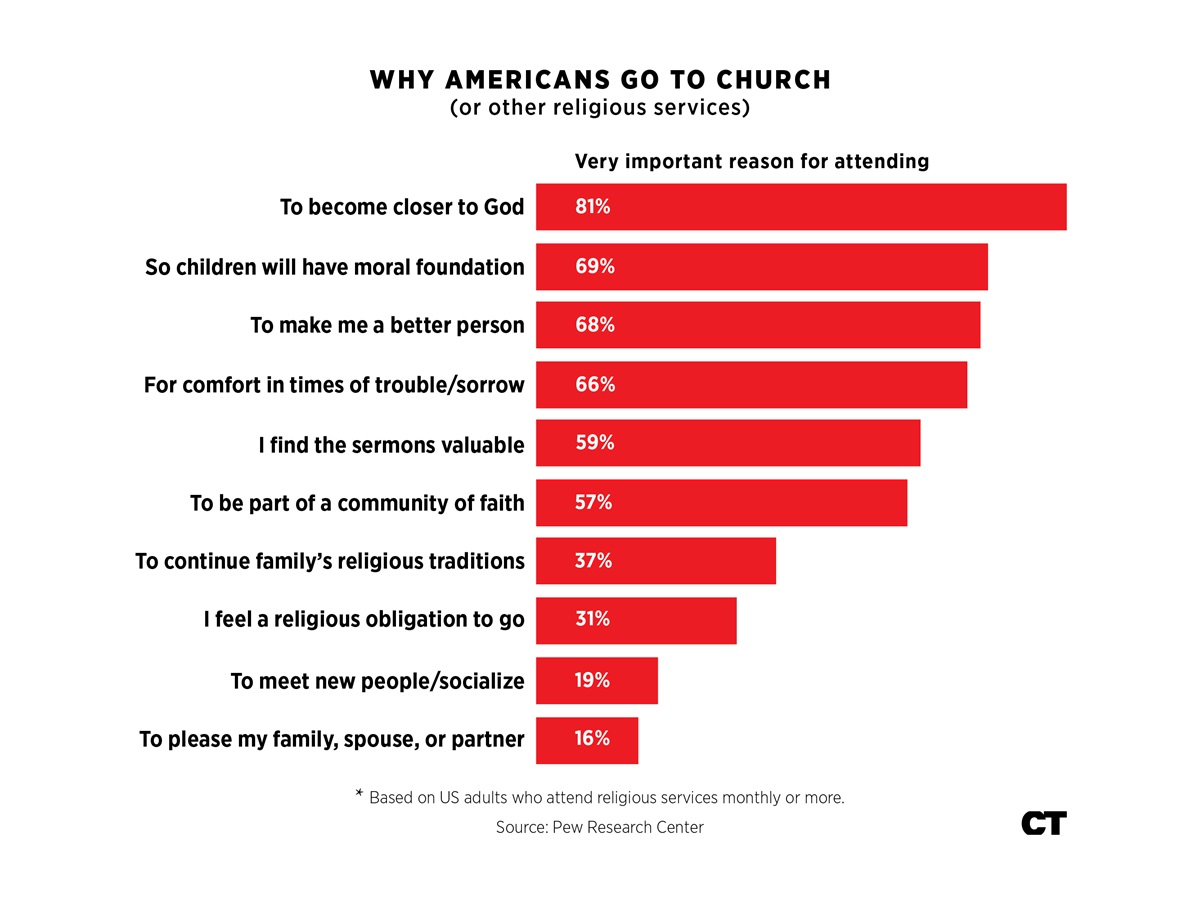
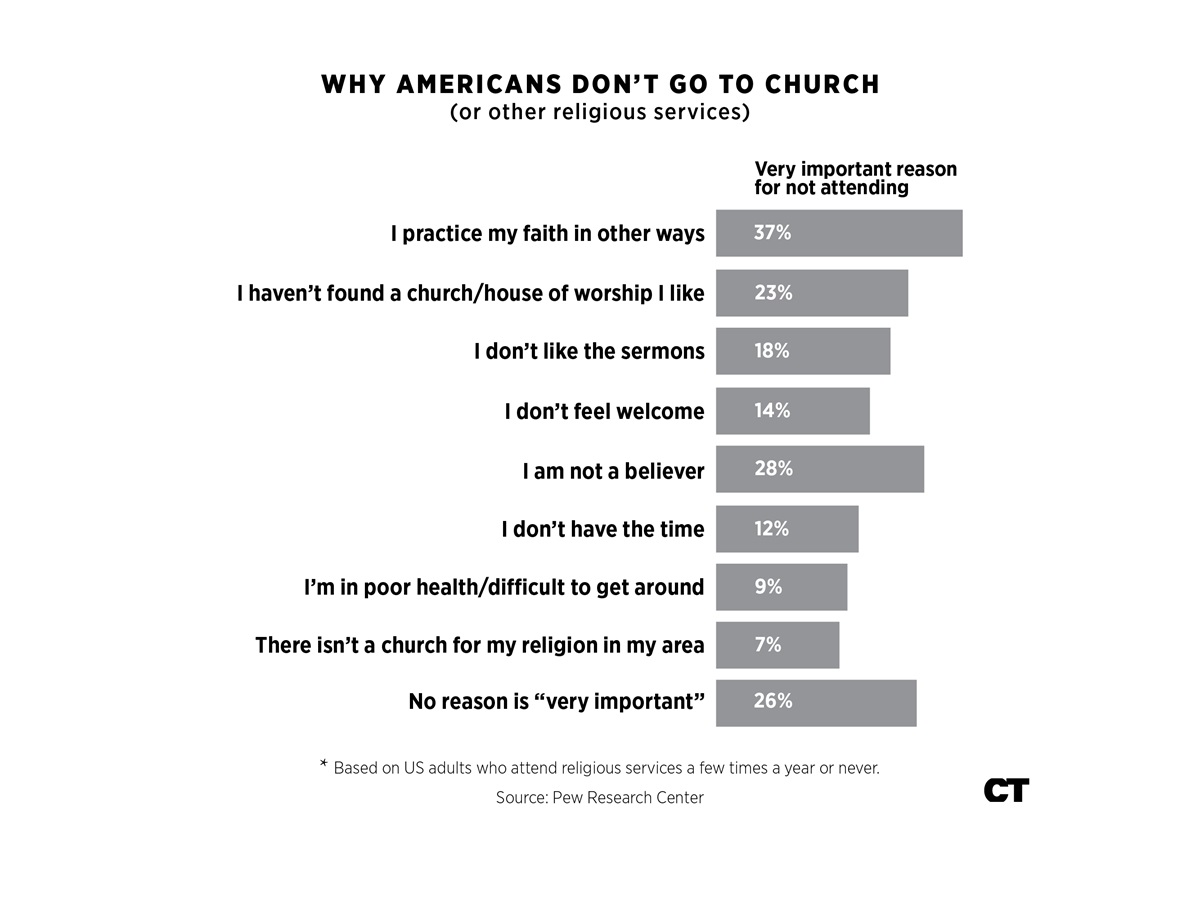
Christianity Today recently published these infographics based on data from Pew Research Center:

image.pngimage.png

Read the full report here: Pew: Why Americans Go to Church or Stay Home

Two significant things that these infographics reveal: 1) Americans view Christianity as being important for the purpose of moral formation, 2) Americans tend to think that church is superfluous when it comes to Christian faith.

The Irony

Comparing the Chinese situation with the American one, what we see is that the people who stand to lose the most from going to church (the Chinese) are the most resolute in doing so, even though doing so will likely hurt them financially, socially, and even physically. Conversely, those who have the most freedom and stand to lose nothing are the most apathetic about public worship.

Whereas many Chinese Christians see gathered worship as central to their faith, something they absolutely cannot give up or do without, and an act of resistance – many American Christians see it as extraneous.

Who is Right?

I believe that we in the West can afford to learn something from our brothers and sisters in the East.

Christianity was formed and grew in the crucible of persecution, and perhaps the worst thing for Christians is to experience such ease and comfort that we lose the understanding that following Jesus is a radical and subversive thing in this world.

Perhaps the greatest danger our faith can face is not direct persecution, but patronizing “pats on the head” and people thinking that Christianity is “nice”.

Sinclair Ferguson has put it this way:

“We are not saved individually and then choose to join the church as if it were some club or support group. Christ died for his people, and we are saved when by faith we become part of the people for whom Christ died.”

Recently I read an article by Simon Chan from the theological journal Pneuma, in which he very astutely wrote this:

[Western Christians] have a very weak sociological concept of the church. This has two negative consequences. First, the church tends to be seen as essentially a service provider catering to the needs of individual Christians. Rarely are individuals thought of as existing for the church. When the church is seen as existing for the individual, then the focus of ministry is on individuals: how individual needs can be met by the church. But when individuals are seen as existing for the church, the focus shifts from the individual needs to our common life in Christ: how we as the one people of God fulfill God’s ultimate purpose for the universe, namely, to glorify and enjoy God forever.

Chan is challenging us to ask the question: Contrary to our consumeristic mentality, isn’t it actually true that the church does not exist for us as much as we exist for the church, and the church exists for God?

I believe that we in the West can afford to look to the East and learn from our Christian brothers and sisters in China about the importance of gathered worship.

New Feature: Ask a Question or Suggest a Topic

A lot of the topics that I write about here are inspired by conversations I have or questions I’ve received from readers.

In order to better serve you with content that is relevant to questions that you have about the Bible, culture or current events, I created a new page with a form that can be filled out to submit a question or suggest a topic.

You can access it from the menu or by clicking here: Ask a Question or Suggest a Topic

Brett Felton: US Veteran Fighting ISIS and Defending Christians in Iraq

60 Minutes aired a report this past weekend on the Christians of Northern Iraq, and how they are being persecuted by ISIS. It is terrible and tragic, and something the whole world needs to hear about. Take a few minutes to read this report. This is an event of historic proportions: books and churches which have existed since the early days of Christianity are being destroyed. A Christian community is being eradicated.

If we think back on the actions of Hitler in Europe and reflect on what Christians should have done, we must open our eyes to realize that something similar is happening in our day in the Middle East to Christians. What will the world do? What can be done?

One American Christian, Brett Felton, came to the conclusion that the right thing for him to do, as a former US soldier who fought in Iraq, was to return there to help the Iraqi Christians defend themselves. 60 Minutes posted this video report about him. Check it out.

Brett is over there, not hunting ISIS, but training the Iraqi Christians on how to defend themselves if and when ISIS attacks, and he is standing beside them to fight if and when that day comes.

What do you think about a Christian taking up arms to fight against ISIS?

ISIS is clearly doing something very evil – something that should not be tolerated from any group of people, no matter who they are persecuting.

Considering the circumstances, and the fact that ISIS is functioning as a military group, terrorizing largely unarmed, untrained civilians, I think that what Brett Felton is doing is praiseworthy – putting his life on the line to help civilians protect their families and their ancient civilization from an evil assailant.