The Etymology of God

I enjoy linguistics; I consider it a hobby. I speak only 2 languages fluently, and several others to varying degrees. Whereas some people find language learning tedious, I find it invigorating.

One of the areas of linguistics I enjoy most is etymology: the study of the origin of words.

Etymology gives you a window into the thinking of a culture or a people group.

For example: I have been teaching a church history class at White Fields, and last week we were talking about how Constantine, before his conversion to Christianity, had monotheistic leanings and had declared “the venerable day of the Sun” (Sunday) to be a free day, on which no one was to work. Until that time, Sunday had been a work day, and Christians gathered for worship and the taking of the sacrament (communion) before work and then again after work, in the evening. More on that here.

Someone in the class said: Oh, so that’s why it’s called SUNday?  Yes, and in English that’s why it’s called Monday (Moon) and Saturday (Saturn).

In fact, it is interesting to consider the etymology of the names of the week in other languages. In Russian, Sunday is called: Воскресенье, which is a close derivative of the word воскрешение, which means “Resurrection”.

In Hungarian, it’s not quite as cool: Sunday is “Vasárnap” – which no doubt derives from “vásár-nap”: “Market Day”… Definitely not as cool (or as Christian) as “Resurrection”. While Romans were all about honoring the Sun, Hungarians were all about shopping…

But if etymology gives insight into the way a culture thinks, then what can we learn from the etymology of “God”?

The English word God, does not derive from the word “good”, as one might think, but comes from the Germanic Gott, which derives from the Gothic Gheu, which is thought to derive from the Sanskrit: Hu – meaning: “the one who is invoked” or “the one who is sacrificed to.”  It refers to the supreme being.

The Latin Deus, along with the related Greek Theos comes from the Indo-Iranian Deva/Sanskrit Dyaus, which are related to the terms for “to give light”, “to implore”. It is from these roots that the Spanish Dios comes.

In Hungarian, the word for God is Isten.  I’ve been told that this modern form derives from:  Ős-tény – literally: “The ancient truth (or: ancient fact)”

One of the very interesting things to read about is how different missionaries tried to find a given culture’s word for God, sometimes with great success and sometimes without. For example, in Korea, Catholic missionaries believed that the Koreans had no good word for God – as in, the Supreme Being of the universe – so they used the Chinese word for God, a word which was foreign to the Koreans, and which caused the Koreans to think of Christianity as a foreign religion. It was only when Protestant Presbyterian missionaries came to Korea, that they got to know the Korean culture and language well enough to realize that they did in fact have a word (and therein a concept) for the God of the Bible: the creator and sustainer of all things, the righteous judge of all the Earth – 하나님 (Hananim).

It is as Paul the Apostle said: God has not left himself without witness in any culture, or amongst any group of people. (Acts 14:17)  Etymology gives us a window into this truth.


Why Studying Church History is Important

christian-history1

Something we’ve started recently at White Fields is a series of classes we’re calling: School of Ministry and Discipleship.

The idea is that have started offering a series of 5-week Christian education classes on various topics in a classroom setting. I like to think of it as Bible college for people who don’t have time to go to Bible college.

We ran a test of this last spring, learned a few things, and are ready to start again with our first 3 classes: Christianity 101 and Church History: Parts 1 & 2.

Interestingly, the Gospel Coalition just put out an article this week titled: The Role of History in Reclaiming the Christian Mind.

Here’s an excerpt:

“One of the besetting sins of evangelicalism is a mostly ahistorical approach to theology and praxis. As evangelicals, we appeal to the supreme authority of Scripture, and rightly so. But we don’t read our Bibles in a vacuum.”

Understanding God’s working in and through the church over the past 2000 years, as well as how Christianity developed in doctrine and practice is important for us as Christians today. For me, studying Christian History was one of the most enriching and enlightening parts of going to seminary, and I hope to share some of that with other people.

If you live near Longmont and would be interested in attending these free classes, they will be held on Sundays at noon starting April 3.

For more information or to sign up, click HERE.


The History of Lent & the Lost Celebration

ash-wednesday-cropped

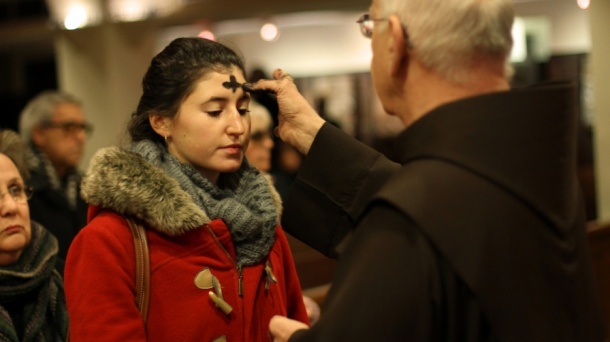
I grew up going to a Lutheran school until 8th grade, and one of the highlights of the year was Ash Wednesday, the first day of the season of Lent:  the 40 days leading up to Easter, which is a time of fasting and self-denial in preparation for Easter. On Ash Wednesday we would have chapel service and would get to walk to the front of the church and have ash put on our foreheads in the shape of a cross. Today as I was out around town, I noticed people with these ash crosses on their heads.

Lent is a tradition which predates all Christian denominations, but today is practiced mainly by Roman Catholic, Anglican/Episcopalian, and Orthodox Christians. However, Lent is more and more popular among evangelical Protestants, some of whom long for connection to the rich history of Christian tradition. I ran across a plethora of articles today from sources like Relevant and Christianity Today recommending that evangelicals would benefit from the practice of Lent. I tend to be inclined this way myself: to appreciate and want to be connected to Christianity’s rich traditions and to embrace the meaningful symbolism.

However, I have changed my thinking in recent years about Lent in particular. In seminary I took a course about the history and development of Christian worship. Here’s what I discovered about the development of Lent:

In the earliest days of Christianity, the time recorded in the Book of Acts, it is clear that new converts to Christianity first came to faith and then were baptized. As time went on, Christians began to feel that it was important that not only faith precede baptism, but instruction also. So they began to require believers to go through a period of instruction in Christian doctrines (catechism) before they could be baptized.

Several early Christian writings indicate that new believers would be baptized on Easter, which from the earliest days of Christianity was the chief Christian celebration. One of these writings that mentions baptisms of new believers being practiced only on Easter is from Tertullian, who argues that baptism need not only be practiced on Easter.

The number 40 held special significance for the early Christians because of the significance of the number 40 in the Hebrew scriptures, and so the 40 days leading up to Easter were the days of preparation, instruction and consecration for those who were getting ready to be baptized on Easter.

Easter itself, for the first 400 years of the church, was a feast that did not last only one day, but which began on Easter Sunday and lasted for 40 days. During that 40 days, people were forbidden from fasting, as well as from kneeling when they prayed, as kneeling is a posture of contrition, and these 40 days were set aside for the express purpose of celebrating the new life, the forgiveness and the redemption that we have because Jesus rose from the grave. It was a 40 day season of joy.

But here’s what changed: in the 4th Century, paedobaptism (child or infant baptism) became the norm. Paedobaptism was already a practice of some churches before that; Tertullian, in his On Baptism (circa 200), mentions that some churches practiced it and others did not, but that it was becoming increasingly popular in his time.

The reasons for the rise of paedobaptism were:

  1. Questions about how those who were born into and raised in Christianity should be initiated into the faith, and how this relates to the Old Testament model of a people in covenant with God.
  2. The emergence of Christendom as Christianity had become the official and dominant religion of the Roman Empire, so to be a citizen of the Empire was equated with being “Christian” and it was presumed that everyone who was a citizen of the empire was a Christian.  This view prevailed throughout the medieval period in Europe and was perpetuated by the magisterial Reformers.
    (I have written more on the subject of Christendom here)
  3. The formulation of the doctrine of ‘original sin’ by Augustine of Hippo, which gave many people a rationale for baptizing infants. The reasoning was that since the Nicene Creed declares that there is ‘one baptism for the forgiveness of sins’, that infant baptism remitted original sin (something Augustine did not teach, but which led to parents wanting to have their babies baptized as soon after birth as possible). Thomas Aquinas also taught that baptism removed the guilt of original sin; however, this teaching was rejected by Luther and other Reformers and is not held by all modern adherents of paedobaptism.

But here’s the issue that paedobaptism brought up in the church: If you baptize babies, then you can’t instruct them before you baptize them, because they’re infants… So what do you do with the 40 day period of consecration and preparation leading up to Easter? Hmm…
Here’s what they did: they decided to make this a time of all believers consecrating themselves to God in preparation for Easter, and catechism was moved to adolescence and paired with a confirmation of one’s faith/baptism.

So, here’s what you had at that point:  40 days of consecration to God before Easter – EASTER – 40 days of celebration of salvation and new life after Easter.

But then, guess what happened with time: We kept one 40 day observance and dropped the other. And which one did we choose? Not the celebration, but the consecration… and over time that consecration became more and more dour and focused on self-denial, penance and contrition.

James White writes:

It is perplexing why Christians have forsaken the season of rejoicing in exchange for the season of penance.

Particularly during the medieval period (and vestiges of this remain in our day in some places and to some degree) some Christians became more obsessed with the process of Jesus’ death – his “passion” – than with the purpose of his death.

Taking this into consideration, I am less inclined to celebrate Lent. I believe that I should consecrate myself to God every day. Romans 12:1 says – I appeal to you therefore, brothers, by the mercies of God, to present your bodies as a living sacrifice, holy and acceptable to God, which is your spiritual worship. 

However, I do believe that the discipline of self-denial is healthy and very much needed for some people, and that setting apart a dedicated time of consecration is both biblical and good.

In the end it gets down to WHY you are practicing Lent. If it is a spiritual discipline through which you draw nearer to God by purposefully setting aside something in order to consecrate yourself in an amplified way for a particular time – then I think that is wonderful and would recommend that you do it.

No matter what – whether you practice it or not – please remember the history, and along with your 40 days of consecration, I encourage you to practice 40 days of dedicated rejoicing in the salvation and new life that Jesus made available to you.

Celebrating what He did for you should take precedence over focusing on what you do for Him.


Advent Meditations: 12 – The Date and Details of Christmas

137199660-e1389118948368

The first Christmas sermon I ever preached was on the topic of whether Jesus was really born on December 25th. My point was that most scholars believe was that Jesus was not born on December 25th, but probably in September, because the shepherds were sleeping outside with their flocks at night, which is not something that would be done in the winter months when it was colder at night. Furthermore, this view is based on the tracking of the stars, which some say would place the North Star in the right place in the sky sometime in autumn.

The first recorded date of Christmas being celebrated on December 25th was in 336AD, during the time of the Roman Emperor Constantine (the first Christian Roman Emperor). A few years later, Pope Julius I officially declared that the birth of Jesus would be celebrated on the 25th December.

Prior to 336AD, December 25th was when pagans celebrated the winter solstice. Constantine took an existing holiday and changed the focus of it and the substance of what was being celebrated. It is remarkable that in the first few hundred years of the church, the main Christian holiday was Easter, when they celebrated the death and resurrection of Jesus. Christmas only began to be celebrated much later on.

However, while that is all interesting information, I somewhat regret having spent the time given me during my first Christmas sermon on this topic. Having had the attention of people on that day, I wish I would not have focused on dates and details, but on the substance of what Christmas is about.

You see – it doesn’t really matter what day we celebrate the birth of Jesus, what matters is the fact of the incarnation. If December 25th is the day that our culture has chosen to celebrate that, then great! I’m happy to celebrate it then or any other time! But if our whole culture is open to talking about it at this time, then what a great opportunity that is to talk about the gospel and the meaning of the incarnation on a day when more people will set foot inside a church than any other day of the year. What matters is not when the incarnation happened, but that it did indeed happen!

There are some people who have a “mentality for the marginal” – a “preoccupation with the peripheral”. They focus all of their time and attention to theories about dates and details, the movement of stars and how exactly the star did lead the magi, or how exactly did the Red Sea split, or how did Jonah survive in the belly of the fish – they are concerned with gathering information on and debating peripheral matters of theology, which are tentative and have very little spiritual significance.

It is not to say that such interests are bad, except when this preoccupation with the peripheral takes one away from a focus on the great central things of the gospel – the holiness of God, the terribleness of sin, the helplessness of man and the love of God; the death of Christ, the resurrection from the dead, justification by faith, the work of the Holy Spirit and the return of Christ and the final judgment. Some people are easily sidetracked from these things by the latest speculations and theories and tidbits regarding things which have little ultimate significance.

What is wonderful about the Christmas story – the story of the incarnation – is that if you will allow it to, it will refocus you onto that which is important. It will help you keep the main things the main things. It re-centers us, by reminding us of the big picture: that the world is under the dark cloud of sin and death, but God, in his love, has sent us a savior: Christ the Lord, who is none other than God himself come to us in  human flesh. And if anyone puts their faith in Him, they will not be put to shame, but they will be saved, justified, forgiven and redeemed, and have life everlasting.


Frontier Church and Beyond

I do my seminary studies in England, and I always find it interesting to read about American culture, politics, etc. from a British perspective.

This semester I’m taking a class on History of Christian Worship, and one part of this describes the development of different ways of “shaping Christian time” in worship.

Here’s an excerpt from my reading about the “Frontier Church model”:

Frontier or Revivalist Groups

This term is used by White to designate a type of Protestant worship widely recognised in North America which spread to the UK. As already indicated, it is a nineteenth-century form of the Service of the Word in which worship became simply equated with evangelism. Its roots were Puritan, Reformed and Methodist, and it was born out of a prevailing spirit of its Victorian times – didactic, stripped-down commonsensical. To meet the challenge of how to mediate Christian faith to the scattered and independent people moving west across the North American continent, evangelists developed a pragmatic, free-style, anti-tradition form. This kind of worship had one purpose and that was to make converts.

The service had a three-part form:

  • 􏰂the warm-up or preliminaries – easy-to-sing emotional hymns;
  • 􏰂 the Word – the sermon, preparing for;
  • 􏰂 the harvest – altar call, an emotional appeal for conversion.

Frontier-type worship is evident in evangelistic ‘crusades’ and in many independent church services and Pentecostal meetings.

Sound familiar?  This gives interesting perspective to the “common” way of doing church in America today.  I know that this is the MO of many mega-churches. However, the question is begged: where is the discipleship? I know of large churches which have no strategy for discipleship beyond their Sunday morning preaching times, which are focused on proclamation of the Gospel with a focus on evangelism.

On the other side of the spectrum, I was speaking this weekend with friends in Canada who told me that the services in their church are focused wholly on the people of God and are not at all evangelistic (something they regretted to admit).

This seems to be one of the big questions: Who and what is the church service designed for? Discipling believers, or preaching to unbelievers for conversion?  But what if everyone is converted already?  Do you just keep preaching the same invitation to receive salvation to the already saved, because there just might be 1 or 2 unsaved people?  Or is it then always an invitation to “re-committ”?  Where does the instruction of believers come in?  Is that really “church”?  BUT – if you never preach and invite people to respond to the call of the Gospel to commit themselves to following Jesus, then what happens when new people come? Is your service simply not for them?

Clearly every church is trying to find this balance. I find that teaching through the Bible systematically, like we do at White Fields, is one of the most effective ways of both instructing believers and giving calls to action and to repentance. I also believe that having Christian instruction outside of the Sunday morning gatherings is an important way of doing this too. One of the things I’d like to start at White Fields is something along this line, because after all, we are called to not only make converts unto Jesus Christ, but disciples of Jesus Christ, teaching them to observe all that He commanded us (Matthew 28:20).