Playing Harps in Heaven? Don’t be Ridiculous

I have been reading CS Lewis’ Mere Christianity along with the men’s group at White Fields Church. I first read the book 18 years ago, and reading it again has been like reading it for the first time.

I came across this quote in the book, which I thought was excellent, in regard to the Christian belief in Heaven:

There is no need to be worried by facetious people who try to make the Christian hope of ‘Heaven’ ridiculous by saying they do not want ‘to spend eternity playing harps’.

The answer to such people is that if they cannot understand books written for grown-ups, they should not talk about them.

All the scriptural imagery (harps, crowns, gold, etc.) is, of course, a merely symbolical attempt to express the inexpressible. Musical instruments are mentioned because for many people (not all) music is the thing known in the present life which most strongly suggests ecstasy and infinity. Crowns are mentioned to suggest the fact that those who are united with God in eternity share His splendour and power and joy. Gold is mentioned to suggest the timelessness of Heaven (gold does not rust) and the preciousness of it. People who take these symbols literally might as well think that when Christ told us to be like doves, He meant that we were to lay eggs.

Lewis, C. S. Mere Christianity (p. 137).

I love his line about if you can’t understand a book written for grown-ups, then you shouldn’t be talking about it!

He says in another place in the book:

Very often a silly procedure is adopted by people who [oppose] Christianity. Such people put up a version of Christianity suitable for a child of six and make that the object of their attack.

When you try to explain the Christian doctrine as it is really held by an instructed adult, they then complain that you are making their heads turn round and that it is all too complicated.

It is no good asking for a simple religion. After all, real thing are not simple.

Lewis, C. S. Mere Christianity (p. 41).

I have found this to be true – not only in regard to discussions about Christianity, but in many debates about many things. People put up a caricature of the other person’s views and then proceed to destroy them. This is sometimes called a “straw man argument”.

It is important that we should not allow people to do that with Christian beliefs, and also that we should not do the same with other people’s beliefs. This is sometimes called “Presuppositional Apologetics” – the idea that you should try to frame the views of your “opponent” in such a way, that they would say, “I couldn’t have put it better myself.”

As Timothy Keller put it recently:


Done with School, and a Few Other Things

I love finishing projects that I start. The only thing is, I also really like starting projects. So I sometimes find myself with several long term projects – but over the past few weeks I've been able to finish up a few of them.

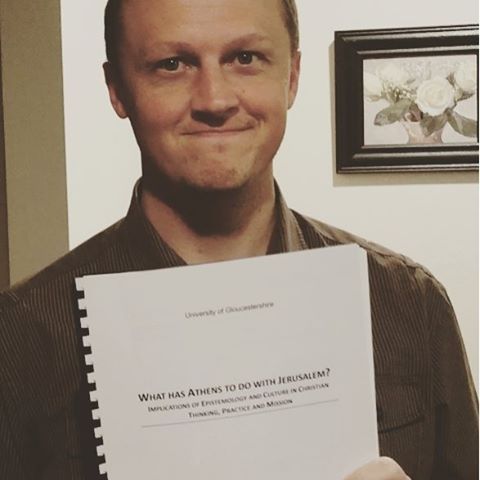
For the past several months I was very busy finishing my dissertation for my theology degree. I started at this university when my first child was the same age as my current youngest child: 5 months old. Now, in completing my dissertation, I am done – at least for now… I would like to continue.

The title of my dissertation: What has Athens to do with Jerusalem? Implications of Epistemology and Culture for Christian Thinking, Practice and Mission

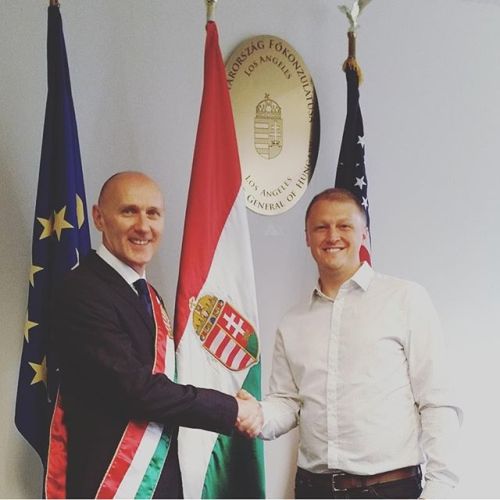
Another thing I've been working on for a while that I was able to complete: During the 10 years that I lived in Hungary I spent a lot of time getting different kinds and levels of residence permits and visas. By the time I left I had permanent residence and a work permit, which I gave up when I moved to the US. No big deal, because I have no plan to move back. But about 2 years ago a friend in Hungary told me that I should look into becoming a Hungarian citizen and that I might meet the requirements for citizenship. I looked into it, and I did – so, a year ago I applied for Hungarian citizenship, and I just found out 2 weeks ago I received it. Last week I traveled to Los Angeles for my naturalization ceremony at the office of the Hungarian Consulate.

Receiving my Hungarian citizenship from Kálmán László, consulate general of Hungary.

I'm not really sure how it will benefit me, but it is meaningful nonetheless. My wife and kids are Hungarian citizens, and I does encourage me to spend more time making sure the kids learn Hungarian and have that identity.

Another long term project we've been working on is getting out of the debt we incurred from the adoption we did. It's been an exercise in budgeting, downsizing and penny pinching, inspired by a Dave Ramsey class, and at the end of June we will have that project complete as well.

I've also finished a few books recently:

The men's group at our church has been going through Mere Christianity by CS Lewis, following a study guide and video series by Eric Metaxas. A lot of the videos refer to Lewis' autobiography, Surprised by Joy, so I picked it up and started reading it. In it, Lewis tells the story of how he became an atheist and then the process by which he turned from atheism to deism and finally to Christianity. “Joy”, spelled with a capital J, is the thing which all people are looking for and get glimpses of throughout their lives in various ways, but which can only be found in and through a relationship with God through Jesus Christ.

Sounds interesting, right? I have to say, Surprised by Joy left me surprised with boredom. I had a really hard time getting through the book, and felt that a lot of the material was indulgent details which had nothing at all to do with the story he was telling. That part though, the story of his journey from a nominal Christian upbringing, to atheism, to deism and finally to Christianity, was truly captivating. The last chapter was particularly good. It's worth reading if you are a CS Lewis fan.

The other book I finished recently was John Steinbeck's The Winter of Our Discontent. I heard somewhere that it is good to read fiction because it fuels creativity and imagination in a way that other media does not. I read a lot of non-fiction, particularly theology books and biographies, and so I want to make sure that I read some good fiction from time to time as well and I have it in mind to read classic novels and literature.

The Winter of Our Discontent was interesting, particularly in how it dealt with moral and ethical issues, as well as issues of contentment, and pressures in society which create dissatisfaction. The novel describes how people often cross their own moral and ethical lines to get what they think they want, and when they get it, they are still discontent and often more miserable that they were before. I think it's a great commentary on society and on the fallen human condition.

Ironically, The Winter of Our Discontent and Surprised by Joy have their core theme in common. The only difference is that whereas Steinbeck didn't answer the question of what it is that human beings are ultimately looking for: the true quest beneath all our quests, Lewis did. And although Lewis' writing style is harder to read, Surprised by Joy actually answers the question posed by The Winter of Our Discontent.


I'm enjoying this season.


Don’t be Decaf

decaf-caffeine

“You are the salt of the earth, but if salt has lost its taste, how shall its saltiness be restored? It is no longer good for anything except to be thrown out and trampled under people’s feet.
“You are the light of the world. A city set on a hill cannot be hidden. Nor do people light a lamp and put it under a basket, but on a stand, and it gives light to all in the house. In the same way, let your light shine before others, so that they may see your good works and give glory to your Father who is in heaven.”   – Jesus
(Matthew 5:13-16)


Was Paul Suicidal?

Recently at White Fields I have been teaching through Paul’s Letter to the Philippians in a study titled, The Pursuit of Happiness.

This past Sunday I taught on Paul’s famous saying: “For me to live is Christ and to die is gain” – and I explained how the gospel gives new meaning to our lives and it redefines what death means for us. Audio of that message can be found here.

In that sermon, I didn’t get to what Paul says after that famous phrase. Here’s the rest:

For to me to live is Christ, and to die is gain. If I am to live in the flesh, that means fruitful labor for me. Yet which I shall choose I cannot tell. I am hard pressed between the two. My desire is to depart and be with Christ, for that is far better. But to remain in the flesh is more necessary on your account. Convinced of this, I know that I will remain and continue with you all, for your progress and joy in the faith, so that in me you may have ample cause to glory in Christ Jesus, because of my coming to you again. (Philippians 1:21-26)

A reader of this blog sent me a message this week about this passage:

I have always wondered if Paul was experiencing a period of depression when he wrote this epistle. What he says in verse 1:22, “yet what I shall choose I cannot tell” even makes me consider that he was in some ways considering “suicide”. I know that sounds preposterous, and I’m not suggesting that he actually thought of killing himself but rather maybe purposely doing something that would result in his death. In todays world it might be called “suicide-by-cop”. It seems as he continues through the remainder of the chapter that he convinces himself that it is better to remain for the benefit of others. It could be that he was just experiencing a time when his death seemed imminent and he was preparing the readers for that eventuality, but I think that he was experiencing a great amount of stress during this time. As always, he was able, through the Spirit, to overcome his stress and turn it into a beautiful, encouraging letter. I believe it probable that all men of great faith experience times of doubt or fear brought on by the enemy.

That’s an interesting thought. Certainly Paul was facing dire circumstances, and I fully agree with the final sentence, but I wouldn’t go so far as to agree that Paul might have been having suicidal thoughts – even to the degree of doing something that might provoke someone else to kill him.

To me, the tone of the letter is one of triumph in the face of harsh circumstances, even death.

I believe that what’s going through Paul’s mind as he writes those words is that he wants to explain something important to the Philippians: That although as Christians, the ultimate hope of the Gospel is the hope of eternal life in paradise with God, that should never minimize the purpose that God has for our lives here on Earth.

This seems to have been a problem amongst some of the early Christians. 2 Thessalonians was written, in part, to let the Christians know that Jesus had not yet returned, that the Parausia, the Second Coming, was still to come – but that as we await Jesus’ imminent return, we should not be inactive;  we should still work hard. That’s why he says:

If anyone is not willing to work, let him not eat. For we hear that some among you walk in idleness, not busy at work, but busybodies. Now such persons we command and encourage in the Lord Jesus Christ to do their work quietly and to earn their own living. (2 Thessalonians 3:10-12)

The context of that, is that the Thessalonians were eagerly expecting the return of Jesus any day – as all early Christians did, and as it seems that Jesus intended all Christians to do, which is the reason for his vagueness about when his return will take place.

The point is this: We should not have a Christianity in which we encourage people to just believe in Jesus and then hang on and wait for death! I think Paul wanted to Philippians to understand that: that Christianity isn’t only about going to heaven when you die, it’s about living this life for Christ – as much as, and as long as possible.

It’s not only that because of the Gospel, DEATH IS GAIN – but also: because of the Gospel, TO LIVE IS CHRIST!

Another reason why I think Paul was not discouraged when he wrote to the Philippians is because he closes the letter by saying:

Greet every saint in Christ Jesus. The brothers who are with me greet you. All the saints greet you, especially those of Caesar’s household. (Philippians 4:21-22)

What this means is that members of Caesar’s household, including the Praetorian Guard (members of which were chained to Paul 24 hrs a day in 6 hr shifts), were becoming Christians through his being there in jail. I think Paul was feeling particularly encouraged after facing years of discouragement prior to this. Finally he was starting to see some fruit and the purpose for which God must have allowed this series of terrible difficulties and injustices happen to him. Many of us may never get to see that in our difficulties, but when we do it helps to encourage us that God is indeed in control and using all of the frayed strands to create a beautiful tapestry.


The Pursuit of Happiness

bible.jpg

The Declaration of Independence contains this famous phrase:

We hold these truths to be self-evident, that all men are created equal, that they are endowed by their Creator with certain unalienable Rights, that among these are Life, Liberty and the pursuit of Happiness.

Happiness is what all people are ultimately seeking.  Including you. Including me. You want to be happy. So do I.

If you really think about it, everything we do is, in one way or another, a pursuit of happiness.

The pursuit of happiness is what motivates people to get married – or not to get married, to have children or not to have children, to choose certain careers or paths in life and not others. It is the reason people abuse substances – and even, as strange as it may sound at first, to commit suicide.

Philosopher and scientist Blaise Pascal said:

All people seek happiness. This is without exception. Whatever different means they employ, they always tend towards this end. The cause of some going to war and of others avoiding it is the same desire in both, attended with different views. The will never takes the least step but to this object (happiness). This is the motive of every action of every man, even of those who hang themselves.
Suicide is the (very misguided!) belief, that one can escape unhappiness here in this life and hopefully find happiness wherever they end up. Still, even this terrible and tragic act is part of the pursuit of happiness.
Sometimes Christians have made a false distinction between happiness and joy. Here is what Joni Eareckson Tada has to say about that:
We are often taught to be careful of the difference between joy and happiness. ‘Happiness,’ it is said, ‘is an emotion which depends on what happens to you (a false etymology).’ Joy, by contrast is supposed to be enduring, stemming from deep within our soul, and which is not affected by circumstances surrounding us. I don’t think God had any such hairsplitting in mind. Scripture uses the terms interchangeably along with words such as “delight” “Gladness” “blessing” – There is no scale of relative spiritual values applied to any of these. Happiness is not relegated to fleshly minded sinners nor joy to heaven-bound saints.

If you ask the average person what they want more than anything else, they will reply:  “I want to be HAPPY!”   “It’s not the only thing I want — but it is at the core of the other things I want.”

If you ask people: “What do you really want for your kids?”  They will say: “I want them to be polite, respectful, successful, responsible” — but why?  Because what they really want is for them to be happy.  The reason they want all those other things for them, is because they believe those things will result in their greater happiness in the long run.
C.H. Spurgeon said this:
My dear brothers, if anyone in the world ought to be happy, we are those people. How boundless our privileges, how brilliant our hopes.
As Christians, in and through Jesus Christ, we have the keys to the happiness we desire and the joy we were made for.
Starting this Sunday at White Fields Church, I will be teaching a series titled: The Pursuit of Happiness, in which we will be studying Paul’s letter to the Philippians with a view of how Paul had the keys to happiness and an indomitable joy even in the midst of dark circumstances.
The graphic art above was done by CryBabyDesign. Check them out for all your graphic design needs.

The Etymology of God

I enjoy linguistics; I consider it a hobby. I speak only 2 languages fluently, and several others to varying degrees. Whereas some people find language learning tedious, I find it invigorating.

One of the areas of linguistics I enjoy most is etymology: the study of the origin of words.

Etymology gives you a window into the thinking of a culture or a people group.

For example: I have been teaching a church history class at White Fields, and last week we were talking about how Constantine, before his conversion to Christianity, had monotheistic leanings and had declared “the venerable day of the Sun” (Sunday) to be a free day, on which no one was to work. Until that time, Sunday had been a work day, and Christians gathered for worship and the taking of the sacrament (communion) before work and then again after work, in the evening. More on that here.

Someone in the class said: Oh, so that’s why it’s called SUNday?  Yes, and in English that’s why it’s called Monday (Moon) and Saturday (Saturn).

In fact, it is interesting to consider the etymology of the names of the week in other languages. In Russian, Sunday is called: Воскресенье, which is a close derivative of the word воскрешение, which means “Resurrection”.

In Hungarian, it’s not quite as cool: Sunday is “Vasárnap” – which no doubt derives from “vásár-nap”: “Market Day”… Definitely not as cool (or as Christian) as “Resurrection”. While Romans were all about honoring the Sun, Hungarians were all about shopping…

But if etymology gives insight into the way a culture thinks, then what can we learn from the etymology of “God”?

The English word God, does not derive from the word “good”, as one might think, but comes from the Germanic Gott, which derives from the Gothic Gheu, which is thought to derive from the Sanskrit: Hu – meaning: “the one who is invoked” or “the one who is sacrificed to.”  It refers to the supreme being.

The Latin Deus, along with the related Greek Theos comes from the Indo-Iranian Deva/Sanskrit Dyaus, which are related to the terms for “to give light”, “to implore”. It is from these roots that the Spanish Dios comes.

In Hungarian, the word for God is Isten.  I’ve been told that this modern form derives from:  Ős-tény – literally: “The ancient truth (or: ancient fact)”

One of the very interesting things to read about is how different missionaries tried to find a given culture’s word for God, sometimes with great success and sometimes without. For example, in Korea, Catholic missionaries believed that the Koreans had no good word for God – as in, the Supreme Being of the universe – so they used the Chinese word for God, a word which was foreign to the Koreans, and which caused the Koreans to think of Christianity as a foreign religion. It was only when Protestant Presbyterian missionaries came to Korea, that they got to know the Korean culture and language well enough to realize that they did in fact have a word (and therein a concept) for the God of the Bible: the creator and sustainer of all things, the righteous judge of all the Earth – 하나님 (Hananim).

It is as Paul the Apostle said: God has not left himself without witness in any culture, or amongst any group of people. (Acts 14:17)  Etymology gives us a window into this truth.


Finishing Up the Trip

Yesterday was our final full day in Ukraine. We spent the day running errands and going around with Ben to look at different properties the church in Svitlovodsk has their eye on to purchase.
Svitlovodsk, with the Dniper river in the background
As part of our support of the ministry there, White Fields donated towards their building project. They currently meet in a 50 square meter (500 square foot) space in an office building, with a few extra rooms for children’s ministry. They estimate that for 60,000 USD they should be able to either buy land and build something from scratch or buy and refurbish a building. Pray for them in this regard.
In the evening we held part 2 of the Work as Worship seminar. Travis taught and then he and I fielded questions on the topic. It went really well and I think that we could easily fine tune this seminar and present it elsewhere. It is a topic which affects all people but something evangelical Christians fail to teach on enough – or to give a comprehensive enough vision for. I look forward to how we might be able to bring this teaching to our church in Longmont.
Travis teaching Work as Worship seminar: part 2 at Calvary Chapel Svitlovodsk

Right after the seminar ended, Levi, the assistant pastor and worship leader, drove Travis and I to Boryspil, where we stayed at a hotel near the airport, and then at 3:30 we woke up and got to the airport by 4:00am.

We had a 5 hour layover in Frankfurt, so we took atvantage of the great public transport here and went into the city. If you’ve been to Frankfurt, you know that there’s not a whole lot to see, so that was plenty of time.

Right now we are in the airport waiting for our flight to Denver. It’s been an extremely fruitful trip, but it will be great to be home.

Here are a few pictures from yesterday and today:

The first rule of cross fit: always talk about cross fit. Apartment building in Ukraine.
Glorious Soviet Air Force Jet in Svitlovodsk
Downtown Frankfurt
…always talk about Crossfit. Frankfurt Stock Exchange
Frankfurt City


Good Times in Eger and a Surpise in Heves

Yesterday we spent the day in Eger. The church here has a car, which we were able to borrow and I was able to Travis out to see the site where we do our English Camp outreach every summer.
A couple from the Eger church, Zakk and Mira joined us and we went to Heves, where in 2010 we started an outreach fellowship which morphed into a gypsy church. Before I left Hungary, this ministry really took off, and it has continued to be a big part of the Eger church's outreach focus.
It was a weekday afternoon, so not everyone was around, but 20 or so people gathered to see us.
While we were there, some people came up to me and showed me their 4 month old baby – a baby they had named after me, Nikolasz, because I had been their pastor! I was blown away and honored and humbled that someone would have felt so impacted by our ministry there that they would name a child after me.
I prayed over their church and over a woman who is sick, and then we came back to Eger, where we met with people from the church there. The church organized an open house for people who wanted to come and see me, and it was a great time of catching up.
Afterwards Travis, Jani and I went out to the thermal bath in Demjén until midnight and talked about life, ministry, church and family before returning to our apartment for the night.
We will see Jani and Tünde again on Friday, because they are coming to Kyiv for the pastors conference I'll be teaching at. Please pray for their family and the ministries they lead in Eger; they are doing well and doing a great job with the church. It has been wonderful to see Jani develop as a pastor over the past 4 years.
Currently we are on the train to Budapest. I have a few meetings today and will teach tonight at Golgota Budapest (Calvary Chapel Budapest), and Travis will be getting together with Németh Laci, the pastor of Golgota Dél-Pest to go see the city and to discuss the ministry Laci leads to combat human trafficking in Hungary. Laci is doing a great work, and we would really like to find out if there is anything we can do to support him and the work he is doing to set people free from modern-day slavery right in his own backyard.

Some of the people we met with in Heves
Little Nikolasz, who was named after me
Communist statue at the site of our English Camp. It says Faithfulness to your nation, Faithfulness to your party!
Hanging out with people from Golgota Eger at Jani and Tünde's house


Follow-up on Bibles for Refugees

A few months ago, when the refugee crisis was at its peak in Europe, White Fields Church collected money to purchase Bibles for refugees, mostly from Iran and Syria, who had come to Hungary and had either become Christians or were interested in Christianity.

Bibles, especially Farsi (Persian) Bibles are expensive and hard to come by, but we were able to send 50 Bibles in various languages to those working on the ground with these refugees. Last summer, my wife Rosemary was able to meet with some of them in Debrecen, before the refugee camp there was closed this November. Since then most of the refugees have been moved to Bicske, near Budapest, and Békéscsaba in South-East Hungary. Those in Bicske are coming now every Monday to Golgota Budapest to learn the Bible and have Hungarian lessons.

The friends of ours in Budapest who help them asked me if Travis and I could come down and meet them today since we were in Hungary and our church had purchased these Bibles for them.

After breakfast with some friends from the Eger church, Travis and I took the train to Budapest, met with some friends at the church, and then went and joined the refugee Bible study, which was in English with translation into Farsi.

After Bible study, I got the opportunity to speak to the group. I told them about how Rosemary and I had spent years doing refugee ministry and we had seen several people from Iran come to faith in Jesus, and how we had also seen some of those people have their lives threatened, one man was attacked and almost killed, for their new faith.

For these people, the Gospel really is a matter of life and death – of all or nothing. As a result of becoming Christians, their lives will be at risk from their fellow countrymen for having converted and they will likely be disowned by their families and communities. However, though they may lose everything for following Christ in this life, they will gain eternal life in the next. Is it worth it? They would say: Absolutely.

One of the men, when they received the Bibles that our church sent them, held it up and said: “In my country I could be killed for reading this! Think about how powerful the message of this book must be that they want to do everything to keep us from reading it!”

One of the things I told this group, was that we were glad that we could provide for them the Bibles that we did, and that if they needed more, we would be happy to provide those also.

After I spoke to the group, I prayed for them. And after the prayer, Lisa, a missionary with Calvary Chapel in Hungary came over and showed me an email she had just received as I was speaking, from the Hungarian Bible Society, that they had located 30 Farsi Bibles, but they weren’t cheap. Lisa showed me the email and asked if I was serious about providing more Bibles…

We said yes, and we were able to purchase 30 Farsi Bibles for these young believers who have never owned a Bible of their own before. One of the men had received a New Testament in his language before, but was eager to read the Old Testament. Another man had received a Bible from us back in September, but had given it away to another man who wanted to read it and needed another one for himself to read.

Can you imagine not having access to a Bible? Or your faith being a matter of life and death? That is what these people face for their decision to follow Jesus.

God is doing a great work amongst these people, and he is going to use them to be evangelists to other refugees in Europe. These people are our brothers and sisters in the faith. Please pray for them and consider ways to support them. The harvest is plentiful, but the workers are few.


Why Studying Church History is Important

christian-history1

Something we’ve started recently at White Fields is a series of classes we’re calling: School of Ministry and Discipleship.

The idea is that have started offering a series of 5-week Christian education classes on various topics in a classroom setting. I like to think of it as Bible college for people who don’t have time to go to Bible college.

We ran a test of this last spring, learned a few things, and are ready to start again with our first 3 classes: Christianity 101 and Church History: Parts 1 & 2.

Interestingly, the Gospel Coalition just put out an article this week titled: The Role of History in Reclaiming the Christian Mind.

Here’s an excerpt:

“One of the besetting sins of evangelicalism is a mostly ahistorical approach to theology and praxis. As evangelicals, we appeal to the supreme authority of Scripture, and rightly so. But we don’t read our Bibles in a vacuum.”

Understanding God’s working in and through the church over the past 2000 years, as well as how Christianity developed in doctrine and practice is important for us as Christians today. For me, studying Christian History was one of the most enriching and enlightening parts of going to seminary, and I hope to share some of that with other people.

If you live near Longmont and would be interested in attending these free classes, they will be held on Sundays at noon starting April 3.

For more information or to sign up, click HERE.