Wesley on Money

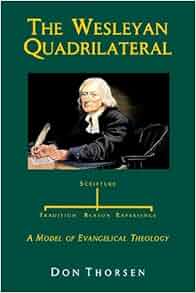
I’ve been reading a book on John Wesley’s theological method for my master’s course, and found an interesting section on his teachings and practice in regard to money.

Here’s an excerpt:

Wesley’s care for people extended beyond their spiritual well-being. In his time he was in the forefront of helping to alleviate the social ills of 18th-century England. His care for souls extended to the whole person, especially among the poor, the uneducated, the sick and the dispossessed – for example, slaves and prisoners.

The poor received special attention. He provided basic medical care and wrote simple medical manuals to help those who could not afford professional healthcare. At Kingswood school he set up a benevolent loan fund for people with immediate financial needs, the only stipulation being that they should repay the loan within three months.

Wesley preached what he practiced. Many sermons were intended to instruct on how to handle money. His best-known sermon dealing with money is entitled “The Use of Money.” In it Wesley exhorted Christians to “gain all you can, save all you can, and give all you can.” Wesley soon discovered that his followers were good at the first two principles, but ignored the third principle against surplus accumulation, which he considered the leading ill of Christian praxis. He was so concerned over the misuse of money and corresponding injustices that he published several sermons specifically warning about the spiritual danger to the person who does not give.

(Thorson, The Wesleyan Quadrilateral: a model of evangelical theology, 53-54)

Several stories are told about Wesley’s passion for good stewardship of money came about. First of all, he grew up in poverty. His father was a minister and John was one of 9 kids.

As a young man, Wesley was accepted into Oxford University. At Oxford, he had just finished paying for some pictures to decorate his room, when one of the maids came to his door. It was a cold day and she only had a threadbare gown to wear with no coat. He reached in his pocked to give her money to buy a coat, but he found that he had too little left after decorating his room. He asked himself, “Will thy Master say, ‘Well done, good and faithful steward’? O justice! O mercy! Are these pictures the blood of this poor maid?”

Starting in 1731, Wesley reportedly began limiting his expenses so he would have more that he could give away. He records that one year his income was 30 pounds and his living expenses were 28 pounds, so he had 2 pounds to give away. The next year his income doubled, but he still managed to live on 28 pounds, so he had 32 pounds to give away. In the third year, his income jumped to 90 pounds. Instead of letting his expenses rise with his income, he kept them to 28 pounds and gave away 62 pounds. In the fourth year, he received 120 pounds. As before, his expenses were 28 pounds, so his giving rose to 92 pounds.

Wesley felt that the Christian should not merely tithe but give away extra income. He believed that with increasing income, what should rise is not the Christian’s standard of living but their standard of giving.

With increased income, what should rise is not the Christian’s standard of living but their standard of giving.

One year his income was a little over 1400 pounds. He lived on 30 pounds and gave away nearly 1400 pounds.

Wesley encouraged Christians to “gain all you can,” meaning that it is good to make a lot of money. However, he added that in gaining all you can, Christians must be careful not to damage their own souls, minds, or bodies, or the souls, minds, or bodies of anyone else. He prohibited gaining money through industries that took advantage of others, exploiting them or endangering them.

Wesley outlined four guidelines for spending one’s income:

  1. Provide things needful for yourself and your family (1 Timothy 5:8)
  2. Having food and raiment, let us be therewith content (1 Timothy 6:8)
  3. Provide things honest in the sight of all men (Romans 12:17) & Owe no many anything (Romans 13:8)
  4. As we have therefore opportunity, let us do good unto all men, especially unto them who are of the household of faith (Galatians 6:10)

I was challenged and encouraged by reading about Wesley’s attitudes and practices with money. I hope you are too.

Let’s not stop with only being inspired – but may we be moved to action! Is there a change that needs to be made in the way you view or handle money?


Inputs and Outputs for Growth and Maturity

A few weeks ago I got a copy of Daniel Im’s new book No Silver Bullets in the mail to read and review.

IMG_20170919_105558

I got to know Daniel Im by listening to the New Churches podcast that he was part of along with missiologist Ed Stetzer, and was glad to receive this copy of his book, which I have enjoyed reading. What stands out to me about the book is the focus on not looking for a “fixes” or “gimmicks,” but rather simple strategies for how to better pastor and shepherd people towards Christ.

In one section of the book, he references a research study done by Lifeway Research called the Transformational Discipleship Assessment, which took place between 2007-2011 and studied 2500 Protestants in order to determine which “inputs” tended to lead to the greatest amount of spiritual maturity, progress and growth over time.

“Inputs,” according to this study, were spiritual disciplines that a person can do. The “outputs” were indicators of Christian maturity, namely: Bible engagement, obeying God, denying self, serving God and others, sharing Christ, exercising faith, seeking God, building relationships and transparency.

Here are the most interesting finds of the survey:

  1. The most important “input” (spiritual discipline) a person can do to have the greatest impact on their life, is reading the Bible.
    This may sound obvious, but you might be surprised to discover how much this is neglected even in many Christian circles. If you want to grow, and if you want to help other people grow, there is no substitute for the Word of God; reading it, studying it, and teaching it.
  2. One input which most powerfully affected people in spiritual growth was confessing sins.
    The Bible encourages us to confess our sins, both to God and to one another.

    If we confess our sins, he is faithful and just to forgive us our sins and to cleanse us from all unrighteousness. (1 John 1:9)
    Therefore, confess your sins to one another and pray for one another, that you may be healed. (James 5:16)
    Whoever conceals his transgressions will not prosper, but he who confesses and forsakes them will obtain mercy. (Proverbs 28:13)

    In fact, what was most interesting, was that confessing one’s sins was found to positively influence an individual’s proclivity to share Christ with others.

  3. The three most impactful inputs that the study showed helped people to grow in their faith and as disciples were: reading the Bible, regular church attendance and participation in small groups or classes.

Are those things a part of your life?

What is Eid al-Adha?

eid-al-adha
Carrying off an animal to be sacrificed during Eid al-Adha

Last night as my kids were getting ready for bed, they were looking at a calendar hanging on the wall, and they noticed that today is a holiday: Eid al-Adha. They asked me what it is; maybe you’re wondering too.

Eid al-Adha means “Feast of Sacrifice” in Arabic, and it comes at the end of the Hajj, the annual pilgrimage to Mecca. Eid al-Adha commemorates how Abraham’s faith was tested when he was asked by God to sacrifice his only son.

The Biblical story, found in Genesis 22, states that God tested Abraham’s faith by asking him to sacrifice “your son, your only son, whom you love,” and that this son was Isaac. In spite of that, Muslims believe that this son was not Isaac, but actually Ishmael. The Qur’an’s account of this story does not list the name of the son explicitly, but Muslims believe that it was Ishmael, not Isaac – because the Arabic people are descended from Ishmael, whereas the Jewish people are descended from Isaac. It is important to keep in mind that the Muslim traditions and the Qur’an came about much later (hundreds and in some cases, thousands of years) than the biblical texts.

Another difference between the Islamic version of this story and the Biblical one is the location where this takes place. In the Bible, this sacrifice took place on Mount Moriah, which is the future location of Jerusalem, and specifically the Temple. As such, it is the same hill upon which Jesus would later be crucified.

Islamic tradition states that during this time, Abraham was tempted by the devil not to obey God. For this reason, part of the Hajj includes the throwing of rocks at a three large columns in Mina, where it is believed that Abraham was tempted by the devil.

In the biblical account of the story, God provides a ram to be a substitute for Abraham’s son, to die in his place, so that he can live. This, particularly in light of the location on Mount Moriah, is an important foreshadowing to the biblical concept of substitutionary sacrifice, the greatest of which is Jesus – after whom no more sacrifices are to be offered, because no more sacrifices are needed to atone for sin or to facilitate fellowship with God, since Jesus has accomplished those things in their fullest form, forever.

Muslim tradition, on the other hand, states that as Abraham attempted to kill Ishmael, either the knife was turned over in his hand, or copper appeared on Ishmael to prevent Abraham from killing him, and then Abraham was told that he had fulfilled the command. No mention is made in the Qur’an of an animal replacing the son, only that he is replaced with a “great sacrifice.” This sacrifice was taken to be the institution of regular religious sacrifice, which is now practiced every year on Eid al-Adha, where Muslims around the world slaughter an animal to commemorate Abraham’s sacrifice and to remind themselves to obey the way of Allah.

However, there is some Islamic art which has historically shown Abraham sacrificing an animal in place of his son, like in the biblical account.

The greatest difference between Christianity and every other religion in the world, including Islam, is the belief about how one is saved, or justified (made right with God). Whereas every other religion and philosophy says that it is based on your obedience, your performance, your compliance and adherence to certain rules and ordinances, Christianity says that it is by the substitutionary sacrifice of Jesus on your behalf – and the story of Abraham and Isaac, and how God provided a substitute, is one of the greatest pictures of this salvation by grace in the Old Testament. Isaiah later speaks of how the Messiah will be slaughtered, like a lamb, and as a substitute for the people (Isaiah 53). Jesus is later referred to as “the Lamb of God who takes away the sins of the world.” (John 1:29).

Please join me in praying that especially now during Eid al-Adha, God would open the eyes of many Muslim people to see Jesus as the true and ultimate sacrifice, given by God on their behalf, so they can rest from their labors of trying to justify themselves, and receive justification and salvation as a free gift of His grace.

The Hurricane Has Become Human

N.T. Wright, in the introduction to his book, For All God’s Worth, writes:

How can you cope with the end of one world and the beginning of another one? Or the thought that the hurricane has become human, that fire became flesh, that life itself came to life and walked in our midst?

This, he goes on to say, is what Christianity is all about. And the question for us is: how ought we to respond to such news? The answer is: Worship. That is the only appropriate response.

What is he referring to?

In the Old Testament, when God appeared to the people it was often a terrifying experience. God appeared to Job in the form of a tempest (AKA “hurricane”). When God appeared to the people of Israel in the wilderness on Mt. Sinai, it was in the form of a consuming fire, essentially a fire-storm of lightning and fire on top of the mountain. The message was: God is inapproachable. To attempt to come near to Him would result in certain death… God even told Moses that if anyone would see Him in His glory, they would surely die.

And yet, the incredible message of Christianity is that in the person of Jesus, “the hurricane became human,” that the “fire became flesh” and “life itself came to life and walked in our midst.” And as a result of what he did, we have the promise and the hope of the end of this corrupt world and the advent of a new and better world to come.

To really understand this, Wright says, to take it seriously, means that the only appropriate response is “sheer unadulterated worship of the True and Living God and following Him wherever He leads.”

“Worship,” he says, “is not an optional extra for Christians, nor a self-indulgent religious activity. It is the basic Christian stance and the only truly human stance.”

Worship is not an optional extra for Christians, a self-indulgent religious activity. It is the basic Christian stance and the only truly human stance.

He goes on to say that many people view Christianity as a being something which gives them a sense of comfort and nostalgia. This should not actually be the case if someone really understands what Christianity is about. Rather than making you feel cozy, the gospel message is one that upturns every area of your life.

Wright says Christmas is a perfect example of this:

Take Christmas, for instance: a season of nostalgia, of carols and candles and firelight and happy children. But that misses the point completely. Christmas is not another reminder that the world is really quite a nice old place. It reminds us that the world is a shockingly bad old place, where wickedness flourishes unchecked, where children are murdered, where civilized countries make a lot of money by selling weapons to uncivilized ones so they can blow each other apart. Christmas is God lighting a candle; and you don’t light a candle in the room that’s already full of sunlight. You light a candle in the room that’s so murky that the candle, when lit, reveals just how bad things really are. The light shines in the darkness, says St. John, and the darkness has not overcome it.

Christmas then, and Christianity as a whole, is not about escapism, it’s about reality. It’s about how God has intervened in our world, and as a result, everything has and will change. The only proper response to this is to worship God for all he’s worth.

Part of that response, part of that worship, is to take up God’s mission. As John Piper says, “Mission exists because worship doesn’t.”

May we truly understand the weight of the Christian message: “the end of one world and the beginning of another” — and may we be moved towards this rhythm of response: Worship and Mission.

For more on worship and mission, check out these recent messages from White Fields Church:

Famous Last Words

Guatama Buddha, the founder of Buddhism, is his final teaching to his disciples said this:

“Behold, O monks, this is my last advice to you: Work hard to gain your own salvation.”

Source: Buddahnet

Others have translated this sentence in this way:

“Strive without ceasing to earn your salvation”

Compare that with the final words of Jesus, who, as he hung on the cross, surrounded by his mother and a few of his closest disciples, said with his final breath:

“It is finished.”

The word he used: Tetelesti, is the word that a painter would use when he put the final touch on a work of art. It is the word you would use, when you make the final payment on your loan. It is a word which conveys a sense of satisfaction with an accomplishment.

Jesus was saying: “It is accomplished! What I came here to do: it’s done!” The implication is that there is nothing that needs to be added to it. He did it.

The thing which sets Christianity apart from all other religions and philosophies in the world, is that Christianity is about good news, not good advice.

Good advice says: here are some principles. If you follow them well enough, you will be saved.

Good news says: here is something that has been done for you, on your behalf, and as a result, you will be saved.

In Buddhism or Islam, for example, you are not saved by anything that Buddha or Mohammad did for you, you are saved by your own works; salvation comes by following the teachings or adhering to the pillars of the religion.

In Christianity, however, you are not saved by following the teachings of Jesus; you are saved by what Jesus did for you in His life, death and resurrection. In Christianity, you are not saved by your works, but by the work of God, in Christ, on your behalf.

In Christianity, you are not saved by following the teachings of Jesus; you are saved by what Jesus did for you in His life, death and resurrection.

Christianity is unique in that it says that your salvation is inextricably tied to historical events, which either happened or didn’t. If they didn’t happen, then we are wasting our time, Paul the Apostle argues in 1 Corinthians 15. And yet, all of the historical and anecdotal evidence points to the fact that they did indeed happen.

The gospel is good news, not good advice!

(For the rest of the message I taught on this subject at White Fields Church, click here.)

Racism is Not Merely a Matter of Ignorance

We had a great time taking church outside this past Sunday!

20769930_1499334950089508_3159093556915729672_n

One of the things I heard was that people in the nearby buildings came out and listened to the worship and the sermon from their balconies.

Every Sunday we invite people at White Fields to text or tweet us abut the sermon as a way of interacting. Someone sent this text message in response to this past Sunday’s sermon from the Church Matters series on the topic of the gospel:

Could you please share with me what you said about racism in the sermon today? I had never heard it put that way, and I found it very insightful.

It was during the section where I was talking about what the gospel does, that it gives you a new status before God.

Here’s that text from my notes:

The gospel transforms the way you think about yourself and about other people.
As long as you are still trying to justify yourself, you will always be looking for reasons why you are better than other people. That’s what the first guy in Jesus’ story (Luke 18:9-14) did. He prayed: “Thank you God, that I am not like other people! Thank you that I am better than other people, like this TAX COLLECTOR for example! I’m a much better person than He is!”

That kind of attitude leads to things like racism, prejudice and condescension.

Everyone wants to feel that they have value and worth, and one of the main ways that people try to find value and worth is by looking for ways that they can believe they have an edge up on others — so they can feel better about themselves. What they’re ultimately looking for is justification! And it makes you feel like you have value and worth if you can look at other people and say: I’m better than them!

This is where many people find their identity: in looking at other people and convincing themselves that they are superior for whatever reason.

But when you understand the gospel, you no longer have the need to prove yourself, to justify yourself or try to build an identity or a resume by which to make yourself acceptable. Because the message of the gospel is that God has justified you in Christ, and in Him, He has given you an identity and has accepted you. When you understand that on your own merits, you are completely bankrupt before God, and yet God loves you with a greater love than you could have ever dreamed of — not because you earned it or deserved it, but simply because of who HE is and because HE loves you — and through Jesus, He acted to make you His own, and to transform you into His child!

When you really understand the Gospel, it makes you, on the one hand, incredibly HUMBLE (because you recognize that you aren’t actually any better than anyone else) — and at the same time it makes you incredibly CONFIDENT! (Because you know that you are completely loved and accepted by the one being in the universe whose opinion really matters! Because in Christ, God looks at you and says: You are my child, in whom I am well pleased.

And therefore, the gospel enables you to be incredibly confident — without being the least bit condescending towards others, because you no longer derive your value and worth from being better than other people, but from God’s love for you and the identity He has given you in Christ.

I actually wrote this before the events that took place on Saturday in Charlottesville, VA. I am deeply grieved by what happened there and my heart goes out to the family of Heather Heyer, the woman who died, as well as to the people who were injured and their families.

Here’s the thing we need to understand as Christians: Many people in our culture say that racism is a matter of ignorance. “If people were only less ignorant,” they argue, “then they wouldn’t be racist.” Yet what the Bible teaches is that racism isn’t merely a matter of ignorance, it is a matter of the heart.

We saw this very thing in our recent study of Jonah. Jonah was racist, and he assumed that God shared his views, and he was shocked to find out that God did not. Jonah’s problem was not ignorance; it was a heart issue! He did not share the heart of God, which was love for all people of all nations.

That racism is not merely a matter of ignorance should be clear from the fact that the majority racist movements of the twentieth century (Fascism and Naziism) took place in some of the most highly educated countries in the world. The German Nazis were not ignorant, and yet they were very racist. Racism isn’t merely a matter of ignorance, it’s a matter of the heart.

Racism is a sin which the gospel reveals and heals. Racism, as I said on Sunday, is a means of self-justification. Racism is completely incompatible with Christianity. God loves the world, and so should we. Jesus died to save people of every tribe, tongue and nation and to make them all ONE in Him.

Beloved, if God so loved us, we also ought to love one another. (1 John 4:11)

More Stable than the Mountains

Whenever you look at the mountains, remember this:

“For the mountains may be removed and the hills may shake, But My lovingkindness will not be removed from you, And My covenant of peace will not be shaken,” Says the LORD who has compassion on you. (Isaiah 54:10)

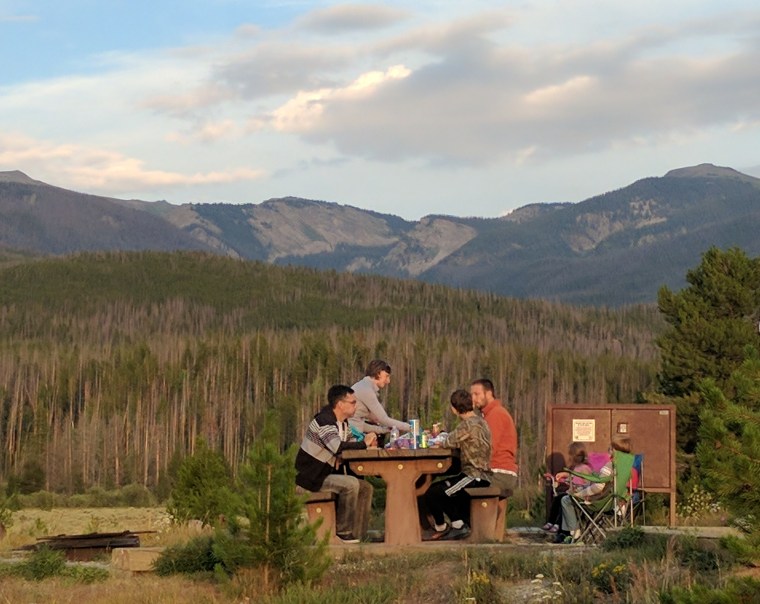
Last weekend, after church, we went camping at our favorite spot in Grand County, Colorado. Here’s the view of our backyard up there:

IMG_20170806_193820

We were right along the Colorado River.

IMG_20170806_184009-EFFECTS
Colorado River with Never Summer Range behind

Some of us in our family had had a cold before going up there, and for me and the baby it got worse – to the point where my wife had to take baby home early. I stayed with one of our kids, and we had a good time.

On the way home, we drove through Rocky Mountain National Park. I was already congested, but the pressure was too much, because I developed an ear infection. I got antibiotics for it and am on the mend now.

My biggest concern was whether I would still be able to run the Sunrise Stampede 10k today or not, but I felt well enough to go for it, and I heard that the rule with running when sick is “the neck rule”: if it’s above the neck, you’re good to go and running might help it; if it’s in your neck or below, then don’t run because running will make it worse.

I ran the race, and I’m glad I did. I ran the 10k in 53:26, 1:35 faster than my last year’s time for this race, and 21 seconds faster than my best 10k time in training.

One of these days I’ll get below 50 minutes…

The Sunrise Stampede is a great event that is in its 32nd year. Proceeds go to support the special education department of the St. Vrain Valley School District.

White Fields Community Church was a sponsor this year, so in addition to the 8 people from church who ran the race, we had others who staffed the booth and got to meet many people, and share with them about Jesus and what God is doing at White Fields.

IMG_20170812_114902_709
Some of the runners from White Fields at the Sunrise Stampede

At the race I met someone from the community who is a reader of this blog! It’s always encouraging to have those kinds of interactions and to know that people are reading and being blessed by what is shared here.

Tomorrow morning White Fields will be having our outdoor service. The band has been preparing and I’m excited to share on the topic of the gospel: what it is, what it isn’t, and what it means for us to be gospel-centered people and a gospel-centered church.

Come on out and join us for this special service if you’re in the area!

White Fields Community Church fényképe.

Here’s our worship pastor, Mike Payne, with a quick video about it:

Upcoming at White Fields

We’ve got a few things happening at White Fields Church in Longmont, Colorado that I wanted to let you know about:

Tomorrow we will be starting a new series called “Church Matters” in which we will be taking four weeks to talk about church: why it matters to God, to us and to the world. We’ll be studying the Bible to see God’s vision for the church, and what therefore we should be about.

White Fields Community Church fényképe.

There is a great local company that helps us with some of our graphic designs: CryBaby Design. Check them out and hit them up if you’re looking for someone to help with graphic design, branding or web design.

We also have a great administrative assistant on our staff who does some design and media work for us, like the following graphic for our upcoming Outdoor Worship Service on August 13, 2017 at 10 a.m.

download_20170805_142709

If you are in or around Longmont, we’d love to have you join us!

Finally, here is a video preview of what’s happening tomorrow at White Fields. Our mission team we recently sent to Hungary to work with the church that we planted years ago is now back and will be giving an update about what God did through them.

We also have some friends in town who are missionaries in Athens, Greece: Travis and Kristen Spencer, who will be giving a presentation after service about their ministry there.

Here’s that video:

Is Christianity in Decline? Yes and No. – Part 2

growth

In Part 1 of this post I shared some thoughts on the commonly held belief that religious belief is in decline around the world and eventually doomed for extinction.

Today, we look at three more important factors to keep in mind regarding this topic:

2. Liberal Religion is Declining, but Conservative Religion is on the Rise

I wrote about this phenomena recently here: When You Stand for Nothing…, where I talked about the case of two Presbyterian denominations, one which is theologically liberal and the other which is theologically conservative. The liberal denomination is bleeding out quickly, whereas the conservative one is growing strongly.

It seems that there has been a major miscalculation by many people about the eventual demise of theologically conservative beliefs.

Since many of the historical mainline Protestant denominations, such as the Evangelical Lutheran Church in America (ELCA), the United Methodist Church (UMC), the Presbyterian Church in the United States of America (PCUSA) and the Episcopal Church in America (TEC) have taken a hard turn towards theological liberalism, they have seen rapid declines in their membership and attendance. And since these denominations compromised a large portion of the population in the United States, their declines have caused many to say that Christianity in the United States is in crisis.

Of the people leaving these denominations, many have transferred into theologically conservative Evangelical Protestant Churches. According to this article from Christianity Today, over the last four decades, there has been more than a 400 percent growth in Protestants who identify as nondenominational. Non-denominational Evangelical Protestant Churches now compromises about 30% of all Christian church attendance in the United States.

Around the world, both in Christianity and outside of Christianity, it is the conservative branches of religious movements which are on the rise, not the liberal ones. This is surprising to those like Richard Dawkins, who assume that as the world becomes more educated and developed, religion will either turn into sentimental tradition or just die out completely. Quite the opposite is happening actually.

3. Secularism is Set to Decline in the Future

In an interview with the Christian Post (full article here), author and pastor Timothy Keller said:

“In the past there was hardly anybody who was secular,” Keller told the Christian Post. “In the future there will be significant numbers of people who are secular more than have ever been in history. But, the facts on the ground are that Christianity and Islam in particular are growing faster than the population. And that over the next 25-45 years the number of people who say that they are secular, the percentage of the world’s population that is secular, is actually going down.”

Is Keller correct? According to a Pew Research Center report released in April 2015, he is. That report projected out to 2050, finding that, as the world population changes in the coming decades, the world’s religious profile will also change.

Christianity is poised to remain the largest religion in the world, but Islam is growing quickly, less by conversion than by birth. This relates again to my previous post, in which I pointed out that inherited religion is in decline globally. It would be assumed that this decline will affect the growth of Islam as well.

4. Only a Small Part of the World is Moving Towards Greater Secularism, and They Will Soon be a Minority

What the Pew Research Center report had to say about the “nones”:

“Atheists, agnostics and other people who do not affiliate with any religion – though increasing in countries such as the United States and France – will make up a declining share of the world’s total population.”

So, it would seem that secularism is set to decline rather than increase in coming decades.

It is important to remember that the rise of religious beliefs is taking place as education as well as industrial and economic development is taking place. It would seem that as the world is becoming more educated and more developed, people are increasingly aware of their need for God.

Is Christianity in Decline? Yes and No. – Part 1

empty_church

Last week a friend of mine sent me a video in which Richard Dawkins was interviewed, and in the interview he stated his view that religion as a whole is eventually destined to die out. Then he sent me another article from The Guardian (UK), about how there is a correlation between the increase of secularism and standards of living around the world.

It seems as if from every angle, people are claiming that Christianity is in decline and it is simply a matter of time until all religion dies out in the world. The assumption is that as we become more “enlightened,” people will cast off their “superstitious” religious beliefs and everyone will be secular, AKA atheist – or atheism’s more friendly cousin: agnostic.

Many people take these claims as foregone conclusions, but is this really the case? Is religion in general, and Christianity in particular, in decline?

The answer is: yes and no. The answer to those questions depends on 1) what kind of religion (and what kind of Christianity) we are talking about, and 2) which parts of the world we are talking about.

There are a few very important factors to keep in mind. We will look at the first one today, and others tomorrow.

1. Inherited Religion is in Decline, but Chosen Faith is on the Rise

This is something we experienced as missionaries in Europe. While it is true that Europe is full of empty churches and has high rates of people who identify as atheists, we also experienced great openness to the gospel, and we saw many people come to faith in Christ and churches planted.

What we are seeing is the decline of inherited religion, but at the same time there is still an increase in chosen faith. There is certainly a down-side to this, in that people who assume inherited Christianity will still be exposed to Christian teaching and the Bible, and such exposure may very well lead to real, personal faith at some point in their life. In a situation where Christian faith is inherited, Christianity is seen in a positive light, as is going to church and reading the Bible. This perception can make it easier for a person to become a Christian than if one is raised in an environment where Christianity is portrayed negatively.

However, from a Christian perspective, there are also benefits of the decline of inherited religion. For example, as many people from Muslim background come to the West, many of them, rather than assume their parents’ religion, are open to the idea that their faith is something they must choose for themselves.

Furthermore, inherited religion, including Christianity, can leave people with a false sense of security, that they are guaranteed salvation or that they are right with God, even when in fact they are not. This is one of the great themes of the Book of Deuteronomy – as Moses speaks to the new generation who will enter Canaan, and he emphasizes to them that they must have their own faith; it is not enough that the Lord was their parents’ God, He must be their God as well.

This article by Timothy Keller for The Gospel Coalition addresses this topic very well: Inherited Faith is Dying. Chosen Faith is Not.

Here’s an excerpt:

[At a recent conference in Paris,] Grace Davie, emeritus professor of sociology at the University of Exeter in Great Britain pointed out that nominal or inherited Christianity is declining. However, she noted (against all expectations) that new movements of Christian faith are growing in Western cities.
The growing Christian churches are evangelical and Pentecostal, and they emphasize the biblical call to “choose for yourselves this day whom you will serve” (Josh. 24:15) and the biblical teaching that we stand or fall on our own faith, not the choices of our family or community (Ezek. 18). These churches teach that vicarious, formal religion isn’t enough; there must be a radical, inward conversion (Deut. 30:6Jer. 9:25Rom. 2:29). Christianity that foregrounds these important biblical concepts and lifts up heart-changing personal faith can reach many contemporary people—and it can reach cities.

Tomorrow we will look at the statistics which point to the fact that secularism is actually poised to decline in coming decades, whereas religious belief, and Christianity in particular is set to increase worldwide. Stay tuned!