
Pastor and author Dominic Done will be joining us at White Fields Community Church on Sunday, November 14, at all three services: 8:00, 9:30 & 11:00 AM.
I was given a copy of Dominic’s book when it first came out, and it sat on my shelf until I picked it up one Saturday to thumb through it, and next thing I knew I had read every word and used up an entire highlighter. I read the whole thing in one sitting because it was so fascinating, well-written, and applicable.
More recently, in September of 2021, I got to spend some time with Dominic in Colorado Springs at an Expositors Collective training weekend where he was one of our guest speakers.
We are excited for Dominic to come and speak at our church on November 14, and I encourage you: if you are within driving distance of Longmont, make sure to join us and bring someone with you who needs to here this important, helpful, and relevant message!
If you have ever struggled with doubts, or if you are curious about deconstruction: what it means, if it is a good thing or a dangerous thing – join us for this special Sunday!
Pastor and author David Guzik joined me on the Theology for the People podcast last week to discuss the topic of Christian liberty.
How do we make sense of “gray areas,” things like drinking alcohol, tattoos, smoking tobacco, music choices, etc. about which some Christians have strong convictions that a Christian person should never engage in those things, whereas others feel that they can enjoy them in moderation without any conflict in their fidelity to following Jesus?
How do we honor one another without being held hostage by every person’s personal whims? David helps shed some light on these and other questions related to this topic in this episode.
David is the author of a free online commentary of the entire Bible, which can be found at EnduringWord.com, along with the audio and video archives of David’s teachings through most of the books of the Bible. Make sure to check out his weekly Q&A sessions on his YouTube Channel, Thursdays at 12:00 PM Pacific Time.
David and I serve together on the steering committee of the Expositors Collective, a group dedicated to raising up the next generation of Christ-centered expository preachers and Bible teachers through weekly podcast episodes, 2-day intensive seminars, and other resources. The next Expositors Collective in-person training weekend will be in Orange County, California on February 18-19, 2022. More information and registration available here.
If you would like to submit a question or suggest a topic for future articles or podcast episodes, you can do that here, by clicking the Ask a Question or Suggest a Topic button.
Navigating Issues of Christian Liberty without Legalism or Licentiousness – with David Guzik –
Theology for the People
Pastor and author David Guzik joins the podcast this week to talk about the topic of Christian liberty.
How do we make sense of "gray areas," things like drinking alcohol, tattoos, smoking tobacco, music choices, etc. about which some Christians have strong convictions that Christians should never do those things, whereas others feel that they can enjoy these things in moderation without any conflict with their fidelity to following Jesus? How do we honor one another without being held hostage by every person's personal whim? David helps shed some light on these and other questions related to this topic.
David is the author of a free online commentary of the entire Bible which can be found at EnduringWord.com, along with the audio and video archives of David's teachings through books of the Bible. Make sure to check out his weekly Q&A sessions on his YouTube Channel, Thursdays at 12:00 PM Pacific.
Visit the Theology for the People blog at nickcady.org, where you can submit questions or suggest topics for articles or future podcast episodes.
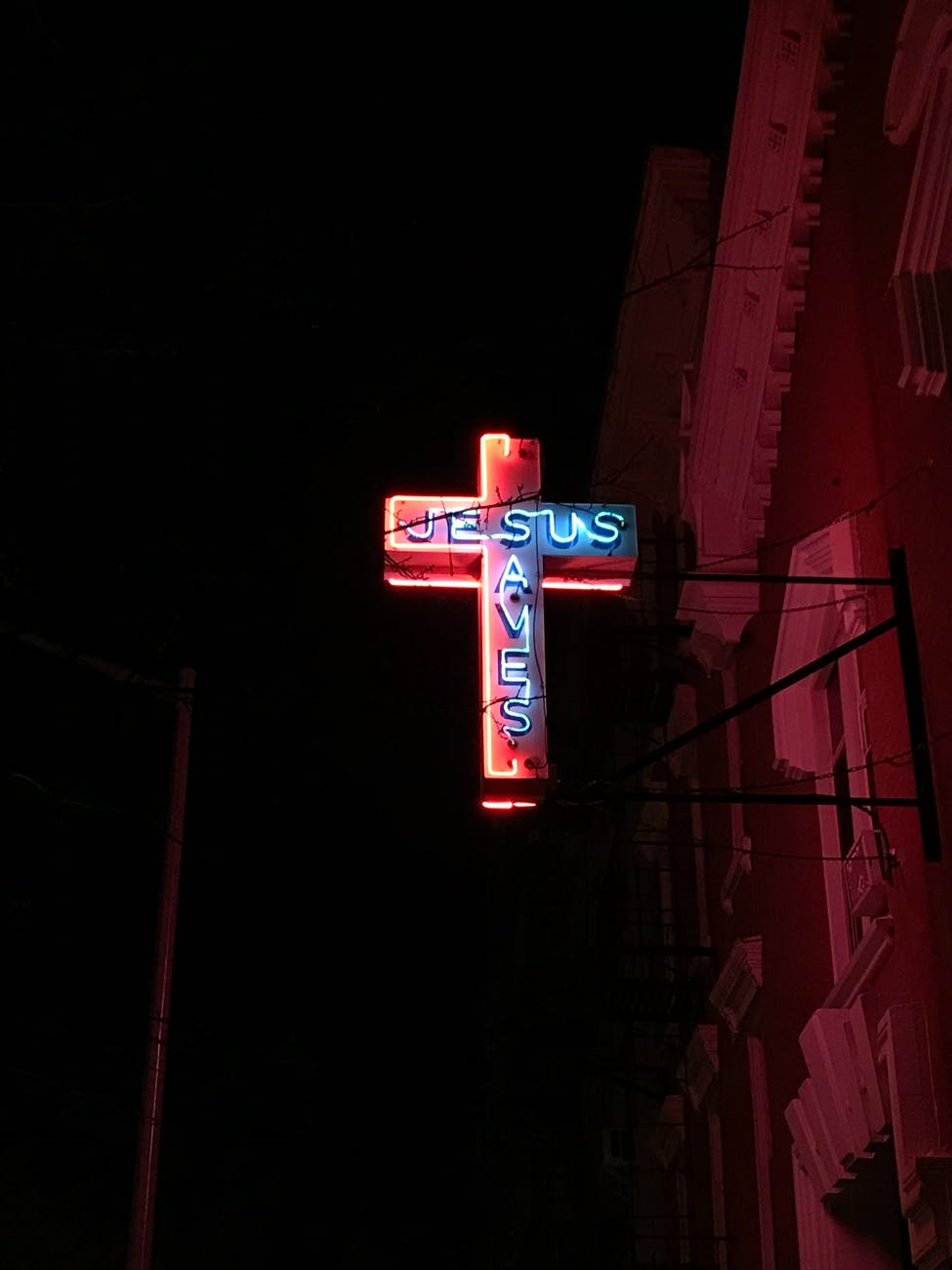
Do you have a theology of glory, or do you follow the theology of the cross? Here’s an easy test: honestly ask yourself the question, “Do you seek God primarily because you consider him useful, or because you find him beautiful?”
There are many things about God that are useful; He is omnipotent and He is able to answer prayers, do the miraculous, help in time of need. But do you seek Him primarily for what He can do for you, or do you seek Him primarily because of who He is?
Martin Luther and the Theology of the Cross
A theology of glory, as Martin Luther explained, most famously in his Heidelberg Disputation (1518), views God primarily as useful to you. A theology of glory, as Luther used the term, is really a theology of man’s glory. Rather than focusing on and seeking the glory of God, a theology of glory is focused on seeking your own personal glory — with Jesus as your self-help guru, who gives you a “boost” or a “shot in the arm” to help you achieve your goals and reach your potential.
The theology of the cross, on the other hand, states that it is ultimately by looking at the cross that we learn who God is and who we are (cf. Hebrews 1:1-2). For example, the cross of Christ shows us that, as human beings, we are completely unable to save ourselves — this is why the Jesus’ death on the cross was necessary. Furthermore, it is through the cross that we come to known the depth of God’s love for us.
The theology of the Cross understands that Jesus is your savior, not your side-kick or personal assistant. The cross causes us, as Paul the Apostle puts it in Philippians 3:3, to “glory in Christ Jesus and put no confidence in the flesh,” i.e. our own abilities or goodness to justify ourselves or earn God’s blessings.
As we come to see the beauty and depth of God’s love, displayed for us in the most ultimate way on the cross, it compels us to respond by surrendering our lives to Him (2 Corinthians 5:14-15). This transforms us from being people who seek to use or leverage God for our own power or glory, and who instead take up our crosses and die to ourselves, that Christ might live in us (Galatians 2:20). We do this, remembering that Jesus surrendered himself to the will of the Father, even unto death on a cross, after which God highly exalted Him (Philippians 2:8-9). Therefore, we also know that if we, rather than seeking to exalt ourselves, seek to exalt Jesus and surrender our lives to Him, God will exalt us in the end as well (1 Peter 5:6).
Useful or Beautiful?
Do you seek God primarily because you consider him useful, or because you find him beautiful? How you answer that question will have big implications for how you view God, and how your faith weathers the storms and trials of this life. For example, if you seek the Lord primarily because you find Him useful, what will happen if there is ever a time when you feel that following Jesus isn’t useful? What if God doesn’t answer your prayer in the way, or within the time frame you expected, or hoped?
If, however, by looking at the cross, you become acutely aware of the beauty of God’s heart and the depth of his love, you will have a faith that is able to weather any storm.
By looking at the cross, we are made aware of who God is and who we are. May we look to the cross, and rather than putting confidence in our flesh, may we glory in Christ Jesus. As we look to the cross and see the beauty and love of God on display, and may it compel our hearts to live not for our own glory, but for Him who died and was raised for us.
If you own a Bible in your own language, it is a direct result of the Protestant Reformation, and the key figure God used to ignite that worldwide movement of returning to the Bible was Martin Luther: a German monk and professor of theology at the University of Wittenberg.
I grew up attending a Lutheran school until eighth grade. During my time there, I learned a lot about Luther, including studying his catechism. Years later, when I put my faith in Jesus and was born again, I started attending a Calvary Chapel church; and over the years, I have grown in appreciation for Martin Luther and the pivotal role he played in God’s work in the world.
The last day of October is celebrated around the world as Reformation Day, because it was on October 31, 1517, that Martin Luther set into motion the movement now known as the Reformation, by mailing a letter. Yes, you read that right: on the eve of All Saints Day (Halloween = “All Hallows Eve”), Luther mailed, not nailed, a letter.1 2
The letter was addressed to the Archbishop of Mainz,3 and Luther sent it because he wanted to alert the archbishop that plenary indulgences were being sold in the archbishop’s name by a man named John Tetzel. Tetzel had been sent from Rome the year before to sell these certificates promising the release of a soul from purgatory in exchange for their purchase, as a fundraising campaign for the building of St. Peter’s Basilica. Luther assumed the archbishop was unaware that this was going on, and that upon receiving his letter, the archbishop would tell Tetzel to cease and desist. That, however, is not what happened.
As a result of the archbishop’s inaction, Luther, as a professor, decided to organize a scholarly debate on the topic of indulgences: whether they were actually effective in procuring the release of a soul from purgatory. To this end, he wrote up what are now known as the 95 Theses, which he titled: A Disputation on the Power and Efficacy of Indulgences. This paper, which was posted on the door of the All Saints Church in Wittenberg, was an invitation to a scholarly debate, but in it Luther challenged both the selling of indulgences and the doctrine of purgatory as unscriptural. By doing this, Luther was challenging the Roman Catholic Church’s teaching and authority, and insisting that the Bible, not the church, should be the ultimate arbiter of what constitutes correct doctrine.
The posting of the 95 Theses is considered the spark which ignited the Protestant Reformation: a movement which sought to reform the church by shedding man-made traditions and returning to the faith which had been handed to us by God in the Holy Scriptures.
Today, there are nearly 1 billion Protestant Christians in the world.4 In the “majority world,” including Africa, Asia, Latin America, and the Muslim world5, Protestant Christianity is growing faster than any other religious movement by conversion.6
Before Luther, there were others who sought to reform the church and bring the Bible to the people. John Wycliffe (1331-1384) published the first English translation of the Bible. Jan Hus (1369-1415) taught the Bible to the common people in Prague. Peter Waldo (1140-1218) commissioned a translation of the New Testament into the local vernacular of southern France. Each of these people were persecuted for trying to put the Scriptures into the hands of the common people.
Over a century before Luther, Hus had protested the sale of plenary indulgences, pointing out that the idea that God’s favor or blessings could be earned in any way, runs contrary to the message of the gospel and the testimony of the Scriptures, and the concept of purgatory is in conflict with the biblical teaching of the sufficiency of Christ’s atonement on the cross.
Martin Luther had long struggled with feelings of condemnation and inadequacy, until his own reading of the Scriptures led him to an epiphany when he read Habakkuk 2:4: “Behold, as for the proud one, His soul is not right within him; But the righteous will live by his faith.” This led Luther to the other places in the Bible where this phrase is repeated: Romans 1:17; Galatians 3:11, and Hebrews 10:38 – where the message is clear: It is not by our own works that we are justified before God, but it is God who justifies us sinners as a gift of His grace, and we receive that justification by faith. After all, the Bible explains, this is how Abraham, the father of our faith, became righteous: he believed God and it was credited to him as righteousness (Genesis 15:6; Romans 4:3, 22). We receive God’s righteousness, which he has provided for us in Christ, in the same way.
Luther became convinced that everyone needed to be able to read the Scriptures for themselves, and he took it upon himself to translate the Bible into German, a translation that is still in use to this day. Soon the Bible was translated into other languages, including English, as the Reformation spread.
Martin Luther called people back to a belief that the Scriptures are perspicuous (clear), and can be understood by those who read them. He called us back to a belief in the inspiration and sufficiency of Scripture: that it is the ultimate rule of faith, by which we are to measure both doctrine and our lives.
In April 1521, Luther was brought before Holy Roman Emperor Charles V at the Diet of Worms, at which Luther was commanded to recant his teachings. Luther refused to do so, famously stating:
“Unless I am convinced by the testimony of the Holy Scriptures or by evident reason – for I can believe neither pope nor councils alone, as it is clear that they have erred repeatedly and contradicted themselves – I consider myself convicted by the testimony of Holy Scripture, which is my basis; my conscience is captive to the Word of God. Thus I cannot and will not recant.”7
This October, as we celebrate Reformation Day, may we take the opportunity to open the Bible and read it for ourselves, and may we embrace and celebrate the message of the gospel: that Jesus Christ came to save sinners, and that we are justified freely by his grace as we trust in him by faith.
NOTES
1 Marshall, Peter. 1517:Martin Luther and the Invention of the Reformation. OUP Oxford. 2017.
Did you know that not everybody embraces Christ-centered hermeneutics with open arms?
Crazy, right? So, what exactly are their objections – and are any of them valid?
In this week’s episode of the Theology for the People Podcast, Mike Neglia joins me again for Part 2 of a 2-part series on Christ-centered hermeneutics. In Part 1, we discussed what a hermeneutics is, as well as the scriptural basis for Christ-centered hermeneutics.This week, in Part 2, we respond to some objections to Christ-centered hermeneutics.
These objections were given to me by a seminarian and author, who is involved in ministry, serving as a preacher in his church.
It all began when a friend of mine, seeing some of my presentations on Christ-centered hermeneutics, reached out and told me that a friend of his doesn’t agree with this position. I asked him to write out his objections for me, and he gave me a list of 8 reasons why he takes issue with Christ-centered hermeneutics.
Then, Mike and I went and read a journal article by Abner Chou, in which he used a lot more words to basically state some objections similar to those given by this friend of a friend.
Finally, Mike asked the Expositors Collective Facebook Group about whether they held or had heard of objections to Christ-centered hermeneutics, and the response we received also mirrored one of the points made by this friend of a friend in his list of 8 objections.
So, in this episode, we go through the 8 objections one-by-one, and respond to each of them.
The interpretive approach this friend-of-a-friend uses is what he calls the “grammatical-historical” hermeneutic. As you will hear in the episode, I think that a grammatical-historical hermeneutic dovetails perfectly with a Christ-centered hermeneutic, and the two are not at odds, as if we must choose one or the other. Certainly we can, and should choose both.
Christ-Centered Hermeneutics – Part 2: Responding to Objections to Christ-Centered Hermeneutics – with Mike Neglia –
Theology for the People
This week Nick Cady and Mike Neglia respond to some objections to Christ-centered hermeneutics.
Is Christ-centered hermeneutics actually ego-centric, in that it focuses on what Jesus has done for “me’? Does Christocentricity fail to honor the trinitarian nature of God by focusing primarily on the Son? Does it fail to teach what the text actually says in an attempt to make every message about Jesus?
Nick and Mike respond to these, and other questions in this episode, which is Part 2 of a 2-part series on Christ-Centered Hermeneutics. In Part 1, we laid the foundation for what Christ-Centered Hermeneutics is, and whether it is a true and faithful way to read the Bible.
Mike Neglia is the lead pastor of Calvary Cork in Ireland and he is the host of the Expositors Collective Podcast, which has an incredible line-up of guests, with interviews to help you grow in your private study and your public proclamation of God's Word.
Resources mentioned in this episode:
Fred Sanders, The Deep Things of God (Second Edition)
Today marks 20 years since the tragic events of September 11, 2001. Those of us who are old enough to remember it can all remember where we were when it happened, but those who are younger have all felt its effects.
Personally, I remember that it was a Tuesday and I was working for Christy Sports in Golden, Colorado in the snowboard shop, and we had the day off to attend a seminar hosted at the Burton Snowboards Colorado headquarters in Denver, so I was parked behind the shop waiting for a colleague to meet me so we could drive down together. He was over an hour late. This was before most people had cell phones, so I just had to stand and wait for him. When he arrived, he told me what had happened. I remember the confusion of that day; at first, people assumed it was an accident, until it became clear it was an attack.
We went to Denver and instead of a seminar, we ended up watching the TV reports at the Burton headquarters. Downtown Denver was absolutely empty, as no one knew if there were going to be more attacks.
I went home, and my dad was there; he worked at the Denver Mint, and since that was a federal building, it was considered a high risk for attack.
At this point in September, I had just returned home from my first trip to Hungary, after which I felt called to move to Hungary, and was making plans to go there in January. I did end up moving to Hungary in January, and one of the ministries I worked in was a refugee camp.
The camp was in an abandoned Soviet military base which had been reopened in 2006 by the UNHCR (United Nations High Commission for Refugees) to house refugees from the Bosnian war, and had then been kept open to house refugees from Kosovo. Around the time I came, there were still many refugees from former Yugoslavia, but quickly the camp filled with over 2000 Afghan refugees.
While working in this camp, I got to know my now wife, Rosemary, and together we saw many people from Afghanistan, Iran, Kosovo, and other muslim-majority countries become Christians. As these people came to Europe to escape the conflicts back home, many of them had the opportunity to read the New Testament and hear the gospel, and meet Christians, and attend a church for the first time in their lives – and God used His Word to change their hearts and their lives.
My heartfelt condolences go out to the grieving families whose lives were changed when over 2,997 people lost their lives on September 11. I pray that the Lord would be their comfort and that they would find in Jesus the hope of the resurrection and life everlasting.
May we also honor and thank the first responders and emergency workers who served that day and in the weeks following. May we pray for our medical workers today as well as they serve the hurting and sick in the midst of this current crisis.
Let us also be in prayer for those who served in the military over the past 20 years, and for the families of those who lost family members in service. And let us pray as well for the Afghan people and the Afghan Christians who are now suffering under Taliban rule today.
Jon Markey and Michael Payne are accomplished musicians, songwriters, and producers, and in the latest episode of the Theology for the People podcast, I sat down with them to talk about the theology of music.
Michael is the Worship Pastor at White Fields Community Church in Longmont, Colorado. Prior to coming to Longmont, he spent 21 years as a worship leader and missionary in Hungary, and prior to that he served in the US Marine Corps.
Jon is a pastor and missionary in Ternopil, Ukraine. He moved to Kiev, Ukraine with his family in the 1990’s, when he was 5 years old, and earned a masters degree from the Ukrainian National Tchaikovsky Academy of Music.
We recently had the pleasure of having Jon and his family visit Longmont and lead worship at our church, and while he was here, I got to sit down with him and Mike to discuss what the Bible has to say about music: its purpose, uses, and significance – including the “song of creation,” and how it serves to counteract pagan origin narratives, as well as Jubal: the first human musician, mentioned in Genesis 4, as well as other practical discussions which have modern application.
Michael Payne and Jon Markey are accomplished musicians, songwriters, and producers, and in this episode they talk with Nick about the theology of music. Listen in to this discussion of what the Bible has to say about music: its purpose, uses, and significance – including the "song of creation," Jubal, and practical discussions for today.
Check out Jon's ministry: Room for More music on YouTube and his church: Calvary Chapel Ternopil (Ukraine)
Check out Michael on Spotify: Michael Payne and you can watch him on the White Fields Community Church YouTube page.
The book mentioned in this episode is Scribbling in the Sand: Christ and Creativity by Michael Card
Visit the Theology for the People blog.
One of the questions that is sometimes asked about the Holy Spirit, is whether God will ever remove the Holy Spirit from a person because of disobedience or sinful actions.
Certainly there are verses which talk about God removing the Holy Spirit from people, such as Psalm 51:11, where King David prays, “Cast me not away from your presence, and take not your Holy Spirit from me.” David prayed this in the wake of his sin with Bathsheba (2 Samuel 11), so that brings up the question: Are there times when God removes the Holy Spirit from someone if they do something really bad?
Furthermore, in 1 Samuel 16, is says that the Spirit of the Lord departed from King Saul, and in the Book of Judges, it says that the Spirit of the Lord departed from Samson.
So, does this mean that God will REMOVE his Spirit from YOU, if you live in a bad way? If so, that would be a pretty big problem, because Romans 8:9 says “Anyone who does not have the Spirit of Christ does not belong to him.”
Understanding the Three Relationships the Holy Spirit has with different groups of people
In order to answer this question and understand what it meant for David, Saul, and Samson – and what it means for us today, we have to first understand the 3 different relationships that the Bible tells us the Holy Spirit has with different groups of people.
Relationship 1: “WITH” All People
In John 14:17, Jesus told his disciples that the Holy Spirit had been with them up until that point.
Jesus then he told them that the work of the Spirit in the world is that He brings about conviction in people’s hearts and minds about 3 things: Sin, Righteousness, and Judgment (John 16:8)
In other words, the Holy Spirit is at work in the world in every country, with all people, and he is whispering in their ears and speaking to their hearts about the fact that 1)They are sinners (they have fallen short of God’s perfect standard), and 2) God is righteous, so therefore 3) There is coming a day of judgment when they will have to stand before that righteous God and give account for their lives.
The purpose of this conviction is not to just make people feel bad about themselves; the purpose is to draw them to Jesus by bringing them to a realization of why they need a savior, so they will embrace Jesus and what He has done in order to save them.
Relationship 2: “IN” those who have been redeemed by Jesus
Jesus told his disciples in John 14:17: The Holy Spirit has been WITH YOU up until this point — but soon, the Holy Spirit will also be IN YOU.
This indwelling of the Holy Spirit is something that was prophesied by the Old Testament prophets Ezekiel and Jeremiah, that one day God was going to put His Spirit within His people (Ezekiel 36:27), in order to transform them from the inside out.
For people in the Old Testament, the indwelling of the Holy Spirit was always a future event, but after Jesus had died and resurrected, we read in John 20:22 that Jesus met with his disciples and he breathed on them and said to them, “Receive the Holy Spirit.” It was at this moment, that the disciples received the Holy Spirit within them, and it was at this moment that they were “born again.” (See also: “What does it mean to be “Born Again”?)
What it comes down to is this: Only those who have put their faith in Jesus have the Holy Spirit within them, and every person who has put their faith in Jesus has the Holy Spirit dwelling with them.
The Bible tells us that when you put your faith in Jesus, God puts his seal on you and gives you His Spirit in as a guarantee(2 Corinthians 1:23). Furthermore, the regenerating and indwelling Spirit is called “the Spirit of Adoption” (Romans 8:15) It’s His guarantee that you belong to Him, and you are His.
The indwelling Spirit sanctifies, leads, guides, strengthens, and transforms from within.
Relationship 3: “UPON” Some people at different times, to empower them to do what God has called them to do
Remember how in John 20 Jesus breathed on his disciples and said, “Receive the Holy Spirit”? Well, right after that, Jesus told his disciples to stay in Jerusalem and wait until the Holy Spirit came upon them. (Luke 24 & Acts 1:4)
But… if they just RECEIVED the Holy Spirit, then why did Jesus tell them to wait for the Holy Spirit?
Because: this is speaking about two different relationships with the Holy Spirit!
When Jesus breathed upon them, they received the Spirit IN them (and they were born again) — but then they were to wait in Jerusalem for the Holy Spirit to come UPON them: to EMPOWER THEM to carry out the mission Jesus had given them.
That’s why Jesus His disciples in Acts 1:8, “But you will receive power when the Holy Spirit has come UPON you, and you will be my witnesses in Jerusalem and in all Judea and Samaria, and to the end of the earth.”
Throughout the Old Testament, before people could have the Holy Spirit WITHIN them — we read that the Holy Spirit would come UPON people, to empower them to do things God had called them to do. For example, it says that the Spirit of the Lord came upon Gideon! (Judges 6:34 NKJV) We’re also told that the Holy Spirit came UPON Samson, and UPON David, and UPON Elisha, and others — to EMPOWER them to do what God had called them to do.
So, Jesus was promising his disciples (and us) — that the Holy Spirit will also come upon us, to empower us to carry out the callings He has placed upon our lives.
Un-Adopting? Un-Sealing?
Remember: in the Old Testament, the Spirit was WITH people (to bring conviction) and the Holy Spirit was UPON people (to empower them), but at that point that Spirit was not yet WITHIN people. So when we read in the Old Testament about God “removing” his Spirit, it’s not in the sense of a person who had the Holy Spirit dwelling within them, rather it’s in the sense of God removing the empowering work of the Holy Spirit from those people.
But for a person who has been sealed by the Holy Spirit indwelling them, we never read of God removing His Spirit from someone in that sense. The indwelling Holy Spirit is the Spirit of Adoption. God does not un-adopt us when we make mistakes and mess up, rather: he disciplines us like a loving Father (see Hebrews 12).
If He has SEALED you, as a guarantee of your salvation, that’s exactly what it is: He has placed his Spirit within you as a guarantee that He will see you through and bring to completion the good work that He has begun in you.
If you are His child, He won’t give up on you – and that’s really good news!
Further Study
For more on the 3 Relationships with the Holy Spirit, see this study: The Promised Helper
In this week’s episode of the Theology for the People Podcast, I sat down with Pastor Wayne Taylor from Calvary Fellowship in Seattle, Washington.
Wayne has a long history as a leader in the Calvary Chapel movement. He founded Calvary Fellowship in Seattle and served there as lead pastor for 42 years. Under Wayne’s leadership, 55 churches were planted, both in the Pacific Northwest and abroad.
Wayne recently spoke at White Fields Church. That message, in which he reads a limerick he wrote about me(!), can be found here: Ephesians 2:10 – God’s Poem’s at Work.
In this episode, Pastor Wayne and I discuss Charismatic Christianity: where the word “charismatic” comes from, what it means, arguments for and against charismatic practices, as well as John MacArthur, theological method, Calvary Chapel, and our own personal experiences and biases.
Pastor Wayne Taylor has a long history as a leader in the Calvary Chapel movement; he founded Calvary Fellowship in Seattle, Washington, where he served as lead pastor for 42 years. Under his leadership, 55 churches were planted out of Calvary Fellowship, both in the Pacific Northwest and abroad. Wayne now serves on the executive leadership team of Calvary Global Network.
In this week's episode, Wayne and I discuss what it means to be "charismatic." We discuss the origin of the word, arguments for and against charismatic practices, as well as John MacArthur, theological method, Calvary Chapel, and our own personal experiences and biases.
Follow Pastor Wayne on Facebook, and check out the Theology for the People blog.
The sermon series from White Fields Church on the Holy Spirit can be found here: The Spirit-Filled Life.
When I was a missionary in Hungary, we used to visit a refugee camp populated with thousands of people from muslim-majority countries, with whom we didn’t have a common language. Everyone in the camp got by with a mix of English, Russian, and sometimes German words that formed a special form of refugee pidgin. But this was insufficient for deeper conversations, such as those about God, Jesus, and salvation.
So, with the help of the International Bible Society, we were able to get New Testaments in Urdu, Dari, Farsi, and other languages, and we handed these out along with humanitarian aid, telling those we met to read them, and then we would follow up. For many of them, this was their first time ever having access to the New Testament in their own language, and by God’s grace, we did see many of them become followers of Jesus.
But this approach to ministry was based on an underlying assumption: that anyone with average reading comprehension skills can sufficiently understand the meaning of the Bible when it comes to what it says about who Jesus is and how salvation is possible through Him.
This assumption is known as belief in the “perspicuity,” or clarity of Scripture.
Not everyone embraces the idea that Scripture is perspicuous, notably the Roman Catholic Church and Eastern Orthodox churches – as well as fringe groups including the Mormons (AKA Latter Day Saints) and the Jehovah’s Witnesses.
It was after a friend of mine converted to Roman Catholicism based on claims he had heard about Scripture not being perspicuous that I was intrigued by this topic and wanted to research it further. I ended up writing my Masters dissertation on the topic – specifically looking at the question of whether the concept of the perspicuity of Scripture was novel to the Reformation, or if it is also found in the writings of the early Church Fathers – which would mean that the insistence on the perspicuity of Scripture in the Reformation period was actually a return to the way the early Christians understood and viewed Scripture.
In this week’s episode of the Theology for People Podcast, Mike asks me questions about the perspicuity of Scripture; what it is and why it matters, and what is at stake when it comes to this issue.
The Perspicuity of Scripture: Is the Bible Clear? Can Everyone Understand It? –
Theology for the People
Can anyone pick up the Bible, read it and understand it? Is Scripture "clear," and if it is: about what and for whom is it clear?
I wrote my Masters dissertation on the topic of the perspicuity, or clarity, of Scripture. This is an important topic, because whether or not we view Scripture as clear affects how we handle and use the Bible and how we relate to church traditions, and how we view the world in the midst of a culture in which many long-held beliefs and assumptions are being challenged.
In this episode, Nick and Mike discuss the concept of the perspicuity of Scripture, looking at the history of this concept and what is at stake in this debate.
For more articles and content, make sure to check out the Theology for the People website.