Marijuana Leglaization Changing Colorado

A few weeks ago I had my first experience meeting someone who had relocated his family to Colorado because of medicinal marijuana. This man, a professing Christian, told me his story of being so sick with intestinal issues and nausea, that he couldn’t eat for several months. During this time he lost about 200 lbs (he was big to begin with), and was unable to work. His doctors from his home state encouraged him to try medical marijuana – he travelled to Colorado and looked into it, then moved here and later brought his family. This man explained to me that he doesn’t drink alcohol and had never gotten high in his life – but that marijuana as medicine has helped him greatly. He’s now able to hold down food and a job.

What are we to make of this – especially as Christians?  Certainly there is a difference between getting high and taking medicine. But is marijuana a legitimate medicine? Dr. Sanjay Gupta of CNN seems to think so. Not long ago Gupta was outspoken against all forms of marijuana legalization, but has recently come out in favor of medical marijuana. 

I have written before on this blog, that I’m not a supporter of the legalization of marijuana for recreational purposes. Interestingly, the man I mentioned above is not a supporter of it either. He moved to Longmont, a city with a moratorium on both medicinal and recreational marijuana sales, because he said he doesn’t want to be in a place with a lot of dispensaries because of all that comes with them. I think there’s a big difference between medical marijuana and recreational marijuana. My teenage son got a prescription for codeine recently after a tooth extraction. There’s a big difference between using codeine (a narcotic) for medical purposes and taking codeine or any other prescription drug recreationally.

On the local news last night, it was reported that Colorado is now a major destination for college kids on spring break. Doesn’t take a lot of guessing to figure out why: Denver has become the Amsterdam of the Americas. Yes, this brings in a lot of tax revenue, so much so that CNN Money reported today that Coloradans may be looking at getting a tax break because of the millions of dollars pouring into state coffers from recreational marijuana taxes, which are only expected to increase as recreational sales increase – but is it worth it?

CNN posted another video this week mentioning a lot of the same concerns that I’ve also expressed: namely that the legalization of marijuana won’t actually kill the black market for marijuana since it is taxed so highly, but will simply increase recreational marijuana use all across the board by making it more mainstream, especially amongst teenagers. Everyone agrees that wouldn’t be good – but in fact, it is already happening.

The encounter I had with the man mentioned above was my first – but I suspect it will not be the last. The legalization of marijuana is changing Colorado.

What are your thoughts on this? Leave a comment below and let me know what you think.

High Speed Chase This Morning Started in Longmont

This morning a car was stolen at a gas station just down the street from where we live. The scary part is that the stolen car had a 4 year old boy in the backseat, who was taken for a ride until the driver ditched that car and hijacked another one near DIA, pulling a woman out of her van.
Scary that something like this would happen so close to home. The 4 year old is safe, but we pray for him and his parents after such a terrible emotional stress.

The Longmont Times Call posted an article with more info about what happened.


Join us on Christmas Eve at White Fields!

Image

If you live near Longmont, then I’d like to invite you to join us on Christmas Eve for our Candlelight Christmas Celebration.

We will have a special band leading us in Christmas carols and worship, as well as a children’s choir and “glad tidings of great joy for all people”.

Hope you will join us!

Ga BleshU

Do you remember that Seinfeld episode where they talked about why we say “God bless you” when someone sneezes? One of them – I can't remember if it was Elain or Jerry – suggested was that instead we should say, “You're so good looking!”, because that would really make people feel better.

I saw this display at Sprouts in Longmont today:

Ga Ble Shu: You know, for when you're not really into God, but you feel like you should say something when people sneeze.

What do you think? Harmless advertising gimmick or a sign of the spiritual climate?


Article in the Longmont Times-Call about Project Greatest Gift

Article in the Longmont Times-Call about Project Greatest Gift

Last week I wrote a post about an initiative that White Fields Community Church is doing to bless children in foster care at Christmastime. 

The Longmont Times-Call newspaper featured Project Greatest Gift and some other Longmont holiday initiatives in this article.

Young Life in Longmont

A few months ago, my wife and I were talking with some people from White Fields – and the topic of Young Life came up. This friend of ours was telling us how she had been involved in volunteering at a YL camp up near Winter Park. Then another friend from White Fields told us that he had applied for a job up at that same camp.

So my wife and I had this conversation: “I wonder if Young Life is doing anything in Longmont…”

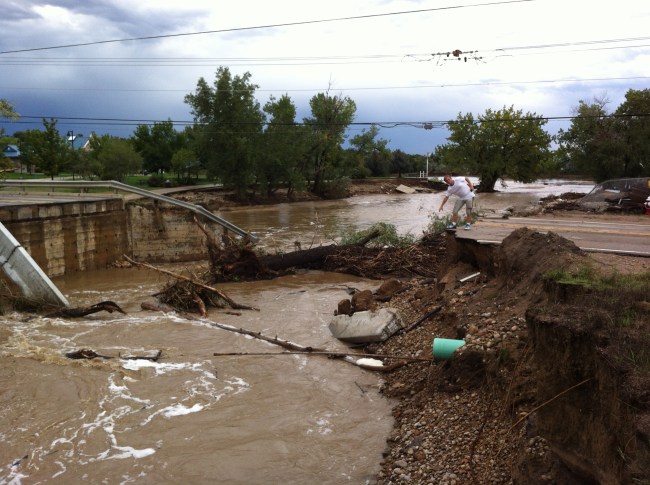
A few weeks later, historic flooding happened right here in Longmont. Houses were flooded, roads were washed out. Lots of destruction.

As one does, I went to go check out the destruction. Here’s the picture we took of Sunset Street in Longmont:

Image
Sunset Street – owned by the St Vrain River

As we’re standing there, some other guys come up and stand right on the edge of the road. I tell the guy: “Hey, watch out, that’s not stable!” Then somehow we got to talking – they asked if I was from Longmont, they told me they recently moved to town from Boulder. I asked what brought them to Longmont – and they told me: “We moved here to start a Young Life branch for the St. Vrain Valley.”

“Really?” I said. “I’m the pastor of a church here in town and my wife and I and some people from church were just talking about how we would love to work with Young Life here in Longmont.”

And that is how I met Ben and Tim, who are heading up the new Young Life branch in the St Vrain Valley.

Since then, they’ve started doing Wyld Life meetings for middle schoolers here in town, and had great turnouts. I’ve gotten together with them a few times – in fact, I just had lunch with them again today. They are great guys, doing great work.

Check out what they are doing – it’s great stuff. The meetings they do are fun and are a safe environment for kids in middle school – and they love parental involvement. Here is their website: St Vrain Valley Young Life


Longmont Church Officials Face Charges In Assault Case

What happened at VineLife is grievous, and the worst kind of offense. In a place where people, especially youth, should be safe, an offense like this is especially terrible.
What makes it worse in this case is that pastors and elders were involved in covering up the situation and not reporting it to police.
There is biblical precedent for dealing with things internally rather than going to court, but I believe this regards civil disputes rather than crimes, especially felonies.
The other thing this story brings to awareness for pastors and church leaders is the fact that pastors, like teachers, are mandatory reporters. A friend of mine who works at a school was recently held responsible before the law because he heard a rumor, investigated it himself, was convinced that nothing had happened – yet did not report it to police. That’s against the law. Pastors in America need to keep that in mind – and we must never cover up crimes. This all falls under the category of respecting the authorities that God has placed over us and the laws of the land in which we live (Romans 13).

Marijuana Legalization and Christianity

This week a Gallup poll came out which showed that for the first time, a majority of Americans favor legalizing marijuana. In fact, in the past year, the support for marijuana legalization surged from 48% to 58% of those polled. Here in Colorado, we live in a state that has had medical marijuana legal for years and which voted last November to legalize its recreational use as well. Not to mention that here in Boulder County, whether it’s legal or not, people in this area have been smoking a lot of pot for a long time and will continue to do so. A friend of mine who just moved to BoCo wrote this about how prevalent marijuana use is just in his daily commute. Just the other day I was talking to someone about Lyons High School (thinking ahead for our kids); they said it’s a good school – but that it’s known for the kids there smoking a ton of weed.

Marijuana is here to stay. It’s already been legalized in this state, and will soon be regulated. Interestingly enough though, I have heard almost NOTHING from Christian leaders on this topic. I have, however, heard a lot of people talking about it – including Christians, saying things like: If marijuana becomes legal and readily available in the same way that alcohol is, then is there anything wrong with trying it out? If you can buy it in a shop and it becomes socially acceptable, then is there any reason to not occasionally indulge?

Up until now, pastors have been telling people they shouldn’t smoke pot because it’s illegal, and the Bible instructs us to honor the laws of the land we live in (Romans 13). But now – guess what: game changer! Marijuana is no longer illegal! Drinking alcohol in moderation is more or less acceptable in most Christian circles these days – so if marijuana gets put in the same legal category, then is it okay to treat it the same way?

These are real questions that people – including Christians – are considering. If Christian leaders aren’t talking about what people are actually thinking about and talking about, then we have become irrelevant and are not engaging people and bringing God’s word to bear on the time and place we live in, as we are called to do.

So, what should be the Christian response to the legalization of marijuana?

What does the Bible say?

The Bible doesn’t say anything about marijuana – just like it doesn’t say anything about tobacco or chemical weapons or genetically modified food. But there are principles the Bible lays down which apply.

The “don’t do it because it’s illegal” argument is soon to be off the table, so what should our position be towards recreational marijuana use? The Bible doesn’t say anything about marijuana in particular, but it does speak about mind-altering drugs – in Greek: farmakeia – which were used recreationally rather than medicinally.

Also, the Bible tells us not to be drunk, but to be filled with the Holy Spirit – i.e.: Don’t be under the influence of substances, but be under the influence of God’s Spirit.

The differences between marijuana and alcohol

More and more people are speaking up about how much safer marijuana is than alcohol. You never hear about people committing violent acts because they are stoned. Marijuana has also not been shown to cause long-term brain damage as alcohol has.

But the difference between marijuana and alcohol are that you can drink alcohol without getting intoxicated. It’s possible to drink wine (like Jesus did) or beer with a meal to enjoy the flavor without getting drunk. No one smokes marijuana just for the flavor – the very point of smoking it is mood alteration.

Will marijuana legalization change anything?

It’s clear by now that adults are going to smoke marijuana whether it is legal or not – which is why more and more people are saying, ‘why not tax it and regulate it then?’. It has been estimated that up to $40 million dollars in tax revenue could come in from recreational marijuana sales in Colorado, which would be earmarked for schools. Regulating marijuana, they point out, could also kill at least part of the black market for it, which inevitably leads to violent crime.

Certainly marijuana use would increase once it’s legalized – as people who were once worried about doing something illegal would no longer have to worry about that. Also, and this is a concern for me – it would make it more accessible to kids, because they would no longer need to find a dealer, they will just have to find a friend with an older brother who is willing to buy it for them – just like with alcohol and tobacco.

I smoked pot when I was a teenager, before I gave my life to the Lord when I was 16. I have family members who smoke pot regularly, and I don’t want my kids to smoke pot. I don’t want them to check out or get intoxicated to cope with life or to have fun – whether with alcohol or marijuana or any other substance.

Legislating morality and the real issue

There are plenty of things the Bible instructs us not to do that are legal in our society, such as adultery, fornication, drunkenness, sorcery, etc. Christian maturity means being able to discern and choose for yourself, from a heart-felt response to God’s grace rather than needing to have someone hold your hand and dictate to you what to do.

There are plenty of ways to harm yourself which are completely legal. You can go buy some glue and sniff it and get high – legally. There are also ways to harm yourself, however, which are illegal, such as chemical food additives, cocaine, certain medications, meth, etc. which we consider detrimental to society and harmful to people, which we have banned and we don’t give people legal avenues to indulge in.

For us as Christians, the point is clear: marijuana is intoxicating. We should not be intoxicated or controlled by substances, but by the Holy Spirit. It’s pretty cut and dry.

For society in general, it’s a question of whether or not it would be helpful or harmful to have more intoxicated people everywhere and to make a mind-altering drug more accessible to children than it already is.

Colorado Flood, the church & charity work, and the question ‘why?’

Flooding in Longmont – September 2013

Just last month, to the surprise of everyone in our community, Longmont and our surrounding area was the center of a national disaster when rain in the mountains filled up our rivers and flooded the towns along Colorado’s northern Front Range. At one point 7000 people in Longmont were evacuated, 2000 people in Lyons and 4000 in Boulder. Hundreds of homes were affected, the town of Lyons was shut down and cut off. Roads and bridges were washed out, cutting us off from nearby towns.

Churches in the community rallied volunteers to distribute food, house evacuees and help clean up and rebuild. It was an amazing thing to witness. Our church meets in a building that became an evacuation center, with up to 300 people making it their home for over a week. Since we weren’t able to have Sunday services because of that, we took the opportunity to work with the City of Longmont, who asked our congregation to help them set up a disaster recovery center in the Twin Peaks Mall. So that Sunday, in place of our usual service, our church met in an empty retail space at the mall; there were no chairs, so we stood and had a short Bible study and prayer and then got to work. Together with another church from town, we set up what became the first and largest disaster recovery center in Colorado and the epicenter for the relief efforts. We also organized work teams who went into The Greens neighborhood to muck out basements that were full of contaminated water. We helped people save photos and heirlooms that had been covered in mud and sewage. We also set up a disaster relief fund and are now working with a relief organization, Calvary Relief, to help with efforts in Lyons.

As good as all this sounds, I had someone ask me a few days into it: Why is the church putting so much effort and energy into this? Isn’t the government taking care of things?   In fact, this question came from a man who had traveled to our area to help with the relief efforts!  He was asking me what the point and purpose of all of this work was. At the root of his question was a fundamental question of what ‘the church’ is and what we exist to do. In other words: ‘what is our mission?’ and ‘does this fit into our mission, or should we leave this for others to do and focus on our mission?’

That isn’t a bad question actually. As I mentioned in my previous post, everything we do begs the question ‘why?’. Why should the church spend money and human resources on helping with disaster relief, when so many others are doing it already?  Should the church be focused on helping people in temporal ways – or should we be focused on helping people spiritually?

One answer that has historically been given, is that if you don’t meet people’s physical needs, then you will lose the opportunity to minister to their spiritual needs – thus, the reason we should do humanitarian work is so that we can open the door to talking to people about spiritual things.  After all, Jesus did say:  “For what does it profit a man to gain the whole world and forfeit his soul?”

Another take on it is to say that the church exists to represent the values of the Kingdom of God in this world in order to bring glory to God and to please God by acting according to His heart of love towards the people He created. Jesus said: “let your light shine before others, so that they may see your good works and give glory to your Father who is in heaven.” He said: ‘Truly, I say to you, as you did it to one of the least of these my brothers, you did it to me.’

So, on the one hand, it could be argued that if we as Christians uniquely have the message of eternal life in Jesus Christ, then our number 1 priority should be saving people’s souls rather than trying to make their lives be more comfortable here and now. Any one of the many NGO’s can help rebuild; shouldn’t we focus on preaching the Gospel so they can be saved eternally? On the other hand, it could also be argued that we are called to love our neighbor as ourselves – and I know if my house was flooded and I was displaced, I would want some help! After all, didn’t Jesus meet people’s temporal needs by healing them and feeding them?  Didn’t the disciples in the Book of Acts care for people’s temporal needs by feeding widows and collecting offerings to assist the poor?

What do you think?  Should the church do charity work, and if so, why?

I’ll tell you this much – if we don’t show people we love them in practical ways, we are misrepresenting God. We need to preach the Gospel, which is the power of God for salvation to all who believe, but we also need to serve and take care of hurting people. Striking this balance is something that Christians have been debating, and even dividing over for centuries.

In a recent sermon, I defined the mission of God as a mission of redemption and restoration of all things affected by sin, and that our mission as Christians is to join God in His mission.

What do you think?  Should the church be involved in charity work? If so, why? and to what degree?

Why…

I’ve come to learn that everything we do begs the question “Why?”. We innately have reasons for the things we do, but if we don’t stop to consider the “why”, then it’s easy to lose focus – not to mention the fact that if we want people to join us on a journey, they will want to know the answer to the question “why?”. ‘Why is this worth my time in a busy world, where there are plenty of options to choose from, where there are already too few minutes in a day?’.

So, why am I starting this blog? Because I want to provide a pastor’s perspective on local issues here in Longmont and the surrounding area of Boulder County, the Carbon Valley and the northern Front Range.

Stay tuned!