Good Times in Eger and a Surpise in Heves

Yesterday we spent the day in Eger. The church here has a car, which we were able to borrow and I was able to Travis out to see the site where we do our English Camp outreach every summer.
A couple from the Eger church, Zakk and Mira joined us and we went to Heves, where in 2010 we started an outreach fellowship which morphed into a gypsy church. Before I left Hungary, this ministry really took off, and it has continued to be a big part of the Eger church's outreach focus.
It was a weekday afternoon, so not everyone was around, but 20 or so people gathered to see us.
While we were there, some people came up to me and showed me their 4 month old baby – a baby they had named after me, Nikolasz, because I had been their pastor! I was blown away and honored and humbled that someone would have felt so impacted by our ministry there that they would name a child after me.
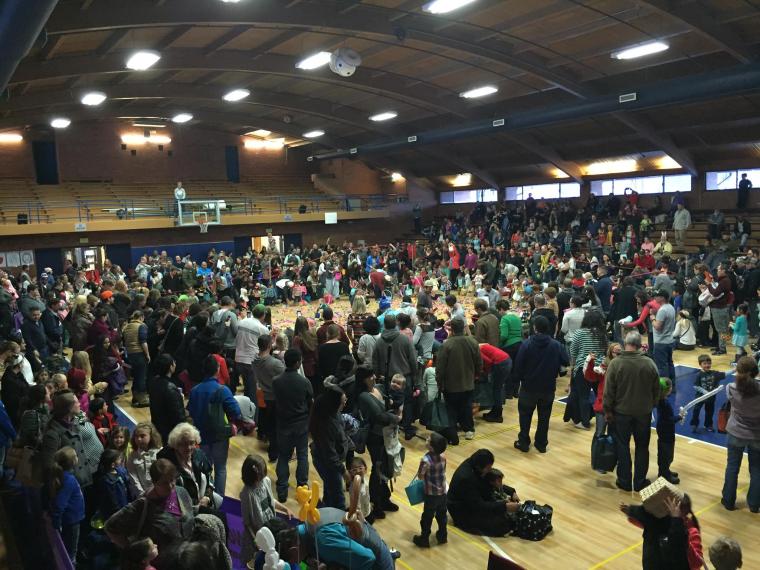
I prayed over their church and over a woman who is sick, and then we came back to Eger, where we met with people from the church there. The church organized an open house for people who wanted to come and see me, and it was a great time of catching up.
Afterwards Travis, Jani and I went out to the thermal bath in Demjén until midnight and talked about life, ministry, church and family before returning to our apartment for the night.
We will see Jani and Tünde again on Friday, because they are coming to Kyiv for the pastors conference I'll be teaching at. Please pray for their family and the ministries they lead in Eger; they are doing well and doing a great job with the church. It has been wonderful to see Jani develop as a pastor over the past 4 years.
Currently we are on the train to Budapest. I have a few meetings today and will teach tonight at Golgota Budapest (Calvary Chapel Budapest), and Travis will be getting together with Németh Laci, the pastor of Golgota Dél-Pest to go see the city and to discuss the ministry Laci leads to combat human trafficking in Hungary. Laci is doing a great work, and we would really like to find out if there is anything we can do to support him and the work he is doing to set people free from modern-day slavery right in his own backyard.

Some of the people we met with in Heves
Little Nikolasz, who was named after me
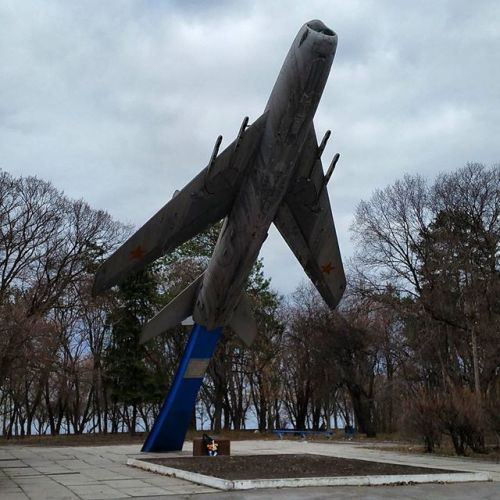
Communist statue at the site of our English Camp. It says Faithfulness to your nation, Faithfulness to your party!
Hanging out with people from Golgota Eger at Jani and Tünde's house


Photos From Our Trip So Far

Preaching at Golgota Debrecen with my friend Jancsi translating. The church is biligual and does all services in Hungarian and English.
Refugee Bible study in Budapest with Farsi translation. They use “Simply Jesus” to teach the Gospel through movement which requires minimal translation.
Many of these Iranian and Afghan refugees recently became Christians
Pastor Jani of Golgota Eger representing for Longmont City!
Elegáns Eger
This is how we got around in Debrecen in Bodi’s tiny car…
Bodi bácsival a Békástónál


Follow-up on Bibles for Refugees

A few months ago, when the refugee crisis was at its peak in Europe, White Fields Church collected money to purchase Bibles for refugees, mostly from Iran and Syria, who had come to Hungary and had either become Christians or were interested in Christianity.

Bibles, especially Farsi (Persian) Bibles are expensive and hard to come by, but we were able to send 50 Bibles in various languages to those working on the ground with these refugees. Last summer, my wife Rosemary was able to meet with some of them in Debrecen, before the refugee camp there was closed this November. Since then most of the refugees have been moved to Bicske, near Budapest, and Békéscsaba in South-East Hungary. Those in Bicske are coming now every Monday to Golgota Budapest to learn the Bible and have Hungarian lessons.

The friends of ours in Budapest who help them asked me if Travis and I could come down and meet them today since we were in Hungary and our church had purchased these Bibles for them.

After breakfast with some friends from the Eger church, Travis and I took the train to Budapest, met with some friends at the church, and then went and joined the refugee Bible study, which was in English with translation into Farsi.

After Bible study, I got the opportunity to speak to the group. I told them about how Rosemary and I had spent years doing refugee ministry and we had seen several people from Iran come to faith in Jesus, and how we had also seen some of those people have their lives threatened, one man was attacked and almost killed, for their new faith.

For these people, the Gospel really is a matter of life and death – of all or nothing. As a result of becoming Christians, their lives will be at risk from their fellow countrymen for having converted and they will likely be disowned by their families and communities. However, though they may lose everything for following Christ in this life, they will gain eternal life in the next. Is it worth it? They would say: Absolutely.

One of the men, when they received the Bibles that our church sent them, held it up and said: “In my country I could be killed for reading this! Think about how powerful the message of this book must be that they want to do everything to keep us from reading it!”

One of the things I told this group, was that we were glad that we could provide for them the Bibles that we did, and that if they needed more, we would be happy to provide those also.

After I spoke to the group, I prayed for them. And after the prayer, Lisa, a missionary with Calvary Chapel in Hungary came over and showed me an email she had just received as I was speaking, from the Hungarian Bible Society, that they had located 30 Farsi Bibles, but they weren’t cheap. Lisa showed me the email and asked if I was serious about providing more Bibles…

We said yes, and we were able to purchase 30 Farsi Bibles for these young believers who have never owned a Bible of their own before. One of the men had received a New Testament in his language before, but was eager to read the Old Testament. Another man had received a Bible from us back in September, but had given it away to another man who wanted to read it and needed another one for himself to read.

Can you imagine not having access to a Bible? Or your faith being a matter of life and death? That is what these people face for their decision to follow Jesus.

God is doing a great work amongst these people, and he is going to use them to be evangelists to other refugees in Europe. These people are our brothers and sisters in the faith. Please pray for them and consider ways to support them. The harvest is plentiful, but the workers are few.


A Day in Debrecen

This morning began early, jet lag does that to you. Before church Travis and I discussed that we would go for a short run. I had an idea that maybe we could run over to see the Kossuth Egyetem (the university in Debrecen which is the largest in Hungary), so we left the church at 6:45. What began as a short run turned into a 10 km run through the medical university and the Nagyerdő  (Great Forest), but it was a great way to see the city.

At 10 we went to church at Golgota Debrecen; I taught and my long time friend Jancsi translated for me, as the church’s services are bilingual. At the end of the service, Bodi, the pastor, prayed for us and then I spent a long time catching up with old friends.

After church we went to eat with friends, and found out that Bodi was planning to drive to Hatvan, near Eger, so he was able to give us a ride to Füzesabony, where Jani, the man who took over for me as pastor of the church in Eger, picked us up and brought us the rest of the way.

We are staying at the flat of someone from the church who is out of town at the moment.

Tomorrow we will go up to Budapest for a meeting with some Iranian refugees who recently became Christians. White Fields Church collected money to buy Bibles for refugees a few months back, and these people were some of the recipients of those. 3 of them were baptized last Sunday and they asked if we could come meet them, so we will do that tomorrow and then come back to Eger for a series of meetings with friends.

I will post pictures tomorrow. We haven’t been able to get a proper Internet connection; I’m posting this from 2G mobile Internet.

Going Back East, Way East

For the next 10 days I will be in Eastern Europe, first Hungary, where I lived for 10 years, and then to Ukraine.

The main purpose for my trip is to teach at a Pastors and Leaders Conference in Kyiv for Calvary Chapels in Ukraine. During my time there I’ll also be going down to visit a ministry White Fields partners with in Svitlovodsk.

Since I’m in the area, I’ll be visiting friends and ministries in Hungary, in Debrecen, Eger and Budapest.

image
Debrecen City Center

Currently I’m in Debrecen, the 2nd largest city in Hungary, the city where I first lived when I moved here. This is where I met my wife and enjoyed 3 years of fruitful ministry to youth, refugees and university students.
Tomorrow morning I will speak at Golgota Debrecen, the church we used to serve at here, and then will spend the day with the pastor and his family.

I’ll be posting more pictures throughout my time here, so stay tuned.

Family Get-away to Steamboat Springs

This past weekend I took my family (all except 1, who had to work) to Steamboat Springs for a short holiday.

I’d always wanted to go to Steamboat; apparently it is the place where I took my first steps when my parents were visiting my aunt who lived there, but of course, I don’t remember that, so it was all new to me.

On the way up, we stopped in Kremmling to see a bit of my family’s history. My Great Grand Uncle (my Grandmother’s uncle) was the town blacksmith for Kremmling until the 1970’s when he died. His old shop still stands in the center of town, with his name still painted on it.

The building is a historical building here in Colorado. Here’s a picture of it from the Denver Public Library’s archives.

Dan_Hoare_Village_Smithy_Kremmling_Colo

In Steamboat we took our baby for her first hike, then went to the outdoor hot springs at Strawberry Park. I have been to a lot of natural hot springs in Europe, but I have to say that I have never been to one with this much character anywhere in the world. As we were there, an elk came down to drink from the spring. It was a great experience.


The next day we went downtown to see the Yampa River, and as we were walking we could smell sulphur, and realized that there were a bunch of natural springs coming right out of the ground, just about everywhere. Some of them were marked, some of them weren’t.

We found a great coffee shop: The Ristretto Lounge, which we would recommend to anyone going to Steamboat to check out.


Why Studying Church History is Important

christian-history1

Something we’ve started recently at White Fields is a series of classes we’re calling: School of Ministry and Discipleship.

The idea is that have started offering a series of 5-week Christian education classes on various topics in a classroom setting. I like to think of it as Bible college for people who don’t have time to go to Bible college.

We ran a test of this last spring, learned a few things, and are ready to start again with our first 3 classes: Christianity 101 and Church History: Parts 1 & 2.

Interestingly, the Gospel Coalition just put out an article this week titled: The Role of History in Reclaiming the Christian Mind.

Here’s an excerpt:

“One of the besetting sins of evangelicalism is a mostly ahistorical approach to theology and praxis. As evangelicals, we appeal to the supreme authority of Scripture, and rightly so. But we don’t read our Bibles in a vacuum.”

Understanding God’s working in and through the church over the past 2000 years, as well as how Christianity developed in doctrine and practice is important for us as Christians today. For me, studying Christian History was one of the most enriching and enlightening parts of going to seminary, and I hope to share some of that with other people.

If you live near Longmont and would be interested in attending these free classes, they will be held on Sundays at noon starting April 3.

For more information or to sign up, click HERE.


Is God’s Covenant Conditional or Unconditional?

covenant_gold

According to the late Ray Dillard, professor of Old Testament at Westminster Seminary in Philadelphia, one of the great themes of the Bible is the question of whether the covenant with God is conditional or unconditional.

It is this question and this tension which drives the Old Testament.

There are places where it seems that God says to his people: “It’s conditional. You have to obey me.  I’m a holy God. I can have nothing to do with sin. If you want to be accepted by me, or have a relationship with me, then you have to obey me.”

There are other places where it seems that God is saying: “No matter what you do, I am going to be faithful to you. I will be there, I won’t give up on you, I will save you.”

So which is it?

In a way, you could say that the entire Old Testament is one big plot thickening, in which the big question is: Can we have a relationship with God? And if so: is our relationship with him conditional or unconditional? Is it that we have to fulfill something, or is it that he loves us no matter what?

So what’s the answer?

The answer is actually not found in the Old Testament. It it when we get to the cross of Calvary that the answer is revealed.

The answer is… YES.

It’s not one or the other, it’s both.

The covenant with God is BOTH conditional and unconditional.

In the death of Jesus on the cross you find that you have to take both the conditions of the covenant and the unconditional nature of God’s love seriously at the same time.

Jesus satisfied the conditions of the covenant on our behalf so that God could accept us and love us unconditionally.


Church: Love It or Leave It?

I recently read a statistic that 80% of people in the United States believe you can be a good Christian and have no connection with a church community.

That means: follow Christ, know Christ, relate to Christ.

80% of Americans polled said that it is possible to do these things without being related to any church.

Jesus would disagree.

In the Gospel of John, chapter 17, as Jesus is praying to the Father the night before he is crucified – he looks at his disciples, and he looks forward to the church, which he is going to create by what he’s about to do, and he says:

Father, for their sake I consecrate myself, so that they may be sanctified. (John 17:19)

That word “consecrate” means: “I set myself apart for them!  I am dedicated to them! I live for them!”

Jesus lives for the church. He died for the church. He is wholly committed to the church.

That means that there is never a time when Jesus says to himself, “The church… that little organization I left behind down there… I haven’t thought about them in a while; I wonder how they’re doing… ”  

No! Rather, he lives for the church, he died for the church, and he is wholly committed to the church.


The church is God’s masterpiece, which he gave his life to create – and which he promised to protect forever, never allowing it to be overcome by evil.

In Ephesians chapter 1, it says that Jesus rules all things for the church.

The church is God’s expression of Himself in the world.

The church is God’s chosen and designed vehicle for the carrying out of his mission in the world.

In the Book of Acts, we see God bringing the church into existence, then adding to the church, then multiplying the church – and then sending out missionaries to start more churches.

In the Book of Revelation, where do we see Jesus? He is walking amongst the lampstands, which represent the churches.

God loves the church! It is his masterpiece. Jesus lived and died to create it, and he actively sustains it. He is fully committed to it – and you should be too.

And not just in the sense of the invisible worldwide communion of all who follow Christ – but the local church in particular. It’s easy to say, “Oh, of course I love “the church” in the sense of all the followers of Jesus out there – you know, as long as I don’t have to actually see them or interact with them or have any responsibility towards them…”

The idea that Christianity is a purely private, personal matter and that the church is optional and unnecessary – or even as the leader of a parachurch organization put it to me once: a “necessary evil” – is the product of our individualistic culture rather than the heart of God.

It has been said that the church is like a work of art, a masterpiece which mediocre and even bad artists have been painting over for centuries.

This happens sometimes: a great artist created a masterpiece, but over the years other artists – mediocre or even bad artists – tried to touch it up, and they painted over the top of it, and the challenge is to get underneath, back to the original masterpiece. That requires slow, hard work of scraping away and removing layers.

There is much about the church which turns people off, but there is no way you can say, like 80% of Americans that you can be a good Christian and write off the church and have no commitment to it.

The answer is not to write it off or dismiss it, but to return to the original masterpiece.

If Jesus loves the church, if Jesus is committed to it and lives for it and gave his life for it – then to love Jesus and follow Jesus means to love his church and be committed to it as well.