
“Oh, How I Love Your Law” – the Role of the Law in the Life of a Believer is More than Just Showing You that You Need a Savior

img_20171123_164134

For Thanksgiving I took my family to California to visit family and friends. We drove out; it’s a 15-16 hour drive each way, but this afforded me the chance to listen to 3 audiobooks.

The first was The Sun Also Rises by Ernest Hemingway. Earlier this year I read A Farewell to Arms and loved it, particularly the ending, and how Hemingway is clearly expressing his own wrestling with faith and belief in God. However, The Sun Also Rises was not like that at all. Besides the detailed account of bull fighting, I didn’t really like the book.

The second book I listened to was The Whole Christ by Sinclair Ferguson, on the topic of the Marrow Controversy, a debate which split the Scottish Presbyterian churches in the 18th Century over the topics of legalism and antinomianism (anti – nomos (law) = against the law).

Ferguson points out that legalism and antinomianism are like cousins who are more related to each other than they are to the gospel. The legalist looks to rules and performance to earn status and favor with God. Clearly this is a wrong and unbiblical view. But the other extreme is antinomianism – a rejection, even antagonism towards the Law, i.e. the moral commandments, rules and obligations which the Bible lays out.

The thinking behind antinomianism is that the Law served one purpose: to show us that we are sinners who need a Savior, and once that work is done, we have no further use for the Law, and we should have nothing to do with it in our lives, beyond historical reference.

It is true that the Law serves to show us that we are sinners who have not lived up to God’s perfect standards, and therefore we need a Savior. Romans and Galatians make this point crystal clear. But is this the only function of the Law in the life of a believer? The answer is: No.

So then what is the role of law in the life of a believer – one who has been set free in Christ – beyond just showing us that we are sinners who need a savior?

1. The Law points us to Christ as the Fulfiller of the Law

The Bible is full of moral principles and injunctions towards things like kindness, compassion, honesty, forgiveness, generosity, humility, etc. The problem is that very often we read these (or teach them) without reference to Christ. Paul writes in Galatians 3:24 “So then, the law was our guardian until Christ came, in order that we might be justified by faith.”  The Law shows us that we are sinners who desperately need a Savior. But, we see the perfect fulfillment of the Law in Christ—and only in Him! The Law points us to Christ not only by condemning us for breaking it, but by pointing to Christ who is the fulfillment of it! Jesus said: Do not think that I have come to abolish the Law or the Prophets; I have not come to abolish them but to fulfill them. (Matthew 5:17)

2. The Law Reveals God’s Character and Shows His Glory

The Law reveals the Glory of God, by showing us His holiness, how He is “other”, different, perfect and good. Where we fall short, He does not.

The Law leads us to reverence and worship of a God who is greater than us. This leads us to a posture of humility before God. 

Humble yourselves before the Lord, and he will lift you up. (James 4:10)

3. God’s Law is a playbook for the redeemed person to use in bringing Him pleasure

We ought not look to God’s moral injunctions as the means by which to garner His love or favor, nor as a way of earning or meriting anything from Him. But for the redeemed person, the Law becomes a playbook in our hands, which tells us what God likes and dislikes – and therefore how we, as people who love God, can bring joy and pleasure to His heart.

I recently taught a class at White Fields’ School of Ministry on the Minor Prophets. The last book, Malachi, talks a lot about obeying God by keeping His law, and specifically talks twice (in only three chapters) about tithing. The question I asked the students was: What is the role of keeping God’s Law, and specifically of tithing, for the New Testament believer?

The answer was that, as people who don’t relate to the Law as a means of earning or meriting anything from God, we approach it as a playbook which instructs us about what God loves and hates, and therefore helps us to respond in love to Him who has poured out His love in our hearts by the Holy Spirit and redeemed us from the pit and set us on a rock in Christ. When we obey His moral instructions and commands, it doesn’t make Him love us more, but it is a way that we can bring Him joy and pleasure.

May we not become antinomian in our view of the Law, but may we see it for the good and glorious thing that it is, and say with the Psalmist: “Oh, how I love your Law!” (Psalm 119)

What Andy Kaufman, Jim Carrey, John Coltrane and CS Lewis Have in Common

I’ve been watching the Netflix documentary about Andy Kaufman through the eyes of Jim Carrey, which shows behind the scenes footage filmed during the filming of Man on the Moon. As Carrey says in the documentary: the behind the scenes stuff is the actual movie, because the entire time they were filming the movie, he insisted to stay completely in character, even to the point of having tearful and heartfelt conversations with Andy Kaufman’s relatives, who truly acted and felt as if they were talking to Andy himself.

But I thought the best part of the documentary was whenever Jim Carrey would talk to the camera. He seemed very vulnerable, honest and melancholy. He talked about how his whole life he was playing a part: that “Jim Carrey” was a persona he created, and now he’s done trying to be that person, and he’s ready to just be himself. That is what he learned by “being” Andy Kaufman – because Andy Kaufman was a unique individual. He wasn’t a comedian – he rejected that label, pointing out that he never actually told a single joke. Instead, he considered himself…well: himself. He would just do whatever he wanted and thought would entertain people, whether that was singing a song or wrestling a woman, or staging a fight. He was completely out of the box, and totally comfortable in his own skin. Realizing this while playing this role, Carrey says, changed his life.

About half-way through the documentary, Jim Carrey says:

At some point when you create yourself to make it, you’re going to have to either let that creation go and take a chance on being loved or hated for who you really are, or you’re going to have to kill who you really are, and fall into your grave grasping onto a character who you never were.

This reminds me of a quote from CS Lewis in Mere Christianity:

You will never make a good impression on other people until you stop thinking about what sort of impression you are making. Even in literature and art, no man who bothers about originality will ever be original: whereas if you simply try to tell the truth (without caring two pence how often it has been told before) you will, nine times out of ten, become original without ever having noticed it. Give up yourself, and you will find your real self.

Jazz musician John Coltrane wrote about a similar experience he had in his life. He had spent his life, like many people, believing that if he could get really good and become successful, people would love and appreciate him and then he would have a sense of value, worth and meaning in his life. But in the notes of his album “A Love Supreme” he wrote about a change that had taken place in his life:

During the year 1957, I experienced, by the grace of God, a spiritual awakening which was to lead me to a richer, fuller, more productive life. At that time, in gratitude, I humbly asked to be given the means and privilege to make others happy through music…to inspire them to realize more and more of their capacities for living meaningful lives. Because there certainly is meaning to life. I feel this has been granted through His grace. ALL PRAISE TO GOD. This album is a humble offering to Him. An attempt to say “THANK YOU GOD” through our work, even as we do in our hearts and with our tongues.

John Coltrane had stopped making music out of a desire to be praised and accepted. Now he did it for the sake of music, for the benefit of the listener, and to unto God. And in doing so, he experienced freedom.

There is a wonderful freedom in self-forgetfulness, the act of taking our eyes off of ourselves. But if we stop there, we haven’t gone far enough. We need to take the final step, as John Coltrane did, of not only taking our eyes off of ourselves, but fixing our eyes on Jesus and what He has done for us. If you do, then His beauty, love, power and strength will be what motivates you in a labor of love and response.

The Role of Doubt in Faith

“For most people who reject Christianity, their reasons for doing so are not usually intellectual, they’re personal.”

The book of the Bible called “The Letter to the Hebrews” was written to people who were discouraged, to the point of giving up. The reason? Because they didn’t see anything happening. They had put their faith in a God who loved them and cared about them, in a God whom they had been assured would hear their prayers when they called out to him, and yet their lives were characterized by frustration and difficulty.

Probably they knew that the promised salvation didn’t guarantee them a problem-free life – but they wondered: If God is good and loves me, then why are these bad things happening to me? They were struggling with doubt. They were weary and discouraged. And because of this, some of them were thinking of backing off of Christianity, or even turning their backs on it completely.

I’ve heard it said before that for most people who reject Christianity, their reasons for doing so are not intellectual (like not believing in the supernatural), they are personal. Something happened in their life which deeply hurt them or which they are frustrated with and can’t understand, and they wonder: Why? If there’s a supposedly a God who loves and cares about me, then why doesn’t he do more to make my life better?

There is a powerful statement found in the short New Testament letter of Jude:

“Have mercy on those who doubt.” – Jude 1:22

You can see that this is how God treats people who doubt as well. Think of Gideon, whom God called to do something, but then Gideon asked for a sign. Once he got the sign, he still wasn’t satisfied, so he asked for another sign! Rather than being a good practice that we should follow, Gideon’s requests for signs was essentially a lack of faith in God and his word, and yet – God was merciful towards Gideon.

Doubt is an inherent part of faith. If we could see everything, there would be no need for faith, but because we don’t see, we must have faith, and implicit to faith is doubt. Doubt is not necessarily the enemy of faith, it can actually be something that strengthens faith – but, there are different kinds of doubt: there is an honest form of doubt, which wants to believe but honestly struggles with some questions, and there is a cynical kind of doubt which says, “Don’t bother me with the facts, I’ve already made up my mind not to believe.”

In Timothy Keller’s book The Reason for God: Belief in an Age of Skepticism, he writes:

A faith without some doubts is like a human body without any antibodies in it. People who blithely go through life too busy or indifferent to ask hard questions about why they believe as they do will find themselves defenseless against either the experience of tragedy or the probing questions of a smart skeptic. A person’s faith can collapse almost overnight if she has failed over the years to listen to her own doubts, which should only be discarded after long reflection. Believers should acknowledge and wrestle with doubts—not only their own, but their friends’ and neighbors’.

But even as believers should learn to look for reasons behind their faith, skeptics must learn to look for a type of faith hidden within their reasoning. All doubts, however skeptical and cynical they may seem, are really a set of alternative beliefs. You cannot doubt Belief A from a position of faith in Belief B. For example, if you doubt Christianity because ‘There can’t be just one true religion,’ you must recognize that this statement is itself an act of faith. No one can prove it empirically, and it is not a universal truth that everyone accepts. If you went to the Middle East and said, ‘There can’t be just one true religion,’ nearly everyone would say, ‘Why not?’ The reason you doubt Christianity’s Belief A is because you hold unprovable Belief B. Every doubt, therefore, is based on a leap of faith.

So, not only is doubt normal and even healthy (if handled properly), but all forms of doubt are based on faith and belief in something. May we be those who not only wrestle with questions and come to a stronger, more robust faith – but may we be those who doubt our doubts, and help others to do the same!

The Empty Soul

This past Sunday we finished the 5 Solas series at White Fields with our study of Soli Deo Gloria (to the glory of God alone) – click here to listen to that message. Something I learned through preparing for this study, is that for the Reformers, Soli Deo Gloria referred specifically to their view of work: that everything a person does, not just work in and for the Church, can be service to God. They rightly elevated the place of work – and all God-honoring, people-benefiting work – to its biblical place of significance and importance. This doctrine went hand in hand with the teaching of “the priesthood of all believers.”

Here is an excerpt from Luther’s article “To the Christian Nobility of the German Nation” on this topic:

It is pure fiction that Pope, bishops, priests, and monks are called the “spiritual estate” while princes, lords, artisans, and farmers are called the “temporal estate.” This is indeed a piece of deceit and hypocrisy. Yet no one need be intimidated by it, and that for this reason: all Christians are truly of the spiritual estate, and there is no difference among them except that of office. . . . We are all consecrated priests by baptism, as St. Peter says: “You are a royal priesthood and a priestly realm” (1 Pet. 2: 9). The Apocalypse says: “Thou hast made us to be kings and priests by thy blood” (Rev. 5: 9– 10).

As I was preparing for this message last week, I came across something interesting written by Dorothy Sayers, who has written a lot on the topic of the integration of faith and work.

While the biblical view of work is that it is good and part of God’s good design for us as human beings, there are certainly some pitfalls that we can fall into in regard to how we see our work. If we look to our work to “make a name for ourselves” – rather than looking to God to receive our “name” (identity, status, value) from him, then we will inevitably have an unhealthy, and destructive, relationship with our work.

Dorothy Sayers, in Creed or Chaos?, points out that there is a common misunderstanding about the meaning of “sloth” or “slothfulness” – one of the traditional seven deadly sins. Usually, we tend to think of sloth as laziness, but the Greek word Acedia means more of a life which is consumed only with cares about oneself.

Acedia is the sin which believes in nothing, cares for nothing, enjoys nothing, loves nothing, hates nothing, finds purpose in nothing, lives for nothing and only remains alive because there is nothing for which it will die. We have known it far too well for many years, the only thing perhaps we have not known about it is it is a mortal sin.

She goes on to say that because a person characterized by acedia only cares about their own needs, interests and comforts, they might not necessarily be lazy at all. They might seem quite driven, in fact. She says though that acedia is “the sin of the empty soul.”

We think that if we are busily rushing about and doing things we cannot be suffering from Sloth. Gluttony offers a world of dancing, dining, sports, and dashing very fast from place to place to gape at beauty spots. Covetousness rakes us out of the bed at an early hour in order that we may put pep and hustle into our business; Envy sets us to gossip and scandals, to writing cantankerous letters to the paper, and to the unearthing of secrets and scavenging of desk bins; Wrath provides the argument that the only fitting activity in a world so full of evil doers and evil demons is to curse loudly and incessantly, while Lust provides that round of dreary promiscuity that passes for bodily vigor. But these are all disguises for the empty heart and the empty brain and the empty soul of Acedia. In the world it calls itself Tolerance but in hell it is called Despair.

Timothy Keller, referring to Sayers’ writings on Acedia in his book Every Good Endeavor, points out that Acedia is really misdirected passion. It is passion that only cares about oneself, but true passion – like the Jesus’ Passion – is passion for the good and well-being of others.

Jesus said: For whoever wants to save their life will lose it, but whoever loses their life for me and for the gospel will save it. (Mark 8:35)

To live for yourself, caring for your own needs, interests and comforts, will leave you with an empty soul – but to give your life in service to God and others in response to the gospel will leave you with a soul that is full to overflowing. Jesus emptied Himself for you, but in doing so, His heart was full! May He empower us to live that way as well!

Martin Luther on Music and Song Writing

One of Luther’s great contributions to Christianity was that he pointed out that much of the common thinking about Christian living and attitudes comes from Plato and Aristotle, rather than from the Bible.

Plato, for example, was a dualist – who viewed the physical world as inherently bad, and the unseen spiritual world as inherently good. Therefore, Plato taught that physical pleasure should be avoided; it was better to live a life of suffering and eschew pleasure in order to be more spiritual. This thinking worked its way into Christianity, to the point where things intended by God to be blessings for our enjoyment were rejected and forbidden. One such area was music.

Augustine of Hippo had written about music in the 5th century, stating that he was “troubled in conscience whenever he caught himself delighting in music.” Luther, who greatly looked up to Augustine, responded by saying: “I have no use for cranks who despise music, because it is a gift of God.” He went on to say, “Next after theology I give to music the highest place and the greatest honor,” and “next to the Word of God only music deserves to be extolled as the mistress and governess of the feelings of the human heart.”

“Next after theology I give to music the highest place and the greatest honor.”

“Next to the Word of God only music deserves to be extolled as the mistress and governess of the feelings of the human heart.”

Luther is the one who introduced, or at least re-introduced congregational singing to the church. It may be hard to imagine, but until Luther brought singing to the church, there had been no such thing for at least several hundred years, if not more. Furthermore, the fact that there is congregational singing in Catholic churches today is directly because of Luther, and most hymns sung in the Roman Catholic Church today were written by Protestants.

Luther also believed that music was a great tool for teaching spiritual truths. He wanted to put good doctrine into congregational songs to reinforce the teaching that was coming from the pulpit. Luther wrote many hymns himself, but he also reached out to others for help. In a letter to his friend Georg Spalatin in 1523, Luther wrote:

Our plan is to follow the example of the prophets and the ancient fathers of the church and to compose songs for the people in the vernacular, that is: spiritual songs so the Word of God may be among the people also in the form of music. Therefore we are searching everywhere for poets. Since you are endowed with a wealth of knowledge and elegance in the German language, and since you have polished it through much use, I ask you to work with us in this project.

I would like you to avoid any new words or the language used at court. In order to be understood by the people, only the simplest and most common words should be used for singing; at the same time, however, they should be pure and apt; and further, the sense should be clear and as close as possible to the [Bible]. You need a free hand here; maintain the sense, but don’t cling to the words; [rather] translate them with other appropriate words.

Furthermore, unlike Zwingli in Zürich, who forbade the use of musical instruments, Luther encouraged the use of musical instruments in church.

Martin Luther not only introduced music back into the church, but he defined the parameters of what makes for good Christian church music.

What Really Happened on October 31, 1517?

Today is Reformation Day, and not just any Reformation Day – it is the 500 year anniversary of the event which is usually considered to mark the official start of the Reformation, and rightly so – because something was done on October 31, 1517 which would snowball into the Reformation and would changed the world forever.

But what was that event?

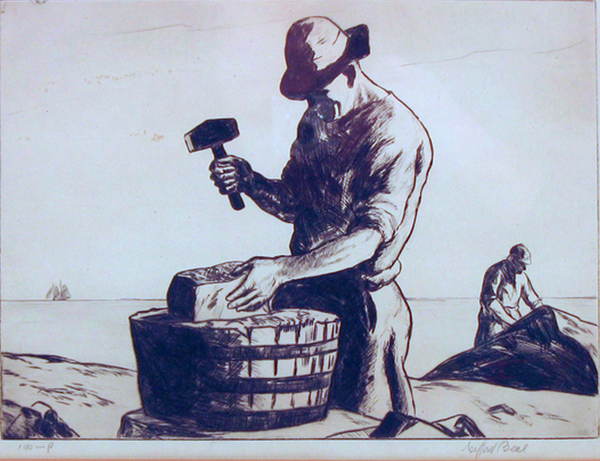
It is widely held, that this is the day when Martin Luther defiantly nailed his 95 Theses to the wooden door of the castle church in Wittenburg, Germany – his hammer strikes shattering the Holy Roman Empire, and the nail piercing right through the heart of the Pope!

luther-hammers-the-95-theses-to-the-church-door-of-wittenberg.jpg

But on closer examination, it was actually something no less significant, but probably slightly less dramatic!

Here’s what we know:

Luther mailed a letter

The one thing we do know is that on this day, Luther posted a letter to Archbishop Albrecht of Mainz. So rather than having the picture in your mind of Luther brazenly and defiantly mailing nailed a list of grievances to the door of the church, picture in your mind Luther sitting at his desk, sealing an envelope and then gently handing a letter to a currier, and giving him some cash to deliver it.

Furthermore, this letter was written – not defiantly and aggressively, but in the most humble, polite and apologetic tone that can be imagined.

You can read the text of that letter here: Luther’s Letter to the Archbishop of Mainz (1517)

Here’s just his introduction:

Spare me, Most Reverend Father in Christ and Most Illustrious Prince, that I, the dregs of humanity, have so much boldness that I have dared to think of a letter to the height of your Sublimity. The Lord Jesus is my witness that, conscious of my smallness and baseness, I have long deferred what I am now shameless enough to do, — moved thereto most of all by the duty of fidelity which I acknowledge that I owe to your most Reverend Fatherhood in Christ. Meanwhile, therefore, may your Highness deign to cast an eye upon one speck of dust, and for the sake of your pontifical clemency to heed my prayer.

The reason Luther wrote to the Archbishop of Mainz is because these indulgences were being sold in his name in the region over which he had oversight and authority, and Luther believed that Archbishop Albrecht was not aware of what was going on, and that it was his duty to inform him. Luther expected that upon hearing about what was happening, Archbishop Albrecht would put an abrupt stop to it. That is, however, not what happened…

We don’t know when the 95 Theses were actually posted

It was Melanchthon, Luther’s follower, who several years later gave the date of October 31, 1517 as the date when the 95 Theses were posted. There’s a good chance that he did that based on knowing that was the day when Luther mailed his letter to Archbishop Albrecht of Mainz.

Maybe that is the date, maybe it isn’t.

The 95 Theses probably weren’t posted the way it has been depicted

A hammer and some nails. So dramatic. Such bravado! But in all likelihood, that’s not how they would have been posted.

More likely:

  • They were probably posted with paste, rather than with a hammer and nails. So instead of imagining Luther with his arm cocked back to strike a nail with a hammer, imagine him with a bucket of paste and a brush.
  • They were probably not posted by Luther himself. The door of the church functioned as the church bulletin board, where you would post everything from “I lost my cat Mittens” to “I’m offering guitar lessons for $10/hour”. And it was the job of the church custodian to post things on the door. So try to picture Luther gently handing the church custodian something to post on the door, you know: when he had a moment.
  • They were probably posted on several church doors. The posting was in Latin (not the vernacular German), and it was an invitation to a scholarly debate. Kind of like how you might post to Facebook and Twitter and Instagram to get your message out there, it is likely that a message like this would have been shared on more than one church door (AKA bulletin board).

No matter the particulars about it, we can be sure of one thing: the Reformation was about a return to the Bible, putting the Bible in the hands of the people, and a rediscovery of the core message of the Bible: the gospel!

Happy Reformation Day!

Sola Scriptura: All Scripture is Breathed Out by God

Yesterday we began a 5-week series at White Fields in which we are looking at the 5 Solas of the Reformation: the slogans that the Reformers used to summarize their core beliefs:

  • Sola Scriptura (Scripture Alone)
  • Sola Gratia (Grace Alone)
  • Sole Fide (Faith Alone)
  • Solus Christus (Christ Alone)
  • Soli Deo Gloria (To the Glory of God Alone)

We started by looking at the first of these: Sola Scriptura.

sola_scriptura__artwork__dark-01

Sola Scriptura means: the Bible alone is our highest authority.

Martin Luther and the other Reformers found themselves in a situation, where – having read the Bible, they discovered that many practices and teachings of the church in their time were actually in direct opposition to the clear teaching of the Bible – particularly on the issues of absolution of sin and justification.

This is what led to Martin Luther’s famous statement at the Diet (Congress) of Worms:

Unless I am convinced by the testimony of the Scriptures or by clear reason (for I do not trust either in the pope or in councils alone, since it is well known that they have often erred and contradicted themselves), I am bound by the Scriptures I have quoted and my conscience is captive to the Word of God. I cannot and will not recant anything, since it is neither safe nor right to go against this knowledge. May God help me. Amen.

Sola Scriptura does not mean that we reject other sources of truth and wisdom, nor that we reject or ignore tradition. To do so would not only be foolish, but it would be ignorant of the fact that the very way that we got the canon of Holy Scriptures that we now have was in large part by God working through reason and tradition to transmit the Scriptures to us.

What Sola Scriptura means is that when it comes to what we believe and how we live, there is no higher voice, no greater authority than the Holy Scriptures, and everything must by judged by them.

So, if church councils say one thing, but the Bible says another: Who wins?  The Bible does. If our culture and society says one thing, but the Bible says something else, then who do we believe?  Who do we submit to?  The answer is: the Scriptures.

Did the New Testament Writers Know They Were Writing Scripture?

2 Timothy 3:16 says: All Scripture is breathed out by God and profitable for teaching, for reproof, for correction, and for training in righteousness

What Scriptures are being referred to here?

Obviously it is referring to the Old Testament scriptures, but interestingly, this comes from 2 Timothy, the last letter which Paul wrote, at the end of his life. By this time — almost all of the books that we have in our New Testaments had already been written, and were being distributed amongst the Christians, to be read and studied in their churches.

So, when Paul says, “All Scripture” — he’s not just talking about the Old Testament, he’s also talking about the New Testament!

In the New Testament, what you find is that the Apostles understood that God was using them in their time to bring about a New Testament of Holy Scriptures, by the inspiration of the Holy Spirit.

Here are a few examples:

  • In 2 Peter 3:15-16, Peter refers to the writings of Paul as “Scriptures”
  • In 2 Thessalonians 2:13, Paul referred to his own message as “the word of God”
  • In 1 Timothy 5:18, Paul takes a quotation from the Gospel of Luke – and he calls it “Scripture” (Luke 10:7)
  • In some of his letters, Paul instructs the recipients to distribute his letters and have them read in the churches. (Colossians 4:16, 1 Thessalonians 5:27)

What Paul is telling Timothy in this text is to stick to the Scriptures, because they come from God, not from man.

The Bible is not only inspired in the sense that it is like a great work of art that we might say is “inspired” – but it is inspired in the greater sense, that the words it contains were breathed by God Himself!

What that means is that the Bible is no ordinary book — it is the very word of God to us, and therefore it alone is worthy to be the highest authority in our lives.

Take Joy in Being the People of God

Last night I went to an event where author Eric Metaxas was speaking about his new book, a biography of Martin Luther. It was held at a church in Greenwood Village, and after speaking for about an hour about Luther and the writing of the book, he answered questions and then signed books.

IMG_20171024_194254.jpg

During the Q&A time, Metaxas said a few things which I thought were particularly powerful. The question was one about how Christians should always be reforming the church. Eric responded by saying that: yes, the Reformation must always continue, but in his opinion, oftentimes the church is too critical of the church. That Christians spend a lot of time deriding Christians and bemoaning the church, when in fact we should find an immense amount of joy in being the people of God who are called to take the message of God’s grace and love into the world. This is something we should revel in!

He went on to say that he grew up in the secular culture, and that for him – he saw the church as a living connection to God. When you’re drowning and someone throws you a rope, he said, it may be an imperfect rope, but it is a rope nonetheless, and rather than focusing on its flaws, you are thankful for the rope!

Metaxas went on to point out that the cultural elites in our day all speak the same language of secular humanism, and they together have collectively agreed that Christianity is old fashioned, obsolete and passé – and too often, we as Christians bow down to that and say: ‘Yeah, you’re right,’ and we shrink back into the shadows or retreat into an insular Christian sub-culture. Instead, we should stand in confidence as the people of God, with the truth of God, and use all avenues available to us to bring God’s truth and the message of the gospel into our society.

Eric has done this very well with his radio program and his books, which are published by a mainstream publisher (Viking Books) and several of which have made the New York Times bestseller list. He has a unique perspective on the church, having become a Christian later in life, studying at Yale and living in New York City, none of which are generally considered particularly friendly towards Christianity. He has been a good steward of the gifts that God has given him and has become an important and influential voice in our society, heralding the gospel as he can.


How Martin Luther King Jr Got His Name

This coming weekend at White Fields we will be starting a new series for the 500 year anniversary of the Reformation about the 5 Solas.

Partly in preparation for this and partly out of my own interest and curiosity, I’ve been reading a few books. One of them is Eric Metaxas’ new biography of Martin Luther, and the other is Stephen Nichols’, The Reformation: How a Monk and a Mallet Changed the World.

Metaxas begins his book with a story, which I had never heard before: How in 1934, an African American pastor from Georgia got on a boat to make the trip of a lifetime; he sailed across the Atlantic Ocean, through the gates of Gibraltar, across the Mediterranean Sea, to Israel. After this pilgrimage to the Holy Land, he traveled to Berlin to attend an international conference of Baptist pastors. While in Germany, this man, Michael King, became so impressed with what he learned about the Reformer, Martin Luther, that he decided to do something dramatic: he decided to change his name to Martin Luther King. This man’s son, also named Michael, was five years old at the time, and although close relatives would continue to call him Mike for the rest of his life, his father also changed his name, and he became known to the world as Martin Luther King Jr.

Metaxas uses this story to highlight the dramatic impact that Martin Luther has had, not only on the world, but on those who have come to know the story of his life and understand his actions, which have indeed changed the world and Christianity as we know it – even Roman Catholicism.

What has caught my attention most in the book so far, is how shockingly little even those who did have access to the Bible actually read it in Luther’s time, and how deep and widespread the problems were in the church at that time, largely as a result of this. It seems that what really set Martin Luther apart, and what led to the Reformation, was simply that he read the Bible. May we not be guilty of neglecting that in our day!

Tomorrow evening (Tuesday, October 24), my wife and I will be going down to Denver to see Eric speak about his book at Cherry Creek Pres. If you’re interested in going, here’s the event site where you can get tickets.

Wesley on Money

I’ve been reading a book on John Wesley’s theological method for my master’s course, and found an interesting section on his teachings and practice in regard to money.

Here’s an excerpt:

Wesley’s care for people extended beyond their spiritual well-being. In his time he was in the forefront of helping to alleviate the social ills of 18th-century England. His care for souls extended to the whole person, especially among the poor, the uneducated, the sick and the dispossessed – for example, slaves and prisoners.

The poor received special attention. He provided basic medical care and wrote simple medical manuals to help those who could not afford professional healthcare. At Kingswood school he set up a benevolent loan fund for people with immediate financial needs, the only stipulation being that they should repay the loan within three months.

Wesley preached what he practiced. Many sermons were intended to instruct on how to handle money. His best-known sermon dealing with money is entitled “The Use of Money.” In it Wesley exhorted Christians to “gain all you can, save all you can, and give all you can.” Wesley soon discovered that his followers were good at the first two principles, but ignored the third principle against surplus accumulation, which he considered the leading ill of Christian praxis. He was so concerned over the misuse of money and corresponding injustices that he published several sermons specifically warning about the spiritual danger to the person who does not give.

(Thorson, The Wesleyan Quadrilateral: a model of evangelical theology, 53-54)

Several stories are told about Wesley’s passion for good stewardship of money came about. First of all, he grew up in poverty. His father was a minister and John was one of 9 kids.

As a young man, Wesley was accepted into Oxford University. At Oxford, he had just finished paying for some pictures to decorate his room, when one of the maids came to his door. It was a cold day and she only had a threadbare gown to wear with no coat. He reached in his pocked to give her money to buy a coat, but he found that he had too little left after decorating his room. He asked himself, “Will thy Master say, ‘Well done, good and faithful steward’? O justice! O mercy! Are these pictures the blood of this poor maid?”

Starting in 1731, Wesley reportedly began limiting his expenses so he would have more that he could give away. He records that one year his income was 30 pounds and his living expenses were 28 pounds, so he had 2 pounds to give away. The next year his income doubled, but he still managed to live on 28 pounds, so he had 32 pounds to give away. In the third year, his income jumped to 90 pounds. Instead of letting his expenses rise with his income, he kept them to 28 pounds and gave away 62 pounds. In the fourth year, he received 120 pounds. As before, his expenses were 28 pounds, so his giving rose to 92 pounds.

Wesley felt that the Christian should not merely tithe but give away extra income. He believed that with increasing income, what should rise is not the Christian’s standard of living but their standard of giving.

With increased income, what should rise is not the Christian’s standard of living but their standard of giving.

One year his income was a little over 1400 pounds. He lived on 30 pounds and gave away nearly 1400 pounds.

Wesley encouraged Christians to “gain all you can,” meaning that it is good to make a lot of money. However, he added that in gaining all you can, Christians must be careful not to damage their own souls, minds, or bodies, or the souls, minds, or bodies of anyone else. He prohibited gaining money through industries that took advantage of others, exploiting them or endangering them.

Wesley outlined four guidelines for spending one’s income:

  1. Provide things needful for yourself and your family (1 Timothy 5:8)
  2. Having food and raiment, let us be therewith content (1 Timothy 6:8)
  3. Provide things honest in the sight of all men (Romans 12:17) & Owe no many anything (Romans 13:8)
  4. As we have therefore opportunity, let us do good unto all men, especially unto them who are of the household of faith (Galatians 6:10)

I was challenged and encouraged by reading about Wesley’s attitudes and practices with money. I hope you are too.

Let’s not stop with only being inspired – but may we be moved to action! Is there a change that needs to be made in the way you view or handle money?