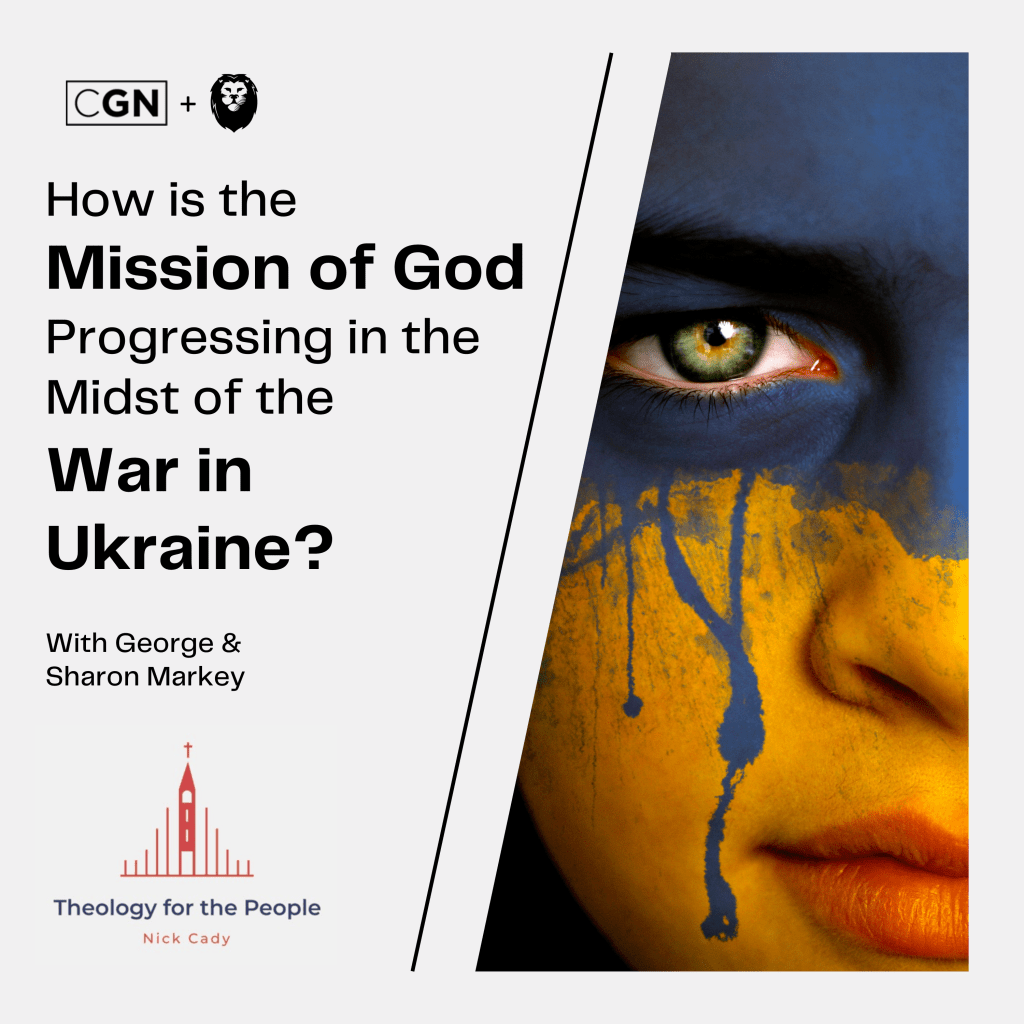
In this week’s episode of the Theology for the People podcast, Michael Payne and I speak with George and Sharon Markey, who are missionaries in Kyiv, Ukraine. George has been in Ukraine for 30 years now, and is able to give unique insight into what is happening there right now in the midst of the war.
In this discussion, recorded when George and Sharon visited us in Colorado in June of 2022, George tells the story of how his family moved to Ukraine in 1992, and Sharon tells her story of meeting George and joining him on the mission field.
They talk about their family’s experience in evacuating from Ukraine when the war began and how they are continuing to reach out with the love of Jesus to the Ukrainian people, and how the mission of God is progressing even in the midst of the current calamity.
Check out George and Sharon’s new website, mentioned in the episode: BridgeUA.org
If you find this episode interesting or helpful, please share it with others and leave a rating and review on your podcast app, as that helps other people discover this podcast and its content.
In this episode, Michael Payne and Nick Cady speak with George and Sharon Markey, missionaries in Ukraine. George tells the story of how his family moved to Ukraine in 1992, and Sharon tells her story of meeting George and joining him on the mission field. They talk about their family's experience in evacuating from Ukraine when the war began and how they are continuing to reach out with the love of Jesus to the Ukrainian people, and how the mission of God is progressing even in the midst of the current calamity.
Check out George and Sharon's new website, mentioned in the episode: BridgeUA.org
This episode was originally recorded for the White Fields Community Church YouTube channel. Please visit and subscribe to that, and you can visit the Theology for the People blog at nickcady.org
Dean Inserra is the author of the book, Pure: Why the Bible’s Plan for Sexuality Isn’t Outdated, Irrelevant, or Oppressive. In this episode, we talk about “purity culture” and whether the recent pushback against it is warranted. We also discuss biblical sexual ethics and Dean gives advice for people in different life situations in regard to marriage, singleness, and dating.
Dean is the founding and lead pastor of City Church in Tallahassee, Florida. He is a graduate of Liberty University and holds a MA in Theological Studies from Midwestern Baptist Theological Seminary. He is currently pursuing a D.Min from Southern Seminary. Dean is an advisory member of the Ethics and Religious Liberty Commission’s Leadership Council with the Southern Baptist Convention and is a member of Baptist 21.
For more information about the Calvary Chapel / CGN international conference June 26-29, 2022, visit conference.calvarychapel.com
If you find this episode interesting or helpful, please share it with others and leave a rating and review on your podcast app, as that helps other people discover this podcast and its content.
Are Christian Sexual Ethics Harmful or Helpful? Was "Purity Culture" a Mistake? – with Dean Inserra –
Theology for the People
Dean Inserra is the author of the book, Pure: Why the Bible's Plan for Sexuality Isn't Outdated, Irrelevant, or Oppressive. In this episode, we talk about "purity culture" and whether the recent pushback against it is warranted. We also discuss biblical sexual ethics and Dean gives advice for people in different life situations in regard to marriage, singleness, and dating.
Dean is the founding and lead pastor of City Church in Tallahassee, Florida. He is a graduate of Liberty University and holds a MA in Theological Studies from Midwestern Baptist Theological Seminary. He is currently pursuing a D.Min from Southern Seminary. Dean is an advisory member of the Ethics and Religious Liberty Commission's Leadership Council with the Southern Baptist Convention and is a member of Baptist 21.
For more information about the Calvary Chapel / CGN international conference June 26-29, 2022, visit conference.calvarychapel.com
Tim is the Pastor for Preaching at Reality Ventura and Founding Pastor of Reality Church London and Reality LA. A native to California, Tim’s first ten years of church-planting ministry started as the Lead Pastor of Reality LA in 2006, a thriving church in the heart of Hollywood, before planting Reality London in the UK in 2016. In 2021, Tim returned to California to take up the Pastor for Preaching role at Reality Ventura.
In this episode we talk about culture in general, and “gospel culture” specifically. What is “gospel culture” and how is it developed amongst a group of people, whether that be a church, a family, a staff, or elsewhere?
Tim’s first two books, Better: How Jesus Satisfies the Search for Meaning and The Truth about Lies, were projects which came from lessons learned while living and pastoring in urban areas. Pastor Tim and his wife Lindsey care deeply about the ministry of the local church and seek to devote themselves to helping churches begin and flourish in their mission to share and reflect the gospel.
Tim and I will both be speaking at the Calvary Chapel / CGN International Conference in Orange County, California, June 26-29. More information and registration can be found here at conference.calvarychapel.com
If you find this episode interesting or helpful, please share it with others and leave a rating and review on your podcast app, as that helps other people discover this podcast and its content.
Tim Chaddick is the Pastor for Preaching at Reality Ventura and Founding Pastor of Reality Church London and Reality LA. A native to California, Tim's first ten years of church-planting ministry started as the Lead Pastor of Reality LA in 2006, a thriving church in the heart of Hollywood, before planting Reality London in the UK in 2016. In 2021, Tim returned to California to take up the Pastor for Preaching role at Reality Ventura.
In this episode we talk about culture in general, and "gospel culture" specifically. What is "gospel culture" and how is it developed amongst a group of people, whether that be a church, a family, a staff, or elsewhere?
Tim and I will both be speaking at the Calvary Chapel / CGN International Conference in Orange County, California, June 26-29. More information and registration can be found here at conference.calvarychapel.com
Tim's first two books, Better: How Jesus Satisfies the Search for Meaning and The Truth about Lies, were projects which came from lessons learned while living and pastoring in urban areas. Pastor Tim and his wife Lindsey care deeply about the ministry of the local church and seek to devote themselves to helping churches begin and flourish in their mission to share and reflect the gospel.
In his 1986 book, Power Evangelism, John Wimber suggested that when people see miracles, they are more inclined to believe in Jesus and embrace the gospel.
But is that true? Is that actually what we see in the Bible?
There are verses like John 2:11, where it says that Jesus’ disciples, having seen the first of his signs by which he manifested his glory, believed in him. Furthermore, at the end of the Gospel of John, John says that he has told us about these particular signs that Jesus performed, so that we may believe in him.
However, another common theme in the Gospel of John is that many people in Jesus’ time saw him perform miracles, and although they were fascinated with and captivated by seeing miracles, it did not translate into genuine faith and devotion to Jesus.
Regarding the disciples and the verse in John 2:11 that they believed in Him after they saw the sign he performed, it should be remembered that at this point they were already his disciples – which means they already believed in him. What this miracle did was cause them to believe in a deeper way. It solidified their belief, in other words.
Something that always strikes me, is the fact that Jesus fed over 5000 people (on two occasions!), thousands of others saw him perform miracles, yet on the Day of Pentecost, there were only 120 committed followers in the upper room.
The question that must be asked is: WHY did Jesus perform miracles? Was it an evangelistic strategy (as Wimber supposes), or was it because those miracles were signs, pointing to something beyond themselves (as John tells us in his gospel)?
It would seem that if miracles were Jesus’ evangelistic strategy, they weren’t very effective in producing lasting, genuine faith. A good example is found in John 4, where there is a contrast made between the Samaritans, who believed in Jesus because of his word (John 4:41) – even though they never saw a miracle, and the Galileans, whom Jesus chastised because they were only willing to believe if they saw signs and wonders (John 4:48).
The message is that faith, rather than coming from seeing miracles, comes from hearing the Word of God and believing. This same message is repeated at the end of John’s Gospel in John 20:29, where Jesus tells Thomas: “Have you believed because you have seen? Blessed are those who have not seen and yet have believed.”
In a recent Sermon Extra, Michael and I discussed signs and wonders, whether miracles produce genuine faith:
In this week’s episode of the Theology for the People podcast, I speak with Dominic Done. We talk about what the Bible means when it talks about the “soul,” and what God’s vision is for how your soul can flourish.
Dominic is a pastor and author based out of Colorado Springs, where he leads a ministry called Pursuing Faith.
Dominic has served as Professor of Applied Theology at George Fox University, lead pastor of Westside: A Jesus Church in Portland, Oregon. He has a Master’s Degree in Theology from the University of Oxford and is currently working on his PhD at the University of Oxford under Alister McGrath.
For more information about the Calvary Global Network (CGN) conference taking place in Costa Mesa, CA from June 26-29, at which Dominic will be speaking, visit conference.calvarychapel.com
If you find this episode interesting or helpful, please share it with others and leave a rating and review on your podcast app, as that helps other people discover this podcast and its content.
Dominic Done is a pastor and author based out of Colorado Springs, where he leads a ministry called Pursuing Faith.
Dominic has served as Professor of Applied Theology at George Fox University, lead pastor of Westside: A Jesus Church in Portland, Oregon. He has a Master’s Degree in Theology from the University of Oxford and is currently working on his PhD at the University of Oxford under Alister McGrath.
He has written two books. His first book, When Faith Fails: Finding God in the Shadow of Doubt, addresses the topics of doubt and deconstruction. His latest book, Your Longing Has a Name: Come Alive to the Story You Were Made For, was just released this year.
Dominic was recently a guest on Unbelievable? in which he debated with an atheist philosopher on the origin of virtues.
For more information about the Calvary Global Network (CGN) conference taking place in Costa Mesa, CA from June 26-29, at which Dominic will be speaking, visit conference.calvarychapel.com
I’m not sure exactly how it started, but at some point, I had began to struggle, and it had reached a point that felt like a crisis.
I was living in Hungary at the time, Rosemary and I had just had our first child, he was about 6 months old at the time. I was pastoring a church, and things were going well; people were coming and growing in their faith, others were coming to faith for the first time, and being baptized.
I was teaching the Bible twice a week, on Sundays and Wednesdays, and yet, I found myself struggling with feelings of doubt. I began to question whether the things I was saying about the Bible were actually true! I began having doubts about whether God even exists!
Up until that point, I had never struggled to believe, but now, all of a sudden, my mind was plagued with doubts. The things I was teaching, was I just parroting what I had heard from other people? Was I just taking their word for it, that the things they said about God and the Bible were true? I hadn’t actually researched and studied those things for myself… What if they were wrong?
My Journey to Formal Education
This crisis of faith led me on a journey, which involved enrolling in university, and studying Christianity, the Bible, and other religions, at the university level. And as a result of that journey, having studied these things for myself, I’m at a place today where I’m more confident than ever before that the Bible is trustworthy and the gospel message of Jesus Christ is true.
What the Bible has to Say about Pursuing Education
Here’s what Paul said to Timothy, a young pastor:
Do your best to present yourself to God as one approved, a worker who has no need to be ashamed, rightly handling the word of truth.
2 Timothy 2:15
Here’s what Peter wrote in his “general epistle” (to all Christians):
His divine power has granted to us all things that pertain to life and godliness, through the knowledge of him who called us to his own glory and excellence
For this very reason, make every effort to supplement your faith with virtue, and virtue with knowledge, and knowledge with self-control, and self-control with steadfastness, and steadfastness with godliness, and godliness with brotherly affection, and brotherly affection with love. For if these qualities are yours and are increasing, they keep you from being ineffective or unfruitful in the knowledge of our Lord Jesus Christ.
2 Peter 1:3,5-8
“Why Can’t You Just Be Self-Taught?”
I’ve heard people push back against formal education and insist that you can get just as good of an education on your own by reading books. My response is, you probably can – but there are some big benefits to studying in an institute of higher education.
One of the greatest benefits is that you will be forced to read things you disagree with, and you will be required to critically engage with the material, and with smart people who hold positions other than your own. This will make you sharper, and force you to examine the foundations of what you believe. If you navigate this well, it will lead to a stronger faith.
Furthermore, if you’re like me, the rigor and deadlines of a school program will help you to actually do your work, and think hard, since you know your work will be examined and critiqued by people who won’t let you get away with sloppy or lazy conclusions.
Does education make you less dependent on the Holy Spirit?
Having spent years in seminary, let me tell you that I have never met anyone who thinks that they no longer need the Holy Spirit now that they have learned more things. In fact, if anything – gaining education has the effect on a person of making them more aware of how much they don’t know.
The Dunning-Kruger Effect is the phenomena that those who are less competent tend to be more self-confident because they don’t realize how much they don’t know, whereas those who are more competent tend to be more aware of just how much they don’t know.
This isn’t always the case, I’m sure. Probably there are some people out there who become proud because they think they know more than others, once they’ve received some amount of education.
“Knowledge puffs up, but love edifies” (1 Corinthians 8:1)
I absolutely agree! However, I have also met some people who are proud of their lack of education, and look down on those who have pursued formal theological education, as if their choice to not go to seminary is more spiritual.
The key is to keep love (for God and for others, in response to God’s love for us) as the motivating factor, rather than pursuing knowledge just for the sake of knowledge – and we should certainly never seek knowledge in an attempt to assert superiority over others, rather view it as something to be used to help serve others.
Discussion On the CGN Mission & Methods Podcast
In the most recent episode of the CGN Mission & Methods Podcast, we discussed the power, presence, and work of the Holy Spirit, and this topic came up. Here’s a clip of our discussion:
What Does CGN Believe about Charismatic Gifts and Their Use in the Church Today? –
The CGN Podcast
What do CGN leaders believe about the charismatic gifts mentioned in the Bible — specifically, the spiritual gifts of prophecy, healing, and speaking in tongues? Are these gifts still in operation? Are they available to Christians today? — And if so, how should they be used practically, in our churches?
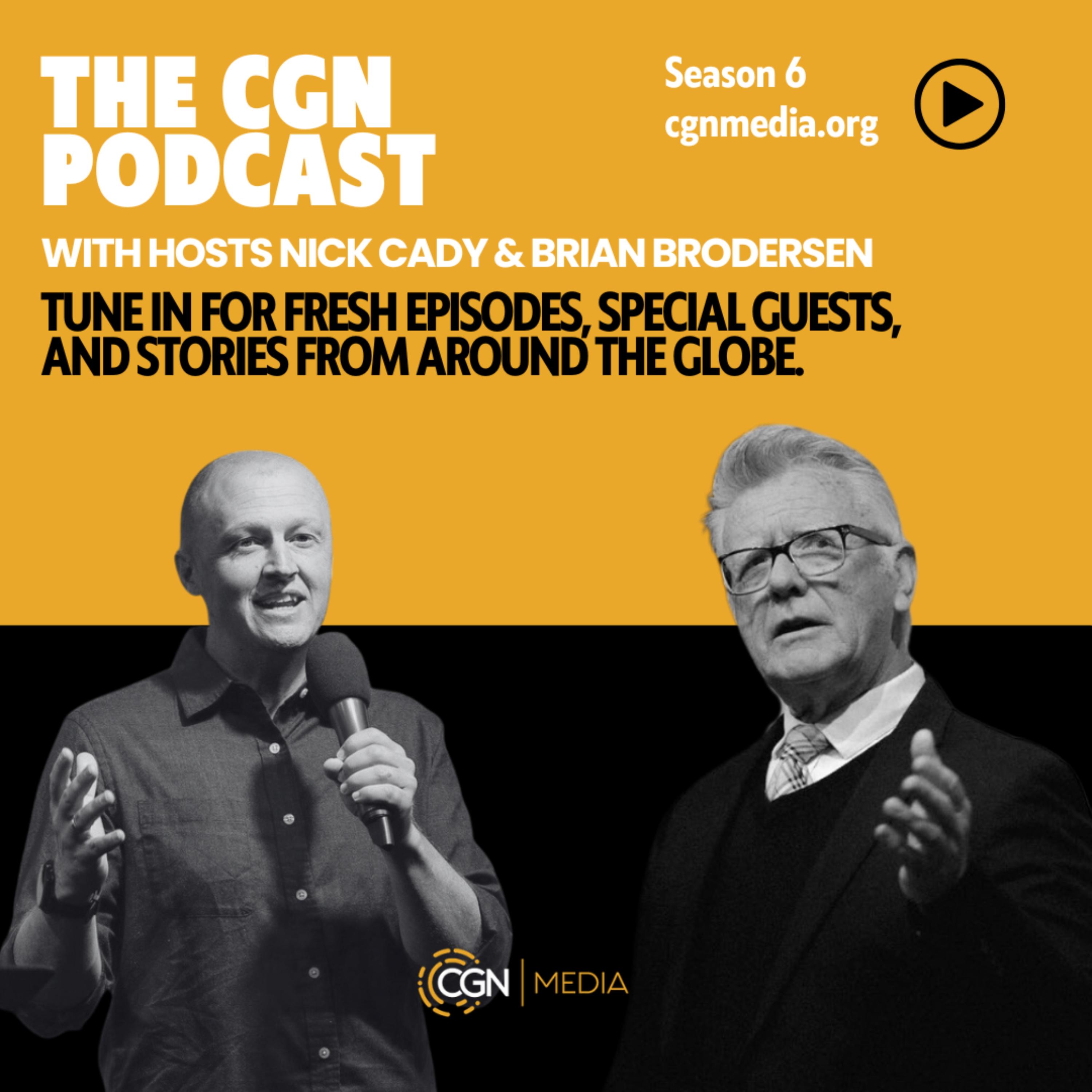
In this episode of the CGN Mission & Methods podcast, I sit down with Brian Brodersen and Kellen Criswell to discuss on of the theological streams that we belong to as a network, which is: Continuationism. We believe that all the spiritual gifts mentioned in the New Testament are available for believers today. In this episode, we discuss the difference between the terms “Continuationist” and “Charismatic,” and we talk about the biblical reasons why we hold this position, and share some stories as examples of what this can look like in practice.
Make sure to listen for a clip from Pastor Chuck Smith, in which he talks about a key passage for this discussion, found in 1 Corinthians 13:8-10.
New episodes are being released every two weeks! Make sure you subscribe to the podcast, so each episode will be delivered to your device as soon as they come out!
We’d love to hear feedback from you on these episodes. You can email us at cgn@calvarychapel.com
In response to that episode, we received a few follow-up questions.
Conor and I sat down to discuss some of these more nuanced points on the topic of fasting. You can hear the recording of our conversation here (or in the embedded player below), but here is one of the questions we received:
If someone has an eating disorder, can they still fast?
First of all, if you suspect you may be struggling with an eating disorder and need someone to talk to, please contact the Eating Disorders Helpline, where you can chat, call, or text with someone who can help.
Eating disorders are serious but treatable mental and physical illnesses that can affect people of all genders, ages, races, religions, ethnicities, sexual orientations, body shapes, and weights. National surveys estimate that 20 million women and 10 million men in America will have an eating disorder at some point in their lives.
Eating disorders are serious, potentially life threatening conditions that can affect every organ system in the body. They are not fads or phases, and can have serious consequences for health, productivity, and relationships.
Please seek help if you or someone you care about is struggling in this area.
Can someone who has struggled with eating disorders participate in fasting?
Nick: I think that’s a really good question. What if your church is doing an all-church fast? Should we tell those who have a history of eating disorders, “Sorry, you can’t participate in this spiritual exercise and in the graces that might come through it”?
Conor: This is a very serious topic and it would be honest to say that it’s probably happening more in our own churches than we realize – whether it’s anorexia nervosa, or bulimia, because it’s often shrouded in secrecy by the person dealing with it.
Eating disorders tend to be connected with a feeling of shame concerning body image, or identity. It is definitely a heavy subject that is applicable to the subject of fasting because we’re talking about food.
What I would suggest is that we should seek to always have a healthy relationship between congregation and pastor, and an understanding of the Imago Dei, which means that we are created in the image of God. It is important to understand that our bodies were created by God and he declared them to be good, and therefore God sees you as his beautiful creation, who has so much value.
Recommendations
Conor: If someone were to come into my office after I gave a call to corporate fasting, and said, “Hey, I’m dealing with this now,” or maybe “I’ve dealt with this in the past,” and “I have an apprehension about moving into an activity of fasting,” of course I would always suggest that they talk to a medical professional first.
If a medical professional gives the go ahead, then, because of the fact that anorexia and bulimia have their foundation in shame and secrecy, I would suggest that we follow the practical structure that we set up in our last episode, of taking 25 hours (I really wouldn’t want to prescribe a fast longer than that, at least for my congregation, of sundown to sundown). And, I would suggest this person try this, not on their own, but in participation with another person.
In this way, it’s not you fasting alone, but a 25 hour intimate participation with that other person in prayer and constant conversation about the Lord, which will be a real opportunity for growth for both parties, in which they both have a desperate hunger for God, and are willing to do this together.
Finally, I would insist on participation in the culmination, or breaking of the fast, by moving into a time of feasting and thankfulness for the grace of God and what he has provided, after sundown.
So, if all of that is acceptable to the person, and they say, “Yes, I want to do this,” then I believe the grace of God is going to come into the parties’ participation together, corporately.
I wouldn’t prescribe this to a person individually, on their own, if they had a history of an eating disorder.
Nick: Certainly there are diverse histories and varying degrees of eating disorders, so I like the fact that you mention speaking with a physician and encouraging communication. I like that we can talk about the nuances of fasting, and give pastoral answers.
In an upcoming episode, I’m going to be interviewing Mike Neglia on the topic of gluttony, which is the other side of the coin from fasting. So keep an eye out for that.
In this Bonus Episode, Conor Berry and I discuss some questions we received regarding our previous episode on fasting:
Can you fast from things other than food?
What about people who have present or past eating disorders? Can they, or should they fast?
Conor also mentions another resource in this episode on the topic of feasting: The Supper of the Lamb by Robert Capon
If you find this episode interesting or helpful, please share it with others and leave a rating and review on your podcast app, as that helps other people discover this podcast and its content.
Make sure to visit the Theology for the People blog at nickcady.org
In response to that episode, we received a few follow-up questions.
Conor and I sat down to discuss some of these more nuanced points on the topic of fasting. You can hear the recording of our conversation here (or in the embedded player below), but here is one of the questions we received:
Can you fast from things beside food?
Nick: My initial assumption had been that the answer is, Yes – you can probably fast from things other than food. This came from my background growing up with the practice of Lent, where you often hear people say things like, “I’m fasting from chocolate, I’m fasting from Netflix, I’m fasting from, running,” (and then it turns out that they weren’t actually a runner to begin with!).
But now, having looked into it, I’ve actually come to the conclusion that abstaining from things other than food may be a good thing to do, but fasting itself is actually a practice which is specific to abstaining from food for a set period of time.
Conor: Yeah, it’s interesting: We categorize fasting as a spiritual discipline, and when we think of the word discipline, we think of how Paul talks about disciplining my body so that I wouldn’t be under the power or the authority of anything, except the sovereignty of God.
And so we can say, “For the 40 days of Lent, I’m not going to eat chocolate, or I’m going to stay off of social media or Netflix, etc.” Yet, if we say that we only have Scripture as our defining cause for the topic of fasting, Scripture only shows that fasting has to do with not eating food or water for a specific period of time.
Once again, bringing the definition from Scot McKnight, that fasting is the natural response to a grievous or sacred moment, we choose not to eat as a means of inducing hunger. And so, my perspective on this is that to say, “I don’t want to eat chocolate, or I want to put social media aside to focus on God,” while that’s a wonderful thing, I would consider that to be under the category of “abstinence,” but not true, scriptural fasting.
Nick: One verse that comes to mind is in 1 Corinthians 7:5, where it says that a husband and wife should not withhold sex from their spouse, except for a time, for the purpose of prayer and fasting. That’s interesting because it doesn’t say that abstaining from sex is a form of fasting, rather it’s distinct from fasting. It’s not called “fasting from sexual intercourse,” it’s called abstaining from it – so that you can fast and pray.
Conor: I agree with you, it’s distinct from the discipline or act of fasting, but it has great application for our desire for holiness and intimacy with God.
All throughout church history, there have been ascetics, people who have devoted their lives to asceticism in order to find transcendence with God, and the act itself sometimes becomes the identity of the person rather than Christ. People are in awe of their discipline and assume the holiness of the person based upon the act, but that sometimes becomes the person’s identity, and not Christ. So there’s a danger to this as well.
Nick: Do you think there’s something unique about food that makes it the focus of this spiritual discipline?
Conor: Absolutely. Because the experience of food and the enjoyment of feasting is something that we’ve enjoyed even before the fall. When we think of Adam and Eve in the Garden of Eden, the Lord said, “This whole place is for you and for your pleasure,” so it’s not just for nourishment, it’s also for taste. And food plays an essential role, not only in our vitality and nourishment, but in our pleasure with God. Even taking the two elements of Communion, we’re using effectually food given by God as a means of worship and thankfulness to him. So yeah, food holds a particular significance.
Nick: When it comes to the idea of abstinence, someone might say, “I have. Improper relationship with this thing I’m doing, so I need to abstain from it, maybe for the purpose of breaking the control this habit or this practice has over me.” But with food, although overeating can certainly go to that extent, and that’s what we call gluttony, it’s also possible to have a healthy relationship with food, and it’s the regularity of eating and its necessity for our existence which makes it unique.
Conclusion
So, in summary: there are times when it would be right and good and advisable to abstain from something if you feel like maybe it’s gotten its claws into your heart, and you want to dedicate more time to seeking the Lord – but don’t call it fasting. Call it abstinence or abstaining, and let fasting be fasting.
Conor: I completely agree. In our previous episode, we looked at church history and the different motives people have had for fasting, and one was to individually fight against temptation. Augustine said that it’s good to fast as a means of developing a hunger for God that would be sovereign over the hunger for some of the temptations in your life.
Should you abstain from social media if it becomes an addiction? Absolutely, but I would be so bold as to say that you can abstain from it along with a time of fasting to say, “I’m abstaining against the temptation, and I’m fasting for more of a hunger for God at the same time.”
Stay Tuned for the Next Question: Eating Disorders and Fasting
In my next post, I will share our discussion on the question of whether it is advisable for someone with past or present struggles with eating disorders to participate in the practice of fasting. Are they disqualified from participating in this practice? What advice can we give to people struggling with this question?
In this Bonus Episode, Conor Berry and I discuss some questions we received regarding our previous episode on fasting:
Can you fast from things other than food?
What about people who have present or past eating disorders? Can they, or should they fast?
Conor also mentions another resource in this episode on the topic of feasting: The Supper of the Lamb by Robert Capon
If you find this episode interesting or helpful, please share it with others and leave a rating and review on your podcast app, as that helps other people discover this podcast and its content.
Make sure to visit the Theology for the People blog at nickcady.org
Recently, a listener reached out to me asking if I had any resources on the topic of fasting. I remembered that, several years ago, I had picked up a book from a church book store titled, “A Hunger for God,” thinking that the title sounded like something I would be interested in – but when I got home I took a look at it and realized, much to my dismay, that it was a book about fasting! So, I left it on my bookshelf and never read it… until this week!
It isn’t that I was opposed to fasting. I have, and do, fast occasionally. It’s just that I assumed the book would be a downer, and would basically just tell me that I needed to fast more. Well, this week, in preparation for this episode, I read the whole book in one day, and actually loved it! Here’s a link to the book, if you’re interested in checking it out: A Hunger for God by John Piper
In this episode, Conor and I discuss what the Bible has to say about fasting; what is the purpose of fasting? How does it work? What is the relationship between fasting and prayer, and what is the “reward” of fasting mentioned by Jesus in Matthew 6:16?
We seek to answer these questions with consideration of how Christians throughout history have understood fasting, and finally, Conor gives some practical recommendations for people regarding the duration and regularity of fasting, as well as what to fast from.
And as a bonus, at the end of the episode, we give a recommendation for those looking for a church in Cork, Ireland.
If you find this episode interesting or helpful, please share it with others and leave a rating and review on your podcast app, as that helps other people discover this podcast and its content.
Conor Berry is the Lead Pastor of Calvary Chapel Santa Maria on the Central Coast of California.
In this episode we discuss what the Bible has to say about fasting. What is the purpose of fasting? How does it work? What is the relationship between fasting and prayer, and what is the "reward" of fasting mentioned by Jesus in Matthew 6:16?
We seek to answer these questions with consideration of how Christians throughout history have understood fasting, and by looking at a few modern resources as well.
Books referenced in this episode:
A Hunger for God by John Piper
Fasting by Scot McKnight (Ancient Practices Series)
If you find this episode interesting or helpful, please share it with others and leave a rating and review on your podcast app, as that helps other people discover this podcast and its content.
Make sure to visit the Theology for the People blog at nickcady.org
This week’s episode of the Theology for the People podcast is a special episode. This year I have been the host of the CGN Mission & Methods Podcast for Calvary Global Network. This episode originally aired on that podcast, which I recommend you check out if you’re looking for good discussions about Christian ministry in the world today or if you want to hear what God is doing in and through the Calvary network of churches.
In this episode I speak with my friend and colleague Kellen Criswell about an initiative we have been working on for the past year and a half, which is a program designed to cultivate church planting by creating a program to assess, train, deploy, and support new church planters and missionaries.
The program is called Cultivate, and alongside my primary ministry at White Fields Church, it has been a major area of focus for me since finishing my Masters. I’d love it if you’d listen to this episode and pray for this initiative!
If you find this episode interesting or helpful, please share it with others and leave a rating and review on your podcast app, as that helps other people discover this podcast and its content.
This episode was originally published on the Calvary Global Network (CGN) Mission and Methods Podcast.
Calvary Chapel has been recognized as one of the greatest church planting movements of recent times. In this episode, I speak with Kellen Criswell, Global Strategist for Calvary Global Network about a program I have been involved in developing called "Cultivate," which is a program designed to assess, train, and deploy new church planters and missionaries — using the local church as the garden in which those leaders are cultivated. We explain the design and heart behind the Cultivate program, as well as how to get more information and register.
If you find this episode interesting or helpful, please share it with others and leave a rating and review on your podcast app, as that helps other people discover this podcast and its content.
Make sure to visit the Theology for the People blog at nickcady.org







 Theology for the People