I first met Wendy and her husband Danny back when I lived in Hungary, and they were studying at Bible College. Since that time, they have moved to a city in Central Serbia called Kragujevac, and they have planted a church there. I recently got to visit Wendy and Danny and see their church, and I’m excited to introduce you to them, and for you to hear more about God’s work in Serbia, and in their lives.
Wendy recently wrote a book about her experiences of stepping into unknown, both in Serbia and in Central Asia, where she spent time earlier. The book is called: Hard Is Only Half the Story: Real Adventures from My Journey into the Unknown. In this book, Wendy talks about the important role that taking steps of faith plays in our spiritual growth, and our relationship with God.
In our conversation, we talk about what it’s like to live as a missionary in Serbia, what makes Serbia unique, and some of the ways that taking steps of faith in obedience to God shapes us and helps us grow.
Hard is Only Half the Story: The Role of Taking Steps of Faith in Spiritual Growth – with Wendy Zahorjanski –
Theology for the People
Taking a step into the unknown can be scary, and yet, when led by God, it can lead to incredible spiritual growth and benefits for your life.
Wendy Zahorjanski is a missionary in Serbia with her husband, Danny, in the city of Kragujevac, where they planted a church.
Wendy recently wrote a book about her experiences stepping into unknown, and she talks about the important role that taking steps of faith plays in our spiritual growth and relationship with God.
Randy grew up in a secular Jewish home, but through relationships with Christians, as well as through a series of personal events and realizations, he became a Christian. Randy is now a senior fellow for apologetics at the C.S. Lewis Institute, and over the past several decades he has talked with many individuals, and studied their journeys of coming to faith in Jesus.
In his recent book, “Questioning Faith” – he tells some of these stories, and looks at the factors in what he calls “indirect journeys of belief through terrains of doubt.”
In this episode, Randy and I speak about his story of coming to faith in Jesus, and we talk about some of the factors that Christians face today in sharing their faith, and how we can do that more effectively.
From Doubt to Belief: The Factors Involved in Journeys to Faith in Jesus – with Randy Newman –
Theology for the People
Randy Newman grew up in a secular Jewish home, but through relationships with Christians, as well as through a series of personal events and realizations, he became a Christian. Randy is now a senior fellow for apologetics at the C.S. Lewis Institute, and over the past several decades he has talked with many individuals, and studied their journeys of coming to faith in Jesus.
In his recent book, “Questioning Faith” – he tells some of these stories, and looks at the factors in what he calls “indirect journeys of belief through terrains of doubt.”
In this episode, Randy and I speak about his story of coming to faith in Jesus, and we talk about some of the factors that Christians face today in sharing their faith, and how we can do that more effectively.
Make sure to check out the Theology for the People website at nickcady.org
In this episode of the Theology for the People Podcast, I speak with Shane Angland. Shane has been a recurring guest on the podcast, and is excellent on the topic of historical theology.
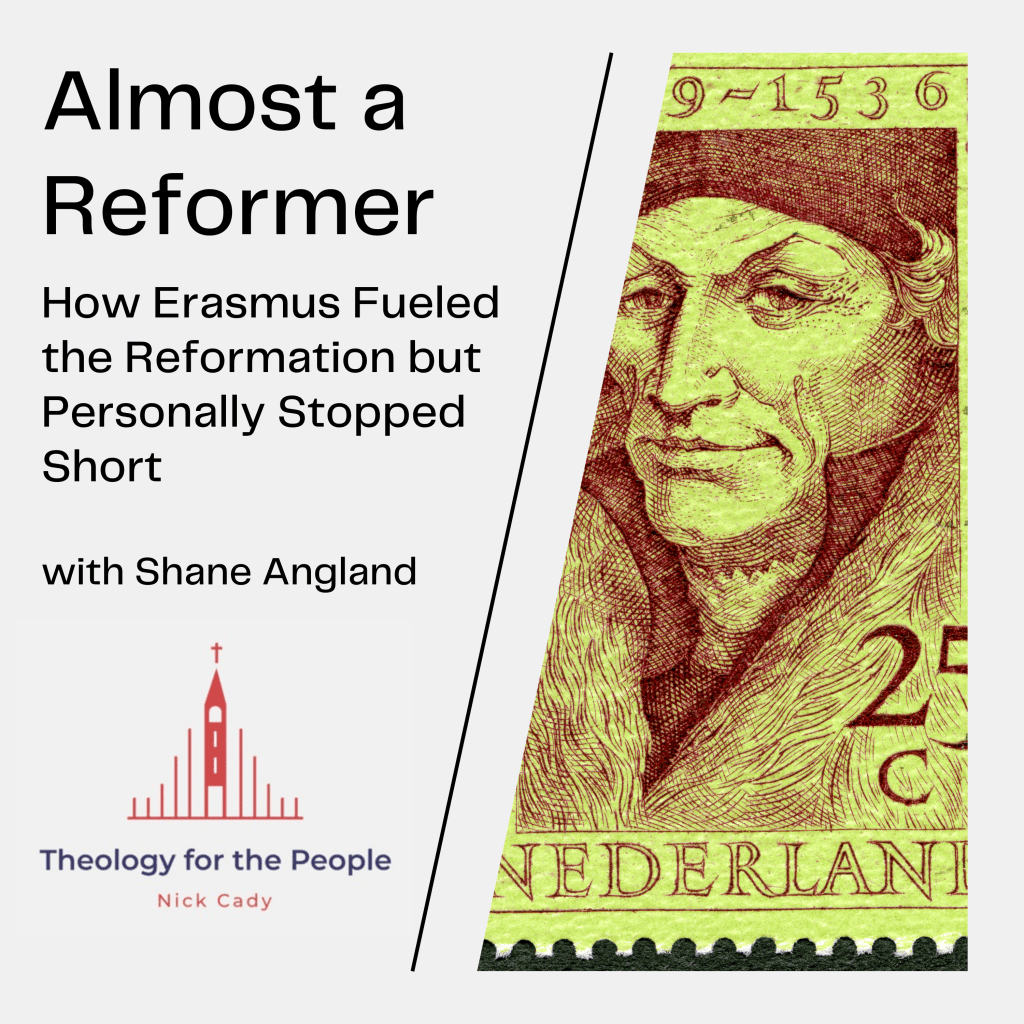
In this episode, we discuss Desiderius Erasmus, one of the most important figures in the history of the Protestant Reformation. He was a key thinker, and the compiler of many of the manuscripts that were used in translating the Bible from Greek and Hebrew into languages of the people. He was also in communication with many of the key figures of the reformation, like Martin Luther.
And yet, Erasmus stopped short of being a Reformer. In this episode, Shane and I talk about this intriguing person, the contributions he made, and why he fell short.
Shane lives in Ennis, Ireland where he serves at Ennis Evangelical Church. He holds a Masters of Divinity from Dallas Theological Seminary, and has served as a missionary in Ukraine.
Almost a Reformer: How Erasmus of Rotterdam Fueled the Reformation but Personally Stopped Short – with Shane Angland –
Theology for the People
Desiderius Erasmus is one of the most important figures in the history of the Protestant Reformation. He was a key thinker, and the compiler of many of the manuscripts that were used in translating the Bible from Greek and Hebrew into languages of the people. He was also in communication with many of the key figures of the reformation, like Martin Luther.
And yet, Erasmus stopped short of being a Reformer. In this episode, I speak with Shane Angland about this intriguing person, what contributions he made, and why he fell short.
Shane Angland is from Ennis, Ireland and holds a Masters of Divinity from Dallas Theological Seminary.
Make sure to check out the Theology for the People website at nickcady.org
Jamie’s church is only a few blocks from the U.S. Capitol building, and Jamie discusses how their church has navigated some of the difficult social issues of the past few years by determining to be a “Christ alone” type of church.
In this episode, we discuss the goal of Christian unity in the midst of a divided society, and how to pursue it. Where do you draw the lines? How do you determine which issues are primary issues? And why is it important to love those who are different from you, in the Body of Christ?
Loving the Ones Who Drive You Crazy: How and Why Christians Should Pursue Unity in the Church – with Jamie Dunlop –
Theology for the People
Jamie Dunlop is an associate pastor at Capitol Hill Baptist Church, in Washington D.C. and the author of the book, Love the Ones Who Drive You Crazy: Eight Truths for Pursuing Unity in Your Church.
Jamie's church is only a few blocks from the U.S. Capitol building, and Jamie discusses how their church has navigated some of the difficult social issues of the past few years by determining to be a “Christ alone” type of church.
In this episode, we discuss the goal of Christian unity in the midst of a divided society, and how to pursue it. Where do you draw the lines? How do you determine which issues are primary issues? And why is it important to love those who are different from you, in the Body of Christ?
episodeleave a written review on Apple Podcasts or Spotify.
People
In the Parable to the Good Samaritan, Jesus concludes the parable with this phrase: “Go and Do Likewise.” What then is the role of “acts of mercy” or providing for physical needs, in regard to the Great Commission we’ve received from Jesus: to go into the world and preach the Gospel to all people?
In this episode of the Theology for the People Podcast, I speak with Amy DiMarcangelo. Amy is an author, a mom, and a seminarian who cares deeply about engaging in the mission of God in a holistic way. She and her husband have adopted a child, and they are involved in caring for refugees in their community.
In this episode, Amy and I talk about the “social gospel” and evangelism, and about developing a holistic approach to meeting people’s physical and spiritual needs. We also share our stories of working with refugees, including how my father in law, who was a refugee from Hungary, came to faith in Jesus.
Go and Do Likewise: the Role of Acts of Mercy in the Mission of Jesus – with Amy DiMarcangelo –
Theology for the People
In the Parable to the Good Samaritan, Jesus concludes the parable with this phrase: “Go and Do Likewise.”
What then is the role of “acts of mercy” or providing for physical needs, in regard to the Great Commission we’ve received from Jesus: to go into the world and preach the Gospel to all people?
Amy DiMarcangelo is an author, a mom, and a seminarian who cares deeply about engaging in the mission of God in a holistic way. She and her husband have adopted a child, and they are involved in caring for refugees in their community.
Amy's recent book is called, Go and Do Likewise: A Call to Follow Jesus in a Life of Mercy and Mission.
In this episode, Amy and I talk about the “social gospel” and evangelism, and about developing a holistic approach to meeting people’s physical and spiritual needs.
We also share our stories of working with refugees, including how my father in law, who was a refugee from Hungary, came to faith in Jesus.
Make sure to check out the Theology for the People website at nickcady.org
The internet is a tool that nearly everyone uses on a daily basis, but what impact does it have on us in regard to Christian discipleship?
In this episode of the Theology for the People Podcast, I speak with Samuel James. Samuel is the associate acquisitions editor at Crossway Publishing. He is the author of Digital Liturgies, a regular Substack newsletter focused on Christianity, technology, and culture.
In this discussion, Samuel and I talk about how digital devices have transformed the way that communities and churches function, and what challenges these technologies pose for us as individuals seeking to follow Jesus.
Digital Liturgies: How the Internet Impacts Christian Discipleship – with Samuel James –
Theology for the People
The internet is a tool that nearly everyone uses on a daily basis, but what impact does it have on us in regard to Christian discipleship? How have digital devices transformed the way that communities and churches, function, and what challenges do these technologies pose for us as individuals seeking to follow Jesus?
Samuel James is the author of the book: Digital Liturgies: Rediscovering Christian Wisdom in a Digital Age, and in this discussion we talk about strategies for faithful discipleship in an online age.
Visit the Theology for the People website at nickcady.org
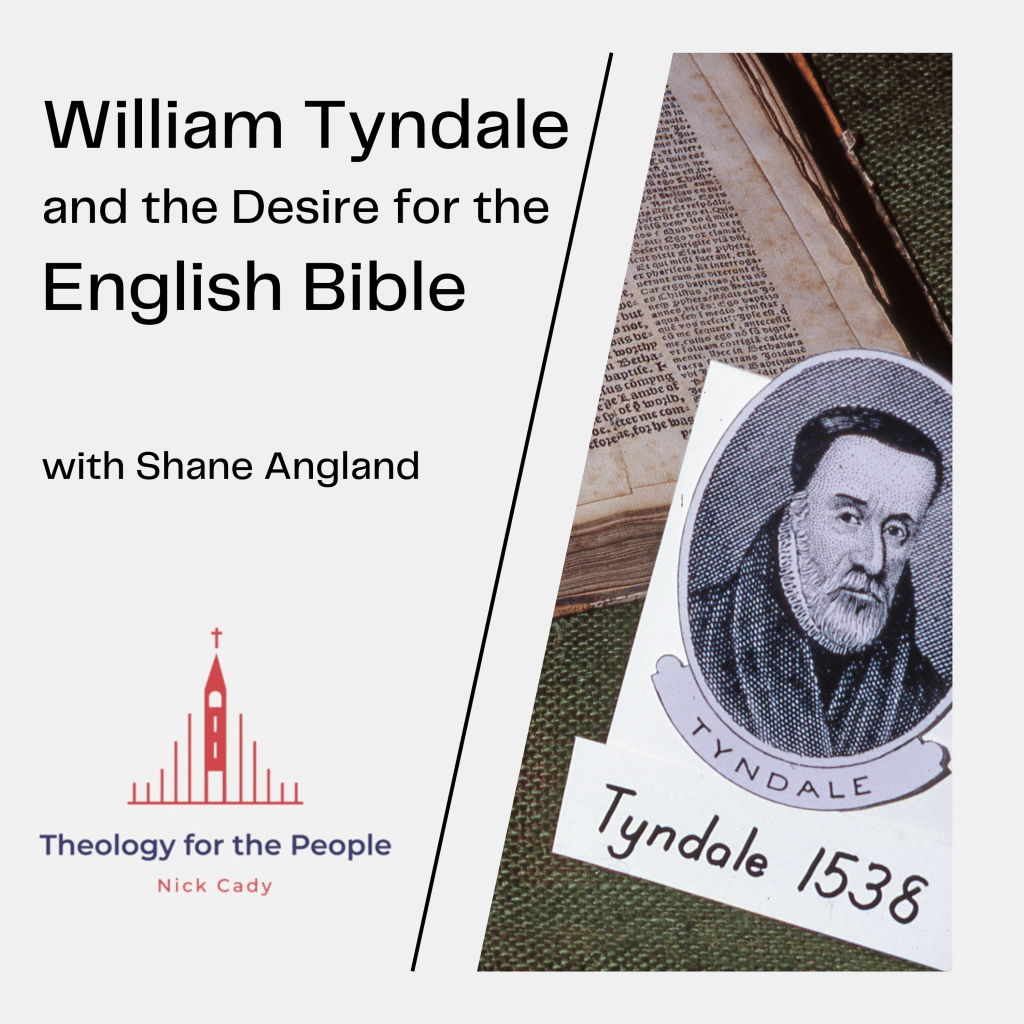
If you read the Bible in English, you may not realize all of the drama and sacrifices that went into getting the Bible translated into the English language.
In this episode of the Theology for the People Podcast, I speak with Shane Angland of Ennis Evangelical Church in County Clare, Ireland. Shane holds a Master of Divinity degree from Dallas Theological Seminary, and specializes in historical theology.
Shane and I speak about William Tyndale: an English biblical scholar and linguist who became a leading figure in the Protestant Reformation, until he was executed for his beliefs. Tyndale created the first English translation of the New Testament from the original Greek text and was working on translating the Old Testament from Hebrew. Much of his work can still be seen in the way the Bible is translated into English to this day.
If you read the Bible in English, you may not realize all of the drama and sacrifices that went into getting the Bible translated into the English language.
William Tyndale was an English biblical scholar and linguist who became a leading figure in the Protestant Reformation, until he was executed for his beliefs. Tyndale created the first English translation of the New Testament from the original Greek text and was working on translating the Old Testament from Hebrew. Much of his work can still be seen in the way the Bible is translated into English to this day.
In this episode, my guest is Shane Angland of Ennis Evangelical Church in County Clare, Ireland. Shane holds a Masters of Divinity from Dallas Theological Seminary, and specializes in historical theology.
Are we as Christians allowed to practice contraception without sinning? I believe all Christians hold fast that abortion is always a sin, but can married people practice family planning (number of children, spacing)?
Creation and Stewardship
In the Book of Genesis, when God created the man and the woman, he gave them what is called “The Cultural Mandate”:
Then God said, “Let us make man in our image, after our likeness. And let them have dominion over the fish of the sea and over the birds of the heavens and over the livestock and over all the earth and over every creeping thing that creeps on the earth.” So God created man in his own image, in the image of God he created him; male and female he created them. And God blessed them. And God said to them, “Be fruitful and multiply and fill the earth and subdue it, and have dominion over the fish of the sea and over the birds of the heavens and over every living thing that moves on the earth.”
Genesis 1:26-28
Part of this mandate included being fruitful, multiplying, and filling the Earth – as well as “subduing” it, i.e. managing and stewarding the use of its resources.
Just as God created, now we are called and empowered to thoughtfully bring more life into being. Obviously we can’t do this apart from God’s work, but it also requires our participation. Sometimes when someone says they are “praying for children,” it’s nice to remind them that it takes more than just prayer! 😁
However, it’s worth noting that God, in creation, at a certain point, ceased creating! He didn’t create everything He could; certainly God could have imagined and created many other creatures and plants than He did, but at some point, He deemed His creation complete and perfect in its design. This act of ceasing to create speaks volumes about God’s intentionality.
What this shows us is that God values not only the act of creation but also the stewardship of His creation.
He entrusts humans with the responsibility to co-create with Him, to participate in the unfolding of His divine plan for the world. Within the context of marriage, this stewardship extends to the realm of family planning. Just as God decided when to create, and when to cease creating, Christian couples are called to exercise discernment and responsibility in their reproductive choices. This includes considering factors such as physical health, emotional readiness, financial stability, and the well-being of existing children.
Contraception, when used responsibly and in accordance with a couple’s shared values and beliefs, can be a tool for fulfilling this stewardship.
Also worth keeping in mind is the fact that not all contraception is equal in nature. It’s worth considering whether the given method prevents conception, or terminates conception. Those forms of contraception that prevent contraception are ethical and can be used in good conscience by Christians.
Ask a Question or Suggest a Topic
If you have a question or would like to suggest a topic for me to address here on the blog, click here: Ask a Question or Suggest a Topic
Who is the Holy Spirit, and how does an understanding of the person and work of the Holy Spirit contribute to our life and faith as believers in Jesus?
Fred has focused much of his theological work on the topic of the Trinity, so when it comes to talking about the person and work of the Holy Spirit, he has a unique and helpful perspective.
In this episode we talk about what the Bible says and doesn’t say about the Holy Spirit, whether it’s okay to pray to the Holy Spirit, and more.
Who is the Holy Spirit, and how does an understanding of the person and work of the Holy Spirit contribute to our life and faith as believers in Jesus?
Fred Sanders is professor of theology at the Torrey Honors College at Biola University. He is the author of a much sought-after series of theological comic books, as well as the recently published book, The Holy Spirit: an Introduction, which is part of the Short Studies in Systematic Theology series put out by Crossway Publishing.
Fred has focused much of his theological work on the topic of the Trinity, so when it comes to talking about the person and work of the Holy Spirit, he has a unique and helpful perspective.
In this episode we talk about what the Bible says and doesn’t say about the Holy Spirit, whether it’s okay to pray to the Holy Spirit, and more.
Make sure to visit the Theology for the People website at nickcady.org
The only autobiographical statement Jesus gave of himself was this one:
Take my yoke upon you and learn from me, for I am meek and humble of heart; and you will find rest for yourselves.
Matthew 11:29 NASB
In that statement, one of adjectives that Jesus used of himself was “meek”.
Additionally, in the Beatitudes in the Sermon on the Mount, Jesus declared:
Blessed are the meek, for they shall inherit the earth.
Matthew 5:5 ESV
Thus, it seems it is pretty important to understand what “meekness” is, so we can understand who Jesus is, and what He was saying in the Beatitudes, about who will inherit the Earth.
“Meek” in Greek – Language & History
The word “meek” is the English translation of the Greek word Praús.
The Greek military leader Xenophon used the word to describe war horses that were well-trained; strong and spirited, yet highly disciplined.
Socrates said that a meek person is one who can argue his case without losing his temper.
Plato used the word to describe a victorious general who was merciful to a conquered people.
Aristotle referred to a meek person as someone concerned about justice, but whose anger does not degrade into revenge or retaliation.
The common theme in all these uses of the word is: “Power under control” – which certainly describes Jesus. [1]
How was Jesus “Meek”?
The Bible tells us that Jesus, though He is the almighty creator of the universe, He humbled Himself by taking on the form of a servant and submitting Himself to the Father. Though He was all-powerful, He set “emptied” Himself, becoming like us in all ways, in order to redeem us through His sacrifice for us.
What Does it Mean for Us to be “Meek”
For us to be meek means for us to bring ourselves, our intellects, our strengths, our agency, into submission to God’s call and commands for our lives. It means for us to use our strengths to serve Him and His mission, rather than to merely fulfill our own desires.
For more on the Beatitudes, here’s a recent sermon I taught on them at White Fields Church:




 Theology for the People