
Ministry in the COVID-19 Crisis and Beyond

This past week I was honored to be interviewed by David Snead on his podcast. David is a missionary in Lviv, Ukraine – and he is one of the most organized people I know.

We had a great discussion about my background in ministry, ministering in the COVID-19 crisis and beyond, Calvary Chapel, and expository preaching. Check it out:

New Sermon Series: Desiring the Kingdom

For a long time I have wanted to study the books of 1 & 2 Kings with our church.

These are historical books which tell the history of the nation of Israel after the time of King David, beginning with the “Golden Age” of King Solomon, and following the downward spiral that began with his apostasy, followed by the division of the people into two rival kingdoms, and their subsequent apostasies and exiles in Assyria and Babylon.

This history is, on the one hand tragic, and on the other hand full of hope. One of the great “narrative plot lines” that runs throughout the Bible is that of the desire for a king and a kingdom.

While on the one hand these books show us how even the best people are merely people at best, we are constantly reminded of and pointed to the promised Eternal Kingdom and its coming King: the Messiah, Jesus Christ. He alone remains as the sole hero of the stories in these books!

Through the failed kings of Israel and Judah, we are reminded of our desire for a kingdom and a king, and the ever-increasing realization that what we desire will be fulfilled in Jesus and His Kingdom.

I invite you to join us on this journey through 1-2 Kings online on the White Fields YouTube channel and Facebook page, as well as on our website: whitefieldschurch.com

Book Review: Why Does God Care Who I Sleep With?

Sam Allbery is an Anglican pastor from Maidenhead, England, who also works with Ravi Zacharias International Ministry (RZIM)Cedarville University, and writes for The Gospel Coalition. He is the author of a number of books, including Is God Anti-Gay?, and 7 Myths about Singleness.

I was introduced to Sam last year when he spoke at the Calvary Global Network conference. See: Sam Allbery on Sexual Ethics and Moral Intuition

One thing that is worth knowing about Sam is that by his own admonition, he has only ever had romantic desires and sexual attraction to other men, yet he has chosen to live a celibate life of devotion to God.

When I saw that Sam’s latest book “Why Does God Care Who I Sleep With?,” was being released, I preordered a copy. Upon my return from my recent trip to Europe, I was happy to see that the book had arrived while I was away, and I used the first week of my quarantine to read it from cover to cover.

The Supreme Human Right?

Sam begins his book by answering the question in the title of the book:

Just fifteen years ago Christians like me, who follow the teaching of the Bible, would have been thought of as old-fashioned for holding to the traditional Christian understanding of sex being exclusively for marriage, but now, increasingly, we are thought of as being dangerous to society.

Who we sleep with is seen as a supreme human right. Anything that seems to constrain our choice in this area is somehow viewed as an existential threat.

God cares who we sleep with because he cares deeply about the people who are doing the sleeping. He cares because sex was his idea, not ours. He cares because misusing sex can profoundly hurt and damage. He cares because he regards us as worthy of his care.

Why Does God Care Who I Sleep With?, pp. 9-10

Honoring Sacred Space

One of Allberry’s key points of argument is to show that the Bible does not take a low view of sex, seeing it as something dirty and unholy, but just the opposite: it takes a much higher view of our physical bodies and what we do with them than the secular world does, describing them as “temples” (1 Corinthians 6:19) and therefore sacred space.

It is precisely because of this high view of the physical body that God cares so much about sex, insisting that this powerful thing be used in the right ways, lest it cause pain and destruction.

He points out that when Jesus says that for a man to look lustfully at a woman is to break the commandment against adultery, Jesus is declaring that the sexuality of the person being looked at is precious and valuable: an integrity that deserves to be honored, and must not be violated, even in the privacy of another person’s mind, and to do so is to wrong that person.

Jesus’ teaching reflects something we see throughout the whole Bible: how we treat one another sexually matters a great deal to God.

Any sexual assault is a violation of sacred space.

The pain of sexual assault is not the pain of a grazed knee but the trauma of holy space being desecrated. Maybe our bodies are less like playthings and more like temples.

pp. 19, 20, 30

The reason our bodies matter so much is because of the Imago Dei (the Image of God) with which we are endowed uniquely as human beings. It is for this reason that we believe that all human life, regardless of physical ability or disability, income or education level, is equal in value.

There is something sacred about human life.

We [all] know that human life matters in a unique way. When someone treats a pet life a human, we think it a bit odd. But when someone treats a human being like an animal, we know deep down that it is terribly wrong.

When we fawn over a baby, we’re not coldly observing a mere organism. We’re beholding one who bears divine finger prints. And because a human being is the sacred product of sex, the sexual process by which that person is made is also sacred.

p. 35

Holy Fire

Sam Allberry describes the power of sex with the metaphor of fire: where you do it matters. In the fireplace of a house it can create heat and light which brings warmth and life. Lighting one elsewhere can be dangerous, destructive, and life-threatening. The context matters.

Furthermore, he points out that the purpose of sex is unification and giving. To use it in a way which does not serve these purposes is to take it out of the life-giving context.

Not Just Physical

God cares who we sleep with because God cares about us as people. Sex deeply affects the whole person: physically, emotionally, and psychologically.

When someone is sexually assaulted or when someone is sexually betrayed, it is not just their body that is attacked; they as a person are violated.

p. 51

Redemption

One of Sam Allberry’s emphases in this book is that while he wants to explain the biblical and theological reasoning behind the Bible’s sexual ethics, he also wants to communicate the Bible’s message of redemption for those who have fallen short.

He points out that not only are all of us sinners, all of us are sexual sinners – and the promise of the gospel is forgiveness, redemption, and new life in Jesus Christ.

Conclusion

This book is short, informative, and engaging. It answers several very commonly asked questions, which are only going to be asked more and more in the years to come, including questions about LGBTQ and co-habitation. Everyone would do well to educate themselves on the answers to these questions, and this book by Sam Allberry is an excellent resource for doing so.

Global Prayer & Local Music Videos

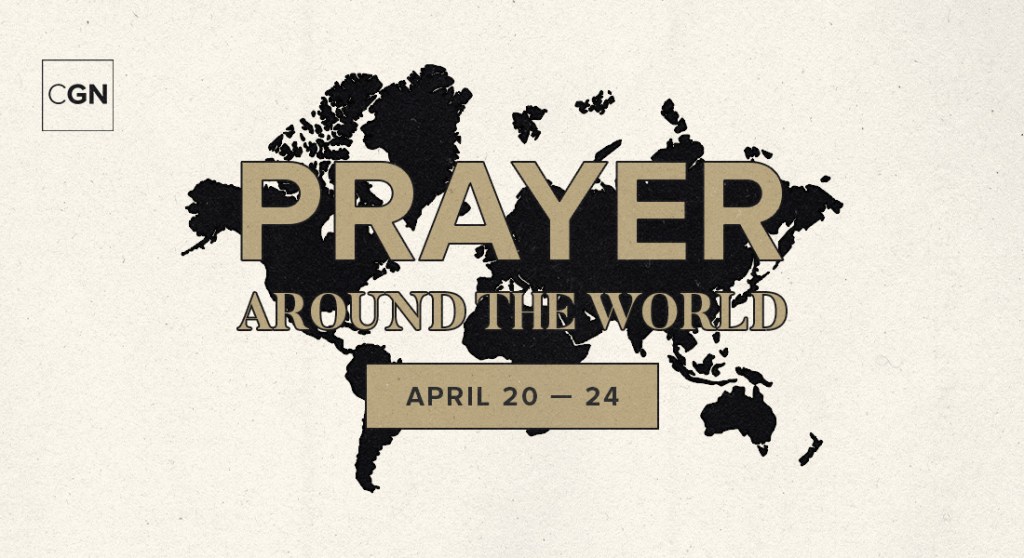
Prayer Around the World Extended for another week

For the past 2 weeks Calvary Global Network leaders around the world have been leading live prayer on the Calvary Chapel Facebook page. The idea is that you can log on at any time and join in prayer as well as submit prayer requests.

I have been leading prayer from 1:00-2:00 PM Mountain Time each day, and it has been encouraging to see God use it. I have had people ask to pray to receive salvation, I’ve had several times when we prayed for something and then received a report within a few minutes that God had answered that prayer, and I had someone say that God has used these prayer times to change their life!

It would be great to have you join me for these times of prayer; it has certainly been good for me to spend an hour in prayer each day for all that’s going on. I’m sure God would use it in your life as well.

Music from Good Friday & Easter

One of the benefits of having our facility is that we are able to do more with music and video. We have a great worship ministry, and we look forward to having them lead us in worship together once the current crisis subsides.

Here are two songs they did: one for Good Friday and the other for Resurrection Sunday:

Preaching Funerals

100_Funerals_cover.jpg

In the latest episode of the Expositors Collective podcast, Mike Neglia and I discussed preaching funerals.

Click here to listen: Episode 100 – Preaching Funerals. Click here to listen on Apple Podcasts, or on Spotify.

As it so happens, this is the 100th episode of the podcast. As Mike shares in the intro to the episode, he had planned some fanfare and celebration for this milestone, but with the current COVID-19 crisis, it seems that an episode on preaching funerals is more apropos.

Mike and I recorded this episode in Austria back in January during the Calvary Chapel European Pastors Conference in Millstatt.

Whether you find yourself in the position of preaching or leading a funeral, or if you simply want to listen in to my process and insights, I encourage you to check out this episode.

Why Do Some Countries Celebrate Easter on a Different Day?

Today as we celebrated Easter at White Fields Church in Longmont, Colorado, we had a special greetings sent in from some of the missionaries we support around the world, including several in Ukraine.

See: An Easter Like No Other

Here’s the video of the Easter service, which includes the greetings from those missionaries:

Some of the missionaries in Ukraine mentioned that their country celebrates Easter a week later than we do in the United States, leading some people to ask why that is.

Council of Nicea (325 AD): Setting a Common Date for Easter

The First Ecumenical Council of Christin leaders around the world as held in 325 AD and is known as the Council of Nicea.

Prior to Nicea, churches in different parts of the world celebrated Easter on different Sundays of the year. In order to bring unity, council members created a formula to would calculate the date for Easter for all churches around the world: the first Sunday after the first full moon which follows the vernal equinox, after the Jewish Passover.

To avoid confusion, it determined that the vernal equinox was on March 21. This system guaranteed that all churches around the world celebrated Easter on the same day.

The Great Schism and the Introduction of the Georgian Calendar

In 1054 the Eastern and Western churches split. The division was for theological, cultural, and political reasons. Shortly after this, Pope Gregory VIII introduced the Gregorian calendar, whereas the Eastern Empire continued with the Julian calendar, which had been used since the time of Julius Caesar.

The reason for the introduction of the Gregorian calendar was the realization that the Julian calendar was discovered to be 11 minutes too long, which, though not much, led to the spring equinox no longer being on March 21 by that time. The Gregorian calendar sought to bring correction to this issue, whereas the Eastern Empire (and its churches) continued with the Julian calendar despite the fact that according to it, the vernal equinox was no longer on March 21.

By using two different calendar systems, the vernal equinox now fell on March 21 under the Gregorian calendar and April 3 on the Julian calendar. The two empires (and their churches), as a result, began celebrating Easter on two different days, though on occasion Easter date does still fall on the same day for both calendars (e.g. in 2017 and next in 2025).

As for the question of why the date of Easter changes every year, see: Easter Math: How Does It Add Up?

What Happened on Holy Saturday?

Holy Saturday is the name given to the day in between Good Friday and Resurrection Sunday.

For more on the timeline of Jesus’ death and resurrection, see: Was Jesus in the Grave Three Days and Three Nights? Here’s How It Adds Up. But what happened during that time when Jesus was in the grave?

He Descended to the Dead

The Apostles’ Creed, one of the oldest Christian creeds – in continual existence since at least the 4th Century A.D. – contains a line which many people have found intriguing: it declares that Jesus “descended to the dead.”

Older translations of the original text into English sometimes translate this phrase as saying that Jesus “descended into Hell.”

Looking at the creed in ancient languages is interesting as the Greek text says: κατελθόντα εἰς τὰ κατώτατα, which means: “descended to the bottom” – and the Latin text says: descendit ad inferos, the word inferos being translated as “Hell.”

More recent translations into English have chosen to say “descended to the dead” rather than “descended into Hell” as “the dead” would be more accurate biblically and theologically than “Hell.” The reason for this is based on a particular understanding of “Sheol” in the Old Testament and the Jewish mind, which was the dwelling place of all souls, being divided (according to Luke 16:19-31) into two parts: Abraham’s Bosom and Hades, AKA: Hell.

Abraham’s Bosom, we are told in Luke 16, was a place of comfort for those who died in faith, i.e. the “Old Testament saints,” such as those described in Hebrews 11, who died prior to the redemptive actions of Jesus, but died in faith that they would be “raised up to a better life” (Hebrews 11:35)

He Proclaimed What He Had Done, and Led Captives in His Train

In 1 Peter 3:19 and 4:6, Peter tells us that Jesus’ spirit went to Sheol after his death on the cross but prior to his resurrection, and declared to the souls of the deceased there what he had accomplished in his life and death. This message would have been:

  1. A message of redemption and release from Sheol for those who were kept in Abraham’s Bosom awaiting the redemptive work of the Messiah (“He led captives in his train” – Ephesians 4:8)
  2. A message of condemnation for those held in the Hades/Hell portion of Sheol.

God Often Does His Greatest Work in the Dark

For the disciples, that first “Holy Saturday” would have seemed much less than holy. It would have felt like defeat and been perhaps the lowest point in their lives. Many of them, having left everything to follow Jesus, would have been wondering, “Now what am I going to do with my life?” – not to mention the fact that they were afraid that they would be next: that the Romans and Jewish leaders would likely come be coming to arrest and execute them as well.

And yet, in the awful silence of that day, God was doing a great work of redemption!

Remember: with God, silence is not absence. Sometimes when God seems most distant to us, is when He is accomplishing his most profound work.

That is the reminder of Holy Saturday: we can’t always see what God is doing.

May God bless you and give you rest in your soul this Holy Saturday!

See also:

An Easter Like No Other

A Time For Celebration?

For Christians, Easter is our biggest celebration of the year. And yet, how do you celebrate in the midst of a crisis in which thousands of people are sick and dying, and millions are out of work and hurting financially?

Some churches have suggested that celebrations of Easter should be delayed until this crisis gets better. I disagree. In fact, I would say that there is no more appropriate time for us to celebrate Easter than in the face of sickness, instability, and death, because these things are the very reasons why Easter is good news worth celebrating!

In fact, this may be the one moment in all of our lives when we understand the weight of what Easter means, and the hope that it brings, more than ever.

The meaning of Easter is that the Lord of Life died in order to destroy death, and make it possible for us to be reconciled to Him and resurrected to “a better life” (Hebrews 11:35, 40).

See also: Does Easter Come from Ishtar? & Was Jesus in the Grave Three Days and Three Nights? Here’s How It Adds Up

How We’re Doing Church This Weekend

This year we will be having our church’s first ever Good Friday service, but since we cannot gather physically we put out pre-packaged communion supplies for people to pick up outside of the church.

We have been pre-recording our services in order to create a worshipful experience for those who watch at home.

See also: Pastoring in the Midst of Crisis

Join Us for Good Friday and Easter Online

I invite you to join us online for our Good Friday and Easter Sunday services online on White Fields’ YouTube channel and Facebook page.

  • Good Friday: 6:00 PM Mountain Time
  • Easter Sunday: 10:00 AM Mountain Time

Prayer Around the World Extended for Another Week

Last week I invited you to join me for a week of global prayer on the Calvary Chapel Facebook page along with Calvary Global Network leaders around the world. The idea was to have every hour of every day filled with leaders leading live prayer sessions, in which people could log on and pray and submit their prayer requests.

The week of prayer around the world went so well that it has been extended for another week.

My time slot has changed for this second week; I will now be on from 1:00-2:00 PM Mountain Time from April 3-10 (Friday-Friday).

I’d love to have you join me for these times of prayer! They’ve been very encouraging, and I’m excited to see how God will answer all of these prayers we’ve been lifting up together.

Are the Anakim the Same as the Nephilim?

This past Sunday I taught a message from Numbers 14 and Joshua 14, about how Joshua and Caleb understood something about obeying God by faith: that just as we need food to sustain our bodies and keep us healthy physically, we need challenges and steps of faith in our walk with God in order to stay healthy spiritually.

Here’s a link to that message if you’d like to watch it or listen to it.

One issue that comes up in the text, which I didn’t address in the sermon is the question of whether the Anakim (the sons of Anak), mentioned in Numbers and Joshua as the giants in Canaan, are the descendants of the Nephilim mentioned in Genesis 6. In Numbers 13:32-33, the 10 faithless spies claim that there are giants in the land of Canaan who are “from the Nephilim.” What does that mean?

Who are the Nephilim?

When man began to multiply on the face of the land and daughters were born to them, the sons of God saw that the daughters of man were attractive. And they took as their wives any they chose. Then the Lord said, “My Spirit shall not abide in man forever, for he is flesh: his days shall be 120 years.” The Nephilim were on the earth in those days, and also afterward, when the sons of God came in to the daughters of man and they bore children to them. These were the mighty men who were of old, the men of renown.

Genesis 6:1-4

There are two main theories on who these Nephilim were:

Theory #1: The offspring of demons and human women

This theory, while perhaps seeming quite foreign to modern Westerners, has the support of extra-biblical Jewish literature. It interprets the above passage along these lines: the “sons of God” is a phrase used in the Bible to refer to angels, therefore the “sons of God” who had relations with the “daughters of men” which resulted in children being born means that these were fallen angels who manifested in physical form and had sexual relations with human women resulting in a race of half-human, half-demons – and that this is what, at least in part, precipitated the flood of God’s judgment in the time of Noah.

The challenges to this view are the question of whether it is possible for demons to have sexual relations with humans, resulting in offspring.

In Matthew 22:30, Jesus states that, “At the resurrection people will neither marry nor be given in marriage; they will be like the angels in heaven.” However, this merely tells us that angels do not marry, it does not tell us whether or not they are capable of sexual relations with human beings, resulting in offspring.

This view is also interesting in that it seems to correspond with some other ancient stories of the “Titans” – a race of half-human, half-“gods” – who lived on Earth.

Some people see a possible connection with this in 2 Peter 2, where Peter says:

For if God did not spare angels when they sinned, but cast them into hell and committed them to chains of gloomy darkness to be kept until the judgment; if he did not spare the ancient world, but preserved Noah, a herald of righteousness, with seven others, when he brought a flood upon the world of the ungodly

2 Peter 2:4-5

What’s interesting about this passage is that the word Peter uses for “hell” is the word “Tartarus” which was considered the deepest part of hell, reserved for fallen angels – or in Greek mythology, that reserved for the Titans. It is also possible that Peter is only referring to the judgment of fallen angels (demons) and not to any kind of unique race of mixed demon-human offspring, but it is interesting that it is tied to a discussion about the flood in Noah’s time.

Theory #2: The intermarrying of the godly line of Seth with ungodly peoples

This theory also has historical precedent, and states that the “sons of God” is a term which refers to the godly and messianic (AKA “kingly”) family line of Seth, because Genesis 4 ends with the words:

And Adam knew his wife again, and she bore a son and called his name Seth, for she said, “God has appointed for me another offspring instead of Abel, for Cain killed him.” To Seth also a son was born, and he called his name Enosh. At that time people began to call upon the name of the Lord.

It is from the line of Seth that the Messiah will come, and some people interpret this to mean that there was an intermarrying of the godly family line of Seth with the ungodly family lines of others like Cain’s descendents, who turned away from the Lord, not only as individuals but as clans and societies. Intermarriage between people who follow God and those who don’t is forbidden, and thus – according to this interpretation – this was a further sign of the depth of depravity at that time: that even the godly people were becoming unfaithful to the Lord, hence the fact that Noah was the only godly person to be found.

Those who argue with this position would say that it makes no sense that intermarriage would so upset God that it would precipitate the judgment of the flood, and that it does not explain the existence of the Nephilim, who must have been very tall people.

In response, those who hold this position would say that what precipitated the flood was that “the wickedness of man was great in the earth, and every intention of the thoughts of his heart was only evil continually.” (Genesis 6:5) God then states in Genesis 6:7 that He will blot out man from the earth, with the exception of Noah. In other words: the judgment of the flood was intended to blot out human beings, not to destroy a race of half-human, half-demons. Furthermore, they would argue that the statement about the Nephilim is simply an aside; it is merely stated that the Nephilim were on the Earth at this time during which the godly family line of Seth was mixing with the ungodly line of Cain – and this is not necessarily an “origin story” of the Nephilim.

Does Nephilim simply mean “giants”?

Another important factor in this discussion is the etymology of the word “Nephilim”. Genesis 6:4 never actually calls the Nephilim “giants”, but the Nephilim are understood to be giants because in Numbers 13:32-33, the giants in the land of Canaan are described as coming from the Nephilim.

Also, the Septuagint (Ancient Greek translation of the Hebrew Bible {AKA: Old Testament}) translates both the Hebrew נְּפִלִ֞ים (Nephilim) and גִּבֹּרִ֛ים (gibborim, “mighty men” or “men of renown”) in Genesis 6:4 as γίγαντες (gigantes, “giants”).[1] (It may be that the Septuagint translated Nephilim as “giants” because of the account in Numbers 13, though some think Nephilim comes from the Aramaic word naphiyla for giant.[2]) (Source: [3])

If the word Nephilim simply means giants, then the statement in Numbers 13:32-33 that the Anakim are related to the Nephilim is easily understood, as simply meaning that they are giants.

The Nephilim and the Flood

One of the problems with the idea that the Anakim in Canaan are descended from the Nephilim in Genesis 6, is that in between Genesis 6 and Numbers 13 there was a giant flood that wiped out the entire population except for Noah and his immediate family.

This means that either:

  1. The flood in the time of Noah was local rather than universal, and therefore some Nephilim survived the flood
  2. What happened in the time of Noah with fallen angels having sexual relations with humans, producing half-human, half-demon offspring happened again after the flood
  3. The word nephilim is simply a general term for giants

The problem with the first option is that even if the flood was local rather than universal (which I don’t believe it was, and I the text seems makes it clear that it was not merely local), the point of the text seems to be that the Nephilim on the Earth at that time were destroyed in the flood either way. There is one other view on this, which states that perhaps a demon-child was able to survive the flood in the womb of one of Noah’s daughters, but this seems a bit far-fetched and has the same problem as the second option:

The second option brings up the obvious question of: if it could happen again after the flood, who’s to say it couldn’t happen now as well? Yet we have no evidence of any half-demon, half-human giants in the world today.

On the third option, if the word nephilim simply refers to giants in general, then it explains why Genesis 6:4 says that the Nephilim were on the earth in those days, and also afterward.

What is the connection between the Anakim the Nephilim?

Again, there are a few possibly explanations here, but since I don’t consider the view that some Nephilim survived the flood, these are the three remaining possibilities:

  1. The spies in Numbers 13 were exaggerating, and saying that the giants they saw in Canaan (the sons of Anak, AKA: Anakim) were the Nephilim of Genesis 6 in order to scare the people of Israel into agreeing with them that they should not enter into the land and fight the battles.
  2. These were indeed half-demon, half-human offspring who resulted from sexual relations between demons and humans after the flood.
  3. The spies were simply using a word which refers to giants in general. This is the way the (Jewish, pre-Christian) translators of the Septuagint interpreted it, and this is reflected in the Textus Receptus which is the basis of the King James and New King James translations in English, which don’t use the word Nephilim in Numbers 13, but rather the word “giants,”

I lean towards explanations 1 and 3, seeing in explanation 2 the same problems listed above in the previous section.

Certainly this is a tangential issue and not one related to the core of biblical faith, but I hope this helps bring some clarity and help for those who have wondered about it.