This week’s episode of the Theology for the People podcast is a special episode. This year I have been the host of the CGN Mission & Methods Podcast for Calvary Global Network. This episode originally aired on that podcast, which I recommend you check out if you’re looking for good discussions about Christian ministry in the world today or if you want to hear what God is doing in and through the Calvary network of churches.
In this episode I speak with my friend and colleague Kellen Criswell about an initiative we have been working on for the past year and a half, which is a program designed to cultivate church planting by creating a program to assess, train, deploy, and support new church planters and missionaries.
The program is called Cultivate, and alongside my primary ministry at White Fields Church, it has been a major area of focus for me since finishing my Masters. I’d love it if you’d listen to this episode and pray for this initiative!
If you find this episode interesting or helpful, please share it with others and leave a rating and review on your podcast app, as that helps other people discover this podcast and its content.
This episode was originally published on the Calvary Global Network (CGN) Mission and Methods Podcast.
Calvary Chapel has been recognized as one of the greatest church planting movements of recent times. In this episode, I speak with Kellen Criswell, Global Strategist for Calvary Global Network about a program I have been involved in developing called "Cultivate," which is a program designed to assess, train, and deploy new church planters and missionaries — using the local church as the garden in which those leaders are cultivated. We explain the design and heart behind the Cultivate program, as well as how to get more information and register.
If you find this episode interesting or helpful, please share it with others and leave a rating and review on your podcast app, as that helps other people discover this podcast and its content.
Make sure to visit the Theology for the People blog at nickcady.org
Mason is a graduate of Calvary Chapel Bible College and has worked in the financial services industry for 17 years.
In this episode we discuss what the Bible has to say about money, wealth, and poverty. How should we think biblically about financial matters, including investments and retirement?
We discuss how Christians have related to money historically, such as those who take vows of poverty. Finally, Mason gives us some very practical advice about stewardship, investment, and financial planning.
If you find this episode interesting or helpful, please share it with others and leave a rating and review on your podcast app, as that helps other people discover this podcast and its content.
Mason Mortimer is a graduate of Calvary Chapel Bible College and has worked in the financial services industry for 17 years.
In this episode we discuss what the Bible has to say about money, wealth, and poverty. How should we think biblically about financial matters, including investments and retirement?
We discuss how Christians have related to money historically, such as those who take vows of poverty. Finally, Mason gives us some very practical advice about stewardship, investment, and financial planning.
If you find this episode interesting or helpful, please share it with others and leave a rating and review on your podcast app, as that helps other people discover this podcast and its content.
Make sure to visit the Theology for the People blog at nickcady.org
Several years ago, I remember talking with my pastor, Tom Stipe, and discussing something I had observed: Sin makes you weird, but walking with Jesus makes a person increasingly healthy and “normal.”
Who Defines What is “Weird”?
Some people might bristle at the terms “weird” and “normal,” wondering whose definition of “normal” we should use, but in this case I use it in the sense of the healthy standards for behavior and attitudes that are laid out in the Bible, and which have shaped global society in a pervasive way.
For more on that, see Tom Holland’s incredible book, Dominion: How the Christian Revolution Remade the World. Holland is not a “Christian author” per se; he is a historian who has spent most of his life studying history as relates to other topics, but he has admitted that his research for this book profoundly impacted his life and faith personally. I read it last year and would recommend it.
So, when I say “normal” in this sense, I am referring to virtues which are not only biblical, but which are affirmed by the majority of cultures worldwide. Things such as goodness, kindness, charity, graciousness, and the like – in contrast to abuse, usury, envy, pride, and so on.
Brain Scans
My conviction that “sin makes you weird” is not new to me, but it has been verified through the ever-increasing use of brain scans which show how certain behaviors affect brain activity.
One of the chief among these, and most reported on, is the use of illicit drugs, including marijuana, and pornography.
Do Other Sins Make You Weird? What’s the Solution?
I would venture to guess that other behaviors have similar affects on behavior, outlook, and the brain, such as lying, jealousy, and other attitudes and actions.
In it, importantly, we talk about the solution to the problem, which is: abiding in Christ, which Jesus defines as living in abiding relationship with him, by obeying his commandments (John 15:10).
On our wedding day, as my wife was walking down the aisle, she looked at me intently, and the big question in her mind was, “Is he going to do it?” Her friend’s husband had done it at their wedding, and she wondered if I would too. But much to her dismay, I did not cry when she walked down the aisle. She asked me later on why I had not cried. “Why would I?”, I asked. “That was a moment to celebrate, not to cry!”
And yet, the Gospel of Luke tells us, that on Palm Sunday, when everyone else was celebrating and rejoicing, Jesus was crying. Why? The answer draws us into the heart of the gospel.
GOD’S PROMISE OF A TRUE KING
Israel had many kings throughout their history, but, as we see in the books of 1-2 Kings, each one was a disappointment. Some were better than others, but none of them fulfilled their potential, and all left the people hoping for more.
God had promised that one day, He would send them a true king, who would rule in righteousness. He would be a liberator, who would set the people free from all oppression and establish a kingdom of peace and justice, which would have no end. And yet, no governing administration ever produced what they hoped it would.
JESUS, THE TRUE KING & PROMISED MESSIAH
Rumors had been swirling for years that Jesus was the promised Messiah, the true king, but Jesus had refused to allow people to revere him as such, until Palm Sunday. On Palm Sunday, with the city of Jerusalem full of people who had come to celebrate Passover, Jesus affirmed publicly that he was indeed the Messiah, and he rode into the city on a donkey, fulfilling the prophecy of Zechariah 9:9.
The people waved palm branches (John 12:13), laying them on the ground, along with their cloaks, before Jesus to create a “red carpet” for the rightful king. The significance of this act is found in 2 Kings 9:13, when Jehu became king of Israel, overthrowing the wicked dynasty of the Ahab and Jezebel. At that time, the people laid their cloaks on the ground before him. Additionally, some 200 years before Jesus was born, in the Maccabean Revolt, Israel had successfully cast off their Syrian overlords and gained their independence — at which time, the people celebrated with a parade, in which they waved palm branches. The palm branch, stamped on Jewish coins, was a symbol of deliverance from oppression.
JESUS GOES TO THE TEMPLE, FAILING TO MEET THEIR EXPECTATIONS
And yet, upon entering Jerusalem, instead of going to the Antonia Fortress to put the Romans on notice, Jesus went to the Temple, where he drove out the money changers and healed the sick (Matthew 21:12-14). Clearly, many of the people were disappointed that Jesus did not give them a political solution that day. Perhaps some of the same people who shouted, “Hosanna,” on Palm Sunday were even amongst the crowd shouting, “Crucify Him,” on Good Friday, having been disillusioned that Jesus hadn’t done what they expected him to do.
Perhaps they should have read Zechariah’s prophecy again. “Behold, your king is coming to you; righteous and having salvation is he” (Zechariah 9:9). Jesus, the true king, came to meet our greatest need. The unrighteous, the Bible says, will not enter the Kingdom of God (1 Corinthians 6:9-10). Jesus, the only truly righteous person who has ever lived, came to meet our greatest need: so that through his life, death, and resurrection, we might be justified by his grace, and thereby be saved from judgment!
GOD’S PLAN: BETTER THAN WHAT THEY HOPED FOR
The people in Jerusalem had an expectation of what Jesus was going to do for them, but when Jesus didn’t do what they expected He would, some of them turned away — and yet, what Jesus was doing for them was better than what they had hoped for, and was what they truly needed!
May that be a lesson for us this Palm Sunday, so that we would walk with God by faith, trusting in His character, His love, and His plans. Rather than a genie in a bottle, who always gives us what we want, we have a Father in Heaven, who loves us and gives us what we need — and that is infinitely better!
Jesus Wept With Us So That One Day We Might Rejoice With Him Forever
In Luke 19:41, we read that as Jesus was riding into Jerusalem on Palm Sunday, as the crowds were cheering, Jesus was crying.
Shouldn’t He have been reveling in receiving the recognition that He rightly deserved? The reason Jesus cried is because, as He looked over Jerusalem, He knew that the current enthusiasm would not last, and He would soon be crucified as a criminal by the people He had come to save.
Yet, with tears streaming down His face, Jesus continued into Jerusalem. Why? Because, Hebrews 12:2 tells us of the joy that was set before him.
Jesus wept with us for a moment, so that one day, we might rejoice with Him forever.
In the Book of Revelation, we are given this preview of Heaven: “After this I looked, and behold, a great multitude that no one could number, from every nation, from all tribes and peoples and languages, standing before the throne and before the Lamb, clothed in white robes, with “palm branches” in their hands, and crying out with a loud voice, “Salvation belongs to our God who sits on the throne, and to the Lamb!” (Revelation 7:9-10).
PALM BRANCHES – THE SYMBOL OF DELIVERANCE, AGAIN
In Heaven, we see palm branches, the symbol of deliverance from oppression, because Jesus, the true king, has liberated us from that which is at the root of all oppression! Whereas on Palm Sunday, people shouted “Hosanna!” (“Save Now”), the great multitude in Heaven declares that Jesus has saved them.
Palm Sunday points us to the heart of the gospel: The true King came to meet our greatest need, and He wept with us so that one day we might rejoice with Him forever.
We discuss the difference between interpreting the Bible “literally” and interpreting it “literarily,” i.e. according to the genre of a given passage. Kristie describes the 8 major literary genres found in the Bible, and their unique aspects. We give a few examples of how not taking genre into account can lead to misinterpretation and misapplication of particular texts.
Kristie is married to Pastor Thabiti Anyabwile and they serve at Anacostia River Church in Washington D.C. For more about Kristie, visit her website: kristieanyabwile.com.
Kristie also shares with us in this episode the meaning of her last name!
Also mentioned in this episode are two groups Kristie is involved with:
If you find this episode interesting or helpful, please share it with others and leave a rating and review on your podcast app, as that helps other people discover this podcast and its content.
How Does Understanding Biblical Genres Affect How We Interpret and Teach Passages in the Bible? –
Theology for the People
In this episode, I speak with Kristie Anyabwile, who recently wrote a book called, Literarily: How Understanding Bible Genres Transforms Bible Study.
We discuss the difference between interpreting the Bible "literally" and interpreting it "literarily," i.e. according to the genre of a given passage. Kristie describes the 8 major literary genres found in the Bible, and their unique aspects. We give a few examples of how not taking genre into account can lead to misinterpretation and misapplication of particular texts.
Kristie is married to Pastor Thabiti Anyabwile and they serve at Anacostia River Church in Washington D.C. For more about Kristie, visit her website: kristieanyabwile.com.
Also mentioned this episode are:
Charles Simeon Trust
The Pelican Project
If you find this episode interesting or helpful, please share it with others and leave a rating and review on your podcast app, as that helps other people discover this podcast and its content.
Make sure to visit the Theology for the People blog at nickcady.org
When I moved to Longmont to pastor White Fields, I was 28 years old. I had been pastoring for 7 years, and had a lot more hair (though it was already thinning!)
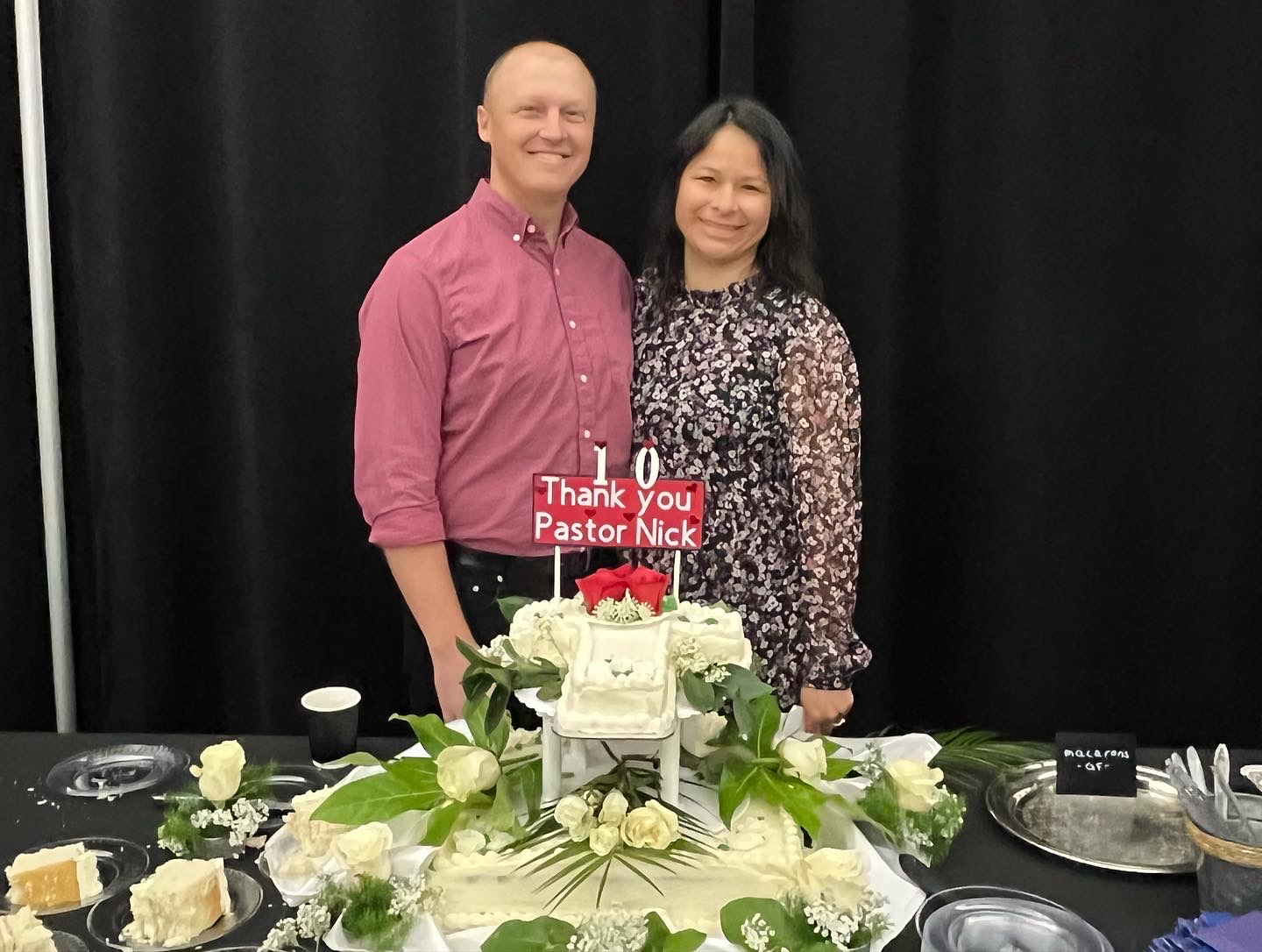
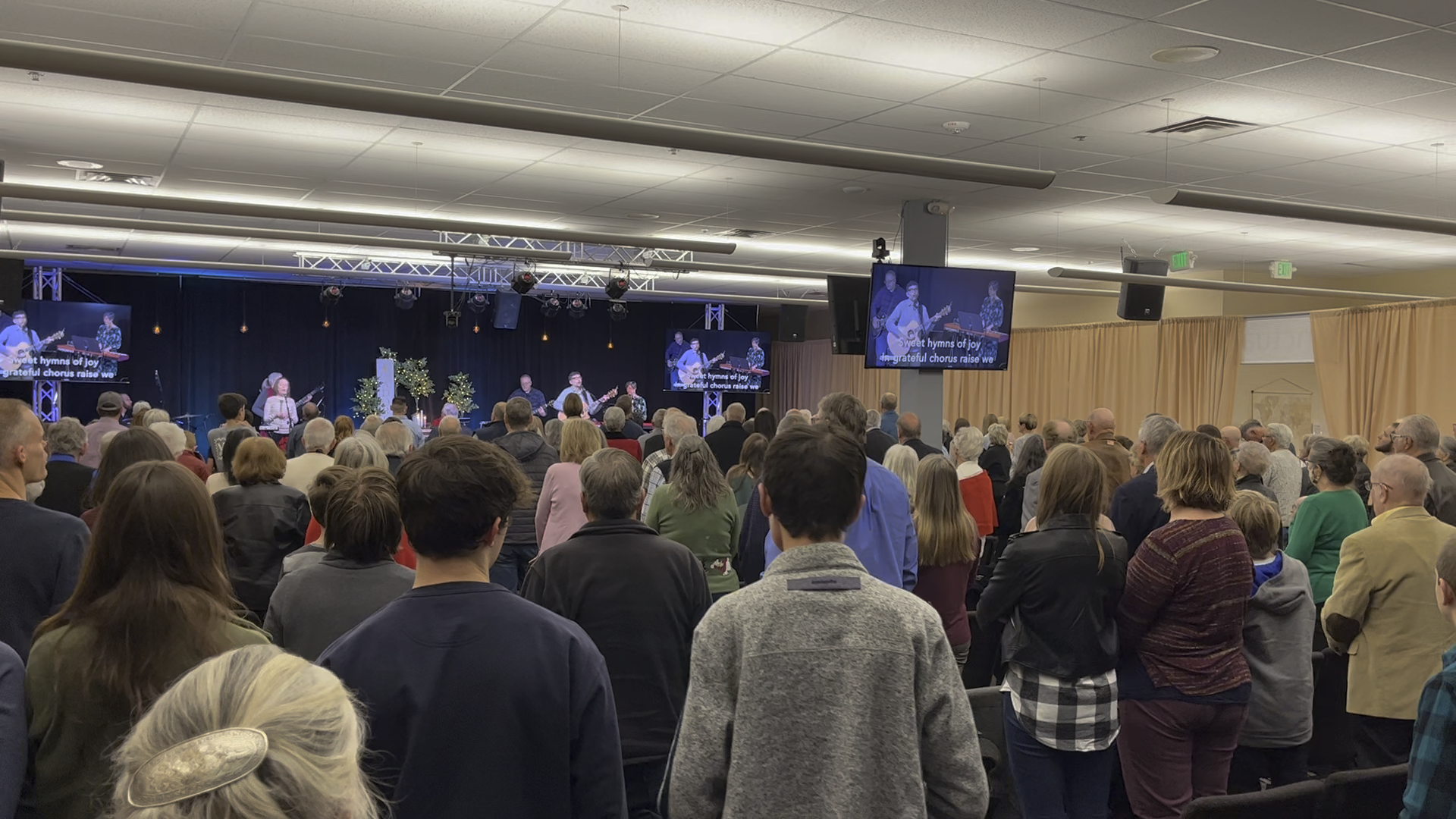
On March 27, the church surprised me with a celebration I didn’t know was coming. We had cakes and other treats at each service, and they had leaders who were elders in the first few years I was here come up and say a few words and pray for my wife and I.
Of these past 10 years, the last 5 have been particularly enjoyable; working with friends, taking steps of faith, and experiencing good fruit.
We are currently in the midst of a building expansion project, in order to create room for more people to come, hear God’s Word, grow, and be equipped. It’s an exciting time, and I look forward to the future!
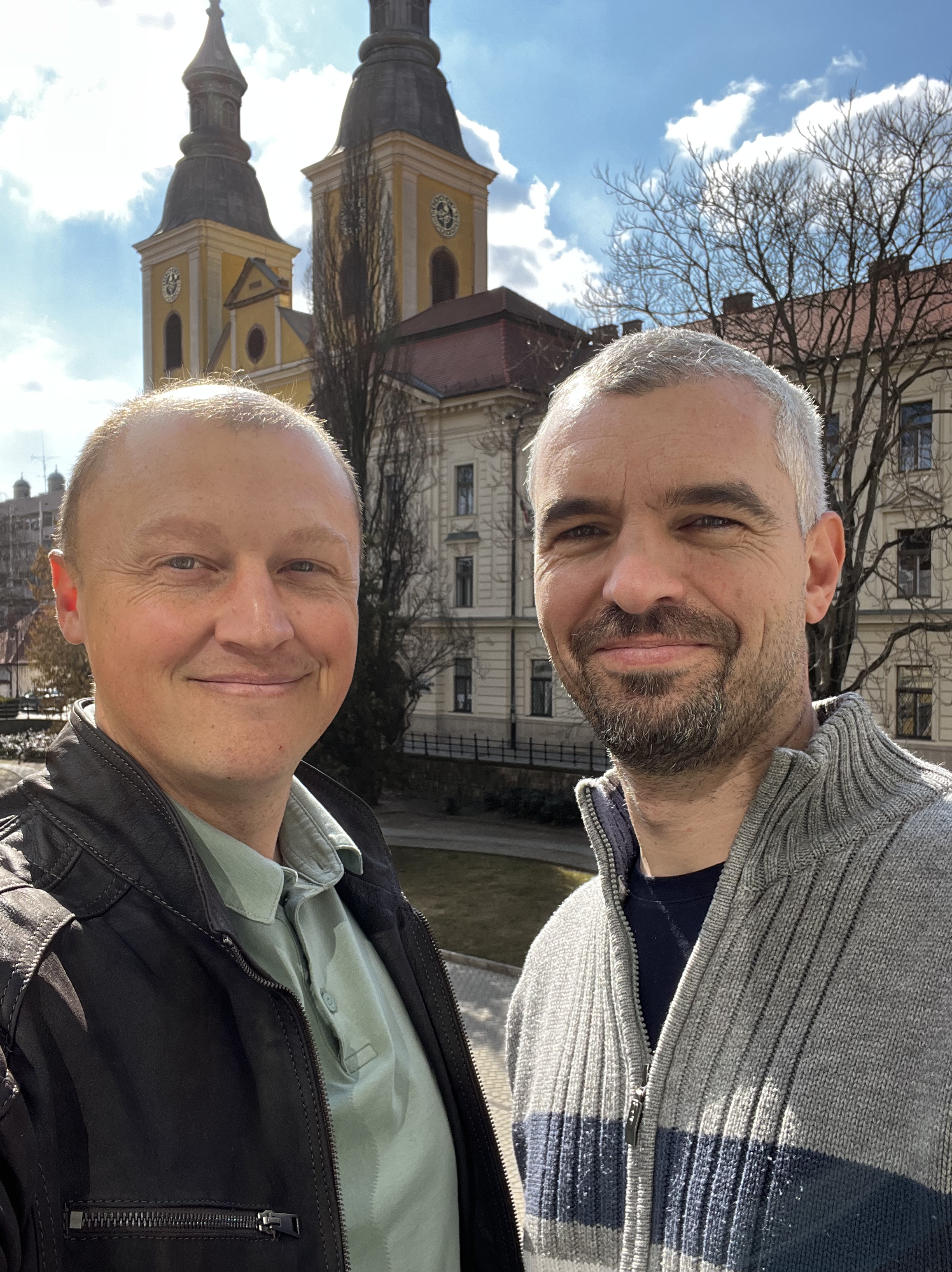
This March, my trip to Hungary to visit, encourage, and support our friends and co-laborers in the gospel from Ukraine coincided with the 10 year anniversary of me leaving Hungary to move to Colorado.
On Women’s Day, March 8, 2012, we left the beautiful city of Eger, where all of our kids (up until that point) had been born, and boarded a flight bound for Germany, on route to San Diego.
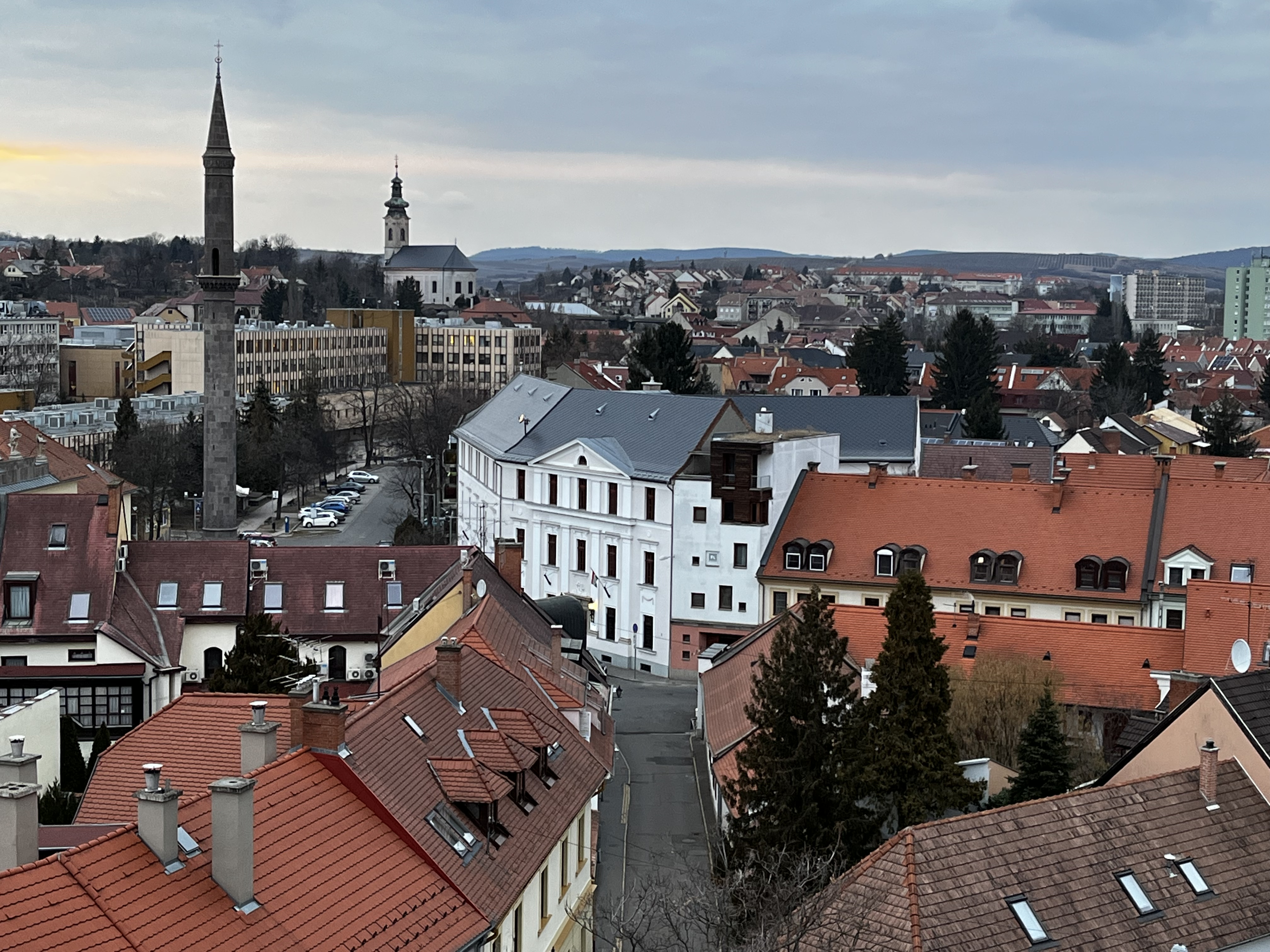
Eger, looking north from the city center. The minaret is the northern-most Turkish minaret in Europe, and the long yellow building behind it is where my kids were born. The church on the hill is a Serbian Orthodox Church; we started the Eger church in the neighborhood next to it.
We left part of our hearts there. People often ask me if I miss living in Hungary, and the answer is: Yes, I miss it so bad it hurts, every day. This isn’t to say that I’m not content where I am, or that I am planning to move back – it’s just the truth. I spent my entire adult life in Hungary up until we left. When we moved to Colorado, I had never been an adult in America before, and there was a learning curve, for sure.
Not only did we leave behind our beloved city, more significantly, we left behind a ministry we loved: one we started and nurtured.
We moved to Eger in 2005 with a vision to start a church which would be self-sustaining, that would be focused on evangelism and discipling those who became Christians through our outreaches, and we hoped that someday that church would have a Hungarian pastor, preferably someone who had been raised up through our ministry. Additionally, we hoped to start a “daughter church” out of that church, and to take the people of that church on mission trips themselves.
By God’s grace, all of these dreams came to fruition.
In January 2012, I handed over leadership of the Eger church to Jani, and he celebrated his 10 year anniversary as pastor earlier this year.
I had the opportunity to preach at the church when I was there this year, exactly 10 years to the week of my departure. I preached in Hungarian, which I miss doing.
The church recently moved into a new location, about 2 blocks from where they used to meet, and still in the heart of the city center, right on the main walking street, with a balcony overlooking it.
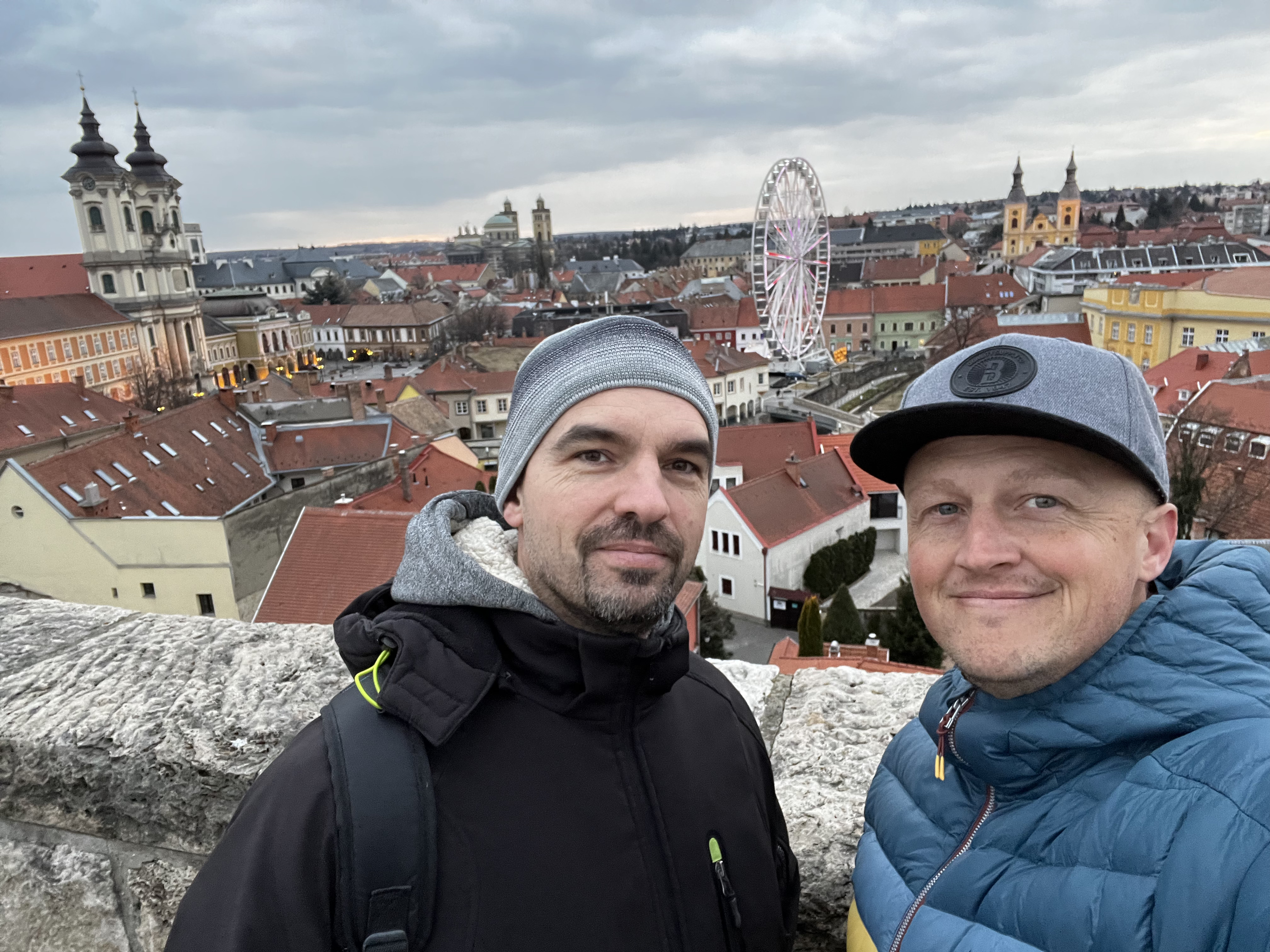
Standing on the balcony of the new church meeting place in downtown Eger.
Pray for Eger, and pray for Pastor Jani. He has been faithful. Pray for a fresh work of the Holy Spirit, for vision, guidance, and effective ministry.
As part of the discussion, Aaron asked Mike and I about our worst Easter sermon ever. As I was telling about my worst Easter sermon, I remembered something that happened on our first Easter (also our first Sunday) planting a church in Eger, Hungary. It wasn’t something I did (or even saw), but it was something which probably made it the worst Easter service ever for those who attended 😂. Here’s the video of that part of our discussion:
Aaron broke up our discussion into sections and created a helpful article, with Mike and I discussing about Good Friday, how to support staff and volunteers amongst the busyness of Easter weekend, and how to keep Easter fresh.





 Theology for the People