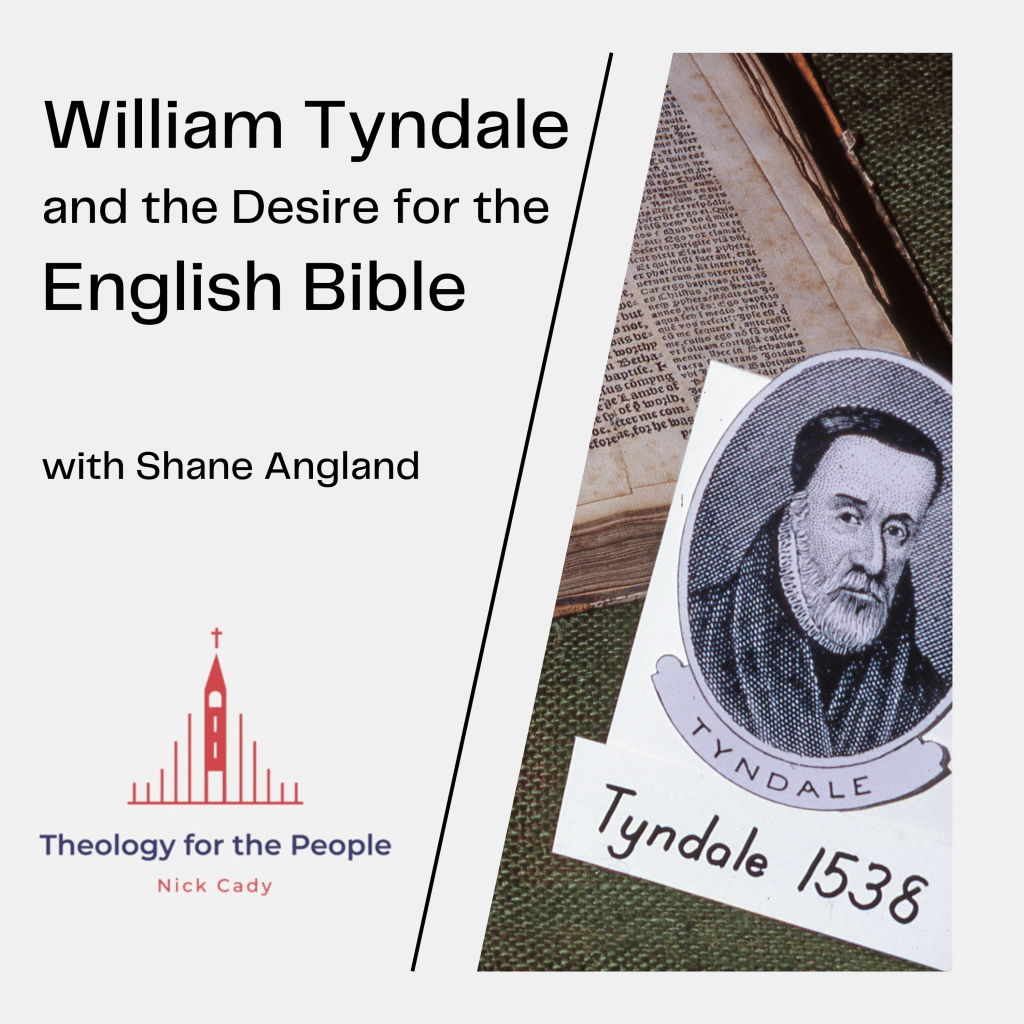
If you read the Bible in English, you may not realize all of the drama and sacrifices that went into getting the Bible translated into the English language.
In this episode of the Theology for the People Podcast, I speak with Shane Angland of Ennis Evangelical Church in County Clare, Ireland. Shane holds a Master of Divinity degree from Dallas Theological Seminary, and specializes in historical theology.
Shane and I speak about William Tyndale: an English biblical scholar and linguist who became a leading figure in the Protestant Reformation, until he was executed for his beliefs. Tyndale created the first English translation of the New Testament from the original Greek text and was working on translating the Old Testament from Hebrew. Much of his work can still be seen in the way the Bible is translated into English to this day.
If you read the Bible in English, you may not realize all of the drama and sacrifices that went into getting the Bible translated into the English language.
William Tyndale was an English biblical scholar and linguist who became a leading figure in the Protestant Reformation, until he was executed for his beliefs. Tyndale created the first English translation of the New Testament from the original Greek text and was working on translating the Old Testament from Hebrew. Much of his work can still be seen in the way the Bible is translated into English to this day.
In this episode, my guest is Shane Angland of Ennis Evangelical Church in County Clare, Ireland. Shane holds a Masters of Divinity from Dallas Theological Seminary, and specializes in historical theology.
Are we as Christians allowed to practice contraception without sinning? I believe all Christians hold fast that abortion is always a sin, but can married people practice family planning (number of children, spacing)?
Creation and Stewardship
In the Book of Genesis, when God created the man and the woman, he gave them what is called “The Cultural Mandate”:
Then God said, “Let us make man in our image, after our likeness. And let them have dominion over the fish of the sea and over the birds of the heavens and over the livestock and over all the earth and over every creeping thing that creeps on the earth.” So God created man in his own image, in the image of God he created him; male and female he created them. And God blessed them. And God said to them, “Be fruitful and multiply and fill the earth and subdue it, and have dominion over the fish of the sea and over the birds of the heavens and over every living thing that moves on the earth.”
Genesis 1:26-28
Part of this mandate included being fruitful, multiplying, and filling the Earth – as well as “subduing” it, i.e. managing and stewarding the use of its resources.
Just as God created, now we are called and empowered to thoughtfully bring more life into being. Obviously we can’t do this apart from God’s work, but it also requires our participation. Sometimes when someone says they are “praying for children,” it’s nice to remind them that it takes more than just prayer! 😁
However, it’s worth noting that God, in creation, at a certain point, ceased creating! He didn’t create everything He could; certainly God could have imagined and created many other creatures and plants than He did, but at some point, He deemed His creation complete and perfect in its design. This act of ceasing to create speaks volumes about God’s intentionality.
What this shows us is that God values not only the act of creation but also the stewardship of His creation.
He entrusts humans with the responsibility to co-create with Him, to participate in the unfolding of His divine plan for the world. Within the context of marriage, this stewardship extends to the realm of family planning. Just as God decided when to create, and when to cease creating, Christian couples are called to exercise discernment and responsibility in their reproductive choices. This includes considering factors such as physical health, emotional readiness, financial stability, and the well-being of existing children.
Contraception, when used responsibly and in accordance with a couple’s shared values and beliefs, can be a tool for fulfilling this stewardship.
Also worth keeping in mind is the fact that not all contraception is equal in nature. It’s worth considering whether the given method prevents conception, or terminates conception. Those forms of contraception that prevent contraception are ethical and can be used in good conscience by Christians.
Ask a Question or Suggest a Topic
If you have a question or would like to suggest a topic for me to address here on the blog, click here: Ask a Question or Suggest a Topic
Who is the Holy Spirit, and how does an understanding of the person and work of the Holy Spirit contribute to our life and faith as believers in Jesus?
Fred has focused much of his theological work on the topic of the Trinity, so when it comes to talking about the person and work of the Holy Spirit, he has a unique and helpful perspective.
In this episode we talk about what the Bible says and doesn’t say about the Holy Spirit, whether it’s okay to pray to the Holy Spirit, and more.
Who is the Holy Spirit, and how does an understanding of the person and work of the Holy Spirit contribute to our life and faith as believers in Jesus?
Fred Sanders is professor of theology at the Torrey Honors College at Biola University. He is the author of a much sought-after series of theological comic books, as well as the recently published book, The Holy Spirit: an Introduction, which is part of the Short Studies in Systematic Theology series put out by Crossway Publishing.
Fred has focused much of his theological work on the topic of the Trinity, so when it comes to talking about the person and work of the Holy Spirit, he has a unique and helpful perspective.
In this episode we talk about what the Bible says and doesn’t say about the Holy Spirit, whether it’s okay to pray to the Holy Spirit, and more.
Make sure to visit the Theology for the People website at nickcady.org
How should we, as Christians think about mental health and mental illness? Are there ways in which the Bible gives us insights into treating mental illness, that go beyond what modern secular scholarship can provide?
In our discussion, David talks about his own struggles with mental illness, and about how the Bible gives us the best possible framework for dealing with issues that are often both spiritual and physical in nature.
How should we, as Christians think about mental health and mental illness? Are there ways in which the Bible gives us insights into treating mental illness, that go beyond what modern secular scholarship can provide?
In this episode, I speak with David Murray. David Murray holds a PhD from Vrije Universiteit Amsterdam and has pastored churches in Scotland and the USA. He is also a counselor, and the author of several books, including the latest, which he co-authored, A Christian’s Guide to Mental Illness: Answers to 30 Common Questions.
In our discussion, David talks about his own struggles with mental, and about how the Bible gives us the best possible framework for dealing with issues that are often both spiritual and physical in nature.
For many people, the study of the “End Times” can feel mysterious and disorienting. But, upon examination, what you find is that there are really only three main lenses through which people interpret the eschatological texts in the Bible.
In this episode of the Theology for the People Podcast, my friend Aaron Salvato from the Good Lion Podcast, interviews me about the end times passages in the Bible and I lay out the three different ways these passages have been interpreted, and why.
I outline the futurist, preterist, and idealist positions, and explain how they correspond to premillennialism, postmillennialism, and amillennialism. I also weigh the strengths and weaknesses underlying these different interpretations.
For many people, the study of the “end times” can feel mysterious and disorienting. But, upon examination, what you find is that there are really only three main lenses through which people interpret the eschatological texts in the Bible.
In this episode, my friend Aaron Salvato from the Good Lion Podcast, interviews me about the end times passages in the Bible and I lay out the three different ways these passages have been interpreted, and why.
I outline the futurist, preterist, and idealist positions, and explain how they correspond to premillennialism, postmillennialism, and amillennialism. I also weigh the strengths and weaknesses underlying these different interpretations.
Make sure to visit the Theology for the People website at nickcady.org
Psalm 23 is one of the most well-known and beloved passages in the Bible. It is often read at funerals, or at times when people are in need of comfort. And yet, there is more to this Psalm than many people realize.
According to David, Psalm 23 echoes the major themes of the Bible and foreshadows God’s saving work through Jesus – in a way that is wonderful, edifying, and encouraging. Rather than being a Psalm for death – he wants to show us how this is a passage about life, for those who follow Jesus!
Psalm 23 is one of the most well-known and beloved passages in the Bible. It is often read at funerals, or at times when people are in need of comfort.
And yet, there is more to this Psalm than many people realize. According to my guest, David Gibson, Psalm 23 echoes the major themes of the Bible and foreshadows God’s saving work through Jesus – in a way that is wonderful, edifying, and encouraging.
Rather than being a Psalm for death – he wants to show us how this is a passage about life, for those who follow Jesus!
David Gibson is the minister of Trinity Church in Aberdeen, Scotland, and the author of several books, including his latest: The Lord of Psalm 23: Jesus Our Shepherd, Companion, and Host.
Make sure to check out the Theology for the People website at nickcady.org
Many people consider Jesus to be a great teacher, but few actually realize just how incredible his teachings actually were.
In this episode of the Theology for the People podcast, I speak with Dr. Peter J. Williams, the principal of Tyndale House in Cambridge, and the chair of the International Greek New Testament Project. He is also a member of the ESV Translation Oversight Committee, and the author of several books, including: Can We Trust the Gospels?
Dr. Williams’ latest book is called The Surprising Genius of Jesus: What the Gospels Reveal about the Greatest Teacher, in which he examines Jesus’ teachings in the Gospels and shows how we know that these teachings truly do originate with Jesus, and that they show an incredible awareness of, and connection to the Old Testament in a way that would have triggered the memories of the first listeners, and which contains layers of meaning for us as readers today.
This is a fascinating discussion; I hope you enjoy it!
Peter J. Williams – Why Jesus’ Teachings in the Gospels are Reliable & Incredible –
Theology for the People
Many people consider Jesus to be a great teacher, but few actually realize just how incredible his teachings actually were.
Dr. Peter J. Williams is the principal of Tyndale House in Cambridge, and he is the chair of the International Greek New Testament Project. He is also a member of the ESV Translation Oversight Committee, and the author of several books, including one titled: Can We Trust the Gospels?
Dr. Williams' latest book is called The Surprising Genius of Jesus: What the Gospels Reveal about the Greatest Teacher, in which he examines Jesus' teachings in the Gospels and shows how we know that these teachings truly do originate with Jesus, and that they show an incredible awareness of, and connection to the Old Testament in a way that would have triggered the memories of the first listeners, and which contains layers of meaning for us as readers today.
Make sure to check out the Theology for the People website at nickcady.org
Andrew has a PhD from King’s College London, and he serves as the teaching pastor at King’s Church London.
In his new book, Remaking the World: How 1776 Created the Post-Christian West, Andrew looks at 7 transformational events which took place in 1776, that paved the way for today’s post-Christian western culture. By understanding how those events influence the way people think today, Christians can more effectively share God’s truth in a post-Christian age.
In this episode, Andrew and I talk about the TV show Lost, along with discussions about philosophy, and history, how these things relate to Christian theology, mission, and practice, and how God’s Word and the hope of the gospel are particularly relevant to the Western mindset today.
Andrew Wilson – Romanticism & “Protestant Paganism”: Christianity in Relation to Western Culture –
Theology for the People
In this first episode of Season 4, Nick Cady speaks with pastor and author Andrew Wilson about why understanding western culture is important for Christian theology and mission.
Andrew has a PhD from King’s College London, and he serves as the teaching pastor at King’s Church London.
In his new book, Remaking the World: How 1776 Created the Post-Christian West, Andrew looks at 7 transformational events which took place in 1776, that paved the way for today’s post-Christian western culture. By understanding how those events influence the way people think today, Christians can more effectively share God’s truth in a post-Christian age.
Make sure to visit the Theology for the People website at nickcady.org
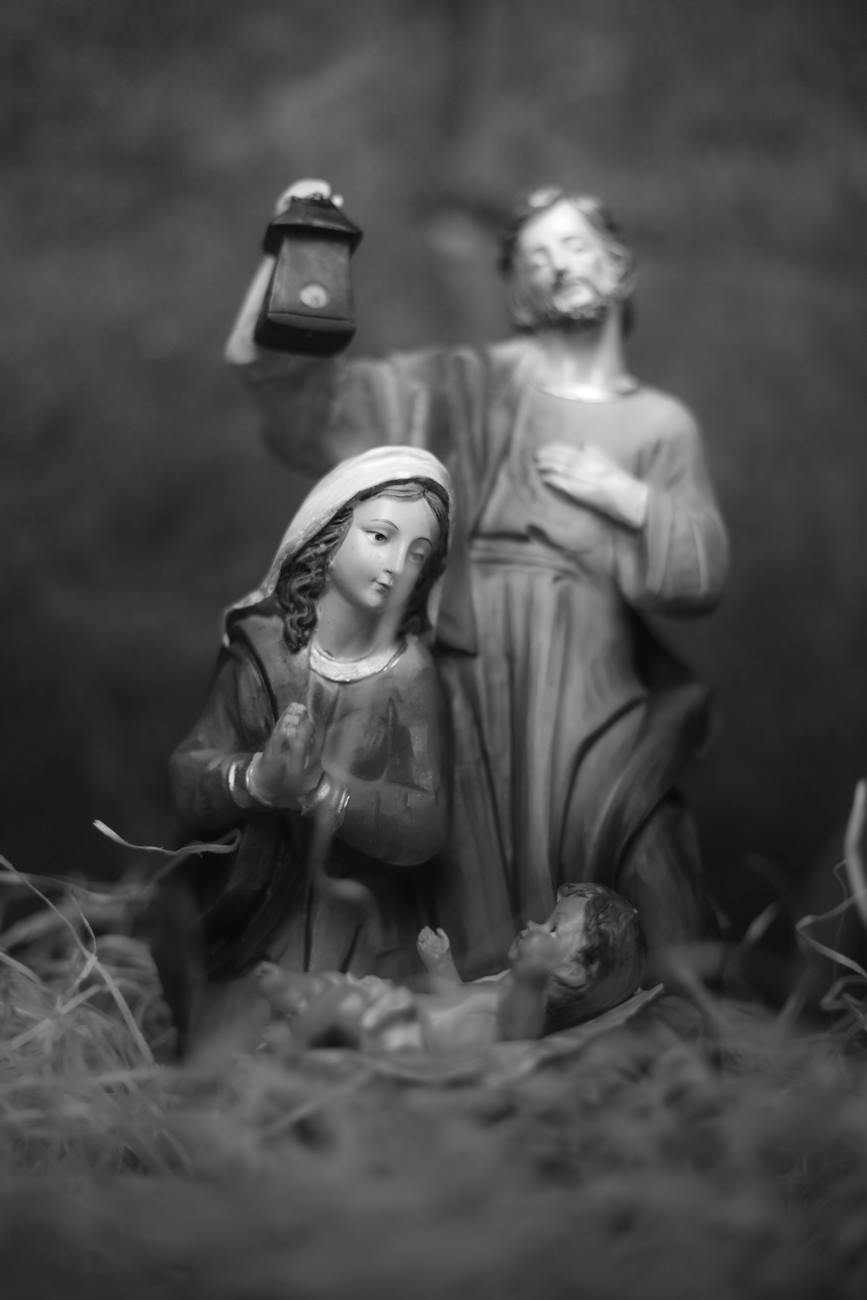
Several people over the years have asked me whether the virgin birth of Jesus is an essential element of the gospel message.
Emergent church leader Rob Bell, for example, asked the question of which parts of the biblical story of Jesus are essential to believe in order to be saved. He specifically questioned the necessity of belief in the virgin birth.
Additionally, this week I came across a discussion online of people arguing that instead of the original lyrics to the hymn Hark! The Herald Angels Sing, the line “offspring of the virgin’s womb” should be changed to “offspring of Mary’s womb.” The reason for this, they said, was that not saying Mary’s name, but instead identifying her according to her sexual status, takes away from her dignity. Therefore, we should say her name, and get rid of this “unnecessary” controversy regarding the virgin birth.
So, is the virgin birth essential to the gospel?
I believe it is. In this video, I explain the reasons why:
Continuing through the workshop that Aaron Salvato and I presented at this year’s Calvary Chapel pastors and leaders conference on the topic of Understanding Doubt and Deconstruction, here is Part 3, in which we delve into topics such as:




 Theology for the People