Sola Scriptura: All Scripture is Breathed Out by God

Yesterday we began a 5-week series at White Fields in which we are looking at the 5 Solas of the Reformation: the slogans that the Reformers used to summarize their core beliefs:

  • Sola Scriptura (Scripture Alone)
  • Sola Gratia (Grace Alone)
  • Sole Fide (Faith Alone)
  • Solus Christus (Christ Alone)
  • Soli Deo Gloria (To the Glory of God Alone)

We started by looking at the first of these: Sola Scriptura.
sola_scriptura__artwork__dark-01

Sola Scriptura means: the Bible alone is our highest authority.

Martin Luther and the other Reformers found themselves in a situation, where – having read the Bible, they discovered that many practices and teachings of the church in their time were actually in direct opposition to the clear teaching of the Bible – particularly on the issues of absolution of sin and justification.

This is what led to Martin Luther’s famous statement at the Diet (Congress) of Worms:

Unless I am convinced by the testimony of the Scriptures or by clear reason (for I do not trust either in the pope or in councils alone, since it is well known that they have often erred and contradicted themselves), I am bound by the Scriptures I have quoted and my conscience is captive to the Word of God. I cannot and will not recant anything, since it is neither safe nor right to go against this knowledge. May God help me. Amen.

Sola Scriptura does not mean that we reject other sources of truth and wisdom, nor that we reject or ignore tradition. To do so would not only be foolish, but it would be ignorant of the fact that the very way that we got the canon of Holy Scriptures that we now have was in large part by God working through reason and tradition to transmit the Scriptures to us.

What Sola Scriptura means is that when it comes to what we believe and how we live, there is no higher voice, no greater authority than the Holy Scriptures, and everything must by judged by them.

So, if church councils say one thing, but the Bible says another: Who wins?  The Bible does. If our culture and society says one thing, but the Bible says something else, then who do we believe?  Who do we submit to?  The answer is: the Scriptures.

Did the New Testament Writers Know They Were Writing Scripture?

2 Timothy 3:16 says: All Scripture is breathed out by God and profitable for teaching, for reproof, for correction, and for training in righteousness

What Scriptures are being referred to here?

Obviously it is referring to the Old Testament scriptures, but interestingly, this comes from 2 Timothy, the last letter which Paul wrote, at the end of his life. By this time — almost all of the books that we have in our New Testaments had already been written, and were being distributed amongst the Christians, to be read and studied in their churches.

So, when Paul says, “All Scripture” — he’s not just talking about the Old Testament, he’s also talking about the New Testament!

In the New Testament, what you find is that the Apostles understood that God was using them in their time to bring about a New Testament of Holy Scriptures, by the inspiration of the Holy Spirit.

Here are a few examples:

  • In 2 Peter 3:15-16, Peter refers to the writings of Paul as “Scriptures”
  • In 2 Thessalonians 2:13, Paul referred to his own message as “the word of God”
  • In 1 Timothy 5:18, Paul takes a quotation from the Gospel of Luke – and he calls it “Scripture” (Luke 10:7)
  • In some of his letters, Paul instructs the recipients to distribute his letters and have them read in the churches. (Colossians 4:16, 1 Thessalonians 5:27)

What Paul is telling Timothy in this text is to stick to the Scriptures, because they come from God, not from man.

The Bible is not only inspired in the sense that it is like a great work of art that we might say is “inspired” – but it is inspired in the greater sense, that the words it contains were breathed by God Himself!

What that means is that the Bible is no ordinary book — it is the very word of God to us, and therefore it alone is worthy to be the highest authority in our lives.
Wesley on Money

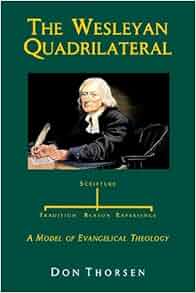
I’ve been reading a book on John Wesley’s theological method for my master’s course, and found an interesting section on his teachings and practice in regard to money.


Here’s an excerpt:

Wesley’s care for people extended beyond their spiritual well-being. In his time he was in the forefront of helping to alleviate the social ills of 18th-century England. His care for souls extended to the whole person, especially among the poor, the uneducated, the sick and the dispossessed – for example, slaves and prisoners.

The poor received special attention. He provided basic medical care and wrote simple medical manuals to help those who could not afford professional healthcare. At Kingswood school he set up a benevolent loan fund for people with immediate financial needs, the only stipulation being that they should repay the loan within three months.

Wesley preached what he practiced. Many sermons were intended to instruct on how to handle money. His best-known sermon dealing with money is entitled “The Use of Money.” In it Wesley exhorted Christians to “gain all you can, save all you can, and give all you can.” Wesley soon discovered that his followers were good at the first two principles, but ignored the third principle against surplus accumulation, which he considered the leading ill of Christian praxis. He was so concerned over the misuse of money and corresponding injustices that he published several sermons specifically warning about the spiritual danger to the person who does not give.

(Thorson, The Wesleyan Quadrilateral: a model of evangelical theology, 53-54)

Several stories are told about Wesley’s passion for good stewardship of money came about. First of all, he grew up in poverty. His father was a minister and John was one of 9 kids.

As a young man, Wesley was accepted into Oxford University. At Oxford, he had just finished paying for some pictures to decorate his room, when one of the maids came to his door. It was a cold day and she only had a threadbare gown to wear with no coat. He reached in his pocked to give her money to buy a coat, but he found that he had too little left after decorating his room. He asked himself, “Will thy Master say, ‘Well done, good and faithful steward’? O justice! O mercy! Are these pictures the blood of this poor maid?”

Starting in 1731, Wesley reportedly began limiting his expenses so he would have more that he could give away. He records that one year his income was 30 pounds and his living expenses were 28 pounds, so he had 2 pounds to give away. The next year his income doubled, but he still managed to live on 28 pounds, so he had 32 pounds to give away. In the third year, his income jumped to 90 pounds. Instead of letting his expenses rise with his income, he kept them to 28 pounds and gave away 62 pounds. In the fourth year, he received 120 pounds. As before, his expenses were 28 pounds, so his giving rose to 92 pounds.

Wesley felt that the Christian should not merely tithe but give away extra income. He believed that with increasing income, what should rise is not the Christian’s standard of living but their standard of giving.

With increased income, what should rise is not the Christian’s standard of living but their standard of giving.

One year his income was a little over 1400 pounds. He lived on 30 pounds and gave away nearly 1400 pounds.

Wesley encouraged Christians to “gain all you can,” meaning that it is good to make a lot of money. However, he added that in gaining all you can, Christians must be careful not to damage their own souls, minds, or bodies, or the souls, minds, or bodies of anyone else. He prohibited gaining money through industries that took advantage of others, exploiting them or endangering them.

Wesley outlined four guidelines for spending one’s income:

  1. Provide things needful for yourself and your family (1 Timothy 5:8)
  2. Having food and raiment, let us be therewith content (1 Timothy 6:8)
  3. Provide things honest in the sight of all men (Romans 12:17) & Owe no many anything (Romans 13:8)
  4. As we have therefore opportunity, let us do good unto all men, especially unto them who are of the household of faith (Galatians 6:10)

I was challenged and encouraged by reading about Wesley’s attitudes and practices with money. I hope you are too.

Let’s not stop with only being inspired – but may we be moved to action! Is there a change that needs to be made in the way you view or handle money?


What Happened That Made You Like This?

Since the shooting in Las Vegas last Sunday, authorities have been searching for a motive for why Steven Paddock opened fire on a crowd of people with the intent to kill as many as possible. So far, no leads have turned up. Everyone who knew him seems genuinely shocked. He doesn’t seem to fit any of the expected patterns or usual profiles. People are confused and asking: How does someone get to the point where they would do something so profoundly evil and terrible as this?

The modern worldview is that we are progressing as a society, we are evolving and getting better. Furthermore, it believes that “evil” doesn’t really exist per se, but that “evil behavior” is the result of outside factors:

  1. You have a psychological complex because you were raised improperly.
  2. You did it because of bad sociology: you weren’t educated enough, or you were poor.
  3. It’s a result of bad genetics and/or you are aggressive because of millennia of natural selection which favored aggressive behavior.

There might be some truth to the matters of how someone is raised, but this theory is insufficient. This theory has no category for a Steven Paddock, who doesn’t fit any of these models. He wasn’t poor, he wasn’t uneducated, he was raised in a loving home… It’s interesting to watch reporters grasp at straws to find a reason for what happened to him that made him like this…

It reminds me of a scene from the book, Silence of the Lambs, about the serial killer: Hannibal Lecter. Officer Starling goes in to interview Hannibal Lecter, and she is looking at him and considering what he has done, and she sees his attitude, and she asks:

“What happened to you that made you like this?”

Officer Starling is the quentisential modern person. She thinks: “You are doing bad things, therefore something must have happened to you, something must have come from outside – it couldn’t have come from inside!” This is a philosophical leap of faith, which assumes that people are basically good, and if they do anything bad it is only because of outside influence.

Hannibal Lecter replies:

“Nothing happened to me, Officer Starling. I happened. You can’t reduce me to a set of influences. You’ve given up good and evil for behaviorism, Officer Starling. You’ve got everybody in moral dignity pants – and nothing is ever anybody’s fault. Look at me, Officer Starling. Can you stand and say I’m evil? Am I evil, Officer Starling?” (The Silence of the Lambs, Thomas Harris)

Hannibal Lecter is making a very important point: the modern worldview has no category for evil.

The modern world view has actually been eroding very quickly. In the 20th Century, the world became wealthy and educated, many of the problems of poverty were overcome, and yet wars and violence didn’t end, they escalated. The 20th Century was the most bloody century in history – at a time when the world was more educated, industrialized and wealthy than ever before.

The Christian worldview, however, which is based on the Bible, has no problem accepting these things – because we have a very comprehensive view on sin.

We have a category for Hannibal Lecter and for Steven Paddock. The Bible tells us that within all of us lurks the capacity for terrible acts, because we are fallen and corrupt. The theological term is: Totally Depravity. That means that, apart from God’s work within us, even the good things we do, we do for less-than-pure motives: either to benefit ourselves, bring praise to ourselves, or to justify ourselves.

But the Bible doesn’t just stop there with telling us what’s wrong, and that evil lurks inside of us; it also tells us what God has done to save us and redeem us. It tells us what God has done to destroy evil without destroying us: He took on human flesh, became one of us, and died a substitutionary death, so that through His death He might destroy the one who holds the power of death, and set free those who through fear of death were subject to lifelong slavery. (Hebrews 2:14-15)

We should pursue better legislation, further education and the eradication of poverty, because we have been given a calling and vocation from God to “subdue the Earth,” i.e. to manage it well and to do all that we can under God to promote human flourishing. But we must remember that such things do not change the heart. We must place our ultimate hope in the redeeming work of Jesus Christ on our behalf.

Who Needs Theology When You Can Have Jesus? You Do.

I ran across two videos online yesterday. The first was one I had seen before by Jefferson Bethke, called “Why I Hate Religion But Love Jesus,” and the other was by Thabiti Anyabwile called “Why is Theology Important?

I’ll be concise and say that I love the second video, but the first video doesn’t sit right with me.

I understand what Jefferson Bethke is getting at, but I think he is a bit misguided in his approach and his choice of words.

Kevin DeYoung has written a very good response to Bethke’s video and to statements like “God hates religion.” That response can be found here: Does Jesus Hate Religion?  Kinda, Sorta, Not Really

In think that many Christians have overplayed their hand when it comes to trying to make a hard dichotomy between Christianity and religion, or saying that people don’t need theology, all they need is Jesus. That’s a false dichotomy.

Throughout the Old Testament, God Himself established what could be called a “religious” system of rituals, symbols, rules and ceremonies – all of which pointed to Jesus and were then fulfilled by Jesus. In James 1:27 we are encouraged to practice “pure religion which is pleasing to God.” (James 1:27).

As I have written about extensively on this site, Christianity is unique compared to all religions of the world, which all share a common method of obtaining salvation: earning it. In this sense, it is right to say that Christianity can’t be bunched together with other world religions. Timothy Keller, in his writings has put it this way: that Christianity is neither religion nor irreligion, but something completely different: salvation by grace unto a relationship with God. I agree.

And yet, it would seem that what God hates isn’t religion per se, but bad religion which leads to self-righteousness and self-justification and any other practices which do not align with His heart. He chastised the Israelites in the Old Testament, not for being religious, but for distorting their religion for selfish purposes which did not align with His heart. The solution God gave them was not that they cast off religion, but that they get back to the heart of God.

It is important to remember that self-justification and self-righteousness don’t only come about through religion; there are plenty of non-religious ways that people seek to justify themselves and get a sense of self-righteousness, e.g. through morality, career, achievements, family, etc.  In fact, apart from Jesus every person is pursuing self-justification in one form or another, and most of these forms are not through religion.

One of the particular dangers of “bad religion” is that it gives people a false sense of security in being right with God. However the same could be said of an anti-religious stance which is just as condescending and self-righteous in its own right…

This is why theology is so important. Theology is not opposed to relationship with God, rather it is what Anselm of Canterbury called, “Faith seeking understanding.” If Christianity is about a relationship with God – and it is – then it is of utmost importance that we get to know this God for who He is through how He has chosen to reveal Himself to us. Furthermore, theology directly affects the way we live practically.

The fact is, like it or not: we are all theologians. You are a theologian, whether you think of yourself as one or not, because you have conceptions and ideas about God: who He is and what He is like. That makes you a theologian. Whether you are a good theologian or not is a different question, but the fact is that you are a theologian. Even atheists are theologians.

Check out this video of Thabiti Anyabwile talking about why theology is important:

Want to Join a Korean Doomsday Cult?

This past Sunday I received a message from someone who attends White Fields. She said that she was in Alta Park in Longmont when a couple approached her who were from the Worldwide Mission Society Church of God, seeking to evangelize her.

When she told them that she is a Christian, they questioned her salvation and told her that Jesus had claimed that he would come again as a man, give his church a new name, and that in order to be saved, one needs to be part of this church, and adhere to several “new covenant requirements” including keeping all of the feasts mentioned in the Book of Leviticus.

They mentioned that they belonged to a branch of this church which had recently started in Boulder, and that they were planning to start a Longmont branch soon as well.

I had never heard of this group before, so I looked them up. Turns out they have some pretty crazy doctrines, which, unsurprisingly, they kept quiet about in this interaction in the park.

Who are they and what do they believe?

The Worldwide Mission Society Church of God (WMSCOG) was founded by Ahn Sahng-Hong in South Korea in 1964. He was a long-time Seventh-day Adventist, until he split off to establish his own religion.

They believe in God the Father and God the Mother, and they believe that their founder, Ahn Sahng-Hong (deceased) was the reincarnation of Jesus Christ (this is what the people in Alta Park were talking about when they said Jesus came back as a man and gave his church a new name), and that his wife (still alive) is the incarnation of God the Mother.

Ahn Sahng-Hong’s wife, Jang Gil-ja, is not only considered to be divine as God the Mother, but she is also known as “The Bride of Christ” – because she was married to Ahn Sahng-Hong, whom they believe to be the reincarnation of Christ.

Along with referring to him as “Christ Ahn Sahng-Hong,” they also believe that he is the Holy Spirit and they baptize and pray in the name of the Father, Son and Ahn Sahng-Hong.

I just threw up a little bit in my mouth as I wrote that…

They teach that all people were originally created as angels in Heaven, but then sinned against God and were sent to Earth as a second chance to return to God. The only way for humans to be saved and return to heaven is by keeping the Levitical feasts and following the teachings of Ahn Sahng-Hong, which includes believing in God the Mother, AKA Jang Gil-ja, Ahn Sahng-Hong’s wife, who gives everlasting life.

When you lay it out like this, it’s pretty clear how crazy this is. Not only is it a cult of personality, it is a radical deviation from Biblical doctrine. It’s not surprising that they keep most of this stuff to themselves when they go out preaching in parks.

And yet, the WMSCOG is growing very rapidly. They boast of 450 churches in Korea and 3000 around the world.

The member of our church who met them concluded her message to me by saying that this whole experience made her realize how unprepared she was to explain and, if necessary, defend what she believes and why.

How should you respond if you are approached by the WMSCOG? Or by any other pseudo-Christian group that has their own heterodox interpretation of the Bible?

There is one thing which is common to every religion in the world, other than Christianity: they teach that salvation is something that you have to earn. The gospel message of Jesus Christ, on the other hand, teaches that salvation is something that Jesus earned for you, and which is given to you by God as a free gift.

Notice that the soteriology (doctrine of salvation) of the WMSCOG is one of salvation by works.

Here’s what the Bible has to say:

“for it is by grace that you have been saved, through faith; and that not of yourselves, it is the gift of God; not as a result of works, so that no one may boast,” (Ephesians 2:8-9).

On the matter of feasts and Sabbaths:

“Therefore no one is to act as your judge in regard to food or drink or in respect to a festival or a new moon or a Sabbath day— things which are a mere shadow of what is to come; but the substance belongs to Christ” (Colossians 2:16-17).

“But now that you have come to know God, or rather to be known by God, how is it that you turn back again to the weak and worthless elemental things, to which you desire to be enslaved all over again? You observe days and months and seasons and years. I fear for you, that perhaps I have labored over you in vain” (Galatians 4:9-11).

The gospel is not a call to celebrate feast days and Sabbaths in order to obtain salvation, it is the good news of who Jesus is and what He has done for you, in order to save you. Anyone who teaches that such things are necessary for salvation is not only wrong, they are creating a different gospel.

Jesus said that when he would return again, he would come to judge the living and the dead. The teachings of the WMSCOG are not only incorrect and dangerous, they are heretical; both in their deification of Ahn Sahng-Hong and Jang Gil-ja and in their teaching of salvation by works, which goes contrary to the clear teaching of the Bible that we are justified by God through faith in Christ and his finished work on the cross.

In the big picture, this is just another re-branding of an old, and widespread lie: that you can (and must) work your way to God. The good news of the gospel is that salvation is not earned by your performance being good enough, but on the sufficient sacrifice of Jesus on the cross. Rest in that, and be on guard against those who teach otherwise.

For more on the Worldwide Mission Society Church of God and sources for this article, check out these sites:

Aren’t Justice and Mercy Incompatible by Definition?

web-justice-mercy-lisa-aiken-shutterstock_197111327

Recently at White Fields we have been studying through the Book of Jonah. Jonah was called by God to go to Nineveh, the capital of Assyria – a violent and imperialistic nation which posed a clear and present danger to the very existence of Israel. And Jonah was called to take them a message which carried with it the promise of mercy if they would repent of their sins and turn to the Lord.

Archaeologists and historians who have studied the Assyrian Empire report things such as human sacrifice, furniture upholstered with human skin, pyramids of human skulls, how they would put hooks in the faces of captives and leading them around by chains…

So it is not surprising that one of Jonah’s hesitations with going to Nineveh was that he didn’t think it would be fair for God to show mercy to people who did such terrible things. Jonah struggled with the question of how God could still be just if he were to forgive these sins and show them mercy.

This is a question many people struggle with:  If you forgive someone, then what about justice?  Can anyone just do anything they want and then say sorry, and suddenly it’s okay, and there are no repercussions? Where’s the justice in that?

For this reason, some people are hesitant to forgive those who have hurt them: because it kind of feels like in that case, they are getting away with it, or you are saying that it wasn’t a big deal — even though it was. (More on this topic here: Does Forgiving Mean Forgetting?)

One of the great promises of the Bible is that God is just, and even if we don’t see it in our lifetime, there will be justice.  Nothing is hidden from the eyes of God, and He will deal justly with every hurtful action and every wrongdoing. This gives us great comfort in the face of injustice, corruption and unfair and unethical behavior that we see or which touches our lives.

In the Psalms, the Psalmist often bemoans the injustice that he sees in the world: that those who lie, cheat and steal get ahead, at the expense of those who are fair and honest. Nice guys finish last. Good doesn’t always defeat evil. However, the Psalmist then goes on to comfort himself with the knowledge that, in the end, God will bring about justice: there is no wrong deed that will not go unpunished.

There’s only one problem with that:    ALL of us have done wrong things. Without exception…

So the problem with justice is: if God is totally just and judges every wrong deed, then that means that He will have to not only judge those who have sinned against us, but He will have to judge us as well.

But then, the Bible gives us the good news: for those who turn to the Lord, He will give them mercy!

But here’s the thing:   The definition of Justice is:  Giving someone what they deserve. On the other hand, the definition of Mercy is:  NOT giving someone what they deserve.

So, by definition: if you show someone mercy, then you are no longer being just! The two are diametrically opposed. So, if God shows mercy, doesn’t that mean He is no longer being just? Does one of God’s attributes therefore contradict another one of His attributes?

Isn’t mercy therefore a travesty of justice?

One of the great tensions of the Old Testament is the question of how God can be both Just and Merciful at the same time.

In my last post I wrote about another one of these great tensions: the question of whether the covenant with God is conditional or unconditional.

Neither of these tensions are actually resolved in the Old Testament. They only find their resolution in the New Testament – in Jesus.

The way that God can be both just and merciful at the same time, is because Jesus took all of the righteous judgment that we deserved, so that God could show us mercy. In this way, God remains completely just, and yet is able to show mercy without compromising his justice. In this way, He is both just and the justifier of the one who trusts in Jesus by faith. (Romans 3:26)

In Jesus, the Judge of all the Earth came to the Earth and took our judgment HIMSELF, so that we could be saved. It was the ultimate act of grace. 

Whereas justice is giving someone what they deserve, and mercy is not giving someone what they deserve, grace is giving someone something they don’t deserve.

Jesus is the answer to all the riddles.

Is God’s Love Conditional or Unconditional?

As a young Christian, I remember hearing that God’s love is unconditional. And yet, I also heard that it was necessary to believe in Jesus and embrace the gospel in order to become a child of God and receive salvation. Is that a “condition”? Is God’s love really unconditional?

I saw an interesting conversation online yesterday. It was a discussion over what was being taught at a certain church in regard to salvation, the love of God and the work of Jesus on the cross.

Recently William Paul Young, the author of The Shack, released his first non-fiction book: Lies We Believe About God, in which he lays out what he believes. I happened to see this book on the shelf at Walmart recently, alongside a bunch of other books in the religion/spirituality realm which I hope that no-one will ever read because of their aberrant/heterodox theology and claims about God.

Here’s a word of advice: As a rule, don’t buy books about God / Spirituality / Theology from Walmart.

Basically, in Lies We Believe About God, William Paul Young comes out as a full-fledged universalist; he believes that all people will be saved, that God doesn’t require anything of us, that the idea of Hell is a creation of Medieval Christendom for the purpose of manipulating people into submission, and that no matter someone does or believes, they are a child of God and will therefore be saved and have eternal life.

Of course, these beliefs fly in the face of what the Bible clearly teaches and what Christians have taught and believed for 2000 years. For an explanation of the content of this book and a response to it, check out this great article from the Gospel Coalition.

How this ties into the online discussion that I witnessed yesterday, was that this church which had embraced the views of Wm. Paul Young and had taken a hard turn towards universalist theology. As a result, some people had left the church while others had embraced this teaching.

The crux of both this online conversation and the beliefs of William Paul Young is the question of whether the love of God is conditional or unconditional. The one thing that was assumed as true by all, is that God’s love is unconditional, which then created some issues, questions and difficulties for those on both sides…

Some made the conclusion that if God’s love is unconditional, then even the requirement that one must believe in Jesus constitutes a condition! Therefore, they conclude: ‘believing in Jesus must not be necessary for salvation.’ Furthermore, they conclude: ‘God does not require anything of us in order to accept us as his children, since he loves us unconditionally, and therefore all people are children of God simply by virtue of having been created, and therefore all of the promises of the Bible which pertain to the “children of God” belong to all people universally, no matter what they do or believe.’

Others, who hold orthodox Christian beliefs, disagreed with this, pointing out that Jesus himself clearly taught that unless one believes in Him they will not have salvation (John 3:18), and that the status of “Child of God” is reserved for those who believe (John 1:12). They struggled, however, to explain how these things did not constitute “conditions” – which would then contradict the claim that God’s love is “unconditional.”

So what is the answer? Is God’s love conditional or unconditional?

First of all, I do believe that God loves all people, but the question of whether all people have salvation or are in a covenant relationship with God is another issue.

This question of whether the covenant with God is conditional or unconditional is one of the great tensions of the Old Testament. In some places, it seems to be saying that God will love and bless and be faithful to his people unconditionally, no matter what they do. Yet, in other places it seems to be saying that the covenant is conditional, that certain requirements must be met in order for it to apply.

This tension builds and builds throughout the Old Testament, but is never actually resolved… UNTIL we get to Jesus!

In Jesus, the question is answered and the tension is resolved. The message of the gospel is that Jesus met all of the conditions of the covenant so that IN HIM (and only in Him) God can love us and accept us unconditionally.

The message of the gospel is that Jesus met all of the conditions of the covenant so that IN HIM (and only in Him) God can love us and accept us unconditionally.

Jesus is the answer to all the riddles.

Is God’s love conditional or unconditional? The answer is: Yes.
The good news of the gospel is that Jesus met all the righteous requirements of the Law, he fulfilled all of the conditions of the covenant, once and for all, on our behalf, so that if we are “in Him” by faith, then we are declared righteous, we are justified, and we have become children of God. Apart from Jesus, there is no such promise or hope. This is why the gospel is truly good news!

Much aberrant theology comes from deficient Christology.

May we be those who make much of Jesus and who celebrate the gospel: “the mystery hidden for ages and generations but now revealed to His saints.” (Colossians 1:26)

What is Over-Realized Eschatology?

Oftentimes the word “eschatology” is thought of only in terms of the timeline of Jesus’ return. This is one aspect, but certainly not the full meaning of what eschatology is. “Eschatology” means the study of final or ultimate things. It comes from the word “eschaton,” which means “final event” or “culmination.”

The promise of the gospel is that because of what Jesus accomplished in his life, death and resurrection, ultimately, one day, God will wipe away every tear and sickness and death and all of the effects of the curse of sin will be eradicated forever (cf. Revelation 21:1-4 , among others), and that there will be a new heavens and new Earth, a renewed and restored and redeemed creation in which all things are the way that God designed them to be apart from the curse of sin and death. That is the “eschatological (final/ultimate) hope” of the Bible for those who are “in Christ.”

All of Christianity is Eschatological

In this sense, all of Christianity is eschatological, in that it hopes in and looks to a final culmination in which certain things will take place. Conversely, any form of “Christianity” that doesn’t have hold to this eschatological hope is arguably no longer true Christianity.

I recently read Randy Alcorn’s book, Heaven. I picked it up expecting it to be a tedious read full of sentimentality, but I was pleasantly surprised. Instead, it presents a systematic theology of heaven, which reveals that this eschatological hope is much more material and physical than many Christians commonly think. If you haven’t read the book, I recommend you check it out.

How we understand this eschatological hope and our place in relation to it today will inevitably shape our thinking and practice as Christians.

A Biblical Picture: Dawn

A picture the Bible uses to describe the place where we are at in history is: Dawn (2 Peter 1:19). Dawn is that in-between time after the first light of morning has broken the darkness of night – but before the sun has crested the horizon and driven out night’s darkness completely. During the dawn, light and dark are both present at the same time, yet neither are present in full force; the darkness is not as dark as it once was, and neither is the light as bright as it will be. The promise of dawn is that the shift from night to day will come; it has begun and will not regress. It’s full fruition is only a matter of time. Peter refers to Jesus as the “morning star,” i.e. the signifier of the dawn of a new day.

Another picture the Bible uses to help us understand the world and our place in it, in relation to the eschaton, is Jesus’ Parable of the Wheat and the Weeds, in which Jesus describes the world as a field in which God planted good seed, but an enemy came in and planted bad seed. The farmer then makes the surprising decision to allow the wheat and the weeds to grow together until the harvest, at which time they will be separated – the wheat brought into the storehouse and the weeds burned. This is a picture of the world we live in, where good and evil are both present, and God is fully committed to eradicating evil, but the day to do so has not yet come, thus these two “kingdoms” currently exist in the world at the same time, and yet the eschatological promise is that the kingdom of darkness and evil will be eradicated at the eschaton.

(Click here to listen to a sermon I preached on this parable)

Over-Realized Eschatology and the Prosperity Gospel

An “over-realized eschatology” is when someone expects that the eschatological hope of Christianity is already here and now. They might say, Well, if Jesus has come and the Kingdom has come, then there should no longer be evil in the world, everyone should be healed of sickness, there should be no poverty or suffering, and everything should be the way that God designed it to be NOW, and if you believe well enough, or have enough faith, you will experience it.

This leads to what is sometimes called a “prosperity gospel,” which is best understood as an over-realized eschatology which expects something which will ultimately happen for those who are in Christ to happen right now. One of the problems with it is that it places an incredible burden on people by telling them, “If you’re not healthy and wealthy, it must be because you are doing it wrong.” It fails to take into account the nature of the world and our time and place in God’s plan of redemption, not to mention the sovereignty of God.

Converesely, there is such a thing as an under-realized eschatology. This is one which does not recognize that with the coming of Jesus into the world, the Kingdom of God has come to this world, even if not yet in fullness.
Both over- and under- realized eschatology fails to take hold of the “already, but not yet” nature of our unique place in time: after Jesus’ death and resurrection and before the eschaton – which is illustrated by the picture of dawn and the Parable of the Wheat and the Weeds.

A Balanced, Biblical View of Eschatology Leads to Healthy Christian Living

This understanding helps us to make sense of the world we live in today in which sin, death and sickness are realities we still grapple with, without laying unnecessary burdens upon people that their illnesses and difficulties must be the result of their own lack of faith, while holding onto the glorious eschatological hope of the gospel which empowers us to have endurance in the face of whatever hardships come our way.

Here is a good explanation of this principle from John Piper. The whole video is good, but the last part addresses this specifically:

Luther’s Big Anniversary

This year marks 500 years since the beginning of the Protestant Reformation. On October 31, 1517, Martin Luther – a German monk and professor of theology – nailed his 95 Theses to the door of the All Saints Church in Wittenberg, Germany. This act is considered the official beginning of the Reformation.

To celebrate this anniversary some European countries have declared special events and programs. Ukraine, for example, has declared an official program called R500 that includes special teaching in public schools about the Reformation and Protestants. This is particularly interesting considering how Protestants in Eastern Ukraine have suffered persecution from separatist authorities.

In honor of this anniversary I’ll be posting some of my favorite quotes from Luther over the next few months. I grew up going to Lutheran school, so I have some familiarity with him and affinity for him.

Luther’s Large Catechism begins with some insight about the first commandment:

The First Commandment: Thou shalt have no other gods before Me

That is: Thou shalt have and worship Me alone as thy God.

What is the force of this, and how is it to be understood? What does it mean to have a god? or, what is God?

Answer: A god means that from which we are to expect all good and to which we are to take refuge in all distress, so that to have a God is nothing else than to trust and believe Him from the heart; as I have often said that the confidence and faith of the heart alone make both God and an idol. If your faith and trust be right, then is your god also true; and, on the other hand, if your trust be false and wrong, then you have not the true God; for these two belong together faith and God. That now, I say, upon which you set your heart and put your trust is properly your god.

Therefore it is the intent of this commandment to require true faith and trust of the heart which settles upon the only true God and clings to Him alone. That is as much as to say: “See to it that you let Me alone be your God, and never seek another,” i.e.: Whatever you lack of good things, expect it of Me, and look to Me for it, and whenever you suffer misfortune and distress, creep and cling to Me. I, yes, I, will give you enough and help you out of every need; only let not your heart cleave to or rest in any other.

To read the continuation, click here.

Fearfully and Wonderfully Made? What About Those Born Handicapped?

A few days ago I received a question from someone in our church:

Psalm 139 says: “For you formed my inward parts; you knitted me together in my mother’s womb. I praise you, for I am fearfully and wonderfully made.”

How is this true of those born with birth defects?

This past Sunday we started a class at White Fields called Christianity 101. The goal of the class is to teach people the core doctrines of Christianity over the course of 4 weeks. The first week covers the topic of: Who is God? To answer this question, we look at the various attributes of God and then consider: 1) the implications of that attribute for people in general, and 2) the application for you and your life in particular.

Before looking at the attributes of God, we begin with the question with which the Westminster Catechism begins: What is the chief end of man? Answer: To glorify God and enjoy Him forever.

What you find is that as you consider multiple attributes of God, the implications of these attributes compound together to answer questions like the one above.

For example, God is:

  • Sovereign (does what He wants, see: Psalm 115:3)
  • Omniscient (knows everything)
  • Omnipotent (can do anything)
  • Righteous (good)
  • Love
  • Immutable (having integrity, unchanging)

If all of these are true at the same time and all the time (that’s where the immutability comes in), then it helps us to determine an answer to many questions, including the one above.

The other factor to take into consideration is this: “the whole world lies under the power of the evil one” (1 John 5:19). We live in a fallen, broken world, which Jesus came to redeem, but as it stands now, “all of creation waits with eager longing…in hope that the creation itself will be set free from its bondage to corruption and obtain the freedom of the glory of the children of God. For…the whole creation has been groaning together in the pains of childbirth until now. And not only the creation, but we ourselves, who have the firstfruits of the Spirit, groan inwardly as we wait eagerly for…the redemption of our bodies.” (Romans 8:18-25)

In other words: We live in a broken world, where things are not the way that they “should be.” One day, everything will be made right, because of the redeeming work of Jesus. As it is now, God can do anything, and He does whatever He wants, but He doesn’t always do everything that we think He should do. We must remember though, that He knows more than we do, and that everything He does (or doesn’t do) is based on love, and is for our ultimate good and for his ultimate glory.

One of the verses in the Bible that I find most encouraging is Revelation 16:7. In this section, we are reading about the vision that God gave John about the future and how, in the end, God wins and defeats evil for good. In this particular section, John is having a vision of heaven, and many people standing before the throne, after believers have been killed for their faith. And this is the statement that is spoken in heaven: “Yes, O Lord God, the Almighty, true and righteous are Your judgments.”

In other words: there are a lot of things that happen here on Earth, about which we wonder: How is that fair? How can a good, loving God allow that to happen? But here is what this verse is telling us: that one day, when we get God’s perspective on things, the perspective that you can only have from heaven, you too will say: every judgment you made, O God, was right and true. You may not see it now, but you will. That’s the promise.

Regarding the omniscience of God, and that He has created us for His glory, it is like the time when Jesus’ disciples asked him about a man born blind:

As he passed by, he saw a man blind from birth. And his disciples asked him, “Rabbi, who sinned, this man or his parents, that he was born blind?” Jesus answered, “It was not that this man sinned, or his parents, but that the works of God might be displayed in him. (John 9:1-3)

God created us for His glory. That means that we are not the owners of our lives — we are tenants. (I will be talking about that subject this coming Sunday at White Fields as we study the Parable of the Tenants).

A few years ago, when our daughter was born, she suffered a severe oxygen deficiency which caused brain damage. She was in a coma for a week, and we were told she would be seriously handicapped for the rest of her life. During that time, my wife and I grieved, and we sought the Lord, both for our daughter’s healing, but also to give us the grace and strength to be able to handle whatever happened. We came to the conclusion, that no matter what happened, we wanted our daughter to be happy and to love God and know that He loved her. The fact is, that there are many mentally handicapped people who are happy and have a very pure love for God.
This week, I ran across this video about people with Down’s Syndrome being asked why they were so happy and why they love themselves and other people so much. It’s worth watching.

In the end, God healed our daughter. I’ve written about that story here if you’re interested in reading it: I Believe in Miracles. Here’s Why. If He hadn’t, we’d still love and trust Him, and our hearts do go out to those whose loved ones have not been healed…yet. That is the hope that we have in Jesus — that for those who are in Christ, it is only a matter of time before all is made right.

Maranatha. Come quickly Lord Jesus!