
Is the Virgin Birth Essential to the Gospel?

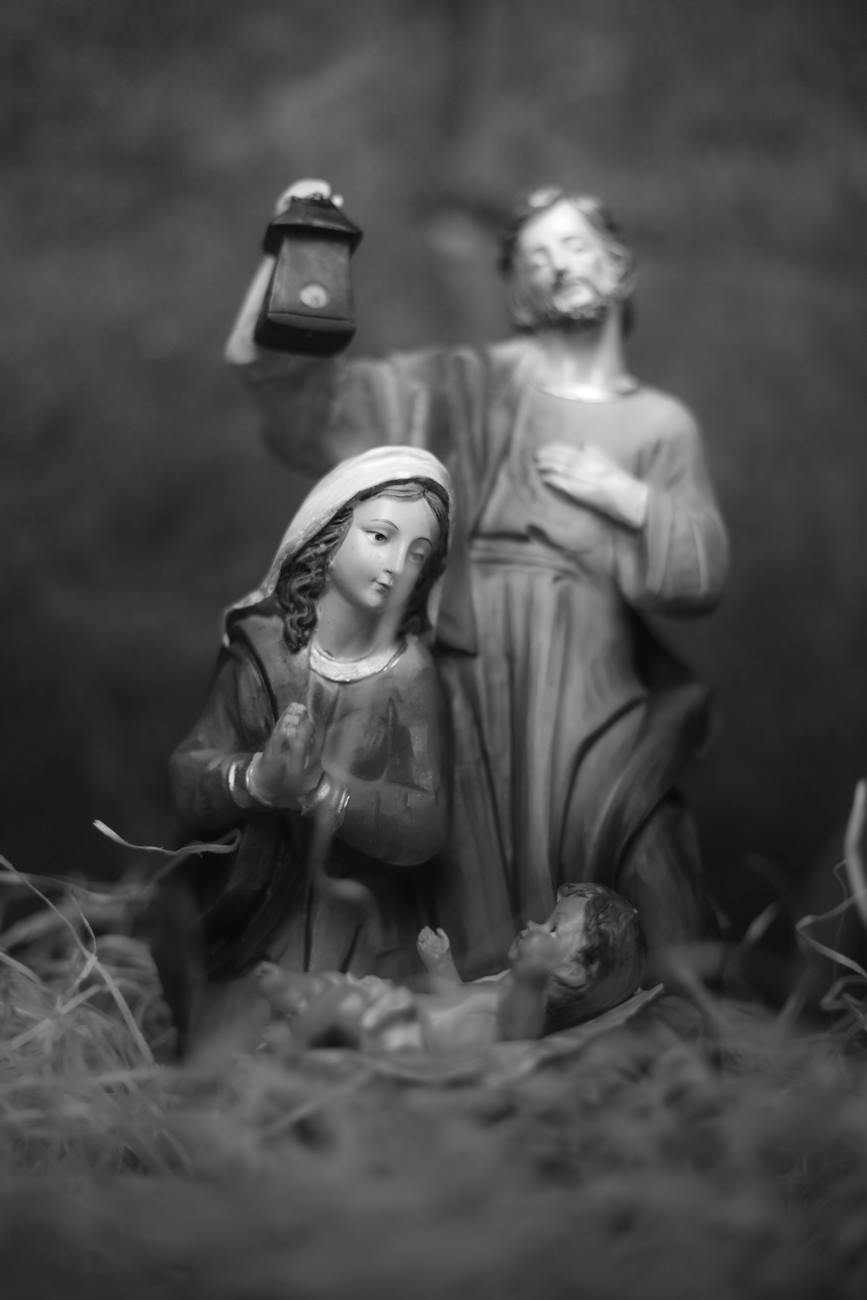
Several people over the years have asked me whether the virgin birth of Jesus is an essential element of the gospel message.

Emergent church leader Rob Bell, for example, asked the question of which parts of the biblical story of Jesus are essential to believe in order to be saved. He specifically questioned the necessity of belief in the virgin birth.

Additionally, this week I came across a discussion online of people arguing that instead of the original lyrics to the hymn Hark! The Herald Angels Sing, the line “offspring of the virgin’s womb” should be changed to “offspring of Mary’s womb.” The reason for this, they said, was that not saying Mary’s name, but instead identifying her according to her sexual status, takes away from her dignity. Therefore, we should say her name, and get rid of this “unnecessary” controversy regarding the virgin birth.

So, is the virgin birth essential to the gospel?

I believe it is. In this video, I explain the reasons why:

Israel at War: How to Pray and How to Help

Recently, in light of the October 7 attack in Israel by Hamas terrorists, many people have been curious how to think about these events from a biblical perspective, as well as how they should pray, and if there are any ways that they can help.

How to Pray

These are just a few of the many ways to pray:

  • Pray for the peace of Jerusalem (Psalm 122:6)
  • Pray for the victims of the terrorist attacks, the injured, those taken hostage, the families of those killed or held captive, and those who live in fear of attack or injury
  • Pray for the innocent civilians who are being impacted by the conflict
  • Pray for justice to prevail
  • Pray for the safety of Jewish people around the world who are being targeted, as anti-semitism has seen a sharp rise
  • Pray for the many Christians in the West Bank and the estimated 800-1000 Christians living in Gaza

How to Think About These Events from a Biblical Perspective

I shared my views on this in this recent video:

How to Help

For those looking for a good Christian ministry to support in Israel, Netivah Ministries was recommended by a pastor friend who says that he knows this group personally and recommends the good work they are doing. Here is a recent update and video from them:

Dear Friends!
It has been a month since the horrific Saturday on the 7 of October, and many of you have been asking how we are coping, praying for our safety and contributing to the work we are doing here.
THANK YOU SO MUCH!
We are blessed, encouraged and strengthened by all your support.
We also know that during these days the most important thing is to be a light and a voice of hope in these dark times, encouraging our loved ones that are on the front line, those that have been displaced, and sharing the hope to our people that are hurting and confused.
Four of our NETIVAH team have been called up and the rest of us are working to be effective and supportive for the Body of Yeshua, for the displaced families and for our young men and women in the service.

Thank you for your Prayers, Concern and Support during these days.
Yours in Yeshua,

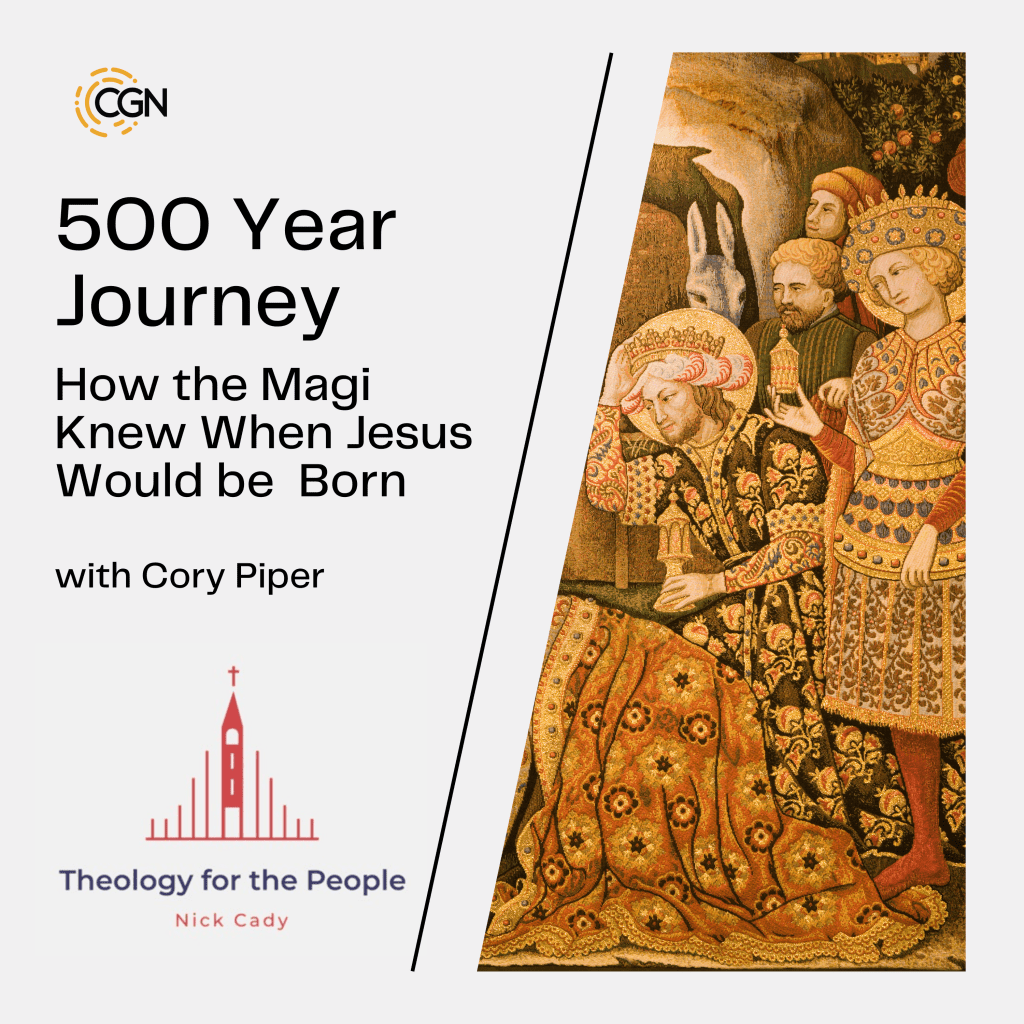
500 Year Journey: How the Magi Knew When Jesus Would Be Born – with Cory Piper

In this episode of the Theology for the People podcast, I speak with Cory Piper. Cory is a teacher who specializes in the Old Testament, theology, and history. He recently wrote a book called 500 Year Journey: How the Magi Knew When Jesus Would be Born

We discuss who the Magi were and why they came to Jerusalem at the exact time they did, when Jesus was born, and how it ties into the book of Daniel and other Old Testament passages.

Additionally, we talk about the history of why the church has celebrated the birth of Jesus on December 25, and whether that has any ties to paganism or not.

Click here to listen to the episode or listen in the embedded player below.

500 Year Journey: How the Magi Knew When Jesus Would be Born – with Cory Piper Theology for the People

Cory Piper is a teacher who specializes in the Old Testament, theology, and history. He recently wrote a book called 500 Year Journey: How the Magi Knew When Jesus Would be Born We discuss who the Magi were and why they came to Jerusalem at the exact time they did, when Jesus was born, and how it ties into the book of Daniel and other Old Testament passages. Additionally, we talk about the history of why the church has celebrated the birth of Jesus on December 25, and whether that has any ties to paganism or not. Visit the Theology for the People website at nickcady.org

Reader Questions: Was Jesus’ Promise in John 1:51 Ever Fulfilled?

Here on the site there is a feature where you can Ask a Question or Suggest a Topic.

This question recently came in:

In John 1:51, Jesus told Nathanael that he would see heaven opened and the angels of God ascending and descending on the Son of Man. Was this ever fulfilled? If so, when?

That’s a good question, and there’s a great answer!

The passage you’re referring to is in the first chapter of John’s Gospel, where we read about Jesus calling his first disciples. Jesus called Philip, and then Philip went and told his friend Nathanael that “We have found him of whom Moses in the Law and also the prophets wrote, Jesus of Nazareth, the son of Joseph.” Nathanael was skeptical that the Messiah could be from Nazareth, to which Philip invited Nathanael to come and meet Jesus to see for himself.

When Jesus saw Nathanael coming towards him, he greeted him in a way that implied that Jesus already knew him. When Nathanael asked how Jesus already knew him, Jesus replied: “Before Philip called you, when you were under the fig tree, I saw you.”

Some scholars say that it was traditional for Jewish people to sit under a fig tree to read the Scriptures, but whatever happened with Nathanael under the fig tree must have been something so personal, and so private that Nathaniel was sure no one could have possibly seen or heard him. The fact that Jesus knew about it was enough to convince Nathaniel right there on the spot that Jesus was indeed the Messiah, and he immediately responded by saying: “Rabbi, you are the Son of God! You are the King of Israel!”

This brings us to the text in question.

Jesus answered him, “Because I said to you, ‘I saw you under the fig tree,’ do you believe? You will see greater things than these.”

And he said to him, “Truly, truly, I say to you, you will see heaven opened, and the angels of God ascending and descending on the Son of Man.”

John 1:50-51

If you look for a story in the gospels in which this happened, you won’t find one. The closest events you will find to this are:

  • Jesus’ baptism, when the Spirit descended on Jesus as a dove and the Father spoke from Heaven declaring that Jesus was His beloved Son in whom He was well-pleased.
  • Jesus’ transfiguration, in which Peter, James, and John saw Jesus in his glorified state, and he appeared with Moses and Elijah, accompanied by a voice from Heaven which told Peter: “this is my beloved Son, listen to Him.”
  • Jesus’ ascension, when he was caught up to Heaven.

However, while these examples include the heavens being opened, none of them include angels, much less Nathanael or anyone else seeing the angels ascending and descending on Jesus.

So, does that mean that Jesus’ promise to Nathanael was not fulfilled?

No. Rather, to expect this to be the promise of a literal vision of angels is to misunderstand what Jesus is saying, which is actually more significant than promising a vision of angels.

Jacob’s Ladder

When Jesus tells Nathanael that he will see “the heavens opened and the angels of God ascending and descending on the Son of Man, Jesus is making reference to a story from the Old Testament.

In Genesis 28, Jacob, the grandson of Abraham, was on the run from his brother Esau, who wanted to kill him. One night while Jacob was sleeping in a field, with a rock for a pillow, God appeared to him in a vision as he slept.

In this vision, Jacob saw the heavens opened up and a ladder, or a bridge, spanning the gap between Heaven and Earth, and “the angels of God were ascending and descending on it” (Genesis 28:12).

You might remember that the people of Babel, in Genesis 11, had tried to “build a tower with its top reaching to the heavens” in order to make a name for themselves and to protect themselves. They had sought to span the gap between Heaven and Earth through their own strength, endeavors, and intellect – and they failed.

What Jacob saw in his vision, was that God alone can span the gap between Heaven and Earth. Whereas we are incapable of reaching Heaven by our own works, God has come down to us from Heaven, in order to lift us up into relationship with Him and eternal life.

If Jacob was in fact reading the Scriptures under the fig tree, could it be that this is the exact passage that Nathanael had been reading, and Jesus was interpreting it for him?

Jacob’s Ladder is a Person

What Jesus was saying to Nathanael in John 1:51 is that HE is Jacob’s ladder! He is the bridge that spans the gap between Heaven and Earth that God pictured to Jacob in that vision! It is in Him that God has come from Heaven to Earth in order to do for us what we cannot do for ourselves: to lift us up into relationship with Him and give us eternal life.

Jesus is saying that He has come not just to point the way to Heaven, but to be the way to Heaven.

Now, you might be tempted to think: If it’s a ladder, that means I must need to climb as high as I can, and if I’m strong enough, and if I’ve got enough stamina to make it all the way, then I can reach God. But that’s not the idea behind this ladder. Listen to what Paul the Apostle has to say in Romans ch 10:

But the righteousness based on faith says, “Do not say in your heart, ‘Who will ascend into heaven?’” (that is, to bring Christ down) “or ‘Who will descend into the abyss?’” (that is, to bring Christ up from the dead). But what does it say? “The word is near you, in your mouth and in your heart” (that is, the word of faith that we proclaim); because, if you confess with your mouth that Jesus is Lord and believe in your heart that God raised him from the dead, you will be saved. 

Romans 10:6-9

In other words: the message of the Gospel is not that you have to climb your way up to God, but that God has come down to you! This ladder is not the ladder by which we ascend to God – but rather the ladder by which God has come down to us, to lift us up to Himself.

Jesus is telling Nathanael, and us, in John 1:51 that Jacob’s ladder is a person, and that person is Him! What good news!

If you have any questions or topics you’d like me to address, fill out the form on this page: Ask a Question or Suggest a Topic.

The Number of the Beast and Solomon

In my recent post, I answered some questions about what the “Mark of the Beast” is: Reader Questions: Could the Mark of the Beast Be Transmitted Through a COVID-19 Vaccine?

This past Sunday I taught through 1 Kings 9-10 in our Desiring the Kingdom series. You can watch or listen to that message here.

In that study, we read 1 Kings 10:14, which says:

Now the weight of gold that came to Solomon in one year was 666 talents of gold…

1 Kings 10:14

This is the only time this number, 666, appears in the Bible other than in Revelation 13:18, where we read about the beast who rises from the earth and it says:

This calls for wisdom: let the one who has understanding calculate the number of the beast, for it is the number of a man, and his number is 666.

Revelation 13:18

Is this just a coincidence or is there some significance to this number having been used to describe Solomon’s annual income?

Pastor Mike and I discuss that question in this week’s Sermon Extra video:

The Statistical Probability of Jesus Fulfilling the Messianic Prophecies

black and grey casio scientific calculator showing formula

With all the religions out there, how can you know that Christianity is true? How can you know whether the Bible actually gives the accurate and correct story of the world?

How do you know that Christianity isn’t just a fairy tale, made up by people to help them cope with hardship and death, and deal with life?

That’s the question which the Apostle Peter addresses in 2 Peter 1:16-21, which we studied this past Sunday at White Fields Church in the sermon titled, “Dawn is Coming” (2 Peter 1:16-21)

Peter essentially gives two evidences for why we can trust the Bible:

  1. Christianity is based on historical facts which had many eye-witnesses
  2. The record of Messianic prophecies which Jesus fulfilled

The Test & the Evidence

The Book of the Prophet Isaiah contains an incredible claim: the Lord God is contrasting himself with the pagan gods which many people worshiped in the form of idols, and God says, Here is how you will know that I am the one true God, and those so-called ‘gods’ are nothing: I will tell you the end from the beginning; I will tell you what will happen before it happens, and then when those things come to pass, that will be the proof to you that I alone am God. See: Isaiah 44:6-8; 46:9-10; 48:5-6

So God himself challenges us to put him to the test, and he goes on record predicting things about the future which will come to pass. Roughly 1/3 of the Bible is made up of prophecies, including many about the promised Messiah, which predicted various things about his identity and actions.

According to one calculation, there are 332 Messianic prophecies from the Hebrew Bible (Old Testament), which Jesus fulfilled.

This is why the Dead Sea Scrolls are such a big deal: they date back to about 100 years before the birth of Jesus, which shows us that the prophecies which Jesus fulfilled were indeed written before his birth, and were not later redactions or additions. See: Why the Dead Sea Scrolls Matter for Christians

Peter Stoner’s Calculations

Professor Peter W. Stoner was Chairman of the Departments of Mathematics and Astronomy at Pasadena City College and Chairman of the science division at Westmont College. In his book, Science SpeaksProfessor Stoner outlines the mathematical probability of one person in the first century fulfilling just eight of the most clear and straightforward Messianic prophecies.

Josh and Sean McDowell quote Stoner in their book, Evidence That Demands a Verdict:

We find that the chance that any man might have lived down to the present time and fulfilled all eight prophecies is 1 in 1017 (1 in 100,000,000,000,000,000).

In case you’re wondering, the Mega Millions had a $1.6 billon jackpot in October 2018, and the odds of winning it were merely 1 in 302,575,350. [1]

Stoner went on to calculate the probability of one person fulfilling 48 prophecies: 1 in 10157.

In case you’re questioning whether Professor Stoner’s math was wrong, H. Harold Hartzler, PhD, of the American Scientific Affiliation, Goshen College, writes in the forward of Stoner’s book:

The manuscript for Science Speaks has been carefully reviewed by a committee of the American Scientific Affiliation members and by the Executive Council of the same group and has been found, in general, to be dependable and accurate in regard to the scientific material presented. The mathematical analysis included is based upon principles of probability which are thoroughly sound and Professor Stoner has applied these principles in a proper and convincing way.

What Makes Christianity Unique

Along with eye-witness evidence of historical events (testimony for which people died, suffered imprisonment, torture, and the torture of their loved ones), and the prophetic record, something else that sets Christianity apart from all other religions and philosophies is the path of salvation it presents:

Whereas other religions offer ways to save yourself or endear yourself to God through doing actions, or keeping rules – the gospel message of the Bible is that you cannot save yourself, no matter how hard you try – but that God has done for you in Christ that which you could never do for yourself, in order to save you – because he already loves you.

That’s much better news, and a promise you can take to the bank.

Is There Only One Correct Way to Interpret a Given Passage of Scripture?

white ballpoint pen on book pages

In the Gospel of Matthew, Matthew explains how different aspects of Jesus’ life fulfilled Old Testament prophecies. However, upon examinations, some of these prophecies bring up interesting questions.

Yesterday I addressed one such question: Is There a Prophecy that Says that Jesus Would Come from Nazareth? – based on Matthew’s claim in 2:23 that Jesus was raised in Nazareth in order to fulfill what was spoken by the prophets.

The Issues: Authorial Intent and Multiple Meanings

Another verse in Matthew chapter 2 brings up a different issue: In Matthew 2:13-15, Matthew describes the flight to Egypt, when Jesus and his family fled to Egypt for several years because Herod wanted to kill Jesus. (See also: Advent Meditations: Jesus Was a Refugee) In Matthew 2:15, Matthew says that when Jesus returned from Egypt, it was a fulfillment of Hosea’s prophecy: “Out of Egypt I called my son.”

Here’s why this is interesting: When Hosea wrote these words, he was speaking of Israel as God’s “son” whom he brought out of Egypt in the Exodus. Hosea’s intention was not to speak of the Messiah. However, what Matthew is saying, assumedly under the inspiration of the Holy Spirit, is that even though Hosea’s intent was merely to refer to Israel, he was also writing (by the inspiration of the Spirit) about the Son of God, i.e. the Messiah, whom we now know to be Jesus of Nazareth – even though he did not realize it at the time.

Furthermore, this means that there are two meanings and interpretations of this passage which are both correct: historically it speaks about God bringing Israel out of Egypt, and prophetically it foretells that the Messiah would sojourn in Egypt for a time.

Polysemy and Multivalence

There are several Old Testament prophecies which are used in the Old Testament in this way: while they have a historical meaning, which corresponds to the authorial intent of the original writer, they also have a prophetic meaning, which the author was unaware of, which found (or still will find) its fulfillment in the future.

For example, several passages in the prophetic books warn of an exile which is to come, but then conclude with a promise of the regathering of the people of both Israel and Judah to the land, as well as a time of peace and prosperity to follow. The return of the people to the land was fulfilled in the time following the Babylonian exile. It could also be said that this was fulfilled again through the Zionist movement in the 19th and 20th centuries. And yet, both of these were only partial fulfillments, since the ultimate fulfillment of promised kingdom of peace, justice, and righteousness will only see its complete fulfillment after the return of Jesus.

What this means is that many biblical texts are polysemic and multivalent. 

  • Polysemic: “multiple meanings”
  • Multivalence: “many appeals or values”

Scholars of textual hermeneutics, like Paul Ricoeur and Hans G. Gadamer explain the polysemy of biblical texts by saying that, unlike scientific formulas and computer codes, the texts of Scripture sometimes contain “surpluses of meaning.” [1]

This is why some texts in the Bible are not entirely controlled in their interpretation by their original human writers (i.e. authorial intent). The Hosea passage cited in Matthew 2 is a perfect example of this. What is notable here is that the different meanings do not contradict each other.

John Goldingay explains, “An element of polyvalence or irreducible ambiguity characterizes parts of scripture.” [2]

Thus, Scripture cannot be used to say anything we want it to, but we would be contradicting Scripture itself to claim that there can only be one correct interpretation of every passage in Scripture. What is important is that the different interpretations do not have contradictory meanings.

Above all, this should leave us in awe of the rich complexity and beauty of the Word of God, and it should leave us all the more convinced of its divine inspiration.

Multivalence and Multivocality

Multivalence means different appeals or values, and Multivocality means that Scripture speaks to different listeners in different voices that say different (but, again, not conflicting) things.

Christian Smith illustrates this by compiling a list of different lessons and applications which can be faithfully gleaned from Jesus’ encounter with the woman at the well in John 4:

  • Christians would do well to “get out of their comfort zones” in order to preach the gospel to those who are culturally different or who live in foreign lands, but are “ripe for the harvest”
  • A person who drinks of “the living water” that Jesus offers will never again “thirst” for the unsatisfying “waters” of “the world”
  • Jesus knows every detail about our personal lives, and loves us enough to confront us with hard questions in order to lead us to repentance
  • Jesus knows everything we have ever done, and still loves us and stands ready to forgive us
  • An effective strategy for evangelism is to build relationships, ask questions, and point people to Jesus
  • Those who have truly encountered Jesus and repented will naturally respond by telling others, i.e. evangelizing
  • The fact that Jesus was physically tired shows that he was fully human
  • The fact that the woman left her water jar to go and tell people in town about Jesus models the kind of priorities we ought to have in regard to possessions and the mission of God
  • By speaking to this Samaritan woman, Jesus reveals that he has come as the Savior of people from all the nations
  • Jesus’ reply to his disciples about hunger and food shows us the proper outlook on doing God’s will and God’s work [3]

Again, this is not to say that we can make Scripture say whatever we want; we certainly cannot. Yet any of these above messages – and more – would be faithful interpretations and applications of this text.

Considering Inspirational Intent

We must not only consider authorial intent, we must also consider the intent of the inspirer: God. To do this, we consider canonical, or biblical theology: i.e. the message and narrative of the Bible as a whole.

This is what Matthew is doing  in several instances where he re-interprets Old Testament passages and applies them to Jesus; he is considering the grand narrative and message of the Bible as a whole, as a story which – in all of its “sub-stories” – is about Jesus. He applies a Christo-centric hermeneutic, in other words; one that he likely learned from Jesus himself after the resurrection when Jesus “opened their minds to understand the Scriptures” (Luke 24:45), and “beginning with Moses and all the Prophets, he interpreted to them in all the Scriptures the things concerning himself.” (Luke 24:27)

May God help us to understand, interpret, and apply His Word faithfully and accurately – according to His intent!

Is There a Prophecy that Says that Jesus Would Come from Nazareth?

jesus christ figurine

Matthew chapter 2 tells one of the most overlooked and skipped-over parts of the Christmas story: the mass killing of innocent infants and toddlers by king Herod “the Great.”

When you read the Christmas story to your children, you might likely leave this part out. Chances are that if you attend a school Christmas pageant, the kids will not act out this part of the story.

And yet, it’s an incredibly important part of the Christmas story, because in effect, it tells us what Christmas is really all about: God came to us in order to rescue us from the tyranny of evil, sin, suffering, and death.

This past Sunday we studied this story to kick off our Advent series, “God With Us.” You can listen to the message here: “The Hopes and Fears of All the Years”

One of the most interesting parts of Matthew chapter 2 is that Matthew points out several prophecies which Jesus fulfilled. However, Matthew 2:23 says that Jesus was raised in Nazareth to fulfill what was spoken by the prophets. However, you can look through the Old Testament all you want, but you won’t find a prophecy which mentions Nazareth as a city directly. What then is this verse referring to?

Mike and I sat down for our weekly Sermon Extra video to discuss this topic, and answer that question. Check it out:

What Does It Mean that “Judgment Begins at the Household of God”?

inside photography of church

In 1 Peter 4:17, Peter makes an interesting statement; he says: “For it is time for judgment to begin at the household of God; and if it begins with us, what will be the outcome for those who do not obey the gospel of God?”

Judgment might seem like an odd word to use in regard to the people of God… Hasn’t Jesus already taken our judgment upon himself on the cross? What is Peter referring to here, and how should we understand this statement?

The Waters That Buried Some, Lifted Others

In 1 Peter chapter 3, Peter referred to the judgment that took place in the time of Noah, and said that the waters of that flood were a type, or a picture, of baptism. The judgment of the flood, which was a judgment upon human wickedness, did effect, touch, and impact even those who were believers. However, because those believers were in the ark, the waters of the flood did not crush them, but rather lifted them up.

The ark, in this case, is a picture of Jesus. When we climb into Him by faith, and are hidden in Him, He takes the brunt of the storm of God’s judgment, which, apart from Him, we would not be able to survive on our own. As we are in Him, the waters which destroyed those outside the ark actually serve to lift us up and they have a cleansing and purifying effect.

The Fire That Destroys Some, Purifies Others

Along with water, Peter uses another word-picture in this letter: fire, which is used to purify precious metals, like gold.

Paul uses this same analogy in 1 Corinthians 3, where he talks about how our actions in this life will be tested by God as by fire; those things which were pure in motive will withstand the test, and those good things we might have done for the wrong reasons will be burned away like wood, hay and stubble.

Essentially, Peter is saying that the judgment of God will have the effect on believers, not of destroying them, but of purifying them, and clarifying who is really in the faith.

This makes sense, especially in light of the fact that earlier in the same chapter (1 Peter 4:1-4), Peter called his readers to holiness and to separate themselves from the sins which formerly enslaved them.

Malachi’s Prophecy

In his commentary on 1 Peter, Edmund Clowney says that in these verses (1 Peter 4:12-19), Peter is alluding to a prophecy of Malachi:

See, I will send my messenger, who will prepare the way before me. Then suddenly the Lord you are seeking will come to his temple; the messenger of the covenant, whom you desire, will come,’ says the Lord Almighty. But who can endure the day of his coming? Who can stand when he appears? For he will be like a refiner’s fire or a launderer’s soap. He will sit as a refiner and purifier of silver; he will purify the Levites and refine them like gold and silver. (Malachi 3:1-3)

God’s judgment has a double purpose: to purify his worshipers and to consume the wicked.

In Hebrews 12, the writer says that it is proof of God’s fatherly love for us that He disciplines us.

Rather than cleansing us in purgatory, God’s cleansing of his people is a process which takes place in this life through our trials. Our suffering in this life does not atone for our sins, Jesus’s suffering did that for us, but God uses our trials in order to form us into the image of Christ (cf. Romans 8:29), purify us like gold, and prepare for us a weight of glory to be revealed.

Further Discussion

https://twitter.com/DominicDone/status/1199788112060112896

This week Mike and I sat down to discuss this verse in more detail. One of the things we talked about was how persecution and hardship has the effect of purifying the church and “weeding out” those who have come to Jesus for the wrong reasons. One example we bring up is my experience with the Roma (Gypsy) population in Hungary and the false promises of the “prosperity gospel.” Check it out:

Resources for Studying the Prophets

This past Sunday we began a new series at White Fields called “Remember the Prophets“.

The idea for the series comes from James 5:10, where James tells us to “remember the prophets who spoke in the name of the Lord. Take them as examples of patient endurance under suffering.”  In this series, we will be looking at a different Old Testament prophet each week, considering their lives and their messages and what we can learn from them.

remember the prophets main title 16x9

We are moving through them chronologically, and so began with Amos, an interesting person with an important message. Click here to listen to that message: Amos: Faith that Works

This Sunday we will continue the series by looking at Hosea, a gripping story of adultery and faithfulness which gives us insight into God’s heart.

Resources for Studying the Prophets

Generally speaking, the prophetic books are not well known by many people who even regularly read the Bible. Part of the reason for that is because of the negative tone of some of the books, as well as the feeling that without understanding the context of the books, they don’t make sense.

People have asked me at times what books or materials are good to use if they want to get to know the prophetic books better. Here are my top two recommendations:

Exploring the Old Testament: A Guide to the Prophets, J. Gordon McConville

Image result for exploring the old testament a guide to the prophetsI had the pleasure of studying under Gordon McConville at the University of Gloucestershire in England, where he is professor of Old Testament theology. This was one of my text books, but is part of a great series from Inter-Varsity Press and is very accessible to the average reader and also scholarly at the same time.

On the scholarly side, this book tends to get a little bit into the weeds about theological discussions and debates, but the introductions and outlines of the books, their themes and their structures are very good. In other words, you can use it to go as deep as you’re ready to go.

Jensen’s Survey of the Old Testament, Irving L. Jensen

When I first became a pastor, one of my mentors told me, “You’re going to need some books.” He then walked me into the book store at the church we were at and pulled Jensen’s surveys of the Old Testament and New Testament off the shelf and handed them to me.

The benefit to these books published by Moody Press is that rather than being a commentary that tells you information, they instead instruct you about how to ask the right questions. Thus, you are the one doing the exegetical work, or the inductive Bible study, rather than just passively receiving information. They do, however, give you important background information in order to get the context you need, but they also tell you where to go to get that context if it is found in other places in the Bible.

I hope these resources are helpful for you, as they have been for me!