
Returning to Give Thanks: Learning from the Grateful Leper

This article was originally published on CalvaryChapel.com.

“Thou that hast giv’n so much to me,
Give one thing more, a gratefull heart:
. . . . . . . . . . . . . . . . . . . . . . . . . . . . . . . . .
Not thankfull when it pleaseth me,
As if Thy blessings had spare days;
But such a heart whose pulse may be
Thy praise.“
(George Herbert, “Gratefulnesse,” 1633)

There is a tendency I have noticed in myself: I am quick to pray and ask God for things that I need. In fact, if I were to categorize my prayers, the majority are requests. There is nothing inherently wrong with this; Jesus encouraged us to ask the Father for what we need (e.g., Matthew 7:7-11). When we ask God to do things that are beyond our capabilities, we honor Him because it shows that we believe in his power and ability, and it expresses our reliance on Him. I often encourage our church to honor the Lord by praying for big and great things rather than assuming that such things are “too big” for Him.

However, the tendency I have noticed in myself is that I often fail to stop, reflect, and thank God for the things that He has done, and the prayers He has answered. I am quick to move on to the next need or the next task without stopping to praise God for His provision and His faithfulness.

A Lesson from the Lepers (Luke 17:11-12)

In the Gospel of Luke, we read about a time when Jesus passed between Samaria and Galilee. As He entered a certain village, He was met by ten lepers, who stood at a distance and cried out to Jesus, saying, “Jesus, Master, have mercy on us.”

These lepers were helpless, and they were hopeless. Their incurable disease not only destroyed their bodies but also made them outcasts from society. Cut off from their families, communities, and places of worship, their lives were characterized by isolation and suffering.

Leprosy is often recognized as a type, or a picture, of sin and what sin does in our lives. Like leprosy, sin leads to a hardening of the heart, a loss of feeling; it causes a person to lose parts of themselves, and it ultimately ruins them and leads to death. Because there was no cure for leprosy, the fact that Jesus healed lepers was a sign that He was the Messiah (Matthew 11:2-5).

Hearing their cries for help, Jesus had mercy on these ten lepers, and He healed them. He told them to go and show themselves to the priests so that the priests could inspect them according to the Law of Moses (Leviticus 13-14), to verify that they had been healed and pronounce them as clean so they could be restored to society.

Quickly, the ten lepers ran off, overjoyed and eager to have their cleansing verified by the priests — but one of them stopped and turned back. While the others ran off ahead, this one returned and “praising God in a loud voice, he fell on his face at Jesus’ feet, giving thanks” (Luke 17:15-16).

To make the story even more surprising, Jesus points out that the one who returned to give thanks was a Samaritan, a group whom many Jews considered themselves superior to. Jesus then expressed His consternation that, whereas ten were healed, only one returned to give thanks and praise God for what he had received.

Pausing to Praise and Give Thanks

This story challenges us to consider our own actions: When God hears your prayers, how do you respond?

Like those lepers, those whose faith is in Jesus have been cleansed from an incurable condition; we have been saved from death and destruction and given a new destiny. Additionally, we have experienced God’s faithfulness through His provision. God hears our prayers and has provided for our needs. How ought we to respond to this?

There is nothing wrong with making requests of God; not only does He invite us to do it, but we honor Him by doing so. However, what we see from this passage is the importance of returning to the Lord, acknowledging what He has done, and thanking Him and praising Him for His faithfulness and goodness.

For those who are celebrating Thanksgiving this week, we have the opportunity to do just that. May this Thanksgiving holiday be a reminder to us to stop and give thanks, and may it spark a habit of thanksgiving in our hearts that lasts throughout the year.
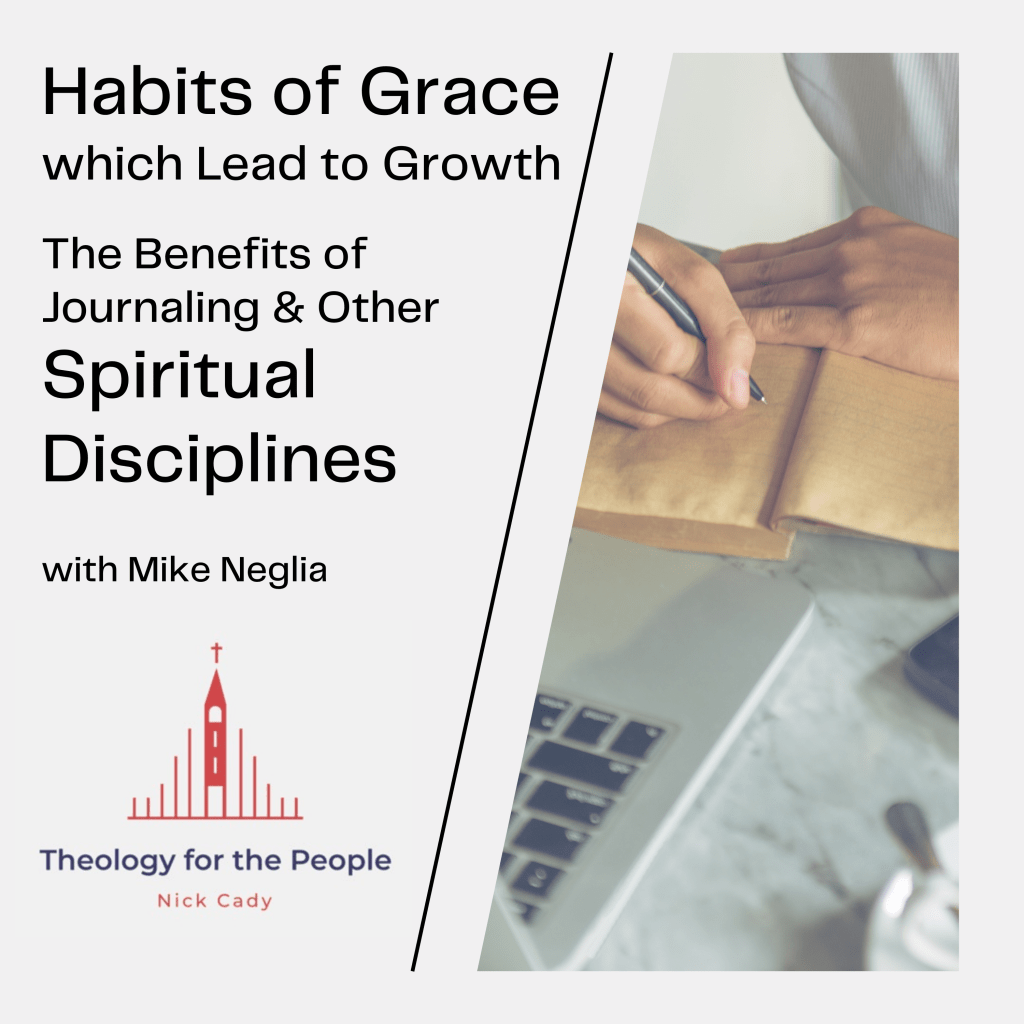
Habits of Grace which Lead to Growth: the Benefits of Journaling and Other Spiritual Disciplines – with Mike Neglia

Spiritual disciplines are intentional, repeated practices which help you to grow in relationship with God.

In this episode of the Theology for the People Podcast, I speak with my friend and colleague, Mike Neglia about his practice of journaling, and how it has benefited him spiritually.

Almost 6 years ago, Mike handed me a Field Notes notebook at a coffee shop in Estes Park. He told me to keep it in my pocket, and he said it would change my life. It took me an entire year to use up that first notebook, but since then writing and journaling in notebooks has become a regular part of my everyday life, and Mike was right: it has changed my life!

In this episode, Mike and I talk about the practice of taking notes in church, the value of different types of notebooks, and other tactile things we can do, which will help us grow in our faith.

Mike is the pastor of Calvary Cork, in Cork City, Ireland, and he is the host of the very popular: Expositors Collective Podcast

Together, Mike and I serve on the Executive Team of Calvary Global Network, and we are both leaders in the Expositors Collective initiative to raise up the next generation of Christ-Centered Expository Bible Teachers.

Expositors Collective will be offering an in-person two-day training weekend in the Bay Area of California on May 24-25, 2024. You can find more information and register here.

Click here to listen to the episode, or listen in the embedded player below.

Habits of Grace which Lead to Growth: the Benefits of Journaling & Other Spiritual Disciplines – with Mike Neglia Theology for the People

Spiritual disciplines are intentional, repeated practices which help you to grow in relationship with God. In this episode, I speak with my friend and colleague, Mike Neglia about his practice of journaling, and how it has benefited him spiritually. We also talk about the practice of taking notes in church, the value of different types of notebooks, and other tactile things we can do, which will help us grow in our faith. Mike is the pastor of Calvary Cork, in Cork City, Ireland, and he is the host of the very popular Expositors Collective Podcast. Together, Mike and I serve on the Executive Team of Calvary Global Network, and we are both leaders in the Expositors Collective initiative to raise up the next generation of Christ-centered expository Bible teachers. Visit the Theology for the People website at nickcady.org

Mike also recently spoke at White Fields Church, and you can watch his message here:

Israel at War: How to Pray and How to Help

Recently, in light of the October 7 attack in Israel by Hamas terrorists, many people have been curious how to think about these events from a biblical perspective, as well as how they should pray, and if there are any ways that they can help.

How to Pray

These are just a few of the many ways to pray:

  • Pray for the peace of Jerusalem (Psalm 122:6)
  • Pray for the victims of the terrorist attacks, the injured, those taken hostage, the families of those killed or held captive, and those who live in fear of attack or injury
  • Pray for the innocent civilians who are being impacted by the conflict
  • Pray for justice to prevail
  • Pray for the safety of Jewish people around the world who are being targeted, as anti-semitism has seen a sharp rise
  • Pray for the many Christians in the West Bank and the estimated 800-1000 Christians living in Gaza

How to Think About These Events from a Biblical Perspective

I shared my views on this in this recent video:

How to Help

For those looking for a good Christian ministry to support in Israel, Netivah Ministries was recommended by a pastor friend who says that he knows this group personally and recommends the good work they are doing. Here is a recent update and video from them:

Dear Friends!
It has been a month since the horrific Saturday on the 7 of October, and many of you have been asking how we are coping, praying for our safety and contributing to the work we are doing here.
THANK YOU SO MUCH!
We are blessed, encouraged and strengthened by all your support.
We also know that during these days the most important thing is to be a light and a voice of hope in these dark times, encouraging our loved ones that are on the front line, those that have been displaced, and sharing the hope to our people that are hurting and confused.
Four of our NETIVAH team have been called up and the rest of us are working to be effective and supportive for the Body of Yeshua, for the displaced families and for our young men and women in the service.

Thank you for your Prayers, Concern and Support during these days.
Yours in Yeshua,

Personal Update

On April 19, 2023 I had a snowboarding accident which left me with two broken ankles and a traumatic leg injury.

I took to my podcast to record a personal update, to share what happened and how you can be praying for me.

Additionally, I talk about what to look forward to in coming weeks on the podcast.

Click here to listen to listen the episode.

Personal Update Theology for the People

On April 19, 2023 I had a snowboarding accident which left me with two broken ankles and a traumatic leg injury. In this personal update I talk about what happened and how you can be praying for me. Additionally, I talk about what to look forward to in coming weeks on the podcast. Make sure to check out the Theology for the People blog at nickcady.org

The Subversive Power of the Lord’s Prayer

Dan Marotta is the founding Rector of Redeemer Anglican Church in Richmond, Virginia, and the author of Liturgy in the Wilderness: How the Lord’s Prayer Shapes the Imagination of the Church in a Secular Age.

In this episode, we discuss the topic of prayer and the Lord’s Prayer specifically. 

The Lord’s Prayer is a beautiful, subversive prayer given to the church by Jesus. It forms our imaginations and—given time—transforms us. Dan explains how what you pray shapes what you believe, which in turn shapes how you live.

What was Jesus’ intention in giving us this prayer? Was it to give us a model of how to pray, or was it intended to be given to us as what to pray? Dan and I discuss the historical usage of the Lord’s Prayer, as well as the value and dangers of both praying written prayers and praying extemporaneously.

Dan is a graduate of Denver Seminary, and we discuss some of the cultural uniquenesses of different parts of the United States, and how those affect the way we minister to others.

Click here to listen to the episode, or listen in the embedded player below.

The Subversive Power of the Lord's Prayer Theology for the People

Dan Marotta is the founding Rector of Redeemer Anglican Church in Richmond, Virginia, and the author of Liturgy in the Wilderness: How the Lord's Prayer Shapes the Imagination of the Church in a Secular Age. In this episode, we discuss the topic of prayer and the Lord's Prayer specifically.  The Lord’s Prayer is a beautiful, subversive passage of words given to the church by Jesus. It forms our imaginations and—given time—transforms us. Dan explains how what you pray shapes what you believe, which in turn shapes how you live. Visit the Theology for the People blog at nickcady.org, where you can read articles and suggest topics for future episodes.

What Is Your Soul, and How Can It Flourish?

In this week’s episode of the Theology for the People podcast, I speak with Dominic Done. We talk about what the Bible means when it talks about the “soul,” and what God’s vision is for how your soul can flourish.

Dominic is a pastor and author based out of Colorado Springs, where he leads a ministry called Pursuing Faith.

Dominic has served as Professor of Applied Theology at George Fox University, lead pastor of Westside: A Jesus Church in Portland, Oregon. He has a Master’s Degree in Theology from the University of Oxford and is currently working on his PhD at the University of Oxford under Alister McGrath. 

He has written two books. His first book, When Faith Fails: Finding God in the Shadow of Doubt, addresses the topics of doubt and deconstruction. His latest book, Your Longing Has a Name: Come Alive to the Story You Were Made For, was just released in April of this year.

Dominic was recently a guest on Unbelievable? in which he debated with an atheist philosopher on the origin of virtues. 

For more information about the Calvary Global Network (CGN) conference taking place in Costa Mesa, CA from June 26-29, at which Dominic will be speaking, visit conference.calvarychapel.com

If you find this episode interesting or helpful, please share it with others and leave a rating and review on your podcast app, as that helps other people discover this podcast and its content.

Click here to listen to the episode, or listen in the embedded player below.

What is Your Soul and How Can It Flourish? – with Dominic Done Theology for the People

Dominic Done is a pastor and author based out of Colorado Springs, where he leads a ministry called Pursuing Faith. Dominic has served as Professor of Applied Theology at George Fox University, lead pastor of Westside: A Jesus Church in Portland, Oregon. He has a Master’s Degree in Theology from the University of Oxford and is currently working on his PhD at the University of Oxford under Alister McGrath.  He has written two books. His first book, When Faith Fails: Finding God in the Shadow of Doubt, addresses the topics of doubt and deconstruction. His latest book, Your Longing Has a Name: Come Alive to the Story You Were Made For, was just released this year. Dominic was recently a guest on Unbelievable? in which he debated with an atheist philosopher on the origin of virtues.  For more information about the Calvary Global Network (CGN) conference taking place in Costa Mesa, CA from June 26-29, at which Dominic will be speaking, visit conference.calvarychapel.com

The Purpose and Power of Fasting

In this week’s episode of the Theology for the People podcast, I speak with Conor Berry about the topic of fasting.

Conor is the Lead Pastor of Calvary Chapel Santa Maria on the Central Coast of California. 

Recently, a listener reached out to me asking if I had any resources on the topic of fasting. I remembered that, several years ago, I had picked up a book from a church book store titled, “A Hunger for God,” thinking that the title sounded like something I would be interested in – but when I got home I took a look at it and realized, much to my dismay, that it was a book about fasting! So, I left it on my bookshelf and never read it… until this week!

It isn’t that I was opposed to fasting. I have, and do, fast occasionally. It’s just that I assumed the book would be a downer, and would basically just tell me that I needed to fast more. Well, this week, in preparation for this episode, I read the whole book in one day, and actually loved it! Here’s a link to the book, if you’re interested in checking it out: A Hunger for God by John Piper

In this episode, Conor and I discuss what the Bible has to say about fasting; what is the purpose of fasting? How does it work? What is the relationship between fasting and prayer, and what is the “reward” of fasting mentioned by Jesus in Matthew 6:16?

We seek to answer these questions with consideration of how Christians throughout history have understood fasting, and finally, Conor gives some practical recommendations for people regarding the duration and regularity of fasting, as well as what to fast from.

The book Conor references in this episode is: Fasting by Scot McKnight (Ancient Practices Series)

And as a bonus, at the end of the episode, we give a recommendation for those looking for a church in Cork, Ireland.

If you find this episode interesting or helpful, please share it with others and leave a rating and review on your podcast app, as that helps other people discover this podcast and its content.

Click here to listen to the episode, or listen in the embedded player below.

The Purpose and Power of Fasting – with Conor Berry Theology for the People

Conor Berry is the Lead Pastor of Calvary Chapel Santa Maria on the Central Coast of California.  In this episode we discuss what the Bible has to say about fasting. What is the purpose of fasting? How does it work? What is the relationship between fasting and prayer, and what is the "reward" of fasting mentioned by Jesus in Matthew 6:16? We seek to answer these questions with consideration of how Christians throughout history have understood fasting, and by looking at a few modern resources as well. Books referenced in this episode: A Hunger for God by John Piper Fasting by Scot McKnight (Ancient Practices Series) If you find this episode interesting or helpful, please share it with others and leave a rating and review on your podcast app, as that helps other people discover this podcast and its content. Make sure to visit the Theology for the People blog at nickcady.org

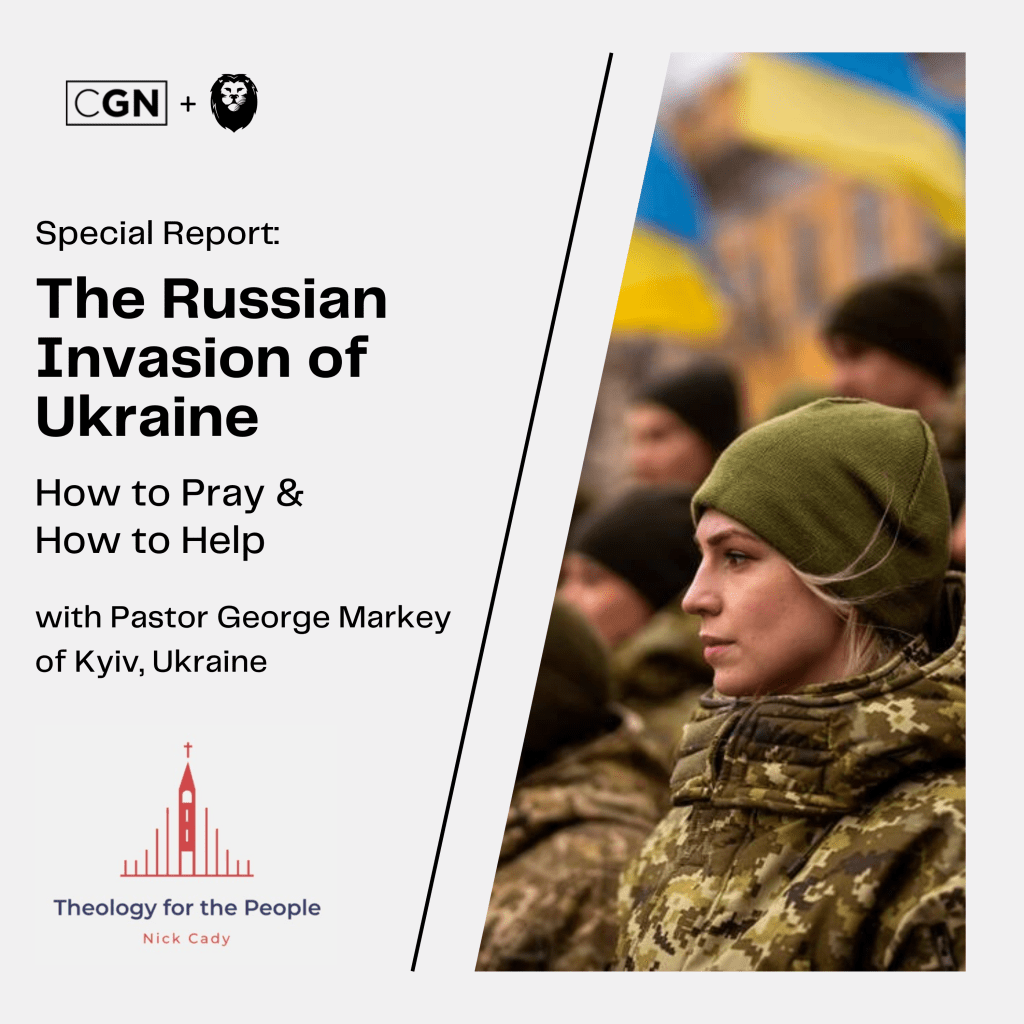
Special Report: The Russian Invasion of Ukraine: How to Pray & How to Help – with George Markey

This week’s episode of the Theology for the People podcast is a discussion I recorded in Budapest, Hungary this week with Pastor George Markey of Kyiv, Ukraine.

This was originally recorded for KWAVE Radio in Southern California, but I am putting it out here as well, so more people can hear it.

George has lived in Ukraine for the past 30 years, and is the overseer for the Calvary Chapel churches in the country.

In this episode, George shares his perspective on what is going on as Russia is attacking Ukraine, as well as stories of how God is working in the midst of it. We also discuss needs, what is currently being done, and how you can get involved and help. Finally, George shares how he personally prays for Ukraine during this time.

Click here to listen to the episode, or listen in the embedded player below.

The Russian Invasion of Ukraine: How to Help & How to Pray – with George Markey Theology for the People

Recorded in Budapest, Hungary this week with Pastor George Markey of Kyiv, Ukraine, originally for KWAVE Radio in Southern California. George has lived in Ukraine for the past 30 years, and is the overseer for Calvary Chapel churches in Ukraine.  In this episode, George shares his perspective on what is going on as Russia is attacking Ukraine, as well as stories of how God is working in the midst of it.  We also discuss needs, what is currently being done, and how you can get involved and help. Finally, George shares how he personally prays for Ukraine right now. Please share this episode with others, subscribe to the podcast, and check out the Theology for the People blog at nickcady.org

Pray for Ukraine

I am deeply saddened by what is happening in Ukraine. Already people have been killed in the Russian attacks.

I’ve been in touch with several pastors and friends. Some are fleeing their cities, others are going into basements and shelters for refuge.

Pray for the people of Ukraine, for divine intervention and protection. Pray for God’s presence to be with them in those places, as a shield and a comfort. Pray for God to ultimately redeem this situation.

This post from Eugene Cho shows a picture of Christians praying in the center of Kharkiv, which was one of the first cities attacked in the early morning today.

My Flight to Ukraine Was Cancelled…

This coming Sunday, I was scheduled to fly to Kyiv, Ukraine, where I and some others were going to be speaking at a seminary and then leading a conference for Calvary Chapel pastors and leaders from all over the country.

We were notified this week that Lufthansa and KLM cancelled our flights to and from Kyiv because of the escalating tensions with Russia.

We are tentatively planning to reschedule the conference for later this year, in the spring, hoping that things will have calmed down by then.

I am grieved by Russia’s attacks against Ukraine, and what it means for the Ukrainian people. I long for the day when righteousness and the knowledge of God will cover the Earth like water covers the sea, and people will beat their weapons into plowshares and wage war no more. (Habakkuk 2:14, Isaiah 2:4)

I have many friends all over Ukraine, and our church supports several missionaries there.

Please join me in praying for the safety of the Ukrainian people in general, and for our friends and missionaries in particular, especially those in the city of Kharkiv, which is very close to the Russian border.

Pray for their churches to be havens that people flock to, for the believers to shine the light of the knowledge of Jesus in this dark time, and that they would be beacons of the hope of the resurrection and the good news of the gospel.