Counted Worthy

Friday I am heading to Europe with a mission team to Hungary and Romania and I will take a short jaunt down to Serbia on my own apart from the team. I will be teaching at a churches in Budapest and Eger, Hungary and in Subotica, Serbia, and the team will be doing 2 week-long youth outreaches – one in Eger, Hungary and the other in Bistrita, Romania – which will be youth camps where we will teach English and hope to build relationships through which will share the Gospel with these young people.

We created a website where you can follow us; all the team members are registered as authors, and will be posting photos and updates over the 2 week trip.  Here’s that site: https://whitefieldsmissions.wordpress.com

On Sunday I taught Acts chapter 5 at White Fields, and there is this phrase in there which is captivating: that the apostles rejoiced that they were counted worthy to suffer dishonor for the name [of Christ] (Acts 5:41).

That evening, my son told me that there was a “stinky mud” coming up from the drain into our basement shower. You might have already guessed, but it wasn’t exactly mud – it was sewage. I spent that whole night and most of the next day snaking our sewer line, ripping out carpet, and bleaching walls because of the sewage that had come up into the bathroom…

The next morning we got an email from the church in Eger, that many of their key members for this outreach had come down with the flu; one even had to be taken to the hospital.

My wife’s comment on Facebook in response to all of this?  “Rejoice that you are counted worthy to suffer for His name!”

What a grand perspective that is!  And what a much neglected perspective that is, amongst so many Christians! When the reaction of so many is: “Why would you let this happen to me, God!?”  – the response of rejoicing to be counted worthy to suffer for His name is absolutely counter-cultural.

Paul the Apostle talks about the “fellowship of suffering”:  that I may know [Christ] and the power of His resurrection and the fellowship of His sufferings (Philippians 2:10)

What Paul is talking about is a special kind of fellowship you can have with Jesus in your suffering.

Not to say that what we went through was particularly abnormal or outstanding, but I believe the perspective is a good and important one to have no matter the degree of your trial, and particularly when those trials come in relation to serving Jesus.

Farewell to Elisabeth Elliot

One of the first books I read as a missionary was the diary of Jim Elliot – missionary to Ecuador who was martyred by the people he went to tell about Jesus.

The diary of Jim Elliot details his thoughts and dreams, his hopes and prayers, as he went to Wheaton college,  went as a missionary to Ecuador, met and married his wife, Elisabeth, and then embarked on a journey to share the Gospel with the unreached Auca indians – an endeavor which ended in both tragedy and glory: tragedy because Jim and his missionary companions were murdered, but glory because after their deaths, the wives of the slain men continued to reach out to the Auca’s, forgave them for what they had done, and ultimately did lead them to Christ.

The reason Jim Elliot’s diary was available for me to read was because of the work of his wife: Elisabeth Elliot, who made it available to the world. Additionally, Elisabeth Elliot wrote two books about their missionary work in Ecuador – one titled Through Gates of Splendorwhich has been called one of the most influential books of the Twentieth Century.

Elisabeth Elliot went on to write many other books and became a prominent advocate for world missions.

Yesterday she entered through those Gates of Splendor herself at the age of 88 and was reunited with Jim in the presence of the God she loved and served her whole life.

Here’s more about Elisabeth Elliot from Christianity Today. Oh that God would give us more people like her! Oh that God would give us the kind of hearts for Him that she and Jim had.

Jim Elliot’s famous quote – brought to the world through the work and advocacy of Elisabeth Elliot:

He is no fool who gives what he cannot keep to gain that which he cannot lose.

Here’s a photo of that quote in Jim Elliot’s own handwriting:

Jim Elliot’s diary

I’m Back – and Shelby the Elder

I just got back from a 12-day trip to Hungary and Ukraine, the bulk of which was spent visiting the church my wife and I planted in Eger, Hungary. This church was celebrating their 10 year anniversary, so I and my fellow pastor from White Fields Church went to celebrate with them at a weekend retreat where we did the teaching. We also had great times of fellowship with church members and were able to spend some quality and hopefully encouraging time with the church leadership.
Conference in Eger, Hungary

After Hungary we travelled to Ukraine, where we visited a church which White Fields partners with in the city of Svitlovodsk.

The stand of the Lenin statue in Svitlovodsk, which was toppled last year and then painted with the colors of the Ukrainian flag

It’s good to be back home and I look forward to writing more as time permits.

In the mean time – I wanted to recommend a new blog, authored by one of the elders I serve with at White Fields: Shelby the Elder.

Check him out, engage with him and leave him comments and encourage him to keep on writing!

Why You Need a Mission

Do you remember being 7 years old? Most of us can.

I have a 7 year old — and there’s a sense in which I would much rather spend time with 7 year olds than 37 year olds, because the thing about kids at that age is that they are full of life and they are so incredibly full of hope! They aren’t jaded and cynical like a lot of adults you meet.

And one of the ways you see that hope, is how every child loves stories about HEROIC quests! About ADVENTURES — about SAVING THE WORLD

World-Saving Missions — that’s what all the great stories are about! The movies, the books, the fairy tales which most excite you — that’s what they’re all about: World-Saving Missions!

And children innately love and believe in world-saving missions, and when they think about their own future and what they want to do when they grow up — they think of it in terms of MISSION!

Earlier this year, my son had his Kindergarten graduation. And during that ceremony, each of the kids talked about what they wanted to be when they grew up. And you know, not one of them said: “I’m probably just going to work in data entry! I’m hoping to sit in front of a computer all day, in an office, pushing papers… If I get lucky, I’ll get my own cubicle…” No! It was: “I want to be a doctor! I want to be a soldier! I want to be a firefighter, a police officer” — one kid said he wants to be President!

Do you see how their focus is: “I’m going to make a difference! I’m going to HELP PEOPLE! I’m going to change things! I’m going to make things RIGHT!”

These children see their future in terms of mission!

And why do you think they want to help people and save the world? Because there is JOY in that!

You see — there is a link between Joy and Mission. Mission is a requirement for joy!

And as we grow up — throughout our teenage years, and into our twenties — high school, college — we hold onto this ideal, of doing something significant to change the world and make things better! Many people I know chose their major in college because they wanted to make an impact for good in the world! They had a desire to bring healing and justice and love and peace to the world! People who study to become teachers or pastors — they didn’t do it to get rich! All the teachers I know — they went into that profession because they wanted to make an impact – to change lives!

But what happens? We see all these adults, running the rat race, but they have no joy in it… They’ve got all the stuff — the house, the cars… but they’ve got not joy. And the reason they lack joy, is because they don’t have a Mission!

In our culture, when you become an adult — you are sold this philosophy which says that idealism and dreams of saving the world are fine for kids — but now it’s time to grow up. And in the real world, all that really matters is your own personal fulfillment and comfort. And a lot of people buy into that, and they trade that mission of changing the world and making a difference, for this new goal of Personal Fulfillment.

But the problem is: When you have no higher cause than making yourself happy and comfortable, then you no longer have a mission; you no longer have anything to live for or to die for or to sacrifice for — except yourself… And when you don’t have a mission, you don’t have joy, because mission is a requirement for joy.

A lot of people are lacking joy, because they are lacking mission. You need a mission! You are BUILT for mission! And when you are living for yourself, you have no mission — and inevitably you will lack joy, because having a mission is a necessary requirement for you to have joy!

Jesus says that very thing, in John 17 — as he sends his disciples out on mission. In John 17:13, Jesus says that he wants his disciples to have the JOY that he has. And that’s why he prays in Vs 18: So, just as you (Speaking to the Father) sent me into the world, so I am sending them into the world. Jesus is saying: “Father, I want my followers to have the same JOY that I have — so, in order that they might have my JOY, I’m giving them my Mission!”

In Hebrews 12:2, we read this incredible statement: it says there that for the joy that was set before him, Jesus him endured the cross, despising the shame. Jesus endured the cross for you. He bore your sin and your shame. That’s the story of the Cross. But this verse takes us behind the scenes. To where God the Father came to the Son and said: “I’m sending you on a Mission! A mission to bring truth and life and salvation to the world that is just broken and dying under the curse of sin and death! And you’re going to go and save them! But it’s going to cost you everything! You’re going to have to take all the punishment, and all the suffering — and it’s all going to fall upon you. And it’s going to crush you! It’s going to tear you to pieces… But as a result, people are going to be saved. Lives are going to be transformed and set free – forever! You’re going to redeem them.”

And as Jesus considered that mission — consider both the cost and the pay-off of this mission — His heart was filled with one thing: JOY! It was the JOY of knowing the final outcome, which carried Him through the difficult times — that made him able to endure the cross and bear the shame. And so Jesus says: I want other people to have MY JOY — and so I’m sending them out on mission — so that they might have fullness of joy.

The reason many people lack joy in their lives is because they are living only for themselves! They have no mission, they have no higher commitment than themselves.

The irony is: The more significance you give to yourself — the less significant your life will actually be. The more you live for yourself — the less you will make a difference and have an impact in the world!

But Jesus says: “I’m giving you a mission! And if you accept this mission, God will use you to bring truth and life and salvation and redemption into the World. Yes, there will be a cost! It will cost you time and energy and resources to fulfill this calling and do this mission. It may even cost you your whole life! But it is something which is worth living for and dying for and sacrificing for — because there is nothing more important in the world, than this mission.”

You need a mission. It’s a fundamental human need. It’s a basic requirement for joy. And the Mission of God is the only mission which is legitimately worth giving everything for, because it is the only mission which actually has the potential to save the world.

[This is an excerpt from a message titled “A Mission from God”, the whole of which can be listened to here]


 

When God Says “No”

One of the things we’ve been doing at White Fields Church is giving people the opportunity to text or tweet us questions during the sermon.

Yesterday morning I taught 2 Samuel ch 7, which is the time when David had a desire to build a house for the Lord, but God said “No!”  That has some interesting implications, because what David wanted to do was a good thing, and it was a biblical thing – yet God said “no”.

This question was texted in during that sermon:

This morning in the sermon, you discussed having a desire to be a missionary, pastor, etc. If we have that desire in our hearts, didn’t God put that there? So why would He close The door if He put that desire there?

That is a great question!  The first question is a particularly important one: Did God put that desire there?  I believe that as we get closer to the heart of God – delighting ourselves in the Lord, as David said (Psalm 37:4) – that our desires are changed and become more aligned with His desires. 

In the story we studied yesterday in 2 Samuel 7: David had a desire. It was a good, noble desire – it was even a Biblical desire. Did God put that desire there? Maybe! Or maybe not. We don’t know for sure. There is a way in which we could argue that God did put that desire in David’s heart – but that David’s role in fulfilling that was not to be directly involved in the building of the temple, but indirectly – as we saw, how David got the ball rolling with the building of the temple and had all of the items made which would be used in the temple.

Let me share an example from my own life: I gave my life to the Lord when I was 16, and almost immediately I developed a desire to minister to the people of the former Soviet Union, specifically Ukraine, where my family had immigrated from. When I was 18, I was invited to go on a ministry trip to Budapest, Hungary – to a conference for Calvary Chapel churches from Hungary and Ukraine. It was the Ukrainian part which I was interested in, and I went there with the hope that I could connect with some ministries in Ukraine. I was able to do that, but interestingly all of the “doors of opportunity” for me to serve in Ukraine seemed closed, however there was an incredible open door and an invitation for me to serve in Debrecen, Hungary – the pastor there told me he had been praying for someone exactly like me to come and work with them. I had no real desire to go to Hungary, my desire was to serve the Lord in Ukraine – but I prayed about it and came to the conviction that this is what God had for me at that point, and after serving there for a little while I could move to Ukraine, where I really desired to be. I committed to go to Debrecen, Hungary for 8 months. During those 8 months, I prayed for Ukraine constantly, I even tried to go to Ukraine to work with some of the people I had met the year before at the conference in Budapest, but once again all the doors of opportunity were closed!  My feeling was: God, why did you give me this desire to serve you in Ukraine, and then close all the doors before me?!  Yet, in the meantime, I had become very proficient in Hungarian and was involved in some very exciting and fruitful ministry in Hungary. I came to see that perhaps God had given me that desire to serve Him in Ukraine in order to get me to pray and to get me to Hungary – which hadn’t even been on my radar, but which ended up being the “land of blessing” for me, where I met my future wife, where I became a pastor, where my 3 kids were born, where I was involved in years of fruitful and wonderful ministry. Was it God who put that desire to serve Him in Ukraine in my heart? I’m not sure. But He certainly used that desire in my life to lead me to where He wanted me to be.

My desire to serve the Lord in Ukraine never went away; I still have it. But I have come to rest in believing that God gave me that desire not in order to move me to Ukraine, but so that I would carry the people of that country on my heart and pray for them, and support what God is doing through other people there – which is exactly what I strive to do! This desire to serve the Lord in Ukraine led me to start taking teams from our church in Eger up to a Hungarian-speaking region of Ukraine, where we would do evangelism and support ministries in that region. I also had the opportunity to take extended trips to Ukraine and teach in a Bible school there. Who knows what God has for the future, but I very much can relate to David – who, although he was not allowed to be directly involved in the building of the temple, found a way to still be involved in it in a signifiant and meaningful way, indirectly.

So, to the question: If you have a desire to be a pastor, missionary, etc. – did God put it there? If so, why would he then shut the door?    I think that 2 Samuel 7 shows us that even if God is the one who put that noble desire in your heart to serve the Lord in a particular way, perhaps the fulfillment of that desire is not found in you fulfilling the role you specifically have in mind – perhaps the fulfillment of that desire will come in a way that is completely from God, and has a greater impact, even in your own life, than you could have ever imagined.

English Camp in Hungary

This July I was in Hungary for just under 2 weeks, leading a team from White Fields Community Church in Longmont to serve at the English Camp outreach hosted by Golgota Eger.

My wife and I started this camp when we were living in Eger and looking for a way to effectively reach young people with the Gospel. This was the 9th English Camp in the hills outside of Eger – and over the years, we have seen God do such great things through it and so much great fruit come out of it.

For the past several years, the camp has been at full capacity of what we can fit at this location, and the amount of kids we can reasonably handle and minister to well – around 130.

Here is are 2 short videos which highlight the long-term impact that this outreach is having on youth in this part of Hungary:


How did I know it was time to leave Hungary?

My wife and I were missionaries in Hungary for over 10 years, where we were doing church planting and humanitarian work with Calvary Chapel. In 2012, we moved from Eger, Hungary to Longmont, CO.

A friend recently asked me how I knew it was time to leave Hungary, and how God spoke to me and led me during that transition. I thought that a video blog would be the best forum for answering that question. Check out my response in this video.

If you have any questions about this topic, leave a comment below – and if you have any questions you’d like me to answer here on the blog, feel free to email me at nick [at] whitefieldschurch.com

Is Christian Evangelism Presumptuous?

Evangelism, proselytizing, seeking to convert people to our faith – these are things which are inherent to Christianity if one is to take the words of Jesus as true and relevant.

However, some – even some Christians – feel that this is presumptuous; that Christians should just do their thing and let other people be drawn to it if they will – but not actively attempt to convert others to their faith.

I found this quote to give a helpful perspective:

A major aspect of the Great Commission is the emphasis that Jesus places upon his authority. This is vitally important, because unless Jesus has such authority how can he give such a command? This is a kingly command which assumes that he is Lord over all peoples. If Jesus is not the King, his Commission is presumptuous and without foundation. If he is King, then the whole of life ought to be subject to his royal authority. The fact that God is King is the heart of the Gospel message.

The authority of the missionary lies therefore in the very person of Christ. If Jesus is the King of God’s Kingdom then the missionary has the right, even the duty, to go to all people. If he is not King, then the missionary has no right to seek to take his religious ideas to others. Is Jesus Lord? This is the vital question.

– D. Burnett, “God's Mission: Healing the Nations”


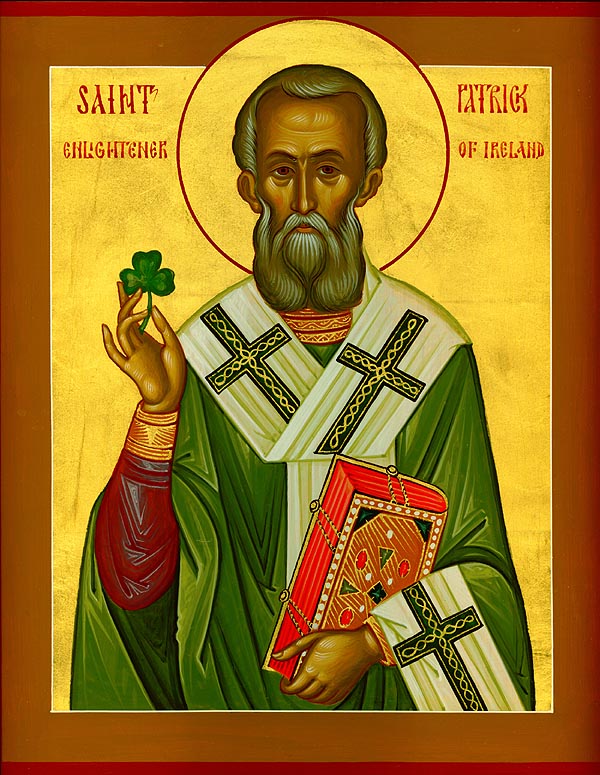
Who Was Saint Patrick?

0317patrick-ireland

I am an Irish-American. My dad’s family is all Irish, and I have an Irish last name. The only really Irish things I remember growing up were eating corned beef and hash and having a big Irish wake after my grandmother’s funeral. I personally feel that the Irish response to death is one of the great things about their culture – they know how to mourn a loss and celebrate a life at the same time.

Today is Saint Patrick’s Day – but who was Saint Patrick?

Well, interestingly enough, Patrick has never officially been named a saint by any church body. Furthermore, Patrick was not Irish! And if you’ve ever heard that Patrick drove the snakes out of Ireland – there never actually were snakes in Ireland, so that is just the stuff of legend.

The real Patrick was a Roman Briton born in Wales around 390 AD to a wealthy, noble family. His father was a deacon and his grandfather a pastor. When Patrick was 16 years old, he was captured by Irish marauders and taken to Ireland as a slave. After living there as a slave for 6 yrs, he managed to escape back to Britain. After his return to Britain, he joined a monastery and became a minister, and during this time he was burdened with a desire to go back to his former captors in Ireland and share with them the Gospel of Jesus Christ. So Patrick returned to Ireland in 432, this time not as a slave, but of his own volition – as a missionary.

Patrick was one of the earliest Christian missionaries to travel abroad to spread Christianity. One of the noteworthy things which Patrick did as a missionary was live in solidarity with the Irish people. Patrick wrote that he “sold his nobility” to enhance his commonality with his Irish audience. He spoke their language, and lived among; he became one of them, that he might reach them with the Gospel.

One of the first things that Patrick did was gain religious toleration for Christians from the Irish King. He also sought to evangelize prominent druids, knowing that others would likely follow if high profile druid leaders converted to Christianity. One of Patrick’s emphases amongst those who converted to Christianity was spiritual growth. Within 15 years Patrick has evangelized much of Ireland. In all, Patrick served as a missionary and pastor in Ireland for some 30 years.

One of the long-term fruits of Patrick’s ministry in Ireland was a movement of Irish missionaries that grew up in the generations following his establishment of Christianity in that country. One of these men was Columba (521-597) who was born in an Irish Christian family and became a priest in the church and somewhat of a church planter, establishing many churches in Ireland. At age 42 Columba left Ireland, saying he had been motivated by the ‘love of Christ’ and went to Scotland, where he established a monastery which served as a station for training and sending missionaries into the surrounding region.

Here’s to Patrick the missionary and to the Irish people!

“I never made a sacrifice”

This past Sunday at White Fields church I spoke about how when we give everything over to God, although we often fear what we will lose, the reality is that we always get more than we bargained for. Like Jesus said, it is when we give our life fully over to him that we find true life and really start living. (you can listen to the audio of that sermon here)

One example of this that came to my mind, but I didn’t share on Sunday was a quote by David Livingstone – the 19th century British missionary who gave his entire life in service to Christ, exploring and evangelizing the interior of Africa. Today, as a direct result of his work, sub-Saharan Africa has become a place where Christianity thrives, where 200 years ago it was almost non-existent.

David Livingstone – Missionary and Explorer of the interior of Africa

Livingstone made several trips back to England during his time as a missionary in Africa, in which he would go on speaking tours. He was considered a national hero in England, and was invited to speak at universities and to dignitaries.

One of the questions most frequently asked of Livingstone was how he was able to make such a great sacrifice, as to give his life in service as a missionary. He was an educated man who could have had a comfortable, upper-class life in England, but instead he chose to spend the prime of his life in the bush of Africa.

Here is what Livingstone said in response to this question in a speech he gave at Cambridge University in 1857:

For my own part, I have never ceased to rejoice that God has appointed me to such an office. People talk of the sacrifice I have made in spending so much of my life in Africa. . . . Is that a sacrifice which brings its own blest reward in healthful activity, the consciousness of doing good, peace of mind, and a bright hope of a glorious destiny hereafter? Away with the word in such a view, and with such a thought! It is emphatically no sacrifice. Say rather it is a privilege. Anxiety, sickness, suffering, or danger, now and then, with a foregoing of the common conveniences and charities of this life, may make us pause, and cause the spirit to waver, and the soul to sink; but let this only be for a moment. All these are nothing when compared with the glory which shall be revealed in and for us. I never made a sacrifice.