Annihilationism & Hell: Is Every Soul Eternal?

Recently a friend reached out to me with some questions regarding “annihilationism” and “conditional immortality.”

Will Every Soul Live Forever, or is Immortality Conditional?

One of the key questions in this discussion is this: Although the Bible clearly teaches the promise of eternal life for those who have been redeemed by Jesus, does the Bible teach eternal death for those who die in their sins?

“Conditional immortality” is the term given to the belief that the souls of those who die apart from redemption in Jesus will not go on living forever. They believe that immortality is conditional, meaning that only the souls of those who put their faith in Jesus will live forever, but not the souls of those who do not.

The central argument for conditional immortality in the Bible comes from Genesis 3 and Revelation 22, which talk about the Tree of Life, which was present in the Garden of Eden and will be present again in the New Jerusalem. In Genesis 3 we are told that the people were cut off from it, lest they eat of it and live forever in their fallen state. The idea is that if the Tree of Life is in the New Jerusalem (Heaven), it provides people with eternal life, but to be cut off from Heaven is therefore to be cut off from the source of eternal life.

Conditional immortality is also related to the idea of “annihilationism”

Annihilationism or Eternal Conscious Torment (ECT)?

Annihilationism is the belief that unredeemed souls will be “annihilated,” i.e. snuffed out in the Lake of Fire (Revelation 21:15) and cease to exist for all eternity. Seventh Day Adventists in particular argue that since Hebrews 12:29 says that God is a “consuming fire,” those who have not been justified and sanctified through Christ will be consumed by his presence and cease to exist.

In contrast to this is the traditional belief about Hell, held by the Church Fathers and the majority of Christians throughout history, that Hell is eternal conscious torment (ECT).

The key arguments against the ECT view of Hell, and in favor of annihilationism are two-fold:

  1. An eternity of punishment for sins committed in a finite lifetime seems unfair, i.e. “the punishment doesn’t fit the crime”
  2. The view of Hell as eternal conscious torment is not Biblical, but is imported from outside philosophies.
    • The ECT view is often blamed on Platonism, or Hellenism more generally, or from medieval assumptions influenced by writings like Dante’s Inferno

Rather than unquestioningly accepting these claims, we should examine if what they claim is true.

What Did Jesus Say About Hell?

Some might find it surprising that most of our understanding about Hell from the Bible does not come from the Old Testament, but from the words of Jesus.

13% of Jesus’ teaching and half of his parables were about Hell, judgment, and the wrath of God.

What that means is that Hell is not a peripheral issue, but is a major theme of Jesus’ teachings. If you claim that Jesus was a good teacher, you have to deal with the issue of what he taught about Hell.

Examining Jesus’ teachings, we find that the view of Hell as eternal, conscious torment was not a later addition to Christianity in the Middle Ages, nor the influence of Platonism or Hellenism, but rather people who simply accept the words of Jesus at face value.

Here are some examples of what he said:

  • Then he will say to those on his left, Depart from me, you cursed, into the eternal fire prepared for the devil and his angels. (Matt. 25:41)
  • And these will go away into eternal punishment, but the righteous into eternal life.” (Matt. 25:46)
  • [but some] will be thrown into the outer darkness. In that place there will be weeping and gnashing of teeth.  (Matt. 8:12)
  • And if your eye causes you to sin, tear it out. It is better for you to enter the kingdom of God with one eye than with two eyes to be thrown into hell, ‘where their worm does not die and the fire is not quenched.’ (Mark 9:47-48)
    • Here Jesus is quoting from Isaiah 66:24

In Luke 16, Jesus tells the story of a man who suffered in Hell after his life on Earth ended, which means that his soul was not snuffed out when he died, but continued living.

Because of the simple clarity of these verses, the great majority of Christians throughout history have accepted that the teaching of the Bible is that Hell is eternal, conscious torment.

Eternal Separation from God

In 2 Thessalonians 1:9, the Apostle Paul describes Hell in this way:

those who do not know God and on those who do not obey the gospel of our Lord Jesus. They will suffer the punishment of eternal destruction, away from the presence of the Lord and from the glory of his might,

2 Thessalonians 1:9

Once again, we see an example of the eternality of the destruction which will be suffered by those who do not know God and who reject the gospel.

Rather than being unkind or heartless, these messages are written to those who are alive so that they can turn from their ways and be saved. As Ezekiel 33:11 says:

As I live, declares the Lord GOD, I have no pleasure in the death of the wicked, but that the wicked turn from his way and live; turn back, turn back from your evil ways, for why will you die?

Ezekiel 33:11

It is the heart of a loving God that warns and pleads, knowing the gravity of what is at stake. It is because God cared so much that he came to this Earth to give his life, that people might be saved.

A Message from Beyond the Grave

In the Gospel of Luke 16:19-31 Jesus tells a story about a rich man who died and suffered torment in Hades. Jesus shares that this man longed to be able to send a warning to his family members who were still alive that they should not make the mistake that he did, of not trusting in and walking with God.

For those who are alive, this is a very important story because it helps us to understand the urgency of responding to the gospel and receiving the gift of salvation and life that is extended to us in Jesus.

Unjust Punishment?

The question still remains as to whether it is fair for Hell to be eternal, since life on Earth is finite.

Here 2 Thessalonians 1:9 is helpful, which tells us that the essence of Hell is separation from God and his glory.

Since God is the source of beauty, life, joy, peace, and goodness – to be separated from God and his glory is to be cut off from those things for eternity. In other words: what makes Hell hellish, is that God is not there. What makes Heaven heavenly, is that God is there.

Furthermore, since Hell is the destiny of those who have rejected the grace of God and relationship with him, and have essentially pushed God away or turned their back on Him, Hell is the final culmination of them getting what they wanted in their lifetime.

In Genesis 6:3, God says something very serious: “My Spirit will not always contend (or strive) with man.” If a person continually rejects the offer of God’s grace and the conviction of the Holy Spirit, the time will come when God will give them what they insisted upon, forever: life apart from God. This giving people over to their ungodly desires is the essence of God’s judgment (see Romans 1:18-31).

Hope Beyond the Grave

Faithful Christian teachers in history, such as John Stott, have believed in annihilationism, but this view has always been a minority viewpoint, mostly because it seems to contradict the straightforward teachings of Jesus.

What we do know is that the message of the gospel is truly good news, and that there is an urgency to this gospel because of the reality of Hell.

Reader Questions: Christians and the Sabbath

Here on the site there is a feature where you can Ask a Question or Suggest a Topic.

This question was recently submitted:

The commandments were written by the hand of God and the 4th directs us to keep the Sabbath holy. No one has the authority to set aside or alter any of God’s laws. Please explain with reference to the Bible. I know we are saved by grace and not works and that no one can keep the Ten Commandments but our Lord Jesus Christ.

God’s Laws Fall Into Three Categories

The 613 Old Testament laws fall into three different categories, and are treated differently in the New Testament. The three categories are:

  • Civil Laws
  • Ceremonial Laws
  • Moral laws

For the people of Israel, all three types of laws were blended together. Breaking a moral law had civil and ceremonial consequences. But in the New Testament, by the time of Jesus, Israel was no longer a theocratic nation-state, but was an occupied territory ruled by the Roman Empire. As such, they had to follow the laws of Rome, which in some cases contradicted their Jewish law, such as in the case of capital punishment: Roman law forbade the Jews from carrying out capital punishment against those who broke the Old Testament laws. Only the Romans were allowed to carry out capital punishment. This created a conflict for the Jews, much in the same way that Muslims in Western countries struggle with their inability to live by Sharia law.

The Ceremonial Laws, we are told in the Letter to the Hebrews, all foreshadowed and pointed forward to Jesus, and were fulfilled by Him and in Him.

The Moral Laws were fulfilled by Jesus in that He lived a perfect life, free of moral failure. But unlike the civil and ceremonial laws, the moral laws reflect God’s character, and since His character doesn’t change, neither does His moral standard. In fact, whenever Jesus talked about the moral laws of the Old Testament, he either re-affirmed them or intensified them (see Matthew 5:21-48).

In the 10 Commandments, what makes the 4th Commandment unique is that it is the only one which is a ceremonial law.

The Shadows and the Substance

Therefore let no one pass judgment on you in questions of food and drink, or with regard to a festival or a new moon or a Sabbath. These are a shadow of the things to come, but the substance belongs to Christ.

Colossians 2:16-17

What the Apostle Paul is telling us here is that the Sabbath is an example of something which foreshadows Jesus.

Imagine if you went out of town for an extended trip, and when you came back, your wife came running out to meet you, but rather than embracing you, she threw herself on the ground and started kissing your shadow. That would be strange, since you – the actual substance – are standing right there!

Or imagine if you were sitting on the couch next to your wife, but rather than embracing you, she instead hugged a photograph of you.

This, Paul is saying, is what it is like when we focus on the shadows rather than the substance, now that He (Jesus) has come.

The Principle and The Purpose

As mentioned previously, the Book of Hebrews shows us how all of the ceremonial aspects of Judaism foreshadowed Jesus and were fulfilled in Jesus. Hebrews 3 & 4 address the Sabbath rest.

The essence of what it says in Hebrews 3-4 is that both the Sabbath day rest and the rest of the Promised Land were not ends in themselves, but pointed forward to the true rest of God which is found in Jesus. Thus, the purpose of the Sabbath is to point us to Jesus, in whom we rest from our labors of trying to justify ourselves before God.

However, there still remains the issue of a “Sabbath principle”: the idea that it is wise and good for us to take a break from our work, and set aside a day dedicated to physical rest and Spiritual enrichment.

It is important to note that for Christians, Sunday is not the “Christian Sabbath.” For a discussion of the significance of Christian worship on Sundays, see these articles:

In summary: the message of the New Testament is that what it means to truly honor the Sabbath is to embrace the gospel and enter into the ultimate rest in Jesus, to which the Sabbath points. Jesus and the salvation He came to provide is the fulfillment of the Sabbath, and honoring the Sabbath means embracing that salvation by faith and living in it.

Thank you for the question!

For any further questions or topics you’d like me to address, fill out the form on this page: Ask a Question or Suggest a Topic.

Reader Questions: If Children are a Gift from God, Why Does God Sometimes Give Children to Bad People?

Here on the site there is a feature where you can Ask a Question or Suggest a Topic.

This question was recently submitted:

A lot of people say children are a gift from God. If that’s true, then why would God give a pedophile children?

It isn’t just people who say that children are a gift from God; God himself says that children are a gift from Him.

Psalm 127:3 says, “Behold, children are a gift of the LORD, The fruit of the womb is a reward.” (NASB)

In the 1989 movie Parenthood, Keanu Reeves’ character says something profound:

You know Mrs. Buckman, you need a license to buy a dog. You need a license to drive a car. Hell, you even need a license to catch a fish. But they’ll let any butt-reaming a**hole be a father.

Keanu Reeves as Tod Higgins in Parenthood
Keanu Reeves - best on-screen moments | Gallery | Wonderwall.com
Keanu Reeves in Parenthood

When we lived in Hungary, we adopted a child whom we had guardianship over for years. The process included a gauntlet of intrusive tasks: home inspections, psychological examinations, classes, fees. During a week-long class, one of the other prospective adoptive parents expressed his frustration that it seems unfair people who want to help children in need by adopting them are put through such a rigorous process, when someone who becomes a parent biologically doesn’t have to do anything.

At the same time, we also visited orphanages where children were abandoned because they were either unwanted, or the parents were unable to care for them.

Here in Colorado, our church is involved in helping children in kinship and foster care, who oftentimes end up in these situations because of abuse or neglect.

We’ve known people over the years who would have been great parents, but struggled with infertility, or were unable to have children because of other medical issues.

See: Infertility and the Will of God

It seems like an incredible injustice that many who want to have children cannot, while many who should not have children do. Is God somehow irresponsible in his distribution of children? And if it is merely a natural, biological occurrence, then why does the Bible insist that children are a gift from God?

The Principle

The reason for the principle, that children are a gift, is intended to shape the way we think about human life.

Life, the Bible says, is sacred. Human beings are created in the image of God, and though we are fallen, we continue to bear the image of the divine, even if it is marred within us. Alone out of all creation, this is unique to human beings. This is why it is allowed for human beings to ethically kill and eat animals, but human life is different.

Many ancient people considered children to be a nuisance. God wanted people to treat children as treasures.

This can be seen with Jesus; when his disciples tried to shoo away the children who wanted to come to Jesus, assuming that their master was too great a person to be bothered by annoying little children, Jesus corrected them and said, “Allow the little ones to come to me, for to such belongs the Kingdom of Heaven.”

One reason why little children were not valued very highly in ancient society is because they were not able to contribute or produce anything. Furthermore, young children were particularly susceptible to disease and death. So the feeling of many was that once (and if) the child grew to the point where they could be a contributing member of society, then their life would have value. God said: No, children are not a drain, they are a gift.

The principle is that children are to be considered a gift, and human life is to be treasured.

The Curse

As human beings, we are fallen. We ourselves and the world we live in languish under a curse: the curse of sin and death. This curse has far-reaching implications: it means that the world does not work the way it was originally designed to, and neither do we.

The results of this curse include sickness, hatred, envy, strife, selfish and hurtful actions, as well as all kinds of deviant behavior, and ultimately death.

We were not designed to struggle with infertility, we were not designed to abuse others, nor to suffer abuse at the hands of others.

Every human being lives under the cloud of this curse their entire life, and we all suffer from its effects in all kinds of forms. This is tragic. So tragic, that God became one of us in Jesus Christ to put an end to it forever.

Human life is still a gift and is still precious, even though human beings suffer here on Earth.

Identity and Responsibility

To say that someone is a pedophile is to define them by their sin. Rather than saying that God gives children to pedophiles, it would be more accurate to say that God gives children to people, and tragically, some people choose to harm children.

Here is how the Bible explains this:

Let no one say when he is tempted, “I am being tempted by God,” for God cannot be tempted with evil, and he himself tempts no one. But each person is tempted when he is lured and enticed by his own desire. Then desire when it has conceived gives birth to sin, and sin when it is fully grown brings forth death.

James 1:13-15

To ask the question of why God allows people to be parents if he knows ahead of time that they will one day commit abusive acts against their children is akin to taking responsibility away from the sinner and placing it upon God, and this issue gets into the classic Trilemma of Theodicy:

trilemma is like a dilemma, only instead of two issues (di) that are at odds with each other, in a trilemma there are three (tri).

The trilemma of theodicy states that there are three things the Bible states are true about God, which cannot all be true at the same time:

  1. God is loving
  2. God is all-powerful
  3. Evil exists

The argument goes that since evil exists, either: God must not really be loving, or God must not really be all-powerful. Either God is incapable of stopping evil, even though he’d like to – in which case he is not all-powerful, or God is capable of stopping evil, but chooses not to, in which case he must not be truly loving.

The logical flaw in the trilemma

The big flaw in this thinking is that it takes into account only two of God’s attributes: his love and his power.

But does God have only two attributes? Certainly not! God has a myriad of attributes, including that he is: all-knowing, providential, eternal, etc. Simply adding another attribute of God to the equation changes it fundamentally, and removes the “lemma” out of the tri-lemma!

For example, if we say that God is not only loving and all-powerful, but also all-knowing and/or providential, it changes things completely. It means that it is possible for God to allow bad things and use them for good purposes, and even for our ultimate benefit. The fact that God is eternal reminds us that comfort in this life is not the pinnacle of existence, therefore it is also possible for an eternal God to allow temporal hardship in order to work an eternal good purpose. The Bible says this explicitly in 2 Corinthians 4:17 – For this light momentary affliction is preparing for us an eternal weight of glory beyond all comparison.

Thankfully, even in the most horrific situations, there is hope:

The Hope

Why is human life still a gift, if a person suffers abuse?

While on the one hand, the human experience is irreconcilably tainted by suffering, human life is a gift because it carries with it the hope of redemption.

The promise of the gospel is that no matter what horrors a person might suffer here on Earth, in this broken world at the hands of broken and evil people, because of what Jesus did, redemption is possible.

And what redemption looks like is a new world, in which all that is wrong is made right: in which injustice and evil are judged, in which an end is put to suffering once and for all.

Then I saw a new heaven and a new earth, for the first heaven and the first earth had passed away, and the sea was no more. And I saw the holy city, new Jerusalem, coming down out of heaven from God, prepared as a bride adorned for her husband. And I heard a loud voice from the throne saying, “Behold, the dwelling place of God is with man. He will dwell with them, and they will be his people, and God himself will be with them as their God. He will wipe away every tear from their eyes, and death shall be no more, neither shall there be mourning, nor crying, nor pain anymore, for the former things have passed away.”

Revelation 22:1-4

Human life, despite its suffering, carries with it the hope of eternal life and redemption.

Speaking of this redemption, Paul the Apostle says:

For I consider that the sufferings of this present time are not worth comparing with the glory that is to be revealed to us. For in this hope we were saved.

Romans 8:18,24a

The pages of Scripture are full of the story of the people who suffered greatly.

Some were tortured, refusing to accept release, so that they might rise again to a better life. Others suffered mocking and flogging, and even chains and imprisonment. They were stoned, they were sawn in two, they were killed with the sword. They went about in skins of sheep and goats, destitute, afflicted, mistreated… But God has provided something better for us.

Hebrews 11:35-37,40a

May we take hold of this promise and hope by faith in Jesus and what He accomplished for us, so we can experience life and redemption!

If you have any questions or topics you’d like me to address, fill out the form on this page: Ask a Question or Suggest a Topic.

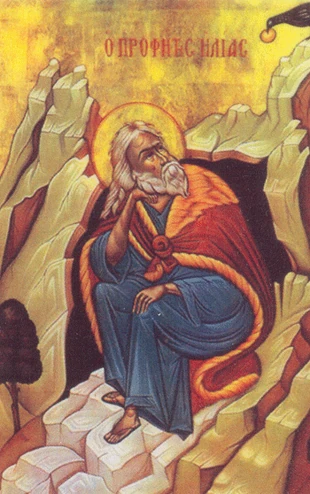
Was John the Baptist the Reincarnation of Elijah?

Currently at White Fields Church we are studying through the books of 1-2 Kings in our series called Desiring the Kingdom. We recently looked at the taking up of the Prophet Elijah in a whirlwind (watch or listen to that message here: 2 Kings 1:1-2:12 “The Legacy of Your Life”

Check out: Did Elijah Really Go to Heaven?

One of the questions this brings up, is in regard to the identity of John the Baptist. Was John the Baptist actually the return, or the reincarnation of Elijah?

Here are the key issues:

Elijah Never Died…

Elijah is one of only a handful of people in the Bible who never tasted death. Another is Enoch, in Genesis 5.

Some people speculate that maybe Moses never actually died, but was also taken by God before tasting death. The reason for that has to do with something in Revelation 11, which I will address further down in this article, but Deuteronomy 34:5 clearly states that “Moses died in the land of Moab according to the word of the Lord.” The speculation here comes from the idea that this chapter of Deuteronomy was not written by Moses, and therefore the writer only assumed that Moses died. That conclusion seems to be clearly in contradiction of what the text clearly states, however, and as people who believe in the inspiration of the Bible, we should reject it.

The Prophecies

Malachi 3:1, speaking about the coming of the Messiah, says: “Behold, I send my messenger, and he will prepare the way before me. And the Lord whom you seek will suddenly come to his temple; and the messenger of the covenant in whom you delight, behold, he is coming, says the LORD of hosts.”

Malachi 4:5, also speaking about the Day of the Lord and the coming of the Messiah says: “Behold, I will send you Elijah the prophet before the great and awesome day of the LORD comes. And he will turn the hearts of fathers to their children and the hearts of children to their fathers, lest I come and strike the land with a decree of utter destruction.”

The Words of Jesus

Here’s what Jesus had to say about John the Baptist:

As they went away, Jesus began to speak to the crowds concerning John: “What did you go out into the wilderness to see? A reed shaken by the wind? What then did you go out to see? A man dressed in soft clothing? Behold, those who wear soft clothing are in kings’ houses. What then did you go out to see? A prophet? Yes, I tell you, and more than a prophet. This is he of whom it is written,
“‘Behold, I send my messenger before your face,
who will prepare your way before you.’

For all the Prophets and the Law prophesied until John, and if you are willing to accept it, he is Elijah who is to come. He who has ears to hear, let him hear.

Matthew 11:7-15

Two important things here:

  1. Jesus is claiming that John is the promised messenger from Isaiah 40:3 who would prepare the way for the coming of the Messiah.
  2. Jesus is claiming that John is the fulfillment of Malachi’s prophecy about the messenger in Malachi 3:1.

This statement of Jesus that “if you are willing to accept it, he is Elijah who is to come” has led some people to believe that John was the return, or reincarnation of Elijah. However…

The Claim of John the Baptist Himself

John the Baptist explicitly denied being Elijah the Prophet:

And this is the testimony of John, when the Jews sent priests and Levites from Jerusalem to ask him, “Who are you?” He confessed, and did not deny, but confessed, “I am not the Christ.” And they asked him, “What then? Are you Elijah?” He said, “I am not.” “Are you the Prophet?” And he answered, “No.” So they said to him, “Who are you? We need to give an answer to those who sent us. What do you say about yourself?” He said, “I am the voice of one crying out in the wilderness, ‘Make straight the way of the Lord,’ as the prophet Isaiah said.”

John 1:19-23

Rather, John identifies himself as the promised messenger from Isaiah 40:3, which Jesus also identified him as.

Are John and Jesus contradicting each other?

Some people believe that John was in denial about his identity as Elijah…

I don’t believe either of these options to be true, rather there is a simple explanation:

“The Spirit and Power of Elijah”

In the Gospel of Luke, chapter 1, when the angel Gabriel is telling Zechariah (John the Baptist’s Father) about who his son will be, he says that John “will turn many of the children of Israel to the Lord their God, and he will go before him in the spirit and power of Elijah, to turn the hearts of the fathers to the children, and the disobedient to the wisdom of the just, to make ready for the Lord a people prepared.” (Luke 1:15-17)

Here, Gabriel is quoting from Malachi 3:1 and 4:5. This tells us that those verses are speaking about the same person, and it tells us that that person is John.

In conclusion, John the Baptist was not literally Elijah, i.e. the reincarnation of Elijah, rather he is a prophet sent by God in the spirit and the power of Elijah.

This is why Jesus said John “was Elijah, if you are willing to accept it.” In other words, John is the fulfillment of the coming of the prophet Elijah in the sense that he came in the spirit and power of Elijah, but he is also not literally Elijah reincarnated.

The Transfiguration

Further proof of this fact is that Elijah himself appeared at Jesus’ transfiguration (Matthew 17:11-12), not John the Baptist.

Furthermore, both Herod and the people distinguished between Elijah and John the Baptist (see Mark 16:14-16 & 8:28)

Will Elijah Come Again During the Great Tribulation?

Revelation 11 describes two witnesses who will come on the scene during the Tribulation, a time of great trouble for the world before the return of Jesus.

And I will grant authority to my two witnesses, and they will prophesy for 1,260 days, clothed in sackcloth.”
These are the two olive trees and the two lampstands that stand before the Lord of the earth. And if anyone would harm them, fire pours from their mouth and consumes their foes. If anyone would harm them, this is how he is doomed to be killed. They have the power to shut the sky, that no rain may fall during the days of their prophesying, and they have power over the waters to turn them into blood and to strike the earth with every kind of plague, as often as they desire.
And when they have finished their testimony, the beast that rises from the bottomless pit will make war on them and conquer them and kill them, and their dead bodies will lie in the street of the great city that symbolically is called Sodom and Egypt, where their Lord was crucified. For three and a half days some from the peoples and tribes and languages and nations will gaze at their dead bodies and refuse to let them be placed in a tomb, and those who dwell on the earth will rejoice over them and make merry and exchange presents, because these two prophets had been a torment to those who dwell on the earth. But after the three and a half days a breath of life from God entered them, and they stood up on their feet, and great fear fell on those who saw them. Then they heard a loud voice from heaven saying to them, “Come up here!” And they went up to heaven in a cloud, and their enemies watched them.

Revelation 11:3-12

From the descriptions given of the two witnesses, it seems clear that allusions are being made to Elijah and Moses.

In 2 Kings 1, when Ahaziah sent soldiers to arrest and assumedly kill Elijah, Elijah called down fire from Heaven to consume them. This isn’t exactly “fire pouring from their mouths to consume their foes” but it is similar.

Elijah did shut the sky by his prayers so it did not rain (1 Kings 17 & James 5), and Moses struck the waters and they turned to blood.

Some people assume that it is because Elijah did not die that he is able to return, and that this might be a further fulfillment of Malachi 4:5, in this case Elijah returning in the flesh as opposed to John the Baptist coming in the spirit and power of Elijah. This is also the reason why some people assume that Moses never died, because they assume that the reason Elijah is able to come back is because he never tasted physical death. Others speculate that perhaps the second witness is Enoch, the other person in the Bible who never tasted death.

However, I am not convinced that having never died is a prerequisite for being one of these witnesses. Although they didn’t die physically, their Earthly lives did end.

Furthermore, it seems that if John the Baptist could fulfill Malachi 4:5 by coming in the spirit and power of Elijah, it is not necessary that these two witnesses be the literal reincarnations or reappearances of Elijah and Moses; they could be people who come in the spirit and power of those men.

Conclusion

In summary: John the Baptist was Elijah in that he came in fulfillment of Malachi 3:1 & 4:5, and he came in the spirit and power of Elijah, but he was not a reincarnation of Elijah himself.

What Does It Mean to Be “Ready” for the Return of Jesus?

COVID-19, social unrest, natural disasters… A lot of people have been asking what these current events mean in light of Bible prophecy.

Does the Bible speak about these events – and if so, what does it say?

Furthermore, if the return of Jesus is imminent, what does it mean for us to be “ready” for His return?

Some people believe that to be ready means to stockpile food and guns – you know, so you can shoot your neighbors when they get hungry and try to take your food, right?! I’m quite sure that’s not what Jesus wants us to do, and it’s not what it means to be ready for his return.

So, what does it mean for us to be “ready” for Jesus’ return? If we are living in the last days, what should we be doing?

Mike and I sat down to discuss these questions in our latest video. Check it out:

Which Voices are Shaping You?

Doctors tell us that children in the womb are able to recognize their mother’s voice and differentiate it from the voices of others. Even though they’ve never seen their mother, they know and respond to her voice.

How are babies able to differentiate their mother’s voice from other voices they hear? Because their mother’s voice is the voice they hear and listen to most often.

What voices are you listening to the most?  

Right now, more than ever before, there are a lot of voices out there vying for your attention. It used to be that everybody had an opinion, but now everyone has a platform.

Mobile devices are designed not primarily for creating content, but consuming it.

If you don’t think that you are being shaped by the content you consume, think again. So choose wisely!

You can spend your time listening to the voices of political pundits, reading all kinds of articles, you can spend your time listening to the voices of everyone on social media…

The content you consume not only conveys information, it has a teleology, in other words: it aims to lead you somewhere. To use a biblical term: they seek to make you disciples of their beliefs and attitudes.

Just like a baby in its mother’s womb: whose voice do you want to be most familiar with? Whose voice do you want filling your ears and shaping your thoughts the most?

Many people today are being discipled more by social media, politicians, and influencers than by Moses, Isaiah, Paul, and Jesus.

May I encourage you instead to spend more time listening to the voice of God than to all those other voices?

As you immerse yourself in the Word of God, it tunes your heart to God’s voice and it familiarizes you with his voice.  As you read and study the Bible,  you get to know God’s voice and God’s heart, and you become familiar with the kinds of things God says.

Jesus described himself as the Good Shepherd, and he said that his sheep know his voice and will not follow the voice of another. (John 10:4-5)

When it comes to hearing God’s voice: the most reliable, most certain way to hear God’s voice is to immerse yourself in the words of Scripture.

Let me encourage you to make His voice the voice you listen to the most. He alone has the words of eternal life, and everything that pertains to life and godliness.

Here is a recent message I taught at White Fields Church on the topic of hearing God’s voice:

Reader Questions: Is the Return of Jesus Near? & What Does It Mean to “Believe in Jesus”?

Here on the site there is a feature where you can Ask a Question or Suggest a Topic.

These questions were recently sent in:

Do the Signs of the Times Point to the Imminent Return of Jesus?

Considering the things that are currently going on in the world, including locust plagues in Africa, the possibility of famines, economic collapse, civil unrest and nations arming for war, and the pestilence of the coronavirus, do you think this means that the return of Jesus is going to happen soon?

During Jesus’ final week in Jerusalem before he was crucified, he went up on the Mount of Olives, the hill in Jerusalem which stands opposite the Temple Mount, and he gave his famous “Olivet Discourse.”

The View From the Mount of Olives

As he sat on the Mount of Olives, the disciples came to him privately, saying, “Tell us, when will these things be, and what will be the sign of your coming and of the end of the age?” And Jesus answered them, “See that no one leads you astray. For many will come in my name, saying, ‘I am the Christ,’ and they will lead many astray. And you will hear of wars and rumors of wars. See that you are not alarmed, for this must take place, but the end is not yet. For nation will rise against nation, and kingdom against kingdom, and there will be famines and earthquakes in various places. All these are but the beginning of the birth pains.

Matthew 24:3-8

Jesus described the coming of the end of the age, which will culminate with His return, as being similar to “birth pains.” The thing about birth pains is they are building up to something, in this case the eschaton – “the final event,” from which we get the word eschatology. The closer we get to the eschaton, Jesus says, the more these “birth pains” will increase in both frequency and intensity.

See: All of Christianity is Eschatological

Here are a few factors to keep in mind regarding these current events and what they mean about the return of Jesus:

  1. We get closer to the eschaton every day. Just as you are older than you used to be, every day we are closer than we have ever been before.
  2. The eschaton is something we should look forward to with eager expectation, not something we should fear or hope to postpone. In Titus 2:13, Paul describes the early Christians as: “in the present age, waiting for our blessed hope, the appearing of the glory of our great God and Savior Jesus Christ”. To the Thessalonians, Paul wrote about the return of Jesus in order to encourage them and comfort them (1 Thess. 4:13-18). The early Christians used the slogan, “Maranatha!”, an Aramaic phrase which means, “Our Lord, come!” and is found in 1 Corinthians 16:22 as well as in other ancient Christian writings, such as the Didache. The early Christians did not fear the eschaton, but eagerly looked forward to it, and the knowledge of its coming was a source of hope and encouragement for them, as it should be for us as well.
  3. We should always be ready for the return of Jesus. In Matthew 25, in this same Olivet Discourse, Jesus told two parables: “The Parable of the Talents” and “The Parable of the Ten Virgins.” Both of these parables are about the topic of being “ready” for Jesus’ return. What does it mean, and what does it look like for us to be ready for Jesus’ return? According to these parables, to be “ready” means being busy about the Lord’s work – doing what He has called you to do, not becoming complacent and checking out, taking your foot off the gas because the end is near.
  4. What Jesus would say if you asked him if His coming is near: In Acts 1:6, after His crucifixion and resurrection, Jesus’ disciples asked Him if it was now time for Him to restore the kingdom to Israel. He told them, “It is not for you to know times or seasons that the Father has fixed by his own authority. But you will receive power when the Holy Spirit has come upon you, and you will be my witnesses in Jerusalem and in all Judea and Samaria, and to the end of the earth.” (Acts 1:7-8). If you were to ask Jesus, “Is it almost time for you to return?”, His answer would be the same today: “It is not for you to know times or seasons that the Father has fixed by his own authority. But you will receive power when the Holy Spirit has come upon you, and you will be my witnesses…to the end of the earth.” In other words: Jesus wants us to be ready always for His return to happen at any moment, and that means being fully occupied with the work of His mission and His Kingdom.

What Does It Mean to “Believe in Jesus”?

In my sermon this past Sunday I addressed the question of what it means to “believe in Jesus” in order to receive salvation and forgiveness of your sins, as the Bible describes.

Now Jesus did many other signs in the presence of the disciples, which are not written in this book; but these are written so that you may believe that Jesus is the Christ, the Son of God, and that by believing you may have life in his name.

John 20:30-31

I explained that the kind of belief the Bible is talking about is not merely believing that Jesus was a historical person. No reputable historians deny that. Simply believing that Jesus existed doesn’t make you a Christian.

So does it mean believing that Jesus really died on a cross and rose from the grave? Again, it is possible to ascent to the validity of these historical events without being a Christian.

James explains this in his epistle:

You believe that God is one; you do well. Even the demons believe—and shudder!

James 2:19

Rather the word “belief” (pisteo in Greek) in this case means to trust in, to cling to, to rely on someone or something.

To believe in Jesus unto salvation, therefore, means that rather in trusting in yourself, or relying on someone or something, rather than clinging to your own merits to save you – you trust in, cling to, and rely on Jesus and what He did in order to save you.

A friend from church sent this excerpt from the book Life in the Trinity: An Introduction to Theology with the Help of the Church Fathers by Donald Fairbain

On this point, I think the church fathers have a great deal to teach us, because when we today speak of what faith is or whether one has it, we are unwittingly obscuring the face that everyone already has faith. Everyone trusts in someone or something. That is, all people in their efforts to achieve fulfillment or happiness or anything else of value entrust those efforts to someone or something. Many of us entrust our lives to ourselves. Some of us entrust them to a religion or a philosophical worldview. Some of us entrust them to another person. Some of us entrust them to an institution. Christianity insists that for this trust to be salvific, it must be directed only toward Christ. He holds what is truly valuable in life – his relationship with the Father. He has shown the uttermost depths of love for us. He is able through his Spirit to unite us to his Father, to make us adopted sons and daughters. Our lives are infinitely safer in his hands than in our own hands or in the hands of anyone else or any institution or philosophy. He is the one to whome we should look, the one in whom we should trust. Jesus says, “Come to me, all you who are weary and burdened, and I will give you rest” (Matthew 11:28). In light of this, it is perhaps appropriate today for evangelicals to spend less time seeking to nail down exactly what faith is and instead to point other people to the one who is truly worth of their faith, Jesus Christ. Conversion to Christianity is not so much a process of gaining faith where one had none before as it is a process of transferring one’s trust from whatever or whomever one was trusting previously to Christ alone.

Fairbain, Life in the Trinity, p. 188

Amen!

Thank you for reading and sending in your questions!

Racism, Identity, & Self-Justification

In Pittsburgh, Racism Is a Health Crisis - CityLab

Like so many of you, when I saw the video last night of what happened to George Floyd, I was horrified.

If someone was not there to film this incident, would we even know that this happened?

Was this an isolated incident? We have to recognize that a steady stream of “isolated incidents” constitutes a pattern, and racism and prejudice are alive and well in the world today.

As Christians, it is our theological duty to speak out against racism.

Racism asserts that some people are more valuable than others. This view is anathema to those who follow Jesus.

No matter the color of a person’s skin, no matter their economic or social status, no matter their level of ability or disability: all people are created in the image of God, and therefore endowed with an innate dignity as image bearers of the Divine.

What is at the Root of Racism?

It would not be uncommon to hear someone say that at the root of racism is sin. The question though is: What sin exactly is at the root of racism?

What underlies racism is the endeavor common to all human beings of seeking to establish an identity.

Every person is seeking to establish an identity, which can be defined as: evidence that we have value and worth, that we are deserving of love and acceptance.

People seek to do this in many ways, such as geography, ethnicity, morality, economics, social standing, education, etc.

However, when someone seeks to establish their identity in anything other than the redeeming work of Jesus, it leads to disaster.

This disaster, in some cases, may only be personal; it may only affect them. It will still be disaster because it will lead to emptiness, futility, and the loss of their soul (see Mark 8:36).

However, in many cases, the disaster of attempting to build an identity apart from Christ can affect others. This is what leads to wars, ethnic conflicts, tribalism, rivalries, and racism.

These are all forms of self-justification, or the attempt to prove one’s worth by means of something within them, whether that is their morality, their good deeds, or their race or tribe.

The Reformers, particularly Calvin, pointed out that while people can do good things apart from faith in Jesus and experiencing His regenerative work in their lives, all of their good works will ultimately be motivated by either self-justification or self-glorification.

Self-justification often seeks opportunities to justify oneself by looking for ways in which they can feel superior to others. It is endeavoring to build an identity for yourself – apart from Christ – that “proves” that you have worth, and many people go about that negatively by juxtaposing themselves against other people whom they deem to have “less worth.”

Considering It All Rubbish

In the third chapter of his letter to the Philippians, Paul the Apostle talks about how he formerly tried to build his identity apart from Christ in his ethnic background, in his morality, in his education, and in his zeal for God. (Philippians 3:4-9).

The result of these things, in every instance, was that they led him to look down on others who didn’t have his ethnic background, his morality, his education, or his zeal for God – and in at least one case it led him to physically and psychologically harm an entire group of people.

However, after coming to faith in Christ and embracing the gospel, Paul says that he now considers all of these things rubbish compared to the surpassing worth of knowing Christ Jesus, and being found in Him, with a righteousness that comes from Jesus, not from anything within Paul himself.

What the gospel offers us is value, worth, and belonging because of what God has done for us and who we are in Christ. This identity, rather than leading to oppression or rivalry, leads to love and charity.

May we be those who find our identity in Christ, and who recognize the inherent dignity of all people.

Where Does Our Sense of Morality Come From?

Is morality something that people intuitively know, or is it something we need to be told or instructed about?

Why is it that what is considered moral changes over time in different societies?

Pastor Mike and I discuss these questions in this week’s Sermon Extra video, in which we look at 1 Timothy 1:8-9: “Now we know that the law is good, if one uses it lawfully, understanding this, that the law is not laid down for the just but for the lawless and disobedient, for the ungodly and sinners”

The book we reference about people who considered murder and lying to not be wrong and treachery to be a virtue is Peace Child by Don Richardson, which I highly recommend.

We also discuss the question of how much of a Christian’s self-understanding should be determined by the recognition of their sinfulness versus their having been redeemed by Jesus.

A Word for Christians in a Politically Divided Culture

The COVID-19 crisis has been a major disruption worldwide, affecting the lives of nearly every person on the planet. Movement has been restricted, jobs have been furloughed or ended, businesses have suffered, not to mention the emotional stress it has put on the population. Almost universally, church gatherings have been limited in an effort to slow the spread of the virus and protect the vulnerable.

As the crisis has continued and stay-at-home orders have been extended, the situation has become increasingly divisive, and since the responses in different areas are determined by local authorities, it has also become political.

The discourse has also shifted from simply questioning the actions of authorities, business owners, and other civilians, to questioning their motives and accusing them of everything from indifference to malice.

Christians have not been exempt from this. Differing views on the motives of everyone from government authorities to church leaders have led some Christians to view each other with suspicion or even contempt. In a highly politicized and media-heavy world it is very easy for Christians to get caught up in social and political divisions to the point where their views on these issues become their primary source of identity, and they begin to view those with whom they disagree with enmity.

The Apostle Paul’s words to the Ephesians are particularly important for Christians to hear and take to heart in these times:

Therefore I, the prisoner of the Lord, implore you to walk in a manner worthy of the calling with which you have been called, with all humility and gentleness, with patience, showing tolerance for one another in love, being diligent to preserve the unity of the Spirit in the bond of peace.

Ephesians 4:1-3 NASB

Paul later warns the Ephesians not to “give the devil any opportunity” (Ephesians 4:27 NASB). As David Guzik explains,

The devil’s work is to accuse and divide the family of God, and to sow discord among them. When we harbor anger in our heart, we do the devil’s work for him.

Enduring Word commentary, Ephesians 4

As Christians our identity is found not in our opinions about politics or current events, but in Christ who gave his life for us to make us new people individually and “the people of God” collectively. A powerful example of this can be seen in the example of the people Jesus called to become his closest disciples.

Disciples from Opposite Ends of the Political Spectrum

In Matthew 10:1-4 we have a list of the 12 disciples. Two names in the list are particularly interesting: Matthew the tax collector and Simon the Zealot.

Tax collectors were Jewish people who worked with and for the occupying Roman government to collect taxes from their fellow countrymen, which not only took money away from individuals, but was used to support the Roman occupation and its military. For this reason, tax collectors were seen as sell-outs and traitors by more nationalistically minded Jews, who despised them.

The Zealots were a political action group of far-right nationalists who were willing to use violence in resistance to the Roman occupying forces. Zealots reportedly carried hooked knives under their cloaks with which they would seek to wound or assassinate Roman officials and their collaborators as they walked in public places.

Political divisions are nothing new; they existed in Jesus’ time as well. Simon the Zealot was someone who would have killed someone like Matthew the tax collector because of their differing political and social views.

However, Jesus called both these men, from opposite ends of the political spectrum, to follow him and become his disciples. He gave their lives a new direction and a new purpose. In Jesus, they received a new identity and a new community.

Apart from Jesus these men would have been enemies, but because of Jesus they became brothers, and they set aside their differences for a higher calling and a greater allegiance: not Rome, not Israel, but the Kingdom of God.

As Christians today in this politically divided climate, may we be those who are “diligent to preserve the unity of the Spirit in the bond of peace,” “showing tolerance for one another in love,” as we have been called together in one body and given a new identity and purpose in Christ.