The History of Lent & the Lost Celebration

ash-wednesday-cropped

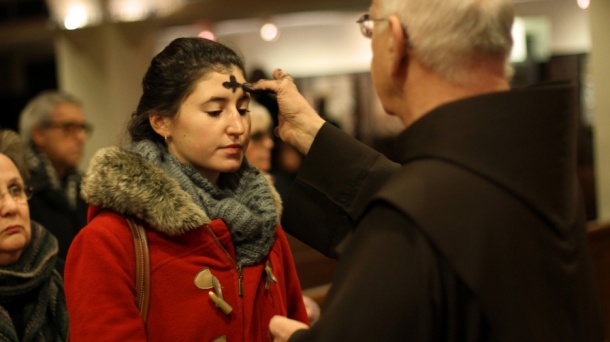
I grew up going to a Lutheran school until 8th grade, and one of the highlights of the year was Ash Wednesday, the first day of the season of Lent:  the 40 days leading up to Easter, which is a time of fasting and self-denial in preparation for Easter. On Ash Wednesday we would have chapel service and would get to walk to the front of the church and have ash put on our foreheads in the shape of a cross. Today as I was out around town, I noticed people with these ash crosses on their heads.

Lent is a tradition which predates all Christian denominations, but today is practiced mainly by Roman Catholic, Anglican/Episcopalian, and Orthodox Christians. However, Lent is more and more popular among evangelical Protestants, some of whom long for connection to the rich history of Christian tradition. I ran across a plethora of articles today from sources like Relevant and Christianity Today recommending that evangelicals would benefit from the practice of Lent. I tend to be inclined this way myself: to appreciate and want to be connected to Christianity’s rich traditions and to embrace the meaningful symbolism.

However, I have changed my thinking in recent years about Lent in particular. In seminary I took a course about the history and development of Christian worship. Here’s what I discovered about the development of Lent:

In the earliest days of Christianity, the time recorded in the Book of Acts, it is clear that new converts to Christianity first came to faith and then were baptized. As time went on, Christians began to feel that it was important that not only faith precede baptism, but instruction also. So they began to require believers to go through a period of instruction in Christian doctrines (catechism) before they could be baptized.

Several early Christian writings indicate that new believers would be baptized on Easter, which from the earliest days of Christianity was the chief Christian celebration. One of these writings that mentions baptisms of new believers being practiced only on Easter is from Tertullian, who argues that baptism need not only be practiced on Easter.

The number 40 held special significance for the early Christians because of the significance of the number 40 in the Hebrew scriptures, and so the 40 days leading up to Easter were the days of preparation, instruction and consecration for those who were getting ready to be baptized on Easter.

Easter itself, for the first 400 years of the church, was a feast that did not last only one day, but which began on Easter Sunday and lasted for 40 days. During that 40 days, people were forbidden from fasting, as well as from kneeling when they prayed, as kneeling is a posture of contrition, and these 40 days were set aside for the express purpose of celebrating the new life, the forgiveness and the redemption that we have because Jesus rose from the grave. It was a 40 day season of joy.

But here’s what changed: in the 4th Century, paedobaptism (child or infant baptism) became the norm. Paedobaptism was already a practice of some churches before that; Tertullian, in his On Baptism (circa 200), mentions that some churches practiced it and others did not, but that it was becoming increasingly popular in his time.

The reasons for the rise of paedobaptism were:

  1. Questions about how those who were born into and raised in Christianity should be initiated into the faith, and how this relates to the Old Testament model of a people in covenant with God.
  2. The emergence of Christendom as Christianity had become the official and dominant religion of the Roman Empire, so to be a citizen of the Empire was equated with being “Christian” and it was presumed that everyone who was a citizen of the empire was a Christian.  This view prevailed throughout the medieval period in Europe and was perpetuated by the magisterial Reformers.
    (I have written more on the subject of Christendom here)
  3. The formulation of the doctrine of ‘original sin’ by Augustine of Hippo, which gave many people a rationale for baptizing infants. The reasoning was that since the Nicene Creed declares that there is ‘one baptism for the forgiveness of sins’, that infant baptism remitted original sin (something Augustine did not teach, but which led to parents wanting to have their babies baptized as soon after birth as possible). Thomas Aquinas also taught that baptism removed the guilt of original sin; however, this teaching was rejected by Luther and other Reformers and is not held by all modern adherents of paedobaptism.

But here’s the issue that paedobaptism brought up in the church: If you baptize babies, then you can’t instruct them before you baptize them, because they’re infants… So what do you do with the 40 day period of consecration and preparation leading up to Easter? Hmm…
Here’s what they did: they decided to make this a time of all believers consecrating themselves to God in preparation for Easter, and catechism was moved to adolescence and paired with a confirmation of one’s faith/baptism.

So, here’s what you had at that point:  40 days of consecration to God before Easter – EASTER – 40 days of celebration of salvation and new life after Easter.

But then, guess what happened with time: We kept one 40 day observance and dropped the other. And which one did we choose? Not the celebration, but the consecration… and over time that consecration became more and more dour and focused on self-denial, penance and contrition.

James White writes:

It is perplexing why Christians have forsaken the season of rejoicing in exchange for the season of penance.

Particularly during the medieval period (and vestiges of this remain in our day in some places and to some degree) some Christians became more obsessed with the process of Jesus’ death – his “passion” – than with the purpose of his death.

Taking this into consideration, I am less inclined to celebrate Lent. I believe that I should consecrate myself to God every day. Romans 12:1 says – I appeal to you therefore, brothers, by the mercies of God, to present your bodies as a living sacrifice, holy and acceptable to God, which is your spiritual worship. 

However, I do believe that the discipline of self-denial is healthy and very much needed for some people, and that setting apart a dedicated time of consecration is both biblical and good.

In the end it gets down to WHY you are practicing Lent. If it is a spiritual discipline through which you draw nearer to God by purposefully setting aside something in order to consecrate yourself in an amplified way for a particular time – then I think that is wonderful and would recommend that you do it.

No matter what – whether you practice it or not – please remember the history, and along with your 40 days of consecration, I encourage you to practice 40 days of dedicated rejoicing in the salvation and new life that Jesus made available to you.

Celebrating what He did for you should take precedence over focusing on what you do for Him.


Advent Meditations: 12 – The Date and Details of Christmas

137199660-e1389118948368

The first Christmas sermon I ever preached was on the topic of whether Jesus was really born on December 25th. My point was that most scholars believe was that Jesus was not born on December 25th, but probably in September, because the shepherds were sleeping outside with their flocks at night, which is not something that would be done in the winter months when it was colder at night. Furthermore, this view is based on the tracking of the stars, which some say would place the North Star in the right place in the sky sometime in autumn.

The first recorded date of Christmas being celebrated on December 25th was in 336AD, during the time of the Roman Emperor Constantine (the first Christian Roman Emperor). A few years later, Pope Julius I officially declared that the birth of Jesus would be celebrated on the 25th December.

Prior to 336AD, December 25th was when pagans celebrated the winter solstice. Constantine took an existing holiday and changed the focus of it and the substance of what was being celebrated. It is remarkable that in the first few hundred years of the church, the main Christian holiday was Easter, when they celebrated the death and resurrection of Jesus. Christmas only began to be celebrated much later on.

However, while that is all interesting information, I somewhat regret having spent the time given me during my first Christmas sermon on this topic. Having had the attention of people on that day, I wish I would not have focused on dates and details, but on the substance of what Christmas is about.

You see – it doesn’t really matter what day we celebrate the birth of Jesus, what matters is the fact of the incarnation. If December 25th is the day that our culture has chosen to celebrate that, then great! I’m happy to celebrate it then or any other time! But if our whole culture is open to talking about it at this time, then what a great opportunity that is to talk about the gospel and the meaning of the incarnation on a day when more people will set foot inside a church than any other day of the year. What matters is not when the incarnation happened, but that it did indeed happen!

There are some people who have a “mentality for the marginal” – a “preoccupation with the peripheral”. They focus all of their time and attention to theories about dates and details, the movement of stars and how exactly the star did lead the magi, or how exactly did the Red Sea split, or how did Jonah survive in the belly of the fish – they are concerned with gathering information on and debating peripheral matters of theology, which are tentative and have very little spiritual significance.

It is not to say that such interests are bad, except when this preoccupation with the peripheral takes one away from a focus on the great central things of the gospel – the holiness of God, the terribleness of sin, the helplessness of man and the love of God; the death of Christ, the resurrection from the dead, justification by faith, the work of the Holy Spirit and the return of Christ and the final judgment. Some people are easily sidetracked from these things by the latest speculations and theories and tidbits regarding things which have little ultimate significance.

What is wonderful about the Christmas story – the story of the incarnation – is that if you will allow it to, it will refocus you onto that which is important. It will help you keep the main things the main things. It re-centers us, by reminding us of the big picture: that the world is under the dark cloud of sin and death, but God, in his love, has sent us a savior: Christ the Lord, who is none other than God himself come to us in  human flesh. And if anyone puts their faith in Him, they will not be put to shame, but they will be saved, justified, forgiven and redeemed, and have life everlasting.


Thoughts on Representative Klingenschmitt’s Comments about the Judgement of God and the Assault in Longmont

Last week Colorado State Representative Gordon Klingenschmitt from Colorado Springs stated on his YouTube channel that the Bible says that the Longmont woman who was assaulted and had her baby cut from her stomach was the wrath of God coming against America because we have failed to protect unborn children. To make this point, he quoted from Hosea 13:16.

Since then, both conservatives and liberals have distanced themselves from Klingenschmitt and he has been removed from at least one comittee that he was a member of.

I went and checked out the statement he made, because I know how sometimes things can be misconstrued when relayed by media – I was curious if that was the case here.

Here are my thoughts:

  1. The one way that Klingenschmitt might have been misrepresented was that he was not saying that God was judging this woman individually, who was the victim of the assault – rather he said that God is judging our soceity in general, and what happened to this woman was part of that judgment.
  2. He quoted from Hosea 13:16, a verse about how both Israel and Samaria would face God’s judgment (in the form of war) as a result of their rebellion against God. The prophet describes what will happen when war comes: no one will be spared; children will die, and even pregnant women will be killed with the sword (cut open).
    This is, first of all, not even talking about the kind of assault that took place in Longmont. Secondly, the important detail in understanding what is being said by the prophet is that judgment will come in the form of war, and in war, these are the kinds of atrocities that happen.
    In other words, it isn’t God saying that He’s going to judge them by sending people to kill their children and cut open their pregnant women, it’s God saying that he will allow a time of hardship by removing His hand of protection and allowing a foreign nation (the Assyrians in this case) to overrun them. Historically, this is exactly what happened. However, in the context of the Book of Hosea, it is important to note that this is said as a warning of the judgment that will come if the people continue in their wickedness and rebellion, and is followed in the next chapter by the urging of Hosea about the blessings and restoration that repentance would bring to the nation instead.
    In other words: “You have a choice to make. It’s not too late! You can choose to continue rebelling against God, in which case God will not protect you from the impending onslaught of the Assyrians (and just to remind you, here are the kinds of terrible atrocities that happen in war…), or you can repent and turn back to the Lord and he will restore you and heal your nation.”
    Conclusion: Klingenschmitt is clearly taking this verse out of context.
  3. The difficult question this brings up is: when do we consider something to be God’s judgment, and when do we not? In the Bible, it seems that many times things happened that were indeed the judgment of God, which, if they were to happen in our day, we might not see them as such.
    For example, in the Old Testament, in Korah’s rebellion, people got swallowed up by the Earth as God’s judgment upon them. Nowadays, if someone gets sucked up in a sinkhole, calling it the judgment of God is not exactly politically correct. In the Old Testament, wars and attacks from foreign nations were often related to God’s judgment. Do we still consider that to be the case? Or how about Ananias and Saphira – they lied to make themselves look good, and God struck them dead. We don’t often think in our day about heart attacks as being God’s judgment on a person. I’m sure that not all heart attacks are God’s judgment on people – but it would seem that sometimes they might be.
    It is incredibly difficult to discern or to say with any amount of certainty which things are God’s judgment and which are not, apart from divine revelation.

My conclusion is that this man is not evil or heartless, but perhaps a bit misguided and could use some lessons in exegesis, because he is very dogmatic about some things which he doesn’t have proper basis to be so dogmatic about. Furthermore, having a platform like the one he does as a State Congressman, he should be much more careful about what he says.

Much more importantly, my heart goes out to the victim of this terrible crime. We pray for her physical and emotional healing. We pray that she will be able to have more children after this. I have been so impressed by her graciousness in her public statements, and we do pray that she would sense the love of God and presence of God and the hope of the Gospel.

Brett Felton: US Veteran Fighting ISIS and Defending Christians in Iraq

60 Minutes aired a report this past weekend on the Christians of Northern Iraq, and how they are being persecuted by ISIS. It is terrible and tragic, and something the whole world needs to hear about. Take a few minutes to read this report. This is an event of historic proportions: books and churches which have existed since the early days of Christianity are being destroyed. A Christian community is being eradicated.

If we think back on the actions of Hitler in Europe and reflect on what Christians should have done, we must open our eyes to realize that something similar is happening in our day in the Middle East to Christians. What will the world do? What can be done?

One American Christian, Brett Felton, came to the conclusion that the right thing for him to do, as a former US soldier who fought in Iraq, was to return there to help the Iraqi Christians defend themselves. 60 Minutes posted this video report about him. Check it out.

Brett is over there, not hunting ISIS, but training the Iraqi Christians on how to defend themselves if and when ISIS attacks, and he is standing beside them to fight if and when that day comes.

What do you think about a Christian taking up arms to fight against ISIS?

ISIS is clearly doing something very evil – something that should not be tolerated from any group of people, no matter who they are persecuting.

Considering the circumstances, and the fact that ISIS is functioning as a military group, terrorizing largely unarmed, untrained civilians, I think that what Brett Felton is doing is praiseworthy – putting his life on the line to help civilians protect their families and their ancient civilization from an evil assailant.

“He LIVED”

Continuing on the topic of George Whitefield, here is more on what Charles Spurgeon, the “Prince of Preachers” – perhaps the single most influential preacher of recent centuries – had to say about him:

“There is no end to the interest which attaches to such a man as George Whitefield. Often as I have read his life, I am conscious of distinct quickening whenever I turn to it. He LIVED. Other men seem to be only half-alive, but Whitefield was all life, fire, wing, force. My own model, if I may have such a thing in due subordination to my Lord, is George Whitfield; but with unequal footsteps must I follow in his glorious track.”

The more I read about Whitefield and his life, the more I desire that by the grace of God I might live like him.

Happy Birthday George Whitefield!

People have often asked where we got the name of our church: White Fields Community Church.
The answer is actually three-fold:
1) In John 4:35, Jesus said, “Look, I tell you, lift up your eyes, and see that the fields are white for harvest.” The name White Fields aligns us with this, and is a statement that we exist to carry out the mission of God and be laborers in His harvest field.
2) The area where we are, North-East Boulder County, is full of wheat fields which turn white at harvest time. The name reflects the area we live in.
3) George Whitefield, the great evangelist of 18th century America, is someone we greatly revere and we want to follow in his footsteps of evangelism and bringing the Gospel to bear on people’s hearts in powerful ways.

Today is George Whitefield’s 300th birthday. He was born in Gloucester, England (where it just so happens that I attend seminary) on December 16, 1714. He later came to America and was used by God as a driving force for the Great Awakening.

Check out this short biography of Whitefield’s life to learn more about him.

“It is a poor sermon that gives no offense; that neither makes the hearer displeased with himself nor with the preacher.”
George Whitefield

Evangelicals’ Favorite Heresies

Christianity Today posted this article about surveys done of evangelical Christians, which revealed how many American evangelicals hold views condemned as heretical by some of the most important councils of the early church.

Here’s the article:

New Poll Finds Evangelicals’ Favorite Heresies: Survey finds many American evangelicals hold unorthodox views on the Trinity, salvation, and other doctrines.

It’s worth reading. Here are a few of the poll results:

The concluding statements were also very insightful and worth taking note of:

Beth Felker Jones, professor of theology at Wheaton College, said, “Orthodoxy is life-giving, and God’s people need access to it.” Participants who gave unorthdox answers are not heretics, but probably lacked quality resources, she said. “Church leaders need to be able to teach the truth of the faith clearly and accurately, and we need to be able to show people why this matters for our lives.”

For Nichols, one way forward in understanding God and ourselves is to consult the historic church. “While slightly over half see value in church history, [nearly] 70 percent have no place for creeds in their personal discipleship,” he said. For Nichols, the church’s knowledge of its past will determine its future. Knowing heresies and how they were overcome, he says, will help the church stay on the right track theologically.

Thoughts?

The King’s Crown

…and twisting together a crown of thorns, they put it on his head and put a reed in his right hand. And kneeling before him, they mocked him, saying, “Hail, King of the Jews!”
– Matthew 27:29

Today is Good Friday, the day on which some 2000 years ago Jesus of Nazareth was nailed to a Roman cross just outside the walls of Jerusalem.

Have you ever wondered why Jesus wore a crown of thorns?

Clearly, the Roman soldiers put it on his head to mock him.  Jesus had been hailed “King of the Jews”,  so the Romans considered him an insurrectionist.

But there is a deeper meaning.

Back in Genesis chapter 3, we read about what happened when sin entered the world. When by their rebellion and disobedience to his commands, people first told God, “we don’t trust you and we don’t want you – we know better than you what is best for us” – as sin entered into the world, it brought with it a curse: the curse of death.

This curse affected all of creation, and amongst the various effects of this curse, we read:

cursed is the ground because of you;
in pain you shall eat of it all the days of your life;
thorns and thistles it shall bring forth for you
– Genesis 3:18

Do you see the symbolism of the crown of thorns?  Thorns, the symbol of the curse of sin and death, were placed upon Jesus’ head because on the cross Jesus was taking our curse upon himself, so that we might be set free from it.

He hung on a wooden cross. Why? Because in his death, he was taking our curse – the curse of sin and death – upon himself.

Christ redeemed us from the curse of the law by becoming a curse for us—for it is written, “Cursed is everyone who hangs on a tree”
– Galatians 3:13

In the same way, the crown of thorns symbolized our curse, which Jesus took upon himself on the cross, so we could be redeemed.

Have a wonderful Good Friday, reflecting on the fact that “It is Finished!”
And don’t forget: Sunday is coming…

Maundy Thursday – The Greatest Servant

Today is Maundy Thursday, the day of Holy Week when Jesus and his disciples celebrated their last supper.

On this day, we read that they rented a room in which to eat the traditional Passover meal, full of symbolism, of which Jesus was the ultimate fulfillment.

Being that people wore open sandals and that the roads were dirt, it meant that if they had been walking around outside, people’s feet were dirty.  Not only were they dirty from dusty roads, but without modern sewage systems, a lot of waste would end up in the streets, adding to the level of grime and filth on a person’s feet after simply going about a day’s business outside. Especially, considering that dinner was eaten sitting on pads on the floor, this foot washing was important because of the close proximity people would be in to each other’s feet – smelly feet ruin appetites.

For this reason, the custom was for people who entered a house to remove their sandals and wash their feet. If you were a guest at someone’s house, usually that foot washing would be taken care of by the host, or if the host could afford it, by a servant.

However, Jesus and his disciples were using a borrowed room, so there was no host to welcome them, and no servant assigned to wash people’s feet.

Luke’s Gospel tells us that as they sat at this dinner table, eating the passover – the disciples began to argue over which of them was the greatest. Presumably, part of this discussion was also to determine which one of them was the least – which one of them should become the servant of all and wash everyone’s feet.

And then something happened which no one expected: Jesus stood up and wrapped a towel around his waist and one by one, he washed the feet of his disciples.

Peter, seeing this, protested! How could he let Jesus serve him?! He should be serving Jesus!   But Jesus told Peter: If you don’t let me serve you, you can have no part in me.

And Jesus explained to them – that if anyone would be the greatest in His Kingdomhe must become the servant of all. In His Kingdom, those who humble themselves are the greatest, and those who exalt themselves will be humbled. Jesus explained: “The kings of the Gentiles exercise lordship over them, and those in authority over them are called benefactors. But it will not be so amongst you. Rather, let the greatest among you become as the least, and the leader as one who serves.”

At another point Jesus had said: “The Son of Man came not to be served but to serve, and to give his life as a ransom for many.”

How are you doing as a servant? Pursue true greatness and be like Jesus: a servant.