The IOC on Religion: Nothing New Under the Sun


One of the things we do at White Fields Church every week is invite people to text or tweet questions during the sermon and then I respond to them on our members’ website called The City. I really enjoy this aspect of it, and I think that such engagement aides in the learning process.

For the past several weeks I have been teaching through Paul’s letter to the Colossians, and what I have found most interesting about it is that the core message of the book is something which is incredibly relevant to our day, which is the uniqueness of the Christian gospel as it relates to every other religion and philosophy in the world.

When you look into the culture of the Roman Empire, interestingly what you find is a society which was very similar to modern Western society in many ways. It was a pluralistic society, a multi-cultural, multi-ethnic society, in which there was freedom of religion – and yet… the prevailing notion was that in order for there to be peace in a mixed society, no one should say that their tradition or religion was any better or more true than anyone else’s – only that it was different. Furthermore, a person’s religion or tradition was considered to be something they were born into rather than something they had a responsibility to choose for themselves, and therefore it was considered taboo, rude and even wrong to try to “convert” someone to another religion than that which they were born into or brought up in.

Now, if that doesn’t sound familiar to our day and age, then you should check your pulse.

I discussed this in more detail this past Sunday. If you’re interested, check out the audio of that message here.

In response to that teaching, a member of our church texted in:

The unifying/melting pot of religions that Paul is warning the Colossians about in today’s passage is the same message delivered by the president of the IOC at the opening of the Olympic Games. It’s clear that making exclusive claims about right or wrong in regard to religion is frowned upon internationally.

I unfortunately missed the opening ceremony of the Rio Olympics, and have not been able to find a way to watch the whole thing online – if anyone knows a way, please let me know!

Although I am not surprised by this, I am surprised by the naivety in thinking which it represents. For educated people to say that no one should make exclusive claims is to ignore the fact that EVERYONE makes exclusive claims, including the people who say that you should not make exclusive claims. For example, if you say that it is wrong to say that something is wrong, you are doing the same thing which you are claiming should not be done. I only wonder if this overlooking of the obvious is sincere/naive in nature, or it is it a willful ignorance for the sake of pragmatism; in this case that everyone would just get along. Either way, to make such a claim reveals a sort of patronizing disregard for the validity of the claims of any and all religious beliefs, which is itself a form of judgment about them… Oh the irony…

Don’t fall for this underdeveloped, recycled logic. We can absolutely live in a free society where honest and open dialogue of the validity of certain ideas, traditions, practices and beliefs exists.


Evangelism and Street Witnessing Now Illegal in Russia

From Assemblies of God and Christianity Today:

Late on the afternoon of July 7, Russian President Vladimir Putin signed into law legislation against terrorism and extremism. An amendment in this law restricts religious practice in a way that is considered the most restrictive measure in post-Soviet history.

The amendments, including laws against sharing faith in homes, online, or anywhere but recognized church buildings, go into effect July 20.

Christians wishing to share their faith must secure government permits through registered religious organizations. Even with such permits, they will not be allowed to witness anywhere besides registered churches or religious sites. Churches that rent rather than owning their facilities may be forcibly disbanded.

This decision will severely restrict missionary work and the ministry of local churches in Russia.

Proposed by United Russia party lawmaker Irina Yarovaya, the law appears to target religious groups outside the Russian Orthodox church. Because it defines missionary activities as religious practices to spread a faith beyond its members, “if that is interpreted as the Moscow Patriarchate is likely to, it will mean the Orthodox Church can go after ethnic Russians but that no other church will be allowed to,” according to Frank Goble, an expert on religious and ethnic issues in the region.

If passed, the anti-evangelism law carries fines up to US $780 for an individual and $15,500 for an organization. Foreign visitors who violate the law face deportation.

Russia has already moved to contain foreign missionaries. The “foreign agent” law, adopted in 2012, requires groups from abroad to file detailed paperwork and be subject to government audits and raids. Since then, the NGO sector has shrunk by a third, according to government statistics.

Sergey Ryakhovsky, head of the Protestant Churches of Russia, and several other evangelical leaders called the law a violation of religious freedom and personal conscience in a letter to Putin posted on the Russian site Portal-Credo.

“If it will come to it, it’s not going to stop us from worshiping and sharing our faith,” wrote Sergey Rakhuba, president of Mission Eurasia. “The Great Commission isn’t just for a time of freedom.”

Pray for the believers in Russia and for the missionaries who go to serve there.

Street witnessing was illegal in the first century, in the time of the Book of Acts, as were Christian gatherings. Such restrictions only caused the church to grow!

Please join me in praying for the gospel to spread throughout Russia despite these restrictions, and for the believers there to be emboldened to share their faith whatever the cost.

Vacation and Russian Novels

For the past week we have been on vacation in California. For the first week of it we were in Orange County where I attended the Calvary Chapel pastors conference in Costa Mesa. Rosemary and the kids spent time with friends and at the beach, and Rosemary was able to attend some parts of the conference as well. The conference was refreshing; a great time of focusing on the Lord and recentering as well as reconnecting with friends from all over the world. 

After that we went down to North San Diego and visited friends and family there, and then came to Los Angeles to stay with family. We’ll be back in Colorado for church on Sunday.

Overlooking Los Angeles from the Griffith Observatory in the Hollywood hills 

One of the books I’ve been reading on vacation is Dostoyevsky’s The Brothers Karamazov. Several years ago I read Crime and Punishment and it became one of my favorite books. I think Dostoyevsky was a brilliant writer, particularly how he developed characters and got inside their minds.
What was interesting about Crime and Punishment was that it wasn’t only a novel so much as it was a platform for Dostoyevsky’s view of human anthropology – in other words: what makes us tick. What I found even more interesting, as I looked more into Russian literature from that time period, was that the other great Russian author, Tolstoy, did the same thing with his novels, but he had distinctly different views. 

Tolstoy was a pacifist, who considered himself a Christian, but didn’t want anything to do with church in any way. In fact, the more you get to know his views, you realize that he was extremely legalistic and held many strange interpretations of Biblical passages. For example, Tolstoy said that since Jesus said in the Sermon on the Mount: “Do not resist an evil person” (Matthew 5:39), that means that we should not even have police, because the role of the police is to resist evil people. What he was arguing for was beyond pacifism to a form of anarchy, which was based on his fundamental belief in the basic goodness of humankind: that left to our own devices, with no outside intervention, people would trend towards good rather than evil, and that the trajectory of the human race is towards greater virtue, peace and harmony. Tolstoy’s views were a major influence on Ghandi and others.

Dostoyevsky on the other hand, did not share Tolstoy’s views about humanity. Dostoyevsky considered himself a serious Christian, something which is very apparent in his writing, and he held much more traditional (and biblical) views about the nature of humankind and what makes us tick. 

In Crime and Punishment, for example, the main character is a university student who ends up killing the older woman he lives with. The popular thinking at the time (and still in our time as well) was the Englightenment theory that people are basically good, and that when people do things that are wrong, the reason they do them is either because of lack of education or because of poverty. Thus, the thought is that if you can educate people and bring them out of poverty, then crime and violence, as well as racism and hatred will cease to exist. The Bible does not agree with this theory, and says that the reason people do bad things, is because we are sinful and broken, and sin doesn’t just affect us, but it dwells within us, it is part of our very core. We weren’t designed by God to be this way, and it is for this reason that Jesus came, to redeem us from the curse of sin and death. But apart from redemption, all people are sinful, which is the reason we do sinful things. 

If there is any question about this, Nazi Germany is a perfect case study of how the most educated society in the world, which was well off economically, committed some of the worst atrocities the world has ever seen. If the Englightenment theory was true, that shouldn’t have happened, but the Biblical view would say: educated and rich people are still sinners, they’re just educated and rich sinners. What all people need is a new heart, something which can only be found in and through Jesus Christ.
In Crime and Punishment the main character is an educated young man who kills his landlord simply because he wants to, because he’s curious what it will be like, and then he justifies his actions to himself. Why do people do bad things? Because sin dwells within us, rich or poor, educated or uneducated, Dostoevsky would say.

I am only 20% of the way through The Brothers Karamazov, but am very much enjoying it. It tells the story of a father and his 3 sons, actually 4 – as one of the servants is also the son of the man. The father is a foolish and base man, his oldest son is similarly base, but at least has a sense of conscience which his father seems to lack. The second son is an intellectual and considers himself an atheist, but is torn because he realizes that if there is no God and no afterlife and no Heaven or Hell, then there is no meaning to life. The third son is an apprentice monk at the local monastery, where he studies under a devout elder. There is another elder at the monastery who is crazy, and somehow in his derangedness is more popular with the people than the devout and humble  elder who actually says a lot of things which are good and biblical.

One of the points that Dostoyevsky is making in the book is that the life of sincere Christian faith put into practice is the truly good life. Through the characters he is showing the results of a life of sin and the meaninglessness and pain of life apart from God and encouraging the reader to forsake sin and turn to God.

At least that’s what I’ve gotten out of it so far. I’ll let you know if anything changes!

Here are some excerpts:

“Love God’s people, let not strangers draw away the flock, for if you slumber in your slothfulness and disdainful pride, or worse still, in covetousness, they will come from all sides and draw away your flock. Expound the Gospel to the people unceasingly. Do not love gold and silver. Have faith. Cling to the banner and raise it on high.”  – Father Zossima, the humble and sincere elder to Alyosha, the third son who is a Christian

“Remember, young man, unceasingly,” Father Païssy began, without preface, “[humanism], which has become a great power, has, especially in the last century, analyzed everything divine handed down to us in the holy books. But they have only analyzed the parts and overlooked the whole, and indeed their blindness is marvelous. Yet the whole still stands steadfast before their eyes, and the gates of hell shall not prevail against it. Has it not lasted nineteen centuries, is it not still a living, a moving power in the individual soul and in the masses of people? It is still as strong and living even in the souls of atheists, who have destroyed everything! For even those who have renounced Christianity and attack it, in their inmost being still follow the Christian ideal, for hitherto neither their subtlety nor the ardor of their hearts has been able to create a higher ideal of man and of virtue than the ideal given by Christ. When it has been attempted, the result has been only grotesque.

What Makes Someone a Missionary?

I spent 10 years in Hungary as a missionary. I had a visa and several legal papers for my residence there which stated on them that I was a missionary. Furthermore, I was sent out and supported by a number of churches who supported as a missionary.

This having been the case, I have put a lot of thought over the years into what it is that makes someone a “missionary”. 

I remember working alongside Hungarians in Hungary, doing the same work – and yet I carried the title of missionary, and they were just Christians who were serving the Lord. Every now and then, some of them would say that they too were missionaries then, since they were doing the same work. But what about the other Christians in Hungary who were not with our organization, who did similar work? Were they also missionaries? They didn’t seem to covet that title, but were content to consider their service simply completely normal Christian behavior.  Some Hungarians we worked with received financial support from churches in the West so that they could serve full time at a church. Did that make them missionaries, even though they were serving in their home country or culture?

Some missions organizations use the term “native missionaries” and raise funds in wealthier countries to support national workers who already know the culture and language of a place. The idea is that with the proper training and some financial support to free them up to do the work, these local Christian workers will be able to reach the places where they live more effectively than foreign missionaries. This is especially popular in countries which do not give visas to foreign missionaries. Is the word “missionary” appropriate in this case? 

What makes someone a missionary?

One time when my wife and I had come back from Hungary to visit family and supporters, we were in Carlsbad, CA, and at the beach some young people, probably in their early 20’s,  approached us and started talking about Jesus. They were evangelizing – and when we told them we were Christians, they told us that they had come from somewhere in the Midwest as missionaries to California. They hadn’t been sent by any church community, but believed they were called and so they had come. Does that make you a missionary?

When I moved to Longmont I knew some people who said that they were missionaries to Longmont, and raised support for their living expenses and various ministry endeavors, so that they could be free to pursue these things full-time. These particular people had grown up in Longmont and felt called to serve God in their hometown. 

What makes someone a missionary?

Something that has often been proclaimed in evangelical circles is that all Christians are called to be “missionaries” and that the work of missionaries is not something which only needs to happen in far off places with developing economies, there is need for evangelism and outreach in wealthy countries, including the United States as well. One bookmark I saw said: “You don’t have to cross the ocean to be a missionary, you just have to cross the street.”

So what are we to make of all of this? What makes someone a missionary?

A little etymology helps to sort things out:

Missio = send. Thus, to be a missionary is to be someone who is sent.

There is a sense in which all Christians have been sent by Jesus to carry out his mission, which he received from the Father, in his mission field, which is the entire world.

“”For God so loved the world, that he gave his only Son, that whoever believes in him should not perish but have eternal life.” – John‬ ‭3:16‬ ‭ESV‬‬

“As you sent me into the world, so I have sent them into the world.” – ‭John‬ ‭17:18‬ ‭ESV‬‬

“Jesus said to them again, “Peace be with you. As the Father has sent me, even so I am sending you.” – ‭‭John‬ ‭20:21‬ ‭ESV‬‬

However, some are sent and supported by a local body of believers, led by a sense of calling from God, like Paul and Barnabas in Acts ch 13. It is clear from the Book of Acts, that Paul had an ongoing relationship with his “sending church” in Antioch, returning there after each of his missionary journeys. It seems there there was an accountability, and probably some degree of financial support from the church there which had sent Paul out. 

Here’s how I sort it out: All Christians are called by be “on mission” with God, in his mission field, which is the entire world. In fact, to be on mission is an essential and inherent part of what it means to be a Christian. Therefore, it should be normal for all Christians to do the work of a missionary wherever they live, whether it is their home or not. This is the NORMAL Christian life.

And yet, I feel that we should preserve the significance of the word “missionary” for those who are sent out on a mission by a local body of believers to another place, following the leading of God. There is a way in which to use the word missionary to loosely diminishes the sacrifices and the unique challenges faced by those who leave home and country and follow God’s leading to go to another place, having had a local body of believers confirm this by sending them out. Similarly, there is a way in which the concept of the priesthood of all believers can be taken to a degree which detracts from the significance of a calling to be a pastoral overseer. While we are all called to minister and we are all called to be on mission, these titles point to particular roles.

There is an interesting place in Paul’s second letter to Timothy, where Paul tells Timothy: “Do the work of an evangelist.” (2 Timothy 4:5)  Paul, in Ephesians 4, mentions the “office” or official role in the church of “evangelist” – in other words, it seems that there were some people in the church who had this title. However, it would seem that even though this was not Timothy’s official title or role, Paul was encouraging him to do the work of an evangelist nonetheless. 

I believe the same applies in regard to the discussion of the term “missionary” or “pastor”. If you are a Christian, you may not be an officially sanctioned “missionary” – but you are called to do the work of a missionary nevertheless! You may not be a pastor, but you are still called to do the work of a pastor in your interactions with other people.

The Impact on Kids of Dad’s Faith and Church Attendance

Dream Lake landscape  Rocky Mountain National Park

According to LifeWay Research Group, Fathers Day is the holiday with the single lowest average church attendance – statistically lower than Labor Day, Memorial Day and even the Fourth of July.

This is interesting, especially when you consider that Mothers Day tends to be the day with the third highest church service attendance, after Easter and Christmas.

So, Mothers Day is one of the most highly attended Sundays of the year, and Fathers Day is one of the lowest. What does this tell us?

Scott McConnell, director of LifeWay Research, gives this assessment:

“Clearly, mothers want to be present for the affirmation that is typically offered in most churches, but families also are present knowing their attendance will honor their mother.

The attendance difference between Mothers Day and Fathers Day is telling,” said McConnell. “Either churches are less effective in affirming fathers, or families believe Christian fathers don’t value their participation in worship services.”

Surely there are other factors involved, including travel and the time of year. On Mothers Day school is still in session, on Fathers Day it isn’t – so families travel to visit relatives, or go on vacation.

But all these factors and statistics aside, here’s what’s really striking: when you see the research on the impact of a dad’s faith and practice on their families.

According to data collected by Promise Keepers and Baptist Press, if a father does not go to church, even if his wife does, only 1 child in 50 will become a regular worshiper. If a father does go regularly, regardless of what the mother does, between two-thirds and three-quarters of their children will attend church as adults. If a father attends church irregularly, between half and two-thirds of their kids will attend church with some regularity as adults.

If a mother does not go to church, but a father does, a minimum of two-thirds of their children will end up attending church. In contrast, if a father does not go to church, but the mother does, on average two-thirds of their children will not attend church. 

Another study, focused on Sunday School, found similar results on the impact of fathers:

  • When both parents attend Bible study in addition to the Sunday service, 72% of their children attend Sunday school when grown.
  • When only the father attends Sunday school, 55% of the children attend when grown.
  • When only the mother attends Sunday school, 15% of the children attend when grown.
  • When neither parent attends Sunday school, only 6% of the children attend when grown.

Another survey found that if a child is the first person in a household to become a Christian, there is a 3.5% probability everyone else in the household will follow. If the mother is the first to become a Christian, there is a 17% probability everyone else in the household will follow. However, when the father is first, there is a 93% probability everyone else in the household will follow. 

Here’s the point of all these statistics: Dad’s impact on the kids’ faith and practice is HUGE.

Dads, let me encourage you with these words which Moses spoke by the inspiration of the Holy Spirit to the dads of the new generation in Deuteronomy:

And these words that I command you today shall be on your heart. You shall teach them diligently to your children, and shall talk of them when you sit in your house, and when you walk by the way, and when you lie down, and when you rise. You shall bind them as a sign on your hand, and they shall be as frontlets between your eyes. You shall write them on the doorposts of your house and on your gates. (Deuteronomy 6:6-9)

Playing Harps in Heaven? Don’t be Ridiculous

I have been reading CS Lewis’ Mere Christianity along with the men’s group at White Fields Church. I first read the book 18 years ago, and reading it again has been like reading it for the first time.

I came across this quote in the book, which I thought was excellent, in regard to the Christian belief in Heaven:

There is no need to be worried by facetious people who try to make the Christian hope of ‘Heaven’ ridiculous by saying they do not want ‘to spend eternity playing harps’.

The answer to such people is that if they cannot understand books written for grown-ups, they should not talk about them.

All the scriptural imagery (harps, crowns, gold, etc.) is, of course, a merely symbolical attempt to express the inexpressible. Musical instruments are mentioned because for many people (not all) music is the thing known in the present life which most strongly suggests ecstasy and infinity. Crowns are mentioned to suggest the fact that those who are united with God in eternity share His splendour and power and joy. Gold is mentioned to suggest the timelessness of Heaven (gold does not rust) and the preciousness of it. People who take these symbols literally might as well think that when Christ told us to be like doves, He meant that we were to lay eggs.

Lewis, C. S. Mere Christianity (p. 137).

I love his line about if you can’t understand a book written for grown-ups, then you shouldn’t be talking about it!

He says in another place in the book:

Very often a silly procedure is adopted by people who [oppose] Christianity. Such people put up a version of Christianity suitable for a child of six and make that the object of their attack.

When you try to explain the Christian doctrine as it is really held by an instructed adult, they then complain that you are making their heads turn round and that it is all too complicated.

It is no good asking for a simple religion. After all, real thing are not simple.

Lewis, C. S. Mere Christianity (p. 41).

I have found this to be true – not only in regard to discussions about Christianity, but in many debates about many things. People put up a caricature of the other person’s views and then proceed to destroy them. This is sometimes called a “straw man argument”.

It is important that we should not allow people to do that with Christian beliefs, and also that we should not do the same with other people’s beliefs. This is sometimes called “Presuppositional Apologetics” – the idea that you should try to frame the views of your “opponent” in such a way, that they would say, “I couldn’t have put it better myself.”

As Timothy Keller put it recently:


Done with School, and a Few Other Things

I love finishing projects that I start. The only thing is, I also really like starting projects. So I sometimes find myself with several long term projects – but over the past few weeks I've been able to finish up a few of them.

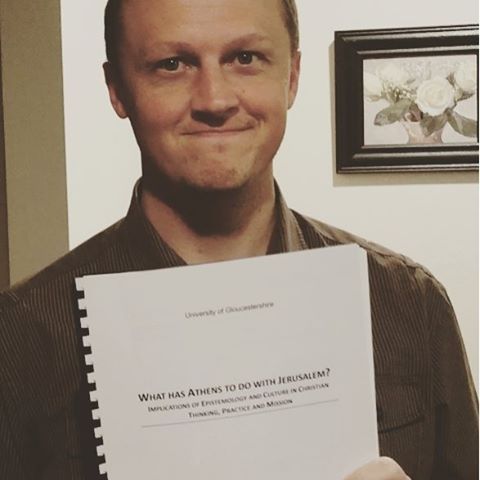
For the past several months I was very busy finishing my dissertation for my theology degree. I started at this university when my first child was the same age as my current youngest child: 5 months old. Now, in completing my dissertation, I am done – at least for now… I would like to continue.

The title of my dissertation: What has Athens to do with Jerusalem? Implications of Epistemology and Culture for Christian Thinking, Practice and Mission

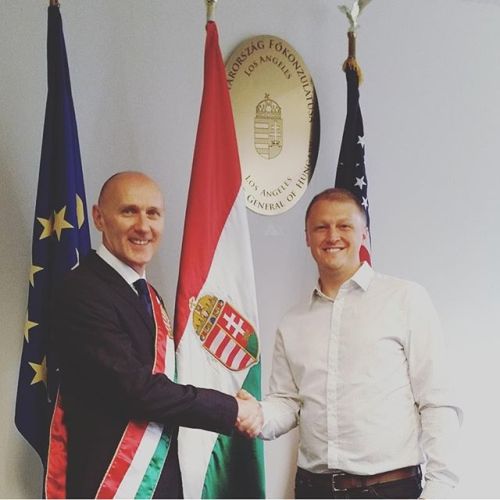
Another thing I've been working on for a while that I was able to complete: During the 10 years that I lived in Hungary I spent a lot of time getting different kinds and levels of residence permits and visas. By the time I left I had permanent residence and a work permit, which I gave up when I moved to the US. No big deal, because I have no plan to move back. But about 2 years ago a friend in Hungary told me that I should look into becoming a Hungarian citizen and that I might meet the requirements for citizenship. I looked into it, and I did – so, a year ago I applied for Hungarian citizenship, and I just found out 2 weeks ago I received it. Last week I traveled to Los Angeles for my naturalization ceremony at the office of the Hungarian Consulate.

Receiving my Hungarian citizenship from Kálmán László, consulate general of Hungary.

I'm not really sure how it will benefit me, but it is meaningful nonetheless. My wife and kids are Hungarian citizens, and I does encourage me to spend more time making sure the kids learn Hungarian and have that identity.

Another long term project we've been working on is getting out of the debt we incurred from the adoption we did. It's been an exercise in budgeting, downsizing and penny pinching, inspired by a Dave Ramsey class, and at the end of June we will have that project complete as well.

I've also finished a few books recently:

The men's group at our church has been going through Mere Christianity by CS Lewis, following a study guide and video series by Eric Metaxas. A lot of the videos refer to Lewis' autobiography, Surprised by Joy, so I picked it up and started reading it. In it, Lewis tells the story of how he became an atheist and then the process by which he turned from atheism to deism and finally to Christianity. “Joy”, spelled with a capital J, is the thing which all people are looking for and get glimpses of throughout their lives in various ways, but which can only be found in and through a relationship with God through Jesus Christ.

Sounds interesting, right? I have to say, Surprised by Joy left me surprised with boredom. I had a really hard time getting through the book, and felt that a lot of the material was indulgent details which had nothing at all to do with the story he was telling. That part though, the story of his journey from a nominal Christian upbringing, to atheism, to deism and finally to Christianity, was truly captivating. The last chapter was particularly good. It's worth reading if you are a CS Lewis fan.

The other book I finished recently was John Steinbeck's The Winter of Our Discontent. I heard somewhere that it is good to read fiction because it fuels creativity and imagination in a way that other media does not. I read a lot of non-fiction, particularly theology books and biographies, and so I want to make sure that I read some good fiction from time to time as well and I have it in mind to read classic novels and literature.

The Winter of Our Discontent was interesting, particularly in how it dealt with moral and ethical issues, as well as issues of contentment, and pressures in society which create dissatisfaction. The novel describes how people often cross their own moral and ethical lines to get what they think they want, and when they get it, they are still discontent and often more miserable that they were before. I think it's a great commentary on society and on the fallen human condition.

Ironically, The Winter of Our Discontent and Surprised by Joy have their core theme in common. The only difference is that whereas Steinbeck didn't answer the question of what it is that human beings are ultimately looking for: the true quest beneath all our quests, Lewis did. And although Lewis' writing style is harder to read, Surprised by Joy actually answers the question posed by The Winter of Our Discontent.


I'm enjoying this season.


Don’t be Decaf

decaf-caffeine

“You are the salt of the earth, but if salt has lost its taste, how shall its saltiness be restored? It is no longer good for anything except to be thrown out and trampled under people’s feet.
“You are the light of the world. A city set on a hill cannot be hidden. Nor do people light a lamp and put it under a basket, but on a stand, and it gives light to all in the house. In the same way, let your light shine before others, so that they may see your good works and give glory to your Father who is in heaven.”   – Jesus
(Matthew 5:13-16)


Was Paul Suicidal?

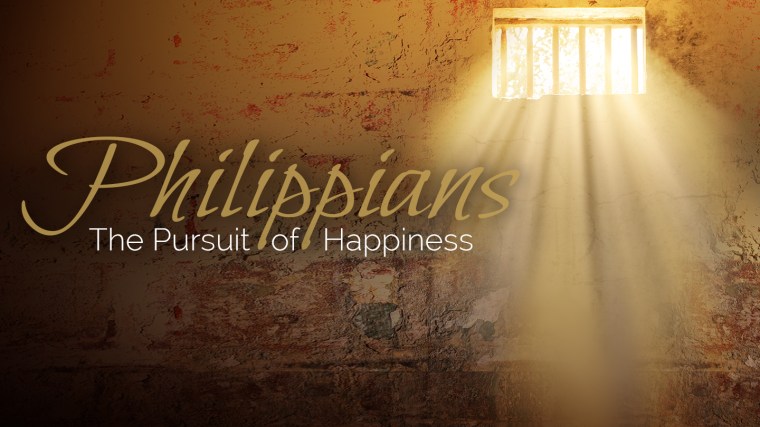
Recently at White Fields I have been teaching through Paul’s Letter to the Philippians in a study titled, The Pursuit of Happiness.

This past Sunday I taught on Paul’s famous saying: “For me to live is Christ and to die is gain” – and I explained how the gospel gives new meaning to our lives and it redefines what death means for us. Audio of that message can be found here.

In that sermon, I didn’t get to what Paul says after that famous phrase. Here’s the rest:

For to me to live is Christ, and to die is gain. If I am to live in the flesh, that means fruitful labor for me. Yet which I shall choose I cannot tell. I am hard pressed between the two. My desire is to depart and be with Christ, for that is far better. But to remain in the flesh is more necessary on your account. Convinced of this, I know that I will remain and continue with you all, for your progress and joy in the faith, so that in me you may have ample cause to glory in Christ Jesus, because of my coming to you again. (Philippians 1:21-26)

A reader of this blog sent me a message this week about this passage:

I have always wondered if Paul was experiencing a period of depression when he wrote this epistle. What he says in verse 1:22, “yet what I shall choose I cannot tell” even makes me consider that he was in some ways considering “suicide”. I know that sounds preposterous, and I’m not suggesting that he actually thought of killing himself but rather maybe purposely doing something that would result in his death. In todays world it might be called “suicide-by-cop”. It seems as he continues through the remainder of the chapter that he convinces himself that it is better to remain for the benefit of others. It could be that he was just experiencing a time when his death seemed imminent and he was preparing the readers for that eventuality, but I think that he was experiencing a great amount of stress during this time. As always, he was able, through the Spirit, to overcome his stress and turn it into a beautiful, encouraging letter. I believe it probable that all men of great faith experience times of doubt or fear brought on by the enemy.

That’s an interesting thought. Certainly Paul was facing dire circumstances, and I fully agree with the final sentence, but I wouldn’t go so far as to agree that Paul might have been having suicidal thoughts – even to the degree of doing something that might provoke someone else to kill him.

To me, the tone of the letter is one of triumph in the face of harsh circumstances, even death.

I believe that what’s going through Paul’s mind as he writes those words is that he wants to explain something important to the Philippians: That although as Christians, the ultimate hope of the Gospel is the hope of eternal life in paradise with God, that should never minimize the purpose that God has for our lives here on Earth.

This seems to have been a problem amongst some of the early Christians. 2 Thessalonians was written, in part, to let the Christians know that Jesus had not yet returned, that the Parausia, the Second Coming, was still to come – but that as we await Jesus’ imminent return, we should not be inactive;  we should still work hard. That’s why he says:

If anyone is not willing to work, let him not eat. For we hear that some among you walk in idleness, not busy at work, but busybodies. Now such persons we command and encourage in the Lord Jesus Christ to do their work quietly and to earn their own living. (2 Thessalonians 3:10-12)

The context of that, is that the Thessalonians were eagerly expecting the return of Jesus any day – as all early Christians did, and as it seems that Jesus intended all Christians to do, which is the reason for his vagueness about when his return will take place.

The point is this: We should not have a Christianity in which we encourage people to just believe in Jesus and then hang on and wait for death! I think Paul wanted to Philippians to understand that: that Christianity isn’t only about going to heaven when you die, it’s about living this life for Christ – as much as, and as long as possible.

It’s not only that because of the Gospel, DEATH IS GAIN – but also: because of the Gospel, TO LIVE IS CHRIST!

Another reason why I think Paul was not discouraged when he wrote to the Philippians is because he closes the letter by saying:

Greet every saint in Christ Jesus. The brothers who are with me greet you. All the saints greet you, especially those of Caesar’s household. (Philippians 4:21-22)

What this means is that members of Caesar’s household, including the Praetorian Guard (members of which were chained to Paul 24 hrs a day in 6 hr shifts), were becoming Christians through his being there in jail. I think Paul was feeling particularly encouraged after facing years of discouragement prior to this. Finally he was starting to see some fruit and the purpose for which God must have allowed this series of terrible difficulties and injustices happen to him. Many of us may never get to see that in our difficulties, but when we do it helps to encourage us that God is indeed in control and using all of the frayed strands to create a beautiful tapestry.


The Pursuit of Happiness

bible.jpg

The Declaration of Independence contains this famous phrase:

We hold these truths to be self-evident, that all men are created equal, that they are endowed by their Creator with certain unalienable Rights, that among these are Life, Liberty and the pursuit of Happiness.

Happiness is what all people are ultimately seeking.  Including you. Including me. You want to be happy. So do I.

If you really think about it, everything we do is, in one way or another, a pursuit of happiness.

The pursuit of happiness is what motivates people to get married – or not to get married, to have children or not to have children, to choose certain careers or paths in life and not others. It is the reason people abuse substances – and even, as strange as it may sound at first, to commit suicide.

Philosopher and scientist Blaise Pascal said:

All people seek happiness. This is without exception. Whatever different means they employ, they always tend towards this end. The cause of some going to war and of others avoiding it is the same desire in both, attended with different views. The will never takes the least step but to this object (happiness). This is the motive of every action of every man, even of those who hang themselves.
Suicide is the (very misguided!) belief, that one can escape unhappiness here in this life and hopefully find happiness wherever they end up. Still, even this terrible and tragic act is part of the pursuit of happiness.
Sometimes Christians have made a false distinction between happiness and joy. Here is what Joni Eareckson Tada has to say about that:
We are often taught to be careful of the difference between joy and happiness. ‘Happiness,’ it is said, ‘is an emotion which depends on what happens to you (a false etymology).’ Joy, by contrast is supposed to be enduring, stemming from deep within our soul, and which is not affected by circumstances surrounding us. I don’t think God had any such hairsplitting in mind. Scripture uses the terms interchangeably along with words such as “delight” “Gladness” “blessing” – There is no scale of relative spiritual values applied to any of these. Happiness is not relegated to fleshly minded sinners nor joy to heaven-bound saints.

If you ask the average person what they want more than anything else, they will reply:  “I want to be HAPPY!”   “It’s not the only thing I want — but it is at the core of the other things I want.”

If you ask people: “What do you really want for your kids?”  They will say: “I want them to be polite, respectful, successful, responsible” — but why?  Because what they really want is for them to be happy.  The reason they want all those other things for them, is because they believe those things will result in their greater happiness in the long run.
C.H. Spurgeon said this:
My dear brothers, if anyone in the world ought to be happy, we are those people. How boundless our privileges, how brilliant our hopes.
As Christians, in and through Jesus Christ, we have the keys to the happiness we desire and the joy we were made for.
Starting this Sunday at White Fields Church, I will be teaching a series titled: The Pursuit of Happiness, in which we will be studying Paul’s letter to the Philippians with a view of how Paul had the keys to happiness and an indomitable joy even in the midst of dark circumstances.
The graphic art above was done by CryBabyDesign. Check them out for all your graphic design needs.