This March, my trip to Hungary to visit, encourage, and support our friends and co-laborers in the gospel from Ukraine coincided with the 10 year anniversary of me leaving Hungary to move to Colorado.
On Women’s Day, March 8, 2012, we left the beautiful city of Eger, where all of our kids (up until that point) had been born, and boarded a flight bound for Germany, on route to San Diego.
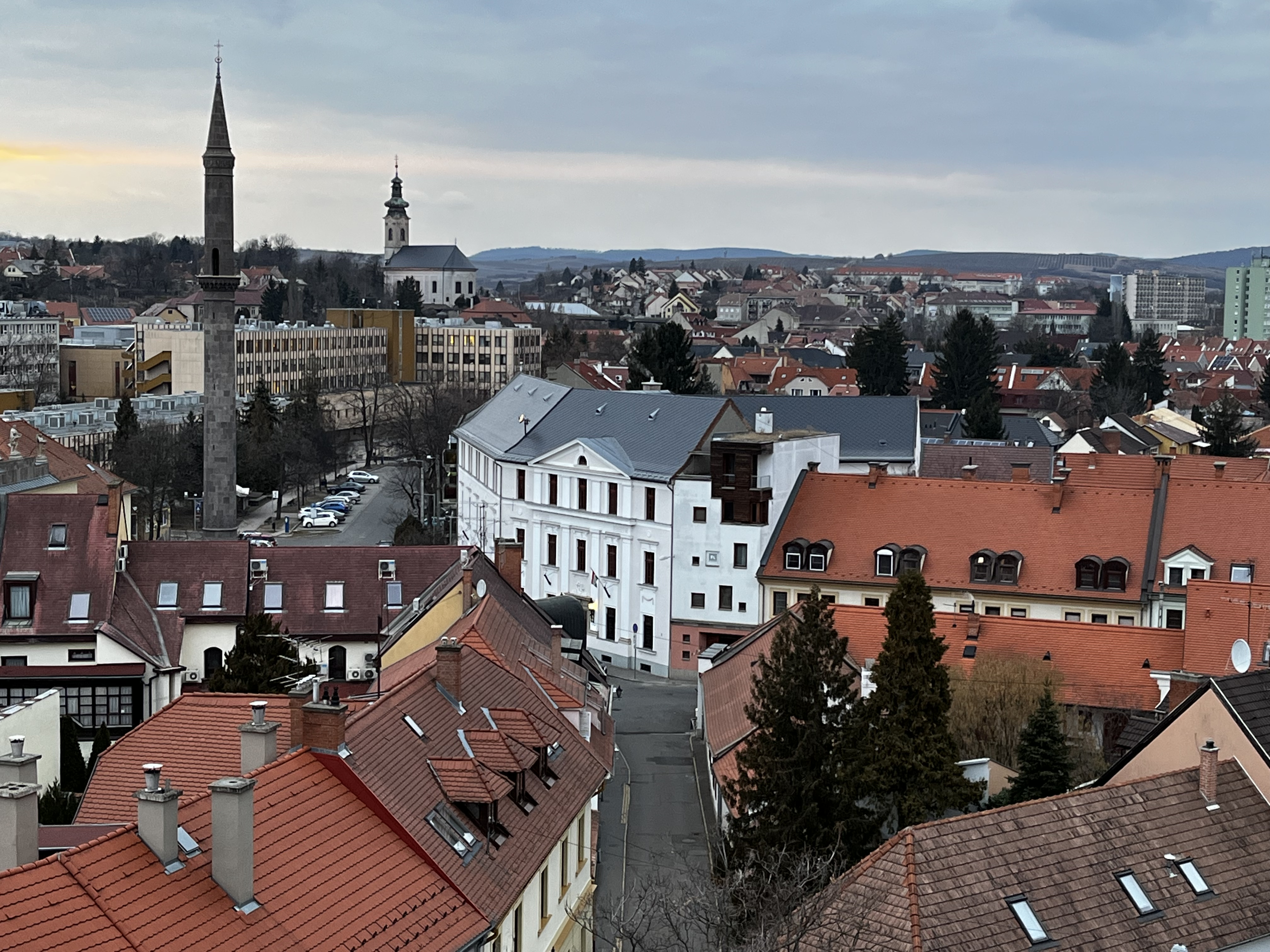
Eger, looking north from the city center. The minaret is the northern-most Turkish minaret in Europe, and the long yellow building behind it is where my kids were born. The church on the hill is a Serbian Orthodox Church; we started the Eger church in the neighborhood next to it.
We left part of our hearts there. People often ask me if I miss living in Hungary, and the answer is: Yes, I miss it so bad it hurts, every day. This isn’t to say that I’m not content where I am, or that I am planning to move back – it’s just the truth. I spent my entire adult life in Hungary up until we left. When we moved to Colorado, I had never been an adult in America before, and there was a learning curve, for sure.
Not only did we leave behind our beloved city, more significantly, we left behind a ministry we loved: one we started and nurtured.
We moved to Eger in 2005 with a vision to start a church which would be self-sustaining, that would be focused on evangelism and discipling those who became Christians through our outreaches, and we hoped that someday that church would have a Hungarian pastor, preferably someone who had been raised up through our ministry. Additionally, we hoped to start a “daughter church” out of that church, and to take the people of that church on mission trips themselves.
By God’s grace, all of these dreams came to fruition.
In January 2012, I handed over leadership of the Eger church to Jani, and he celebrated his 10 year anniversary as pastor earlier this year.
I had the opportunity to preach at the church when I was there this year, exactly 10 years to the week of my departure. I preached in Hungarian, which I miss doing.
The church recently moved into a new location, about 2 blocks from where they used to meet, and still in the heart of the city center, right on the main walking street, with a balcony overlooking it.
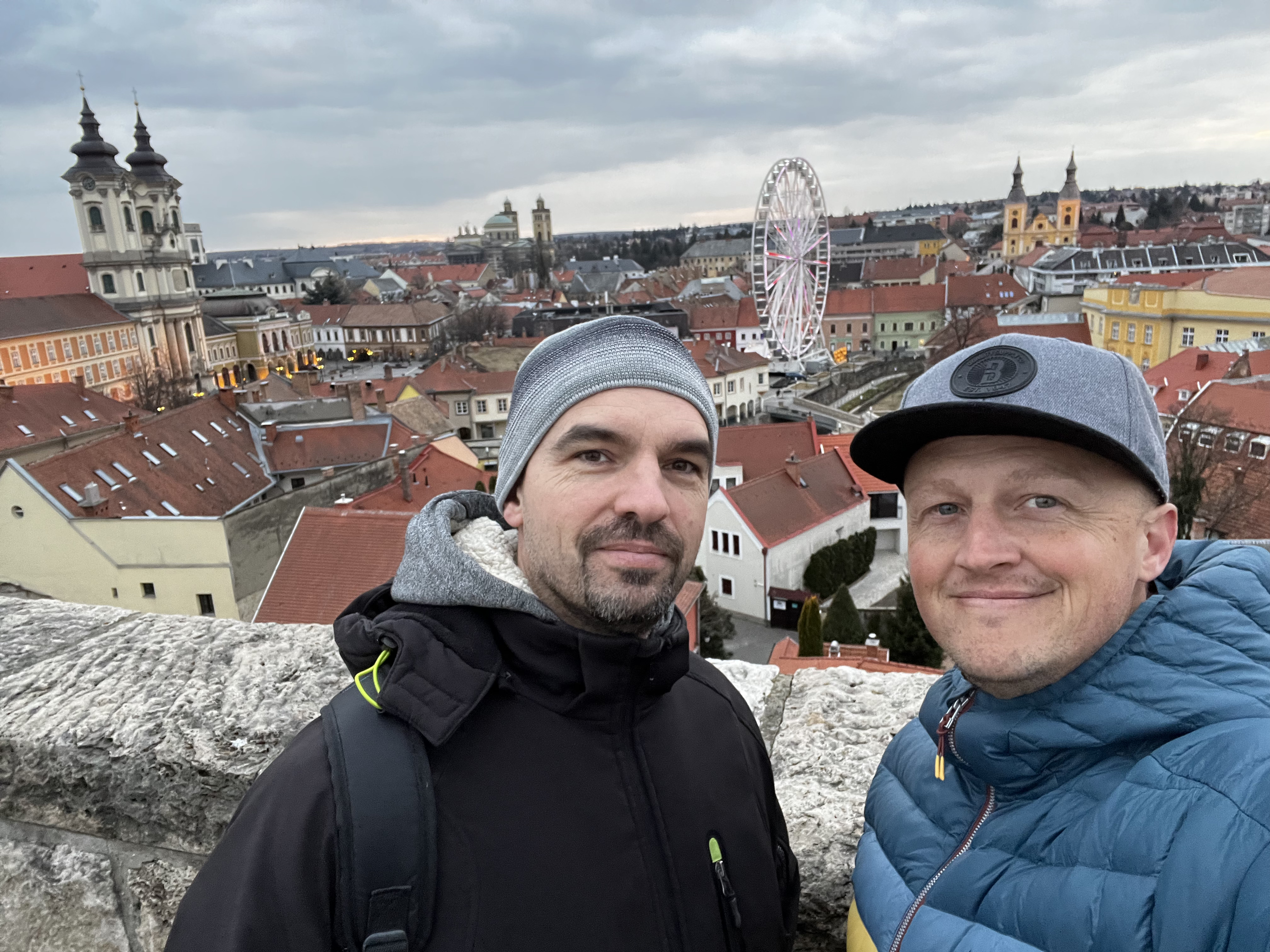
Standing on the balcony of the new church meeting place in downtown Eger.
Pray for Eger, and pray for Pastor Jani. He has been faithful. Pray for a fresh work of the Holy Spirit, for vision, guidance, and effective ministry.
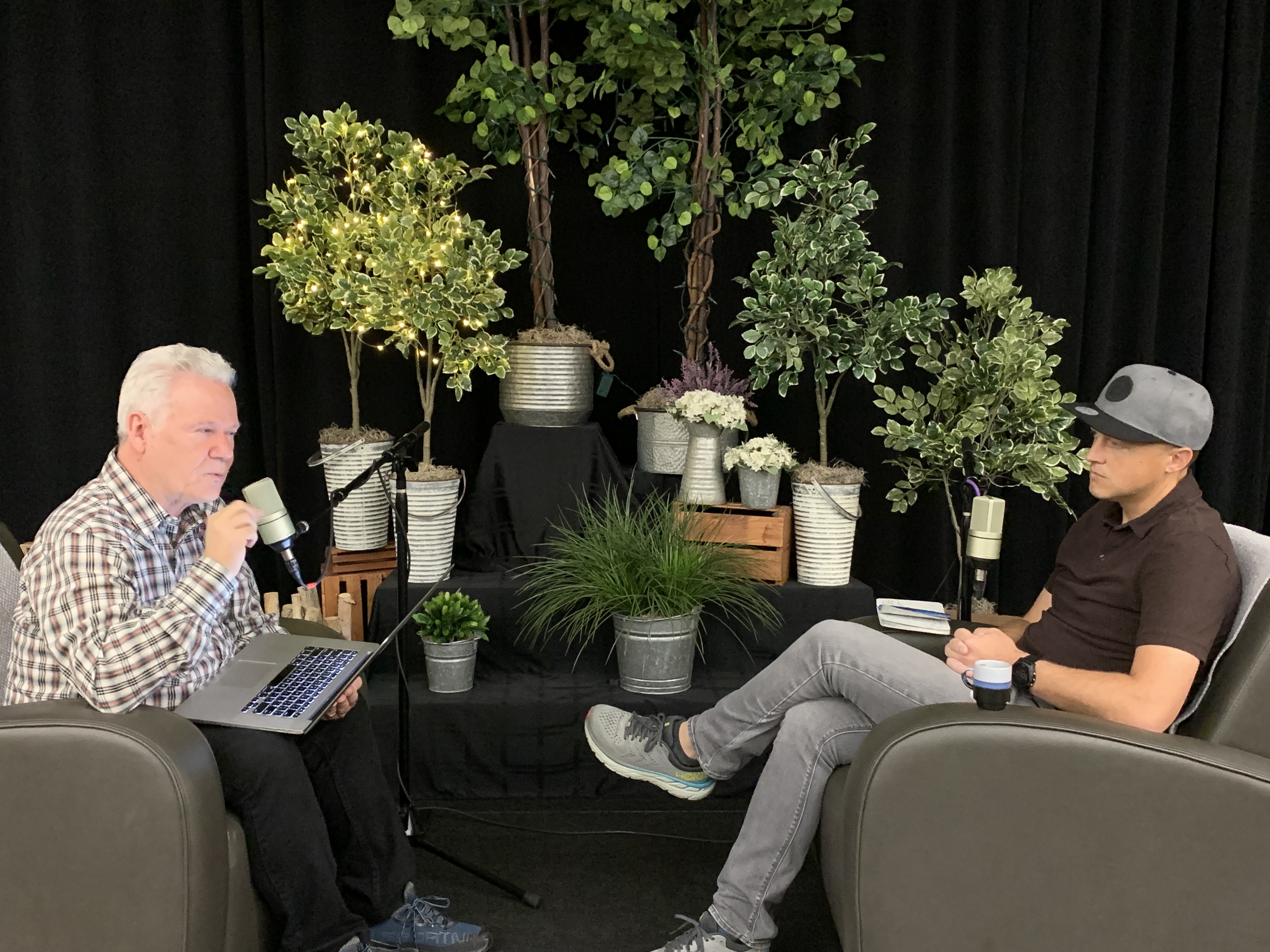
As part of the discussion, Aaron asked Mike and I about our worst Easter sermon ever. As I was telling about my worst Easter sermon, I remembered something that happened on our first Easter (also our first Sunday) planting a church in Eger, Hungary. It wasn’t something I did (or even saw), but it was something which probably made it the worst Easter service ever for those who attended 😂. Here’s the video of that part of our discussion:
Aaron broke up our discussion into sections and created a helpful article, with Mike and I discussing about Good Friday, how to support staff and volunteers amongst the busyness of Easter weekend, and how to keep Easter fresh.
On this week’s episode of the Theology for the People podcast, Aaron Salvato interviews me about hypocrisy can be a barrier to people embracing Christianity, and what the solution is to this problem.
In my recent book, The God I Won’t Believe In: Facing Nine Common Barriers to Embracing Christianity, one of the chapters addresses the question of how Christianity can really be true if many of its adherents are hypocritical or hateful people. Can this problem be blamed on Christianity itself? Or is there another explanation? Either way, it certainly hurts Christian witness, so what, if anything, should or can be done about it?
If you find this episode interesting or helpful, please share it with others and leave a rating and review on your podcast app, as that helps other people discover this podcast and its content.
This week’s episode of the Theology for the People podcast is a discussion I recorded in Budapest, Hungary this week with Pastor George Markey of Kyiv, Ukraine.
This was originally recorded for KWAVE Radio in Southern California, but I am putting it out here as well, so more people can hear it.
George has lived in Ukraine for the past 30 years, and is the overseer for the Calvary Chapel churches in the country.
In this episode, George shares his perspective on what is going on as Russia is attacking Ukraine, as well as stories of how God is working in the midst of it. We also discuss needs, what is currently being done, and how you can get involved and help. Finally, George shares how he personally prays for Ukraine during this time.
The Russian Invasion of Ukraine: How to Help & How to Pray – with George Markey –
Theology for the People
Recorded in Budapest, Hungary this week with Pastor George Markey of Kyiv, Ukraine, originally for KWAVE Radio in Southern California. George has lived in Ukraine for the past 30 years, and is the overseer for Calvary Chapel churches in Ukraine.
In this episode, George shares his perspective on what is going on as Russia is attacking Ukraine, as well as stories of how God is working in the midst of it.
We also discuss needs, what is currently being done, and how you can get involved and help.
Finally, George shares how he personally prays for Ukraine right now.
Please share this episode with others, subscribe to the podcast, and check out the Theology for the People blog at nickcady.org
I arrived home last night after a whirlwind trip to Europe to help with the humanitarian crisis caused by Russia’s invasion of Ukraine.
Many people have been interested to hear about what we did over there, and what needs and opportunities there are for help in the future, so the night before I left to come back to the US, Pastor Michael and I sat down to film a video sharing with people some of what we accomplished, and what some of the ongoing needs are.
We filmed this at the kitchen table in Michael’s old apartment in Budapest, using a broom as our camera stand!
There are many needs. Just today we have been working on wiring money to people in another city in Ukraine to help buy another van to transport food and aid, and to evacuate people. If you would like to give, we will put that money directly into the hands of people who are serving on the ground. Donations can be made here: Ukraine Relief Fund
This coming Sunday, I was scheduled to fly to Kyiv, Ukraine, where I and some others were going to be speaking at a seminary and then leading a conference for Calvary Chapel pastors and leaders from all over the country.
We were notified this week that Lufthansa and KLM cancelled our flights to and from Kyiv because of the escalating tensions with Russia.
We are tentatively planning to reschedule the conference for later this year, in the spring, hoping that things will have calmed down by then.
I am grieved by Russia’s attacks against Ukraine, and what it means for the Ukrainian people. I long for the day when righteousness and the knowledge of God will cover the Earth like water covers the sea, and people will beat their weapons into plowshares and wage war no more. (Habakkuk 2:14, Isaiah 2:4)
I have many friends all over Ukraine, and our church supports several missionaries there.
Please join me in praying for the safety of the Ukrainian people in general, and for our friends and missionaries in particular, especially those in the city of Kharkiv, which is very close to the Russian border.
Pray for their churches to be havens that people flock to, for the believers to shine the light of the knowledge of Jesus in this dark time, and that they would be beacons of the hope of the resurrection and the good news of the gospel.
One of my favorite Christmas carols is “O Holy Night,” mostly because I love the first verse:
Long lay the world in sin and error pining, ‘til He appeared and the soul felt its worth.
A thrill of hope, the weary world rejoices, for yonder breaks a new and glorious morn!
THE WEARY WORLD
If there is one word that accurately describes the feeling in the world right now, it is probably “weary.”
We are weary from two years of pandemic. We are weary of restriction and new variants. We are weary of our friends and family members getting sick, and even dying. We are weary from the divisiveness in society. We are weary of inflation, tragedy, tension, and strife.
But, as this song reminds us, the coming of Jesus into the world is good news for the weary world. It gives us weary people a reason to rejoice. Why? Because it tells us that, “yonder breaks a new and glorious morn.”
THE DAY DAWNS
One of the greatest metaphors the Bible uses to describe where we are at currently in the big picture of human history is: Dawn.
The true light, which gives light to everyone, was coming into the world. – John 1:9
Dawn is an interesting period; *it is a time when night and day, darkness and light, exist simultaneously in the same space, yet neither are in full force*.
At dawn, the darkness that formerly ruled the night is broken by the light, but it is still dark out … though not as dark as it used to be. However, at dawn, even though light has come, the light is not yet present in its full form, because although the light has appeared, it has not yet broken over the horizon to fully dispel the darkness.
Peter expressly uses this metaphor of dawn in his second letter:
We have the prophetic word more fully confirmed, to which you will do well to pay attention as to a lamp shining in a dark place, until *the day dawns* and *the morning star* rises in your hearts. – 2 Peter 1:19
THE MORNING STAR
Jesus is called “the morning star.” The “star” known as the morning star is not actually a star, but the planet Venus. The reason it is called the morning star is because it is the last “star” that is visible in the sky once the dawn has come.
The meaning and message of Christmas is that the true light has come into the world, and the dawn has begun. The beginning of dawn is an irreversible occurrence; once the first light of dawn has broken the darkness of night, it is only a matter of time before the sun crests the horizon, totally dispelling the darkness, bringing about the full light of the new day.
We live in a time right now where there is darkness in the world. It touches our lives, and we groan, along with all of the fallen creation, under the weight of the curse of sin and death. And yet, with the coming of Jesus into the world in His first advent, dawn has come: The light of life has come into our world in the person of Jesus Christ. We have the light of God’s Word to guide us … as we wait with eager expectation for Jesus’ second advent when He comes again!
For our world, covered in the shroud of darkness, a darkness which permeates even our own hearts, the message is clear: The advent of Jesus is the death knell of darkness and the guarantee that a new day is on the horizon.
Let us look to the morning star to give us hope until that day comes!
Kellen Criswell is a pastor, ministry leader, and former missionary who holds and MA in Global Leadership from Western Seminary and is currently working on his doctorate. He is the Executive Director of Calvary Global Network and has a heart for the mission of God and the global church.
After a brief discussion about Kellen’s favorite music and the fact that he is from Utah (AKA “Colorado Jr.”), we dive into a discussion about Missional Ecclesiology, which is a way of understanding the identity, purpose, and function of the church within the Missio Dei (the love-motivated, self-sending, mission of God into the world to save, redeem, and restore).
One more thought about Utah: If you have to tell people (on your license plates) that you have “the best snow in the world,” you probably don’t. It’s kind of like using the world “Real” in a title. If you have to say that something is “real ______” – it probably isn’t. And also, what Margaret Thatcher said: “Being a leader is like being a lady: If you have to tell people you are one, you probably aren’t.” Same with the snow, Utah…
But I digress…
Ecclesiology is the discussion of what the Church is called to be and to do – including its nature, purpose, hopes, structures, and practices.
We discuss how this concept works out practically, including a discussion of “foreign missions” and how they fit into this understanding. Furthermore, we discuss what the past nearly two years of pandemic has revealed about ecclesiology, and why there is hope as we move forward.
Missional Ecclesiology: What is the role of the church in the mission of God? – with Kellen Criswell –
Theology for the People
Kellen Criswell is a pastor, ministry leader, and former missionary who holds and MA in Global Leadership from Western Seminary and is currently working on his doctorate. He is the Executive Director of Calvary Global Network and has a heart for the mission of God and the global church.
In this episode we discuss Missional Ecclesiology, which is a way of understanding the identity, purpose, and function of the church within the Missio Dei (mission of God). Ecclesiology is the discussion of what the Church is called to be and to do – including its nature, purpose, hopes, structures, and practices.
We discuss how this concept works out practically, including a discussion of "foreign missions" and how they fit into this understanding. Furthermore, we discuss what the past nearly two years of pandemic has revealed about ecclesiology, and why there is hope as we move forward.
Bibliography and recommended resources:
Hirsch, Alan. The Forgotten Ways: Reactivating Apostolic Movements.
Goheen, Michael. The Church and it’s Vocation: Leslie Newbigin’s Missionary Ecclesiology.
Stetzer, Ed. Planting Missional Churches: Your Guide to Starting Churches that Multiply.
Newbigin, Leslie. The Gospel in a Pluralist Society.
Van Engen, Charles. Transforming Mission Theology.
Wright, Christopher J.H.. The Mission of God: Unlocking the Bible’s Grand Narrative.
Bosch, David. Transforming Mission: Paradigm Shifts in Theology of Mission.
Hooker, Paul. "What is Missional Ecclesiology?"
Make sure to check out the Theology for the People blog at nickcady.org
Make sure to check out some of the books and papers listed below for more information and study on this topic.
If you own a Bible in your own language, it is a direct result of the Protestant Reformation, and the key figure God used to ignite that worldwide movement of returning to the Bible was Martin Luther: a German monk and professor of theology at the University of Wittenberg.
I grew up attending a Lutheran school until eighth grade. During my time there, I learned a lot about Luther, including studying his catechism. Years later, when I put my faith in Jesus and was born again, I started attending a Calvary Chapel church; and over the years, I have grown in appreciation for Martin Luther and the pivotal role he played in God’s work in the world.
The last day of October is celebrated around the world as Reformation Day, because it was on October 31, 1517, that Martin Luther set into motion the movement now known as the Reformation, by mailing a letter. Yes, you read that right: on the eve of All Saints Day (Halloween = “All Hallows Eve”), Luther mailed, not nailed, a letter.1 2
The letter was addressed to the Archbishop of Mainz,3 and Luther sent it because he wanted to alert the archbishop that plenary indulgences were being sold in the archbishop’s name by a man named John Tetzel. Tetzel had been sent from Rome the year before to sell these certificates promising the release of a soul from purgatory in exchange for their purchase, as a fundraising campaign for the building of St. Peter’s Basilica. Luther assumed the archbishop was unaware that this was going on, and that upon receiving his letter, the archbishop would tell Tetzel to cease and desist. That, however, is not what happened.
As a result of the archbishop’s inaction, Luther, as a professor, decided to organize a scholarly debate on the topic of indulgences: whether they were actually effective in procuring the release of a soul from purgatory. To this end, he wrote up what are now known as the 95 Theses, which he titled: A Disputation on the Power and Efficacy of Indulgences. This paper, which was posted on the door of the All Saints Church in Wittenberg, was an invitation to a scholarly debate, but in it Luther challenged both the selling of indulgences and the doctrine of purgatory as unscriptural. By doing this, Luther was challenging the Roman Catholic Church’s teaching and authority, and insisting that the Bible, not the church, should be the ultimate arbiter of what constitutes correct doctrine.
The posting of the 95 Theses is considered the spark which ignited the Protestant Reformation: a movement which sought to reform the church by shedding man-made traditions and returning to the faith which had been handed to us by God in the Holy Scriptures.
Today, there are nearly 1 billion Protestant Christians in the world.4 In the “majority world,” including Africa, Asia, Latin America, and the Muslim world5, Protestant Christianity is growing faster than any other religious movement by conversion.6
Before Luther, there were others who sought to reform the church and bring the Bible to the people. John Wycliffe (1331-1384) published the first English translation of the Bible. Jan Hus (1369-1415) taught the Bible to the common people in Prague. Peter Waldo (1140-1218) commissioned a translation of the New Testament into the local vernacular of southern France. Each of these people were persecuted for trying to put the Scriptures into the hands of the common people.
Over a century before Luther, Hus had protested the sale of plenary indulgences, pointing out that the idea that God’s favor or blessings could be earned in any way, runs contrary to the message of the gospel and the testimony of the Scriptures, and the concept of purgatory is in conflict with the biblical teaching of the sufficiency of Christ’s atonement on the cross.
Martin Luther had long struggled with feelings of condemnation and inadequacy, until his own reading of the Scriptures led him to an epiphany when he read Habakkuk 2:4: “Behold, as for the proud one, His soul is not right within him; But the righteous will live by his faith.” This led Luther to the other places in the Bible where this phrase is repeated: Romans 1:17; Galatians 3:11, and Hebrews 10:38 – where the message is clear: It is not by our own works that we are justified before God, but it is God who justifies us sinners as a gift of His grace, and we receive that justification by faith. After all, the Bible explains, this is how Abraham, the father of our faith, became righteous: he believed God and it was credited to him as righteousness (Genesis 15:6; Romans 4:3, 22). We receive God’s righteousness, which he has provided for us in Christ, in the same way.
Luther became convinced that everyone needed to be able to read the Scriptures for themselves, and he took it upon himself to translate the Bible into German, a translation that is still in use to this day. Soon the Bible was translated into other languages, including English, as the Reformation spread.
Martin Luther called people back to a belief that the Scriptures are perspicuous (clear), and can be understood by those who read them. He called us back to a belief in the inspiration and sufficiency of Scripture: that it is the ultimate rule of faith, by which we are to measure both doctrine and our lives.
In April 1521, Luther was brought before Holy Roman Emperor Charles V at the Diet of Worms, at which Luther was commanded to recant his teachings. Luther refused to do so, famously stating:
“Unless I am convinced by the testimony of the Holy Scriptures or by evident reason – for I can believe neither pope nor councils alone, as it is clear that they have erred repeatedly and contradicted themselves – I consider myself convicted by the testimony of Holy Scripture, which is my basis; my conscience is captive to the Word of God. Thus I cannot and will not recant.”7
This October, as we celebrate Reformation Day, may we take the opportunity to open the Bible and read it for ourselves, and may we embrace and celebrate the message of the gospel: that Jesus Christ came to save sinners, and that we are justified freely by his grace as we trust in him by faith.
NOTES
1 Marshall, Peter. 1517:Martin Luther and the Invention of the Reformation. OUP Oxford. 2017.
Last week Gino Geraci, nationally syndicated radio show host based in Littleton, Colorado, came up to record a few episodes for the Theology for the People podcast. Those episodes are available now, and links and descriptions for them can be found below.
Gino is the founding pastor of Calvary South Denver. He recently stepped down as Lead Pastor of that church, and his son Jon took over in that role. Gino now focuses his time on his daily radio show, Crosswalk with Gino Geraci, which can be heard on the Salem Radio Network.
Gino also works with one of my favorite online organizations: GotQuestions.org – a great internet resource based out of Colorado Springs that provides concise, biblical answers to the questions that people are asking about God and the Bible.
Check out these episodes, subscribe to the podcast, and share with others if you find this content helpful!
In this episode, Gino and I speak about what it means when the Bible tells us that we, as human beings, have been created in the image of God (Imago Dei in Latin).
What are some of the implications of this doctrine as relates to the value of human life, and what would be the implications if this were not true?
Something I am concerned with is how Christianity, because of our belief in the Imago Dei, believes that people with disabilities have inherent dignity. There are other implications of this, which we explain and discuss in this episode.
Imago Dei: What Does It Mean that We are Created in the "Image of God"? – with Gino Geraci –
Theology for the People
Gino Geraci is a pastor, Bible teacher, and syndicated radio show host. He is the founding pastor of Calvary South Denver in Littleton, Colorado, from which he recently retired and is now focusing fully on his radio and online ministries.
In this episode, Gino and Nick speak about what it means when the Bible tells us that we, as human beings, have been created in the image of God (Imago Dei in Latin). What are some of the implications of this doctrine as relates to the value of human life, and what would be the implications if this were not true?
You can find Gino's teachings on his website: ginogeraci.com. His radio show can be heard here: Crosswalk with Gino Geraci, and make sure to check out the other ministry he works with: gotquestions.org
Is it true that “all truth is God’s truth”? What does it mean when the Bible talks about a “mystery” that has been revealed?
In this episode Gino and I discuss the topic of “revelation,” and the question of how we know what we know about God, including His will for us, our lives, and the world.
In the previous episode, we talked about what it means that we are created in the “image of God” and what the implications would be if we were not created in God’s image. That discussion ended with a comment that the doctrine of the Imago Dei hinges on the question of revelation.
The Bible talks about two specific kinds of revelation: general and specific. In this episode we give some examples of each and answer questions like: “Does one have greater value than the other?” and “What are the benefits of each, and what, if any, limitations do these different forms of revelation carry?”
General vs. Specific Revelation: How Do We Know What We Know About God? – with Gino Geraci –
Theology for the People
Is it true that "all truth is God's truth"? What does it mean when the Bible talks about a "mystery" that has been revealed?
This week Gino Geraci joins the podcast once again to discuss the topic of "revelation," and the question of how we know what we know about God, including His will for us, our lives, and the world.
The Bible talks about two specific kinds of revelation: general and specific. In this podcast we give some examples of each and answer questions like: Does one have greater value than the other? What are the benefits of each, and what, if any, limitations do these different forms of revelation carry?
In last week's episode, we talked about what it means that we are created in the "image of God" and what the implications would be if we were not created in God's image. That discussion ended with a comment that the doctrine of the Imago Dei (Image of God) hinges on the question of revelation. In this episode we delve into that question.
Check out the Theology for the People blog, and find Pastor Nick's sermons on the White Fields Church podcast and whitefieldschurch.com







 Theology for the People