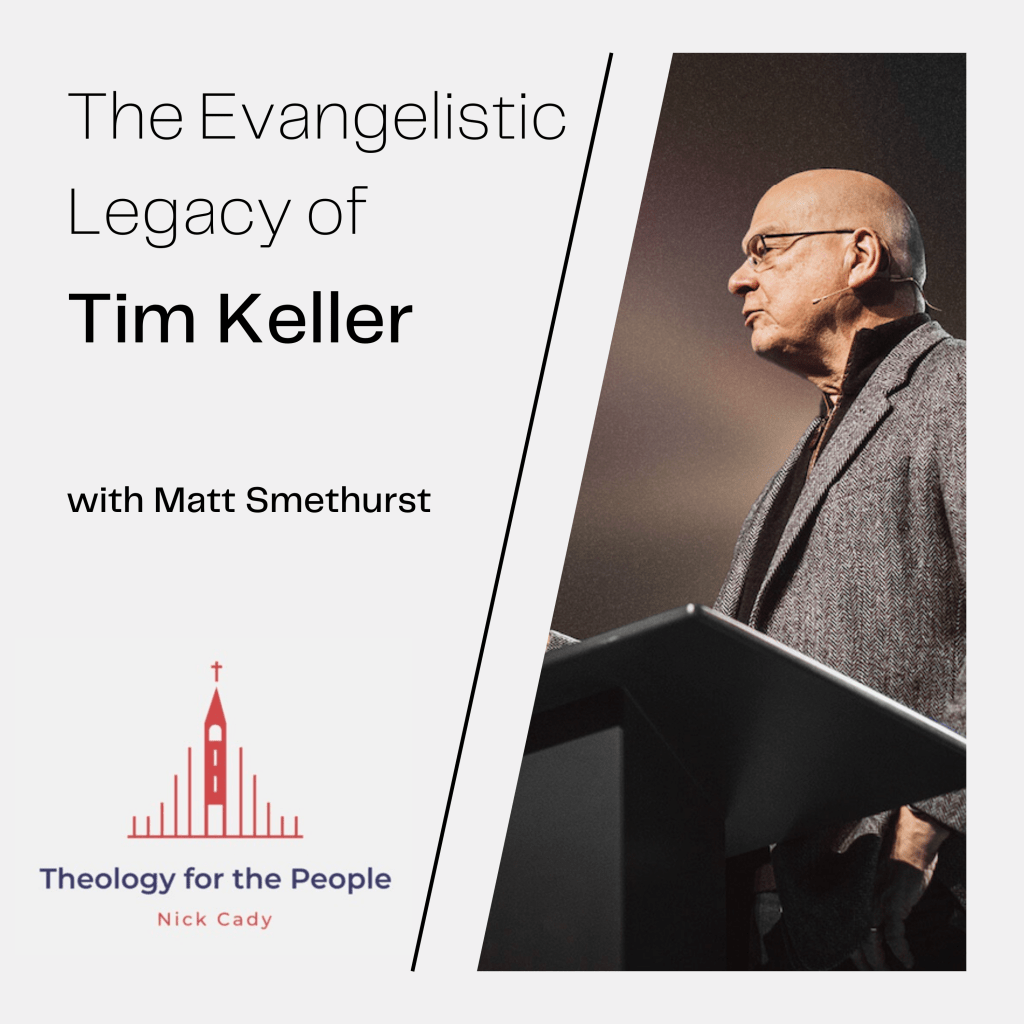
Matt shares about his ministry journey, why Tim Keller’s legacy is still so valuable for the church today, and what he discovered while sifting through Keller’s sermons, books, and endnotes. They discuss Keller’s approach to contextualization, evangelism, friendship, and what it means to taste and see that the Lord is good.
Whether you’re a long-time fan of Keller’s work or just curious about his influence, this conversation will deepen your appreciation for how the gospel changes everything.
Show Notes:
Matt’s background in missions and church planting
Responding to recent critiques of Keller’s ministry
How Keller’s focus on gospel clarity shaped his preaching
What surprised Matt most in Keller’s work
Lessons for pastors, leaders, and everyday believers
In this episode host Nick Cady talks with Matt Smethurst about his new book Tim Keller on the Christian Life. Matt shares about his ministry journey, why Tim Keller’s legacy is still so valuable for the church today, and what he discovered while sifting through Keller’s sermons, books, and endnotes. They discuss Keller’s approach to contextualization, evangelism, friendship, and what it means to taste and see that the Lord is good. Whether you’re a long-time fan of Keller’s work or just curious about his influence, this conversation will deepen your appreciation for how the gospel changes everything.Show Notes:Matt’s background in missions and church plantingResponding to recent critiques of Keller’s ministryHow Keller’s focus on gospel clarity shaped his preachingWhat surprised Matt most in Keller’s workLessons for pastors, leaders, and everyday believers📚 Check out Matt’s books:Tim Keller on the Christian LifeBefore You Open Your BibleBefore You Share Your FaithDeacons: How They Serve and Strengthen the ChurchVisit theologyforthepeople.com for articles and more content.
I have recently started posting more on the Theology for the People YouTube channel. You can watch this interview on video here:
In this episode of the Theology for the People Podcast, I speak with Dr. Alan Stoddard, who interviews me about the baptism of the Holy Spirit.
What is the baptism of the Holy Spirit? Does it happen simultaneously with salvation, or is it a subsequent experience? How should our understanding of the baptism with the Holy Spirit shape our practice in the church?
Alan is a pastor and church planter with over 25 years of ministry experience. Alan holds a Master’s Degree from Southwestern Seminary, and a Doctorate in preaching from Gordon Conwell. Both Nick and Alan serve as Adjunct Professors at Calvary Chapel Bible College. Alan also teaches at Rockbridge Seminary. Nick and Alan also serve on the Leadership Team of Expositors Collective. This year, on Easter Sunday, Alan launched a new church plant called Imagine Church in Cressen, Texas.
In this episode, Nick and Alan discuss the prepositional approach to understanding the Spirit’s work, and how it helps to address some common questions and even some misconceptions about the baptism of the Holy Spirit.
What is the baptism of the Holy Spirit? Does it happen simultaneously with salvation, or is it a subsequent experience? How should our understanding of the baptism with the Holy Spirit shape our practice in the church? In this episode, Pastor Nick Cady is interviewed by Dr. Alan Stoddard about this topic.Alan is a pastor and church planter with over 25 years of ministry experience. Alan holds a Master’s Degree from Southwestern Seminary, and a Doctorate in preaching from Gordon Conwell. Both Nick and Alan serve as Adjunct Professors at Calvary Chapel Bible College. Alan also teaches at Rockbridge Seminary. Nick and Alan also serve on the Leadership Team of Expositors Collective. This year, on Easter Sunday, Alan launched a new church plant called Imagine Church in Cressen, Texas.In this episode, Nick and Alan discuss the prepositional approach to understanding the Spirit’s work, and how it helps to address some common questions and even some misconceptions about the baptism of the Holy Spirit.Resources to check out: Perspectives on Spirit Baptism – book, recommended by AlanArticle by Nick: "Is the “Baptism in the Spirit” the Same as Being “Filled” With the Holy Spirit? Yes and No. Here’s Why"Subscribe to Theology for the People for more episodes.Visit the Theology for the People website and blog
In this episode, Daniel shares how his accidental dive into Hebrews sparked a decade-long passion, revealing how the Psalms prophetically point to Jesus. We talk about the question of who wrote Hebrews, and why it matters — and we talk about how reading the Psalms through the lens of Hebrews can deepen our worship and appreciation of Jesus.
Notable Quotes: • Daniel on Hebrews’ Use of Psalms: “When the author to the Hebrews wanted to make an argument about Jesus, one of the most common places that he goes is to the Psalms.” • On Christological Reading: “It’s not reading something into it, it’s reading what’s there and reasoning from it.” • On Hebrews’ Argument: “It’s not comparing bad to good… it’s good to better.” • For Believers: “If these Psalms aren’t first about us, but about a thing that Jesus has done for us… we can worship Him in finding them.”
Daniel Stevens is Assistant Professor of New Testament Interpretation at Boyce College and author of Songs of the Son: Reading the Psalms with the Author of Hebrews. In this episode, Daniel shares how his accidental dive into Hebrews sparked a decade-long passion, revealing how the Psalms prophetically point to Jesus. We talk about the question of who wrote Hebrews, and why it matters — and we talk about how reading the Psalms through the lens of Hebrews can deepen our worship and appreciation of Jesus.Notable QuotesDaniel on Hebrews’ Use of Psalms: “When the author to the Hebrews wanted to make an argument about Jesus, one of the most common places that he goes is to the Psalms.”On Christological Reading: “It’s not reading something into it, it’s reading what’s there and reasoning from it.”On Hebrews’ Argument: “It’s not comparing bad to good… it’s good to better.”For Believers: “If these Psalms aren’t first about us, but about a thing that Jesus has done for us… we can worship Him in finding them.”More Resources: Follow Daniel on XConnect with Us:Subscribe to Theology for the People for more episodes.Visit the Theology for the People website and blog
Andrew has a PhD from King’s College London, and he serves as the teaching pastor at King’s Church London.
In his new book, Remaking the World: How 1776 Created the Post-Christian West, Andrew looks at 7 transformational events which took place in 1776, that paved the way for today’s post-Christian western culture. By understanding how those events influence the way people think today, Christians can more effectively share God’s truth in a post-Christian age.
In this episode, Andrew and I talk about the TV show Lost, along with discussions about philosophy, and history, how these things relate to Christian theology, mission, and practice, and how God’s Word and the hope of the gospel are particularly relevant to the Western mindset today.
Andrew Wilson – Romanticism & “Protestant Paganism”: Christianity in Relation to Western Culture –
Theology for the People
In this first episode of Season 4, Nick Cady speaks with pastor and author Andrew Wilson about why understanding western culture is important for Christian theology and mission.
Andrew has a PhD from King’s College London, and he serves as the teaching pastor at King’s Church London.
In his new book, Remaking the World: How 1776 Created the Post-Christian West, Andrew looks at 7 transformational events which took place in 1776, that paved the way for today’s post-Christian western culture. By understanding how those events influence the way people think today, Christians can more effectively share God’s truth in a post-Christian age.
Make sure to visit the Theology for the People website at nickcady.org
I’m excited to be heading out to Kansas City in November to speak at a church which used the book as the basis for their community groups this fall. A Christian school in the Bay Area of California used it as the basis of an apologetics class for their students this semester. I have heard several other stories of churches using it in similar ways, and I’m glad it continues to be a helpful resource!
Spanish Translation Coming Out in November 2023
There are several translations of The God I Won’t Believe In currently in process, but I am excited that the Spanish translation is complete! My friend Jonathan Cuesta is a great translator, and did a great job.
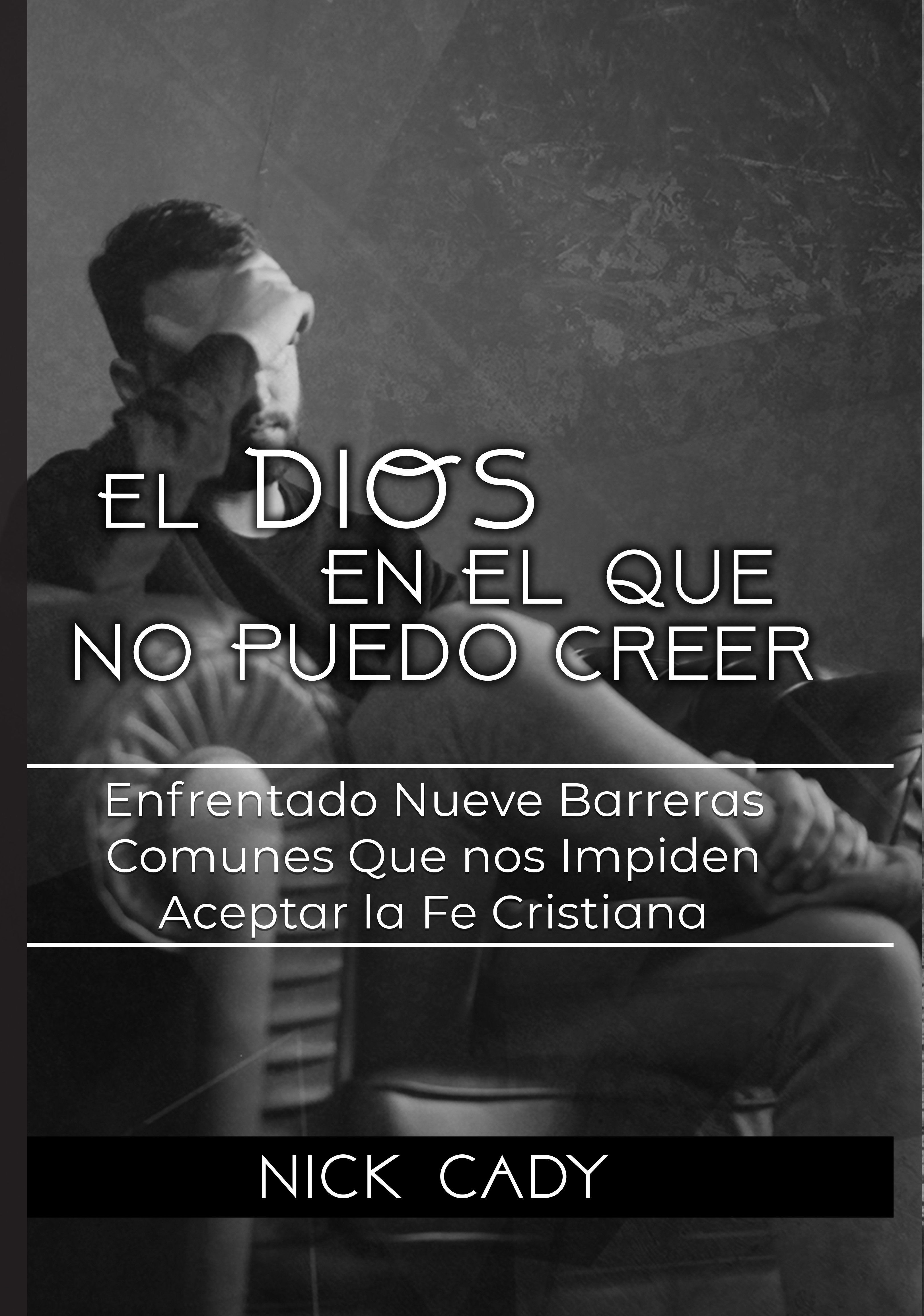
The title of the Spanish version is: El Dios En El Que No Puedo Creer: Enfrentando Nueve Barreras Comunes Que nos Impiden Aceptar la Fe Cristiana.
It will be released mid-November once we get cover art and a few formatting things worked out. Then it will be sold on Amazon and hopefully in several Christian book shops in both the US and abroad. If you have Spanish speaking friends or family, please consider getting a copy for them and helping us promote when the time for that comes.
Study Guide Coming Soon
To help those who want to use the book for group studies, I am currently writing a Group Study Guide resource to be a companion to the book. This was originally scheduled to come out earlier this year, but my injury set me back.
When the guide comes out, each session will include a group activity, a synopsis, and several study questions which correspond to the content of each chapter. Additionally, we are planning to create a series of videos which can be watched along with the study guide, for groups to use.
New book – So That You May Believe: a Study of the Seven Signs and Seven “I am” Statements in the Gospel of John
I have been preparing the content for a new book, which will be a follow-up or companion to my first book. This book will show people the evidence for Jesus as Messiah and God our Savior which are presented by John in his gospel. The details and nuances of these evidences can easily be lost on modern readers, and I look forward to drawing them out for people to see.
Part of the impetus for writing this book is the fact that, when preparing a sermon series on the Gospel of John a few years ago, I noticed that many scholars and commentators point out the structure of John’s Gospel as being built upon seven signs and seven “I am” statements, but there were very few, if any, good short volume books on these subjects. I hope my book can fill that niche, as I’ve heard the need for a book on this topic confirmed by many of my pastor friends.
Last week, I spent the week teaching the content which will make up the book at Ravencrest Chalet Bible College (Torchbearers International) in Estes Park, Colorado. I got great feedback on the study from the students, which encouraged me in continuing the project.
I hope to be able to release that book by Spring of 2024.
In this episode, Dr. Ryken and I discuss the role of beauty in theology. Dr. Ryken points out that Beauty is not a topic that is often discussed in theological circles, but it should be, both as a lens through which we view theological topics such as forgiveness, or atonement, or justice, and even as an attribute of God and the end result of God’s work of redemption in our lives and in the world.
Dr. Philip Ryken is the President of Wheaton College in Wheaton, Illinois. He has a Doctorate in Philosophy from Oxford University, and he is the author of over 50 books. His latest book is called Beauty is Your Destiny: How the Promise of Splendor Changes Everything.
In this episode, Dr. Ryken and I discuss the role of beauty in theology. Dr. Ryken points out that Beauty is not a topic that is often discussed in theological circles, but it should be, both as a lens through which we view theological topics such as forgiveness, or atonement, or justice, and even as an attribute of God and the end result of God’s work of redemption in our lives and in the world.
Jeremy Treat is the Pastor for Preaching and Vision at Reality LA, a church in Los Angeles, California. He is also an Adjunct Professor of theology at BIOLA University, and he has his PhD from Wheaton College.
On this episode of the Theology for the People podcast, I spoke with Jeremy about the doctrine of the Atonement, including what it means, and why it is so central to Christianity.
We also discuss some common errors that people commit when thinking about the atonement, and how many of these errors are due to a view of the atonement which is reductionistic. Further, we talk about the practical implications of those different reductionist views.
Jeremy believes that the best narrative in which to understand the atoning work of Jesus is that of the Kingdom of God, in light of the entire story that the Bible tells.
Jeremy Treat is the Pastor for preaching and vision at Reality LA, a church in Los Angeles, California. He is also an Adjunct Professor of theology at BIOLA University, and he has his PhD from Wheaton College.
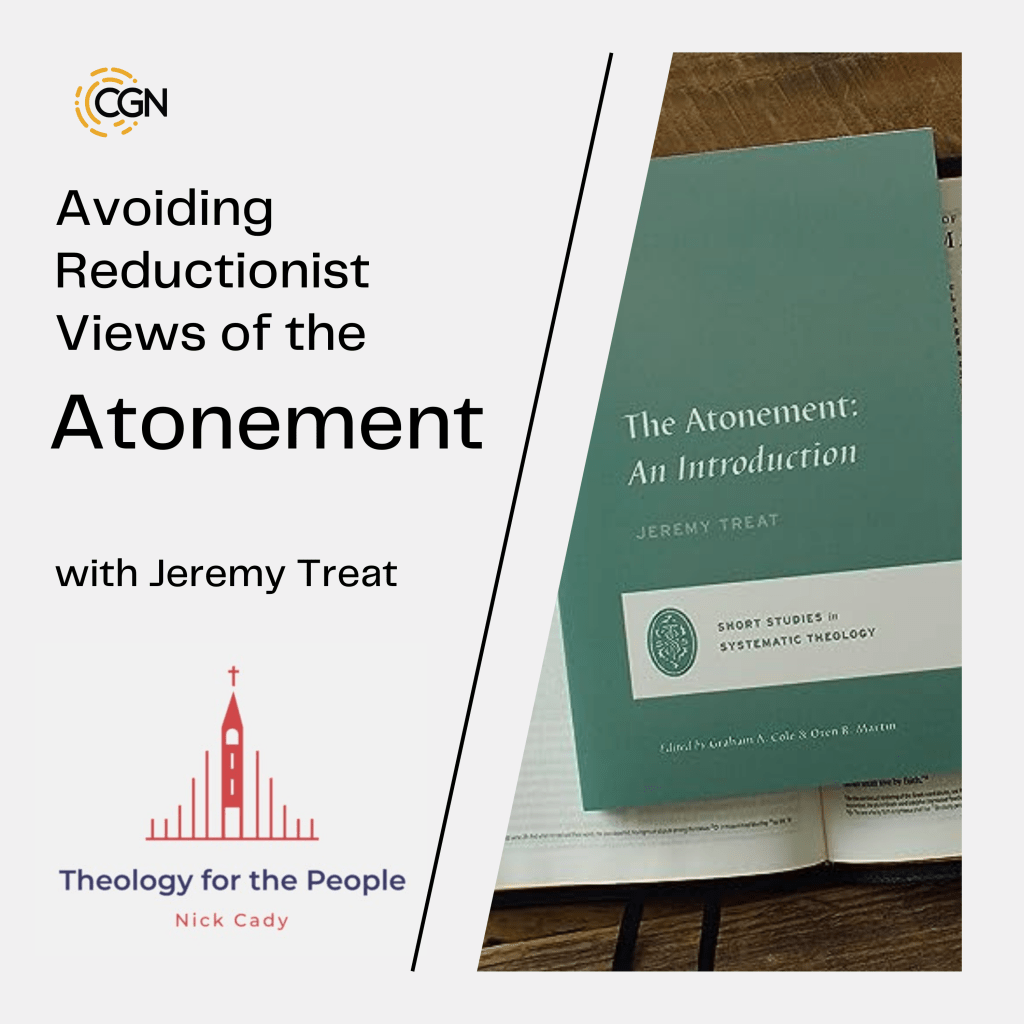
Jeremy is the author of several books. His latest book is The Atonement: an Introduction, published by Crossway Publishing as part of their series of Short Studies in Systematic Theology.
In this episode, Jeremy speaks with Nick Cady about the doctrine of the Atonement, including what it means, and why it is so central to Christianity.
They also discuss some common errors that people commit when thinking about the atonement, and how many of these errors are due to a view of the atonement which is reductionistic. Further, they talk about the practical implications of those different reductionist views.
Jeremy believes that the best narrative in which to understand the atoning work of Jesus is that of the Kingdom of God, in light of the entire story that the Bible tells.
Nathan Knight is the Lead Pastor of Restoration Church in Washington DC — a church that he planted 14 years ago.
He now leads a church planting network in the DC area called Treasuring Christ Together, and he recently wrote a book (published by Crossway and 9Marks) about church planting called: Planting by Pastoring: A Vision for Starting a Healthy Church.
In our discussion, Nathan and I talk about the premise of his book, which seeks to encourage the planting of new churches, while getting back to the biblical definitions of what a church is, what a church does, and how to define “success” in a local church.
Nathan Knight is the Lead Pastor of Restoration Church in Washington DC — which is a church that he planted 14 years ago. He now leads a church planting network in the DC area called Treasuring Christ Together, and he recently wrote a book (published by Crossway and 9Marks) about church planting called: Planting by Pastoring: A Vision for Starting a Healthy Church.
In our discussion, Nathan and I talk about the premise of his book — which seeks to encourage the planting of new churches, while getting back to the biblical definitions of what a church is, what a church does, and how to define “success” in a local church.
Make sure to visit the Theology for the People website at nickcady.org



 Theology for the People