Have you ever wrestled with doubts about your faith? If so, then you are in good company. The Bible contains several stories of men and women of faith who also had seasons in which they struggled with doubts.
In this episode Dr. Ryken shares advice for those currently struggling with doubts, with the goal of also helping others to be equipped to help those around them to come to greater confidence in Jesus and a more vibrant faith.
Faith Under Pressure: How Wrestling Through Your Doubts Can Lead to Deeper Faith – with Dr. Philip Ryken –
Theology for the People
Have you ever wrestled with doubts about your faith? If so, then you are in good company. The Bible contains several stories of men and women of faith who also had seasons in which they struggled with doubts.
Dr. Philip Ryken is the President of Wheaton College in Wheaton, Illinois. He has a Doctorate in Philosophy from Oxford University, and he is the author of over 50 books. His latest book is called I Have My Doubts: How God Can Use Your Uncertainty to Reawaken Your Faith.
In this episode Dr. Ryken shares advice for those currently struggling with doubts, with the goal of also helping others to be equipped to help those around them to come to greater confidence in Jesus and a more vibrant faith.
Listen to Dr. Ryken's previous episode on Theology for the People: The Role of Beauty in Theology
Visit the Theology for the People website at nickcady.org
How is expository Bible teaching different than non-expository teaching?
David Jackman is the founder and director of the Cornhill Training Course, a UK-based initiative which teaches people how to teach the Bible expositorally.
David has served as a pastor and as president of Proclamation Trust, which exists to equip Bible teachers around the world.
In this episode, David explains the value of expository preaching, both in how it honors God’s Word, and in the ways it benefits those who hear it.
We discuss common pushbacks to expository preaching, such as that Jesus was not an expository preacher, and we get into the mechanics of effective Bible teaching, including how to include application, and more.
What is Expository Preaching and How Do We Do It Well? – with David Jackman –
Theology for the People
How is expository Bible teaching different than non-expository teaching?
David Jackman is the founder and director of the Cornhill Training Course, which teaches people how to teach the Bible expositorally. He has also served as a pastor and as president of Proclamation Trust, which exists to equip Bible teachers around the world.
In this episode, David explains the value of expository preaching, both in how it honors God’s Word, and in the ways it benefits those who hear it.
We discuss common pushbacks to expository preaching, such as that Jesus was not an expository preacher, and we get into the mechanics of effective Bible teaching, including how to include application, and more.
Check out David's recent book, Proclaiming the Word, as well as Expositors Collective.
When we talk about “the Early Church” many people’s minds immediately go to the first generation of Christianity, recorded in the Book of Acts and addressed in the New Testament. But what happened after that, and why does it matter for Christians living today?
Matt Pursley is the Executive Pastor at Park Hill Church in San Diego, California. He has a Masters in Christian History, and in this episode, Matt and I discuss the First Council of Nicaea: what led to it and what it produced.
We address many of the common misconceptions about Nicaea, and we discuss the early heresies of Marcionism, Gnosticism, and Arianism, and why it’s important for Christians today to understand those heresies, and why they were rejected.
Along the way we also talk about Jordan Peterson, who Matt says is a modern Marcionite, and how the errors of both liberalism and fundamentalism have a similar origin.
The First Council of Nicaea: What Actually Happened & Why Does It Matter for Us Today? –
Theology for the People
When we talk about “the Early Church” many people’s minds immediately go to the first generation of Christianity, recorded in the Book of Acts and addressed in the New Testament. But what happened after that, and why does it matter for Christians living today?
Matt Pursley is the Executive Pastor at Park Hill Church in San Diego, California. He has a Masters in Christian History, and in this episode, Matt and I discuss the First Council of Nicaea: what led to it and what it produced.
We address many of the common misconceptions about Nicaea, and we discuss the early heresies of Marcionism, Gnosticism, and Arianism, and why it’s important for Christians today to understand those heresies, and why they were rejected.
Along the way we also talk about Jordan Peterson, who Matt says is a modern Marcionite, and how the errors of both liberalism and fundamentalism have a similar origin.
Visit the Theology for the People website at nickcady.org
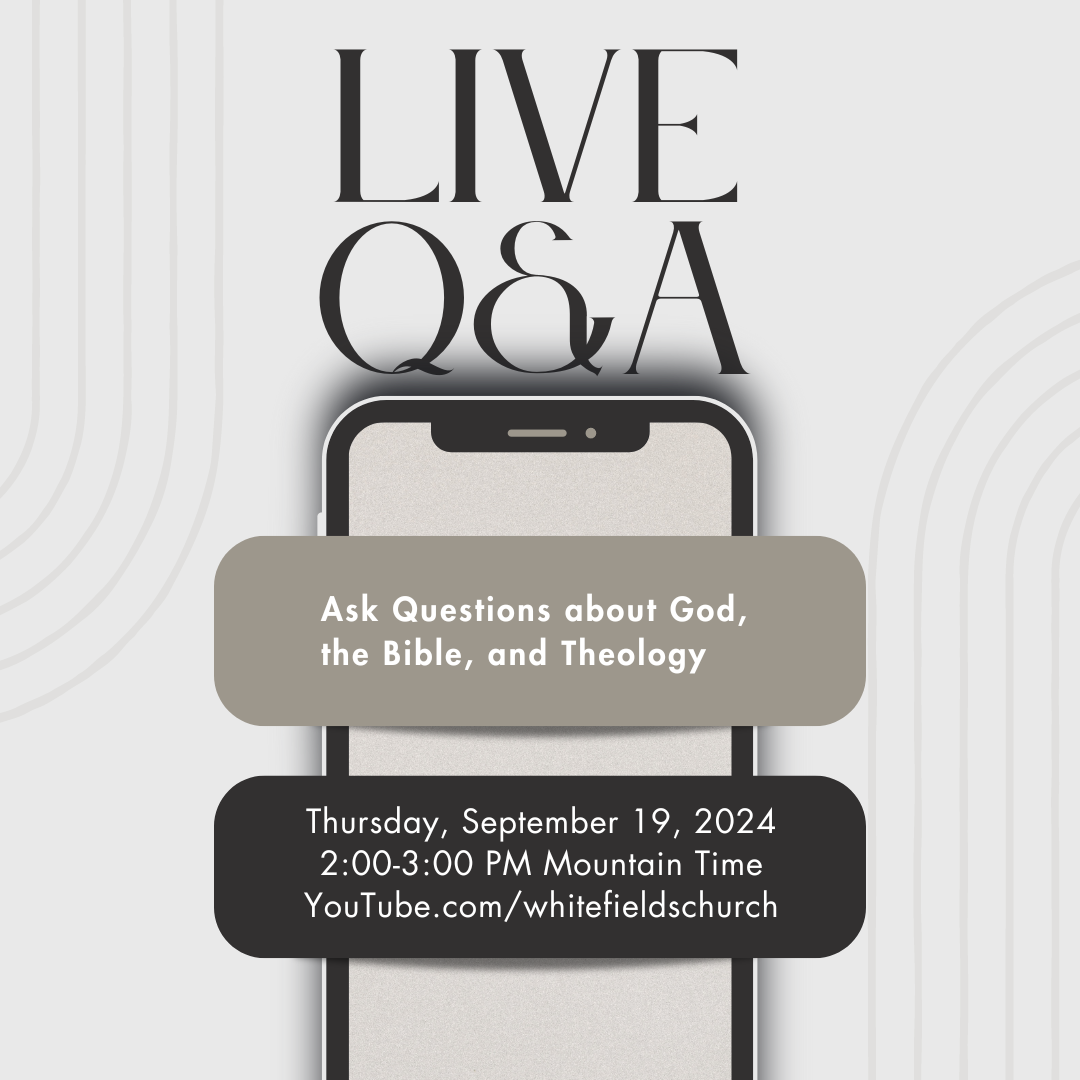
Last Thursday I hosted a YouTube LIVE Q&A for the first time, and it went better than I expected!
I answered questions about politics, the Holy Spirit, suicide, and demonic possession – and more people tuned in than I had anticipated!
Here’s the video of that recording if you’d like to watch back. If you turn on the comments, you can see people posting their questions and feedback.
We’re Doing It Again!
Since it went so well, we are going to be doing this more regularly; we’re currently aiming for doing it weekly on Thursdays – so please join us for that, and please help us spread the word about it, so more people can be part of it and ask their questions!
On this particular occasion, I will be going live from the clubhouse of a golf course because I already had a tee time scheduled before we decided to start doing these live Q&A videos! So please join me in praying that the wifi works well at the clubhouse! And if you want to see my golf attire, you’ll have to tune in!
Here’s the link for that scheduled video, and with this you’ll also be able to watch it (or re-watch it) afterwards:
This Weekend: Rhythm at Roosevelt + Live Q&A On Site!
This Saturday (September 21, 2024) is the Rhythm at Roosevelt festival in Longmont, at Roosevelt Park from 2-10 PM.
White Fields Church will have a booth there, so please come by if you attend. We will be handing out popcorn and free swag and hoping to connect with many people in the community.
As part of our time there, we will be doing a Live Q&A, which will be broadcasted on YouTube, and people will have the opportunity to ask questions in person as well.
Here’s the link for that YouTube event, if you can’t come out in person:
Golf Marathon for YoungLife in the St Vrain Valley
On Monday, Sept. 23rd I am participating in a fundraiser to support YoungLife in the St. Vrain Valley. To raise money, I will be playing a marathon of 45 holes of golf in one day!
My wife Rosemary volunteers with YoungLife and both my high schoolers attend their gatherings. YoungLife specializes in building relationships with teenagers, walking with them through the highs and lows of their teen years, and introducing them to Jesus. YoungLife establishes mentoring relationships between Christian adults and teens, many of whom have no connection to church.
This video is a clip from a message I presented at an Expositors Collective training event, on the topic of Christ-Centered Hermeneutics. I didn’t realize they had isolated this clip and turned it into a video, but I’m glad they did, and I’d love for you to check it out:
What is a discipleship pathway, and how do you go about creating one? What is the process by which people grow spiritually, and how do we help them do that?
Dr. John Whittaker has served as a pastor and theologian for many years, in different capacities. He is the author of The Listener’s Commentary, an audio commentary of the Bible, that is available online. He is also the host of the Bible in Life Podcast.
About half-way through the conversation, I show John our church’s discipleship pathway, and he gives his raw, unscripted feedback on it, so make sure to listen until then, to see if our discipleship pathway passed his test!
A Biblical Theology of Spiritual Growth, & Creating a Discipleship Pathway – with John Whittaker –
Theology for the People
What is a discipleship pathway, and how do you go about creating one? What is the process by which people grow spiritually, and how do we help them do that?
Dr. John Whittaker has served as a pastor and theologian for many years, in different capacities. He is the author of The Listener’s Commentary, an audio commentary of the Bible, that is available online. He is also the host of the Bible in Life Podcast.
About half-way through the conversation, I show John our church’s discipleship pathway, and he gives his raw, unscripted feedback on it, so make sure to listen until then, to see if our discipleship pathway passed his test!
Visit the Theology for the People website at nickcady.org
Leadership is a very popular topic in modern business discussions, but what does the Bible have to say about leadership? And is there a difference between the vision for leadership given in the Bible versus that which comes from the world?
In this episode of the Theology for the People Podcast, I speak with John Currie, who is professor of pastoral theology at Westminster Theological Seminary in Philadelphia, Pennsylvania. He has also served as a pastor in different churches and denominations, and in these roles, he has seen that sometimes pastors thrive in preaching, but struggle with leadership, or vice versa.
Leadership is a very popular topic in modern business discussions, but what does the Bible have to say about leadership? And is there a difference between the vision for leadership given in the Bible versus that which comes from the world?
John Currie is professor of pastoral theology at Westminster Theological Seminary in Philadelphia, Pennsylvania. He has also served as a pastor in different churches and denominations, and in these roles, he has seen that sometimes pastors thrive in preaching, but struggle with leadership, or vice versa.
In his recent book, The Pastor as Leader: Principles and Practices for Connecting Preaching and Leadership, John gives a biblical vision for a uniquely Christian approach to leadership.
Cameron Cole experienced every parent’s worst nightmare: they put their son to bed one night, and in the morning they awoke to find that he had died in his sleep. However, the message of the Gospel, is that their son did indeed wake up — in a greater and more profound way: he awoke to eternal life with Jesus, his Savior.
In the wake of his son’s death, Cameron did a deep dive into the passages in the New Testament where Paul the Apostle writes about Heaven and eternal life. That study gave birth to his recent book, Heavenward: How Eternity Can Change Your Life on Earth.
In this episode of the Theology for the People Podcast, I speak with Cameron about what he learned through this experience, and how it made him more heavenly minded. Cameron also shares about how to the hope of eternal life ought to shape the way we live here and now.
Cameron’s ministry, Rooted, seeks to equip parents and churches to disciple children and students towards lifelong faith in Jesus Christ.
Cultivating a Heavenward Mindset in an Epicurean World – with Cameron Cole –
Theology for the People
Cameron Cole experienced every parent’s worst nightmare: they put their son to bed one night, and in the morning they awoke to find that he had died in his sleep.
However, the message of the Gospel, is that their son did indeed wake up in a greater and more profound way: he awoke to eternal life with Jesus, his Savior.
In the wake of his son’s death, Cameron did a deep dive into the passages in the New Testament where Paul the Apostle writes about Heaven and Eternal Life. That study gave birth to his recent book, Heavenward: How Eternity Can Change Your Life on Earth. In our discussion, Cameron shares what he learned through this experience, and how it made him more heavenly minded. Cameron also shares about how to the hope of eternal life ought to shape the way we live here and now.
Check out Cameron’s ministry: Rooted, which seeks to equip parents and churches to disciple children and students towards lifelong faith in Jesus Christ.
Visit the Theology for the People website at nickcady.org
Is baptism a requirement for salvation? There are some Christian groups who say that it is and others who say it isn’t.
In this episode of the Theology for the People Podcast, I am joined by Pastor Stephen Pomeroy of White Fields Community Church, and we look at the Bible verses and arguments which are central to the debate over “baptismal regeneration,” and aim to show you why we believe that every Christian should be baptized, but that, as Christians, we are saved by grace alone, through faith alone, in Christ alone.
Is baptism a requirement for salvation? There are some Christian groups who say that it is, and others who say it isn’t.
In this episode of Theology for the People, I am joined by Pastor Stephen Pomeroy from White Fields Community Church, and we look at the Bible verses and arguments which are central to the debate over “baptismal regeneration.”
We aim to show you why we believe every Christian should be baptized, but that, as Christians, we are saved by grace alone, through faith alone, in Christ alone.
Visit the Theology for the People website at nickcady.org
Do you know what sex robots, racism, and gender identity all have in common? In addition to being topics that are discussed in this episode of the Theology for the People Podcast, these topics are all related to the subject of Theological (or Biblical) Anthropology.
My guest in this episode is Michael Payne. Mike is the Worship Pastor at White Fields Community Church, and he is a graduate student at Western Seminary, where he is pursing a Masters in Theology.
In this episode we talk about what Biblical Anthropology is and how it shapes the way we understand ourselves and others, as well as how our view of anthropology shapes the way we live and interact in the world.
Theological Anthropology: What is It, and How Does It Shape Our Understanding of Ourselves & Others? – with Michael Payne –
Theology for the People
Do you know what sex robots, racism, and gender identity all have in common? In addition to being topics that are discussed in this episode, these topics are all related to the subject of Theological (or Biblical) Anthropology.
My guest in this episode is Michael Payne. Mike is the Worship Pastor at White Fields Community Church, and he is a graduate student at Western Seminary, where he is pursing a Masters in Theology.
In this episode we talk about what Biblical Anthropology is and how it shapes the way we understand ourselves and others, as well as how our view of anthropology shapes the way we live and interact in the world.
Check out Michael's music on Spotify here.
Visit the Theology for the People website at nickcady.org





 Theology for the People