A Day in Debrecen

This morning began early, jet lag does that to you. Before church Travis and I discussed that we would go for a short run. I had an idea that maybe we could run over to see the Kossuth Egyetem (the university in Debrecen which is the largest in Hungary), so we left the church at 6:45. What began as a short run turned into a 10 km run through the medical university and the Nagyerdő  (Great Forest), but it was a great way to see the city.

At 10 we went to church at Golgota Debrecen; I taught and my long time friend Jancsi translated for me, as the church’s services are bilingual. At the end of the service, Bodi, the pastor, prayed for us and then I spent a long time catching up with old friends.

After church we went to eat with friends, and found out that Bodi was planning to drive to Hatvan, near Eger, so he was able to give us a ride to Füzesabony, where Jani, the man who took over for me as pastor of the church in Eger, picked us up and brought us the rest of the way.

We are staying at the flat of someone from the church who is out of town at the moment.

Tomorrow we will go up to Budapest for a meeting with some Iranian refugees who recently became Christians. White Fields Church collected money to buy Bibles for refugees a few months back, and these people were some of the recipients of those. 3 of them were baptized last Sunday and they asked if we could come meet them, so we will do that tomorrow and then come back to Eger for a series of meetings with friends.

I will post pictures tomorrow. We haven’t been able to get a proper Internet connection; I’m posting this from 2G mobile Internet.

Going Back East, Way East

For the next 10 days I will be in Eastern Europe, first Hungary, where I lived for 10 years, and then to Ukraine.

The main purpose for my trip is to teach at a Pastors and Leaders Conference in Kyiv for Calvary Chapels in Ukraine. During my time there I’ll also be going down to visit a ministry White Fields partners with in Svitlovodsk.

Since I’m in the area, I’ll be visiting friends and ministries in Hungary, in Debrecen, Eger and Budapest.

image
Debrecen City Center

Currently I’m in Debrecen, the 2nd largest city in Hungary, the city where I first lived when I moved here. This is where I met my wife and enjoyed 3 years of fruitful ministry to youth, refugees and university students.
Tomorrow morning I will speak at Golgota Debrecen, the church we used to serve at here, and then will spend the day with the pastor and his family.

I’ll be posting more pictures throughout my time here, so stay tuned.

Family Get-away to Steamboat Springs

This past weekend I took my family (all except 1, who had to work) to Steamboat Springs for a short holiday.

I’d always wanted to go to Steamboat; apparently it is the place where I took my first steps when my parents were visiting my aunt who lived there, but of course, I don’t remember that, so it was all new to me.

On the way up, we stopped in Kremmling to see a bit of my family’s history. My Great Grand Uncle (my Grandmother’s uncle) was the town blacksmith for Kremmling until the 1970’s when he died. His old shop still stands in the center of town, with his name still painted on it.

The building is a historical building here in Colorado. Here’s a picture of it from the Denver Public Library’s archives.

Dan_Hoare_Village_Smithy_Kremmling_Colo

In Steamboat we took our baby for her first hike, then went to the outdoor hot springs at Strawberry Park. I have been to a lot of natural hot springs in Europe, but I have to say that I have never been to one with this much character anywhere in the world. As we were there, an elk came down to drink from the spring. It was a great experience.


The next day we went downtown to see the Yampa River, and as we were walking we could smell sulphur, and realized that there were a bunch of natural springs coming right out of the ground, just about everywhere. Some of them were marked, some of them weren’t.

We found a great coffee shop: The Ristretto Lounge, which we would recommend to anyone going to Steamboat to check out.


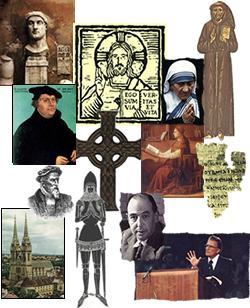
Why Studying Church History is Important

christian-history1

Something we’ve started recently at White Fields is a series of classes we’re calling: School of Ministry and Discipleship.

The idea is that have started offering a series of 5-week Christian education classes on various topics in a classroom setting. I like to think of it as Bible college for people who don’t have time to go to Bible college.

We ran a test of this last spring, learned a few things, and are ready to start again with our first 3 classes: Christianity 101 and Church History: Parts 1 & 2.

Interestingly, the Gospel Coalition just put out an article this week titled: The Role of History in Reclaiming the Christian Mind.

Here’s an excerpt:

“One of the besetting sins of evangelicalism is a mostly ahistorical approach to theology and praxis. As evangelicals, we appeal to the supreme authority of Scripture, and rightly so. But we don’t read our Bibles in a vacuum.”

Understanding God’s working in and through the church over the past 2000 years, as well as how Christianity developed in doctrine and practice is important for us as Christians today. For me, studying Christian History was one of the most enriching and enlightening parts of going to seminary, and I hope to share some of that with other people.

If you live near Longmont and would be interested in attending these free classes, they will be held on Sundays at noon starting April 3.

For more information or to sign up, click HERE.


Is God’s Covenant Conditional or Unconditional?

covenant_gold

According to the late Ray Dillard, professor of Old Testament at Westminster Seminary in Philadelphia, one of the great themes of the Bible is the question of whether the covenant with God is conditional or unconditional.

It is this question and this tension which drives the Old Testament.

There are places where it seems that God says to his people: “It’s conditional. You have to obey me.  I’m a holy God. I can have nothing to do with sin. If you want to be accepted by me, or have a relationship with me, then you have to obey me.”

There are other places where it seems that God is saying: “No matter what you do, I am going to be faithful to you. I will be there, I won’t give up on you, I will save you.”

So which is it?

In a way, you could say that the entire Old Testament is one big plot thickening, in which the big question is: Can we have a relationship with God? And if so: is our relationship with him conditional or unconditional? Is it that we have to fulfill something, or is it that he loves us no matter what?

So what’s the answer?

The answer is actually not found in the Old Testament. It it when we get to the cross of Calvary that the answer is revealed.

The answer is… YES.

It’s not one or the other, it’s both.

The covenant with God is BOTH conditional and unconditional.

In the death of Jesus on the cross you find that you have to take both the conditions of the covenant and the unconditional nature of God’s love seriously at the same time.

Jesus satisfied the conditions of the covenant on our behalf so that God could accept us and love us unconditionally.


Church: Love It or Leave It?

I recently read a statistic that 80% of people in the United States believe you can be a good Christian and have no connection with a church community.

That means: follow Christ, know Christ, relate to Christ.

80% of Americans polled said that it is possible to do these things without being related to any church.

Jesus would disagree.

In the Gospel of John, chapter 17, as Jesus is praying to the Father the night before he is crucified – he looks at his disciples, and he looks forward to the church, which he is going to create by what he’s about to do, and he says:

Father, for their sake I consecrate myself, so that they may be sanctified. (John 17:19)

That word “consecrate” means: “I set myself apart for them!  I am dedicated to them! I live for them!”

Jesus lives for the church. He died for the church. He is wholly committed to the church.

That means that there is never a time when Jesus says to himself, “The church… that little organization I left behind down there… I haven’t thought about them in a while; I wonder how they’re doing… ”  

No! Rather, he lives for the church, he died for the church, and he is wholly committed to the church.


The church is God’s masterpiece, which he gave his life to create – and which he promised to protect forever, never allowing it to be overcome by evil.

In Ephesians chapter 1, it says that Jesus rules all things for the church.

The church is God’s expression of Himself in the world.

The church is God’s chosen and designed vehicle for the carrying out of his mission in the world.

In the Book of Acts, we see God bringing the church into existence, then adding to the church, then multiplying the church – and then sending out missionaries to start more churches.

In the Book of Revelation, where do we see Jesus? He is walking amongst the lampstands, which represent the churches.

God loves the church! It is his masterpiece. Jesus lived and died to create it, and he actively sustains it. He is fully committed to it – and you should be too.

And not just in the sense of the invisible worldwide communion of all who follow Christ – but the local church in particular. It’s easy to say, “Oh, of course I love “the church” in the sense of all the followers of Jesus out there – you know, as long as I don’t have to actually see them or interact with them or have any responsibility towards them…”

The idea that Christianity is a purely private, personal matter and that the church is optional and unnecessary – or even as the leader of a parachurch organization put it to me once: a “necessary evil” – is the product of our individualistic culture rather than the heart of God.

It has been said that the church is like a work of art, a masterpiece which mediocre and even bad artists have been painting over for centuries.

This happens sometimes: a great artist created a masterpiece, but over the years other artists – mediocre or even bad artists – tried to touch it up, and they painted over the top of it, and the challenge is to get underneath, back to the original masterpiece. That requires slow, hard work of scraping away and removing layers.

There is much about the church which turns people off, but there is no way you can say, like 80% of Americans that you can be a good Christian and write off the church and have no commitment to it.

The answer is not to write it off or dismiss it, but to return to the original masterpiece.

If Jesus loves the church, if Jesus is committed to it and lives for it and gave his life for it – then to love Jesus and follow Jesus means to love his church and be committed to it as well.


Dynel Lane, the Media and a Contradiction of Terms

20160219_091150_dynel

Almost a year ago, a tragedy happened here in Longmont: a pregnant woman responded to a Craigslist ad for free baby clothes, only to be attacked and to have her baby cut from her womb and abducted.

The baby did not survive, and the assailant, Dynel Lane is currently on trial this week in the Boulder District Court, however she is not being charged with murder, but with suspicion of attempted first-degree murder, first-degree assault and child abuse knowingly and recklessly resulting in death and unlawful termination of a pregnancy.

Colorado law does not count the death of an unborn child as murder, only if the child lived outside of the womb for some time. The issue in this case is that it’s not possible to prove how long the child lived outside of the womb – so Colorado’s wording of the law will not allow a murder charge in this case, even though wrongful death is obvious.

Dynel Lane has pleaded not guilty to these charges and has come back saying that it was Michelle Wilkins who attacked and tried to stab her, and that she was only trying to defend herself, and the reason she cut the baby out of Michelle’s womb was because she thought Michelle was dead and was trying to save the baby. This however, gives no explanation for why Dynel Lane told medical personal at Longmont United Hospital that the baby was hers, until they realized that she hadn’t given birth and the baby couldn’t be hers.

You can read Dynel Lane’s testimony here.

Today closing arguments are being presented by both sides.

This case presents a conundrum, not only for the wording of the law, but for the media in telling the story.  As one friend pointed out: The Denver Post reported that Dynel Lane “…cut out Wilkins’ fetus before taking the baby to Longmont United Hospital…”

Did you catch that?  She cut out a “fetus” and then took the “baby” to Longmont United Hospital.

It’s a very careful choosing of words which reflects a fundamental belief: that unborn children are not actually children.

The word they’ve coined to help create this false dichotomy – which this case so painfully exposes – is “fetus.” What’s ironic, is that this is based on a failure to grasp the fact that the word fetus is simply Latin for “young person.”

Fetus is Latin for “young person”

Did you catch that?  Young PERSON.    Not “young mass of tissue, akin more to cancer than to a human being.”

This case presents a conundrum for lawmakers and the media, because it shows that a fetus and a baby are not two separate things. Everyone knows that what this woman did was wrong, because she killed a baby… But if we stick with strictly considering the unborn unhuman, then why is this crime so heinous?

Is a baby only a baby if its mother wants it?   Clearly the answer is no.

I will be interested to see what happens in this case. Hoping for justice for Dynel Lane’s crime and mercy for her soul.


Does the Bible Explicitly Condemn Slavery?

Our men’s Bible study is currently going through Tim Keller’s Gospel in Life group study, and last night’s section was about justice. After listening to Keller’s 10 minute teaching on doing justice and showing mercy to various groups, in our time of discussion, one man brought up something that he said had been bothering him for a while: “With all this talk about doing justice, why doesn’t the Bible explicitly condemn slavery?”

Truly, slavery is a terrible form of injustice, and it is a bit of a black eye on Western culture, that British and American people who considered themselves Christians propagated the African slave trade and even used the Bible to justify it. While it is true that Christians led the charge for abolition, there were many Christians on the other side who argued that the Bible condoned slavery. What are we to make of this, and what does the Bible have to say on this topic?

Linguistic Issues

The Hebrew and Greek words used for “slave” are also the same words used for “servant” and “bondservant.” Essentially, there are two kinds of “slavery” described in the Bible: indentured servitude (a servant who was paid a wage or was working off a debt), and the enslavement of someone against their consent and without pay.

In general, the kind of slavery that the Bible talks about is the first kind (indentured servitude), and parameters are put around it to make sure it is fair and humanitarian – but in Leviticus 25:44-46, the Mosaic law allows for Hebrews to take slaves from the surrounding nations. This seems to be the second form of slavery.

Slavery in Historical Perspective

Slavery was a reality of the ancient world. Hammurabi’s code (2242 BC) discusses slavery, the Hebrews were subject to harsh slavery in Egypt as well as Assyria and Babylon later on. In the middle ages, the Moors enslaved Europeans and sold them in North African slave markets, and later the Norse sold other European peoples as slaves in Scandinavia. Roma (Gypsy) people were sold as slaves in Romania only a few centuries ago, and in our modern time, slavery is still practiced in Darfur in Sudan – as well as many exploited people around the world who live as de facto slaves.

As Christians, we believe that God hates the exploitation of the weak and wants us as His people to fight against it. But how then should we understand Leviticus 25? What about other places in the Bible that talk about slavery?

Slavery in the Bible

Bondservants, i.e. indentured servants, were paid a wage (Colossians 4:1), thus the injunctions that “slaves” obey they masters should be understood as speaking of the relationship between an employee towards their employer. In fact, it was common for educated people, including doctors, lawyers and people of other trades, to be “slaves” of wealthy people – a contractual agreement of employment which one freely entered into and was often limited to a designated period of time, but was sometimes for life. This kind of slavery was not based on race, but economics, and several New Testament writers instruct Christians that a person’s employment status should not affect their standing in the church.

Recently I taught about this at White Fields Church in regard to two of Paul’s travel companions from the church in Thessalonica: one an aristocrat and the other a slave; click here for the audio of that message.

The passage from Leviticus 25:44-46 needs to be understood in relation to the nature of the Mosaic Law. The reason there are some things commanded and permitted in the Old Testament which no longer apply today is because of the nature of the Mosaic Law and the nature of Israel as a nation in the Old Testament. Israel was a political and ethnic entity, with God as their king. It was a theocracy in the truest sense. The Law of Moses contains instructions which apply to all people at all times (the 10 Commandments) as well as civil laws which pertain specifically to Israelite society, much like the civil laws that govern our societies today. Furthermore, God actively asserted his justice upon various nations at various times by allowing or even sending another nation to rule over them and enslave them for a period of time. This happened with Israel specifically in Babylon and Assyria: their time as captives and slaves in those nations was the direct judgment of God upon them. Likewise, God says that he is using the Israelites to judge the Ammonites and other Canaanite peoples during the time of the conquest of Canaan. Thus, the permission to take slaves from the Canaanites during this particular period can be understood in this light, but it does not mean a blanket condoning a the practice of slavery.

Does the Bible explicitly condemn slavery?

If we are talking about the kind of slavery that took place during African slave trade, then the answer is: Yes.

Whoever steals a man and sells him, and anyone found in possession of him, shall be put to death. (Exodus 21:16)

“Man-stealing” or kidnapping someone and selling them into slavery, or purchasing someone who had been enslaved this way, was considered one of the worst kinds of sin, those punishable by death.

This is found in the New Testament as well. In 1 Timothy 1:10, “slave-trading” (also translated as “enslaving,” and “kidnapping”) is listed among the most sinful practices, along with murder.

Philemon

Paul’s letter to Philemon is one of the shortest books in the Bible. Philemon was a wealthy man who had slaves working for him, as most, if not all, wealthy people in the Roman Empire did at that time. One of Philemon’s slaves, Onesimus, had escaped and run away, presumably to Rome. Paul ended up meeting Onesimus during his travels, possibly during his imprisonment in Rome, because Onesimus had come in contact with Christians and had become a Christian himself. As they got to talking, Paul discovered that he actually knew the man who had been Onesimus’ master before he escaped: Philemon was also a Christian. So Paul encouraged Onesimus, who had broken contract, and thereby the law, by running away, to return to Philemon and be reconciled with him, and Paul sent him along with the letter which is now part of the New Testament.

In his letter, Paul instructed Philemon to receive Onesimus not as a slave, but as a brother. Furthermore, he told Philemon that if there was anything that Onesimus owed him, that he would like it charged to his (Paul’s) account, and he himself would compensate him for any loss that he had incurred because of Onesimus. One commentator says of this letter that this attitude towards the institution of slavery shows that from the earliest days, Christians were sewing the seeds to explode the institution of slavery.

William Wilberforce, John Newton and the Christian-led Abolitionist Movement

The Abolitionist movement to end “White” on “black” slavery was spearheaded by William Wilberforce, who was motivated by his Christian faith. In opposing slavery, Wilberforce recognized that the slavery mentioned in the New Testament was a slavery of a different kind than that being practiced by the British and Americans. “Racial” slavery was opposed because it was seen to be contrary to the value that God places on every human being, since all are created in His Image and the fact that God “has made from one blood every nation of men to dwell on all the face of the earth” (Acts 17:26).

John Wesley supported the work of William Wilberforce to see slavery abolished. In a letter from Wesley to Wilberforce, Wesley described slavery as “execrable villainy.”

Reading this morning a tract wrote by a poor African, I was particularly struck by that circumstance that a man who has a black skin, being wronged or outraged by a white man, can have no redress; it being a “law” in our colonies that the oath of a black against a white goes for nothing. What villainy is this?

February 24, 1791 (6 days before Wesley’s death)

Wesley opposed slavery because he believed the Bible taught the inherent value of every human life, irrespective of one’s skin color or nationality.

John Newton, the hymn writer who wrote “Amazing Grace,” was a captain of slave ships, and actually continued to do so even after his conversion to Christianity because he was convinced by the prevailing attitudes of his time. He later changed his mind and repented of his involvement in the slave trade, becoming an anti-slavery activist who campaigned against it for the latter part of his life. He wrote a pamphlet titled “Thoughts on the African Slave Trade” which that the slave trade was what we would call in our day a “crime against humanity.” For Newton, like Wesley and Wilberforce, it was his Christian faith and the biblical value of human life which was a deciding factor in his opposition to slavery.

Acts 17:26 is interesting in the discussion of the equal value of all human life. It says that God “has made from one blood every nation of men to dwell on all the face of the earth.” That means that all people, of all nations, of all skin-tones, share the same blood and come from the same origin. Therefore there is no room for looking down on anyone of a particular race or socio-economic class. All human life has value, and as Christians it is our call as the people of God to treat others with dignity.

He has told you, O man, what is good;
and what does the Lord require of you
but to do justice, and to love kindness,
and to walk humbly with your God?
Micah 6:8


Expecting Nothing in Return? Not Usually.

For a long time, I have found this sentence from Jesus to be both extremely beautiful and terribly convicting:

But love your enemies, and do good, and give, expecting nothing in return, and your reward will be great, and you will be sons of the Most High, for he is kind to the ungrateful and the evil. (Luke 6:35)

This is the definition of generosity: giving, expecting nothing in return. Nothing.

That means that a generous person doesn’t keep an accounting in their relationships, i.e. a running tally of who has done more for whom. They don’t keep score. They are free from that – free to give, expecting nothing in return.

That’s a lot easier said than done though…

Recently in my conversations with two people, this topic came up. One in particular likes to help people. He’s always helping people and doing favors. Nice, right? Except there’s one problem: he’s become resentful towards some of the people he’s helped out.

The other person explained to me that he likes to buy things for other people, little token gifts. But he too struggles with feelings of resentment, when he feels that his gestures of kindness are not reciprocated.

Both of these people would say that when they do these things, they don’t expect any form of compensation for them, but yet, both of them feel resentful. Why?

At least in the case of the first person, it is because, albeit subconsciously, oftentimes he isn’t just helping for the sake of helping – he’s doing it because there is a form of compensation that he hopes to receive for doing it. In his case it is not money, it is friendship. If and when friendship does not result, he feels that he was involved in a transaction in which the other party did not pay. The only thing is: the other party wasn’t aware of the assumed agreement and didn’t realize it was a transaction.

“Free” is rarely free.

What that means is that some people give a lot, but they’re not generous – because they give for selfish reasons. For example, the Pharisee in Luke 18:9-14 gave a lot to the Temple, but the reason he gave was so that other people would see it and praise him as a good person. His giving was a means of self-justification and self-glorification. The money still went to good use, and it is certainly better to give to a good cause for bad reasons than to spend money wastefully or only on yourself, but God is also concerned about why we give what we give.

Tim Keller, speaking about generosity, says that some people are always doing things to help other people, but they are actually using those people to feel good about themselves – i.e. they need those people to need them. They need for people to think they are good people. It’s their source of identity and their means of trying to justify their life. They’re not doing nice things for other people for the sake of those people themselves as much as they are actually doing it for themselves.

True generosity is when you act from selfless motivation, giving something and expecting nothing in return.

This is what Jesus encourages, saying, “your father who sees in secret will reward you” (Matthew 6:4)

Again, that is easier said than done. The way we can be motivated to truly act that way is through the message of the Gospel. First of all, the Gospel is that God has been generous to you, not as a transaction, but simply just because He loves you and enjoys blessing you. That’s grace. Secondly, the Gospel gives you an identity: it affirms you, saying that God not only knows you fully, but loves you completely.

Many people believe that they can either be known completely or loved completely, but not both – because if someone really gets to know them, they couldn’t possibly love them. Therefore, in order for people to love them and accept them completely, they cannot possibly allow anyone to know them completely.

But the message of the Gospel is that God BOTH knows you completely and loves you completely – at the same time. That’s incredible love and affirmation.

The message of the Gospel is that you have been justified in Christ, therefore you don’t need to work hard to justify yourself.

And when you really understand that – you’ll be free to give, expecting nothing in return: like God who gives even to the evil and the ungrateful. You’ll be free to give for the sake of giving, for the sake of another person or a cause, with no strings attached, because you are so firm in your identity, that you are already loved and justified and have value. The Gospel sets us free from our ulterior motives in doing even good things and from feelings of resentment towards those we have done acts of kindness for.


Spurgeon Quotes

Charles Spurgeon’s hundreds of sermons are a deep well of eloquent and powerful quotes. Here are a few favorites I recently came across:

Calvinists are often criticized for not considering evangelism an urgent priority, since God is sovereign. Spurgeon was a Calvinist, but these were his thoughts on the importance of diligence in evangelism:

If sinners be damned, at least let them leap to Hell over our dead bodies. And if they perish, let them perish with our arms wrapped about their knees, imploring them to stay. If Hell must be filled, let it be filled in the teeth of our exertions, and let not one go unwarned and unprayed for.

Spurgeon on the gospel which is worth living for, dying for and sacrificing for:

there used to be a gospel in the world which consisted of facts which Christians never questioned. There was once in the church a gospel which believers hugged to their hearts as if it were their soul’s life. There used to be a gospel in the world, which provoked enthusiasm and commanded sacrifice. Tens of thousands have met together to hear this gospel at peril of their lives. Men, to the teeth of tyrants, have proclaimed it, and have suffered the loss of all things, and gone to prison and to death for it, singing psalms all the while. Is there not such a gospel remaining?

Do you have any favorite Spurgeon quotes?  Leave me a comment below.