
In this episode we discuss how White Fields began doing our Easter Egg Hunt outreach in Longmont which has grown over the years into a festival that draws thousands of people every year. We also address the question: “Why would a church put on an Easter Egg hunt?”
Help us spread the word by giving the video a like and sharing it on your social media or sending it directly to some friends. Follow us on YouTube or Vimeo and Soundcloud.
The Last Supper? Actually, No.

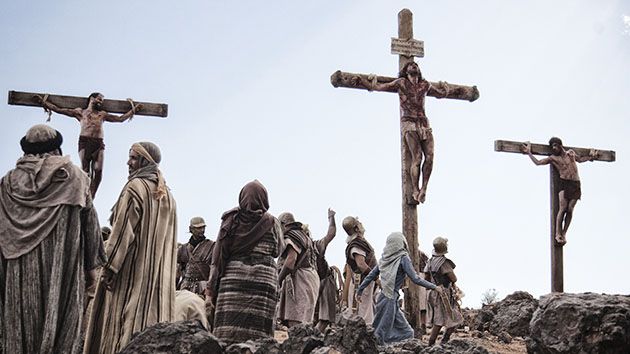
This week is Holy Week, the week during which we remember the final week of Jesus’ life on Earth leading up to his crucifixion and resurrection.
Maundy Thursday is the day in the church calendar when we remember what we call “the Last Supper”, the Passover meal that Jesus shared with his disciples before he was crucified. For more on the “lesser known” days of Holy Week, read: “The Less Famous Days of Holy Week”
However, there are several aspects to these traditions that might be misleading.
First of all, Jesus’ Passover Dinner with his disciples would have been on Wednesday evening. According to Jewish thinking, this would have been Thursday, since in Jewish thinking the new day begins at sundown. Thus, what we consider to be Wednesday night would actually be considered Thursday by the Hebrews.
For more on the timing of Holy Week, read: “Was Jesus in the Grave Three Days and Three Nights? Here’s How It Adds Up”
But most importantly, what is misleading is the name “the last supper”. Consider what James K.A. Smith has to say on this topic:
when Jesus celebrates the Last Supper, he actually intimates that it’s not really the last supper, but the penultimate (second to last) supper.1
Smith is right. Think about what Jesus said during that supper:
Now as they were eating, Jesus took bread, and after blessing it broke it and gave it to the disciples, and said, “Take, eat; this is my body.” And he took a cup, and when he had given thanks he gave it to them, saying, “Drink of it, all of you, for this is my blood of the covenant, which is poured out for many for the forgiveness of sins. I tell you I will not drink again of this fruit of the vine until that day when I drink it new with you in my Father’s kingdom.” (Matthew 26:26-29 ESV)
Paul the Apostle then says this about the practice of the Lord’s Supper by Christians:
For as often as you eat this bread and drink the cup, you proclaim the Lord’s death until he comes. (1 Corinthians 11:26 ESV – emphasis mine)
In other words, the meal commonly referred to as “the last supper” was not ever meant to be thought of as the last supper that Jesus would have with his disciples, but as the preview of the great supper that they would one day share with Jesus in His Kingdom.
In other words, Communion, AKA the Lord’s Supper, AKA the Eucharist is an eschatological supper, through which we remind ourselves week in and week out of what is to come: the wedding feast of the lamb, in the New Jerusalem (Heaven).
Consider these words further thoughts from James K.A. Smith:
there’s a certain sense in which the celebration of the Lord’s Supper should be experienced as a kind of sanctified letdown. For every week that we celebrate the Eucharist is another week that the kingdom and its feast have not yet fully arrived.2
As you remember and reflect during Holy Week on Jesus’ penultimate supper, and every time you take communion, keep in mind that we do so both as an act of looking back and as an act of looking forward! Both are essential aspects of the hope that we have in Jesus!
1 James K.A. Smith, Desiring the Kingdom, p.199
2 Ibid., p.200
Longmont Pastor Video Blog – Episode 5: What is Over-Realized Eschatology?
In this episode we discusses eschatology and more specifically what it means to have an “over-realized eschatology” or even an “under-realized eschatology.”
What does “eschatology” even mean? Check out the video and find out!
For more on this topic, check out the sermon: “Separating the Weeds from Wheat”
Help us spread the word by giving the video a like and sharing it on your social media or sending it directly to some friends. Follow us on YouTube or Vimeo and Soundcloud.
Theological Method and the Leaning Tower of Pisa

Did you know that the Leaning Tower of Pisa is not the only leaning tower in Pisa? There are actually several leaning towers in Pisa as a result of the soft soil in that area.
Did you know that the Leaning Tower of Pisa originally leaned in the other direction? As the builders saw the tower beginning to lean, they built the subsequent levels with one side higher in an attempt to straighten it out by putting more weight on the one side. It ended up being an overcorrection which resulted in the tower leaning in the opposite direction, in which it currently leans.
The Leaning Tower of Pisa as a Picture of the Importance of Theological Method
In my studies at LST I have been studying the topic of theological method. Everyone who thinks about God or the Bible does so methodologically, although they do so with varying degrees of self-awareness and consistency.
There are 5 universally recognized sources of theology: Scripture, Tradition, Reason, Experience and Community.
The way in which a person orders these, the role they believe each of these play, how much importance or credence they give to each one, and how they believe each relates to the other are the questions that go into play in one’s theological method.
Basically: theological method is about the foundations of how we think about God and the Bible.
What we learn from the Leaning Tower of Pisa is that foundations are pretty important. And what happens if you build on a poor foundation, or don’t take care about the foundation you lay – the mistakes the builders in Pisa made – then you will likely end up with a faulty edifice.
Another thing that can happen if you don’t pay attention to foundations is that, like in Pisa, you will end up trying to save your edifice by trying to compensate or over-correct, in which case you may end up leaning in the opposite direction. As Martin Luther said, many of us are like a drunk man trying to ride a horse, who – upon falling off the one side, resolves not to make that mistake again, so he remounts, careful to avoid falling of on the left, and promptly falls off on the right.
A proper theological method will always be driven by Scripture. Reason is a God-given ability which helps us understand His divine revelation, but one which does have its limits in fallen humanity. Tradition is about recognizing the historic interpretations of the Bible by the Body of Christ, such as the Trinity. Again, tradition is not without its errors either, as it has humanity’s fingerprints on it, so this cannot be what drives our theology either. Experience is effective in confirming what we read in Scripture, but what about when we feel something that seems contrary to what the Bible teaches? In these cases, we are to interpret our experiences by the Scriptures, not the other way around. And our community obviously shapes how we read Scripture, but we are to apply the Scriptures to our times and places rather than changing our understandings of Biblical truths based on present cultural mores. Scripture, God’s revelation of Himself, is the proper foundation.
Here is a short video about the Leaning Tower of Pisa:
Longmont Pastor Video Blog – Episode 4: The Trouble with Christianity Is…
In last week’s episode we discussed common hurdles that people in our society face when it comes to believing and embracing Christianity.
Check out the video and then help us spread the word by giving the video a like and sharing it on your social media or sending it directly to some friends. Follow us on YouTube or Vimeo and Soundcloud.
Overcoming Blind Spots

Have you ever heard a recording of your voice and been appalled by how it sounds? “Surely there must be something wrong with that recording,” we think, “because there’s no way that that’s how I really sound!”
But guess what: That’s how you actually sound to other people. The problem isn’t with the recording, it’s that your perception of how you sound doesn’t match the reality of how you actually sound.
From Time’s article: “Why Do I Hate the Sound of My Own Voice?“: “When you hear people talking, sound waves travel through the air and into your ears, vibrating your ear drums. Your brain then transforms those vibrations into sound. However, when you’re the one talking, your vocal cords and airways vibrate. That means you receive two sources of sound: the sound waves that travel into your ears, as well as vocal cord vibrations.”
What is true of our voices is also true of us in general: we aren’t very good judges of how we really are. There is some amount of discrepancy between our perception of ourselves and how other people see us.
We call these things “blind spots.” They are the things about ourselves that we do not see clearly, or are completely unaware of. They can be habits, attitudes, fears, insecurities or other idiosyncrasies.
For example: I can see things in my wife that she doesn’t realize about herself. She is blind to them, but I can see them. The same is true the other way around.
We all have blind spots, but if you were to ask me, “Hey Nick, what are your blind spots?”, my response would be: “How the heck should I know?! By definition they are things that I am blind to! – that I don’t see about myself!”
And oftentimes our blind spots are our greatest weaknesses; they’re the things which can do the most damage to us or hold us back from reaching our goals – they’re the things which will lead us into ruin and trouble!
If that’s the case, then we’ve got a big problem! Because if there are things about us which have the potential to hold us back and even hurt us or wreck us, but we are unable to see them, then we are in big trouble! What can we do to overcome our blind spots?
The only way to overcome our blind spots is by having other people in our lives whom we allow to get to know us well enough that they can see those things about us, and by giving those people permission to speak into your life.
Not any old person will do for this. It doesn’t take a genius to figure out what someone’s weaknesses or blind spots are, but it does take a loving person to be willing to come alongside someone and help them see their blind spots in a way that helps rather than hurts. This is why the Bible says, “Faithful are the wounds of a friend” (Proverbs 27:6). Critiques which come from those who are not committed, loyal friends may often be accurate, but they can often be crushing.
Recently at a conference I spoke about the importance of bringing other people into a creative process. In this case I was speaking particularly about writing sermons, but I believe it is true of other creative processes as well. In order for you to overcome your blind spots, you need people who can help you overcome your idiosyncrasies and weaknesses, but who will do it from a place of commitment and a desire to help. I have experienced this, not only on a creative level, but on a personal level as well.
In order to become the people God is calling us to be, we need brothers and sisters.
Let brotherly love continue. (Hebrews 13:1)
For more on the subject of Christian community, check out this recent message from White Fields Church:
Longmont Pastor Video Blog – Episode 3: Is Christianity in Decline?
Every week we are releasing new episodes of the Longmont Pastor Video series. Last week we discussed the topic of whether or not Christianity is in decline in our society and around the world.
You can help us spread the word by giving the video a like and sharing it on your social media or sending it directly to some friends. Follow us on YouTube or Vimeo and Soundcloud.
For email and WordPress subscribers, click here to see the video.
What Sets Christians Apart? – An Ancient Summary

The Letter to Diognetus dates to sometime in the 2nd Century (approx. 130-180 AD), and is one of the earliest examples of Christian apologetics outside of the Bible. Apologetics is the practice of giving a defense of, or an explanation of, one’s faith for those who have questions or doubts.
The letter, whose author and recipient are unknown, gives us a glimpse into life and thought of early Christians as well as the way that people in their communities viewed them and thought of them.
Here is an excerpt from Chapter 5, on the topic of what sets Christians apart from others in society:
Christians are not distinguished from other men by country, language, nor by the customs which they observe. They do not inhabit cities of their own, use a particular way of speaking, nor lead a life marked out by any curiosity. The course of conduct they follow has not been devised by the speculation and deliberation of inquisitive men. The do not, like some, proclaim themselves the advocates of merely human doctrines.
Instead, they inhabit both Greek and barbarian cities, however things have fallen to each of them. And it is while following the customs of the natives in clothing, food, and the rest of ordinary life that they display to us their wonderful and admittedly striking way of life.
They live in their own countries, but they do so as those who are just passing through. As citizens they participate in everything with others, yet they endure everything as if they were foreigners. Every foreign land is like their homeland to them, and every land of their birth is like a land of strangers.
They marry, like everyone else, and they have children, but they do not destroy their offspring.
They share a common table, but not a common bed.
They exist in the flesh, but they do not live by the flesh. They pass their days on earth, but they are citizens of heaven. They obey the prescribed laws, all the while surpassing the laws by their lives.
They love all men and are persecuted by all. They are unknown and condemned. They are put to death and restored to life.
They are poor, yet make many rich. They lack everything, yet they overflow in everything.
They are dishonored, and yet in their very dishonor they are glorified; they are spoken ill of and yet are justified; they are reviled but bless; they are insulted and repay the insult with honor; they do good, yet are punished as evildoers; when punished, they rejoice as if raised from the dead. They are assailed by the Jews as barbarians; they are persecuted by the Greeks; yet those who hate them are unable to give any reason for their hatred.
This poetic and beautiful description of Christian lifestyle encourages me and challenges me to want myself, my family and my church to be seen as a counter-cultural community with convictions, who are for the community where we live because God so loved the world and He has poured his love into our hearts by the Holy Spirit.
The rest of the letter is also worth reading, particularly Chapters 6 & 9, the latter of which talks about the doctrine of justification.
You can read the letter in its entirety here.
Recap of Recent Travels
I just got back on Saturday night from a 2-week trip, during which I was in NYC, Turkey, Hungary, Ukraine – then a quick jaunt to Southern California, before making my way back home just in time for daylight savings! My internal clock was so confused by that point that losing one more hour of sleep didn’t even register.
Hungary
The purpose for the European trip was to visit White Fields‘ missionaries and ministry partners in Hungary and Ukraine. I got to spend time with Pastor Jani and others from Golgota Eger, the church my wife and I started back in 2005. We also spent time in Budapest at Golgota Budapest and with the leaders of the Anonymous Ways Foundation which helps to rescue women out of sex-trafficking.
Ukraine
After a few short days in Hungary, we flew to Kiev, Ukraine where Mike and I taught at a Pastors and Leaders Conference for Calvary Chapel Ukraine. Our topic was “movement dynamics” and we gave biblical and practical instruction about leading missional churches for about 50 pastors and church leaders from all over Ukraine.
Kiev
On Sunday morning I had the privilege of preaching at Calvary Chapel Kiev. Here is the video of that service if you’d like to watch it:
After church we spent some time with George Markey, one of the pastors of Calvary Kiev, and he shared with us the vision for urban church planting in Kiev – a city of about 5 million people. Their vision is to plant 30 churches in Kiev in 5 years! This year their goal was to begin with 2 church plants, and God has already raised up people for those in the northern Obolon region of the city and in the southern Teremky region. Please join in praying for God’s work in Kiev through Calvary Chapel and for this big vision they have for church planting!
Ternopil and Kharkiv
Sunday evening, three of us got on an over-night train to Kharkiv, the second-largest city in Ukraine, near the Russian border – while Mike and his wife Marika took a train in the opposite direction, to Ternopil in Western Ukraine to visit friends from Calvary Chapel Ternopil.
In Kharkiv, we visited with friends from Calvary Chapel Kharkiv, including Pastor Victor Fisin and Assistant Pastor and missionary Nate Medlong, whose aunt is a member of our church. Nate and his wife Diana are on the front lines of ministry to orphans and children in the foster system in Kharkiv. God is doing great things through their ministry, so please keep them in prayer.
UETS
Returning to Kiev, I got to speak to the students of Ukrainian Evangelical Theological Seminary on Tuesday morning, and then we spent time with one of the teachers and the director of the seminary afterwards. UETS is a doing a great work, raising up pastors and leaders from all over the former Soviet Union. They have a strategic partnership with the seminary I am currently attending: London School of Theology (LST), and they have several hundred students attending their many campuses all over Ukraine and one other former-Soviet country. Pray for their work!
California
While the others from the team came back to Colorado, I had one more trip before I came home: I went to Thousand Oaks, California for the first Expositors Collective – an interactive seminar for young people who have a desire to preach and teach the Bible well. As one of the leaders, I coached a group of young men who had a range of different experiences: from Bible college students to interns, to a staff pastor who sometimes preaches at his church. It was a great event, and one that was geared towards ongoing mentorship. This was only the first of what will hopefully be an ongoing collective to encourage expository Bible teaching in the next generation. For more information, check out expositorscollective.com
It was a great trip, but I’m glad to be home, here where God has called me to be!
Longmont Pastor Video Blog – Episode 2: Calling and Vocation
Every week on Wednesdays we are releasing new episodes of the Longmont Pastor Video series. This week is we discuss the topics of calling and vocation and how the two are related.
You can help us spread the word by giving the video a like and sharing it on your social media or sending it directly to some friends. Follow us on YouTube or Vimeo and Soundcloud.
For email and WordPress subscribers, click here to see the video.