
Does the Bible encourage people who are poor to ask for help, or does it put the onus on the rich to provide for the poor?
The Bible gives a pretty nuanced view of provision for the poor, which includes both proactive provision for the poor, while still requiring action on the part of the recipient.
For example, in Leviticus 19:9-10, farmers were instructed to leave the corners of their fields unharvested so the poor could come and glean. So while the rich were called to sacrifice some of their profits to provide for the poor, the poor were still required to go and harvest the food for themselves. Rather than giving them flour, for example, those in need were required to harvest grain and grind it into flour themselves. If someone was unwilling to work, in this case, they would not eat – but provision was made for them, via sacrifice on the part of those who had enough, to be able to get what they needed to survive.
A similar sentiment is found in the Epistle to the Galatians, where in Galatians 6:2 it says, “Bear one another’s burdens, and so fulfill the law of Christ,” but a few verses later, it says, “Each person will have to bear his own load.” (Galatians 6:5). The difference is that the “burden” mentioned in 6:2 refers to a crushing burden, whereas “load” in 6:5 refers to an individual’s burden of responsibility. So, we are called to help those who are facing burdens they are unable to bear on their own, yet with the goal of helping those people to stand on their own two feet and take responsibility for themselves and their lives.
In 2 Thessalonians 3, we read an interesting passage:
If anyone is not willing to work, let him not eat. For we hear that some among you walk in idleness, not busy at work, but busybodies. Now such persons we command and encourage in the Lord Jesus Christ to do their work quietly and to earn their own living.
2 Thessalonians 3:10-12
For some reason, there were people in the Thessalonian church were unwilling to work, and were living off the generosity of others. Some believe that the reason for this attitude is because they believed it was more spiritual not to work, since they expected the imminent return of Jesus. While Paul encouraged them that Jesus could return at any time, they were encouraged to work in order to provide for themselves if they were able. Here again, we see the importance of providing for those in need while at the same time encouraging people to take initiative and responsibility to work if they are able.
So, to answer the question: The onus is first on those who have to help provide for the poor, no matter how or why they became poor. But this generosity is not to be done in order to create dependence, but rather to relieve a burden and encourage responsibility and independence.
Local Resource: Table of Hope Food Pantry
Table of Hope Food Pantry is a ministry which was born out of White Fields Community Church in Longmont, Colorado and serves Southwest Weld County, Longmont, and the surrounding communities by providing residents in need with nutritious food, the ability to become more self-sufficient, and hope for their future.
Table of Hope is open to anyone, no questions asked, and no ID required. For more information about Table of Hope, check out Table-of-Hope.com
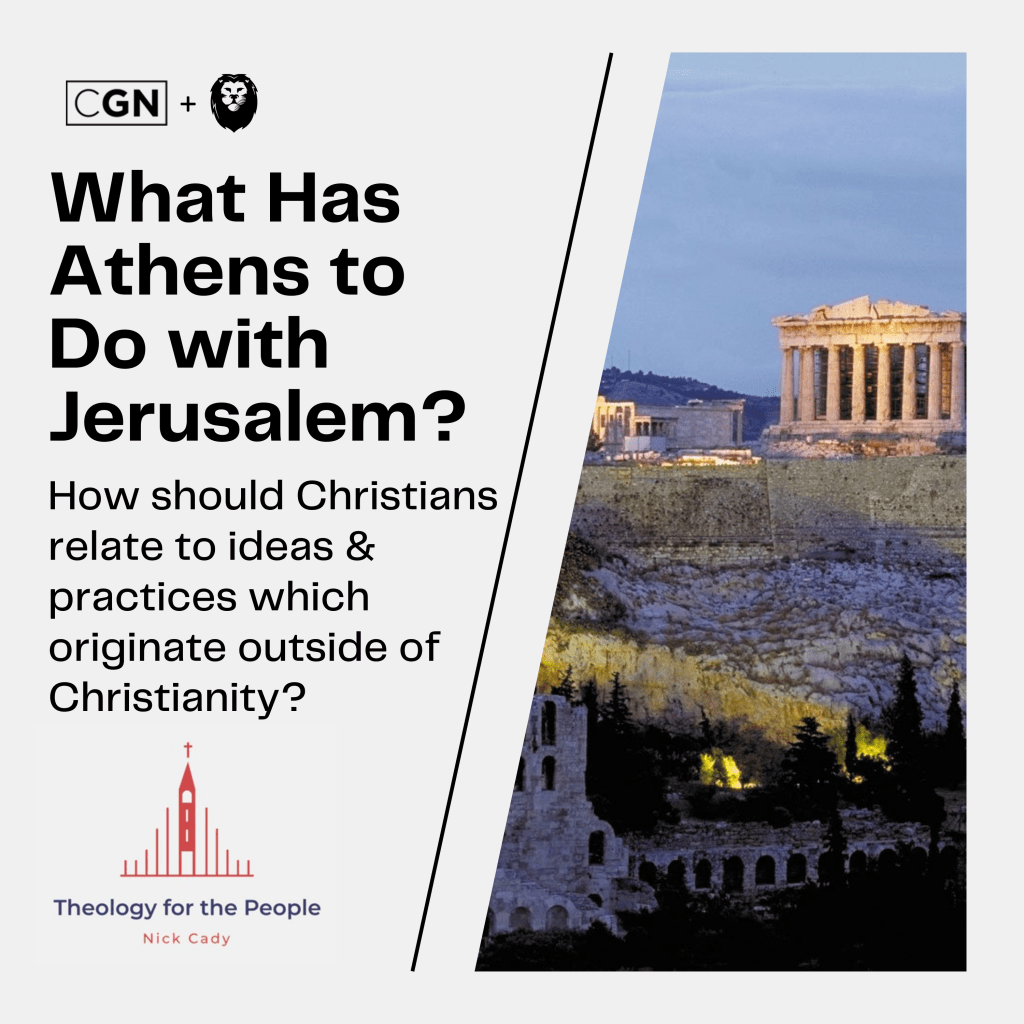
In this episode of the Theology for the People Podcast, Michael and I discuss the topic about which I wrote my BA dissertation: How should Christians relate to ideas and practices in our culture and society which have their origin outside of Christianity?
Some good examples would be:
Can Christians practice yoga? (Origins in Hinduism)
How about martial arts?
What about Christmas? (December 25 was originally a pagan solstice festival which Christians “took over,” detached it from its pagan origins, and infused it with new meaning and made it all about Jesus)
What about psychology?
How about certain instruments, like drums?
What about rock music and electric guitars?
This discussion of how Christians should relate to ideas and practices which originate outside of Christianity can be traced all the way back to a historical argument between Tertullian and Justin Martyr, early Christian apologists and theologians, and can be summarized by Tertullian’s classic question: “What Has Athens to Do with Jerusalem?”
In this episode, Michael and I discuss the relevant principles from the Bible we should follow as guides in navigating these matters.
How does the redemptive narrative arc of Scripture affect how we relate to these practices? How about what Paul says about meat sacrificed to idols in 1 Corinthians 8-10 and Romans 14?
What Has Athens to Do with Jerusalem?: How Should Christians Relate to Ideas and Practices Which Originate Outside of Christianity? –
Theology for the People
In this episode Nick Cady and Michael Payne speak about how Christians should relate to things which originate outside of Christianity, such as yoga, psychology, Christmas, drums, or rock music.
This discussion can be traced all the way back to a historical argument between Tertullian and Justin Martyr which can be summarized by Tertullian's classic question: "What Has Athens to Do with Jerusalem?"
Visit the Theology for the People blog site at nickcady.org – where you can ask questions or submit suggestions for future episodes.
Every November White Fields Community Church hosts Project Greatest Gift, a home-grown ministry that serves children and caretakers in the foster and kinship care systems in Northern Colorado at Christmastime.
Project Greatest Gift works with the Health and Human Services departments of Weld, Adams, and Boulder Counties to provide Christmas gifts, as well as help with groceries and clothing for families in kinship and foster care at this time of the year. This is a practical way we, as the Body of Christ, can show the heart of God and the love of Jesus to those in need in our community.
Last year I sat down with Christine, the founder of Project Greatest Gift, to discuss its origins, the vision behind it, and how God has used it over the past 10+ years. You can watch that discussion in the video below.
You can participate in Project Greatest Gift no matter where you are located since sign-ups for sponsoring children and caretakers are now completely online!
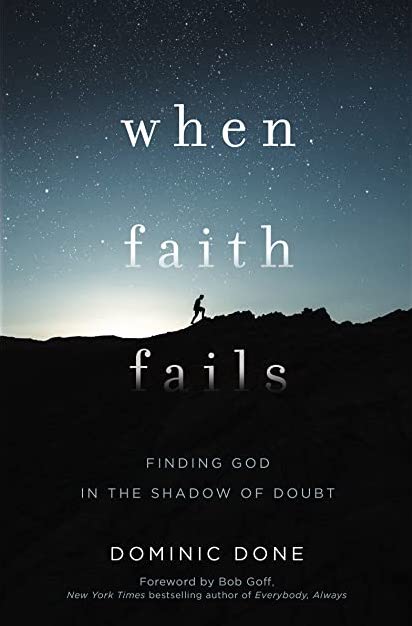
Pastor and author Dominic Done will be joining us at White Fields Community Church on Sunday, November 14, at all three services: 8:00, 9:30 & 11:00 AM.
I was given a copy of Dominic’s book when it first came out, and it sat on my shelf until I picked it up one Saturday to thumb through it, and next thing I knew I had read every word and used up an entire highlighter. I read the whole thing in one sitting because it was so fascinating, well-written, and applicable.
More recently, in September of 2021, I got to spend some time with Dominic in Colorado Springs at an Expositors Collective training weekend where he was one of our guest speakers.
We are excited for Dominic to come and speak at our church on November 14, and I encourage you: if you are within driving distance of Longmont, make sure to join us and bring someone with you who needs to here this important, helpful, and relevant message!
If you have ever struggled with doubts, or if you are curious about deconstruction: what it means, if it is a good thing or a dangerous thing – join us for this special Sunday!
Pastor and author David Guzik joined me on the Theology for the People podcast last week to discuss the topic of Christian liberty.
How do we make sense of “gray areas,” things like drinking alcohol, tattoos, smoking tobacco, music choices, etc. about which some Christians have strong convictions that a Christian person should never engage in those things, whereas others feel that they can enjoy them in moderation without any conflict in their fidelity to following Jesus?
How do we honor one another without being held hostage by every person’s personal whims? David helps shed some light on these and other questions related to this topic in this episode.
David is the author of a free online commentary of the entire Bible, which can be found at EnduringWord.com, along with the audio and video archives of David’s teachings through most of the books of the Bible. Make sure to check out his weekly Q&A sessions on his YouTube Channel, Thursdays at 12:00 PM Pacific Time.
David and I serve together on the steering committee of the Expositors Collective, a group dedicated to raising up the next generation of Christ-centered expository preachers and Bible teachers through weekly podcast episodes, 2-day intensive seminars, and other resources. The next Expositors Collective in-person training weekend will be in Orange County, California on February 18-19, 2022. More information and registration available here.
If you would like to submit a question or suggest a topic for future articles or podcast episodes, you can do that here, by clicking the Ask a Question or Suggest a Topic button.
Navigating Issues of Christian Liberty without Legalism or Licentiousness – with David Guzik –
Theology for the People
Pastor and author David Guzik joins the podcast this week to talk about the topic of Christian liberty.
How do we make sense of "gray areas," things like drinking alcohol, tattoos, smoking tobacco, music choices, etc. about which some Christians have strong convictions that Christians should never do those things, whereas others feel that they can enjoy these things in moderation without any conflict with their fidelity to following Jesus? How do we honor one another without being held hostage by every person's personal whim? David helps shed some light on these and other questions related to this topic.
David is the author of a free online commentary of the entire Bible which can be found at EnduringWord.com, along with the audio and video archives of David's teachings through books of the Bible. Make sure to check out his weekly Q&A sessions on his YouTube Channel, Thursdays at 12:00 PM Pacific.
Visit the Theology for the People blog at nickcady.org, where you can submit questions or suggest topics for articles or future podcast episodes.
Do you have a theology of glory, or do you follow the theology of the cross? Here’s an easy test: honestly ask yourself the question, “Do you seek God primarily because you consider him useful, or because you find him beautiful?”
There are many things about God that are useful; He is omnipotent and He is able to answer prayers, do the miraculous, help in time of need. But do you seek Him primarily for what He can do for you, or do you seek Him primarily because of who He is?
Martin Luther and the Theology of the Cross
A theology of glory, as Martin Luther explained, most famously in his Heidelberg Disputation (1518), views God primarily as useful to you. A theology of glory, as Luther used the term, is really a theology of man’s glory. Rather than focusing on and seeking the glory of God, a theology of glory is focused on seeking your own personal glory — with Jesus as your self-help guru, who gives you a “boost” or a “shot in the arm” to help you achieve your goals and reach your potential.
The theology of the cross, on the other hand, states that it is ultimately by looking at the cross that we learn who God is and who we are (cf. Hebrews 1:1-2). For example, the cross of Christ shows us that, as human beings, we are completely unable to save ourselves — this is why the Jesus’ death on the cross was necessary. Furthermore, it is through the cross that we come to known the depth of God’s love for us.
The theology of the Cross understands that Jesus is your savior, not your side-kick or personal assistant. The cross causes us, as Paul the Apostle puts it in Philippians 3:3, to “glory in Christ Jesus and put no confidence in the flesh,” i.e. our own abilities or goodness to justify ourselves or earn God’s blessings.
As we come to see the beauty and depth of God’s love, displayed for us in the most ultimate way on the cross, it compels us to respond by surrendering our lives to Him (2 Corinthians 5:14-15). This transforms us from being people who seek to use or leverage God for our own power or glory, and who instead take up our crosses and die to ourselves, that Christ might live in us (Galatians 2:20). We do this, remembering that Jesus surrendered himself to the will of the Father, even unto death on a cross, after which God highly exalted Him (Philippians 2:8-9). Therefore, we also know that if we, rather than seeking to exalt ourselves, seek to exalt Jesus and surrender our lives to Him, God will exalt us in the end as well (1 Peter 5:6).
Useful or Beautiful?
Do you seek God primarily because you consider him useful, or because you find him beautiful? How you answer that question will have big implications for how you view God, and how your faith weathers the storms and trials of this life. For example, if you seek the Lord primarily because you find Him useful, what will happen if there is ever a time when you feel that following Jesus isn’t useful? What if God doesn’t answer your prayer in the way, or within the time frame you expected, or hoped?
If, however, by looking at the cross, you become acutely aware of the beauty of God’s heart and the depth of his love, you will have a faith that is able to weather any storm.
By looking at the cross, we are made aware of who God is and who we are. May we look to the cross, and rather than putting confidence in our flesh, may we glory in Christ Jesus. As we look to the cross and see the beauty and love of God on display, and may it compel our hearts to live not for our own glory, but for Him who died and was raised for us.
If you own a Bible in your own language, it is a direct result of the Protestant Reformation, and the key figure God used to ignite that worldwide movement of returning to the Bible was Martin Luther: a German monk and professor of theology at the University of Wittenberg.
I grew up attending a Lutheran school until eighth grade. During my time there, I learned a lot about Luther, including studying his catechism. Years later, when I put my faith in Jesus and was born again, I started attending a Calvary Chapel church; and over the years, I have grown in appreciation for Martin Luther and the pivotal role he played in God’s work in the world.
The last day of October is celebrated around the world as Reformation Day, because it was on October 31, 1517, that Martin Luther set into motion the movement now known as the Reformation, by mailing a letter. Yes, you read that right: on the eve of All Saints Day (Halloween = “All Hallows Eve”), Luther mailed, not nailed, a letter.1 2
The letter was addressed to the Archbishop of Mainz,3 and Luther sent it because he wanted to alert the archbishop that plenary indulgences were being sold in the archbishop’s name by a man named John Tetzel. Tetzel had been sent from Rome the year before to sell these certificates promising the release of a soul from purgatory in exchange for their purchase, as a fundraising campaign for the building of St. Peter’s Basilica. Luther assumed the archbishop was unaware that this was going on, and that upon receiving his letter, the archbishop would tell Tetzel to cease and desist. That, however, is not what happened.
As a result of the archbishop’s inaction, Luther, as a professor, decided to organize a scholarly debate on the topic of indulgences: whether they were actually effective in procuring the release of a soul from purgatory. To this end, he wrote up what are now known as the 95 Theses, which he titled: A Disputation on the Power and Efficacy of Indulgences. This paper, which was posted on the door of the All Saints Church in Wittenberg, was an invitation to a scholarly debate, but in it Luther challenged both the selling of indulgences and the doctrine of purgatory as unscriptural. By doing this, Luther was challenging the Roman Catholic Church’s teaching and authority, and insisting that the Bible, not the church, should be the ultimate arbiter of what constitutes correct doctrine.
The posting of the 95 Theses is considered the spark which ignited the Protestant Reformation: a movement which sought to reform the church by shedding man-made traditions and returning to the faith which had been handed to us by God in the Holy Scriptures.
Today, there are nearly 1 billion Protestant Christians in the world.4 In the “majority world,” including Africa, Asia, Latin America, and the Muslim world5, Protestant Christianity is growing faster than any other religious movement by conversion.6
Before Luther, there were others who sought to reform the church and bring the Bible to the people. John Wycliffe (1331-1384) published the first English translation of the Bible. Jan Hus (1369-1415) taught the Bible to the common people in Prague. Peter Waldo (1140-1218) commissioned a translation of the New Testament into the local vernacular of southern France. Each of these people were persecuted for trying to put the Scriptures into the hands of the common people.
Over a century before Luther, Hus had protested the sale of plenary indulgences, pointing out that the idea that God’s favor or blessings could be earned in any way, runs contrary to the message of the gospel and the testimony of the Scriptures, and the concept of purgatory is in conflict with the biblical teaching of the sufficiency of Christ’s atonement on the cross.
Martin Luther had long struggled with feelings of condemnation and inadequacy, until his own reading of the Scriptures led him to an epiphany when he read Habakkuk 2:4: “Behold, as for the proud one, His soul is not right within him; But the righteous will live by his faith.” This led Luther to the other places in the Bible where this phrase is repeated: Romans 1:17; Galatians 3:11, and Hebrews 10:38 – where the message is clear: It is not by our own works that we are justified before God, but it is God who justifies us sinners as a gift of His grace, and we receive that justification by faith. After all, the Bible explains, this is how Abraham, the father of our faith, became righteous: he believed God and it was credited to him as righteousness (Genesis 15:6; Romans 4:3, 22). We receive God’s righteousness, which he has provided for us in Christ, in the same way.
Luther became convinced that everyone needed to be able to read the Scriptures for themselves, and he took it upon himself to translate the Bible into German, a translation that is still in use to this day. Soon the Bible was translated into other languages, including English, as the Reformation spread.
Martin Luther called people back to a belief that the Scriptures are perspicuous (clear), and can be understood by those who read them. He called us back to a belief in the inspiration and sufficiency of Scripture: that it is the ultimate rule of faith, by which we are to measure both doctrine and our lives.
In April 1521, Luther was brought before Holy Roman Emperor Charles V at the Diet of Worms, at which Luther was commanded to recant his teachings. Luther refused to do so, famously stating:
“Unless I am convinced by the testimony of the Holy Scriptures or by evident reason – for I can believe neither pope nor councils alone, as it is clear that they have erred repeatedly and contradicted themselves – I consider myself convicted by the testimony of Holy Scripture, which is my basis; my conscience is captive to the Word of God. Thus I cannot and will not recant.”7
This October, as we celebrate Reformation Day, may we take the opportunity to open the Bible and read it for ourselves, and may we embrace and celebrate the message of the gospel: that Jesus Christ came to save sinners, and that we are justified freely by his grace as we trust in him by faith.
NOTES
1 Marshall, Peter. 1517:Martin Luther and the Invention of the Reformation. OUP Oxford. 2017.
Last week Gino Geraci, nationally syndicated radio show host based in Littleton, Colorado, came up to record a few episodes for the Theology for the People podcast. Those episodes are available now, and links and descriptions for them can be found below.
Gino is the founding pastor of Calvary South Denver. He recently stepped down as Lead Pastor of that church, and his son Jon took over in that role. Gino now focuses his time on his daily radio show, Crosswalk with Gino Geraci, which can be heard on the Salem Radio Network.
Gino also works with one of my favorite online organizations: GotQuestions.org – a great internet resource based out of Colorado Springs that provides concise, biblical answers to the questions that people are asking about God and the Bible.
Check out these episodes, subscribe to the podcast, and share with others if you find this content helpful!
In this episode, Gino and I speak about what it means when the Bible tells us that we, as human beings, have been created in the image of God (Imago Dei in Latin).
What are some of the implications of this doctrine as relates to the value of human life, and what would be the implications if this were not true?
Something I am concerned with is how Christianity, because of our belief in the Imago Dei, believes that people with disabilities have inherent dignity. There are other implications of this, which we explain and discuss in this episode.
Imago Dei: What Does It Mean that We are Created in the "Image of God"? – with Gino Geraci –
Theology for the People
Gino Geraci is a pastor, Bible teacher, and syndicated radio show host. He is the founding pastor of Calvary South Denver in Littleton, Colorado, from which he recently retired and is now focusing fully on his radio and online ministries.
In this episode, Gino and Nick speak about what it means when the Bible tells us that we, as human beings, have been created in the image of God (Imago Dei in Latin). What are some of the implications of this doctrine as relates to the value of human life, and what would be the implications if this were not true?
You can find Gino's teachings on his website: ginogeraci.com. His radio show can be heard here: Crosswalk with Gino Geraci, and make sure to check out the other ministry he works with: gotquestions.org
Is it true that “all truth is God’s truth”? What does it mean when the Bible talks about a “mystery” that has been revealed?
In this episode Gino and I discuss the topic of “revelation,” and the question of how we know what we know about God, including His will for us, our lives, and the world.
In the previous episode, we talked about what it means that we are created in the “image of God” and what the implications would be if we were not created in God’s image. That discussion ended with a comment that the doctrine of the Imago Dei hinges on the question of revelation.
The Bible talks about two specific kinds of revelation: general and specific. In this episode we give some examples of each and answer questions like: “Does one have greater value than the other?” and “What are the benefits of each, and what, if any, limitations do these different forms of revelation carry?”
General vs. Specific Revelation: How Do We Know What We Know About God? – with Gino Geraci –
Theology for the People
Is it true that "all truth is God's truth"? What does it mean when the Bible talks about a "mystery" that has been revealed?
This week Gino Geraci joins the podcast once again to discuss the topic of "revelation," and the question of how we know what we know about God, including His will for us, our lives, and the world.
The Bible talks about two specific kinds of revelation: general and specific. In this podcast we give some examples of each and answer questions like: Does one have greater value than the other? What are the benefits of each, and what, if any, limitations do these different forms of revelation carry?
In last week's episode, we talked about what it means that we are created in the "image of God" and what the implications would be if we were not created in God's image. That discussion ended with a comment that the doctrine of the Imago Dei (Image of God) hinges on the question of revelation. In this episode we delve into that question.
Check out the Theology for the People blog, and find Pastor Nick's sermons on the White Fields Church podcast and whitefieldschurch.com
Shane Angland (MA Theology, Dallas Theological Seminary), joins the podcast this week to talk about Bible translations and what makes some translations better than others.
Shane is the lead preaching elder at Ennis Evangelical Church in Ennis, Ireland. A native of the west coast of Ireland, Shane served as a missionary in Ukraine with the International Fellowship of Evangelical Students, and later earned a Masters Degree from Dallas Theological Seminary, where the focus of his studies was on Textual Criticism.
In this episode, Shane explains what Textual Criticism is (and is not), and explains the important elements involved in Bible translation, such as translation philosophy and source documents. He also dispels some common misconceptions about Bible translations, such as that newer translations remove content from the Bible, or that they are less accurate than older translations.
Shane and I have some common friends in Ireland and Ukraine, and it was great getting to know him and listening to him share his knowledge on this subject.
See also the series of articles on Bible translation I posted here years ago:
Shane Angland (MA Theology, Dallas Theological Seminary), joins the podcast to talk about Bible translations and what makes some translations better than others.
Shane is the lead preaching elder at Ennis Evangelical Church in Ennis, Ireland. A native of the west coast of Ireland, Shane served as a missionary in Ukraine with the International Fellowship of Evangelical Students, and later earned a Masters Degree from Dallas Theological Seminary, where the focus of his studies was on Textual Criticism.
In this episode, Shane explains what Textual Criticism is (and is not), and explains the important elements involved in Bible translation, such as translation philosophy and source documents. He also dispels some common misconceptions about Bible translations, such as that newer translations remove content from the Bible, or that they are less accurate than older translations.
If you’ve benefited from this episode, please share it online, and leave a rating and review for this podcast in the Apple Podcast store. Also, visit the Theology for the People Blog at nickcady.org.
Did you know that not everybody embraces Christ-centered hermeneutics with open arms?
Crazy, right? So, what exactly are their objections – and are any of them valid?
In this week’s episode of the Theology for the People Podcast, Mike Neglia joins me again for Part 2 of a 2-part series on Christ-centered hermeneutics. In Part 1, we discussed what a hermeneutics is, as well as the scriptural basis for Christ-centered hermeneutics.This week, in Part 2, we respond to some objections to Christ-centered hermeneutics.
These objections were given to me by a seminarian and author, who is involved in ministry, serving as a preacher in his church.
It all began when a friend of mine, seeing some of my presentations on Christ-centered hermeneutics, reached out and told me that a friend of his doesn’t agree with this position. I asked him to write out his objections for me, and he gave me a list of 8 reasons why he takes issue with Christ-centered hermeneutics.
Then, Mike and I went and read a journal article by Abner Chou, in which he used a lot more words to basically state some objections similar to those given by this friend of a friend.
Finally, Mike asked the Expositors Collective Facebook Group about whether they held or had heard of objections to Christ-centered hermeneutics, and the response we received also mirrored one of the points made by this friend of a friend in his list of 8 objections.
So, in this episode, we go through the 8 objections one-by-one, and respond to each of them.
The interpretive approach this friend-of-a-friend uses is what he calls the “grammatical-historical” hermeneutic. As you will hear in the episode, I think that a grammatical-historical hermeneutic dovetails perfectly with a Christ-centered hermeneutic, and the two are not at odds, as if we must choose one or the other. Certainly we can, and should choose both.
Christ-Centered Hermeneutics – Part 2: Responding to Objections to Christ-Centered Hermeneutics – with Mike Neglia –
Theology for the People
This week Nick Cady and Mike Neglia respond to some objections to Christ-centered hermeneutics.
Is Christ-centered hermeneutics actually ego-centric, in that it focuses on what Jesus has done for “me’? Does Christocentricity fail to honor the trinitarian nature of God by focusing primarily on the Son? Does it fail to teach what the text actually says in an attempt to make every message about Jesus?
Nick and Mike respond to these, and other questions in this episode, which is Part 2 of a 2-part series on Christ-Centered Hermeneutics. In Part 1, we laid the foundation for what Christ-Centered Hermeneutics is, and whether it is a true and faithful way to read the Bible.
Mike Neglia is the lead pastor of Calvary Cork in Ireland and he is the host of the Expositors Collective Podcast, which has an incredible line-up of guests, with interviews to help you grow in your private study and your public proclamation of God's Word.
Resources mentioned in this episode:
Fred Sanders, The Deep Things of God (Second Edition)