
Reader Response: Does the New Testament Require Tithing?

There is a page on this site where readers can submit questions or suggest topics. Recently I received the following question:

Do we still have to pay tithes in the New Testament?

Background: What is a “Tithe”?

The tithe (10% of income) was required by the Law of Moses (Leviticus 27:30-33, Numbers 18:21-24) to be given by Jewish people to support the ministry of the Levites and the Temple.

In addition to the tithe, other offerings were to be paid as well. The people of Israel were to be generous with their giving, both to support the ministry of the Temple, but also to care for the needs of the poor.

Jesus talked about Tithing

Jesus said:

“Woe to you, scribes and Pharisees, hypocrites! For you tithe mint and dill and cumin, and have neglected the weightier matters of the law: justice and mercy and faithfulness. These you ought to have done, without neglecting the others.”

Matthew 23:23

Jesus’ primary aim was to criticize the hypocrisy of the Pharisees, who tithed even off the herbs they grew in their garden, but neglected justice and mercy towards others. But notice, Jesus does say: “These you ought to have done without neglecting the others.”

In other words: Jesus is telling the Scribes and Pharisees that they should tithe! Jesus is saying that tithing is a good thing, and that people should do it!

This alone should be enough to say that tithing is taught in the New Testament, by Jesus himself.

Certainly Christians are required to be giving people, and generous people (see 1 Timothy 6:18).

Christians are encouraged to go above and beyond a Tithe

The most penetrating passage in the New Testament about giving is in 2 Corinthians 8-9. There we read about how the Corinthian Christians, though they were facing severe trials, “their abundance of joy and their extreme poverty have overflowed in a wealth of generosity on their part” (2 Corinthians 8:2).

The Corinthians first gave themselves to the Lord, and then to others [through their giving].

Thus, perhaps Christians should aim for 20% in their giving rather than 10%. Why not 30%?

For you know the grace of our Lord Jesus Christ, that though he was rich, yet for your sake he became poor, so that you by his poverty might become rich.

2 Corinthians 8:9

Maybe you’re asking the wrong question!

Many Christians unwittingly ask the question: “What is the LEAST amount that I can give, in order to make God happy/not break God’s rules?” Instead, the New Testament would encourage us to ask the question: “How can I rearrange my life, so that I can be more generous and give more to further the mission of God in the world?”

The tithe is not God’s way of raising money, it’s God’s way of raising kids.

An incredible thing that Paul writes to the Corinthians in 2 Corinthians 8, is that giving, or tithing “benefits you”! (2 Corinthians 8:10). Giving has a positive transformative effect on the person who gives.

Personally, I tithe because it is a matter of values, and it trains my heart. By making my tithe the first check (or automatic withdrawal) from my account ever month, I am making a clear statement of my priorities and values, which sends a message to my heart that it is more important to invest in the furtherance of God’s Kingdom, and the funding of God’s work in the world, than it is to be able to buy more stuff or do more things for recreation.

Tithing is a “keystone habit,” which means that it shapes the way that you live and affects all other areas of your life, when you make it a priority. In other words, choosing to tithe means that I will not be able to do certain things, which I would have been able to do if I didn’t tithe – and that’s good!

A sacrifice is only a sacrifice if it hurts.

David said, I will not sacrifice to the Lord that which cost me nothing (2 Samuel 24:24)  The woman who gave 2 mites, who Jesus pointed out to his disciples: that was a relatively insignificant amount of money to most people, but for her, it hurt!

Worship and sacrifice are very closely related. We all sacrifice for that which we worship. If you want to know what you truly worship, consider the things for which you are willing to sacrifice other things, especially things like time, family, or money.

God is looking for vessels He can pour into, who will then pour back out what He has given them in ways that He desires. If we show ourselves faithful stewards with the little things that God has entrusted to us, he may entrust us with more. Furthermore, God is a God who gives radically and generously; in fact he gave his all for the mission of bringing salvation to the world. To be like him and share his heart necessitates that we be willing to sacrifice for these same ends.

Do Christians Have to Tithe?

The New Testament does not explicitly state that Christians must tithe. However, it is a biblical principle, about which God invites and challenges us to test him! (see Malachi 3:10).

To Create Lines of Differentiation Between the Old and New Testament Risks Creating a False Dichotomy

To create a line of differentiation between the Old Testament and the New Testament risks creating a false dichotomy. There is only one mission and plan that God has been carrying out through the ages. The New Testament does not negate the Old Testament, but fulfills it. Thus, though we are no longer under obligation to keep the Law of Moses, Old Testament principles do not need to be restated in the New Testament to remain valid.

God loves a joyful giver. He doesn’t want people to give out of a sense of coercion or obligation. But this is a principle of which God says: “If you want to live the full life that I have designed for you, if you want to experience joy, then walk in this way,” – ‘the way everlasting’.

Related Post: Should I Tithe If I’m in Debt?

Ask a Question or Suggest a Topic

If you have a question or would like to suggest a topic for me to address here on the blog, click here: Ask a Question or Suggest a Topic
Romanticism & “Pagan Protestantism”: Christianity in Relation to Western Culture – with Andrew Wilson

In this episode of the Theology for the People podcast, the first of Season 4(!), I speak with Andrew Wilson.

Andrew has a PhD from King’s College London, and he serves as the teaching pastor at King’s Church London.

In his new book, Remaking the World: How 1776 Created the Post-Christian West, Andrew looks at 7 transformational events which took place in 1776, that paved the way for today’s post-Christian western culture. By understanding how those events influence the way people think today, Christians can more effectively share God’s truth in a post-Christian age.

In this episode, Andrew and I talk about the TV show Lost, along with discussions about philosophy, and history, how these things relate to Christian theology, mission, and practice, and how God’s Word and the hope of the gospel are particularly relevant to the Western mindset today.

Click here to listen to the episode, or listen in the embedded player below.

Andrew Wilson – Romanticism & “Protestant Paganism”: Christianity in Relation to Western Culture Theology for the People

In this first episode of Season 4, Nick Cady speaks with pastor and author Andrew Wilson about why understanding western culture is important for Christian theology and mission. Andrew has a PhD from King’s College London, and he serves as the teaching pastor at King’s Church London. In his new book, Remaking the World: How 1776 Created the Post-Christian West, Andrew looks at 7 transformational events which took place in 1776, that paved the way for today’s post-Christian western culture. By understanding how those events influence the way people think today, Christians can more effectively share God’s truth in a post-Christian age. Make sure to visit the Theology for the People website at nickcady.org

Is the Virgin Birth Essential to the Gospel?

Several people over the years have asked me whether the virgin birth of Jesus is an essential element of the gospel message.

Emergent church leader Rob Bell, for example, asked the question of which parts of the biblical story of Jesus are essential to believe in order to be saved. He specifically questioned the necessity of belief in the virgin birth.

Additionally, this week I came across a discussion online of people arguing that instead of the original lyrics to the hymn Hark! The Herald Angels Sing, the line “offspring of the virgin’s womb” should be changed to “offspring of Mary’s womb.” The reason for this, they said, was that not saying Mary’s name, but instead identifying her according to her sexual status, takes away from her dignity. Therefore, we should say her name, and get rid of this “unnecessary” controversy regarding the virgin birth.

So, is the virgin birth essential to the gospel?

I believe it is. In this video, I explain the reasons why:

Understanding Doubt & Deconstruction: Part 3 – Reasons People Deconstruct

Continuing through the workshop that Aaron Salvato and I presented at this year’s Calvary Chapel pastors and leaders conference on the topic of Understanding Doubt and Deconstruction, here is Part 3, in which we delve into topics such as:

  • Contradictions
  • Abuse
  • Politics
  • Hypocrisy

My Book in Spanish is Now Available for Purchase

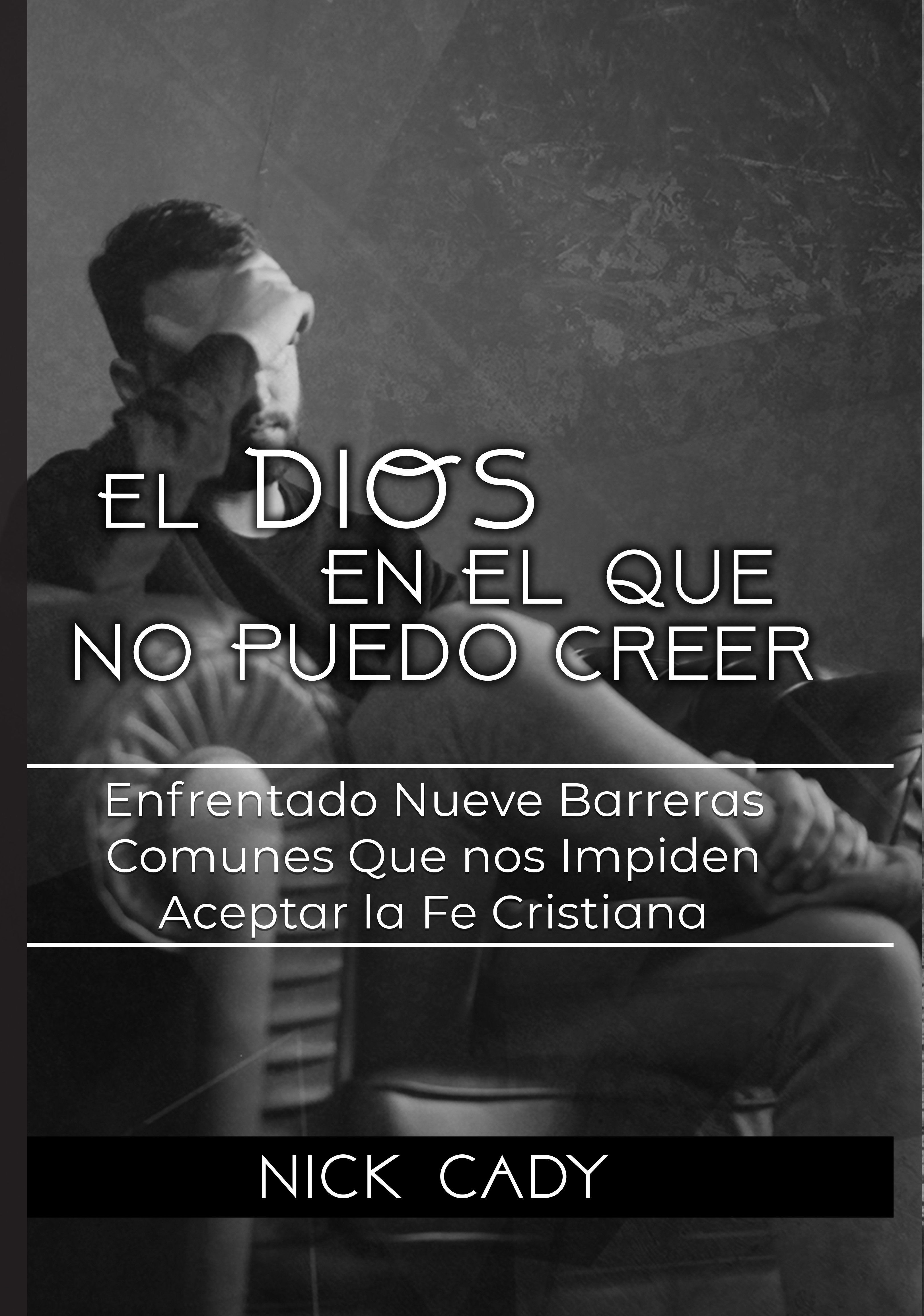
The Spanish translation of my book, The God I Won’t Believe In: Facing Nine Common Barriers to Embracing Christianity, was released today in both paperback and Kindle formats!

It will be available for purchase at the White Fields Church book shop, or online on Amazon and other online retailers.

Check it out here: El Dios En El Que No Puedo Creer: Enfrentando Nueve Barreras Comunes Que nos Impiden Aceptar la Fe Cristiana.

If you know of anyone who would benefit from this resource, please share it with them!

Is Praying in the Spirit Speaking in Tongues?

Recently at White Fields Church, we studied the Epistle of Jude, which contains a phrase which is also used in elsewhere the Bible: “Praying in the Holy Spirit”.

In this Sermon Extra video, Pastor Michael Payne and I discuss whether praying in the Spirit is the same thing as speaking in tongues, what speaking in tongues is, and what it means to pray in the Spirit.

Understanding Doubt & Deconstruction: Part 2 – The #Deconstruction Movement & How We Got Here

Recently I posted Part 1 of a workshop that Aaron Salvato and I presented at this year’s Calvary Chapel pastors and leaders conference on the topic of Understanding Doubt and Deconstruction.

The purpose of the workshop was to help equip Christian leaders to understand and engage those experiencing doubts or going through a process of deconstruction, in order to help strengthen their faith in Jesus and their trust in the Bible, so they might wholeheartedly embrace the gospel.

In Part 2 of this series, Aaron and I speak about the #deconstruction movement and different causes of deconstruction, including the influence of the Emergent Church movement in the early 2000’s.

Release Date for My Book in Spanish: El Dios En El Que No Puedo Creer

The Spanish translation of my book, The God I Won’t Believe In: Facing Nine Common Barriers to Embracing Christianity, has finished the editing and design process, and has an official release date!

The Spanish title is: El Dios En El Que No Puedo Creer: Enfrentando Nueve Barreras Comunes Que nos Impiden Aceptar la Fe Cristiana, and it will be available in paperback and Kindle formats, and will be released on Thursday, December 7, 2023.

The Kindle version is currently available for pre-order.

I’m excited for this to come out and reach a whole new audience. Please pray that it reaches many people and helps them move from doubt to belief!

Are We Living in the “End Times”?

With the flare up of events in Israel (see also: Israel at War: How to Pray and How to Help), many people are asking, “Are we living in the End Times?”

The short answer is: YES!

Yet, some further explanation will provide helpful in understanding exactly how to understand the times we are living in and what to expect.

The Promise of Jesus’ Coming

In 2 Peter chapter 3, Peter the Apostle responds to those who, in his day, were asking the question: “Where is the promise of his coming?”

In other words, even 2000 years ago, in the First Century A.D., people were asking this same question: “Are we living in the End Times?” And the question, “If Jesus said he would return, why hasn’t he come back yet?”

Peter tells us that “the promise of Jesus’ coming” was predicted by the Old Testament Prophets, was promised by Jesus, and by the Apostles. In 2 Peter 3:7, he tells us that Jesus’ (second) coming will involve a day of judgment, and the destruction of the ungodly.

Peter says in 2 Peter 3:10-12 that Jesus’ (second) coming will be “the day of the Lord,” in which the Lord will return to Earth, and the heavens will pass away with a roar, and the heavenly bodies (stars) will be burned up and dissolved, and the earth and everything in it will be exposed.

And in 2 Peter 3:13 he says that this will not only be a day of judgment, but for those who are in Christ, it will be a day of salvation. It will be at this time that God’s promise will be fulfilled, of bringing about the New Heavens and New Earth in which righteousness dwells (see also Revelation 21:1-4)

The Day of the Lord

The “Day of the Lord” is a really important concept in the Old Testament, especially in the Prophets. It refers to a time in history when God intervenes in the happenings on Earth, in order to bring judgment on those who do evil, and salvation to those who belong to Him.

Throughout the Old Testament there were many smaller “days of the Lord,” when God intervened and brought judgment (such as the flood in the time of Noah, which Peter mentions in 2 Peter 3:6.

But all of these “smaller” “days of the Lord” were just previews and foreshadowings of THE Day of the Lord, which is still yet to come. And what Jesus told us is that THE Day of the Lord, AKA: “the day of God’s coming, will be the day when He returns to Earth in the Second Coming.

The “Parousia”

The phrase “Second Coming of Christ” is not found in the Bible, but instead, the word the Apostles used to speak about the Second Coming was the Greek word “word “”Parousia,” which means “presence,” or “appearing,” or “arrival.” More specifically, it might be translated as, “presence after absence.”

The word “Parousia” is used 13 times in the New Testament, and every time it is used it speaks of Jesus’ Second Coming.

For example, check out: 1 Corinthians 15:231 Thessalonians 2:193:134:155:232 Thessalonians 2:1,8James 5:7,82 Peter 1:163:4,121 John 2:28.

In Jesus’ first coming, he came to live as one of us, as our substitute in life (a life of perfect obedience to God), and in death (as an atoning sacrifice for our sins). Further, he resurrected, in order to make a way for us to also be resurrected from death to life everlasting.

In Jesus’ Second Coming, he will come as king: judge, and ruler.

Are we living in the Last Days?

Peter tells us in 2 Peter 3:3 that in the last days, there will be scoffers who will say, “Where is the promise of His coming?” In other words, “If Jesus is really coming back, why hasn’t he come back yet?”

After all, modern readers of the Bible might ask the question, “If Peter and the early Christians, who lived nearly 2000 years ago, thought that they were living in the last days, then does that mean that they were wrong?” “And what does that mean for us today, especially if you say that we are living in the Last Days right now?”

It is true, that the early Christians believed that Jesus was going to return during their lifetimes, and that he did not, and that he still has not returned since that time. So, if those early Christians thought that they were living in the End Times, then how can we say that we are living in the End Times?

This requires an understanding of what the “End Times” is.

Are we living in the End Times? Yes. Was Peter living in the End Times when he wrote this letter? Also: Yes. 

Here’s why: Because the “End Times” or “Last Days” is a PERIOD of time which BEGAN with Jesus’ ascension into Heaven, 40 days after his resurrection.

How do we know that? Because in Acts chapter 2, we read about how, on the day of Pentecost (10 days after Jesus’ ascension), the Holy Spirit was poured out on the 120 believers who were gathered in an upper room in Jerusalem. As a result, those people began to speak about God’s amazing works, in multiple languages, and the people down on the street who heard them doing this, said amongst themselves, “Look!  Those people are already drunk, and it’s only 9:00 in the morning!” (Acts 2:13)

And Peter stood up at that moment and addressed the crowd, and said to them: These people are not drunk!   Rather this is what was spoken of by the Prophet Joel. (Acts 2:14-16)

Peter then quoted from the Book of Joel, chapter 2 — where the Prophet Joel said that in the Last Days, God will pour out his Spirit, and these kinds of things would happen. (Acts 2:17)

In other words: Peter was explaining to those people, that with the ascension of Jesus and the coming of the Spirit on Pentecost, the “Last Days” had begun. The Last Days is the final period in the timeline of history, before the “coming of the Lord.” We are in that period right now, and have been for the past several centuries since Jesus’ ascension into Heaven.

You can think of it like this:  Until the ascension of Jesus, history was moving forward, towards “the end of the age,” (Matthew 24:3). But when Jesus ascended into Heaven, the timeline of history turned, and began running parallel to “the end.”

That’s why we have been in the “End Times” or “Last Days” for almost 2000 years now. And the reason that’s important is because it means that Peter and the early Christians were not wrong in expecting Jesus to return in their lifetimes.

Further, it means that there is currently nothing preventing Jesus from coming back at any moment.

Peter says in 2 Peter 3:10 that when Jesus comes, it will be like the coming of a thief. When I lived in Hungary, one evening while we were out at dinner, our house got broken into and robbed. The thieves did not notify us that that they would be coming over at 7:00 PM on Tuesday. The only way for us to have been ready for their coming, would have been for us to always be ready. In the same way, Jesus’ coming could happen at any time.

Why Does Jesus Delay His Coming?

Jesus has not actually delayed or postponed his coming, though, to many of us, it may seem like the “end times” has been going on a long time.

In 2 Peter 3:8-9, Peter says:

But do not overlook this one fact, beloved, that with the Lord one day is as a thousand years, and a thousand years as one day. The Lord is not slow to fulfill his promise as some count slowness, but is patient toward you, not wishing that any should perish, but that all should reach repentance.

2 Peter 3:8-9

Our sense of time is very different than God’s sense of time, Peter tells us. 2000 years may feel like a long time to us, but it’s not a long time to God.

In other words, God is not slow, but He is patient. And God’s patience has a purpose.

The purpose of God’s patience is that there are more people He wants to save! There are more people he wants to rescue and redeem, and bring into His family. Personally, I sure am glad He waited for me!

As Christians today — we often (rightly) say, “Come quickly Lord Jesus!”   “Come and deal with all the wickedness in the world! Come, and bring your Kingdom of Righteousness!” Yet, if Jesus would have returned 10 years ago, or 20 years ago, many of us would not have been in a saving relationship with Jesus.

We should not confuse the patience of God with the permission of God. That’s the mistake that some in the New Testament era made. There is an urgency to the message of the gospel. And yet, God’s patience has a purpose: that more would be saved.

How to Live in the Last Days

In 2 Peter 3:11-12, Peter tells us that “Since all these things are thus to be dissolved, what sort of people ought you to be in lives of holiness and godliness, waiting for and hastening the coming of the day of God”

Since this world is going to pass away, it would be foolish to live lives focused on and for earthly things that will not last. Instead, our attention is better spent focusing on things that will last.

When everything is destroyed, what will remain are: God and human souls.

Therefore, the focus of our lives should be on pursuing godliness and holiness, because a relationship with the Living God is eternal (see John 17:3).

Furthermore, holiness and godliness matter for our mission. Jesus taught us:  Let your light shine before others, so that they may see your good works and give glory to your Father who is in heaven (Matthew 5:16).

Both Peter and Paul talks the importance of Christians living holy lives so that the way of Jesus is not reviled. Hypocrisy and ungodly actions and attitudes undermine our effectiveness in the mission we have received from Jesus to spread His love and truth to people all over the world.

In Matthew 25, after talking to his disciples about the signs of His coming and the end of the age (Matthew 24), Jesus then told his disciples a parable to describe what it means to be “ready” for Jesus’ coming. To be ready, Jesus told them, is to be actively investing the resources that God has given you, to further his Kingdom. In other words, the way to live in the Last Days is to be busy about God’s work until Jesus comes again.

Understanding Doubt & Deconstruction: Part 1 – Roots & Definitions

Earlier this year, Aaron Salvato and I presented a workshop together at the Calvary Chapel pastors and leaders conference on the topic of Understanding Doubt and Deconstruction.

The purpose of the workshop was to help equip Christian leaders to understand and engage those experiencing doubts or going through a process of deconstruction, in order to help strengthen their faith in Jesus and their trust in the Bible, so they might wholeheartedly embrace the gospel.

Prior to the conference, we recorded our material and Aaron took that video, added graphics and text, and is releasing it in parts on the Calvary Chapel YouTube page.

The first part can be seen here, and I have to say that Aaron did a really good job with the graphics.

One of my favorite parts of this episode is the discussion of the philosophical origins of the Deconstruction Movement, discussing Foucault, Derrida, and others.