
Church Planting in a Muslim Context: Persecution & Perseverance

What does persecution actually look like in the places where the gospel is least known? And how should Christians think about persecution in relation to missions?

In this episode of the Theology for the People Podcast, I speak with Matt Rhodes. Matt is a missionary and author, who has been serving for 15 years as a church planter in North Africa among a Muslim-majority tribals communities. Matt shares stories from the field and discusses the central thesis of his book Persecution and Missions: A Practical Theology.

One of Matt’s key insights is that persecution is not merely an occasional obstacle to mission—it is often a structural reality in places where the gospel is advancing. In many communities, the greatest barrier to faith in Christ isn’t intellectual objections but the social and familial cost of conversion. Whereas many people espouse the benefits that persecution has on the church, Matt points out that the threat of persecution does keep many from even considering the claims of Christ out of fear of reprisal.

In this episode Matt and I discuss:

  • Why persecution often prevents people from even exploring Christianity
  • The immense social cost faced by converts from Muslim backgrounds
  • Common mistakes Western missionaries make when discipling persecuted believers
  • The tension between contextualization and compromise in missions
  • How the New Testament frames persecution through the lens of the Exodus and the Promised Land
  • Why missionaries must be honest about the cost of following Jesus
  • The dangers of wealth, financial incentives, and dependency in missions

Matt also shares practical wisdom from his experience serving in a village context in North Africa and offers specific ways listeners can pray for believers who face intense pressure for their faith.

This conversation offers an important reminder: following Jesus has always come with a cost—but the hope of resurrection and eternal reward makes that cost worthwhile.

📘 Matt’s book: Persecution and Missions: A Practical Theology

Watch or Listen to the Episode Here:

Follow Theology for the People on YouTube⁠https://www.youtube.com/@theologyforthepeople

Click here to listen to the episode, or listen in the embedded player below.

Church Planting in a Muslim Context – with Matt Rhodes Theology for the People

What does persecution actually look like in the places where the gospel is least known? And how should Christians think about persecution in relation to missions?In this episode of Theology for the People, Nick Cady speaks with missionary and author Matt Rhodes about his 15 years serving as a church planter in North Africa among a Muslim-majority tribal community. Matt shares stories from the field and discusses the central thesis of his book Persecution and Missions: A Practical Theology.One of Matt’s key insights is that persecution is not merely an occasional obstacle to mission—it is often a structural reality in places where the gospel is advancing. In many communities, the greatest barrier to faith in Christ isn’t intellectual objections but the social and familial cost of conversion.Nick and Matt discuss:Why persecution often prevents people from even exploring ChristianityThe immense social cost faced by converts from Muslim backgroundsCommon mistakes Western missionaries make when discipling persecuted believersThe tension between contextualization and compromise in missionsHow the New Testament frames persecution through the lens of the Exodus and the Promised LandWhy missionaries must be honest about the cost of following JesusThe dangers of wealth, financial incentives, and dependency in missionsMatt also shares practical wisdom from his experience serving in a village context in North Africa and offers specific ways listeners can pray for believers who face intense pressure for their faith.This conversation offers an important reminder: following Jesus has always come with a cost—but the hope of resurrection and eternal reward makes that cost worthwhile.📘 Matt’s book: Persecution and Missions: A Practical Theology

This episode is audio only for the safety of the people to whom Matt ministers, but the audio can be found on YouTube here:
What is Eid al-Adha?

eid-al-adha
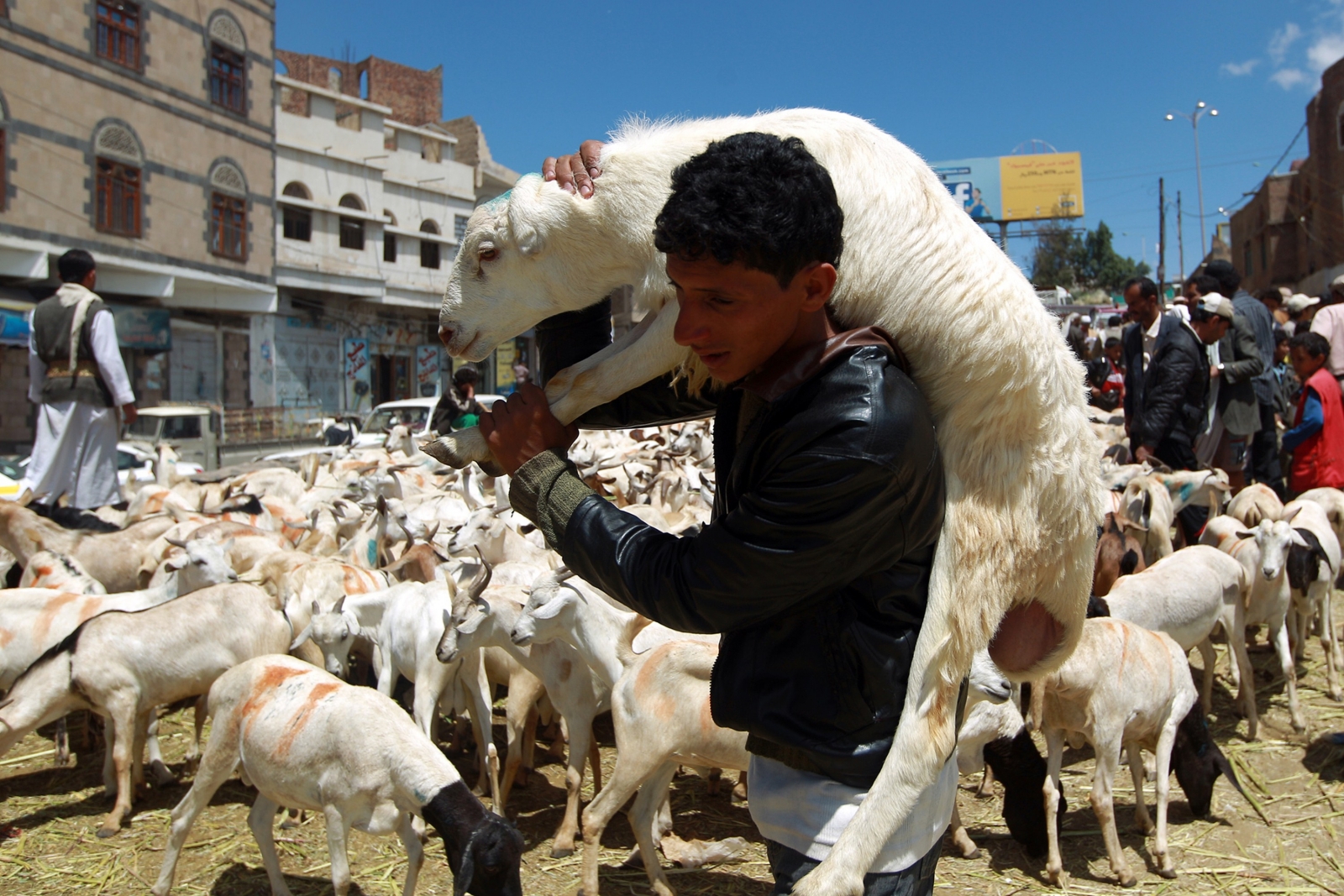
Carrying off an animal to be sacrificed during Eid al-Adha

Last night as my kids were getting ready for bed, they were looking at a calendar hanging on the wall, and they noticed that today is a holiday: Eid al-Adha. They asked me what it is; maybe you’re wondering too.

Eid al-Adha means “Feast of Sacrifice” in Arabic, and it comes at the end of the Hajj, the annual pilgrimage to Mecca. Eid al-Adha commemorates how Abraham’s faith was tested when he was asked by God to sacrifice his only son.

The Biblical story, found in Genesis 22, states that God tested Abraham’s faith by asking him to sacrifice “your son, your only son, whom you love,” and that this son was Isaac. In spite of that, Muslims believe that this son was not Isaac, but actually Ishmael. The Qur’an’s account of this story does not list the name of the son explicitly, but Muslims believe that it was Ishmael, not Isaac – because the Arabic people are descended from Ishmael, whereas the Jewish people are descended from Isaac. It is important to keep in mind that the Muslim traditions and the Qur’an came about much later (hundreds and in some cases, thousands of years) than the biblical texts.

Another difference between the Islamic version of this story and the Biblical one is the location where this takes place. In the Bible, this sacrifice took place on Mount Moriah, which is the future location of Jerusalem, and specifically the Temple. As such, it is the same hill upon which Jesus would later be crucified.

Islamic tradition states that during this time, Abraham was tempted by the devil not to obey God. For this reason, part of the Hajj includes the throwing of rocks at a three large columns in Mina, where it is believed that Abraham was tempted by the devil.

In the biblical account of the story, God provides a ram to be a substitute for Abraham’s son, to die in his place, so that he can live. This, particularly in light of the location on Mount Moriah, is an important foreshadowing to the biblical concept of substitutionary sacrifice, the greatest of which is Jesus – after whom no more sacrifices are to be offered, because no more sacrifices are needed to atone for sin or to facilitate fellowship with God, since Jesus has accomplished those things in their fullest form, forever.

Muslim tradition, on the other hand, states that as Abraham attempted to kill Ishmael, either the knife was turned over in his hand, or copper appeared on Ishmael to prevent Abraham from killing him, and then Abraham was told that he had fulfilled the command. No mention is made in the Qur’an of an animal replacing the son, only that he is replaced with a “great sacrifice.” This sacrifice was taken to be the institution of regular religious sacrifice, which is now practiced every year on Eid al-Adha, where Muslims around the world slaughter an animal to commemorate Abraham’s sacrifice and to remind themselves to obey the way of Allah.

However, there is some Islamic art which has historically shown Abraham sacrificing an animal in place of his son, like in the biblical account.

The greatest difference between Christianity and every other religion in the world, including Islam, is the belief about how one is saved, or justified (made right with God). Whereas every other religion and philosophy says that it is based on your obedience, your performance, your compliance and adherence to certain rules and ordinances, Christianity says that it is by the substitutionary sacrifice of Jesus on your behalf – and the story of Abraham and Isaac, and how God provided a substitute, is one of the greatest pictures of this salvation by grace in the Old Testament. Isaiah later speaks of how the Messiah will be slaughtered, like a lamb, and as a substitute for the people (Isaiah 53). Jesus is later referred to as “the Lamb of God who takes away the sins of the world.” (John 1:29).

Please join me in praying that especially now during Eid al-Adha, God would open the eyes of many Muslim people to see Jesus as the true and ultimate sacrifice, given by God on their behalf, so they can rest from their labors of trying to justify themselves, and receive justification and salvation as a free gift of His grace.