Expecting Nothing in Return? Not Usually.

For a long time, I have found this sentence from Jesus to be both extremely beautiful and terribly convicting:

But love your enemies, and do good, and give, expecting nothing in return, and your reward will be great, and you will be sons of the Most High, for he is kind to the ungrateful and the evil. (Luke 6:35)

This is the definition of generosity: giving, expecting nothing in return. Nothing.

That means that a generous person doesn’t keep an accounting in their relationships, i.e. a running tally of who has done more for whom. They don’t keep score. They are free from that – free to give, expecting nothing in return.

That’s a lot easier said than done though…

Recently in my conversations with two people, this topic came up. One in particular likes to help people. He’s always helping people and doing favors. Nice, right? Except there’s one problem: he’s become resentful towards some of the people he’s helped out.

The other person explained to me that he likes to buy things for other people, little token gifts. But he too struggles with feelings of resentment, when he feels that his gestures of kindness are not reciprocated.

Both of these people would say that when they do these things, they don’t expect any form of compensation for them, but yet, both of them feel resentful. Why?

At least in the case of the first person, it is because, albeit subconsciously, oftentimes he isn’t just helping for the sake of helping – he’s doing it because there is a form of compensation that he hopes to receive for doing it. In his case it is not money, it is friendship. If and when friendship does not result, he feels that he was involved in a transaction in which the other party did not pay. The only thing is: the other party wasn’t aware of the assumed agreement and didn’t realize it was a transaction.

“Free” is rarely free.

What that means is that some people give a lot, but they’re not generous – because they give for selfish reasons. For example, the Pharisee in Luke 18:9-14 gave a lot to the Temple, but the reason he gave was so that other people would see it and praise him as a good person. His giving was a means of self-justification and self-glorification. The money still went to good use, and it is certainly better to give to a good cause for bad reasons than to spend money wastefully or only on yourself, but God is also concerned about why we give what we give.

Tim Keller, speaking about generosity, says that some people are always doing things to help other people, but they are actually using those people to feel good about themselves – i.e. they need those people to need them. They need for people to think they are good people. It’s their source of identity and their means of trying to justify their life. They’re not doing nice things for other people for the sake of those people themselves as much as they are actually doing it for themselves.

True generosity is when you act from selfless motivation, giving something and expecting nothing in return.

This is what Jesus encourages, saying, “your father who sees in secret will reward you” (Matthew 6:4)

Again, that is easier said than done. The way we can be motivated to truly act that way is through the message of the Gospel. First of all, the Gospel is that God has been generous to you, not as a transaction, but simply just because He loves you and enjoys blessing you. That’s grace. Secondly, the Gospel gives you an identity: it affirms you, saying that God not only knows you fully, but loves you completely.

Many people believe that they can either be known completely or loved completely, but not both – because if someone really gets to know them, they couldn’t possibly love them. Therefore, in order for people to love them and accept them completely, they cannot possibly allow anyone to know them completely.

But the message of the Gospel is that God BOTH knows you completely and loves you completely – at the same time. That’s incredible love and affirmation.

The message of the Gospel is that you have been justified in Christ, therefore you don’t need to work hard to justify yourself.

And when you really understand that – you’ll be free to give, expecting nothing in return: like God who gives even to the evil and the ungrateful. You’ll be free to give for the sake of giving, for the sake of another person or a cause, with no strings attached, because you are so firm in your identity, that you are already loved and justified and have value. The Gospel sets us free from our ulterior motives in doing even good things and from feelings of resentment towards those we have done acts of kindness for.
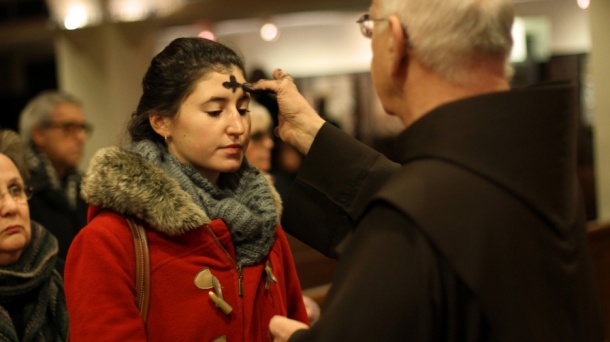
 

The History of Lent & the Lost Celebration

ash-wednesday-cropped

I grew up going to a Lutheran school until 8th grade, and one of the highlights of the year was Ash Wednesday, the first day of the season of Lent:  the 40 days leading up to Easter, which is a time of fasting and self-denial in preparation for Easter. On Ash Wednesday we would have chapel service and would get to walk to the front of the church and have ash put on our foreheads in the shape of a cross. Today as I was out around town, I noticed people with these ash crosses on their heads.

Lent is a tradition which predates all Christian denominations, but today is practiced mainly by Roman Catholic, Anglican/Episcopalian, and Orthodox Christians. However, Lent is more and more popular among evangelical Protestants, some of whom long for connection to the rich history of Christian tradition. I ran across a plethora of articles today from sources like Relevant and Christianity Today recommending that evangelicals would benefit from the practice of Lent. I tend to be inclined this way myself: to appreciate and want to be connected to Christianity’s rich traditions and to embrace the meaningful symbolism.

However, I have changed my thinking in recent years about Lent in particular. In seminary I took a course about the history and development of Christian worship. Here’s what I discovered about the development of Lent:

In the earliest days of Christianity, the time recorded in the Book of Acts, it is clear that new converts to Christianity first came to faith and then were baptized. As time went on, Christians began to feel that it was important that not only faith precede baptism, but instruction also. So they began to require believers to go through a period of instruction in Christian doctrines (catechism) before they could be baptized.

Several early Christian writings indicate that new believers would be baptized on Easter, which from the earliest days of Christianity was the chief Christian celebration. One of these writings that mentions baptisms of new believers being practiced only on Easter is from Tertullian, who argues that baptism need not only be practiced on Easter.

The number 40 held special significance for the early Christians because of the significance of the number 40 in the Hebrew scriptures, and so the 40 days leading up to Easter were the days of preparation, instruction and consecration for those who were getting ready to be baptized on Easter.

Easter itself, for the first 400 years of the church, was a feast that did not last only one day, but which began on Easter Sunday and lasted for 40 days. During that 40 days, people were forbidden from fasting, as well as from kneeling when they prayed, as kneeling is a posture of contrition, and these 40 days were set aside for the express purpose of celebrating the new life, the forgiveness and the redemption that we have because Jesus rose from the grave. It was a 40 day season of joy.

But here’s what changed: in the 4th Century, paedobaptism (child or infant baptism) became the norm. Paedobaptism was already a practice of some churches before that; Tertullian, in his On Baptism (circa 200), mentions that some churches practiced it and others did not, but that it was becoming increasingly popular in his time.

The reasons for the rise of paedobaptism were:

  1. Questions about how those who were born into and raised in Christianity should be initiated into the faith, and how this relates to the Old Testament model of a people in covenant with God.
  2. The emergence of Christendom as Christianity had become the official and dominant religion of the Roman Empire, so to be a citizen of the Empire was equated with being “Christian” and it was presumed that everyone who was a citizen of the empire was a Christian.  This view prevailed throughout the medieval period in Europe and was perpetuated by the magisterial Reformers.
    (I have written more on the subject of Christendom here)
  3. The formulation of the doctrine of ‘original sin’ by Augustine of Hippo, which gave many people a rationale for baptizing infants. The reasoning was that since the Nicene Creed declares that there is ‘one baptism for the forgiveness of sins’, that infant baptism remitted original sin (something Augustine did not teach, but which led to parents wanting to have their babies baptized as soon after birth as possible). Thomas Aquinas also taught that baptism removed the guilt of original sin; however, this teaching was rejected by Luther and other Reformers and is not held by all modern adherents of paedobaptism.

But here’s the issue that paedobaptism brought up in the church: If you baptize babies, then you can’t instruct them before you baptize them, because they’re infants… So what do you do with the 40 day period of consecration and preparation leading up to Easter? Hmm…
Here’s what they did: they decided to make this a time of all believers consecrating themselves to God in preparation for Easter, and catechism was moved to adolescence and paired with a confirmation of one’s faith/baptism.

So, here’s what you had at that point:  40 days of consecration to God before Easter – EASTER – 40 days of celebration of salvation and new life after Easter.

But then, guess what happened with time: We kept one 40 day observance and dropped the other. And which one did we choose? Not the celebration, but the consecration… and over time that consecration became more and more dour and focused on self-denial, penance and contrition.

James White writes:

It is perplexing why Christians have forsaken the season of rejoicing in exchange for the season of penance.

Particularly during the medieval period (and vestiges of this remain in our day in some places and to some degree) some Christians became more obsessed with the process of Jesus’ death – his “passion” – than with the purpose of his death.

Taking this into consideration, I am less inclined to celebrate Lent. I believe that I should consecrate myself to God every day. Romans 12:1 says – I appeal to you therefore, brothers, by the mercies of God, to present your bodies as a living sacrifice, holy and acceptable to God, which is your spiritual worship. 

However, I do believe that the discipline of self-denial is healthy and very much needed for some people, and that setting apart a dedicated time of consecration is both biblical and good.

In the end it gets down to WHY you are practicing Lent. If it is a spiritual discipline through which you draw nearer to God by purposefully setting aside something in order to consecrate yourself in an amplified way for a particular time – then I think that is wonderful and would recommend that you do it.

No matter what – whether you practice it or not – please remember the history, and along with your 40 days of consecration, I encourage you to practice 40 days of dedicated rejoicing in the salvation and new life that Jesus made available to you.

Celebrating what He did for you should take precedence over focusing on what you do for Him.


God is Not Mad at You…unless He is.

I took my son to the store on Sunday night to buy some trading cards for a game he plays. As we were walking around the store, a book caught my eye.

20160117_204314

The title: “God is Not Mad at You.” To be fair, I haven’t read this book, however, I did take the time to go and read some reviews of it online to see if my initial assumptions about the message of this book would turn out to be mistaken. It would seem from these reviews that they were not.

Here’s the thing: the author is correct, God is not mad at you…that is unless, of course, He is.

What do I mean?  What I mean is that God is mad at some people – and rightly so! The Bible makes it very clear that God “opposes” some people, and that God considers some people “enemies.”  In fact, “the wrath of God is revealed from heaven against all ungodliness and unrighteousness of men” (Romans 1:18) and the objects of His wrath are in fact people (Ephesians 2:1-3)!

After all, isn’t it only right that God should be mad about some things AND at some people?  The Bible, in both Old and New Testaments, makes it explicitly clear that there are things which God abhors, and which we should also abhor, for example: injustice, deceit, abuse. God is mad about these things, and more than that: God is mad at the people who do these things. God is mad at the person who exploits another or takes advantage of them from a position of power. God is mad when children are abused, when women are raped, when racial injustice occurs, and God is mad at the people who do these things.

Here’s the thing: it’s easy for us to say, “Well, yeah, okay, I get what you’re saying: God is mad at the bad guys who do bad things. That makes sense… But aside from those guys, who need to know that what they are doing is wrong and that divine justice is promised, the rest of us need to be comforted and encouraged that God isn’t mad at us – after all, most of us aren’t that bad.” 

The question is: who defines “bad”? And how bad do you have to be to be “bad.”  The Bible says this: “For whoever keeps the whole law and yet stumbles at just one point is guilty of breaking all of it.” (James 2:10) Furthermore, Jesus taught in the Sermon on the Mount and the Bible says elsewhere that “all have sinned and fallen short of the glory of God” and that “there is none who is good, no not one.”

What this all means that you and I are more sinful than we even realize, and therefore more deserving of God’s wrath than we even know.

But here’s the message of the Gospel: it’s not that you are a good person and therefore God isn’t mad at you – it’s that God LOVES you in spite of your sins and failures and shortcomings so much that He sent Jesus, the Divine Son, to die in your place, and absorb the wrath which you deserved.

What that means is that if you are in Christ, then indeed God is not mad at you – because Jesus became the “propitiation for our sins” (1 John 2:2), which means that he absorbed not only the legal judgment for our sins, but the righteous anger of God toward our sin.

If you are in Christ, then indeed: the message of the Gospel is that God is not mad at you

However, if you are not in Christ, then the Bible says that you are still in your sins. Jesus himself said this: “Unless you believe that I am He (the Messiah, the Savior), you will die in your sins.” (John 8:24). And if you are still in your sins, then the wrath of God remains on you!  Again, Jesus himself said this very thing: “Whoever believes in the Son has eternal life, but whoever rejects the Son will not see life, for God’s wrath remains on them.” (John 3:36)

Whoever believes in the Son has eternal life, but whoever rejects the Son will not see life, for God’s wrath remains on them. – JESUS (John 3:36)

Here’s the point: God is not mad at you IF you are in Christ, because God’s wrath was poured out on Him in place of you – the undeserving in place of the deserving.  Apart from Jesus, however, there is no such promise and no such hope.

The reason I take issue with this book is because it declares something to all people as a blanket statement, a broad generalization, which does indeed apply to some, but only some! To others, therefore, it gives a false sense of comfort and security, which actually does them a disservice.

The false prophets in the day of Jeremiah did the same thing. God had called Jeremiah to call the people of Judah to radical repentance, to turn away from sin and wickedness and turn with their whole hearts to God, and if they did that they would experience blessing. Jeremiah preached this message, which turned out to be radically unpopular, despite the fact that it was from God.  At the same time, another group of prophets came with a message which was wildly popular, despite the fact that it wasn’t from God! Their message? “Don’t worry; be happy. God’s not mad at you. God just wants you to be happy, so just do your thing and don’t bother yourself with feelings of guilt or needing to repent.” About these false prophets, God said:  “They dress the wound of my people as though it were not serious. ‘Peace, peace,’ they say, when there is no peace.” (Jeremiah 6:14)

“They dress the wound of my people as though it were not serious. ‘Peace, peace,’ they say, when there is no peace.” (Jeremiah 6:14)

The message of the Gospel is that Jesus died on the cross, so that God could end sin without ending us.

No matter who you are or what you’ve done, that is how much God loves you. If you are in Christ, if you have put your faith in Jesus as your Savior, as your righteousness, as the propitiation for your sins and as your Redeemer – then indeed, take comfort: God is not mad at you!

O Little Town of Bethlehem: What are the Odds?

A reader of this blog contacted me this week asking if I could write a few words about Micah 5:2

But you, O Bethlehem Ephrathah,
who are too little to be among the clans of Judah,
from you shall come forth for me
one who is to be ruler in Israel,
whose coming forth is from of old,
from ancient days.

Bethlehem = “House of Bread” – it is a small town only a few kilometers outside of Jerusalem. It was also the ancestral home of King David.

The older, pre-Jewish name of Bethlehem was Ephrathah, which is used on several occasions to speak of it in the Bible.

Micah’s prophecy is about the impending destruction of Samaria and Judea, including Jerusalem for their sins and refusal to repent of them and turn their hearts back to God. As a result, destruction would come upon them from other nations and they would be carried off in exile.

However, the final word of this prophetic message is one of hope and restoration, the message that God has not abandoned his people, but is wholly committed to them, and at a time when they have repented, he will fulfill his promises to them.

What promises were these? In particular it was the promise of a ruler, a King in the line of David, who would establish a Kingdom which would have no end; a kingdom of peace and justice and righteousness which would last forever.

That’s a pretty steep promise! Is it just meant as hyperbole, or was it meant to be taken as a literal promise? How could any king rule forever?

When you begin to take the different promises about this king together, the picture comes together of a King who is more than just a man, but who is actually divine in nature. Notice how Micah says that “his coming forth is from old, from ancient days” – this is saying that one is going to be born, who has existed from eternity past. This is speaking of divinity being born into the world to establish an everlasting kingdom. This is speaking of the incarnation: God coming to us, born in human flesh.

And where would this happen? In Bethlehem. A village of no consequence, only famous as the ancestral home of Israel’s greatest king – and significantly, a king who was promised by God that one of his descendants would establish an everlasting kingdom.

Micah 5:2 is one of 300+ prophecies found in the Hebrew Bible (what Christians call the Old Testament) about the Messiah, which speak of who he would be, what he would do, and how his coming would take place. 300+ – fulfilled by one person! What are the odds?

Peter Stoner, in Science Speaks (Moody Press) attempts to show how coincidence is ruled out by the science of probability. Stoner says that by using the modern calculation of probability in reference to eight prophecies, “we find that the chance that any man might have lived down to the present time and fulfilled all eight prophecies is 1 in 1017.” That would be 1 in 100,000,000,000,000,000.  In order to help us comprehend this staggering probability, Stoner illustrates it by supposing that “we take 1017silver dollars and lay them on the face of Texas. They will cover all of the state two feet deep.

“Now mark one of these silver dollars and stir the whole mass thoroughly, all over the state. Blindfold a man and tell him that he can travel as far as he wishes, but he must pick up one silver dollar and say that this is the right one. What chance would he have of getting the right one? Just the same chance that the prophets would have had of writing these eight prophecies and having them all come true in any one man.”

Stoner considers 48 prophecies and says, “we find the chance that any one man fulfilled all 48 prophecies to be 1 in 10157. The estimated number of electrons in the universe is around 1079. It should be quite evident that Jesus did not fulfill the prophecies by accident.”

Advent Meditations: 13 – The Reason the Son of God Appeared

The reason the Son of God appeared was to destroy the works of the devil. – 1 John 3:8

I have been away for a few days from this because my wife gave birth to our baby girl this past weekend! We feel very blessed.

With every new life comes the promise of hope and joy and the light that this new life will bring into the world, but over every life there looms the shadow of a cloud on the horizon… a debt which will one day come due: the inevitability of death.

Every child is born into a world that is cracked and broken, with remnants of what it was originally intended and designed to be and we live with a lingering memory – an ancestral notion of how things were meant to be.

The message of Christmas is that the Son of God appeared to destroy the works of the devil – to restore things to the way they were meant to be. This is the hope of the Gospel and the hope that we celebrate at Advent: that the day is coming, and is ever nearer, when this hope of ours will be realized. The meaning of Christmas is that there is a new inevitability: that that day is coming, and will be here before we realize it.

The Son of God appeared to destroy the works of the devil: in the world, and also in each of us. He came to make the world what it was meant to be, and to make each of us what we were meant to be.

Joy to the world – the Lord has come!  The Savior reigns!


Advent Meditations: 12 – The Date and Details of Christmas

137199660-e1389118948368

The first Christmas sermon I ever preached was on the topic of whether Jesus was really born on December 25th. My point was that most scholars believe was that Jesus was not born on December 25th, but probably in September, because the shepherds were sleeping outside with their flocks at night, which is not something that would be done in the winter months when it was colder at night. Furthermore, this view is based on the tracking of the stars, which some say would place the North Star in the right place in the sky sometime in autumn.

The first recorded date of Christmas being celebrated on December 25th was in 336AD, during the time of the Roman Emperor Constantine (the first Christian Roman Emperor). A few years later, Pope Julius I officially declared that the birth of Jesus would be celebrated on the 25th December.

Prior to 336AD, December 25th was when pagans celebrated the winter solstice. Constantine took an existing holiday and changed the focus of it and the substance of what was being celebrated. It is remarkable that in the first few hundred years of the church, the main Christian holiday was Easter, when they celebrated the death and resurrection of Jesus. Christmas only began to be celebrated much later on.

However, while that is all interesting information, I somewhat regret having spent the time given me during my first Christmas sermon on this topic. Having had the attention of people on that day, I wish I would not have focused on dates and details, but on the substance of what Christmas is about.

You see – it doesn’t really matter what day we celebrate the birth of Jesus, what matters is the fact of the incarnation. If December 25th is the day that our culture has chosen to celebrate that, then great! I’m happy to celebrate it then or any other time! But if our whole culture is open to talking about it at this time, then what a great opportunity that is to talk about the gospel and the meaning of the incarnation on a day when more people will set foot inside a church than any other day of the year. What matters is not when the incarnation happened, but that it did indeed happen!

There are some people who have a “mentality for the marginal” – a “preoccupation with the peripheral”. They focus all of their time and attention to theories about dates and details, the movement of stars and how exactly the star did lead the magi, or how exactly did the Red Sea split, or how did Jonah survive in the belly of the fish – they are concerned with gathering information on and debating peripheral matters of theology, which are tentative and have very little spiritual significance.

It is not to say that such interests are bad, except when this preoccupation with the peripheral takes one away from a focus on the great central things of the gospel – the holiness of God, the terribleness of sin, the helplessness of man and the love of God; the death of Christ, the resurrection from the dead, justification by faith, the work of the Holy Spirit and the return of Christ and the final judgment. Some people are easily sidetracked from these things by the latest speculations and theories and tidbits regarding things which have little ultimate significance.

What is wonderful about the Christmas story – the story of the incarnation – is that if you will allow it to, it will refocus you onto that which is important. It will help you keep the main things the main things. It re-centers us, by reminding us of the big picture: that the world is under the dark cloud of sin and death, but God, in his love, has sent us a savior: Christ the Lord, who is none other than God himself come to us in  human flesh. And if anyone puts their faith in Him, they will not be put to shame, but they will be saved, justified, forgiven and redeemed, and have life everlasting.


Advent Meditations: 11 – Zechariah’s Song

SONY DSC

“Blessed be the Lord God of Israel,
for he has visited and redeemed his people
and has raised up a horn of salvation for us
in the house of his servant David.

Zechariah was a village priest with a barren wife.

To be barren, in those days, was considered to be a curse from God, because of how important children were to several aspects of life. Nowadays it is not uncommon for women to say, “I don’t think I want to have children” – but if a woman were to say this in the ancient world, those around her would be taken back and say, “What? Do you have a death wish?”

Children were necessary economically, to have more workers in your family business, boys in particular were necessary for community security, and most importantly, children were necessary for personal security: in a society with no social welfare system and no social security, one was completely dependent on family and friends to take care of you in old age. Women in particular were at risk, because men had lower life-expectancy, so it was likely that they would live the final years and perhaps decades of their lives as widows, and if they didn’t have children, then their future was very uncertain and scary, because there was no guarantee that someone would be there to care for them and provide for them in old age.

So you can image how excited a woman like Elizabeth would be to find out that though she had been barren for years, now, in some way, advanced in years though she be, God had allowed her to conceive a son.

You can imagine how a man like Zechariah, the village priest, his life always in the spotlight of public scrutiny, must have been overjoyed to hear that finally his wife was pregnant! After years of people whispering and wondering what was wrong in his home that had caused God to “curse” them by not giving them a baby… People can be cruel, and you can imagine the relief and the sense of justification that came with the news that they would finally have a baby.

When Zechariah first got the news that he would have a son, he refused to believe it. It seemed impossible to him that this could actually happen, and as a result of his unbelief, God made him lose his voice for the duration of his wife’s pregnancy.

But when Zechariah finally got his voice back, after months of not being able to speak, and having to write things on a tablet in order to communicate, what was the first thing he did?  Did he complain, that God had taken away his voice for months?  No, HE SANG!  He sang a song of rejoicing and praising God.

And what’s most interesting about Zechariah’s song is this:  he doesn’t sing for joy primarily because he got his voice back, nor does he sing because his reproach has been taken away with the birth of his son. No, Zechariah’s song in Luke 1:67-89 is all about the Messiah!

It is commonly known an Zechariah’s Prophecy, but it is in the form of a song which he sang. The thing that set Zechariah’s heart on fire, was the idea that God was sending the Messiah – Jesus!   Before Zechariah even mentions his own son – who would have an incredibly important role to play as the forerunner to the Messiah – John the Baptist – first Zechariah sings about Jesus, who at this point was still in the womb. And he says: “Blessed be the Lord, for he has VISITED and redeemed his people.”

The coming of Jesus is the visitation of God to the world to redeem his people.

This is the message of Christmas, and Zechariah’s song – one of the first Christmas songs ever sung – was all about that: The visitation of God to this world to bring redemption.


Advent Meditations: 10 – Christmas Joy

christmas-joy-516x260

And the angel said to them, “Fear not, for behold, I bring you good news of great joy that will be for all the people. For unto you is born this day in the city of David a Savior, who is Christ the Lord. – Luke 2:10-11

What is the joy of this season?    Is it Tradition?  Family?  Giving and receiving?

The thing about each of these, is that the joy of these things is something very temporal and easily lost.

If the joy of Christmas is family, then what about those who have no family?  Does this season hold no joy for them?

If the joy of Christmas is tradition, then what is there for those who have suffered loss of loved ones – or even of financial resources?  For them, Christmas will be pure pain.
If the joy of Christmas is tied to traditions: decorating a house, eating certain foods, doing certain things – then if those things are no longer possible, because you had to give up the house, or because a family member passed away, or any other reason, then Christmas will not be a time of joy, but of pain and heartache.

If the joy of Christmas is in giving and receiving, then once again, what about those who have nothing to give and/or no one to receive from?  If the joy of Christmas is in giving and receiving, then Christmas brings loneliness and shame rather than joy.

These things are what are commonly held by many people to be the joys of Christmas, but let me tell you: these should not be – they cannot be – the wellspring of joy that Christmas brings, because it is only a matter of time, before all of these things run dry…and make Christmas a time of pain and bitter longing rather than life-giving joy.

What is the true joy of Christmas?  It is this: A Savior is born to you, who is Christ the Lord.

One of the verses in the Bible that I find most moving is Matthew 1:21:

She will bear a son, and you shall call his name Jesus, for he will save his people from their sins – Matthew 1:21

This is the joy of Christmas: that though you were lost, God pursued you and found you!   That though you were without hope, God came near to you to give you hope that extends beyond the grave!  That though you were destined for darkness and death, God broke into time and space to bring you light and life!

That is a joy that doesn’t disappear when financial resources dry up!  That is a joy that doesn’t grow dimmer as loved ones pass away – but rather grows all the more vibrant and beautiful!

May this be the joy of Christmas for you!

And may we not teach our children, whether in word or in deed, to find the joy of Christmas primarily in tradition or in giving or receiving, or even in family – but in the hope of the Gospel of Jesus Christ.


Advent Meditations: 9 – No Room at the Inn

And she gave birth to her firstborn son and wrapped him in swaddling cloths and laid him in a manger, because there was no place for them in the inn – Luke 2:7

It is striking how many details came together at the birth of Jesus; so many separate strands came together at one time and place to prepare the perfect setting for his coming – political movements, an empire-wide census which brought Joseph and Mary to Bethlehem, a star in the sky which directed Magi to Bethlehem.

The coming of Jesus into the world happened at a time and in a way that we can clearly see was providentially directed by and planned by God.

Don’t you think then, that the God who can align the stars, the God who can bring down and raise up political leaders, the God who can coordinate a census at just the right time, so that the Messiah will be born in Bethlehem, according to the prophecy… don’t you think that such a sovereign God could have also seen to it that there be an available guest room in Bethlehem for the burgeoning family to stay in?

Of course He could have. But He didn’t.

You see, it isn’t a question of what God could have done, it’s a question of what God willed to do.  (The same is true in our lives, by the way).

God could have made sure there was a place at the inn. God could have brought Jesus into the world in a wealthy family.  But what God willed to do was to have Jesus come into the world through a poor family in an unclean place.

Why?   It was for your sake.   For your sake He became poor, that through Him you might become rich – with a wealth beyond material riches. The kind of wealth that can never be taken from you, that moth and rust cannot destroy, that is imperishable, undefiled, and unfading, kept in heaven for you (1 Peter 1:4).

Jesus’ mission didn’t begin only in his 30th year. No, the road to Calvary began in Bethlehem, in the barn, where the Holy One came into the world in the midst of uncleanness…    What a picture of the incarnation that is.

For you know the grace of our Lord Jesus Christ, that though he was rich, yet for your sake he became poor, so that you by his poverty might become rich. – 2 Corinthians 8:9


Advent Meditations: 8 – Jesus Was a Refugee

1444031923669

behold, an angel of the Lord appeared to Joseph in a dream and said, “Rise, take the child and his mother, and flee to Egypt, and remain there until I tell you, for Herod is about to search for the child, to destroy him.” And he rose and took the child and his mother by night and departed to Egypt and remained there until the death of Herod. – Matthew 2:13-15

I remember the first time I heard the words: I was 19 years old and worked with refugees in Hungary. We had organized a retreat, in which we took some of the refugees who attended the Bible studies we held at different refugee camps around the country to a “retreat center” in the Buda hills – if you could legitimately call that place a retreat center. It was pretty rough – but at least a step up from conditions at the refugee camps, which were former Russian army bases and workers camps which had been converted into shelters for thousands of refugees from Asia, Africa and the Balkan Peninsula.

A pastor from Oregon who had a heart for refugee ministry had come out for the weekend-long event. That first evening, as we sat down for Bible study, he began with these words: “Jesus was a refugee too.”

Jesus was a refugee too.

I had always known the story found in Matthew’s Gospel, of how, after Jesus was born, Herod the Great had ordered that all baby boys in Bethlehem under 2 years old be put to death, so that the one who had reportedly been born King of the Jews would not threaten his power. Having been tipped off to Herod’s plans, Joseph took his wife Mary and the young Jesus and fled by night to Egypt… where they stayed until Herod died.

No one is quite sure how long Jesus stayed in Egypt, but tradition says it was somewhere between 4-8 years. Jesus spent his early childhood, as a refugee, fleeing a murderous regime…

In fact, part of the mentality that the Jewish people were instructed to have in the Old Testament, was that they had once been “sojourners” (what we would call “refugees” or “migrants”) and therefore they should show love, mercy and kindness to foreigners (refugees and migrants) in their land.

Love the sojourner, therefore, for you were sojourners in the land of Egypt. – Deuteronomy 10:19

King David was also at one point a refugee. In 1 Samuel 27 David was being targeted for assassination by a murderous King Saul. Ironically, the Philistines treated David better than the people of Israel did.

But here’s the point: part of the Christmas story is that when God became a man, he could have chosen to be born in comfort and to live a life of ease, but he didn’t. He chose to be born in a barn, to a teenage girl and a construction worker. He chose to become a refugee – to live in exile, despised and held in suspicion, treated as outsiders by those in the country they took refugee in.

Why?  So that he could relate to the poor.  So that he could even relate to the refugees.

When that pastor at our refugee retreat opened with those words: “Jesus was a refugee too,” suddenly he had everyone’s attention – and everyone wanted to know about this God, this Savior, who would become just like THEM. Who understood them, who could empathized with them, and who loved THEM.

Here’s the message of Christmas:

For you know the grace of our Lord Jesus Christ, that though he was rich, yet for your sake he became poor, so that you by his poverty might become rich. – 2 Corinthians 8:9

Loving the sojourner in your land: a great (and biblical!) way to celebrate Christmas this year.