David Foster Wallace on Atheism and Worship

In 2008, at the time of his untimely death, the Los Angeles Times declared that David Foster Wallace was “one of the most influential writers of the last twenty years.”[1] He was an award-winning, bestselling postmodern novelist, who loved to push boundaries in his storytelling.

Although Wallace was an agnostic, he made some profound statements about atheism and worship in his now famous commencement speech, which he gave to the graduating class of Kenyon College in 2005.

Here’s what he said:

webdavidfosterwallaceYou get to choose what to worship. Because here’s something else that’s weird but true: in the day-to day trenches of adult life, there is actually no such thing as atheism. There is no such thing as not worshipping. Everybody worships. The only choice we get is what to worship.


And the compelling reason for maybe choosing some sort of god … to worship … is that pretty much anything else you worship will eat you alive.

If you worship money and things, if they are where you tap real meaning in life, then you will never have enough, never feel you have enough. It’s the truth. Worship your body and beauty and sexual allure and you will always feel ugly. And when time and age start showing, you will die a million deaths before they finally plant you.

Worship power, and you will end up feeling weak and afraid, and you will need ever more power over others to numb you to your own fear. Worship your intellect, being seen as smart, you will end up feeling stupid, a fraud, always on the verge of being found out.

Look, the insidious thing about these forms of worship is not that they are evil or sinful; it is that they’re unconscious. They are default settings. They are the kind of worship you just gradually slip into day after day … without ever being fully aware that that’s what you’re doing. [2]

Wallace, although not a Christian, understood and communicated a very profound and very biblical truth: everyone worships, but anything you worship other than God will “eat you alive.”

Romans 6:16 tells us that there is no such thing as not worshiping, and that anything we worship other than God will enslave us.

Rebecca Manley Pippert puts it this way:

“Whatever controls us in our lord. The person who seeks power is controlled by power. The person who seeks acceptance is controlled by it. We do not control ourselves. We are controlled by the lord of our lives. (Pippert, Out of the Saltshaker, p. 53)

Whether we call ourselves religious or not, all of us have a lord, a master, and we are all worshipers.

The only way to be free, is by having a lord and a master who will not crush you, but who will liberate you – and in Jesus we have exactly that: one who came not to crush us, but to liberate us from all that enslaves us and to fulfill our deepest longings.

Jesus answered her, “If you knew the gift of God, and who it is that is saying to you, ‘Give me a drink,’ you would have asked him, and he would have given you living water.”
“Everyone who drinks of this water will be thirsty again, but whoever drinks of the water that I will give him will never be thirsty again. The water that I will give him will become in him a spring of water welling up to eternal life.” (John 4:10,13)

What a tragedy it would be to know this truth and not come to the fountain of living water and drink in order to be liberated and fulfilled!

Here is a recording of Wallace’s speech. The part about worship begins at 17:50.

The Hijacked Mind (and How to Be Free)

I don’t usually feel much sympathy for cockroaches, but I recently found out about a strange parasite that attacks beetles, grasshoppers and cockroaches.

250px-spinochordodes_in_meconema

Spinochordodes tellinii (S.T.) is a parasitic worm. Once it enters its host, it lives quietly and peacefully inside of them as it develops and grows. Once the S.T. has grown into maturity, it hijacks the mind of its host and causes them to commit suicide by compelling them to find water and cast themselves into it and drown.

The S.T., which by this point has grown to be larger than the host when stretched out, emerges, leaving their host dead in the water, and swims away to find a mate and reproduce.

You can read more about it here: Parasites Brainwash Grasshoppers into Death Dive

The way this parasite functions is similar to the way that sin works in our lives.

We have been studying the Epistle to the Romans on Sunday Mornings at White Fields. (Click here to see those messages) This Sunday we will be looking at Romans chapter 6, which tells us that sin is not something we can merely dabble in, but that our sins actually enslave us.

The only way to be free, we are told, is paradoxically by becoming “slaves of God.”

The paradox of freedom is that freedom from God enslaves us, but serving God frees us.

This is why, when God told Pharaoh through Moses to let his people go, he didn’t merely say, “Let my people go,” (as Charlton Heston incorrectly portrayed), the message was always actually, “Let my people go that they may serve me.” (For more on this, check out: The Setting for Salvation, a study of Exodus chapter 1)

In other words: freedom from the slavery they were in was not found in just coming out of slavery and then doing whatever they wanted. Why? Because it only would have been a matter of time before they would have been captured and enslaved by someone else. The only way for them to experience true freedom was for them to serve a new master who could, and would, truly liberate them and cause them to thrive.

As Bob Dylan sang, “You’re gonna have to serve somebody. It may be the devil or it may be the Lord, but you’re gonna have to serve somebody.”

In Romans 6, we are told that we will either be slaves to sin or slaves to righteousness. The thing about sin is that it acts a lot like the Spinochordodes tellinii: it seems innocuous at first, but as it grows and matures, it will enslave you and ultimately destroy you.
The good news is: there is one who is greater than the greatest parasite: Jesus Christ, who took our sin and conquered the great enemy, so that we might be free. He sets us free from the great hijacker of our minds, hearts and souls.

Jesus told his disciples: “Greater love has no one than this, that someone lay down his life for his friends. You are my friends if you do what I command you. No longer do I call you servants, for the servant does not know what his master is doing; but I have called you friends, for all that I have heard from my Father I have made known to you.” (John 15:13-15)

And yet, the followers of Jesus would refer to themselves as “bondservants of Jesus.” A bondservant was a slave by choice; it was a slave who had been granted their freedom, and yet chose to serve their master, because of their love for their master and desire to remain with them. (See: Free to Be a Slave)

To be a Christian is to be set free from bondage to sin, and to become a bondservant of God, because of Jesus.

I appeal to you therefore, brothers, by the mercies of God, to present your bodies as a living sacrifice, holy and acceptable to God, which is your spiritual worship. Do not be conformed to this world, but be transformed by the renewal of your mind, that by testing you may discern what is the will of God, what is good and acceptable and perfect. (Romans 12:1-2)

Video: Christianity and Politics

“The Gospel is an inherently political message.”

See what we mean by that in this episode in which Mike and I have a discussion about Christianity and politics, and we consider some guiding principles for how Christians should view and engage with this often polarizing and divisive topic.

I’d love to hear your thoughts on this subject, so please leave a comment below.

You can also listen on Soundcloud, and don’t forget to subscribe to our channel on YouTube and Soundcloud so you’ll be able to get new content when it comes out.


Why Did Jesus Tell Some People to Keep Quiet about His Miracles and Identity?

I received this question from a reader:
There are a number of times in the gospels that Jesus performs a miracle and then tells the person healed and those who witnessed to not tell anyone…. I wonder: why?
The obvious answer from a human perspective is because he feared the Jews and those who wanted to shut him down. But since He is God, why would he not just be glad for the good news to spread far and wide? Being fearful of sinful men strikes me as not really his nature…
Thanks for this question, this is one that many people wonder about. Here are a few things to consider which help us understand why he did this on occasion:

Sometimes Jesus told people not to tell others about his miracles and identity, but other times he told them to tell everyone.

There are three main instances in which Jesus instructed people not to tell others who he was or what he had done:
  1. After confirming to his disciples that he was indeed the Messiah, Jesus instructed them not to tell anyone. (Matthew 16:20; Mark 8:29-30; Luke 9:20-21)
  2. Jesus healed a leper and told him not to tell anyone that it was he who had done this. The man, however, did not comply with this request. (Mark 1:40-44; Matthew 8:1-4; Luke 5:12-15)
  3. Jesus told demons not to speak about him and tell others who he was. (Mark 1:34, 3:11-12)

Conversely, there are occasions where Jesus tells people to go out and tell everyone what he did for them:

  1. Mark 5:18-20 (also found in Luke: 8:38-39): As he was getting into the boat, the man who had been possessed with demons begged him that he might be with him. And he did not permit him but said to him, “Go home to your friends and tell them how much the Lord has done for you, and how he has had mercy on you.” And he went away and began to proclaim in the Decapolis how much Jesus had done for him, and everyone marveled.
  2. Matthew 28:18-20 (also Mark 16:15-16): And Jesus came and said to them, “All authority in heaven and on earth has been given to me. Go therefore and make disciples of all nations, baptizing them in the name of the Father and of the Son and of the Holy Spirit, teaching them to observe all that I have commanded you.

What was the reasoning behind these different approaches, and why would Jesus ever tell people not to tell others what he did or who he was?

Here are two reasons:

A Matter of Publicity

One problem with people spreading the word about Jesus healing them was that it resulted in large crowds following him around. This was the case with the leper who did not comply with Jesus’ request that he keep quiet about it. That man went out and “began to talk freely about it, and to spread the news,” and the result was: “so Jesus could no longer openly enter a town, but was out in desolate places, and people were coming to him from every quarter.” (Mark 1:45)

If everyone was crowding around him trying to touch him and clamoring to be healed, it would be harder for him to preach – and preaching, not healing, was his primary objective (see Luke 4:42-43).

When it came to demons, Jesus understandably didn’t want demons to be proclaiming who he was, lest people associate him with demons, or they misrepresent him.

Furthermore, the Jews had many misconceptions of who the Messiah was going to be. Some didn’t believe there would be a Messiah; others thought there would be two Messiahs (a king descended from David and a Levite priest); still others were waiting for a warrior-king to overthrow the Romans. In many cases, Jesus wanted to introduce himself to people first, before telling them that he was the Messiah, so he could teach them things without the baggage of their expectations influencing the way they heard the things he said to them.

A Matter of Timing

Jesus had a very keen sense of timing.  According to prophecy, he had to die in Jerusalem at the Passover. (For more on that, check out: Easter Math: How Does It Add Up?)

There are several passages which show Jesus’ sense of timing and his caution to not come out too early.

  • John 2:4: Jesus tells his mother that the time to begin his ministry had not yet come.
  • John 7:6: when his brothers challenged him to go to the festival, Jesus tells them that “the right time for me has not yet come.”
  • Luke 9:51: it says that the time was approaching for him to be taken to heaven, and at that time, he turned his face resolutely toward Jerusalem.

In John 6:15 we read that some people, hearing that Jesus was the Messiah, wanted to come and make him their king, by force!

However, once the timing was right, Jesus revealed himself as king on Palm Sunday (Matthew 21), and encouraged his followers to tell everyone. For Jesus, this was a matter of publicity and timing.

Easter Math: How Does it Add Up?

Have you ever wondered why the date of Easter changes every year?

Have you ever wondered how it can be that Jesus was in the grave for three days and three nights if he was crucified on a Friday and rose on a Sunday?

How does the Jewish Passover Week correspond with Jesus’ final week leading up to his crucifixion?

Check out this video in which Mike and I discuss these questions!  (Hint: Good Friday is indeed good, but it wasn’t a Friday…)


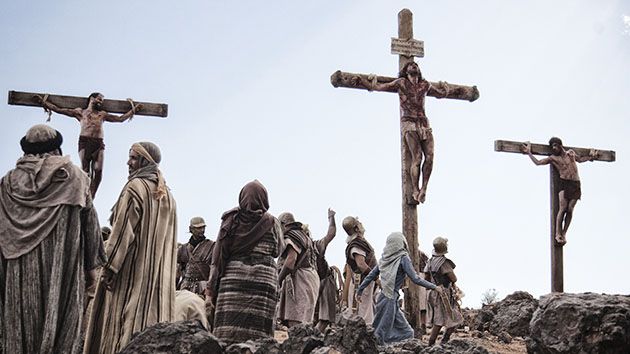
Is Good Friday Actually “Good”?

thebible-crucifixion-630-jpg_225818

This is the day on which we celebrate the death of an innocent man – and not just any man: the greatest man who ever lived. It is the day when we remember that the Light of the World was overcome by darkness; that the Savior of the World was murdered by those He came to save.

Why in the world would we call this day “Good Friday”?

John Stott put it this way:

“The essence of sin is that we substitute ourselves for God; we put ourselves where only God deserves to be … that’s the essence of sin. But the essence of salvation is that God substitutes himself for us; God puts himself where we deserve to be … that’s the essence of salvation.”

2 Corinthians 5:21 says: “For our sake he (God) made him (Jesus) to be sin who knew no sin, so that in him we might become the righteousness of God.”

In this verse we see what it is that makes Good Friday so incredibly “good”. It is something we call “imputation”, and it has two sides: On the cross, God imputed your flawed record to Jesus, so that He could impute Jesus’ perfect record to you. On the cross, God treated Jesus as if he had lived your life, so he could treat you as if you had lived his life.

Jesus’ act of substitution, God’s act of imputation – lead to our reconciliation with God.

And the way to receive this gift of God’s grace, the Bible tells us, is to “receive him, who believe in his name.” (John 1:12) This kind of belief isn’t merely to believe that it happened, but to believe it personally, in the sense of trusting in it, relying on it, and clinging to it.

If you do that, then today will indeed by a Good Friday for you!

The Last Supper? Actually, No.

300px-c3baltima_cena_-_da_vinci_5

This week is Holy Week, the week during which we remember the final week of Jesus’ life on Earth leading up to his crucifixion and resurrection.

Maundy Thursday is the day in the church calendar when we remember what we call “the Last Supper”, the Passover meal that Jesus shared with his disciples before he was crucified. For more on the “lesser known” days of Holy Week, read: “The Less Famous Days of Holy Week

However, there are several aspects to these traditions that might be misleading.

First of all, Jesus’ Passover Dinner with his disciples would have been on Wednesday evening. According to Jewish thinking, this would have been Thursday, since in Jewish thinking the new day begins at sundown. Thus, what we consider to be Wednesday night would actually be considered Thursday by the Hebrews.

For more on the timing of Holy Week, read: “Was Jesus in the Grave Three Days and Three Nights? Here’s How It Adds Up

But most importantly, what is misleading is the name “the last supper”. Consider what James K.A. Smith has to say on this topic:

when Jesus celebrates the Last Supper, he actually intimates that it’s not really the last supper, but the penultimate (second to last) supper.1

Smith is right. Think about what Jesus said during that supper:

Now as they were eating, Jesus took bread, and after blessing it broke it and gave it to the disciples, and said, “Take, eat; this is my body.” And he took a cup, and when he had given thanks he gave it to them, saying, “Drink of it, all of you, for this is my blood of the covenant, which is poured out for many for the forgiveness of sins. I tell you I will not drink again of this fruit of the vine until that day when I drink it new with you in my Father’s kingdom.” (Matthew 26:26-29 ESV)

Paul the Apostle then says this about the practice of the Lord’s Supper by Christians:

For as often as you eat this bread and drink the cup, you proclaim the Lord’s death until he comes. (1 Corinthians 11:26 ESV – emphasis mine)

In other words, the meal commonly referred to as “the last supper” was not ever meant to be thought of as the last supper that Jesus would have with his disciples, but as the preview of the great supper that they would one day share with Jesus in His Kingdom.

In other words, Communion, AKA the Lord’s Supper, AKA the Eucharist is an eschatological supper, through which we remind ourselves week in and week out of what is to come: the wedding feast of the lamb, in the New Jerusalem (Heaven).

Consider these words further thoughts from James K.A. Smith:

there’s a certain sense in which the celebration of the Lord’s Supper should be experienced as a kind of sanctified letdown. For every week that we celebrate the Eucharist is another week that the kingdom and its feast have not yet fully arrived.2

As you remember and reflect during Holy Week on Jesus’ penultimate supper, and every time you take communion, keep in mind that we do so both as an act of looking back and as an act of looking forward! Both are essential aspects of the hope that we have in Jesus!


James K.A. Smith, Desiring the Kingdomp.199
2 Ibid., p.200

Longmont Pastor Video Blog – Episode 1

Starting today, every Wednesday we will be dropping a new episode, in which we will be covering some of the topics addressed here on the blog, as well as others topics and interviews with guests about topics relevant to life, culture and the gospel.

Check out Episode 1: The Role of the Law in the Life of the Believer, and follow us on YouTube or Vimeo and Soundcloud.

You can help us spread the word by giving the video a like and sharing it on your social media or sending it directly to some friends.

Here’s the video (email and WordPress subscribers click here):

Thanks to Ocean Babin for all his hard work recording and editing this video, as well as to CryBaby Design for the great background image. We also want to thank Nick Morris Sound Services for making the music for the intro!

For the content mentioned in this video, check out these posts:

I Took a Poll; Here’s What I’ve Learned So Far

On Monday I posted an anonymous poll, asking people what they have found to be the greatest hurdles people today face in believing and embracing Christianity. I got a ton of responses! I’m still looking to get more input, so if you haven’t do so yet, please visit that poll and fill it out.

Shortly after I posted on Monday, as responses started rolling in, I added a second question to the poll, asking whether the person responding was a Christian or not. The reason was: I wanted to determine if there is a difference between the questions that Christians struggle with as opposed to people who aren’t Christians.

Here’s the data so far:

Of those who indicated their belief:

77% were Christians
18% were not Christians
5% were undecided

18% of responders did not indicate if they were Christians or not.

Moral issues seem to be a bigger stumbling block to faith than empirical issues

Most people (71%) said that hypocrisy amongst Christians is a major hurdle to believing Christianity.

In fact, the majority responses, particularly by people who are not Christians, were that the biggest hurdles for them are not necessarily empirical issues – things which are either true or not, such as science, the veracity of the Bible or the “Christ myth”, but rather moral issues, such as hypocrisy, suffering, and Hell.

This aligns with what I wrote about last week, on the topic of whether studying science leads to atheism or not. (Read that series here)

Some of the write-in responses were very telling as well. One person responded that one of the reasons they struggle with accepting Christianity is because they feel it is regressive in its views of sexuality. Another person wrote that they struggle to embrace Christianity because they see Christian culture as encouraging abusive behavior.

This also aligns with the results of a 2007 Barna research project, in which they asked people why they rejected Christianity. None of the top six answers were evidential reasons. They majority rejected Christianity for moralistic reasons, including hypocrisy and being judgmental. In other words, the biggest problem people had with Christianity was the behavior of Christians themselves. On some level, they had determined that if Christianity produced these kinds of people, then there must be something wrong with Christianity.

A few things to consider regarding hypocrisy

Fake disciples: many people who attend church aren’t Christians

Jesus began his ministry with a call to repent. And yet, who was he talking to: religious people or heathens? Religious people. In other words: there are a lot of people who are religious outwardly, but they are not truly disciples of Jesus.

A poll taken several years ago showed that the lifestyle activities of people who claimed to be Christians were statistically the same as those of people claiming not to be Christians when it came to the following categories: gambling, visiting pornographic websites, taking something that didn’t belong to them, saying mean things behind someone’s back, consulting a medium or a psychic, having a physical fight or abusing someone, using illegal or nonprescription drugs, saying something to someone that’s not true, getting back at someone for something they did, and consuming enough alcohol to be considered legally drunk. The study also found that people who claimed to be Christians were less likely to recycle than those who did not claim to be Christians (68 percent vs. 79 percent).1

Many of these people are those who have adopted a cultural form of Christianity, but whether they have truly been converted in their hearts is another question altogether. Jesus’ most scathing words were for people in this camp – the one to which the Pharisees belonged. He called them “whitewashed tombs” – they look good on the outside, they were outwardly religious, but on the inside there was no life, only death. Check out Jesus’ critique of them in Matthew 23.

Jesus mentioned that there are many people who believe they are Christians, but in fact they are not. See Matthew 7:21-23

James (James 2:14-18) and John (1 John 2:4,9) both say that if a person says they have faith, but their actions contradict what they claim to believe, then there is a seriously possibility that they are not actually a Christian at all. James 2:19 points out that even demons believe that God exists, but that doesn’t make them Christians. Simply believing in the existence of God doesn’t make one a Christian, but believing the gospel and following Jesus.

High standards bring the junk to the surface

It’s not just the “fake disciples” in the church who are hypocrites though… I’m sure that I don’t always live up to the standards which I whole-heartedly affirm. But that’s the nature of standards: the higher the standard, the more incongruity it will bring to the surface. If you don’t have a standard, then you won’t fall short of it and you won’t contradict it. The higher the standard, the more you will fall short.

The gospel causes an upheaval in our lives and spurs on a process of revealing our shortcomings and hypocrisies – but what true disciples do is repent of those things, and seek to change those things by God’s grace at work within them.

And here’s the good news: the message of the gospel is not about what we do, but about what God has done for us in Christ. For Christians though, it is really important to remember that other people care a lot about what we do and the attitudes we have as those who bear the name of Christ.


Reference:
David Kinnaman, and Gabe Lyons, unChristian, 46–47.


Is Christianity Just Another Form of Self-Seeking?

I received this question from a reader recently:
What would you say to someone who claims that “all people watch out for themselves first, even Christians come to their faith in order to selfishly serve themselves and to secure a positive afterlife.”?
I would respond to this claim by pointing out that the Christian ethic is acutely opposed to selfishness. This is exemplified by our God who self-sacrificially gave himself for us; forfeiting glory in exchange for shame, dishonor, discomfort, and death in order to save us. We are then encouraged throughout the New Testament to follow that example in how we relate to others: to lay down our lives for the sake of God’s mission, which is to rescue people out of darkness and death. Christians are encouraged to not seek our own good first, but to sacrifice for the good of others.
A great scripture on this is Philippians 2:3-8:
Do nothing from selfish ambition or conceit, but in humility count others more significant than yourselves. Let each of you look not only to his own interests, but also to the interests of others. Have this mind among yourselves, which is yours in Christ Jesus, who, though he was in the form of God, did not count equality with God a thing to be grasped, but emptied himself, by taking the form of a servant, being born in the likeness of men. And being found in human form, he humbled himself by becoming obedient to the point of death, even death on a cross.
When it comes to salvation, it is too simplistic to claim that Christianity is only about obtaining a “get out of hell free card.” Jesus said in John 17:3 that the essence of eternal life is knowing God; this means that for Christians, salvation is more than just being saved in the afterlife, it is being saved in the here and now, essentially giving up your life here on Earth for God’s plans and purposes, and this life of salvation continues on beyond death – which is what humans were originally created for to begin with, but which was ruined by sin (and the curse of sin, which is death).
This person would not be wrong in saying that many people turn to Christianity for purely selfish reasons. This is nothing new. A lot of people look to God as useful to them, but when you understand the Gospel, that changes: you begin to no longer see God as useful, you begin to see Him as beautiful, and that becomes your motivation in worshiping and serving him.
Do you see God primarily as useful or as beautiful?
Just because some people “do it wrong” doesn’t mean that the flaw is with Christianity. In fact, Jesus himself criticized such people harshly – particularly the Pharisees, who sought to use religion for selfish gain rather than giving up their lives to serve God and serve others. Jesus said that anyone who tries to hold onto their life will lose it, but only the person who gives up their life for the sake of the gospel will find it. The gospel he is referring to is the mission of God to rescue people – thus what he’s describing is a life of sacrificial love and service to others, which helps work out God’s plan for their life (that they would know God and be rescued from sin and death both now and for eternity).
One last thing: this person seems to be making a common assumption: that selflessness is the highest virtue. Consider this quote from CS Lewis on this topic:
If you asked twenty good men today what they thought the highest of the virtues, nineteen of them would reply, Unselfishness.  But if you had asked almost any of the great Christians of old, he would have replied, Love.  You see what has happened?  A negative term has been substituted for a positive, and this is of more than philological importance.  The negative idea of Unselfishness carries with it the suggestion not primarily of securing good things for others, but of going without them ourselves, as if our abstinence and not their happiness was the important point.  I do not thik this is the Christian virtue of Love.  The New Testament has lots to say about self-denial, but not about self-denial as an end in itself.  We are told to deny ourselves and to take up our crosses in order that we may follow Christ; and nearly every description of what we shall ultimately find if we do so contains an appeal to desire.  If there lurks in most modern minds the notion that to desire our own good and earnestly to hope for the enjoyment of it is a bad thing, I submit that this notion has crept in from Kant and the Stoics and is no part of the Christian faith.  Indeed, if we consider the unblushing promises of reward and the staggering nature of the rewards promised in the Gospels, it would seem that Our Lord finds our desires not too strong, but too weak.  We are half-hearted creatures, fooling about with drink and sex and ambition when infinite joy is offered us, like an ignorant child who wants to go on making mud pies in a slum because he cannot imagine what is meant by an offer of a holiday at the sea.  We are far too easily pleased.
– CS Lewis, The Weight of Glory 
For more on this, check out this article from the CS Lewis foundation, which goes into more depth on the topic of ethics and virtues.