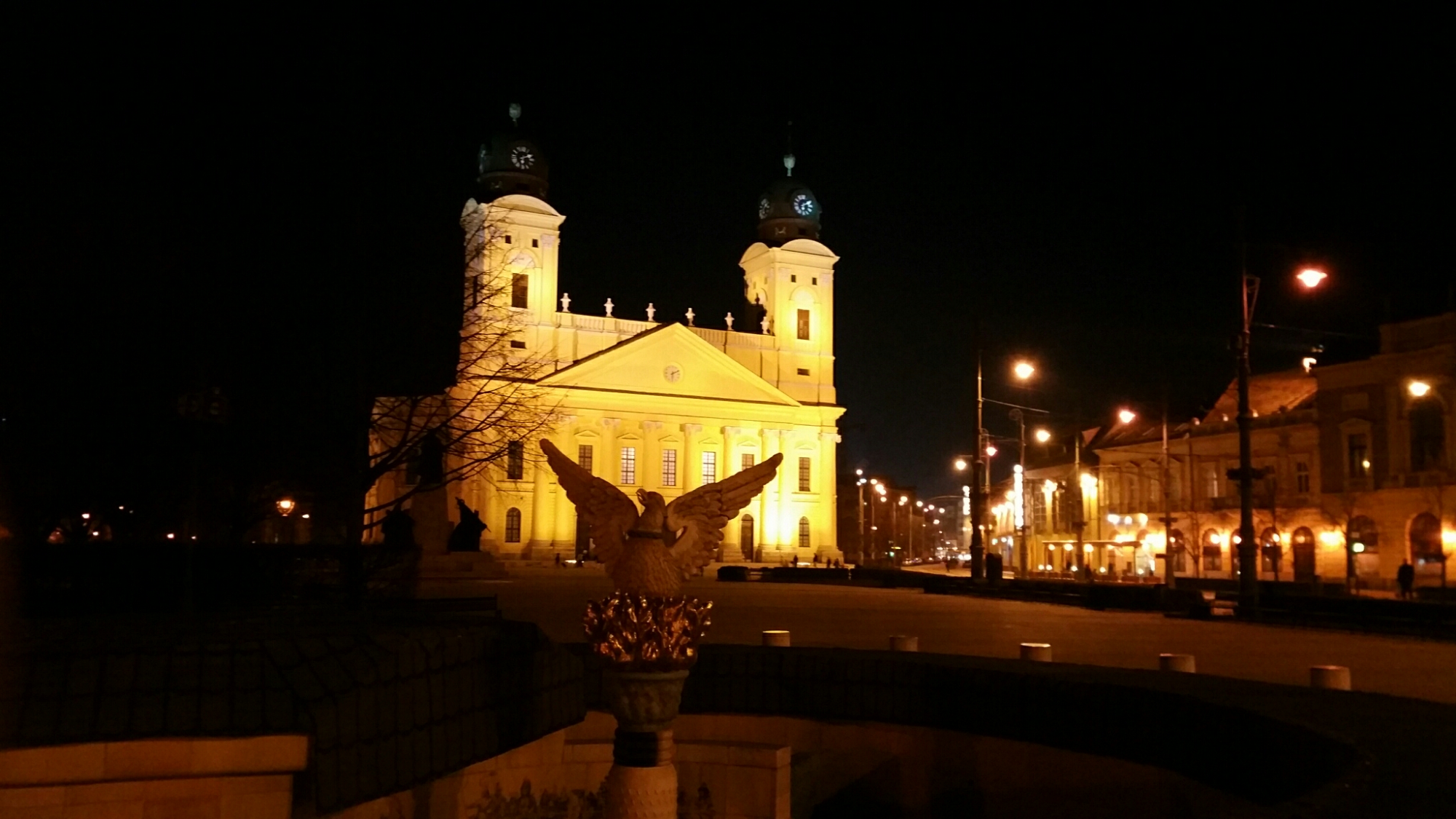
Hungary Becomes the First Country to Officially Defend Christians Persecuted by ISIS

Some good news coming out of my former home, Hungary, this week:

This week, Hungary, which has during the past year come under pressure for its handling of Europe’s mass migration crisis, has become the first government to open an office specifically to address the persecution of Christians in the Middle East and Europe.

“Today, Christianity has become the most persecuted religion, where out of five people killed [for] religious reasons, four of them are Christians,” Catholic News Agency (CNA) quoted Hungary’s Minister for Human Resources, Zoltan Balog, as saying. “In 81 countries around the world, Christians are persecuted, and 200 million Christians live in areas where they are discriminated against. Millions of Christian lives are threatened by followers of radical religious ideologies.”

I’m glad to see someone standing up for these persecuted Christians in the Middle East. It’s about time. Good on you, Hungary!

For the article about it in Christianity Today, click here: http://www.christianitytoday.com/gleanings/2016/september/first-country-to-officially-defend-christians-persecuted-by.html

Peaked Out Weekend

This past weekend was a busy one for us, full of many good things.

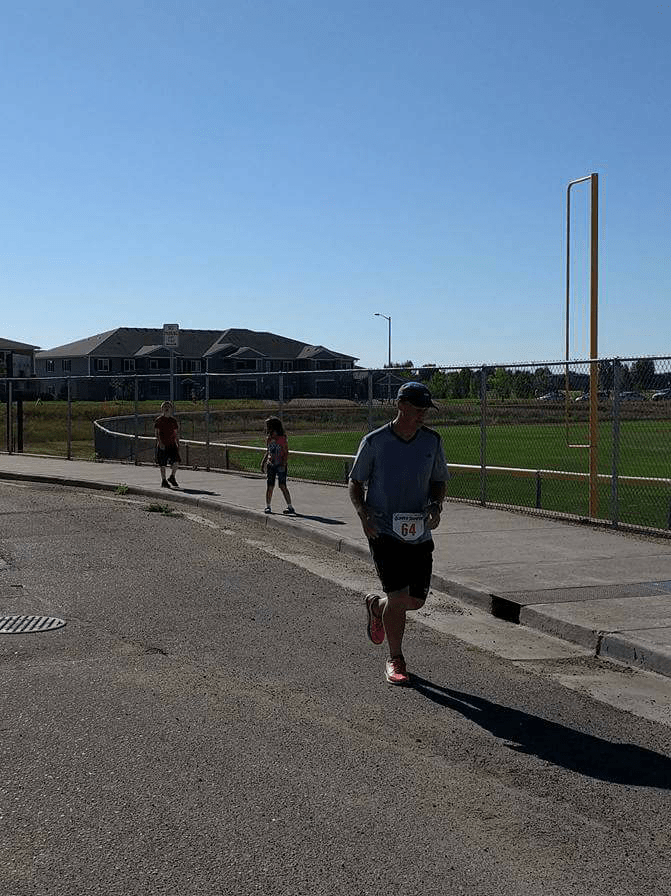
It began on Saturday with the Longmont Sunrise Stampede. My wife and 8 year old son ran the 2 mile race, and I ran the 10k. On the one hand, we were excited to run a race here in Longmont, but an added bonus was that the race went to support a great cause: proceeds went to help fund special education in the St Vrain Valley School District.

I was proud of my son for finishing his first race, and getting a time he could be proud of.

wp-1471379365344.jpg
Before the 2 mile race

I finished my 10k race in 54:51 which was a personal record time for that distance and even better than I had hoped to do.

wp-1471379626026.png
At 9.5 km of the 10k race which ended at Silver Creek HS

We then went up to Bailey, to a picnic for pastors and their families put on by Crossroads Church of Denver, my old church which sent me to Hungary.

We then went to Denver for the Lego BrickFest, which our kids loved, and then finished the day by having dinner with family and friends.

wp-1471379912162.jpg

On Sunday we had church. I taught on Colossians 3:1-11 in a message titled “A New You”, about which I got a surprising amount of positive feedback. One of the key concepts I discussed was the “Already… but Not Yet” nature of the gospel. If you’d like to listen to it, you can find the audio of that message here.

I got an email after church that a couple from Texas had been at church that day, and that they had come because they read this blog and were in the area! That encouraged me to be writing here more.

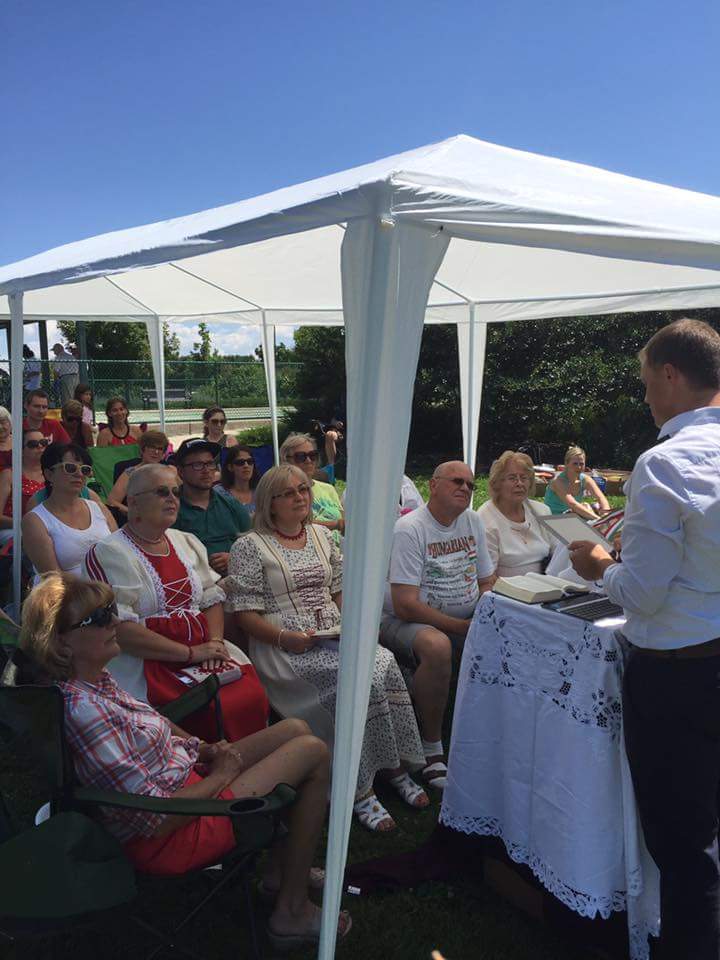
Right after church at White Fields, we went down to Littleton, where the Colorado Hungarian community was having their annual picnic for Szent István (St. Stephen) Day. István was the first king of Hungary, who after converting to Christianity as an adult, established Hungary as a Christian kingdom in 1000. He was declared a saint on August 20, 1083 and because of that, August 20 is the national holiday of Hungary.

wp-1471380135628.jpg
Hungarian language church service in Littleton

At this picnic, I lead a church service in Hungarian for the Hungarian Reformed Church of Denver, at which I preached on one of my favorite scriptures, Matthew 13:44 – “The kingdom of heaven is like treasure hidden in a field, which a man found and covered up. Then in his joy he goes and sells all that he has and buys that field.” I really enjoyed preaching in Hungarian again! I get to do it sometimes when I visit Hungary, but felt great to do it here in Colorado.

On Sunday night, I left home at 11pm with two friends from church to climb Longs Peak.

wp-1471377631837.jpg
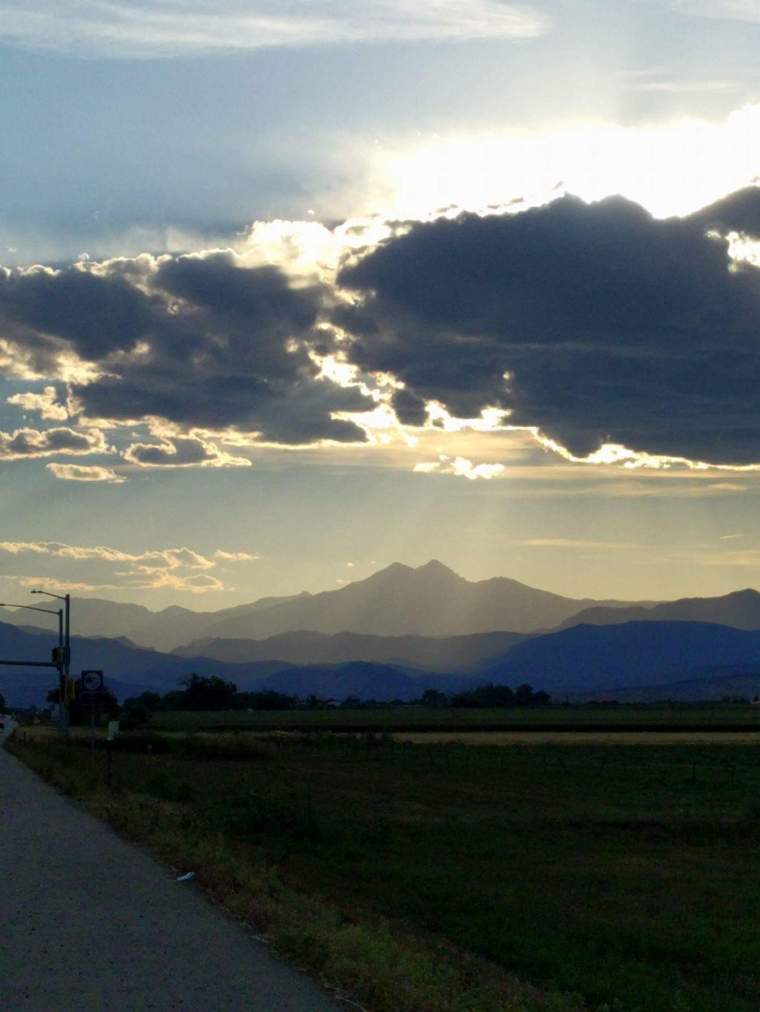
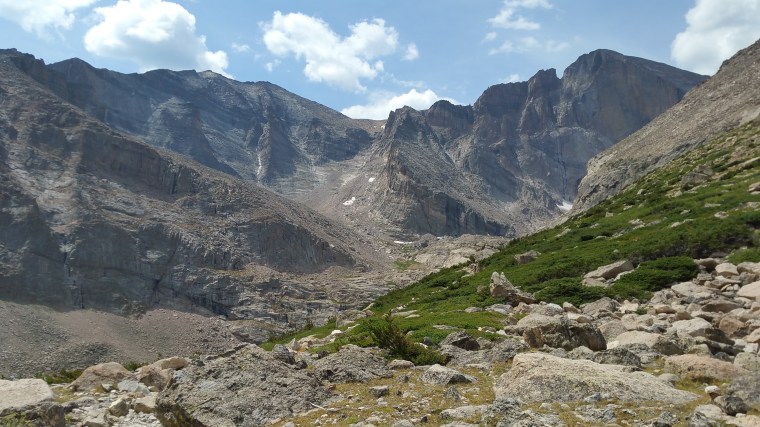
My wife took this picture of Longs Peak and Mt Meeker as we drove into Longmont Saturday evening. We love when the light highlights the layers in the mountains.

It was the 2nd time I’ve climbed it, and it was just as beautiful and difficult of a climb as I remember it being! It’s a 15 mile round trip hike, with 5100 feet of elevation gain. The most difficult part of the hike, mentally, is the last 2.5 miles, when you descend back into the forest and it feels like it will never end. The most technically difficult part is probably “The Trough.” Here’s a description of the route.

wp-1471377684896.jpg
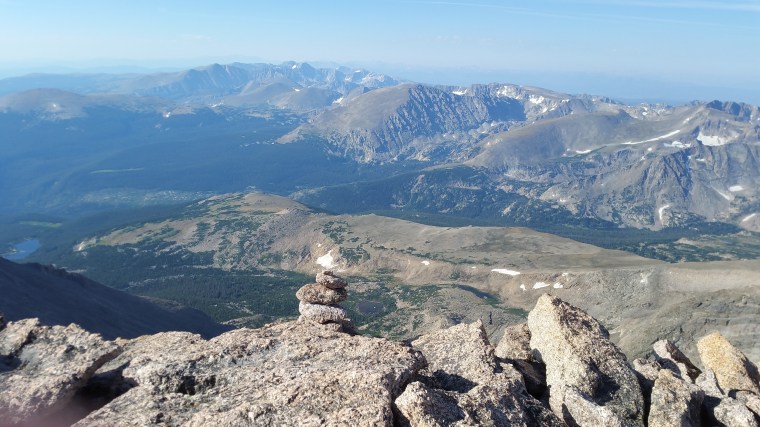
The view from the top of Longs Peak looking South-West towards the Indian Peaks. The lake on the left is Barker Reservoir in Nederland.
wp-1471377684881.jpg
The Twin Peaks – Longs and Meeker, from the split off to Chasm Lake

Today the kids went back to school, which is bittersweet for us as parents. On the one hand, we are going to miss having them around, but on the other hand, it was a lot of work keeping them occupied and on task at home, and we see how good it is for them to be with the other kids and learning.

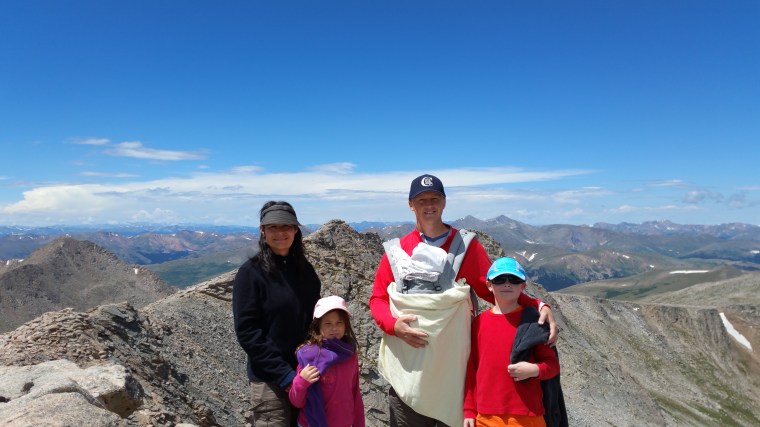
We took a trip last week up to the Mount Evans as a family to celebrate the end of summer vacation. It was my wife and kids’ first time up above 14,000 feet.

wp-1471379398701.jpg
Mt Evans summit (14,270 ft)

I can’t get enough of these Rocky Mountains…


What Makes Someone a Missionary?

I spent 10 years in Hungary as a missionary. I had a visa and several legal papers for my residence there which stated on them that I was a missionary. Furthermore, I was sent out and supported by a number of churches who supported as a missionary.

This having been the case, I have put a lot of thought over the years into what it is that makes someone a “missionary”. 

I remember working alongside Hungarians in Hungary, doing the same work – and yet I carried the title of missionary, and they were just Christians who were serving the Lord. Every now and then, some of them would say that they too were missionaries then, since they were doing the same work. But what about the other Christians in Hungary who were not with our organization, who did similar work? Were they also missionaries? They didn’t seem to covet that title, but were content to consider their service simply completely normal Christian behavior.  Some Hungarians we worked with received financial support from churches in the West so that they could serve full time at a church. Did that make them missionaries, even though they were serving in their home country or culture?

Some missions organizations use the term “native missionaries” and raise funds in wealthier countries to support national workers who already know the culture and language of a place. The idea is that with the proper training and some financial support to free them up to do the work, these local Christian workers will be able to reach the places where they live more effectively than foreign missionaries. This is especially popular in countries which do not give visas to foreign missionaries. Is the word “missionary” appropriate in this case? 

What makes someone a missionary?

One time when my wife and I had come back from Hungary to visit family and supporters, we were in Carlsbad, CA, and at the beach some young people, probably in their early 20’s,  approached us and started talking about Jesus. They were evangelizing – and when we told them we were Christians, they told us that they had come from somewhere in the Midwest as missionaries to California. They hadn’t been sent by any church community, but believed they were called and so they had come. Does that make you a missionary?

When I moved to Longmont I knew some people who said that they were missionaries to Longmont, and raised support for their living expenses and various ministry endeavors, so that they could be free to pursue these things full-time. These particular people had grown up in Longmont and felt called to serve God in their hometown. 

What makes someone a missionary?

Something that has often been proclaimed in evangelical circles is that all Christians are called to be “missionaries” and that the work of missionaries is not something which only needs to happen in far off places with developing economies, there is need for evangelism and outreach in wealthy countries, including the United States as well. One bookmark I saw said: “You don’t have to cross the ocean to be a missionary, you just have to cross the street.”

So what are we to make of all of this? What makes someone a missionary?

A little etymology helps to sort things out:

Missio = send. Thus, to be a missionary is to be someone who is sent.

There is a sense in which all Christians have been sent by Jesus to carry out his mission, which he received from the Father, in his mission field, which is the entire world.

“”For God so loved the world, that he gave his only Son, that whoever believes in him should not perish but have eternal life.” – John‬ ‭3:16‬ ‭ESV‬‬

“As you sent me into the world, so I have sent them into the world.” – ‭John‬ ‭17:18‬ ‭ESV‬‬

“Jesus said to them again, “Peace be with you. As the Father has sent me, even so I am sending you.” – ‭‭John‬ ‭20:21‬ ‭ESV‬‬

However, some are sent and supported by a local body of believers, led by a sense of calling from God, like Paul and Barnabas in Acts ch 13. It is clear from the Book of Acts, that Paul had an ongoing relationship with his “sending church” in Antioch, returning there after each of his missionary journeys. It seems there there was an accountability, and probably some degree of financial support from the church there which had sent Paul out. 

Here’s how I sort it out: All Christians are called by be “on mission” with God, in his mission field, which is the entire world. In fact, to be on mission is an essential and inherent part of what it means to be a Christian. Therefore, it should be normal for all Christians to do the work of a missionary wherever they live, whether it is their home or not. This is the NORMAL Christian life.

And yet, I feel that we should preserve the significance of the word “missionary” for those who are sent out on a mission by a local body of believers to another place, following the leading of God. There is a way in which to use the word missionary to loosely diminishes the sacrifices and the unique challenges faced by those who leave home and country and follow God’s leading to go to another place, having had a local body of believers confirm this by sending them out. Similarly, there is a way in which the concept of the priesthood of all believers can be taken to a degree which detracts from the significance of a calling to be a pastoral overseer. While we are all called to minister and we are all called to be on mission, these titles point to particular roles.

There is an interesting place in Paul’s second letter to Timothy, where Paul tells Timothy: “Do the work of an evangelist.” (2 Timothy 4:5)  Paul, in Ephesians 4, mentions the “office” or official role in the church of “evangelist” – in other words, it seems that there were some people in the church who had this title. However, it would seem that even though this was not Timothy’s official title or role, Paul was encouraging him to do the work of an evangelist nonetheless. 

I believe the same applies in regard to the discussion of the term “missionary” or “pastor”. If you are a Christian, you may not be an officially sanctioned “missionary” – but you are called to do the work of a missionary nevertheless! You may not be a pastor, but you are still called to do the work of a pastor in your interactions with other people.


Done with School, and a Few Other Things

I love finishing projects that I start. The only thing is, I also really like starting projects. So I sometimes find myself with several long term projects – but over the past few weeks I've been able to finish up a few of them.

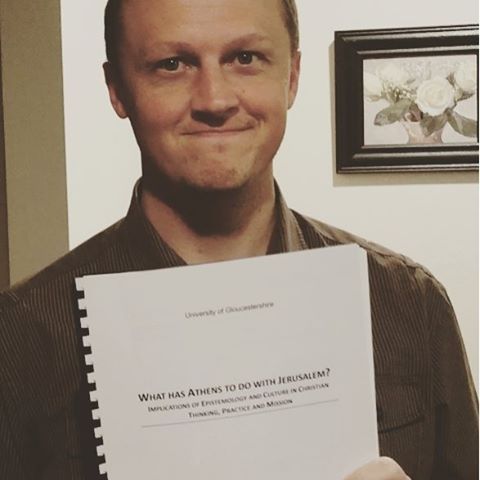
For the past several months I was very busy finishing my dissertation for my theology degree. I started at this university when my first child was the same age as my current youngest child: 5 months old. Now, in completing my dissertation, I am done – at least for now… I would like to continue.

The title of my dissertation: What has Athens to do with Jerusalem? Implications of Epistemology and Culture for Christian Thinking, Practice and Mission

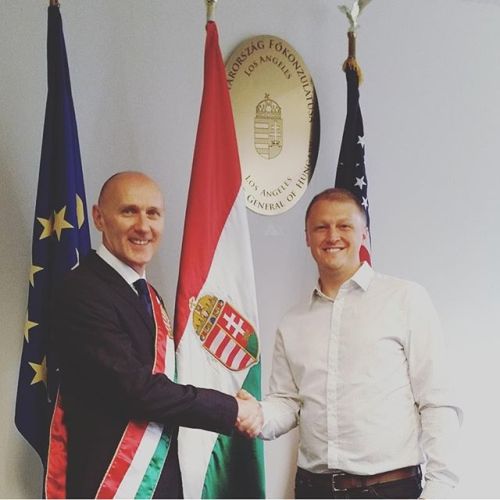
Another thing I've been working on for a while that I was able to complete: During the 10 years that I lived in Hungary I spent a lot of time getting different kinds and levels of residence permits and visas. By the time I left I had permanent residence and a work permit, which I gave up when I moved to the US. No big deal, because I have no plan to move back. But about 2 years ago a friend in Hungary told me that I should look into becoming a Hungarian citizen and that I might meet the requirements for citizenship. I looked into it, and I did – so, a year ago I applied for Hungarian citizenship, and I just found out 2 weeks ago I received it. Last week I traveled to Los Angeles for my naturalization ceremony at the office of the Hungarian Consulate.

Receiving my Hungarian citizenship from Kálmán László, consulate general of Hungary.

I'm not really sure how it will benefit me, but it is meaningful nonetheless. My wife and kids are Hungarian citizens, and I does encourage me to spend more time making sure the kids learn Hungarian and have that identity.

Another long term project we've been working on is getting out of the debt we incurred from the adoption we did. It's been an exercise in budgeting, downsizing and penny pinching, inspired by a Dave Ramsey class, and at the end of June we will have that project complete as well.

I've also finished a few books recently:

The men's group at our church has been going through Mere Christianity by CS Lewis, following a study guide and video series by Eric Metaxas. A lot of the videos refer to Lewis' autobiography, Surprised by Joy, so I picked it up and started reading it. In it, Lewis tells the story of how he became an atheist and then the process by which he turned from atheism to deism and finally to Christianity. “Joy”, spelled with a capital J, is the thing which all people are looking for and get glimpses of throughout their lives in various ways, but which can only be found in and through a relationship with God through Jesus Christ.

Sounds interesting, right? I have to say, Surprised by Joy left me surprised with boredom. I had a really hard time getting through the book, and felt that a lot of the material was indulgent details which had nothing at all to do with the story he was telling. That part though, the story of his journey from a nominal Christian upbringing, to atheism, to deism and finally to Christianity, was truly captivating. The last chapter was particularly good. It's worth reading if you are a CS Lewis fan.

The other book I finished recently was John Steinbeck's The Winter of Our Discontent. I heard somewhere that it is good to read fiction because it fuels creativity and imagination in a way that other media does not. I read a lot of non-fiction, particularly theology books and biographies, and so I want to make sure that I read some good fiction from time to time as well and I have it in mind to read classic novels and literature.

The Winter of Our Discontent was interesting, particularly in how it dealt with moral and ethical issues, as well as issues of contentment, and pressures in society which create dissatisfaction. The novel describes how people often cross their own moral and ethical lines to get what they think they want, and when they get it, they are still discontent and often more miserable that they were before. I think it's a great commentary on society and on the fallen human condition.

Ironically, The Winter of Our Discontent and Surprised by Joy have their core theme in common. The only difference is that whereas Steinbeck didn't answer the question of what it is that human beings are ultimately looking for: the true quest beneath all our quests, Lewis did. And although Lewis' writing style is harder to read, Surprised by Joy actually answers the question posed by The Winter of Our Discontent.


I'm enjoying this season.


Good Times in Eger and a Surpise in Heves

Yesterday we spent the day in Eger. The church here has a car, which we were able to borrow and I was able to Travis out to see the site where we do our English Camp outreach every summer.
A couple from the Eger church, Zakk and Mira joined us and we went to Heves, where in 2010 we started an outreach fellowship which morphed into a gypsy church. Before I left Hungary, this ministry really took off, and it has continued to be a big part of the Eger church's outreach focus.
It was a weekday afternoon, so not everyone was around, but 20 or so people gathered to see us.
While we were there, some people came up to me and showed me their 4 month old baby – a baby they had named after me, Nikolasz, because I had been their pastor! I was blown away and honored and humbled that someone would have felt so impacted by our ministry there that they would name a child after me.
I prayed over their church and over a woman who is sick, and then we came back to Eger, where we met with people from the church there. The church organized an open house for people who wanted to come and see me, and it was a great time of catching up.
Afterwards Travis, Jani and I went out to the thermal bath in Demjén until midnight and talked about life, ministry, church and family before returning to our apartment for the night.
We will see Jani and Tünde again on Friday, because they are coming to Kyiv for the pastors conference I'll be teaching at. Please pray for their family and the ministries they lead in Eger; they are doing well and doing a great job with the church. It has been wonderful to see Jani develop as a pastor over the past 4 years.
Currently we are on the train to Budapest. I have a few meetings today and will teach tonight at Golgota Budapest (Calvary Chapel Budapest), and Travis will be getting together with Németh Laci, the pastor of Golgota Dél-Pest to go see the city and to discuss the ministry Laci leads to combat human trafficking in Hungary. Laci is doing a great work, and we would really like to find out if there is anything we can do to support him and the work he is doing to set people free from modern-day slavery right in his own backyard.

Some of the people we met with in Heves
Little Nikolasz, who was named after me
Communist statue at the site of our English Camp. It says Faithfulness to your nation, Faithfulness to your party!
Hanging out with people from Golgota Eger at Jani and Tünde's house


Photos From Our Trip So Far

Preaching at Golgota Debrecen with my friend Jancsi translating. The church is biligual and does all services in Hungarian and English.
Refugee Bible study in Budapest with Farsi translation. They use “Simply Jesus” to teach the Gospel through movement which requires minimal translation.
Many of these Iranian and Afghan refugees recently became Christians
Pastor Jani of Golgota Eger representing for Longmont City!
Elegáns Eger
This is how we got around in Debrecen in Bodi’s tiny car…
Bodi bácsival a Békástónál


Follow-up on Bibles for Refugees

A few months ago, when the refugee crisis was at its peak in Europe, White Fields Church collected money to purchase Bibles for refugees, mostly from Iran and Syria, who had come to Hungary and had either become Christians or were interested in Christianity.

Bibles, especially Farsi (Persian) Bibles are expensive and hard to come by, but we were able to send 50 Bibles in various languages to those working on the ground with these refugees. Last summer, my wife Rosemary was able to meet with some of them in Debrecen, before the refugee camp there was closed this November. Since then most of the refugees have been moved to Bicske, near Budapest, and Békéscsaba in South-East Hungary. Those in Bicske are coming now every Monday to Golgota Budapest to learn the Bible and have Hungarian lessons.

The friends of ours in Budapest who help them asked me if Travis and I could come down and meet them today since we were in Hungary and our church had purchased these Bibles for them.

After breakfast with some friends from the Eger church, Travis and I took the train to Budapest, met with some friends at the church, and then went and joined the refugee Bible study, which was in English with translation into Farsi.

After Bible study, I got the opportunity to speak to the group. I told them about how Rosemary and I had spent years doing refugee ministry and we had seen several people from Iran come to faith in Jesus, and how we had also seen some of those people have their lives threatened, one man was attacked and almost killed, for their new faith.

For these people, the Gospel really is a matter of life and death – of all or nothing. As a result of becoming Christians, their lives will be at risk from their fellow countrymen for having converted and they will likely be disowned by their families and communities. However, though they may lose everything for following Christ in this life, they will gain eternal life in the next. Is it worth it? They would say: Absolutely.

One of the men, when they received the Bibles that our church sent them, held it up and said: “In my country I could be killed for reading this! Think about how powerful the message of this book must be that they want to do everything to keep us from reading it!”

One of the things I told this group, was that we were glad that we could provide for them the Bibles that we did, and that if they needed more, we would be happy to provide those also.

After I spoke to the group, I prayed for them. And after the prayer, Lisa, a missionary with Calvary Chapel in Hungary came over and showed me an email she had just received as I was speaking, from the Hungarian Bible Society, that they had located 30 Farsi Bibles, but they weren’t cheap. Lisa showed me the email and asked if I was serious about providing more Bibles…

We said yes, and we were able to purchase 30 Farsi Bibles for these young believers who have never owned a Bible of their own before. One of the men had received a New Testament in his language before, but was eager to read the Old Testament. Another man had received a Bible from us back in September, but had given it away to another man who wanted to read it and needed another one for himself to read.

Can you imagine not having access to a Bible? Or your faith being a matter of life and death? That is what these people face for their decision to follow Jesus.

God is doing a great work amongst these people, and he is going to use them to be evangelists to other refugees in Europe. These people are our brothers and sisters in the faith. Please pray for them and consider ways to support them. The harvest is plentiful, but the workers are few.


A Day in Debrecen

This morning began early, jet lag does that to you. Before church Travis and I discussed that we would go for a short run. I had an idea that maybe we could run over to see the Kossuth Egyetem (the university in Debrecen which is the largest in Hungary), so we left the church at 6:45. What began as a short run turned into a 10 km run through the medical university and the Nagyerdő  (Great Forest), but it was a great way to see the city.

At 10 we went to church at Golgota Debrecen; I taught and my long time friend Jancsi translated for me, as the church’s services are bilingual. At the end of the service, Bodi, the pastor, prayed for us and then I spent a long time catching up with old friends.

After church we went to eat with friends, and found out that Bodi was planning to drive to Hatvan, near Eger, so he was able to give us a ride to Füzesabony, where Jani, the man who took over for me as pastor of the church in Eger, picked us up and brought us the rest of the way.

We are staying at the flat of someone from the church who is out of town at the moment.

Tomorrow we will go up to Budapest for a meeting with some Iranian refugees who recently became Christians. White Fields Church collected money to buy Bibles for refugees a few months back, and these people were some of the recipients of those. 3 of them were baptized last Sunday and they asked if we could come meet them, so we will do that tomorrow and then come back to Eger for a series of meetings with friends.

I will post pictures tomorrow. We haven’t been able to get a proper Internet connection; I’m posting this from 2G mobile Internet.

Going Back East, Way East

For the next 10 days I will be in Eastern Europe, first Hungary, where I lived for 10 years, and then to Ukraine.

The main purpose for my trip is to teach at a Pastors and Leaders Conference in Kyiv for Calvary Chapels in Ukraine. During my time there I’ll also be going down to visit a ministry White Fields partners with in Svitlovodsk.

Since I’m in the area, I’ll be visiting friends and ministries in Hungary, in Debrecen, Eger and Budapest.

image
Debrecen City Center

Currently I’m in Debrecen, the 2nd largest city in Hungary, the city where I first lived when I moved here. This is where I met my wife and enjoyed 3 years of fruitful ministry to youth, refugees and university students.
Tomorrow morning I will speak at Golgota Debrecen, the church we used to serve at here, and then will spend the day with the pastor and his family.

I’ll be posting more pictures throughout my time here, so stay tuned.

Advent Meditations: 8 – Jesus Was a Refugee

1444031923669

behold, an angel of the Lord appeared to Joseph in a dream and said, “Rise, take the child and his mother, and flee to Egypt, and remain there until I tell you, for Herod is about to search for the child, to destroy him.” And he rose and took the child and his mother by night and departed to Egypt and remained there until the death of Herod. – Matthew 2:13-15

I remember the first time I heard the words: I was 19 years old and worked with refugees in Hungary. We had organized a retreat, in which we took some of the refugees who attended the Bible studies we held at different refugee camps around the country to a “retreat center” in the Buda hills – if you could legitimately call that place a retreat center. It was pretty rough – but at least a step up from conditions at the refugee camps, which were former Russian army bases and workers camps which had been converted into shelters for thousands of refugees from Asia, Africa and the Balkan Peninsula.

A pastor from Oregon who had a heart for refugee ministry had come out for the weekend-long event. That first evening, as we sat down for Bible study, he began with these words: “Jesus was a refugee too.”

Jesus was a refugee too.

I had always known the story found in Matthew’s Gospel, of how, after Jesus was born, Herod the Great had ordered that all baby boys in Bethlehem under 2 years old be put to death, so that the one who had reportedly been born King of the Jews would not threaten his power. Having been tipped off to Herod’s plans, Joseph took his wife Mary and the young Jesus and fled by night to Egypt… where they stayed until Herod died.

No one is quite sure how long Jesus stayed in Egypt, but tradition says it was somewhere between 4-8 years. Jesus spent his early childhood, as a refugee, fleeing a murderous regime…

In fact, part of the mentality that the Jewish people were instructed to have in the Old Testament, was that they had once been “sojourners” (what we would call “refugees” or “migrants”) and therefore they should show love, mercy and kindness to foreigners (refugees and migrants) in their land.

Love the sojourner, therefore, for you were sojourners in the land of Egypt. – Deuteronomy 10:19

King David was also at one point a refugee. In 1 Samuel 27 David was being targeted for assassination by a murderous King Saul. Ironically, the Philistines treated David better than the people of Israel did.

But here’s the point: part of the Christmas story is that when God became a man, he could have chosen to be born in comfort and to live a life of ease, but he didn’t. He chose to be born in a barn, to a teenage girl and a construction worker. He chose to become a refugee – to live in exile, despised and held in suspicion, treated as outsiders by those in the country they took refugee in.

Why?  So that he could relate to the poor.  So that he could even relate to the refugees.

When that pastor at our refugee retreat opened with those words: “Jesus was a refugee too,” suddenly he had everyone’s attention – and everyone wanted to know about this God, this Savior, who would become just like THEM. Who understood them, who could empathized with them, and who loved THEM.

Here’s the message of Christmas:

For you know the grace of our Lord Jesus Christ, that though he was rich, yet for your sake he became poor, so that you by his poverty might become rich. – 2 Corinthians 8:9

Loving the sojourner in your land: a great (and biblical!) way to celebrate Christmas this year.