On this episode of the Theology for the People Podcast, I speak with Shane Angland about the Radical Reformers of the 16th Century, and how the ideas of the Radical Reformation, though they were initially met with opposition, have had an incredible impact on Christianity as we know it today, including how the church relates to the government and society as a whole. Furthermore, we discuss some of the lessons we can learn today from the mistakes and missteps of the Radical Reformers.
Shane is a Teaching Elder at Ennis Evangelical Church in County Clare, Ireland. He spent several years as a missionary in Ukraine, and is a graduate of Dallas Theological Seminary.
On this episode I speak with Shane Angland about the Radical Reformers of the 16th Century, and how the ideas of the Radical Reformation, though they were initially met with opposition — they have had an incredible impact on Christianity as we know it today, including how the church relates to the government and society as a whole. Furthermore, we discuss some of the lessons we can learn today from the mistakes and missteps of the radical reformers, as well.
Shane Angland is a Teaching Elder at Ennis Evangelical Church in County Clare, Ireland. He spent several years as a missionary in Ukraine, and is a graduate of Dallas Theological Seminary.
How do we know when the books of the New Testament were written? Is it important?
In this episode of the Theology for the People podcast, I speak with Shane Angland about the dating of the Gospels and Revelation, and why the answer to that question might be more important than you think.
We discuss relative and absolute dating methods. We also look at some of the evidences for why we can be confident that the Gospels were written shortly after Jesus’ life and ascension. Additionally we talk about the Book of Revelation, and how the dating of Revelation actually determines how we interpret it.
Shane ss a teaching elder at Ennis Evangelical Church in County Clare, Ireland. He is a graduate of Dallas Theological Seminary (Th.M.) and holds a BA in History and Politics from the University of Limerick. Shane also served for several years as a missionary in Kharkiv, Ukraine.
The book Shane recommends at the end of this episode is: Redating the New Testament by John A.T. Robinson. Although Shane doesn’t agree with Robinson’s theology at some points, this work was groundbreaking because it showed that the books of the New Testament were most likely all written within the first century, and therefore were not pseudographs written in the Second Century, or later, as some, like Walter Bauer, had claimed in the 19th Century.
When were the Gospels & Revelation Written? And Why It Matters – with Shane Angland –
Theology for the People
How do we know when the books of the New Testament were written? Is it important?
In this episode, I speak with Shane Angland about the dating of the Gospels and Revelation, and why the answer to that question might be more important than you think. We look at some of the evidences for why we can be confident that the Gospels were written shortly after Jesus' life and ascension. Additionally we talk about the Book of Revelation, and how the dating of Revelation actually determines how we interpret it.
Shane ss a teaching elder at Ennis Evangelical Church in County Clare, Ireland. He is a graduate of Dallas Theological Seminary (Th.M.) and holds a BA in History and Politics from the University of Limerick. Shane also served for several years as a missionary in Kharkiv, Ukraine.
The book Shane recommends at the end of this episode is: Redating the New Testament by John A.T. Robinson
Check out Shane's blog here: http://anglandicus.blogspot.com/
Visit the Theology for the People blog at nickcady.org, where you can read articles and suggest topics for future episodes.
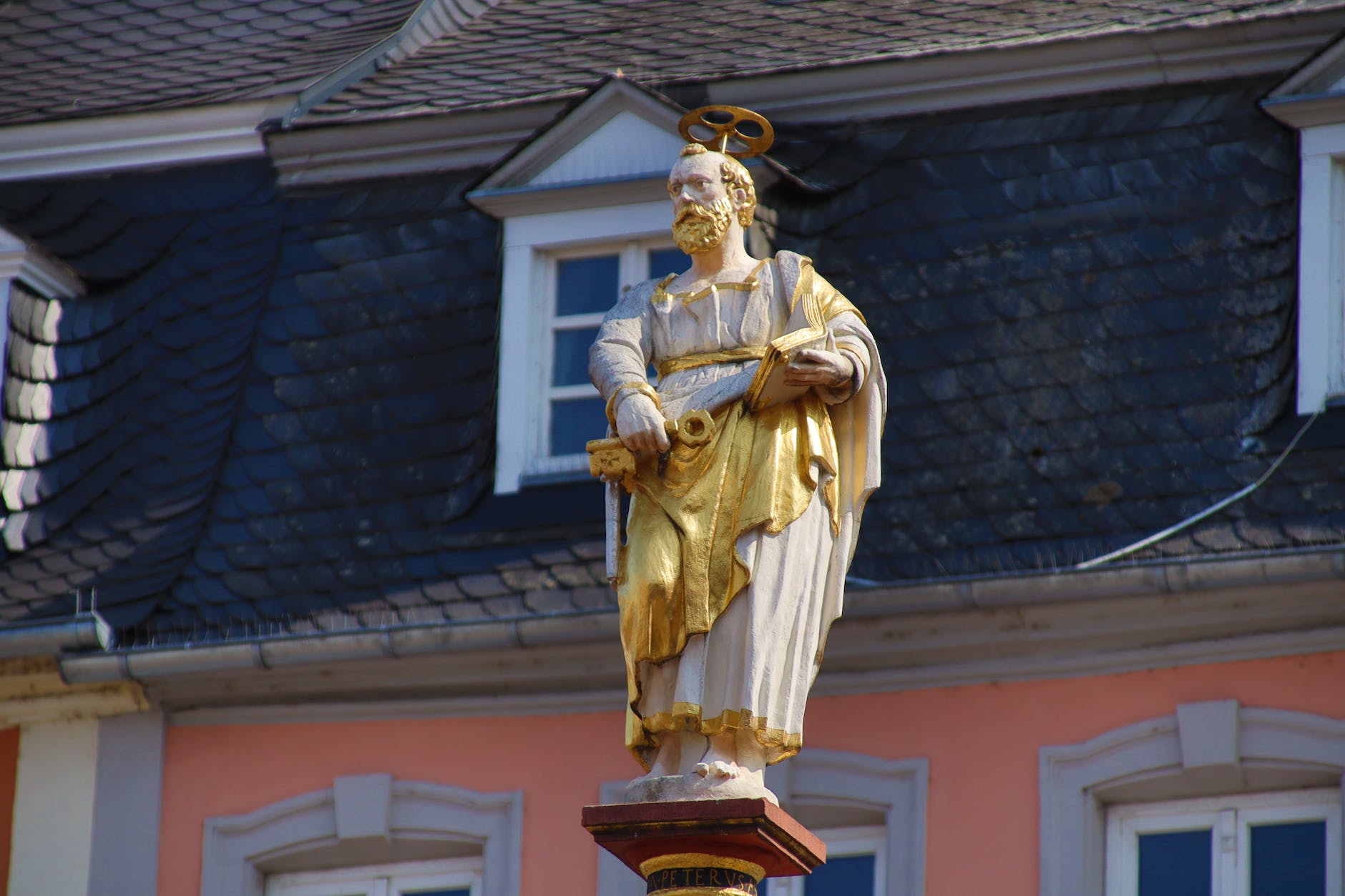
In Matthew 16, we read that in response to Peter’s confession that Jesus is “the Christ, the Son of the Living God” (Matthew 16:17), Jesus says:
And I tell you, you are Peter, and on this rock I will build my church, and the gates of hell shall not prevail against it. I will give you the keys of the kingdom of heaven, and whatever you bind on earth shall be bound in heaven, and whatever you loose on earth shall be loosed in heaven.”
Matthew 16:18-19
These verses have been used by the Roman Catholic Church to support the concepts of papal authority and papal succession, suggesting that Peter’s successors hold the keys of the kingdom.
But is this correct?
What was Jesus speaking about when he said “on this rock I will build my church”? And what are the “keys of the kingdom”?
In a recent Sermon Extra video, Pastor Mike and I discussed this topic. Here are some highlights, and then you can see the full video below.
What was Jesus speaking about when he said “on this rock I will build my church”?
There are 3 possible options:
Jesus is speaking about Peter as the first leader of the church
Jesus is referring to Peter’s confession that Jesus is the Christ (Messiah) and the Son of the Living God (deity)
Jesus is referring to himself as the rock (cornerstone) upon which the church is based
The strength of the first view (that Jesus is speaking about Peter) is the fact that Peter’s name means “stone.” So, perhaps Jesus is speaking about Peter through a play on words.
However, when Peter himself writes his first epistle (1 Peter), he writes that we who are believers are like living stones which are being built together into a spiritual house (temple), with Jesus Christ as the cornerstone. In Paul’s letter to the Ephesians, he says that we who are believers are members of the household of God, which is built on the foundation of the apostles and prophets, with Jesus Christ as the cornerstone (Ephesians 2:20).
When John (who was present when Jesus said those words recorded in Matthew 16) wrote his gospel, he made this statement his grand culmination:
Now Jesus did many other signs in the presence of the disciples, which are not written in this book; but these are written so that you may believe that Jesus is the Christ, the Son of God, and that by believing you may have life in his name.
John 20:30-31
It’s surprising just how similar John’s words are to Peter’s statement: that Jesus is the Christ, the Son of the living God. John says that this is the way to receive eternal life. So, is this confession of Jesus as Messiah and God the foundation of the church?
Here’s the thing: even if it is referring to Peter, and Jesus was giving Peter a position of primacy of leadership in the early church, it does not necessarily follow that Peter’s primacy of leadership would then be handed down in succession to whoever held his position in the future. This is especially true, since Peter’s position changed over the course of time in the early days of Christianity. Early on, we see Peter as a leader in the church in Jerusalem, but eventually he left Jerusalem. He eventually died in Rome, but the church in Rome was not started by him.
The idea of papal succession is quite a leap from this verse, and it has significant historical issues with it as well, as I explain in the video linked below.
What are the “Keys of the Kingdom”?
Keys are something which open doors and close doors. Did Jesus give these keys specifically to Peter, or were they given to Christian leaders in general, or even to believers in general?
If they were given to Peter, it is worth noting that Peter is the one who opened the doors to salvation through Jesus first to the Jews on the Day of Pentecost (Acts 2), then to the Samaritans (Acts 8), and then to the Gentiles (Acts 10-11).
It is certainly significant that the exact phrase that is used in Jesus’ statement in Matthew 16 about the keys of the kingdom: “whatever you bind on earth shall be bound in heaven, and whatever you loose on earth shall be loosed in heaven” is used again by Jesus only two chapters later in Matthew 18, when he is talking about how to deal with a fellow believer who has sinned against you.
There, after explaining the protocol for dealing with these situations, he says:
“Truly, I say to you, whatever you bind on earth shall be bound in heaven, and whatever you loose on earth shall be loosed in heaven. Again I say to you, if two of you agree on earth about anything they ask, it will be done for them by my Father in heaven. For where two or three are gathered in my name, there am I among them.”
Matthew 18:18-20
This is spoken to all of Jesus’ disciples, not just Peter, but the final statements seem to make it clear that this statement applies to all believers who gather in Jesus’ name.
Here’s the video in which we discuss this in a bit more detail, especially in regard to this historical development of interpretation within the Catholic, Orthodox, and Protestant churches:
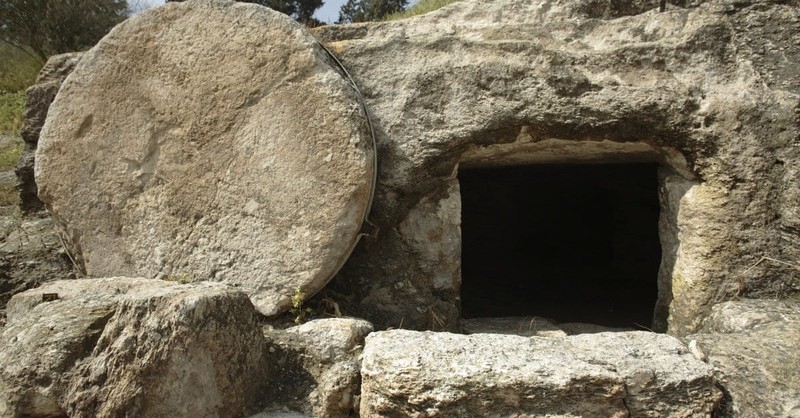
According to the Gospel of Matthew, the guards who were watching over Jesus’ tomb reported to the chief priests what had happened when the angel of the Lord appeared and rolled away the stone from the tomb (Matthew 28:2).
Matthew 28:11-15 says that the chief priests paid the guards a large sum of money and instructed them to say that the disciples came and stole Jesus’ body while they were asleep.
These guards were Roman soldiers who were assigned to keep watch over the tomb. We don’t know if they were punished for failing in their duty to protect the tomb, which would have been normal practice at that time, nor do we know if they got in trouble for accepting the bribe from the chief priests.
It is clear from Matthew’s Gospel that the guards were aware of the miraculous events that took place at the tomb. Perhaps they ran away when the earthquake happened or the stone rolled away from the entrance. We don’t know if they saw Jesus walk out of the tomb or not.
No matter when they left the scene, they would have been left with a powerful testimony to Jesus’ resurrection, as would the chief priests. It is significant to remember what it says in Acts 6:7, that many of the priests in Jerusalem became believers in Jesus. I wonder if any of those who became believers were part of the group who paid off the guards!
This video is particularly good at depicting the incredulity of the idea that Jesus’ disciples stole his body:
On this episode of the Theology for the People podcast, Michael Payne and I discuss what is at stake in regard to Jesus’ resurrection, as well as some alternative explanations for Jesus’ missing body that have been proposed. Finally, we share some of the strongest evidences for why Christians believe that Jesus did in fact rise from the grave.
In this episode, Nick Cady and Michael Payne discuss what is at stake in regard to Jesus' resurrection, as well as some alternative explanations for Jesus' missing body that have been proposed. Finally, they share some of the strongest evidences for why Christians believe that Jesus did in fact rise from the grave.
For more from Nick and Mike, check out the White Fields Church Podcast, whitefieldschurch.com, or the White Fields YouTube channel.
Make sure to visit the Theology for the People blog at nickcady.org for more articles and content.
Jesus’ last week in Jerusalem, known as Holy Week and Passion Week (from the Latin passio = to endure suffering), is the most significant and well-documented period of Jesus’ life. The Gospels all spend more time talking about this one week of Jesus’ life, along with the build up to it, than any other period in Jesus’ life or ministry.
Here is a timeline of the events which took place during this week:
Palm Sunday – The Triumphal Entry
The week begins with Jesus’ triumphal entry into Jerusalem on a donkey, fulfilling the prophecy of Zechariah 9:9. The people of Jerusalem lay down their cloaks and palm branches as a sign of honor and welcome. Jesus enters the city to the cheers and acclamations of the people, who cry out, “Hosanna! Blessed is he who comes in the name of the Lord!” (Matthew 21:9).
Monday – Cleansing the Temple
On Monday, Jesus returns to the temple and cleanses it of the merchants and moneychangers who had set up shop there. He teaches in the temple, and the religious leaders challenge his authority. Jesus responds with a series of parables, including the Parable of the Tenants and the Parable of the Wedding Banquet.
Tuesday – The Olivet Discourse
On Tuesday, Jesus continues to teach in the temple, and his opponents attempt to trap him with questions about paying taxes and the resurrection. Jesus responds with his famous declaration, “Render unto Caesar the things that are Caesar’s, and unto God the things that are God’s” (Mark 12:17). He also delivers his Olivet Discourse (Matthew 24-25), in which he prophesies about the destruction of the temple and the signs of his coming and of the end of the age.
Spy Wednesday
Wednesday is traditionally known as “Spy Wednesday” because it is believed to be the day on which Judas Iscariot agrees to betray Jesus to the authorities. This event is not recorded in the Gospels, but it is mentioned in Matthew 26:14-16, Mark 14:10-11, and Luke 22:3-6.
Maundy Thursday
On Thursday evening, Jesus shares a Passover meal with his disciples in the Upper Room. During this meal, he institutes the sacrament of the Eucharist and washes his disciples’ feet, giving them a powerful example of humility and service. After the meal, they go to the Garden of Gethsemane, where Jesus prays and his disciples fall asleep. Judas arrives with a crowd of soldiers and betrays Jesus with a kiss, leading to his arrest.
The word maundy comes from the Old French mande, in turn from the Latin mandātum, which means “mandate or command.” After washing the feet of his disciples during the Last Supper, John 13:34 tells us that Jesus told his disciples: “A new commandment (mandate) I give you, that you love one another; even as I have loved you, that you also love one another.”
Good Friday
On Friday, Jesus is brought before the High Priest and the Sanhedrin. They accuse him of blasphemy and condemn him to death. He is then taken to Pontius Pilate, the Roman governor of Judea, who finds no fault in him but is pressured by the crowd to have him crucified. Jesus is beaten, mocked, and forced to carry his own cross to a hill outside the city walls called Golgotha, where he is crucified alongside two criminals. He dies in the afternoon and is buried in a nearby tomb.
Holy Saturday
On Saturday, Jesus’ body lies in the tomb, and his followers observe the Sabbath in mourning and prayer.
Resurrection Sunday
On Sunday morning, several women go to Jesus’ tomb to anoint his body with spices. They discover that the tomb is empty, and they encounter angels who tell them that Jesus has risen from the dead. Jesus appears to his disciples throughout the day, including to the women at the tomb, to two disciples on the road to Emmaus, and to the disciples gathered in a locked room. He commissions them to go and make disciples of all nations, and he ascends into Heaven forty days later.
A Possible Alternative Timeline
Along with this traditionally held timeline, is a popular and plausible view which sees some of the events of Monday-Wednesday being combined, and has Jesus actually being crucified on Thursday rather than Friday, since John’s Gospel tells us that it took place on a “special Sabbath.”
Shane Angland is a teaching elder at Ennis Evangelical Church in County Clare, Ireland. He is a graduate of Dallas Theological Seminary (Th.M.) and holds a B.A. in History and Politics from the University of Limerick. Shane also served for several years as a missionary in Kharkiv, Ukraine.
On this episode of the Theology for the People podcast, Shane shares some of his research about the Irish monastic approach to Bible study in the “Dark Ages” and what made it unique, as well as what we today can learn from their practices.
Bible Study in the Dark Ages: The Irish Monastic Approach and What It Can Teach Us Today – with Shane Angland –
Theology for the People
Shane Angland is a teaching elder at Ennis Evangelical Church in County Clare, Ireland. He is a graduate of Dallas Theological Seminary (Th.M.) and holds a BA in History and Politics from the University of Limerick. Shane also served for several years as a missionary in Kharkiv, Ukraine.
On this episode, Shane shares some of his research about the Irish monastic approach to Bible study in the "Dark Ages" and what made it unique, as well as what we today can learn from their practices.
Check out Shane's blog here: http://anglandicus.blogspot.com/
Visit the Theology for the People blog at nickcady.org, where you can read articles and suggest topics for future episodes.
The answer is: Yes, but not in the way that many people might think of the word “political.”
A King and a Kingdom. The City of God and the City of Man.
The fact is that the gospel is political because it has to do with a king (Jesus) and a kingdom (the Kingdom of God).
The word “politics” comes from the Greek term politiká, first used by Aristotle, which refers to “the affairs of a city (polis in Greek).”
The promise of the Messiah, through the Hebrew prophets, was the promise of a king, who would come, from the line of David. These promises of the Messiah being a savior-king go all the way back to Genesis 49, in the promise to Judah, that “the scepter would not depart from Judah until Shiloh comes.”
David then received a promise that this promised savior-king would come through his family line, and establish a kingdom which would have no end (2 Samuel 7).
Isaiah later made the promise that this son promised to David would actually be God himself, come to Earth to establish this eternal kingdom:
For to us a child is born, to us a son is given; and the government shall be upon his shoulder, and his name shall be called Wonderful Counselor, Mighty God, Everlasting Father, Prince of Peace. Of the increase of his government and of peace there will be no end, on the throne of David and over his kingdom, to establish it and to uphold it with justice and with righteousness from this time forth and forevermore. The zeal of the LORD of hosts will do this.
Isaiah 9:6-7
This is why the Gospels of Matthew and Luke begin with a genealogy, which shoes that Jesus is the rightful heir of King David. It’s the reason why the Magi came to pay homage to the new King of the Jews (Matthew 2), and why Herod the Great tried to kill Jesus as a baby.
However, Jesus made it clear in his Kingdom Parables (Matthew 13), for example, that His Kingdom was fundamentally different than a mere earthly kingdom – something he stated explicitly in John 18:36.
And yet, we are told that Jesus currently reigns from Heaven, where he is seated at the right hand of the Father.
What is the Kingdom of God?
A kingdom is a realm in which a king has authority and dominion. Thus, the Kingdom of God is the realm in which God is recognized and submitted to as king.
In this sense, Jesus rules and reigns from Heaven as King now, and he also reigns as King over the lives and areas here on Earth of those who recognize him as king and submit to him (see: Luke 17:20-21) – and the day is coming, when the Kingdom of God will come to Earth, and every knee will bow and every tongue confess that Jesus is Lord to the glory of God the Father (Philippians 2:11)
One day, the City of God will descend upon the City of Man – and the Heavenly City will come to Earth (see Revelation 21).
Jesus describes the “upside-down” values and culture of his kingdom in the Sermon on the Mount (Matthew 5-7).
Thus, the gospel is political – in that it is concerned with the affairs of a King, a City (the new Jerusalem) and the Kingdom (the Kingdom of God).
The Political Language of the Gospel
Interestingly, when Jesus told Pontius Pilate that His Kingdom was not of this world (John 18:36), the word he used for “kingdom” is the same word that was used in the Greek language to speak about the “Roman Empire.” In other words, Jesus was contrasting his kingdom with the kingdom of Rome.
Further, early Christians and the biblical writers – who were inspired by the Holy Spirit – used the same political vocabulary to describe their “politics” as Rome did.
For example, as Christians, we tend to think that the words gospel, Lord, Savior, and Son of God are “Christianese” buzzwords that are foreign to the popular culture. But in the first century, these terms were not unique to Christianity; they were also used by Rome to refer to its own king and kingdom.
Two common titles used for the Roman emperor were lord (kurios) and savior (soter). And since the emperors were viewed as divine, they were also called “son of god” or in some cases just plain “god.” These divine lords were believed to have brought unprecedented peace to the world, which they referred to in Latin as the Pax Romana, or “peace of Rome.” Rome was known for securing such peace and justice through warfare. And whenever Roman leaders returned home from another military victory, heralds were sent throughout the empire to announce the “gospel”—the good news—that Rome had been victorious.
All these terms were commonly used to praise the Caesars of Rome. Christians stole these titles and applied them to their Jewish Messiah, who was also killed by Rome because of the claims that he was king. Remember, this was the question that was asked of Jesus during his trial before his crucifixion: whether he was a king.
When the early Christians hailed Jesus as Lord and Savior, you need to hear a faint first-century echo: Caesar is not.
This is why, in Acts 17, when Paul proclaimed the gospel of Jesus in Thessalonica, the message created an uproar in the city – not because the people were offended at the thought of a new religion, but because they understood that the Christians were proclaiming a king other than Caesar!
“These men who have turned the world upside down have come here also…and they are all acting against the decrees of Caesar, saying that there is another king, Jesus.”
Acts 17:6-7
If Paul was merely preaching about a privatized religious experience, the authorities wouldn’t bat an eye. But Paul announces that Jesus is Lord and Savior. And this means that Caesar is not.
Imagine that in a town like Philippi, where the Roman flag waves high and stories of military victories are swapped in the streets, there was a small group of people who believe that a crucified Jew, rather than Nero, is the true Lord, Savior, and bringer of good news, justice, and peace. [1]
What This Means for Christians Today
As Christians, we still confess that Jesus is Lord and Savior – not any political leader or party today. Our primary citizenship is in Heaven, from which we await our Savior (Philippians 3:20).
And yet, like the people of God in exile in Babylon, we are called to engage in, bless. and pray for the place that we live in now (Jeremiah 29:4-7), that we may live godly and peaceable lives, and we are to pray for the salvation of the leaders and others around us (1 Timothy 2:1-4).
We are called to be salt and light, showing the world around us God’s love and truth through our actions and words (Matthew 5:13-16).
Our ultimate hope, therefore, is a political hope – but not in the sense of the politics of this world. Our hope is the cosmic politics of King Jesus, as we await the fullness of the coming of his Kingdom and its city: the New Jerusalem.
To the King of the ages, immortal, invisible, the only God, be honor and glory forever and ever. Amen.
Some time ago, I addressed some common, but incorrect claims that the origins of Easter are pagan: “Does Easter Come from Ishtar?”
But what about Christmas? Does Christmas have pagan origins?
Saturnalia and the Winter Solstice
Did Christians simply take over the Roman pagan festival of Saturnalia and repurpose it as a celebration of Jesus’ birth Is that why we celebrate Christmas around the same time as the winter solstice?
I used to believe this one myself. However, upon further investigation, it would seem this is not how the celebration of Christmas on December 25 came about. Here’s why:
We don’t actually know what time of year Jesus was born. The one thing we know is that it was almost certainly not in late December. The reason for this is because Luke’s Gospel tells us that the shepherds were watching their flocks by night, sleeping in the fields. In Israel it gets too cold in the winter for that; shepherds sleep outside from about March-September. Clement of Alexandria wrote that some believed May 20 was Jesus’ birthday, others believed it was April 19 or 20, still others believed it was in late March. [1]
Early Christians, along with the majority of ancient cultures, did not celebrate birthdays in the same way we do today. Only two of the four Gospels talk about Jesus’ birth. The early Christian writer Origen dismissed birthdays as something only celebrated by tyrants, such as Pharaoh and Herod in the Bible. [2]
Things changed in the early 300’s AD with the beginning of the celebration of Epiphany, which commemorated the revealing of the Messiah to the Gentiles at the coming of the Magi to see Jesus after his birth. This was celebrated in early January in the Eastern church, not because they believed this to be the birthday of Jesus, but because of how it fit into the liturgical calendar which gave a plan for teaching through key events in the Gospels every year.
The Western (Latin speaking) part of the church wanted to have a festival similar to Epiphany, and decided that since they did not know when exactly Jesus was born, they would have their festival of the celebration of the incarnation and the birth of Jesus in late December, before Epiphany – since the Magi would have arrived after the birth of Jesus.
Again, the decision of this date was based on liturgical calendars, not on the taking over of pagan festivals. It was considered significant, however, that the coming of “the light of the world” should be celebrated at the time of the year which is darkest in the Northern Hemisphere. After this date, the days get longer and the darkness wanes. This symbolism was not lost on early Christians, but rather considered to be a great symbol of the effect of Jesus’ entrance into the world.
Here’s what’s so interesting: there is a document from about 350 AD which tells us that Romans celebrated the festival of Sol Invictus Natali (the birth of the unconquered sun) on December 25, and that same document also tells us that Christians celebrated the birth of Jesus on this same day. There is no earlier evidence or report of a Roman pagan festival on December 25. In other words, it is just as likely that the pagan Romans chose this day for their pagan festivals because Christians were already celebrating the birth of Jesus on this day, and wanted to have their own counter-festival, than that Christians chose this day because of an existing pagan festival.
Furthermore, there is nothing particularly pagan about celebrating anything at the darkest part of year, right before the days start getting brighter. Judaism, for example, celebrates Chanukah – the Festival of Lights, in which they light candles in the darkness to celebrate God’s faithfulness at this same time of year. Pagans don’t own the symbolism inherent to the orbit of the Earth.
Are Christmas Trees Pagan?
There is some evidence that Roman pagans liked to decorate their homes with greenery during winter festivals, and that early Christians decorated their houses with greenery during Epiphany as well.
It should be remembered that in the ancient world, decorating with greenery in the winter was also common because it was bleak outside and they didn’t have Wayfair.com to depend on for affordable home decor.
Some people claim that these verses in Jeremiah are speaking about the practice of Christmas trees:
“Learn not the way of the nations…for the customs of the peoples are vanity. A tree from the forest is cut down and worked with an axe by the hands of a craftsman. They decorate it with silver and gold; they fasten it with hammer and nails so that it cannot move.
Jeremiah 10:1-5
Sounds like a Christmas tree, right? Except that’s not what it’s describing. What Jeremiah is describing is the creation of a household idol out of wood. Isaiah talks about a similar practice in which people would fashion an idol out of wood, stone, or metal, and then worship the very object they had just created.
The history of the Christmas tree dates back to medieval Europe, in the 14th and 15th centuries, during which December 24 was celebrated as “Adam and Eve Day” which was celebrated with the decorating of “paradise trees” by attaching apples to them (think how much bulbs look like apples) – a rarity during the winter, so they were considered treats. Because it was winter, and especially in Northern Europe, evergreen trees were popular to use for this. [3]
Modern Pagan Christmas?
Perhaps of bigger concern is the way in which our modern consumeristic Christmas traditions can detract from the celebration of Jesus and the incarnation which Christmas is meant to celebrate.
May we, even in the joys and the fun of our modern celebrations, not lose sight of what it is that we are celebrating this season: that to people like us who live in deep darkness, a light has shone; the promised Messiah has come to save us from our sins and give us the light of life forever! That is certainly something worth celebrating.






 Theology for the People