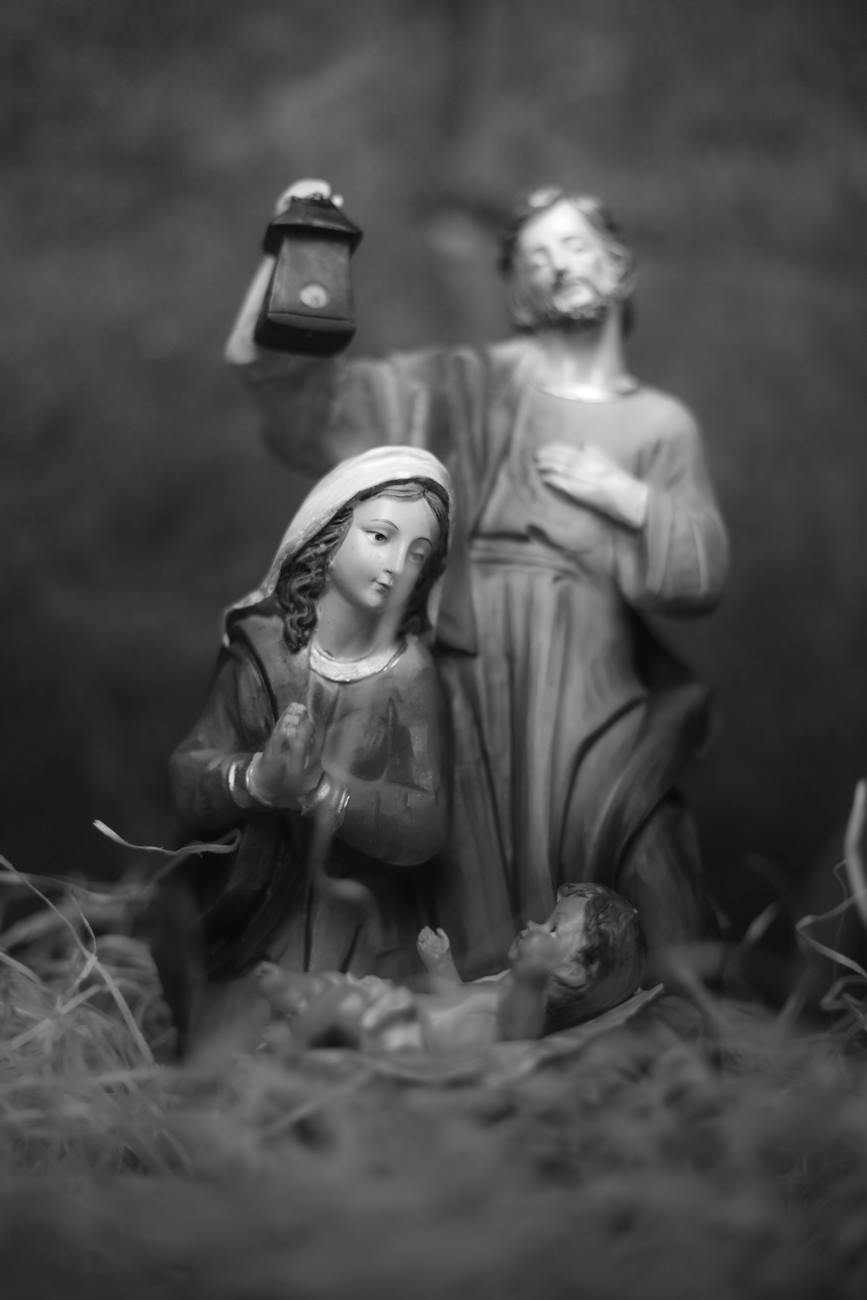
Several people over the years have asked me whether the virgin birth of Jesus is an essential element of the gospel message.
Emergent church leader Rob Bell, for example, asked the question of which parts of the biblical story of Jesus are essential to believe in order to be saved. He specifically questioned the necessity of belief in the virgin birth.
Additionally, this week I came across a discussion online of people arguing that instead of the original lyrics to the hymn Hark! The Herald Angels Sing, the line “offspring of the virgin’s womb” should be changed to “offspring of Mary’s womb.” The reason for this, they said, was that not saying Mary’s name, but instead identifying her according to her sexual status, takes away from her dignity. Therefore, we should say her name, and get rid of this “unnecessary” controversy regarding the virgin birth.
So, is the virgin birth essential to the gospel?
I believe it is. In this video, I explain the reasons why:
Continuing through the workshop that Aaron Salvato and I presented at this year’s Calvary Chapel pastors and leaders conference on the topic of Understanding Doubt and Deconstruction, here is Part 3, in which we delve into topics such as:
Recently I posted Part 1 of a workshop that Aaron Salvato and I presented at this year’s Calvary Chapel pastors and leaders conference on the topic of Understanding Doubt and Deconstruction.
The purpose of the workshop was to help equip Christian leaders to understand and engage those experiencing doubts or going through a process of deconstruction, in order to help strengthen their faith in Jesus and their trust in the Bible, so they might wholeheartedly embrace the gospel.
In Part 2 of this series, Aaron and I speak about the #deconstruction movement and different causes of deconstruction, including the influence of the Emergent Church movement in the early 2000’s.
Yet, some further explanation will provide helpful in understanding exactly how to understand the times we are living in and what to expect.
The Promise of Jesus’ Coming
In 2 Peter chapter 3, Peter the Apostle responds to those who, in his day, were asking the question: “Where is the promise of his coming?”
In other words, even 2000 years ago, in the First Century A.D., people were asking this same question: “Are we living in the End Times?” And the question, “If Jesus said he would return, why hasn’t he come back yet?”
Peter tells us that “the promise of Jesus’ coming” was predicted by the Old Testament Prophets, was promised by Jesus, and by the Apostles. In 2 Peter 3:7, he tells us that Jesus’ (second) coming will involve a day of judgment, and the destruction of the ungodly.
Peter says in 2 Peter 3:10-12 that Jesus’ (second) coming will be “the day of the Lord,” in which the Lord will return to Earth, and the heavens will pass away with a roar, and the heavenly bodies (stars) will be burned up and dissolved, and the earth and everything in it will be exposed.
And in 2 Peter 3:13 he says that this will not only be a day of judgment, but for those who are in Christ, it will be a day of salvation. It will be at this time that God’s promise will be fulfilled, of bringing about the New Heavens and New Earth in which righteousness dwells (see also Revelation 21:1-4)
The Day of the Lord
The “Day of the Lord” is a really important concept in the Old Testament, especially in the Prophets. It refers to a time in history when God intervenes in the happenings on Earth, in order to bring judgment on those who do evil, and salvation to those who belong to Him.
Throughout the Old Testament there were many smaller “days of the Lord,” when God intervened and brought judgment (such as the flood in the time of Noah, which Peter mentions in 2 Peter 3:6.
But all of these “smaller” “days of the Lord” were just previews and foreshadowings of THE Day of the Lord, which is still yet to come. And what Jesus told us is that THE Day of the Lord, AKA: “the day of God’s coming, will be the day when He returns to Earth in the Second Coming.
The “Parousia”
The phrase “Second Coming of Christ” is not found in the Bible, but instead, the word the Apostles used to speak about the Second Coming was the Greek word “word “”Parousia,” which means “presence,” or “appearing,” or “arrival.” More specifically, it might be translated as, “presence after absence.”
The word “Parousia” is used 13 times in the New Testament, and every time it is used it speaks of Jesus’ Second Coming.
In Jesus’ first coming, he came to live as one of us, as our substitute in life (a life of perfect obedience to God), and in death (as an atoning sacrifice for our sins). Further, he resurrected, in order to make a way for us to also be resurrected from death to life everlasting.
In Jesus’ Second Coming, he will come as king: judge, and ruler.
Are we living in the Last Days?
Peter tells us in 2 Peter 3:3 that in the last days, there will be scoffers who will say, “Where is the promise of His coming?” In other words, “If Jesus is really coming back, why hasn’t he come back yet?”
After all, modern readers of the Bible might ask the question, “If Peter and the early Christians, who lived nearly 2000 years ago, thought that they were living in the last days, then does that mean that they were wrong?” “And what does that mean for us today, especially if you say that we are living in the Last Days right now?”
It is true, that the early Christians believed that Jesus was going to return during their lifetimes, and that he did not, and that he still has not returned since that time. So, if those early Christians thought that they were living in the End Times, then how can we say that we are living in the End Times?
This requires an understanding of what the “End Times” is.
Are we living in the End Times? Yes. Was Peter living in the End Times when he wrote this letter? Also: Yes.
Here’s why: Because the “End Times” or “Last Days” is a PERIOD of time which BEGAN with Jesus’ ascension into Heaven, 40 days after his resurrection.
How do we know that? Because in Acts chapter 2, we read about how, on the day of Pentecost (10 days after Jesus’ ascension), the Holy Spirit was poured out on the 120 believers who were gathered in an upper room in Jerusalem. As a result, those people began to speak about God’s amazing works, in multiple languages, and the people down on the street who heard them doing this, said amongst themselves, “Look! Those people are already drunk, and it’s only 9:00 in the morning!” (Acts 2:13)
And Peter stood up at that moment and addressed the crowd, and said to them: These people are not drunk! Rather this is what was spoken of by the Prophet Joel. (Acts 2:14-16)
Peter then quoted from the Book of Joel, chapter 2 — where the Prophet Joel said that in the Last Days, God will pour out his Spirit, and these kinds of things would happen. (Acts 2:17)
In other words: Peter was explaining to those people, that with the ascension of Jesus and the coming of the Spirit on Pentecost, the “Last Days” had begun. The Last Days is the final period in the timeline of history, before the “coming of the Lord.” We are in that period right now, and have been for the past several centuries since Jesus’ ascension into Heaven.
You can think of it like this: Until the ascension of Jesus, history was moving forward, towards “the end of the age,” (Matthew 24:3). But when Jesus ascended into Heaven, the timeline of history turned, and began running parallel to “the end.”
That’s why we have been in the “End Times” or “Last Days” for almost 2000 years now. And the reason that’s important is because it means that Peter and the early Christians were not wrong in expecting Jesus to return in their lifetimes.
Further, it means that there is currently nothing preventing Jesus from coming back at any moment.
Peter says in 2 Peter 3:10 that when Jesus comes, it will be like the coming of a thief. When I lived in Hungary, one evening while we were out at dinner, our house got broken into and robbed. The thieves did not notify us that that they would be coming over at 7:00 PM on Tuesday. The only way for us to have been ready for their coming, would have been for us to always be ready. In the same way, Jesus’ coming could happen at any time.
Why Does Jesus Delay His Coming?
Jesus has not actually delayed or postponed his coming, though, to many of us, it may seem like the “end times” has been going on a long time.
In 2 Peter 3:8-9, Peter says:
But do not overlook this one fact, beloved, that with the Lord one day is as a thousand years, and a thousand years as one day. The Lord is not slow to fulfill his promise as some count slowness, but is patient toward you, not wishing that any should perish, but that all should reach repentance.
2 Peter 3:8-9
Our sense of time is very different than God’s sense of time, Peter tells us. 2000 years may feel like a long time to us, but it’s not a long time to God.
In other words, God is not slow, but He is patient. And God’s patience has a purpose.
The purpose of God’s patience is that there are more people He wants to save! There are more people he wants to rescue and redeem, and bring into His family. Personally, I sure am glad He waited for me!
As Christians today — we often (rightly) say, “Come quickly Lord Jesus!” “Come and deal with all the wickedness in the world! Come, and bring your Kingdom of Righteousness!” Yet, if Jesus would have returned 10 years ago, or 20 years ago, many of us would not have been in a saving relationship with Jesus.
We should not confuse the patience of God with the permission of God. That’s the mistake that some in the New Testament era made. There is an urgency to the message of the gospel. And yet, God’s patience has a purpose: that more would be saved.
How to Live in the Last Days
In 2 Peter 3:11-12, Peter tells us that “Since all these things are thus to be dissolved, what sort of people ought you to be in lives of holiness and godliness, waiting for and hastening the coming of the day of God”
Since this world is going to pass away, it would be foolish to live lives focused on and for earthly things that will not last. Instead, our attention is better spent focusing on things that will last.
When everything is destroyed, what will remain are: God and human souls.
Therefore, the focus of our lives should be on pursuing godliness and holiness, because a relationship with the Living God is eternal (see John 17:3).
Furthermore, holiness and godliness matter for our mission. Jesus taught us: Let your light shine before others, so that they may see your good works and give glory to your Father who is in heaven (Matthew 5:16).
Both Peter and Paul talks the importance of Christians living holy lives so that the way of Jesus is not reviled. Hypocrisy and ungodly actions and attitudes undermine our effectiveness in the mission we have received from Jesus to spread His love and truth to people all over the world.
In Matthew 25, after talking to his disciples about the signs of His coming and the end of the age (Matthew 24), Jesus then told his disciples a parable to describe what it means to be “ready” for Jesus’ coming. To be ready, Jesus told them, is to be actively investing the resources that God has given you, to further his Kingdom. In other words, the way to live in the Last Days is to be busy about God’s work until Jesus comes again.
Earlier this year, Aaron Salvato and I presented a workshop together at the Calvary Chapel pastors and leaders conference on the topic of Understanding Doubt and Deconstruction.
The purpose of the workshop was to help equip Christian leaders to understand and engage those experiencing doubts or going through a process of deconstruction, in order to help strengthen their faith in Jesus and their trust in the Bible, so they might wholeheartedly embrace the gospel.
Prior to the conference, we recorded our material and Aaron took that video, added graphics and text, and is releasing it in parts on the Calvary Chapel YouTube page.
The first part can be seen here, and I have to say that Aaron did a really good job with the graphics.
One of my favorite parts of this episode is the discussion of the philosophical origins of the Deconstruction Movement, discussing Foucault, Derrida, and others.
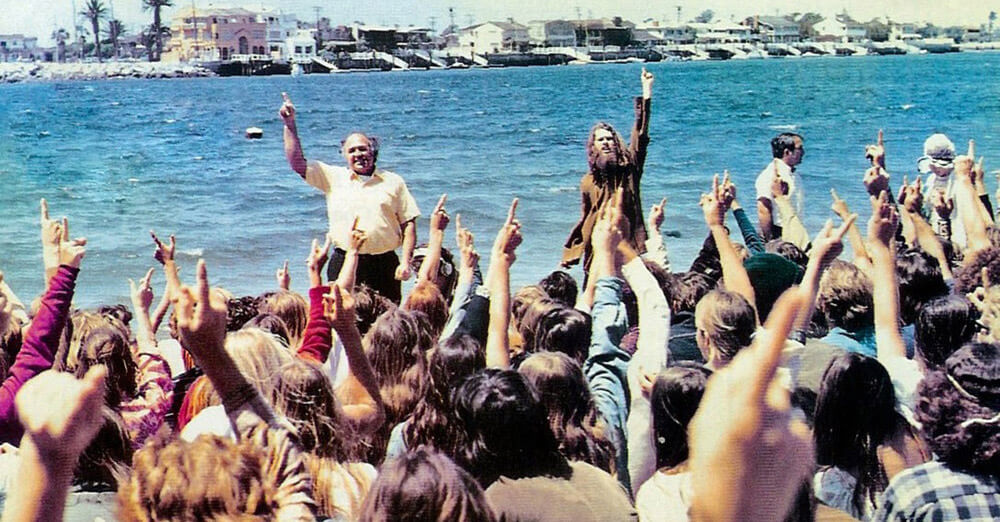
October 3, 2023 marks 10 years since the passing and heavenly homecoming of Pastor Chuck Smith. Pastor Chuck was the man God used to start the Calvary Chapel Movement of churches.
For this anniversary, I wrote an article for CalvaryChapel.com about how Pastor Chuck impacted my life, and the lives of many other young people – including my pastor, Tom Stipe.
Additionally, I recorded a bonus episode of the Mission & Methods Podcast, in which I spoke with Pastor Brian Brodersen about Chuck’s approach to ministry, including some questions about how Chuck pastored personally, and what were the major influences that shaped Chuck’s theology, and his preaching.
Pastor Brian is uniquely qualified to speak to these questions, as he not only served alongside Pastor Chuck and eventually succeeded him as the Senior Pastor of Calvary Chapel of Costa Mesa — but he also shares close family ties to Pastor Chuck, as his son in law.
How God Used Chuck Smith To Empower A New Generation Of Pastors
When I was 18 years old, I boarded a plane bound for Hungary. Despite the fact that I had only been following Jesus for two years, my pastor, the late Tom Stipe, sent me out as a missionary. Three years later, when I was 21, Tom ordained me as I was going out to plant a church.
At the time, these actions didn’t strike me as abnormal or unusual, yet now, years later, I look back on them with a sense of surprise. Why was Tom willing to take a chance on me, as young as I was? Why did he trust that I could serve the Lord in those ways without any formal training?
Later on, I came to realize that the reason was because that is what Chuck Smith had done for him when Tom was a young man: In 1976, Pastor Chuck sent Tom to Colorado to start a Calvary Chapel church here. In the movie, “Jesus Revolution,” millions of people saw the portrayal of how Chuck Smith empowered the young Greg Laurie to plant a church in Riverside, California. Still, the even more incredible reality is that Pastor Chuck did similar things with many young people over the years. Tom was doing for me what Chuck had modeled for him.
I remember sitting with Tom and listening to him tell stories of the early days of Calvary Chapel. One thing that Tom told me was that, in his opinion, the true genius of Chuck Smith was not his verse-by-verse teaching, as many people assume, and as masterful as that was. The true genius of Chuck Smith, Tom said, was that Chuck was willing, and even eager, to empower young people to serve the Lord in meaningful ways because he genuinely believed in the work of the Holy Spirit in and through people who were willing to make themselves available to God.
I finally got to meet Pastor Chuck in Austria, at the conference center that he had acquired for Calvary Chapel as a launching point for ministry in Eastern Europe. He asked about our ministry in Hungary and gave encouragement and affirmation. As I look back on that, I’m full of appreciation for him as a person who was more than just a good Bible teacher but an example of foresight and faith. Not only did Pastor Chuck want the Gospel to go forth into the whole world, but he understood that God wanted to use many other people to do that work. He was willing to support missionaries and church planters, including some of us who maybe wouldn’t have been empowered to do those things by anyone else who didn’t have the measure of faith he did!
Now, ten years after Pastor Chuck’s heavenly homecoming, I’m more inspired than ever to carry on his legacy of Bible teaching, evangelism, missions, and empowering people, especially young people, to serve the Lord.
Q&A On Chuck Smith’s Approach To Ministry – With Nick Cady And Brian Brodersen
September 8, 2023 marks one year since the death of Her Majesty Queen Elizabeth. The late Queen Elizabeth II was remarkable in many ways. She reigned for seventy long years as the sovereign of the United Kingdom and Commonwealth. One of the most well-known people in the world, Queen Elizabeth was popular because of her consistency and the way she fulfilled her role as a leader. What intrigued me about her, is the way she led. Elizabeth showed over her long reign, through her quiet and deliberate leadership, that she considered herself a servant to her people.
In a speech made on her 21st birthday, the Queen (then Princess Elizabeth) pledged her commitment to duty in these memorable words, “I declare before you all that my whole life, whether it be long or short, shall be devoted to your service.” She held true to that pledge over her seventy-year reign, which began when she was just 26 years old. Though she could not know what the future held, she dedicated to give her life in service for her people. And that she did. Instead of spending frivolous time on herself as queen or enjoying entertainment above duty, what was known about Queen Elizabeth II was how she worked hard traveling as a diplomat and acting as Head of state, Head of the armed forces, Head of the Commonwealth, and head of the Church of England.
The Queen lived 96 years, seeing the world change, seeing the United Kingdom change, and seeing her own family change. She began her reign over a large empire which stretched across the world, but at her death, the Commonwealth was much smaller. She allowed the monarchy to modernize and be televised, and even had a Twitter account by the end of her life. She realized that she must not resist change, lest she become unrelatable to the people she served and led. She allowed the public to have access to the royal family, letting them into her life to see what she was like as a person, where she lived, and how she fulfilled her duties. With all of the change Queen Elizabeth II saw in her seventy years as sovereign, she remained dedicated to service and true to who she was as a person. She did what was best to lead as Queen and be connected to the people.
In her family, the Queen had to navigate numerous scandals and make some difficult decisions. Of her four children, three divorced. Elizabeth decided to strip her own son of his titles due to his association with a convicted felon. Elizabeth’s deeply held Christian values were not embraced in the same way by her family members, and yet the Queen did not waver in her faith. Personally, I started paying closer attention to the Queen’s leadership at the time when she was facing these challenges. I paid attention when her home at Windsor Castle caught fire and the family ran out carrying art and heirlooms. I watched to see how the Queen would react as her grandson, Prince Harry, gave up his royal duties and moved to California.
I wanted to see each time which emotion the Queen would emote and how she would respond when Prince Harry and his wife gave public interviews about why they left royal duties and what they did not like about the royal family. To my surprise, the royal family did not respond immediately, and refused to answer questions directed at them by the media. The Queen later issued a response that was unemotional and kind, that she was “saddened” and that the family would privately discuss the accusations. In these days of outrage and arguments on social media, I was happy to see the restraint the Queen exhibited in such an emotionally-charged situation; she was not defensive or retaliatory when attacked.
In this way, Elizabeth was an example of how to conduct oneself in difficult situations. Queen Elizabeth’s quiet but strong leadership was shown in how, as a woman with cameras always on her, and with so much influence, she did not use many words. Although she held weekly audiences with the British Prime Minister, we will never know what they talked about. Her words were not disclosed by the Prime Ministers, though we can assume she had an influence over them, as her words held weight.
Quiet leadership can be profoundly powerful. Many leaders seem to exemplify the opposite of quiet leadership, and yet, the Queen’s influence was huge. She was the one people looked to for a response in times of tragedy or need. Yet it was not her words that made the greatest impact on people, but simply her presence, which conveyed strength and confidence. Her consistent, powerful presence will be missed. It requires meekness to be one of the most influential and popular people in the world, and to not say much, but keep smiling, waving, and appearing, in the midst of other duties.
The Queen had a unique perspective on her life of service, wanting to give her entire life to it, whether her life was long or short. I watched her celebrate her seventy year jubilee in amazement of her longevity in service. Elizabeth seemed to have kept her sense of humor. Despite the pomp and adoration she received, she had the humility and grace to never forget to smile, be kind, trust in God, and continue being a servant. The Queen knew that she would be in her role for a long time, and it gave her the perspective of playing the “long game.” She was committed to fulfilling her goal of a life of service. She endured challenges, family difficulty, and more, yet she continued to do what was right, knowing that those pains would eventually be in the past as she moved forward in duty.
The ability to restrain one’s tongue is addressed in Proverbs 17:9, “He who covers over an offense promotes love, but whoever repeats the matter separates close friends.” When there is a challenging situation in which someone has done wrong, a person who has restraint and a “long game” focus will protect the institution they lead. Retaliation or talking negatively about the person who committed the wrong is short-sighted and does not truly help the well-being of our church or relationships. These principles the Queen exemplified in her leadership of the United Kingdom are transferable to us who lead in the local church.
The Queen’s example of quiet leadership contains many qualities worth emulating. Showing up in time of need, being consistently present, and being slow to speak, are qualities which are worth employing in church leadership. What people may need most in times of tragedy man not be our words primarily, but our presence, reminding them that they are not alone, but that we are standing with them to show that they are cared for and loved. Our meek attitude can help them learn to lean on Christ as the one who cares for them and supplies all that they need.
Queen Elizabeth II was well-loved and respected as the longest-reigning British monarch. Britain changed tremendously during her seventy year reign, but we learned from her example that a leader can be faithful and continue in service while being a strength for the people by never changing focus. Her focus was to consider herself a servant to the people. Few will forget where they were when they heard of the passing of Queen Elizabeth II on September 8, 2022. She was an example in leadership for us all. As a woman in leadership in my local church, I will miss her, and I have been changed by her example.
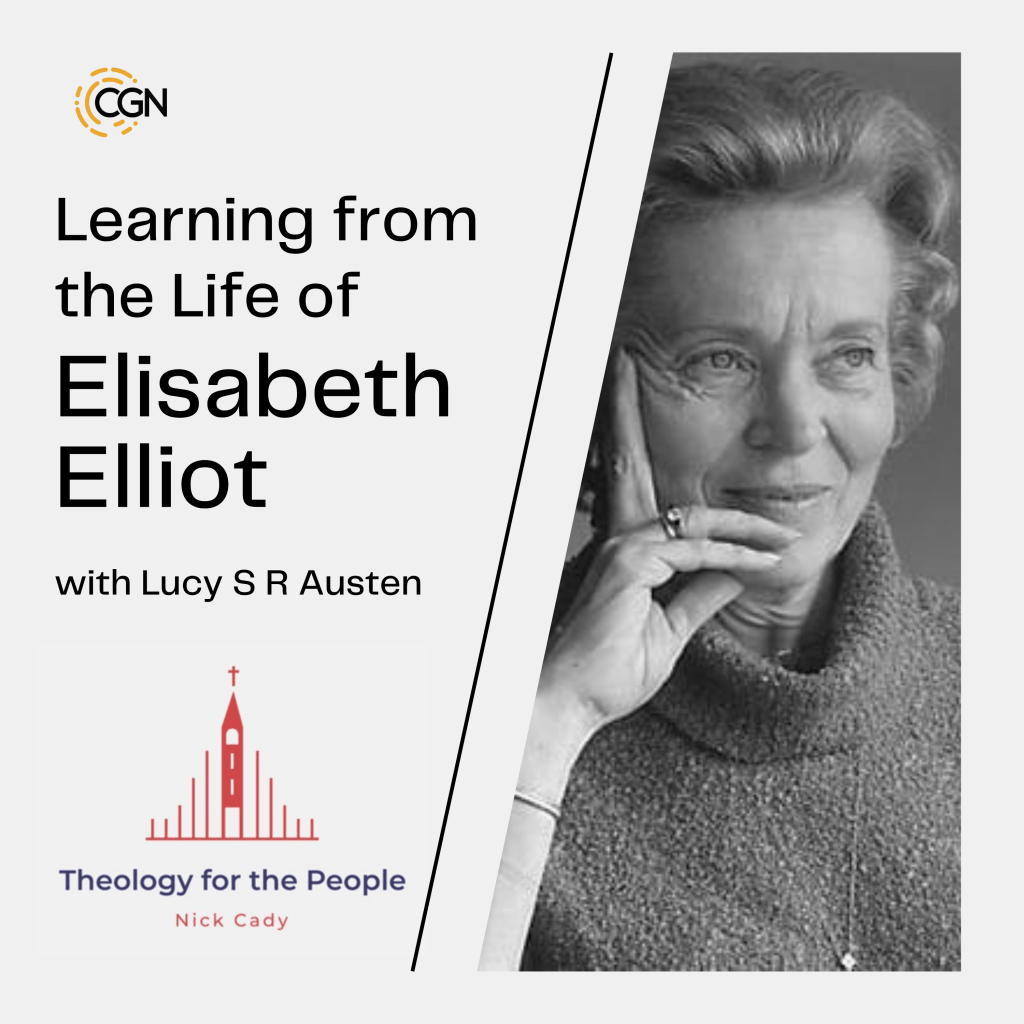
Elisabeth Elliot was one of the most well-known and influential figures of the late 20th century, and early 21st century, both in evangelical circles, but also in the culture at large.
On this episode Lucy and I speak about who Elisabeth Elliot was and the influence she had.
As Lucy points out, Elisabeth Elliot was a sometimes controversial figure, who changed her views on things throughout her life, and her life reflects much of the history of evangelicalism in the 20th century.
Elisabeth Elliott was one of the most well-known and influential figures of the late 20th century, and early 21st century, both in evangelical circles, but also in the culture at large. Recently a biography of her life was written by Lucy S R Austen, and published by Crossway Publishing, titled Elisabeth Elliot: A Life.
On this episode of Theology for the People, I speak with Lucy S R Austen about who Elisabeth Elloitt was and the influence that she had. As Lucy points out, Elisabeth Elliot was a sometimes controversial figure, who changed her views on things throughout her life, and her life reflects much of the history of evangelicalism in the 20th century.
Visit the Theology for the People website at nickcady.org
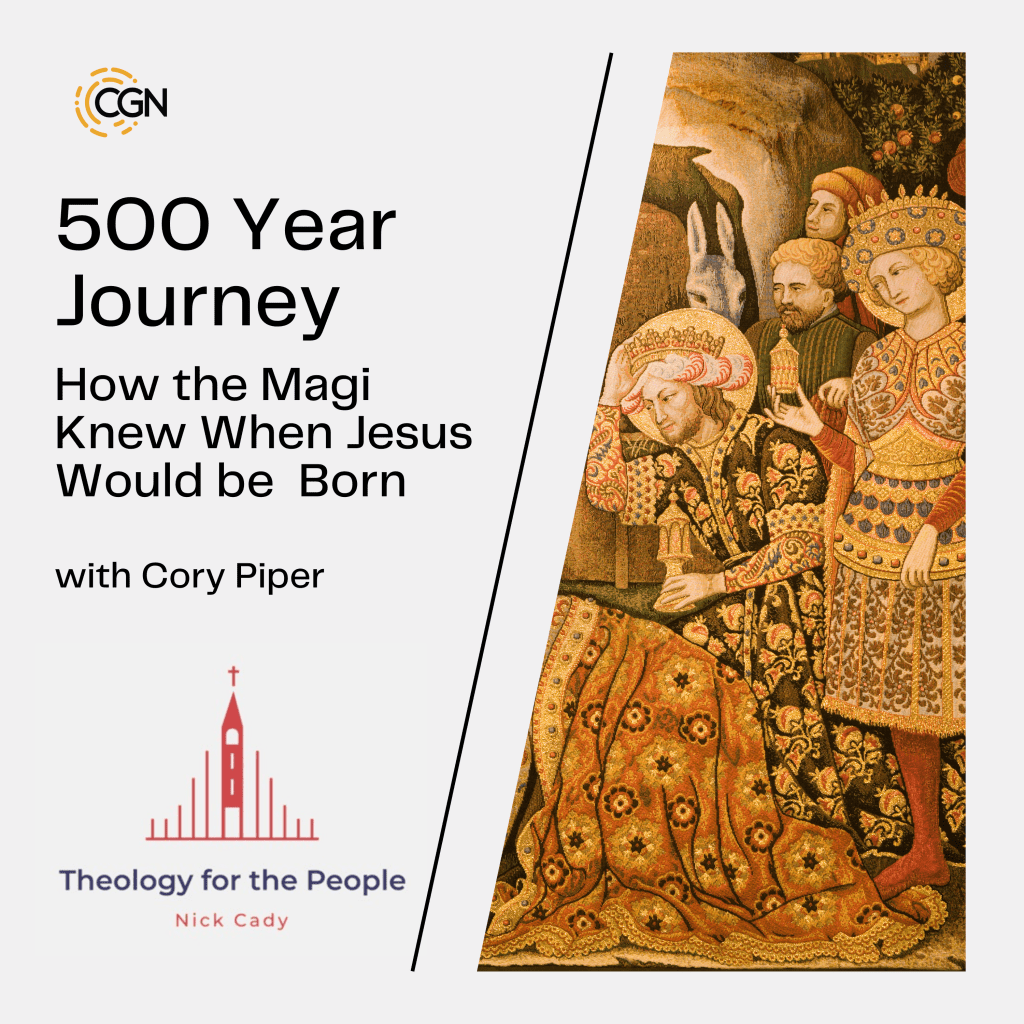
We discuss who the Magi were and why they came to Jerusalem at the exact time they did, when Jesus was born, and how it ties into the book of Daniel and other Old Testament passages.
Additionally, we talk about the history of why the church has celebrated the birth of Jesus on December 25, and whether that has any ties to paganism or not.
500 Year Journey: How the Magi Knew When Jesus Would be Born – with Cory Piper –
Theology for the People
Cory Piper is a teacher who specializes in the Old Testament, theology, and history. He recently wrote a book called 500 Year Journey: How the Magi Knew When Jesus Would be Born
We discuss who the Magi were and why they came to Jerusalem at the exact time they did, when Jesus was born, and how it ties into the book of Daniel and other Old Testament passages.
Additionally, we talk about the history of why the church has celebrated the birth of Jesus on December 25, and whether that has any ties to paganism or not.
Visit the Theology for the People website at nickcady.org
In this episode of the Theology for the People podcast, Nick Cady and Jason Cralley respond to the best arguments for Biblical Unitarianism, which is the a non-Trinitarian interpretation of biblical texts about who God, Jesus, and the Holy Spirit are.
In doing this, we look at the history of Arianism and Trinitarian formulations of who God is, including a discussion about Constantine and the First Council of Nicaea, and the Nicene Creed.
Further, we look into the arguments put forth regarding certain Biblical passages that Unitarians point to as evidence of God’s non-trinitarian, or unitarian nature, and give a defense for trinitarian beliefs.
Below, you can find a link to the video mentioned in the episode about Bad Trinitarian Analogies.
What is Biblical Unitarianism? – Considering the Best Arguments For and Against It –
Theology for the People
In this episode, Nick Cady and Jason Cralley respond to the best arguments for Biblical Unitarianism, the a non-Trinitarian interpretation of biblical texts about who God, Jesus, and the Holy Spirit are.
In doing this, they look at the history of Arianism and Trinitarian formulations of who God is, including a discussion about Constantine and the First Council of Nicaea, and the Nicene Creed.
Further, they look into the arguments put forth regarding certain Biblical passages that Unitarians point to as evidence of God's non-trinitarian, or unitarian nature, and give a defense for trinitarian beliefs.
Make sure to visit the Theology for the People website at nickcady.org




 Theology for the People