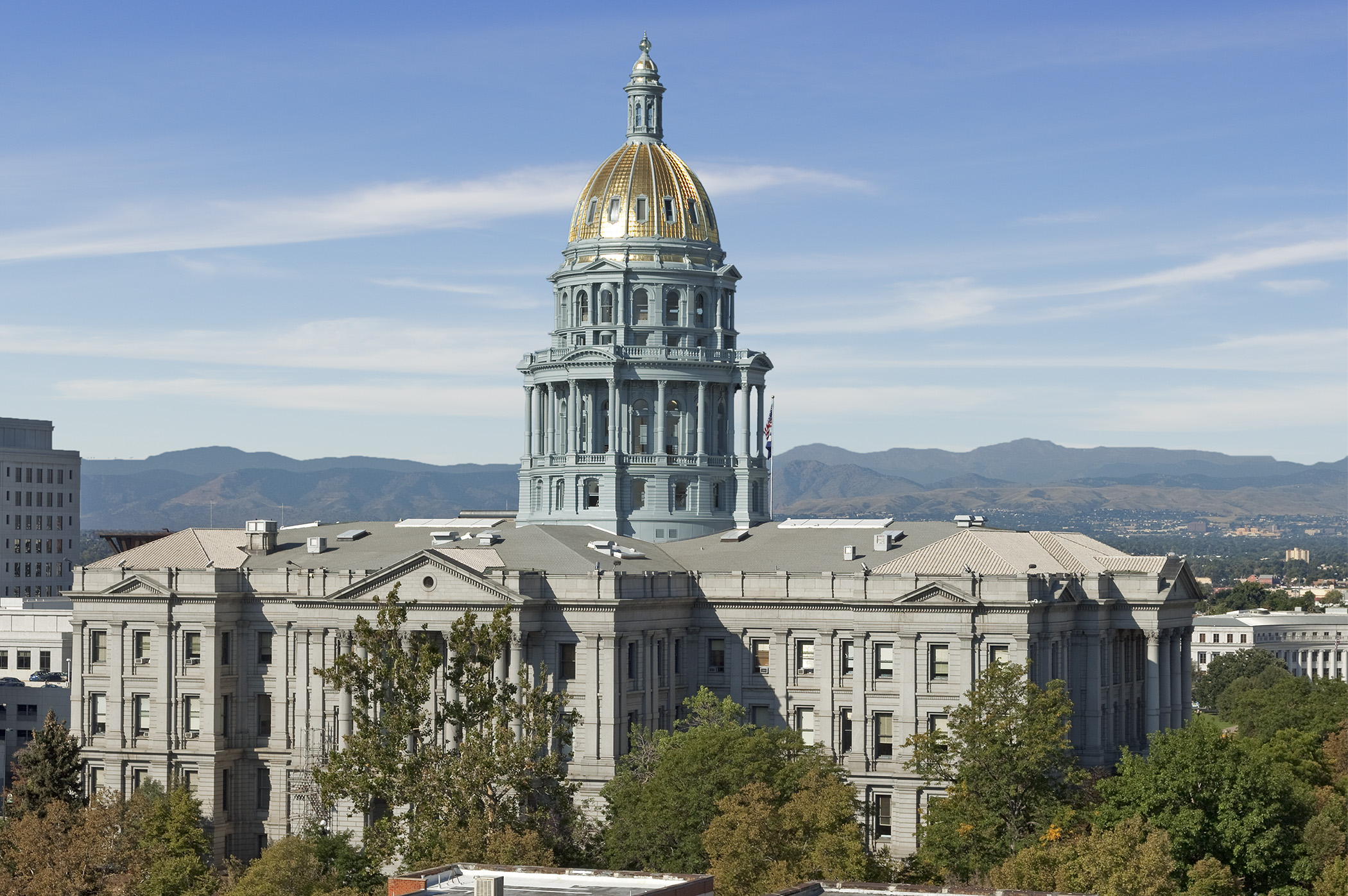
A bill that would have decriminalized sex work among consenting adults in Colorado was abandoned just hours before it was set to come up for a first vote in the state Capitol this week.
State Sen. Lisa Cutter, a Democrat who represents Jefferson County and one of the bill’s co-sponsors, told Denver7 Tuesday Senate Bill 97 was being pulled from the Senate Judiciary Agenda scheduled for Wednesday because it failed to garner enough votes to make it out of committee.
Why the Bill Failed
According to news sources, the withdrawal comes after weeks of intense pushback from law enforcement, religious leaders, and advocates for trafficking survivors. While proponents framed the bill as a way to increase safety for sex workers, the reality was much darker. As we discussed in our previous post, decriminalization without regulation—essentially a “hands-off” approach by the state, threatened to turn Colorado into a magnet for traffickers by dramatically increasing the demand for prostitution.
As discussed in that post, prostitution is not a victimless crime; it tends to prey upon the vulnerabilities of the hurting and those in desperate situations, and almost always involves abuse and exploitation. For those who believe in the inherent dignity of human beings due to us being created in the image of God, this is an answer to prayer and a testament to the power of people in the community making their voices heard.
Still Much to Be Done
While we celebrate this result, the withdrawal (for now) of this bill does not mean the end of the sex trade or the suffering of those trapped within it. Our church will continue to support organizations like the Anonymous Ways Foundation and other efforts to provide a “way out” for those on the streets.
Colorado lawmakers recently introduced a bill to decriminalize prostitution in our state. Senate Bill 26-097, titled “Decriminalize Adult Commercial Sexual Activity,” is framed as a move toward personal liberty, but if it is passed, it will put people, especially women, at greater risk of sexual exploitation.
Those who are concerned with justice, compassion, and the protection of the vulnerable should be alarmed by this bill, and take steps to oppose it.
Last Sunday, at White Fields Church, we were joined by László (Laci) Németh, founder of the Anonymous Ways Foundation (Névtelen Utak Alapítvány) in Budapest, Hungary. Our church has supported their work for years, and when Laci heard about this bill, he was very concerned, because, as he stated in our service, wherever prostitution has been decriminalized, it has led to an increase in the sexual exploitation of women.
What This Bill Would Do
SB26-097 would effectively legalize the sex trade. However, SB26-097 is a decriminalization bill, which is even more reckless than actual legalization because it removes all penalties without adding any oversight or safety regulations. In addition to decriminalizing prostitution, this bill would:
Allow brothel operations. Permitting the establishment of businesses that profit from the sale of sexual acts.
Normalize exploitation. Treating the sex trade as just another sector of the economy, rather than a system built on the brokenness of the human condition.
Why This is a Problem
The proponents of this bill often frame it as a matter of “empowerment” or “safety” for sex workers. However, theology and history both tell a very different story.
In the book of Genesis, we are introduced to the profound truth that forms the bedrock of Christian ethics: every human being is created in the image of God (Imago Dei). This means that people are not products and bodies are not commodities, because human dignity is intrinsic. We are embodied souls, and therefore what we do with our bodies affects our souls.
The Myth of Increased Safety
The primary argument for decriminalization is that it brings the industry “out of the shadows,” supposedly making it safer for those involved. Yet, global data shows the opposite. In regions where prostitution has been decriminalized or legalized, we don’t see a decrease in violence or exploitation. Instead, we see an explosion in demand.
When legal barriers are removed, the market for that service grows. In the context of the sex trade, more buyers will lead to a need for more “supply.” But where does that supply come from? It doesn’t come from a sudden influx of empowered individuals choosing a career path. It comes from the vulnerable. It comes from women and children (boys and girls) trapped by poverty, addiction, and trauma. It comes immigrants and undocumented or trafficked individuals, in other words: from the very people whom God calls His people to protect. (see: “God’s Heart for the Vulnerable”)
By making it easier to buy sex, the state will be creating an infrastructure for human exploitation. You cannot expand the sex industry without expanding the recruitment of people into it—many of whom are not there by “choice” in any meaningful sense of the word.
The ministries and non-profits providing actual outreach to women and men on the streets (like the ones linked above), tell us that these people are not asking for the state to make their “workplace” more official, they are asking for a way out. They are looking for alternative employment, healing, and restoration of their dignity. By legalizing this industry, the state won’t be helping these women exit; it will be helping to keep them in it.
A Righteous Society
Additionally, God’s people are to be those, who like Jesus: love righteousness and hate wickedness (Hebrews 1:9). Sometimes people claim that “you can’t legislate morality,” but in reality, every law speaks to morality on some level, and criminalizes actions which are immoral or unethical.
If we really believe that God’s ways are best and lead to human flourishing, then we should want all people, created in the image of God, to experience that flourishing. If what the Bible says is true, and sin leads to heartbreak and destruction, then we should not allow laws which allow or encourage people to hurt themselves or others.
What You Can Do
As Christians, we are called to champion righteousness and “defend the rights of the poor and needy” (Proverbs 31:9). SB26-097 fails this biblical mandate because it ignores the link between the sex trade and human exploitation.
This bill is currently being considered by the Senate Judiciary Committee. It will not be put to a public vote, but will be decided by our state legislators.
Here’s what you can do:
Email Colorado State Representatives, to tell them that you oppose this bill, and ask them not to approve it.
Pray: Pray for our lawmakers, that they would have the wisdom to see the human cost of this legislation. Pray for the women, men, and children currently trapped in the sex trade.
Yesterday, I was deeply grieved to hear the news of the killing of Charlie Kirk and the shooting at Evergreen High School here in Colorado.
Charlie Kirk
Charlie Kirk rose in fame because of his advocacy for conservative social and economic issues. In recent years, he also became an outspoken Christian. Ever since the pandemic, his focus on faith in Jesus as the ultimate answer became even more pronounced. He was also a father and a husband.
One thing I always appreciated about Charlie was the way that he welcomed polite and calm dialogue with people who had opposing views. Even if someone disagrees with another person’s political positions or opinions on things like gender and identity, that does not warrant murdering them and leaving their children fatherless.
Evergreen High School
I grew up in Jefferson County, which means that I played baseball at Evergreen High School. A good friend and fellow pastor is on staff there, and his daughter is a student.
When I heard about the shooting at Evergreen High School (a JeffCo Public School), it reminded me of April 20, 1999 – a day I will never forget: I was a sophomore in high school, also in a JeffCo Public School, when the shooting at Columbine High School (another JeffCo Public School) took place. There were people I knew at the school that day, and it shaped my final two years of high school in a major way – as it did our country, and the world.
Thankfully my friend and his daughter were not harmed, but the sense of unease that one gets after experiencing something like this lasts well beyond the event.
Pray
Please pray for our country, and for the hurting and frustrated individuals who are considering hurting others.
Please pray for healing and peace in the hearts and minds of those who witnessed or were affected by these tragic events.
Join me in praying what Jesus taught us:
Our Father in heaven, hallowed be your name. Your kingdom come, your will be done, on earth as it is in heaven. Give us this day our daily bread, and forgive us our debts, as we also have forgiven our debtors. And lead us not into temptation, but deliver us from evil.
Did you know that children in the foster system form an at-risk people group within our own communities?
In almost every case, the reason these children end up in foster care is because of an unsuitable home environment, which may involve violence, neglect, drugs, crime, etc. These environments not only result in trauma, but they also tend to result in or be associated with poverty. Many foster care situations are kinship care, which means the child is cared for by a relative, which can create a financial burden.
Poverty has a profound impact on a child’s mental and physical well-being. Children living in poverty have higher rates of absenteeism from school. Students who come from low income families are six times more likely to drop out of high school. Adults without a high school diploma are 4 times more likely to be unemployed and live in poverty, which means raising their children in poverty, perpetuating a cycle of poverty which may persist for generations: poverty affects education which affects poverty. (source 1, source 2)
One of the ways we can help kids break out of this cycle of poverty is by encouraging them to stay in school – and one of the ways we can do that is by helping them have the things they need to be confident and excited about going to school, so they can succeed!
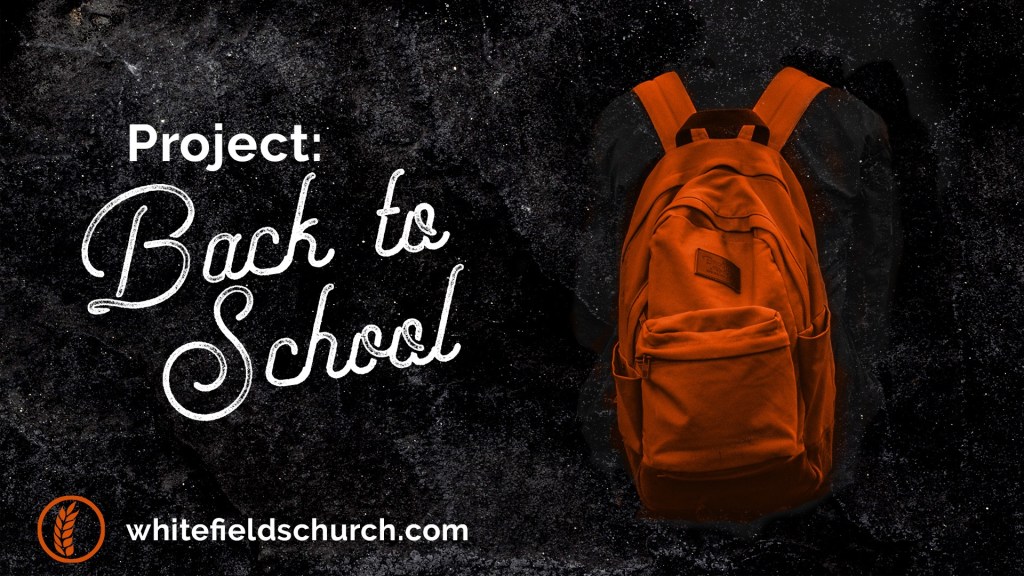
Our church, White Fields Community Church, has a history of ministering to children in the foster system, and six years ago we began a new ministry: Project Back to School.
We are working with Weld County Department of Human Services, and this year they have identified over 100 at-risk kids who need help with school supplies, clothes, and shoes. They have provided us with a list of needed items, which we will share with those who sign up to help.
We are trusting that God will raise up people to bless these families in the name of Jesus. It’s a way for us to love not only in words and in speech, but in action as well (1 John 3:18).
We are taking sign-ups starting Sunday, July 6 and are asking for items to be returned by Sunday, July 27.
How to Get Involved and Make a Difference
1. Sign up in-person
If you live in or near Longmont, visit White Fields Church on a Sunday morning this July and sign up to sponsor one or more children.
2. Sign up online
If you can’t make it on a Sunday morning, but are still local and could drop off items to us for delivery, leave a comment below, or contact the church here.
3. Contribute Financially
All monies that come in designated for Project Back to School will go directly towards buying school supplies for at risk children. You can make a tax-deductible donation on our church’s website here: www.whitefieldschurch.com/give (choose Project Back to School on the drop-down menu).
Join us in praying for these kids, and that God uses this initiative to bless them!
Here in Colorado a piece of legislation—House Bill 25-1312—is moving through the State Legislature under the banner of protecting transgender individuals. However, this bill poses significant risks to parental rights, especially for parents who hold a biblical view of human identity, design, and flourishing.
The bill has already passed the Colorado House of Representatives and is now before the State Senate. If it passes that, it will go to the desk of Governor Polis to be signed into law.
The Centennial Institute at Colorado Christian University strongly urges the Colorado Senate to vote ‘No’ on the proposed bill. “HB25-1312 sets a dangerous precedent by punishing those who live out their biblical convictions,” said Greg Schaller, Centennial Institute director.[1]
What the Bill Says
Among other things, HB25-1312:
Directs courts in child custody cases to consider behaviors such as deadnaming (addressing someone using their birth name) or misgendering (referring to someone by their biological pronouns) as forms of “coercive control.”
Prohibits Colorado courts from recognizing laws from other states that restrict access to “gender-affirming care” (hormone treatment and surgery) for minors without parental consent.
Frames a parent’s hesitance or objection to gender transitions as potentially harmful conduct in custody disputes.
What Does This Mean?
1. Loving Parents Could Lose Custody of Their Kids for Holding Biblical Convictions A Christian parent who lovingly urges their child to embrace the gender which aligns with their biological sex, or does not sign off on making irreversible decisions like hormone therapy or surgery, could be accused of “coercive control” for upholding their biblical convictions, and have their children taken away.
2. Parental Disagreement Could Be Treated as Abuse HB25-1312 equates disagreement with harm, if parents do not affirm the child’s new name or identity. These legislators are trying to define what constitutes a child’s “best interest,” taking that decision away from parents – not to mention that they are defining the child’s best interest based on a particular ideology. If someone doesn’t share their ideology, they are deemed to be abusive and not acting in the child’s “best interest.”
3. It Sets a Precedent Against Religious Belief Christians believe biological sex is part of God’s design. To force parents to affirm something that they believe to be untrue puts them in a moral bind: give up their convictions or lose custody of their kids.
Did you know that children in the foster system form an at-risk people group within our own communities?
In almost every case, the reason these children end up in foster care care is because of an unsuitable home environment, which may involve violence, neglect, drugs, crime, etc. These environments not only result in trauma many times, but they also tend to result in or be associated with poverty. Many foster care situations are kinship care, which means the child is cared for by a relative, which can create a financial burden.
Poverty has a profound impact on a child’s mental and physical well-being. Children living in poverty have higher rates of absenteeism from school. Students who come from low income families are six times more likely to drop out of high school. Adults without a high school diploma are 4 times more likely to be unemployed and live in poverty, which means raising their children in poverty, perpetuating a cycle of poverty which may persist for generations: poverty affects education which affects poverty. (source 1, source 2)
One of the ways that we can help kids break out of this cycle of poverty is by encouraging them to stay in school – and one of the ways we can do that is by helping them have the things they need to be confident and excited about going to school, so they can succeed!
Our church, White Fields Community Church, has a history of ministering to children in the foster system, and six years ago we began a new ministry: Project Back to School.
We are working with Weld County Department of Human Services, and this year they have identified over 100 at-risk kids who need help with school supplies, clothes, and shoes. They have provided us with a list of needed items, which we will share with those who sign up to help.
We are trusting that God will raise up people to bless these families in the name of Jesus. It’s a way for us to love not only in words and in speech, but in action as well (1 John 3:18).
We will be taking sign-ups beginning Sunday, July 7 and are asking for items to be returned by Sunday, July 28.
How to Get Involved and Make a Difference
1. Sign up in-person
If you live in or near Longmont, visit White Fields Church on a Sunday morning this July and sign up to sponsor one or more children.
2. Sign up online
If you can’t make it on a Sunday morning, but are still local and could drop off items to us for delivery, leave a comment below, or contact the church here.
3. Contribute Financially
All monies that come in designated for Project Back to School will go directly towards buying school supplies for at risk children. You can make a tax-deductible donation on our church’s website here: www.whitefieldschurch.com/give (choose Project Back to School on the drop-down menu).
Join us in praying for these kids, and that God uses this initiative to bless them!
The Jesus Revolution movie premiers today, and you should definitely go see it!
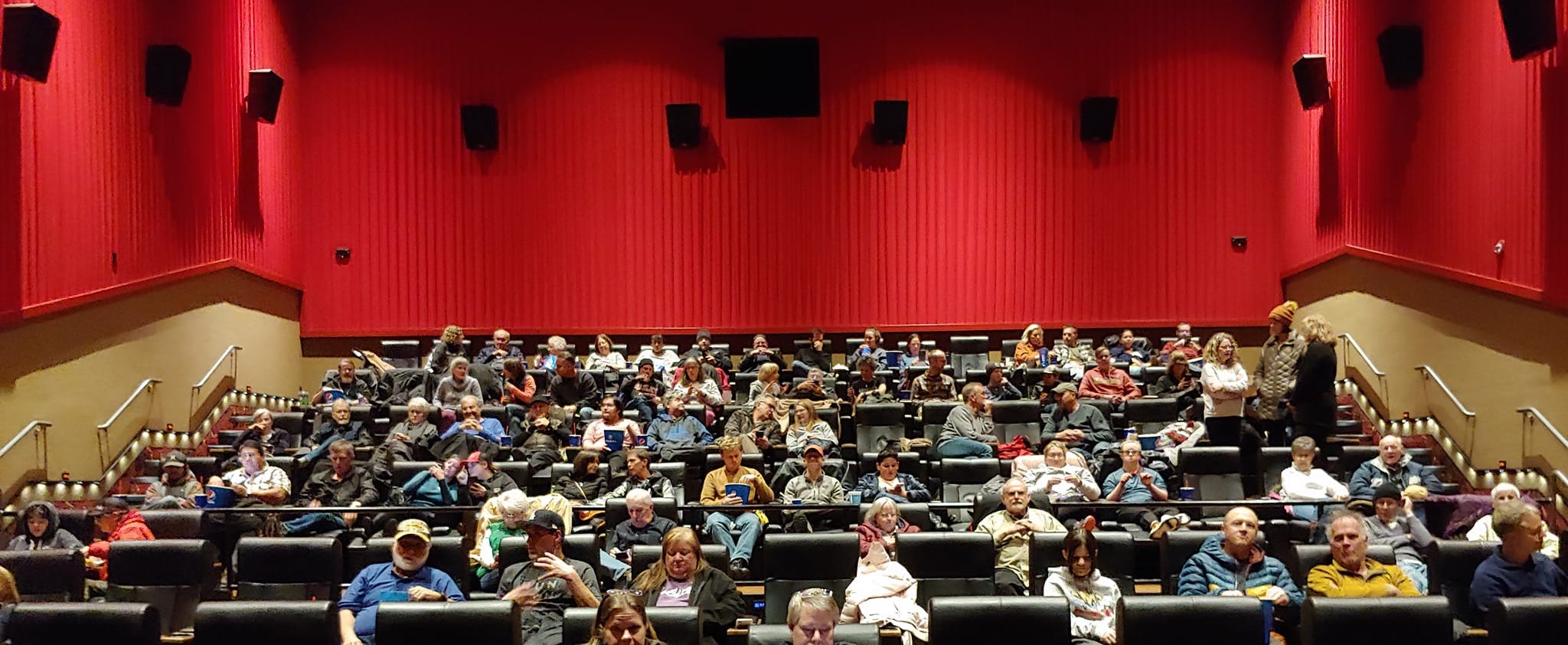
On Wednesday, our church rented out our local theater for a private showing of the movie before its public release. Tickets sold out fast, and the theater was full of people of all ages.
The movie chronicles the early days of the Jesus Movement, through the eyes of Greg Laurie. At the forefront of the Jesus Movement was Chuck Smith and Calvary Chapel, and their stories are told in this film, along with that of hippie evangelist and preacher, Lonnie Frisbee.
The stories told in the movie are stories that I heard from my pastor, Tom Stipe, over the years: Chuck Smith telling his board members, who were concerned about shoeless hippies ruining the new carpet in the church, that he would rather rip out the carpet than send the hippies away, or make them feel unwelcome; baptizing thousands at Pirate’s Cove in Corona del Mar, the concerts in the tent, and more.
Tom, who passed away in 2020, was good friends with Greg Laurie. When Tom passed away, I had the honor of speaking at his memorial, along with Greg. Unfortunately, Tom wasn’t mentioned in the film, although he was right there in the thick of the events that the movie chronicles.
When I, as a teenager, gave my life to the Lord and started attending church at Crossroads – the Calvary Chapel church which Tom pastored in Arvada, Colorado – my dad told me: “You know, back when I was in high school, I remember there were all these hippies playing ‘Jesus music’ on their guitars.” It was only later on, when I got to know Pastor Tom, that I realized the significance of the experience my dad was sharing with me.
Several times during the movie, I found myself moved to tears. There is something incredibly powerful about the hope of the gospel and the message of redemption.
I was so happy to have my kids be able to see this movie and connect the dots with some of the things we’ve shared with them about the history of our movement. Furthermore, I was proud to have the members of our church who were less-familiar with Calvary Chapel see this depiction of the Jesus Movement, and understand the roots and the values of the movement to which our church belongs.
Something I really appreciated about the movie was how they portrayed the nuances of the relationship between Chuck and Lonnie, and the reasons why they parted ways. The film portrayed that tension in a palpable way.
Tom Stipe used to tell me that what God did through Calvary Chapel and the Jesus Movement in the 1970’s was a story that needed to be shared and never forgotten. This movie tells the story of this important part of American history, which has spilled over and changed the world.
I encourage you to go out, watch the movie, and invite a friend or two. I hope many people will see the movie, and that God will use it to spark a Jesus revolution in our generation as well.
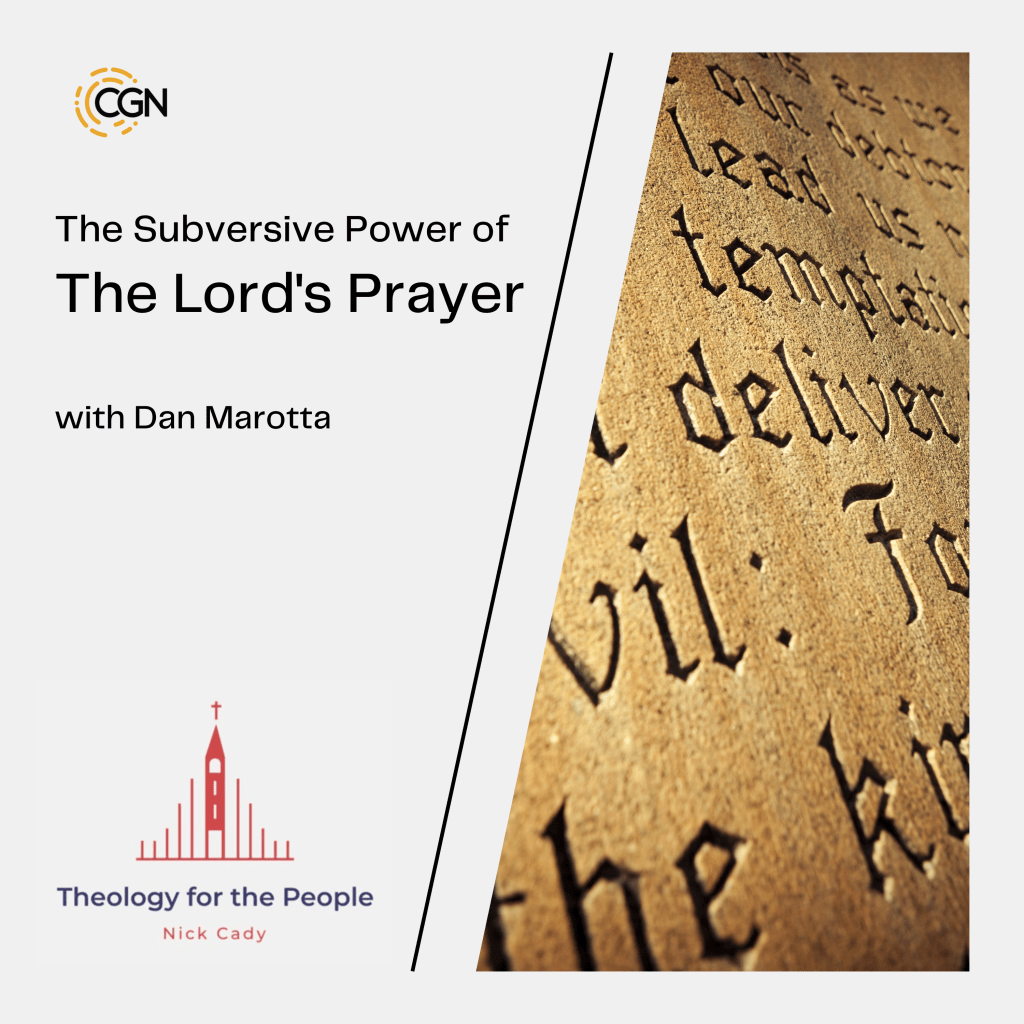
In this episode, we discuss the topic of prayer and the Lord’s Prayer specifically.
The Lord’s Prayer is a beautiful, subversive prayer given to the church by Jesus. It forms our imaginations and—given time—transforms us. Dan explains how what you pray shapes what you believe, which in turn shapes how you live.
What was Jesus’ intention in giving us this prayer? Was it to give us a model of how to pray, or was it intended to be given to us as what to pray? Dan and I discuss the historical usage of the Lord’s Prayer, as well as the value and dangers of both praying written prayers and praying extemporaneously.
Dan is a graduate of Denver Seminary, and we discuss some of the cultural uniquenesses of different parts of the United States, and how those affect the way we minister to others.
Dan Marotta is the founding Rector of Redeemer Anglican Church in Richmond, Virginia, and the author of Liturgy in the Wilderness: How the Lord's Prayer Shapes the Imagination of the Church in a Secular Age.
In this episode, we discuss the topic of prayer and the Lord's Prayer specifically.
The Lord’s Prayer is a beautiful, subversive passage of words given to the church by Jesus. It forms our imaginations and—given time—transforms us. Dan explains how what you pray shapes what you believe, which in turn shapes how you live.
Visit the Theology for the People blog at nickcady.org, where you can read articles and suggest topics for future episodes.
Join us on Christmas Eve and Christmas Day for church services at White Fields Community Church in Longmont, Colorado.
Christmas Eve – 4:00 & 5:30 PM
On Christmas, we celebrate that God became a child so that we could become children of God.
We will have a special Christmas choir, sing classic Christ-centered Christmas carols, and have a candle-lighting at the end of the service.
Childcare will be available at the 4:00 PM service, and both services will be family-friendly.
Join us and bring a friend or family member!
Christmas Day – 9:15 AM
We are excited to have a service on Christmas Day this year! Join us as we celebrate how in Jesus, God became one of us in order to redeem us from sin and death, and give us the light of life.
Did you know that children in the foster system form an at-risk people group within our own communities?
In almost every case, the reason these children end up in foster care care is because of an unsuitable home environment, which may involve violence, neglect, drugs, crime, etc. These environments not only result in trauma many times, but they also tend to result in or be associated with poverty. Many foster care situations are kinship care, which means the child is cared for by a relative, which can create a financial burden.
Poverty has a profound impact on a child’s mental and physical well-being. Children living in poverty have higher rates of absenteeism from school. Students who come from low income families are six times more likely to drop out of high school. Adults without a high school diploma are 4 times more likely to be unemployed and live in poverty, which means raising their children in poverty, perpetuating a cycle of poverty which may persist for generations: poverty affects education which affects poverty. (source 1, source 2)
One of the ways that we can help kids break out of this cycle of poverty is by encouraging them to stay in school – and one of the ways we can do that is by helping them have the things they need to be confident and excited about going to school, so they can succeed!
Our church, White Fields Community Church, has a history of ministering to children in the foster system, and six years ago we began a new ministry: Project Back to School.
We are working with Weld County Department of Human Services, and this year they have identified over 100 at-risk kids who need help with school supplies, clothes, and shoes. They have provided us with a list of needed items, which we will share with those who sign up to help.
We are trusting that God will raise up people to bless these families in the name of Jesus. It’s a way for us to love not only in words and in speech, but in action as well (1 John 3:18).
We will be taking sign-ups beginning Sunday, July 10 and asking items to be returned by Sunday, July 24.
How to Get Involved and Make a Difference
1. Sign up in-person
If you live in or near Longmont, visit White Fields Church on a Sunday morning this July and sign up to sponsor one or more children.
2. Sign up online
If you can’t make it on a Sunday morning, but are still local and could drop off items to us for delivery, leave a comment below, or contact the church here.
3. Contribute Financially
All monies that come in designated for Project Back to School will go directly towards buying school supplies for at risk children. You can make a tax-deductible donation on our church’s website here: whitefieldschurch.com/give/ (choose Project Back to School on the drop-down menu).
Join us in praying for these kids, and that God uses this initiative to bless them!




 Theology for the People