
Shaping Culture: It’s Your Job

There’s a concept I want to share with you: it’s called “the cultural mandate” – and here’s the big idea behind it:  It says that part of God’s design for mankind is that we would be responsible for shaping culture.

The cultural mandate is found in Genesis 1:26-28; 2:15 and is repeated in Genesis 9:1-3.

Here’s the gist of it: In speaking to Adam and Noah respectively as representatives of the human race, he commissions them with a task. It was a matter of stewardship, which involved overseeing the natural and social aspects of this world – for the purpose of human flourishing.

One author puts it this way:

This mandate involves the whole realm of human culture, from habitat to agriculture, industrialization and commerce, politics and social and moral order, academic and scientific achievement, health, education and physical care – a culture which benefits man and glorifies God.”
(G.W. Peters, A Biblical Theology of Missions)

Interestingly, this mandate from God to shape the culture was given two times: once before sin entered the world, and again after sin had entered the world. That means that this mandate is incumbent on us regardless of our spiritual state. It also means that, although the world is broken and fallen, we are still responsible for stewardship over this world – and that doesn’t apply only to natural resources, but to the shaping of the culture of our society.

Just as the Jews in exile in Babylon were told to “seek the welfare of the city where I have sent you into exile, and pray to the Lord on its behalf, for in its welfare you will find your welfare” (Jeremiah 29:7), and just as Mordecai was commended for being a person who “sought the good of his people and spoke for the welfare of his whole nation” (Esther 10:3), we are called to do the same in our day and age and in the societies we live in as people who love and honor God – even as we wait for the ultimate eschatological fulfillment, when all is made as it was once intended to be by Jesus at his return.

Christians: shaping culture is YOUR job!
Yes, sin, brokenness, selfishness and evil in the world make this task much more difficult, but this mandate has still been given to us by God.

One author put it this way:

“Even fallen man has the potentiality and responsibility for faithfulness to his wife, for diligence in training of his children, for skill in the performance of his daily work, for justice in dealings with others. He has the capacity for running schools and hospitals, for tilling the ground and causing even unfertile ground to produce. He still has the capacity for governing society.”
(D. Pentecost, Issues in Missiology) 

To that, I would only add this:  If fallen man has these capacities, how much more so do those who have been redeemed and regenerated by God through Christ and has his enabling Spirit dwelling inside of them?!

This cultural mandate also doesn’t diminish in the least our “spiritual mandate” to bring the life-changing message of the Gospel to the world, which alone is able to bring eternal salvation to people. Jesus himself warned against those who “gain the whole world and yet lose their own soul” (Mark 8:36). Both mandates are important. The results of spiritual redemption will touch every part of man’s life and being and will influence culture and social aspects of life.

So for Christians, rather than retreating from culture or creating an insular counter-culture – it would seem that we have a God-given responsibility and call to shape the culture and society we live in through direct engagement. What that looks like in each of our lives is a matter which we must work out in our own situation before God.


A Compassionate Christian Response to #ShoutYourAbortion

Social media is full today of the hashtag #ShoutYourAbortion in response to the consideration of a federal ban on late term abortions. Those who started the hashtag are encouraging women to share their stories of abortion in an effort to remove the stigma associated with it.

I read some of the tweets, as well as a few articles by women who have had late term abortions, and it seems that they generally fall into 2 categories: those who chose abortion because their baby had serious birth defects and/or brain damage – and those who chose abortion because it was advantageous to them in some way, usually relationally or economically.

I noticed that Christian Today posted an article stating that what was lacking was a compassionate Christian response to those who have had abortions. Instead, the majority of responses from Christians have been angry and accusative, calling those who have had abortions murderers and the like.

I am grieved by this on so many levels:

I’m grieved by the stories of couples who had sick children, many of whom were deemed “incompatible with life” and my heart breaks for them. Particularly the stories from women who have babies that are basically brain dead, but their bodies twitch or seize inside the womb, giving the impression that the baby is well and kicking. My wife being pregnant right now herself, I consider what it would be like to receive such news, that my child would have to be restrained and be so uncomfortable for his/her whole life, that they would not be able to sleep until the point of exhaustion. It is certainly a terrible position to be in.

I am grieved by the stories of women who choose to abort their child for other reasons: because they were scared or thought they were too young or too poor to raise the child the way they would like to. It is these abortions that are most tragic. I had a couple contact me recently; they are poor and pregnant and considering abortion. I recommended they give the child up for adoption. If they are not prepared or willing to raise the child, then at least give him/her a chance to live with one of the scores of couples who would love to raise that child and shower them with love and provision.

I am grieved that Christians are not responding more with the Gospel. Instead the main response is the hashtag #ShoutYourMurder – rather than the promise of forgiveness and restoration for all who have sinned if they turn to Jesus and embrace the Gospel.  I believe in the sanctity of human life, and that we have no right to end a human life, and that an unborn human is absolutely a full-fledged human being. I believe that Planned Parenthood’s selling of body parts for profit is shameful and utterly evil and that government funding of them is completely inappropriate and should end immediately.

I am grieved because I know that people who have chosen to end their own child’s life carry a burden of shame and guilt – the #shoutyourabortion hashtag campaign itself acknowledges that. Having personally known people who chose abortion, my heart goes out to them, because I know that they live with deep pain, sorrow and regret and deep shame and guilt over what they did. Although an abortion provides momentary relief, it is deeply scarring to the body, mind and soul.

To anyone who has had an abortion, for whatever reason, I would say this: the way to cope with your feelings of guilt and shame is not by trying to make yourself feel better about what you’ve done by celebrating it or attempting to justify it. Rather I encourage you to embrace the Gospel of Jesus Christ, through whom you can be forgiven, healed and restored. Whatever is in your past, the message of the Gospel is that God loves you and Jesus gave his life for you, so that through him your past can be forgiven and you can have a new life and a new start in Him, in which you can be right with God and free of shame.

Thoughts on the Refugee Crisis in Europe – and How You Can Help

Hungary has been in the news a lot lately because of the refugee crisis going on right now in Europe. Because my wife and I lived there for so long, many people have been asking for my opinion on what’s happening, so here goes:
What is happening right now is going to shape the future of Europe

This is something of historic proportions. Estimates range from 300,000 to over 1 million Syrian, Iraqi and Afghan migrants and refugees having entered already into Europe over the past several months. Countries like Hungary, Slovakia, Poland, Czech Republic are mostly homogeneous nations; they have had almost no muslim population to speak of. Until now, muslims in Europe have been based solely in the Western countries. That is now going to change.

I don’t believe that most of these migrants are muslim radicals; the great majority of them are people fleeing atrocities and horrible circumstances, which is very understandable. However, since the floodgates have opened up, there is no saying who all is coming into Europe right now, and I’m sure there is a mixed bag, with some of those radical elements being part of it, seeing a wide open door to Europe and taking the opportunity. Conspiracy theories are rampant as to the idea that this is a muslim invasion of Europe, but honestly, really radical muslims in Syria and Iraq who want an Islamic state would probably be most inclined to joining ISIS anyway, since that is what they want.

Long term solutions and short term responses

The long term solutions to this problem are certainly not something I’m qualified to give, but I would assume that peace and stability in Syria, and the defeat of ISIS is a big part of it.

The Dublin Agreement, which says that the first European Union country a migrant enters is responsible for registering them and then processing them is, in my opinion, unfair. It serves to protect the wealthy countries of North and West Europe and keep the burden on the poorer countries of Southern and Eastern Europe. I’m glad to see the Dublin Agreement being ignored and reconsidered. I do think the suggestion of Donald Tusk of Poland is fair, that the countries of the European Union should share the burden of these refugees. Some countries are not really affected by it, while others bear the brunt of it.

However, since the Dublin Agreement has been being ignored, with Austria and Germany accepting thousands of refugees who were “stuck” in Hungary, I expect even more refugees to come, as word of that spreads, and there is an apparent open door into Western Europe for anyone willing to make the journey. None of these people want to stay in Hungary. They are trying to go through Hungary into the wealthy countries of Western and Northern Europe.

In the short term, the response of Christians in Europe to the refugees has been amazing. I do believe that as Christians our calling is to love and serve those right in front of us, no matter their creed or nationality, and many of my friends and former colleagues in Hungary and Serbia are doing just that. Below I have included a link for how you can support their efforts.

The response of Hungarian citizens to the refugees in their country has been outstanding. They have treated them with love and respect. The video that was on the news yesterday of a Hungarian camerawoman at Röszke tripping and kicking refugees was despicable and not at all characteristic of the Hungarian people. This woman was filmed tripping a man carrying a child, so that he and the child fell, and later kicking a young refugee girl in the stomach as she tried to run by. It turns out this woman worked for a far-right wing news source, and even they didn’t approve of her actions and she was fired.

My wife Rosemary and I worked with refugees for years in Debrecen, Hungary – and what we found was that for many of these people from majority muslim countries, coming to Europe was the first time they had been exposed to Christianity and for most of them it was the first opportunity they had to hear the Gospel and read the Bible. We saw many people convert to Christianity, and I do believe that this may be a great opportunity for these muslim people to come to Europe and hear about Jesus. The work of Christians in loving them will make great strides towards this end. Pray that God would use this crisis as a way of bringing many of these people to a saving knowledge of Jesus Christ.

How you can help

Our friends at Calvary Chapel Bible College Europe in Vajta, Hungary – only a short drive from Röszke, the major flashpoint for refugees entering Hungary, are providing food and blankets, among other things, to the refugees who have been being kept at a temporary “camp” on the border, which is just a fenced off corn field, where refugees, including many children, are sleeping on the ground in increasingly cold temperatures. For the last few nights it has been 10 degrees Celsius / 50 degrees Fahrenheit.

Here is the link to where you can donate to support their efforts.

We also have friends in Szeged, Hungary, only a few kilometers from Röszke, and they have been very involved with the refugees as well. Here is a link to their blog where you can follow what they are doing.

Pray for the refugees and those serving them in the name of Jesus!

Denver City Council Tries to Block Chick-fil-A from DIA

I read this disturbing news report last night from 9News in Denver:

Denver City Council has intervened to stall a lease for a Chick-fil-A restaurant at Denver International Airport, citing that the owners of the restaurant chain have a reputation for opposing same-sex marriage. In light of the recent federal decision on same-sex marriage from the Supreme Court, it would seem that entities, perhaps even individuals, who previously opposed same-sex marriage must either get on board with it, or face consequences such as being deemed discriminatory – and face whatever consequences come along with that.

As a pastor, my thoughts immediately jump to the many churches which lease space from public schools, or who rent out space in public parks or amphitheaters. It seems to me that it is only a matter of time before people start to take issue with it, as they have with DIA. Remember – it’s not DIA itself who is opposing the opening of a Chick-fil-A in the airport, it is Denver City Council!  What about churches who meet in Denver Public Schools, whose bylaws state that they believe that only men can be pastors? Does that constitute a “discriminatory hiring practice”? How long will it be before some crusading council members turn their attention to these organizations?

I do believe that if discrimination or persecution does begin to ramp up against Christians, it won’t be the worst thing that could ever happen to us. It’s happened before, and it has only served to strengthen and purify the church. However, it may be wise for churches who rent to be aware of the changing political climate and start making plans now for the future.

Promises and Proverbs

Take the few minutes to listen to this audio from John Piper. He’s addressing something that I think a lot of people are confused about.

The issue is: what constitutes a “promise” in the Bible, and what constitutes a “proverb”?

The issue in question is that of Proverbs 22:6, which says: “Train up a child in the way he should go; even when he is old he will not depart from it.”

Many people consider this a “PROMISE” from God – that if you raise you kids up right, they will be good people who do right things. In particular, many Christians come to this verse in the hope that if they raise up their children to walk with God, then their children are guaranteed to grow up to share their faith – and if that doesn’t happen, then it is “user error”, i.e. the parents didn’t do a good enough job raising their kids up in the right way.

The problem is, there are plenty of kids who come from great, loving, Christian families, who don’t follow their parents’ faith nor their moral/ethical values.  What are we to make of this?

John Piper answers the question well – concerning the nature of proverbs versus the nature of promises, and how we should understand this verse.

Trying to Make the Good News Better

Recently I was asked by some members of our church to listen to a sermon from a church their friends attended, who had been alarmed by some things the pastor had been saying, and they wanted my 2 cents.

I listened to the message and agreed with them that the things they had been concerned about were indeed alarming – but aside from that particular issue, which I won’t go into detail about here, there was something else I heard in the message which caused me to pause.

The pastor was talking about a trip he had taken and how, as he was preaching, people were live-tweeting his message, and the most tweeted phrase was: “I am a good person, I just forgot.” The idea being, that you really are a good person, you just haven’t been acting like one. You just forgot to be good.

He then went on to say this: “When people come to church, they don’t want to be told about their shortcomings, they come to church because they want to hear some good news, and this is the good news: you really are a good person! You just forgot.”

On the surface, that might seem nice, but here’s the thing: is this really the “good news” that Christianity has to share with people? That ‘I am a good person’ – even though people innately have a deep-rooted sense of their own inadequacy? Isn’t the “good news” of the Gospel not that I am a good person, but that God loves me even when I’m not a good person?

The “good news” of the Gospel is not that I’m a good person, but that God loves me even in spite of the fact that he has seen me at my worst and even knows the darkest thoughts of my heart that, although I didn’t act upon them, I wished to do them?

Isn’t the “good news” of the Gospel rather that I am more flawed than I can even imagine, yet at the same time I am more loved by God than I ever dared dream possible – which He proved by giving Himself over to death in my place to rescue me, because I was so lost and so far-gone that I couldn’t save myself? Isn’t the good news of the Gospel that I am so broken that GOD HIMSELF had to die for me, yet against all odds or reason, I am so loved by God – undeservedly – that in some cosmic miracle of grace, he was GLAD to die for me?

It would seem to me that in an attempt to make the Good News better, they have lost the heart of the Good News! But in my opinion, when you really understand the weight of the predicament of human fallenness, and then you see the amazing grace and love of God in light of it, that is what sets your heart on fire, and stirs up hope and gratitude in your heart that a lifetime is not enough to express.

What we need is not to make the Good News better – as if that were even possible. It is already the best news in the world. We just need to let it sink deep down into our hearts and reflect on all the wonderful implications of it.

Significant Things and Mundane Actions

Early Saturday morning I got home from the mission trip to Eastern Europe, and one of the things that has been on my mind since has been how many of the things which have the most glorious end result, are the result of actions which seem very inglorious, mundane, and even boring in the moment.

This is true of marriage, work, ministry, fitness, creating or making things, etc.

Last night I was making something for a friend, which he was excited to watch me make – but I had to tell him: the process is very boring and tedious – but the end result is great. I think that’s the case with many things in life.

During the trip to Hungary and Romania, the actual carrying out of the English classes, administration, etc. was not all that thrilling. But the end result was glorious. We saw 10 young people turn to Jesus as Lord and Savior.

I have known a lot of people who have tons of good ideas, but do not have the ability to carry out the mundane actions which are required in order for those ideas to become reality. And as a result, there is a lot of smoke but no fire. They’ve had grandiose ideas for years – but yet they have nothing to show for it, because it has never moved past the idea stage.

Some of the best things in life are accomplished through actions which in the moment are very mundane. May we have the resolve to do unexciting things which lead to glorious results by keeping our focus on the end goals.

Pastors’ Conference

I just spent the past week at the Calvary Chapel Pastor’s Conference in Costa Mesa, CA. 

Even though the church I lead is called White Fields, I was ordained in Calvary Chapel and have many good relationships there, and very much respect for the core values and aspirations of the movement.

One of the best things about these conferences is the fellowship with other pastors – having so many people together who are doing the same work, facing the same issues and working for the same things for the same reasons is rare, and very refreshing.

I remember one leader I worked with who used to discribe these kinds of meetings as being like Gilgal: the place in the book of Joshua that was the home base of the people of Israel during the time they were moving out to take conquest of the land which God had promised to give them, but which they had to go out and take by faith, but with much work.

This leader would say: This is our Gilgal. We go out into the fight, steping out in faith, obeying God, fighting to take hold of territory – and we come back here, after our defeats, after our victories, to worship, to encourage each other, to share stories from the field of what we experienced: to celebrate victories, to lick each others wounds – and then we go out again.

I’ve always considered that a great analogy of these kinds of gatherings, and that is certainly what this conference was like for me. I’m feeling blessed and refreshed and excited to get back to the work that God has called me to in Colorado.

Tomorrow we will begin the drive back to Colorado from Southern California… Pray for us… 18 hours, to make it there for church on Sunday… 

Farewell to Elisabeth Elliot

One of the first books I read as a missionary was the diary of Jim Elliot – missionary to Ecuador who was martyred by the people he went to tell about Jesus.

The diary of Jim Elliot details his thoughts and dreams, his hopes and prayers, as he went to Wheaton college,  went as a missionary to Ecuador, met and married his wife, Elisabeth, and then embarked on a journey to share the Gospel with the unreached Auca indians – an endeavor which ended in both tragedy and glory: tragedy because Jim and his missionary companions were murdered, but glory because after their deaths, the wives of the slain men continued to reach out to the Auca’s, forgave them for what they had done, and ultimately did lead them to Christ.

The reason Jim Elliot’s diary was available for me to read was because of the work of his wife: Elisabeth Elliot, who made it available to the world. Additionally, Elisabeth Elliot wrote two books about their missionary work in Ecuador – one titled Through Gates of Splendorwhich has been called one of the most influential books of the Twentieth Century.

Elisabeth Elliot went on to write many other books and became a prominent advocate for world missions.

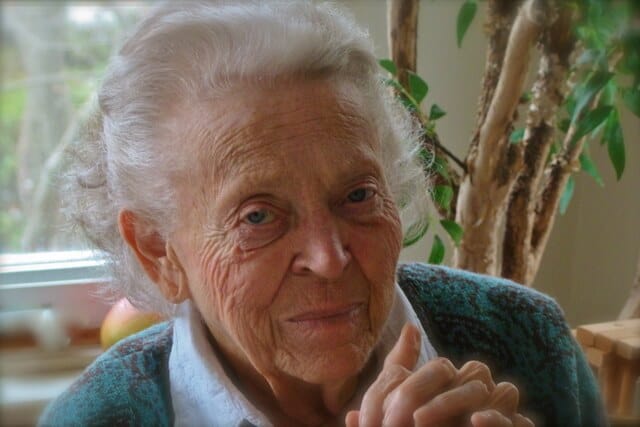
Yesterday she entered through those Gates of Splendor herself at the age of 88 and was reunited with Jim in the presence of the God she loved and served her whole life.

Here’s more about Elisabeth Elliot from Christianity Today. Oh that God would give us more people like her! Oh that God would give us the kind of hearts for Him that she and Jim had.

Jim Elliot’s famous quote – brought to the world through the work and advocacy of Elisabeth Elliot:

He is no fool who gives what he cannot keep to gain that which he cannot lose.

Here’s a photo of that quote in Jim Elliot’s own handwriting:

Jim Elliot’s diary

What is Baptism with Fire?

This past Sunday I was out of town, officiating the wedding of some friends in Minnesota. It was my first time in Minnesota, and it was really nice! I can see the appeal of the lakes.

So this past Sunday I was out of town, but the week before that I preached a message titled “Baptism by Fire” in which I taught about the events of Pentecost, when the Holy Spirit came upon the church in fulfillment of the promises of not only Jesus, but also of God from even the Old Testament. I made reference to the words of John the Baptist, who said that he baptized with water unto repentance, but that one (Jesus) was coming after him who would baptize with the Holy Spirit and fire, and I talked about how the fulfillment of that is found in Pentecost, when the believers were baptized with the Holy Spirit, and as a sign of them each individually receiving this baptism, tongues of fire rested on each of their heads.

Afterwards, someone asked me a great question: Whether the baptism with fire that John the Baptist was talking about was a description of the baptism with the Holy Spirit (like I had taught), or if John was speaking of the fire of judgment – because in the very next verse, John the Baptist says: “His winnowing fork is in his hand, and he will clear his threshing floor and gather his wheat into the barn, but the chaff he will burn with unquenchable fire.” (Matthew 3:12)

Here was my response:

I am familiar with that interpretation you mention, and I think it’s entirely possible given the context of what John was talking about — which is promise of the Messiah and a warning of judgement. In this interpretation, the assumption is that Jesus is saying: he will baptize some people with the Holy Spirit and other people he will baptize with fire — i.e. the same fire of judgment that he refers to in the following verse (vs 12).

Is that what John meant by those words? I agree with you (and many Bible interpreters) that it is quite possible that this is what he meant.

The other main interpretation about this, is that the “fire” is a reference to the Holy Spirit and the purpose of the tongues of fire on Pentecost was that they were a sign that these words of John were now being fulfilled. This is the line of thinking that I took in my sermon. Here’s more on that from the Holman Bible Dictionary:

Fire is one of the physical manifestations of God’s presence. This is illustrated several times in the Bible: the making of the covenant with Abraham (Genesis 15:17 ), the appearance in the burning bush (Exodus 3:2), God leading the Israelites by a pillar of fire by night (Exodus 13:21-22; Exodus 14:24; Numbers 9:15-16; Numbers 14:14; etc.), His appearance on Mount Sinai (Exodus 19:18; Exodus 24:17; Deuteronomy 4:11-36; Deuteronomy 5:4-26; etc.), and others (1Kings 18:24,1 Kings 18:38; 1 Chronicles 21:26; 2Chronicles 7:1,2 Chronicles 7:3 ).

Fire was used symbolically in Israel’s worship to represent God’s constant presence with Israel (Leviticus 6:12-13 ). God’s presence as fire represented both judgment and purification (the words purify and purge come from the Greek word for fire). To be in God’s presence is to be in the presence of absolute holiness where no sin or unrighteousness can stand. To be in the presence of God is to have the overwhelming sense of one’s uncleanness and the overwhelming desire to be clean (see Isaiah 6:1-6 ). God is able to judge and destroy the sin and purify the repentant sinner.

To be baptized with the Holy Spirit has a wider application than this; but when the Holy Spirit is coupled with fire, the particular aspect of the Holy Spirit’s work as described here is in view.

One thing I would add to this excerpt is that fire is a cleansing agent, and one of the roles of the Holy Spirit as he indwells us is sanctification, e.g. Rom 8:13.

This is one of the difficulties of Bible interpretation — to figure out what exactly was meant by a particular word or phrase in its context. In this case, both options are theologically sound and contextually possible, so it’s kind of a win-win. I’m glad to have the chance to explain a little more about the fire aspect and what the significance of it might be.