Reader Questions: How Will There Still Be Sin When Satan Is Bound?

There is a page on this site where readers can submit questions or suggest topics. Recently I received the following question:

We know Satan is the author of sin. So if he is bound for a thousand years (Revelation 20), how can sin still remain on the earth?

Great question! It touches on how we understand Satan, the nature of sin, and the condition of the human heart.

The short answer is: Satan tempts us and influences us sin, but human sin is not dependent on Satan, but on something inside of us – and since the fall, sin resides in the human heart.

The ultimate solution to sin is not even the binding of Satan (as good as that will be) — it is our completed and full redemption. What we need are new hearts and complete sanctification.

Revelation 20: Satan Bound for a Thousand Years

In Revelation 20:1-3 it says:

Then I saw an angel coming down from heaven, holding in his hand the key to the bottomless pit and a great chain. And he seized the dragon, that ancient serpent, who is the devil and Satan, and bound him for a thousand years, and threw him into the pit, and shut it and sealed it over him, so that he might not deceive the nations any longer, until the thousand years were ended. After that he must be released for a little while.

In Revelation, John the Apostle is recounting the vision he received from God, in which he was given a preview of the things which were to come in the future.

He goes on to say:

Also I saw the souls of those who had been beheaded for the testimony of Jesus and for the word of God, and those who had not worshiped the beast or its image and had not received its mark on their foreheads or their hands. They came to life and reigned with Christ for a thousand years. The rest of the dead did not come to life until the thousand years were ended. (Revelation 20:4b-5a)

Then, John goes on to say:

And when the thousand years are ended, Satan will be released from his prison and will come out to deceive the nations that are at the four corners of the earth, Gog and Magog, to gather them for battle; their number is like the sand of the sea. (Revelation 20:7-8)

Clearly what is being described is a time when Satan will be bound, and thereby prevented from deceiving the nations. Then, when he is released, he will deceive the nations once again – the result of which will be a rebellion and a multipolar attack on God’s people.

What this shows us is that, although during the thousand years, sin will be restrained by Christ’s rule – the capacity to sin, rebel, and attack will remain within people during that time, only waiting to be “activated” when the opportunity arises.

In other words: the problem of sin is deeper than demonic influence. It is rooted in human nature.

The Fall: When Sin Entered the Human Heart

In Genesis 3, Satan appears as the tempter. He deceives Eve and entices Adam into rebellion. In that sense, he plays a catalytic role. But notice something crucial: Satan does not force Adam and Eve to sin. He tempts them, but they willingly choose rebellion.

After the fall, something fundamental changes in humanity. Sin is no longer merely a possibility; it becomes part of our nature.

Genesis 6:5 describes the condition of humanity before the flood: “The Lord saw that the wickedness of man was great in the earth, and that every intention of the thoughts of his heart was only evil continually.”

Notice where the problem is located: “the thoughts of his heart.”

In other words: Sin is not merely environmental. It is internal.

The prophet Jeremiah later writes: “The heart is deceitful above all things, and desperately sick; who can understand it?” (Jeremiah 17:9)

And Jesus Himself makes this clear: “For from within, out of the heart of man, come evil thoughts, sexual immorality, theft, murder, adultery…” (Mark 7:21–23)

Sin is not just something that is “out there” – it is something that is “in here”: bound up within our very hearts.

Case Study: The Flood

Sometimes people wonder: “What if we could get rid of all the ‘bad people’ in the world, and start over with only ‘believers'”? Well, in Genesis 6-9, we see that that actually happened once! And it didn’t fix the problem of sin.

In Genesis 6–9, we read about the time when God judged the entire world; the unrepentant were destroyed, and only one righteous man and his believing family were spared. And yet, even after this “global reset” sin and evil somehow reemerged! But, how?!

What the story of the Flood shows us, is that sin is not just something that exists in society, or in certain wicked and unbelieving people. Rather, what the flood shows us is that sin resides inside of the human heart, and is even bound up with those of us who sincerely believe.

If sin were merely “out there” — then the flood should have permanently solved the problem. And yet what happens almost immediately after they exit the ark?

  • Noah becomes drunk (Genesis 9:21).
  • Ham dishonors his father.
  • A curse follows.
  • Within a few generations, humanity is united again in rebellion at Babel (Genesis 11).

Sin reemerges. Why? Because Noah and his family were descendants of Adam. The carried a fallen nature within them.

When Noah got on the ark, sin got on the ark with him. The only way to truly eradicate sin from the world, would be to eradicate humanity completely – and yet, that is not something God was willing to do.

This is why Nicholas Wolterstorff famously said, “The tears of God are the meaning of history.” What he was saying is that, the entire reason there has been human history, is because God refused to wipe us out, even though our sins caused Him grief (as it says in Genesis 6:6 that human sin “grieved Him to His heart.” Rather than wiping us out, God chose to suffer the grief caused by us to Him by our sins.

The flood proves that until we are transformed, sin will always resurface.

Satan’s Role: Tempter, Not Ultimate Source of Sin

Scripture calls Satan:

  • “A liar and the father of lies” (John 8:44)
  • The deceiver of the nations (Revelation 20:3)
  • The tempter (Matthew 4:3)

But the Bible never teaches that Satan is the sole originator of every sinful impulse. James makes this clear:

“Each person is tempted when he is lured and enticed by his own desire. Then desire when it has conceived gives birth to sin…” (James 1:14–15)

Notice the order:

  • Temptation connects with our own desire.
  • Desire gives birth to sin.

Satan can tempt. He can deceive. He can influence. But he works with something already present: the fallen human heart and our desire to sin.

Jesus shows us a different way; even though He was tempted (or “tested” – it’s the same word in Greek) in all ways as we are, He did not sin (Hebrews 4:15). When He was tempted in the wilderness after His baptism, Jesus resisted the temptations of the Devil and responded to him with the Word of God (cf. Matthew 4).

If there were no internal corruption (as we see with Jesus), external temptation would have nothing to attach itself to.

Furthermore, God has promised us that He will give us the strength to withstand whatever temptation we face in life, if we rely on His strength and step out in faith and obedience (1 Corinthians 10:13).

Original Sin and the Fallen Nature

The Apostle Paul writes:

“Therefore, just as sin came into the world through one man, and death through sin… so death spread to all men because all sinned.” (Romans 5:12)

Through Adam, sin entered humanity. We have inherited not only guilt, but a corrupted nature inclined toward self-rule rather than submission to God as Lord.

This is why even in ideal conditions, sin resurfaces.

  • Cleansed world after the flood? Sin.
  • Miraculous provision in the wilderness? Sin.
  • Kingdom of Israel under righteous kings? Sin.

And, as we see in Revelation: Millennial Kingdom? Sin will rear its head then too.

The Hope: A New Heart & a Completed Salvation

God promises in Ezekiel 36:26, speaking about the then future time of the Messiah who is to come, and what will happen to His people as a result: “I will give you a new heart, and a new spirit I will put within you.”

That promise is fulfilled in Jesus Christ. In Him we are: forgiven, justified, regenerated, and sealed with the Holy Spirit.

Paul says in 2 Corinthians 5:17: “If anyone is in Christ, he is a new creation.” The ultimate solution to sin is not merely the binding of Satan, it is the redemption of the human heart.

But even then, we still go through a process of sanctification, which will last all of our lives, and only be complete when we see Jesus face-to-face, and are finally “like Him”

Beloved, we are God’s children now, and what we will be has not yet appeared; but we know that when he appears we shall be like him, because we shall see him as he is. (1 John 3:2)

The good news of the gospel is something greater than simply that Satan will be bound – or even that he will ultimately be defeated (which he will! – see Revelation 20:10). The even greater news, is that God is transforming us from glory into greater glory, and that one day, not only will we be set free from the penalty of sin and the power of sin, but we will even be set free from the presence of sin – both from without AND from within!
A Timeline of Jesus’ Post-Resurrection Appearances

At White Fields Church, I have been teaching through the Gospel of Matthew [listen to the series here] for almost two years, and this past Sunday we reached the final chapter.

After my sermon on Matthew 28:1-15, someone asked a great question:

“How does Mary Magdalene weeping at the tomb in John 20:11-18 fit with Matthew’s account of the women meeting Jesus on the way in Matthew 28:8-10?”

After looking into it, there’s a simple and satisfying explanation. But also, this question touches on a larger issue, of how the different Gospel accounts fit together. The different Gospel writers give different perspectives which ultimately complement, rather than contradict each other.

The Women Who Went to the Tomb

  • Mary Magdalene (Matthew 28:1, Mark 16:1, Luke 24:10, John 20:1)
  • The other Mary (Matthew 28:1; Mark 15:40; Luke 24:10) — most likely Mary the mother of James and Joseph (also called Joses; cf. Matthew 27:56)
    • This seems to be the same person Mark calls “Mary the mother of James” (Mark 16:1)
    • Some people believe this is Mary the Mother of Jesus, while others believe it’s a separate person.
  • Salome (mother of James and John, the sons of Zebedee) (Mark 16:1)
  • Joanna (wife of Chuza, a steward in Herod’s household) (Luke 24:10, cf. Luke 8:3)
  • Other unnamed women who had followed Jesus from Galilee (Luke 23:55; 24:10)

All four Gospel accounts mention Mary Magdalene. John’s Gospel only mentions Mary Magdalene, not to the exclusion of the other women, but only to focus on her previously undocumented encounter with Jesus at the tomb. The fact that Mary Magdalene was not alone is alluded to by John 20:2, “They have taken the Lord out of the tomb, and we do not know where they have laid him.” The plural “we” indicates she wasn’t alone.

The Women Arrive at the Tomb, but Mary Leaves Immediately

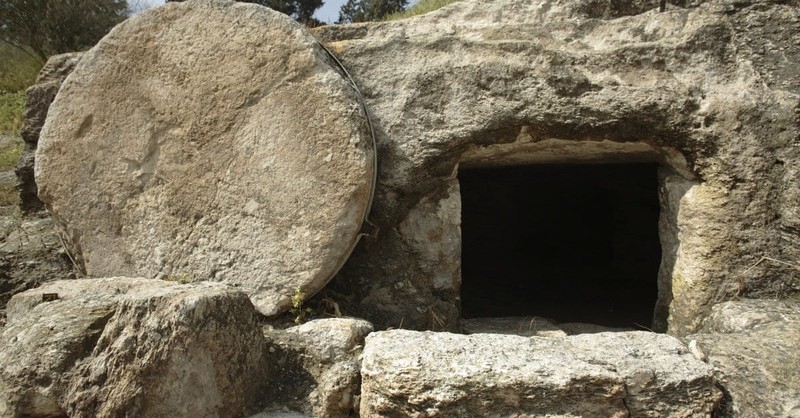
As this group of women arrived at the tomb with spices to anoint Jesus’ body, they saw that the stone had been rolled away. At this point, Mary Magdalene appears to separate from the group and run ahead. Having seen the open tomb, she assumes the worst: that someone has taken the Lord’s body (John 20:2). She runs to tell Peter and John, while the other women remain at the tomb.

The Women Encounter the Angel

Matthew 28:2–7; Mark 16:5–7; Luke 24:4–8: While Mary Magdalene is gone, the other women encounter angels at the tomb. Matthew focuses on one angel, who is sitting on the stone, while Mark and Luke mention two inside the tomb.

The angels proclaim the good news: Jesus has risen, just as He said. The women are told to go and tell the disciples that Jesus is alive and will meet them in Galilee. Shaken by what they had seen, and filled with joy, they rush off from the tomb to share the message with the disciples.

Peter and John Run to the Tomb

John 20:2-10; Luke 24:12: Meanwhile, Mary Magdalene reaches Peter and John with the news that, “They have taken the Lord out of the tomb, and we don’t know where they have laid Him.”

Peter and John sprint to the tomb. John arrives first, looks in, and sees the linen clothes. Peter then arrives; he goes in and notices the face-cloth folded up in a place by itself. This detail indicates that whatever happened in the tomb took place in an orderly manner, rather than a chaotic hurry.

Peter and John realize that something significant has happened, but they don’t yet understand that Jesus has risen. They then head back home (to the place where the disciples were staying in Jerusalem).

Mary Magdalene Weeping at the Tomb

John 20:11-18: Once Peter and John have left, Mary is alone at the tomb. She stands outside the tomb weeping. As she weeps, she stops to look inside the tomb. In the tomb, she sees two angels seated where Jesus’ body had lain. She speaks with the angels, but then turns around and sees Jesus standing there, but does not recognize that it is Him (possibly because of back-lighting, or possibly due to the difference in appearance of Jesus’ resurrection body).

Jesus asks Mary why she is weeping. Mary assumes that he is the gardener, but then Jesus speaks her name: “Mary.” Mary then recognizes that the person speaking to her is Jesus.

Mary embraces Jesus, but He tells her not to cling to Him, but to go and tell his “brothers” (disciples) that He is soon going to ascend to the Father.

It seems that Mary is the first eyewitness of the risen Jesus, and she tells the others that she has seen the Lord.

Jesus Appears to the Other Women

Matthew 28:8-10: As the other women are on the way from the tomb, sent by the angels to tell the disciples, Jesus meets them. The women fall at his feet and worship Him – grasping onto Him.

This likely happened shortly after Mary’s encounter. Jesus tells these women to go and tell the disciples to go to Galilee, promising that they will see Him there.

The Women Report to the Other Disciples

Luke 24:9-11; Mark 16:8-11: The women tell the disciples what they have seen, but their words seem like “an idle tale,” and the disciples are reluctant to believe it.

The Road to Emmaus

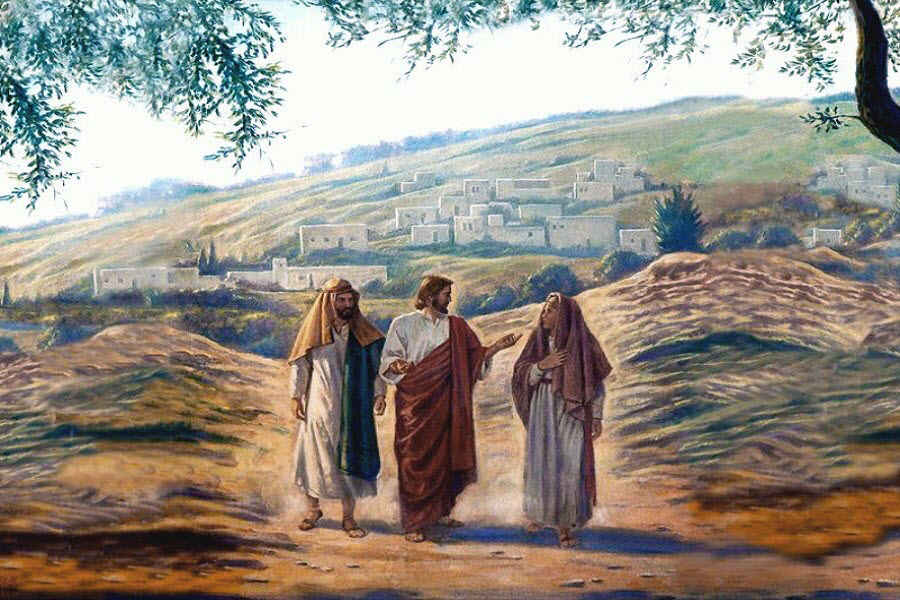
Luke 24:13-35: Later that day, two disciples are walking toward the village of Emmaus, talking about what happened to Jesus and trying to make sense of it. We don’t know who these disciples were, or if they belonged to “the eleven” or were part of the larger group of Jesus’ followers.

Jesus joins them as they walk and engages them in conversation. They explain their confusion: they had thought that Jesus was the Messiah, but when He was captured and killed, they began to doubt. They also mention the report of the women who had been to the tomb, and that they are struggling to know whether to believe it, because despite the women claiming to have seen the angels and Jesus, when the disciples (including Peter and John) went to check it out for themselves, they saw neither Jesus nor angels at the tomb.

Jesus then said to them, 25“O foolish ones, and slow of heart to believe all that the prophets have spoken! 26Was it not necessary that the Christ should suffer these things and enter into his glory?” 27And beginning with Moses and all the Prophets, he interpreted to them in all the Scriptures the things concerning himself. 

When the disciples arrive to their destination, Jesus acts as if He will go on further down the road, but they press Him to eat with them. 30When he was at table with them, he took the bread and blessed and broke it and gave it to them. 31And their eyes were opened, and they recognized him. And he vanished from their sight.

They then rush back to Jerusalem to tell the others.

Jesus Appears to the Disciples Behind Locked Doors in Jerusalem

Luke 24:36–43; John 20:19–23: On the evening of that same day, as the disciples were gathered together behind locked doors, Jesus appeared in the room with them.

Jesus showed them His hands and side. He ate with them. He then breathed on them, imparting the Holy Spirit to them (as promised in John 14:17), and conveyed His mission to them. Despite imparting the Spirit, He also tells them to wait in Jerusalem until they are clothed with power from on high – speaking of the empowerment they would receive on Pentecost (cf. Acts 1:8). Even though the disciples have been called to meet with Jesus in Galilee, they will return to Jerusalem for Jesus’ ascension (40 days after the resurrection) and to wait for this empowerment (received 50 days after the resurrection).

During this meeting, Jesus opened their minds to understand the Scriptures, and explained to them everything written about Him in the Law of Moses, the Prophets, and the Psalms (i.e. the entire Hebrew Bible, AKA “Old Testament”). By doing this, Jesus showed them the hermeneutical key to understanding the Bible; that it is a book about Him.

Thomas was not present on this occasion.

Jesus Appears to the Disciples with Thomas Present

John 20:26-29: Eight days later, apparently in the same location in Jerusalem, Jesus appears to the disciples again, this time with Thomas present.

Jesus calls Thomas to not disbelieve, but believe. Having seen Jesus’ wounds and heard His call to believe, Thomas exclaims a confession of faith in Jesus as “My Lord and my God!”

In Galilee

Matthew 28:16-20: Assumedly after the meeting in Jerusalem where Thomas was present, Jesus’ disciples meet Him on a mountain in Galilee, where the disciples worship Him, and Jesus commissions them to go and make disciples of all nations, baptizing them in the name of the Father, the Son, and Holy Spirit.

John 21:1-23: Jesus meets with the disciples on the shore of the Sea of Galilee, where they share breakfast and Jesus restores Peter to a leadership role after Peter’s denial of Jesus on the night of His arrest.

Other Appearances

In 1 Corinthians 15:5-7 Paul the Apostle lists some other appearances of Jesus, but we aren’t quite sure when or where they took place:

  • A private meeting with Peter (1 Corinthians 15:5)
  • A large group of over 500 people at one time (1 Corinthians 15:6)
  • A meeting with James — likely the half-brother of Jesus, who later became the leader of the Jerusalem church and the author of the Epistle of James – (1 Corinthians 15:7)
  • An appearance to “all the apostles” (apparently a broader group than just “the twelve” (cf. 1 Cor. 15:5)

Conclusion

By harmonizing the Gospel accounts, we get a three-dimensional picture of Jesus’ post-resurrection appearances.

For further study, check out the series of messages I taught a few years ago called “The Resurrected Life” – in which I preached about some of the post-resurrection passages: The Risen Life (2021)

What Happened to the Guards Who Were Watching Over Jesus’ Tomb?

According to the Gospel of Matthew, the guards who were watching over Jesus’ tomb reported to the chief priests what had happened when the angel of the Lord appeared and rolled away the stone from the tomb (Matthew 28:2).

Matthew 28:11-15 says that the chief priests paid the guards a large sum of money and instructed them to say that the disciples came and stole Jesus’ body while they were asleep.

These guards were Roman soldiers who were assigned to keep watch over the tomb. We don’t know if they were punished for failing in their duty to protect the tomb, which would have been normal practice at that time, nor do we know if they got in trouble for accepting the bribe from the chief priests.

It is clear from Matthew’s Gospel that the guards were aware of the miraculous events that took place at the tomb. Perhaps they ran away when the earthquake happened or the stone rolled away from the entrance. We don’t know if they saw Jesus walk out of the tomb or not.

No matter when they left the scene, they would have been left with a powerful testimony to Jesus’ resurrection, as would the chief priests. It is significant to remember what it says in Acts 6:7, that many of the priests in Jerusalem became believers in Jesus. I wonder if any of those who became believers were part of the group who paid off the guards!

This video is particularly good at depicting the incredulity of the idea that Jesus’ disciples stole his body:

Reader Questions: Does the Bible Encourage People Who are Poor to Ask for Help?

There is a page on this site where readers can submit questions or suggest topics. Recently I received the following question:

Does the Bible encourage people who are poor to ask for help, or does it put the onus on the rich to provide for the poor?

The Bible gives a pretty nuanced view of provision for the poor, which includes both proactive provision for the poor, while still requiring action on the part of the recipient.

For example, in Leviticus 19:9-10, farmers were instructed to leave the corners of their fields unharvested so the poor could come and glean. So while the rich were called to sacrifice some of their profits to provide for the poor, the poor were still required to go and harvest the food for themselves. Rather than giving them flour, for example, those in need were required to harvest grain and grind it into flour themselves. If someone was unwilling to work, in this case, they would not eat – but provision was made for them, via sacrifice on the part of those who had enough, to be able to get what they needed to survive.

A similar sentiment is found in the Epistle to the Galatians, where in Galatians 6:2 it says, “Bear one another’s burdens, and so fulfill the law of Christ,” but a few verses later, it says, “Each person will have to bear his own load.” (Galatians 6:5). The difference is that the “burden” mentioned in 6:2 refers to a crushing burden, whereas “load” in 6:5 refers to an individual’s burden of responsibility. So, we are called to help those who are facing burdens they are unable to bear on their own, yet with the goal of helping those people to stand on their own two feet and take responsibility for themselves and their lives.

In 2 Thessalonians 3, we read an interesting passage:

If anyone is not willing to work, let him not eat. For we hear that some among you walk in idleness, not busy at work, but busybodies. Now such persons we command and encourage in the Lord Jesus Christ to do their work quietly and to earn their own living.

2 Thessalonians 3:10-12

For some reason, there were people in the Thessalonian church were unwilling to work, and were living off the generosity of others. Some believe that the reason for this attitude is because they believed it was more spiritual not to work, since they expected the imminent return of Jesus. While Paul encouraged them that Jesus could return at any time, they were encouraged to work in order to provide for themselves if they were able. Here again, we see the importance of providing for those in need while at the same time encouraging people to take initiative and responsibility to work if they are able.

So, to answer the question: The onus is first on those who have to help provide for the poor, no matter how or why they became poor. But this generosity is not to be done in order to create dependence, but rather to relieve a burden and encourage responsibility and independence.

Local Resource: Table of Hope Food Pantry

Table of Hope Food Pantry is a ministry which was born out of White Fields Community Church in Longmont, Colorado and serves Southwest Weld County, Longmont, and the surrounding communities by providing residents in need with nutritious food, the ability to become more self-sufficient, and hope for their future.

Table of Hope is open to anyone, no questions asked, and no ID required. For more information about Table of Hope, check out Table-of-Hope.com

What Does It Mean to be “Born Again”?

Recently someone reached out asking for a simple explanation of what it means to be “born again.”

Blessed be the God and Father of our Lord Jesus Christ! According to his great mercy, he has caused us to be born again to a living hope through the resurrection of Jesus Christ from the dead.

1 Peter 1:3 ESV

The idea of being “born again” is something that the Bible speaks about using a variety of terms, such as: Receiving a new heart, becoming a new creation, being made alive in Christ.

The exact phrase, “born again” is something which Jesus used when speaking to a man named Nicodemus: a moral, religious man who was well-respected in his community. Nicodemus came to Jesus asking for the essence of Jesus’ teaching, and Jesus told him: “Truly, truly, I say to you, unless one is born again he cannot see the kingdom of God.” (John 3:3)

What this means is that although we are born physically alive, every person’s default condition is that they are spiritually dead and disconnected from God.

God loves us, and yet: we are sinners, both by nature and by choice, and as a result there is a separation between us and God, and our default condition is that we are spiritually dead rather than alive.

There are a lot of people in the world who are like Nicodemus: moral and “good” people. And yet, Jesus told this moral man that he needed to be born again. And this is the message of Jesus to all of us as well: “YOU need to be born again!” Not just everyone else; not just the drunks and the immoral people, but YOU too!

YOU need to be born again by coming into a relationship with God by faith in Jesus Christ: faith in the fact that he died in your place to reconcile you to God by imputing his righteousness to you, and imputing your sins to him; faith that he rose from the dead to give you the hope and promise of eternal life!

When you are born again you receive:

  1. a NEW HEART: The very essence of who you are changes! You receive a new heart, with new desires.
  2. a NEW IDENTITY: You change from being an enemy of God to being a child of God.
  3. a NEW MIND: You begin to think differently.
  4. NEW EMOTIONS: You feel differently; God pours out his love, joy, and peace into your heart.
  5. A NEW COMMUNITY: You become part of the people of God, those who are being saved.
  6. A NEW POWER: Power over sin; we are no longer slaves to our flesh, but we gain the power to be free when we are born again by putting our faith in Jesus and God places his Spirit inside of you to strengthen you in your weakness.

Here is an audio version of this, a clip from a sermon titled: The Power and Purpose of the Resurrection (click here for entire sermon):

Zombies in the Bible? Why Did the Dead Come Out of their Graves and Walk Around When Jesus Died?

In Matthew 27:52-53 it says that when Jesus died, “The tombs also were opened. And many bodies of the saints who had fallen asleep were raised, and coming out of the tombs after his resurrection they went into the holy city and appeared to many.”

Why did this happen? And what happened to these “walking dead”: did they ascend into Heaven with Jesus, or did they die again at a later date? What was the meaning and significance of this?

I address this question in the latest episode of the Theology for the People Podcast – in which I tell a story of regret from my honeymoon and explain why this event can only be understood in light of Jesus’ first miracle of turning water into wine.

Click here to listen, or listen in the embedded player below: Zombies in the Bible? Why Did the Dead Come Out of Their Graves and Walk Around When Jesus Died?

Zombies in the Bible? Why Did the Dead Come Out of Their Graves and Walk Around When Jesus Died? Theology for the People

In Matthew 27:52-53 it says that when Jesus died, "The tombs also were opened. And many bodies of the saints who had fallen asleep were raised, and coming out of the tombs after his resurrection they went into the holy city and appeared to many." Why did this happen? And what happened to these "walking dead": did they ascend into Heaven with Jesus, or did they die again at a later date? What was the meaning and significance of this? You can find more articles and content, as well as a place to submit questions or suggest topics at the Theology for the People blog site.

Satan’s Authority & “Divine Child Abuse”

In the Bible, Satan is referred to as “the ruler of this world,” (John 12:31, 14:30) and even “the god of this world” (2 Corinthians 4:4). 1 John 5:19 says that the whole world lies under the power of the evil one.

How then can Jesus say that “all authority in Heaven and on Earth” has been given to him (Matthew 28:18)?

In this week’s Sermon Extra, Pastor Mike and I discuss the authority of Satan, and what the Bible has to say about it: Did Adam and Eve hand over “regency” of the Earth to Satan in the Garden of Eden? And how does this relate to the scroll that only Jesus can open in Revelation 5?

Furthermore, we discuss the claim of Richard Dawkins and others, who say that Jesus’ death on the cross was “divine child abuse,” since the innocent Son of God was sacrificed by the Father – and how the deity of Christ changes everything when it comes to understanding the meaning of the cross.

Check out the video of that Sermon Extra here:

Recommended Further Resources:

What Does It Mean That “Whatever Does Not Proceed From Faith Is Sin”?

This question was recently submitted via the page on this site where you can Ask a Question or Suggest a Topic:

Hi, a question coming from your recent sermon on May 2 about belief and doubt. You were talking about how doubt is held in a sort of middle ground, not to be vilified or esteemed too highly. Today I came across these verses in Romans regarding eating by conscience:

The faith that you have, keep between yourself and God. Blessed is the one who has no reason to pass judgment on himself for what he approves. But whoever has doubts is condemned if he eats, because the eating is not from faith. For whatever does not proceed from faith is sin. (Romans 14:22‭-‬23 ESV)

That last sentence feels very strong in that ANYTHING not from faith is sin. How does this relate to the topic on Sunday?

Additionally, where do we draw a line to keep from absurd conclusions about this? When I go on a bike ride for health, I’m not doing it in faith – I just want to keep fit. What about choosing the right date for traveling on vacation? This verse could easily cause a person to stop making decisions due to fear of sin.

The sermon mentioned in this question is from the series The Risen Life, in which we looked at the post-resurrection appearances of Jesus in the Gospels for the season of Eastertide. The sermon was from John 20:19-30 and was called “From Doubt to Belief.”

In John 20:24-29, in the story of "doubting Thomas," we see that moving from doubt to belief involves hearing testimony, seeing the evidence, and responding in faith.

Doubt and Faith in Romans 14:23

In Romans 14:23, Paul is talking about “gray areas” or “disputable matters” in the Christian life. At that time, some people said that it was acceptable for Christians to eat meat which had been sacrificed to idols, whereas others said that it was not acceptable. Each side had their reasons.

Similar discussions exist today: Is it acceptable for Christians to drink alcohol? To participate in Halloween festivities? To do yoga or martial arts?

In some of these cases, it may be that something may not be categorically wrong, but it may be wrong for a particular person because of their particular propensities. Furthermore, that person may have a strong conviction that they ought not to do something, even if it wouldn’t necessarily be a sin for anyone to do that thing.

Paul is saying that if you have a sincere conviction before God that you should not do something, then you should act on that conviction in faith, and do so as unto the Lord. This, Paul says, honors God. However, if you do something in contradiction to your conviction that you should not do it; i.e. if you have doubts about whether that thing is acceptable or permissible for you to do – then for you to do it anyway would be sin.

Thus, the way doubt and faith is used here is different than in the sense in which we talked about doubt and faith in the above mentioned sermon, where our focus was rather on doubting versus believing in God’s existence, God’s goodness, the validity of God’s Word, or the reliability of God’s promises.

Is Everything that Does Not Proceed from Faith Really Sin?

I believe the answer is: Yes. Let me explain, and I’ll explain how this applies to situations such riding your bike and choosing dates for vacation:

In Hebrews 11:6 we are told that “without faith it is impossible to please God.” In Romans 4:20, faith is correlated with giving glory to God. In 1 Corinthians 10:31 we are told, “whether you eat or drink, or whatever you do, do all to the glory of God.”

The point therefore, is that acting in faith is all about giving glory to God in our actions. If you doubt whether a particular action brings glory to God, then for you to do it anyway would be a sin. It is in this way that anything that does not proceed from faith is sin.

The Question We Often Ask, & the Question We Ought to Ask

I find that too often, we tend to ask the question: “Is it permissible to _________” or “Am I allowed to _________.” What this passage (and others) teach us is that the question we ought to be asking instead is: “Will this action glorify God?” or “Will God be honored, pleased, and glorified through this action?”

If you can do that action in faith so that your motive is to glorify God, then good. If you have doubts about that, then to do it anyway would be sin – at least for you.

This is why Augustine argues that for those who act apart from faith in God, even their virtues can be sinful: because if you do something good – apart from faith in God – your motive in doing so is not to glorify God, but must be either to glorify yourself, or to justify yourself. Thus, even virtuous actions, apart from faith in God, can be sinful. Tim Keller often speaks, quoting the Puritans, of how it is important therefore that we repent not only of our evil actions, but of our good actions done for self-justifying or self-glorifying motives.

May we be those who endeavor to do everything for the glory of God!

What are “Winds and Waves” of Doctrine, and How Can We Recognize Them?

In this week’s episode on the Theology for the People Podcast, Mike and I discuss what it means in Ephesians 4:14 where the Apostle Paul talks about “winds and waves of doctrine.”

What are they? How do we recognize them before it’s too late? And how do we avoid being carried away by them?

We give some examples of winds and waves in the recent past, as well as the desire to move beyond the basics of Christianity to the “deeper things.” We discuss what people often mean when they use that phrase, and how to discover and experience the deepest things in reality.

Listen here, or in the embedded player below: What are “Winds and Waves of Doctrine,” and How Can We Recognize Them?

What are “Winds & Waves of Doctrine,” and How Can We Recognize Them? Theology for the People

In this episode Nick and Mike discuss what it means in Ephesians 4:14 where the Apostle Paul talks about “winds and waves of doctrine.” What are they? How do we recognize them before it’s too late? And how do we avoid being carried away by them? Along with some examples of winds and waves in the recent past, we discuss the “deeper things” of Christianity: what many people mean when they use that phrase and what the deepest things are in reality. Also visit the Theology for the People blog.

Theology for the People Now on GoodLion Podcast Network

The Theology for the People podcast is now on the GoodLion Podcast Network, where you can find a lot of other great podcast content. As part of joining GoodLion, all of our episodes were updated with new graphics. Check them out:

Why Does God Judge Some People More Harshly Than Others?

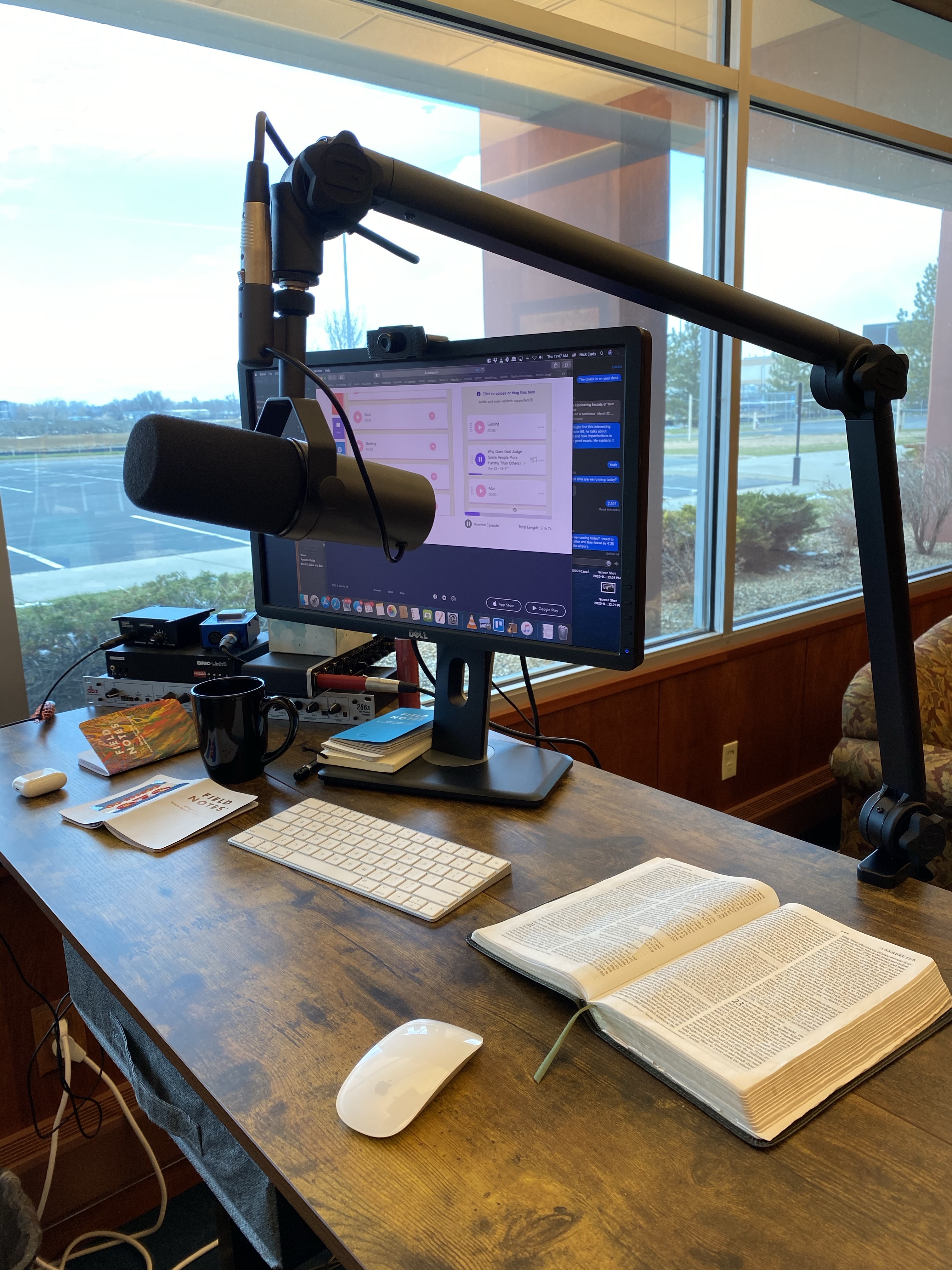
My desk in my office at church

Why is it that in the Bible, sometimes God punishes certain people severely for their sins, but other people receive no punishment for similar actions?

This question was submitted via this form: Ask a Question or Suggest a Topic:

Why does God bring judgment upon some sinful people, yet others who do much worse things remain healthy, prosperous, and well? In some cases they even seem to be getting God’s approval or at least not His punishment for the same sins as those who receive judgment. Examples of this would be Michal (David’s wife) and Uzzah in 2 Samuel 6, and the story of the two prophets in 1 Kings 13.

This is a good question, and is related to a question that David asked in the Psalms about why God allows wicked people to prosper and righteous people to suffer. This question, from David, was not an abstract query, but one that was deeply person to his lived experience.

We can see this dynamic at work in the world today as well, where some people do evil things and seem to suffer no consequences, and in some cases succeed as a result, whereas many who endeavor to lead a godly life don’t succeed or even suffer.

I responded to this question with a podcast episode which is embedded and linked below. In this episode, I give three important considerations which help us to understand this dynamic.

Podcast Episode: Why Does God Judge Some People More Harshly Than Others?