The Role of Beauty in Theology – with Dr. Philip Ryken

In this episode of the Theology for the People podcast I speak with Dr. Philip Ryken, who is the President of Wheaton College in Wheaton, Illinois. He has a Doctorate in Philosophy from Oxford University, and he is the author of over 50 books. His latest book is called Beauty is Your Destiny: How the Promise of Splendor Changes Everything.  

In this episode, Dr. Ryken and I discuss the role of beauty in theology. Dr. Ryken points out that Beauty is not a topic that is often discussed in theological circles, but it should be, both as a lens through which we view theological topics such as forgiveness, or atonement, or justice, and even as an attribute of God and the end result of God’s work of redemption in our lives and in the world.

Click here to listen to the episode, or listen in the embedded player below.

The Role of Beauty in Theology – with Dr. Philip Ryken Theology for the People

Dr. Philip Ryken is the President of Wheaton College in Wheaton, Illinois. He has a Doctorate in Philosophy from Oxford University, and he is the author of over 50 books. His latest book is called Beauty is Your Destiny: How the Promise of Splendor Changes Everything.   In this episode, Dr. Ryken and I discuss the role of beauty in theology. Dr. Ryken points out that Beauty is not a topic that is often discussed in theological circles, but it should be, both as a lens through which we view theological topics such as forgiveness, or atonement, or justice, and even as an attribute of God and the end result of God’s work of redemption in our lives and in the world.

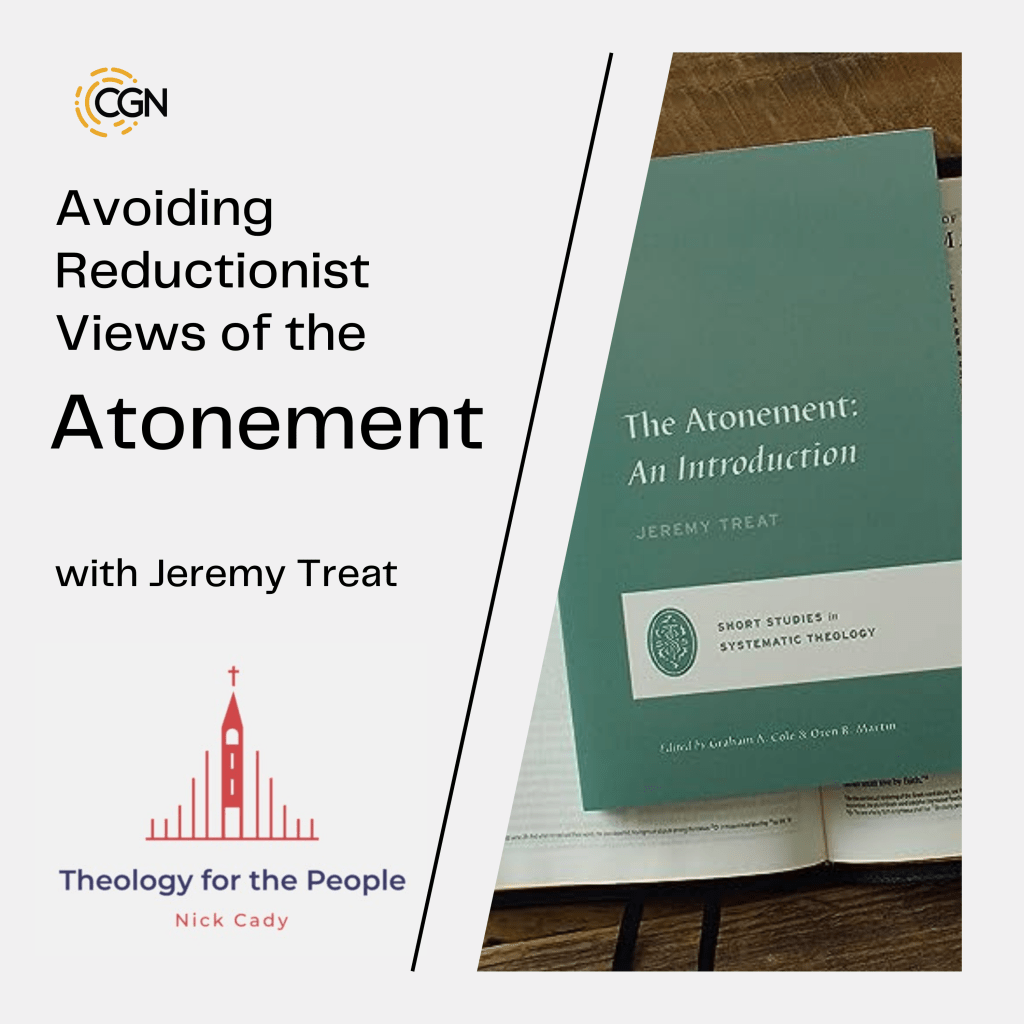
Avoiding Reductionist Views of the Atonement – with Jeremy Treat

Jeremy Treat is the Pastor for Preaching and Vision at Reality LA, a church in Los Angeles, California. He is also an Adjunct Professor of theology at BIOLA University, and he has his PhD from Wheaton College. 

Jeremy is the author of several books. His latest book is The Atonement: an Introduction, published by Crossway Publishing as part of their series of Short Studies in Systematic Theology.

On this episode of the Theology for the People podcast, I spoke with Jeremy about the doctrine of the Atonement, including what it means, and why it is so central to Christianity.

We also discuss some common errors that people commit when thinking about the atonement, and how many of these errors are due to a view of the atonement which is reductionistic. Further, we talk about the practical implications of those different reductionist views.

Jeremy believes that the best narrative in which to understand the atoning work of Jesus is that of the Kingdom of God, in light of the entire story that the Bible tells.

Click here to listen to the episode, or listen in the embedded player below.

Avoiding Reductionist Views of the Atonement – with Jeremy Treat Theology for the People

Jeremy Treat is the Pastor for preaching and vision at Reality LA, a church in Los Angeles, California. He is also an Adjunct Professor of theology at BIOLA University, and he has his PhD from Wheaton College.  Jeremy is the author of several books. His latest book is The Atonement: an Introduction, published by Crossway Publishing as part of their series of Short Studies in Systematic Theology. In this episode, Jeremy speaks with Nick Cady about the doctrine of the Atonement, including what it means, and why it is so central to Christianity. They also discuss some common errors that people commit when thinking about the atonement, and how many of these errors are due to a view of the atonement which is reductionistic. Further, they talk about the practical implications of those different reductionist views. Jeremy believes that the best narrative in which to understand the atoning work of Jesus is that of the Kingdom of God, in light of the entire story that the Bible tells.

A Biblical Approach to Church Planting – with Nathan Knight

Nathan Knight is the Lead Pastor of Restoration Church in Washington DC — a church that he planted 14 years ago.

He now leads a church planting network in the DC area called Treasuring Christ Together, and he recently wrote a book (published by Crossway and 9Marks) about church planting called: Planting by Pastoring: A Vision for Starting a Healthy Church

In our discussion, Nathan and I talk about the premise of his book, which seeks to encourage the planting of new churches, while getting back to the biblical definitions of what a church is, what a church does, and how to define “success” in a local church.

Click here to listen to the episode or listen in the embedded player below.

A Biblical Approach to Church Planting – with Nathan Knight Theology for the People

Nathan Knight is the Lead Pastor of Restoration Church in Washington DC — which is a church that he planted 14 years ago. He now leads a church planting network in the DC area called Treasuring Christ Together, and he recently wrote a book (published by Crossway and 9Marks) about church planting called: Planting by Pastoring: A Vision for Starting a Healthy Church.  In our discussion, Nathan and I talk about the premise of his book — which seeks to encourage the planting of new churches, while getting back to the biblical definitions of what a church is, what a church does, and how to define “success” in a local church. Make sure to visit the Theology for the People website at nickcady.org

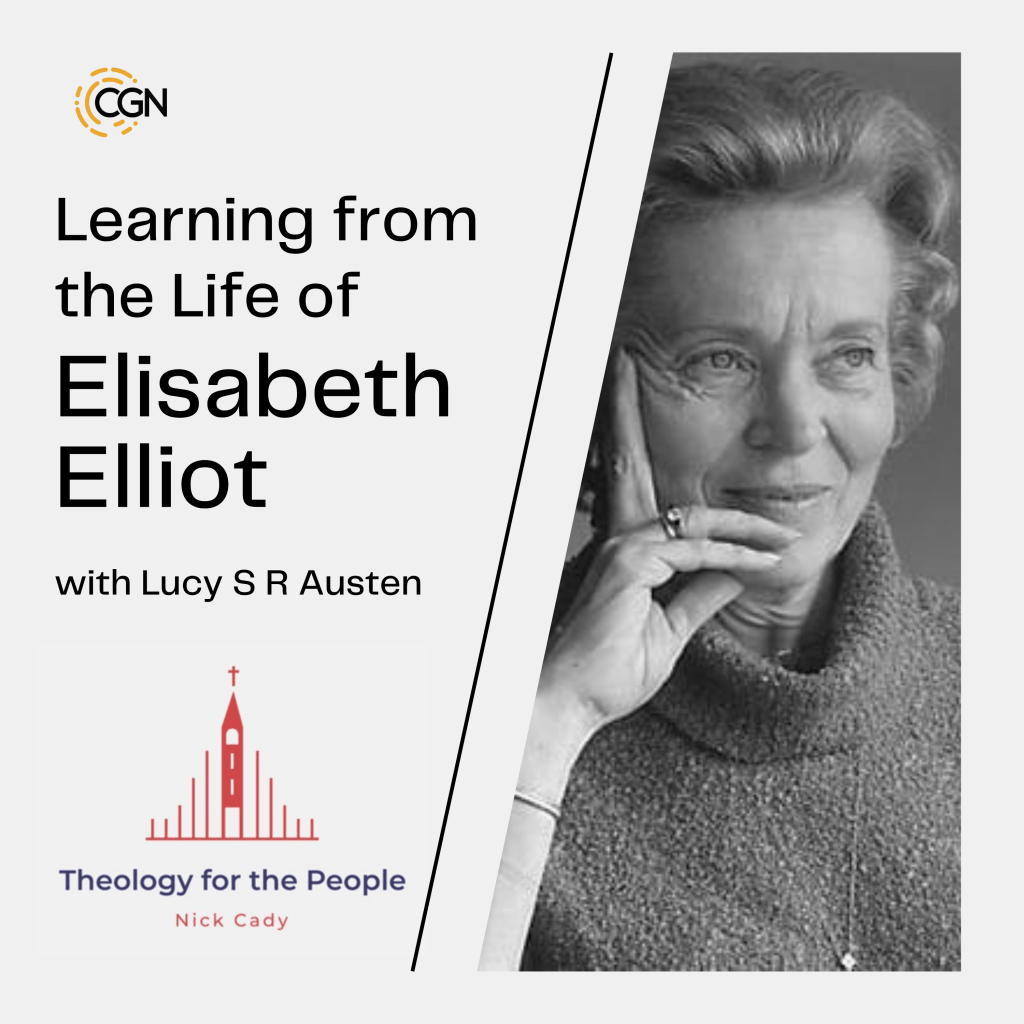
Learning from the Life of Elisabeth Elliot – with Lucy S R Austen

In this episode of the Theology for the People podcast, I speak with Lucy S R Austen. Lucy recently wrote a book, published by Crossway, titled Elisabeth Elliot: A Life

Elisabeth Elliot was one of the most well-known and influential figures of the late 20th century, and early 21st century, both in evangelical circles, but also in the culture at large.

On this episode Lucy and I speak about who Elisabeth Elliot was and the influence she had.

As Lucy points out, Elisabeth Elliot was a sometimes controversial figure, who changed her views on things throughout her life, and her life reflects much of the history of evangelicalism in the 20th century.

Click here to listen to the episode or listen in the embedded player below.

Learning from the Life of Elisabeth Elliot – with Lucy S R Austen Theology for the People

Elisabeth Elliott was one of the most well-known and influential figures of the late 20th century, and early 21st century, both in evangelical circles, but also in the culture at large. Recently a biography of her life was written by Lucy S R Austen, and published by Crossway Publishing, titled Elisabeth Elliot: A Life. On this episode of Theology for the People, I speak with Lucy S R Austen about who Elisabeth Elloitt was and the influence that she had. As Lucy points out, Elisabeth Elliot was a sometimes controversial figure, who changed her views on things throughout her life, and her life reflects much of the history of evangelicalism in the 20th century. Visit the Theology for the People website at nickcady.org

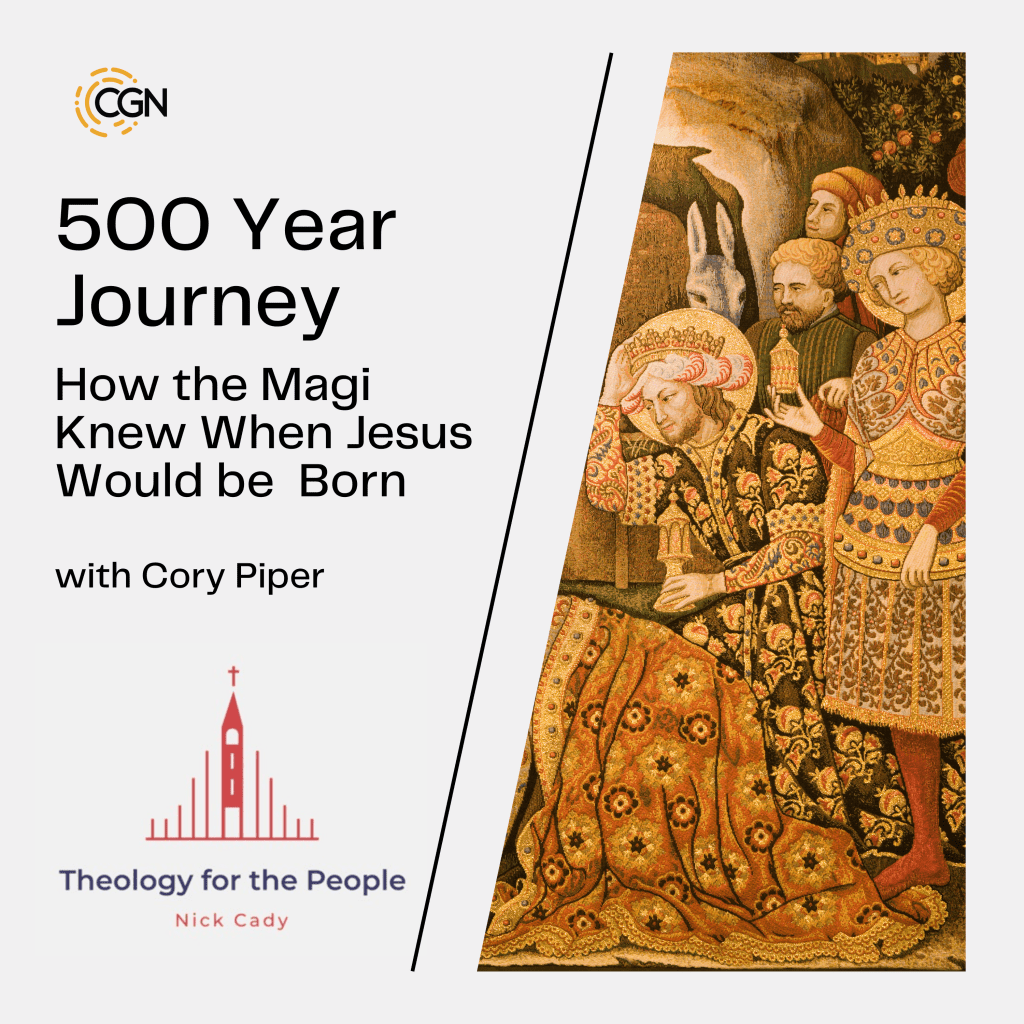
500 Year Journey: How the Magi Knew When Jesus Would Be Born – with Cory Piper

In this episode of the Theology for the People podcast, I speak with Cory Piper. Cory is a teacher who specializes in the Old Testament, theology, and history. He recently wrote a book called 500 Year Journey: How the Magi Knew When Jesus Would be Born

We discuss who the Magi were and why they came to Jerusalem at the exact time they did, when Jesus was born, and how it ties into the book of Daniel and other Old Testament passages.

Additionally, we talk about the history of why the church has celebrated the birth of Jesus on December 25, and whether that has any ties to paganism or not.

Click here to listen to the episode or listen in the embedded player below.

500 Year Journey: How the Magi Knew When Jesus Would be Born – with Cory Piper Theology for the People

Cory Piper is a teacher who specializes in the Old Testament, theology, and history. He recently wrote a book called 500 Year Journey: How the Magi Knew When Jesus Would be Born We discuss who the Magi were and why they came to Jerusalem at the exact time they did, when Jesus was born, and how it ties into the book of Daniel and other Old Testament passages. Additionally, we talk about the history of why the church has celebrated the birth of Jesus on December 25, and whether that has any ties to paganism or not. Visit the Theology for the People website at nickcady.org

Book Review: Does the Bible Support Same-Sex Marriage?

A few weeks ago, I was sitting in the car with my kids on a family trip, and my teenage daughter asked me, “Dad, why is it wrong to be gay?”

I responded that, first we needed to discuss what she meant by “gay”; did she mean: “Is it a sin to feel attraction to people of the same sex?” or did she mean, “Is it a sin to perform sexual activities with people of the same sex?” – because those are two very different questions, which have two different responses from the Bible.

She clarified by saying, “Well, why is it wrong for two people of the same sex to be in love?”

I responded, “The Bible encourages people of the same sex to love each other. We are all called to love everyone God puts in our path, but that certainly doesn’t mean that we are to have sex with everyone God puts in our path.” “For example, the Bible says that David loved Jonathan more than he loved any woman. But that doesn’t mean that they performed sexual acts together; rather that they had a close and intimate friendship. In other words, when we reduce ‘love’ down to sex, we are cheapening it. Further, the Bible’s vision is for people of the same sex to have meaningful, loving friendships, but that’s different than having sex with someone.”

She clarified once again, “Why is it that people of the same sex can’t have romantic relationships?”

I responded, “What do you mean by romantic? Are you talking about an exclusive relationship which is characterized by touching of a sexual nature?”

At this point, she said, “Okay, I get it,” and we changed the subject.

I tell this story to illustrate why Preston Sprinkle’s latest book, Does the Bible Support Same-Sex Marriage?: 21 Conversations from a Historically Christian View, is so needed right now.

My daughter did not ask these questions from a heart of rebellion against God, but out of genuine curiosity and interest, and because she has sincere questions. Certainly the questions she asked were shaped by the cultural influences she faces at school and in the world in general. You can imagine people asking her these questions, and her wondering how to respond. As a father, I’m glad she asked me, and gave me the chance to help her understand.

I received an advance copy of this book to read and review a few months ago. The book was released to the public on August 1, 2023 and is now available wherever books are sold.

The book begins with two chapters which give “Foundations,” or principles which need to be clarified up front. The first is about how to have a fruitful conversation about these topics which are highly charged when it comes to emotions and politics, in the world today. The second foundation is an explanation of the historically Christian view of marriage. This chapter is helpful, in that it looks at how Christians have viewed and understood marriage for the past 2000 years, and why. It looks at the Bible and the writings of church fathers, and more.

Then, the book goes into a response to 21 common questions or claims, which people use as justification for why same-sex marriage should be affirmed by Christians. Preston then responds to these in brief but content-rich chapters. He does so with tact and empathy, which I appreciated very much. He also shares data, statistics, history, facts, and quotes to support his responses.

Overall, the recurring theme of his answers is that sex difference is part of God’s design for marriage and that both same-sex sexual activity as well as all sex outside of marriage is considered “sexual immorality” (porneia in Greek) in the Bible.

For me, the most helpful chapters were Conversations 12-14, which addresses the claims that:

  • Jesus’ Sabbath Hermeneutic Informs How We Should Interpret Same-Sex Prohibitions
  • God’s Acceptance of Gentiles Mirrors How We Should Accept LGB People
  • The Trajectory of Women and Slavery Justifies Same-Sex Prohibitions

There are other chapters which are more “ground-level,” which address questions and claims which may be more common, such as:

  • Love is Love
  • Some People are Born Gay, So It Must Be Okay
  • Paul Was Not Talking about Consensual Same-Sex Relationships
  • The Word Homosexual Was Added to the Bible in 1946

In each chapter, Preston begins by giving a summary of the claim or viewpoint of those who argue for that particular position, then he follows it by sharing a few points of agreement, and finally gives a response.

In the end, Preston’s answer to the question posed in the title of the book is: No, the Bible does not support same-sex marriage. Yet he gives this answer in a thoughtful and helpful manner, which shows respect for his readers and those whose claims he seeks to refute. Finally, he urges the church to truly live out a biblical vision of being a community where the same-sex attracted can find acceptance, love, and care, so that they have a loving community to support them in faithfully following Jesus, including God’s instructions about sexual ethics.

I recommend this book as a helpful resource on this very relevant issue. It would be better if more Christians were well equipped to answer the questions people are asking about same-sex issues, with love and truth.

Responding to Arguments for Biblical Unitarianism (Non-Trinitarianism)

Unitarianism is the belief that God is not Trinitarian in nature.

This belief can take many forms, such as Modalism: the belief that the Father, the Son, and the Spirit are “modes” in which God sometimes manifests, or in Partialism: the belief that the Father, the Son, and the Spirit are “parts” of who God is.

Other unitarians believe that Jesus is not divine and that there was a time when Jesus was not, i.e. that at one point in time, Jesus came into being – and that he has not existed from eternity past, as the Father has. Further, unitarians might believe that the Holy Spirit is either essentially the Father, or that the Holy Spirit is an impersonal force, but not a “person” of the Trinity.

The following is a list of responses to common Unitarian claims, written by Pastor Jason Cralley, Executive Pastor at White Fields Community Church.

Creeds show progression of development towards the Trinity. 

False. The creeds were developed to fight heresy. As one heresy appears, they created a creed to address it. When another heresy appeared around the same topic, they would change the creed to make it more specific. According to the earliest Christian writings it is very clear that they believed in the trinity. Ignatius of Antioch, Polycarp of Smyrna, Theophilus of Antioch, Tertullian, and others all church fathers that wrote about the Trinity long before the first creed was ever written.

The Old Testament foretold that Jesus would be a human being. 

True. But it also said he would be God. Isaiah 9:6 “For to us a child is born, to us a son is given; and the government shall be upon his shoulder, and his name shall be called Wonderful Counselor, Mighty God, Everlasting Father, Prince of Peace.” Isaiah 7:14 “Behold, the virgin shall conceive and bear a son, and shall call his name Immanuel.” As Matthew 1:23 points out, Immanuel means “God with us.” The Biblical Unitarians argue that the Jews never understood that these meant the Messiah would be God. True. But as we knew they misunderstood most of the prophecies about Jesus. They thought he would come and set up an earthly kingdom. We cannot take what they believed as truth.

The New Testament teaches that Jesus was a man. 

True. But it also teaches that Jesus was God. We have to take the Bible as a whole and not take some verses to make a theology and leave others out. Jesus has divine attributes that only God possesses: he is omnipresent (Matt. 28:20), Omniscient (Mark 2:8, John 6:64; 16:30; 21:17), Omnipotent (Matt. 28:18, Mark 4:37-41; 6:30-44), Created all things (John 1:3, Col. 1:16-17), he keeps the universe going by his power (Heb. 1:3). Jesus thought himself as God: he forgave sins (Mark 2:3-12) and the everyone knew that was something only God could do as they tried to kill him (Luke 7:48-50), he accepted worship as God and never rejected it (Matt. 28:9, 17; Luke 24:52; John 9:38; 20:28), He stated he was God (John 10:30-33, Mark 14: 61-62, Rev. 1:8).

The Bible teaches that Jesus was a created being. 

False. Jesus explains his own preexistence ((John 3:13; 6:33, 38, 62; 8:23; 16:28) and that he existed before Abraham (John 8:58). God sent his Son proving that Jesus existed before his incarnation (Rom. 8:3; 1 John 1:2; Gal. 4:4). He didn’t create a son but sent the one that already existed.The New Testament teaches that Jesus is eternal: He existed before creation (John 1:1-3; 17:5), Jesus holds all creation together therefore he had to preexist before his birth (Col. 1:17), Jesus has always been and always will be (Heb. 13:8, Rev. 1:8), created all things meaning he was there before creation (John 1:3, Col. 1:16-17), he keeps the universe going by his power so he had to be preexistent (Heb. 1:3).

The Bible teaches that Jesus has a God. 

True and False. Jesus has two natures: fully human (Gal. 4:4) and fully divine (John 1:1, 14; Col. 2:9; Heb. 1:8). When he came down to earth he humbled himself and cooperated with the limitations of being a human (Phil 2:5-8, Heb. 2:9). Jesus the man had someone he would call his God (the Father). Jesus still has a human nature (1 Tim. 2:5; Col. 2:9). Jesus will always have a human nature and will therefore always call the Father God. This does not mean that Jesus doesn’t share the same divine nature as God the Father. 

Biblical Unitarianism commits the logical fallacy of equivocation where the meaning of a word changes as it is used. Saying “The Trinity is the teaching that the one God of all existence, consists of three divine persons: The Father, the Son, and the Holy Spirit” is not the same as “The Father is God, the Son is God, and the Holy Spirit is God.” The first sentence uses God as a quantitate, dealing with how many gods there are. The second sentence is qualitative, dealing with the nature of divinity. The Unitarians are confusing the qualitative with the quantitative. Jesus is qualitatively stating that the Father is God. He is not quantitatively stating that only the Father is God, and he is not. 

Jesus Called the Father the only true God. 

True. But Jesus claims that the Father and he are one (John 10:30) which his opponents knew to mean that Jesus was claiming to be God and picked up stones to kill him (John 10:31). He later states the Father is in him, and he is in the Father (John 10:36-38). So, if the Father is the one true God, then so is he. The Triune God is the one true God.The Holy Spirit is simply the Father. False. The Holy Spirit is distinct from the Father. The Father sent the Spirit (John 14:26). The Spirit does the will of the Father (Rom. 8:27). The Holy Spirit is mentioned with the Father and Son (Matt. 28:19). If the Father was the Spirit, none of these would make sense.

What is Biblical Unitarianism? – Considering the Best Arguments For and Against It

In this episode of the Theology for the People podcast, Nick Cady and Jason Cralley respond to the best arguments for Biblical Unitarianism, which is the a non-Trinitarian interpretation of biblical texts about who God, Jesus, and the Holy Spirit are.

In doing this, we look at the history of Arianism and Trinitarian formulations of who God is, including a discussion about Constantine and the First Council of Nicaea, and the Nicene Creed.

Further, we look into the arguments put forth regarding certain Biblical passages that Unitarians point to as evidence of God’s non-trinitarian, or unitarian nature, and give a defense for trinitarian beliefs.

Below, you can find a link to the video mentioned in the episode about Bad Trinitarian Analogies.

Click here to listen to the episode or listen in the embedded player below.

What is Biblical Unitarianism? – Considering the Best Arguments For and Against It Theology for the People

In this episode, Nick Cady and Jason Cralley respond to the best arguments for Biblical Unitarianism, the a non-Trinitarian interpretation of biblical texts about who God, Jesus, and the Holy Spirit are. In doing this, they look at the history of Arianism and Trinitarian formulations of who God is, including a discussion about Constantine and the First Council of Nicaea, and the Nicene Creed. Further, they look into the arguments put forth regarding certain Biblical passages that Unitarians point to as evidence of God's non-trinitarian, or unitarian nature, and give a defense for trinitarian beliefs. Make sure to visit the Theology for the People website at nickcady.org

Dealing with Doubt and Deconstruction – with Aaron Salvato

In recent years it has become increasingly popular for people who grew up in Christianity to go through a process of “deconstruction” in which they seek to examine and question the origins of their beliefs. 

Deconstruction isn’t always a bad thing, but the deconstruction movement, powered by social media, largely targets younger people and encourages them to cast off their Christiaan beliefs. 

This episode of the Theology for the People podcast is the recording of a workshop which Nick Cady and Aaron Salvato co-lead at the 2023 Calvary Global Network International Conference on the Topic of Doubt and Deconstruction.

We start out by defining deconstructionism and examining its philosophical roots, then we look at the impact of this movement and some of the common themes in its claims. Finally, we discuss a Biblical response to doubt and deconstruction and give some helpful tips for addressing the questions that those who are deconstructing may have. 

Check out more from Aaron Salvato on the Good Lion Podcast.

My book, The God I Won’t Believe In: Facing Nine Common Barriers to Embracing Christianity, can be found here.

Click here to listen to the episode or listen in the embedded player below.

Dealing with Doubt and Deconstruction – with Aaron Salvato Theology for the People

In recent years it has become increasingly popular for people who grew up in Christianity to go through a process of “deconstruction” in which they seek to examine and question the origins of their beliefs.  Deconstruction isn’t always a bad thing, but the deconstruction movement, powered by social media, largely targets younger people and encourages them to cast off their Christiaan beliefs.  This episode of Theology for the People is the recording of a workshop which Nick Cady and Aaron Salvato co-lead at the 2023 Calvary Global Network International Conference on the Topic of Doubt and Deconstruction. We start out by defining deconstructionism and examining its philosophical roots, then we look at the impact of this movement and some of the common themes in its claims. Finally, we discuss a Biblical response to doubt and deconstruction and give some helpful tips for addressing the questions that those who are deconstructing may have.  Check out more from Aaron Salvato on the Good Lion Podcast. My book, The God I Won't Believe In: Facing Nine Common Barriers to Embracing Christianity, can be found here. Visit the Theology for the People blog at nickcady.org

Making Sense of the Beatitudes – with Chris Castaldo

On this episode of the Theology for the People Podcast, I speak with Chris Castaldo about his recent book, The Upside Down Kingdom: Wisdom for Life from the Beatitudes.

We talk about how the Beatitudes are meant to be understood, and how people have misread them throughout history. Further, we also discuss what the eschatological nature of the Beatitudes, and what they mean for practical areas of life, such as lament, power, and politics.

In this discussion, we talk about different interpretations of the Beatitudes, from Martyn Lloyd-Jones to Robert Schuller, to the church fathers. We also talk about Nietzsche, Constantine, and the question of whether Christianity creates emasculated men under the heading of “meekness,” and what it looks like to live out the ethic of Jesus in our modern world.

Chris Castaldo is the Lead Pastor of New Covenant Church in Naperville, Illinois. He has a PhD from London School of Theology, where he studied under Dr. Tony Lane; the same professor who was my mentor for my Masters dissertation.

Chris is also a fellow at the Center for Pastor Theologians. He has authored and contributed to several books including: Talking with Catholics about the Gospel: A Guide for Evangelicals.
You can find more about Chris and read his writings at chriscastaldo.com.

Click here to listen to the episode or listen in the embedded player below.

Making Sense of the Beatitudes – with Chris Castaldo Theology for the People

Chris Castaldo is the Lead Pastor of New Covenant Church in Naperville, Illinois. In this episode we discuss his recent book The Upside Down Kingdom: Wisdom for Life from the Beatitudes. We talk about how the Beatitudes are meant to be understood, and how people have misread them throughout history. Further, we also discuss what the eschatological nature of the Beatitudes, and what they mean for practical areas of life, such as lament, power, and politics. Chris has a PhD from London School of Theology, and he is a fellow at the Center for Pastor Theologians. He has authored and contributed to several books including: Talking with Catholics about the Gospel: A Guide for Evangelicals. You can find more about Chris and read his writings at chriscastaldo.com.