I am an Irish-American. My dad’s family is all Irish, and I have an Irish last name. The only really Irish things I remember growing up were eating corned beef and hash and having a big Irish wake after my grandmother’s funeral. I personally feel that the Irish response to death is one of the great things about their culture – they know how to mourn a loss and celebrate a life at the same time.
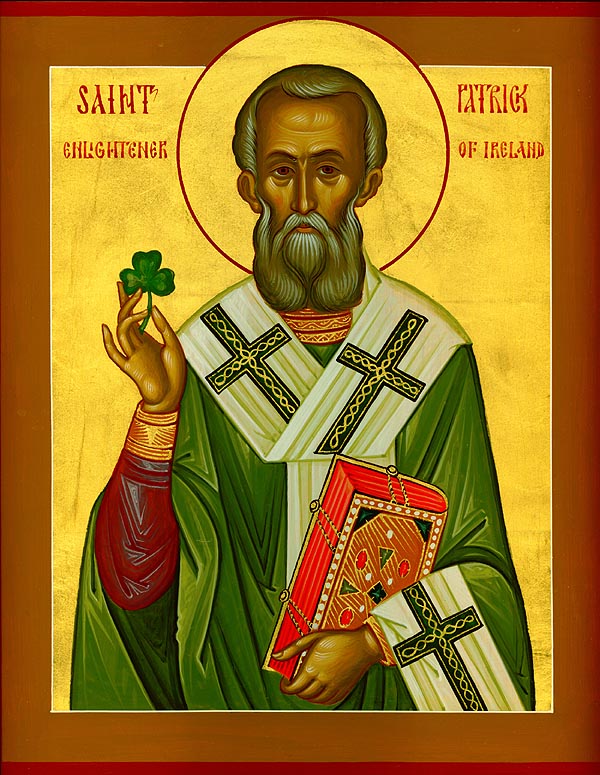
Today is Saint Patrick’s Day – but who was Saint Patrick?
Well, interestingly enough, Patrick has never officially been named a saint by any church body. Furthermore, Patrick was not Irish! And if you’ve ever heard that Patrick drove the snakes out of Ireland – there never actually were snakes in Ireland, so that is just the stuff of legend.
The real Patrick was a Roman Briton born in Wales around 390 AD to a wealthy, noble family. His father was a deacon and his grandfather a pastor. When Patrick was 16 years old, he was captured by Irish marauders and taken to Ireland as a slave. After living there as a slave for 6 yrs, he managed to escape back to Britain. After his return to Britain, he joined a monastery and became a minister, and during this time he was burdened with a desire to go back to his former captors in Ireland and share with them the Gospel of Jesus Christ. So Patrick returned to Ireland in 432, this time not as a slave, but of his own volition – as a missionary.
Patrick was one of the earliest Christian missionaries to travel abroad to spread Christianity. One of the noteworthy things which Patrick did as a missionary was live in solidarity with the Irish people. Patrick wrote that he “sold his nobility” to enhance his commonality with his Irish audience. He spoke their language, and lived among; he became one of them, that he might reach them with the Gospel.
One of the first things that Patrick did was gain religious toleration for Christians from the Irish King. He also sought to evangelize prominent druids, knowing that others would likely follow if high profile druid leaders converted to Christianity. One of Patrick’s emphases amongst those who converted to Christianity was spiritual growth. Within 15 years Patrick has evangelized much of Ireland. In all, Patrick served as a missionary and pastor in Ireland for some 30 years.
One of the long-term fruits of Patrick’s ministry in Ireland was a movement of Irish missionaries that grew up in the generations following his establishment of Christianity in that country. One of these men was Columba (521-597) who was born in an Irish Christian family and became a priest in the church and somewhat of a church planter, establishing many churches in Ireland. At age 42 Columba left Ireland, saying he had been motivated by the ‘love of Christ’ and went to Scotland, where he established a monastery which served as a station for training and sending missionaries into the surrounding region.
Here’s to Patrick the missionary and to the Irish people!