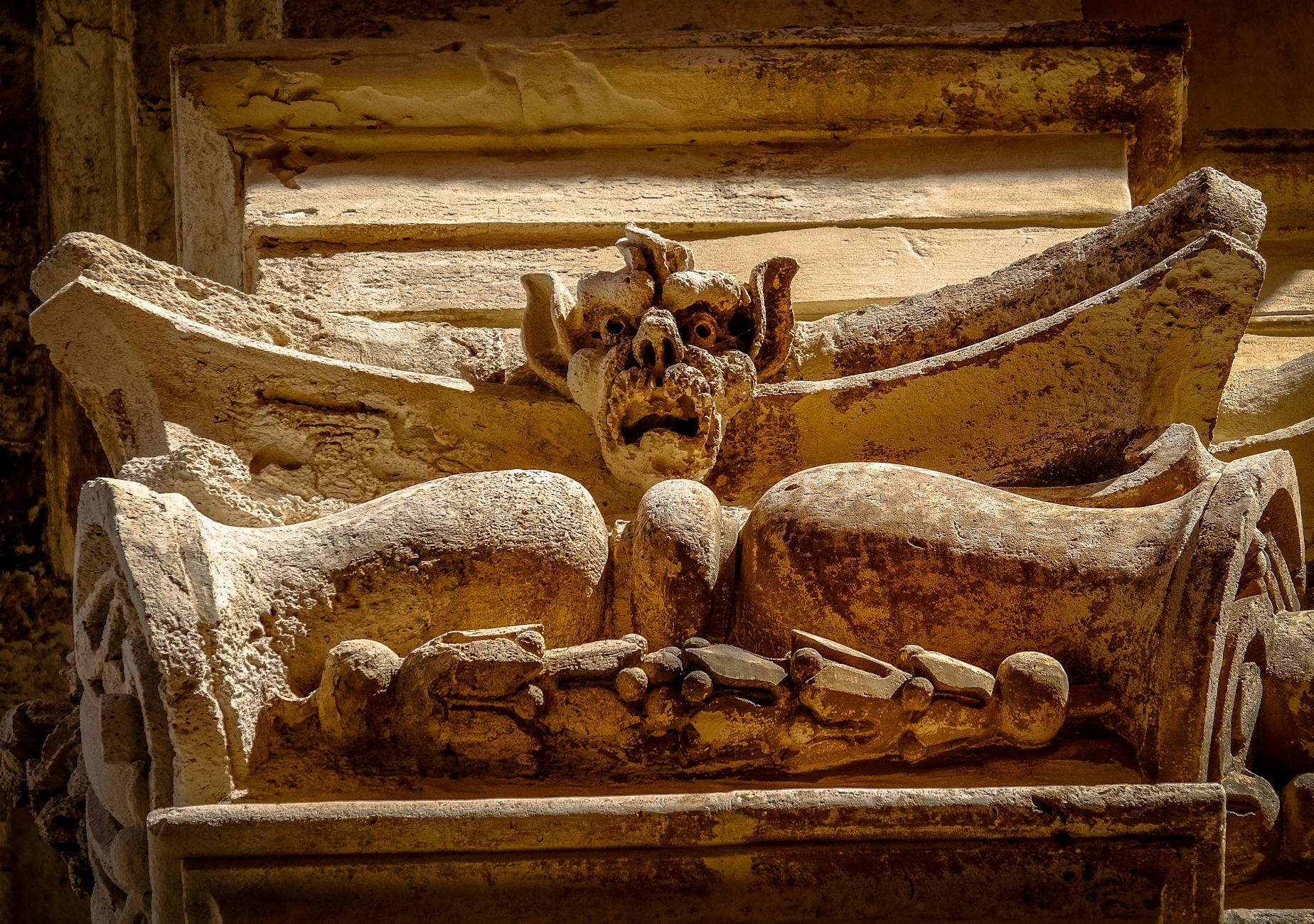
Can Christians be Possessed by Demons? What about “Demonic Oppression”?

Photo by Francesco Ungaro on Pexels.com

There is a page on this site where readers can submit questions or suggest topics. Recently I received the following question:

What are your thoughts on demon possession and deliverance with believers?

Can Christians be Possessed by Demons?

Certainly the New Testament describes people being possessed by demons. For examples, see: Matthew 9:32-3312:2217:18Mark 5:1-207:26-30Luke 4:33-36Luke 22:3Acts 16:16-18.

In these passages, sometimes the demonic possession caused physical ailments. In other cases, such as with Judas, it caused him to do something evil, namely betraying Jesus. In Acts 16, a demon possessed slave girl was able to tell the future. In Mark 5, demon-possession led to a man cutting himself and living naked in a cemetery.

The Bible repeatedly tells us that idol worship can be related to the worship of demons (Leviticus 17:7Deuteronomy 32:17Psalm 106:371 Corinthians 10:20), and so it is possible that involvement with idolatry, the occult, or pagan worship could be a contributing factor for some when it comes to demon possession. Some animistic religions, including voodoo and Santeria, directly involve inviting spirits to indwell and possess the worshiper.

However, when it comes to Christians, the Bible tells us that now, after Jesus’ death and resurrection, we who believe in Jesus have been sealed with the Holy Spirit as a guarantee of their salvation, as a seal that they belong to God (Ephesians 1:13-14, 2 Corinthians 1:22; 5:5; 1 Corinthians 6:19) and are indwelt by the Spirit of God (Romans 8:9-11). For more on the three relationships with the Holy Spirit, click here.

Jesus Himself provides assurance regarding the security of His followers. In John 10:28-29, Jesus declared, “I give them eternal life, and they shall never perish; no one will snatch them out of my hand. My Father, who has given them to me, is greater than all; no one can snatch them out of my Father’s hand.”

In Matthew 12, Jesus spoke about what happens when a demon is cast out from a person.

“When the unclean spirit has gone out of a person, it passes through waterless places seeking rest, but finds none. Then it says, ‘I will return to my house from which I came.’ And when it comes, it finds the house empty, swept, and put in order. Then it goes and brings with it seven other spirits more evil than itself, and they enter and dwell there, and the last state of that person is worse than the first.”

Matthew 12:43-35

What we learn from this description, is that demons can only occupy a person if that person is not already indwelt by a more powerful Spirit, namely the Spirit of the Lord. If the Spirit of the Lord is indwelling a believer, demons cannot also indwell them.

Demonic Oppression and Demonic Influence in the Life of a Believer

While Christians cannot be possessed by demons, they are not immune to spiritual warfare. The Apostle Paul warns believers that they should not be ignorant of the schemes of the devil and exhorts us to put on the full armor of God to stand firm against such attacks (Ephesians 6:10-18). This implies that while demonic possession is not something that is possible for a believers, harassment or oppression by demonic forces remains a possibility.

Oftentimes, the “battlefield” on which spiritual warfare takes place, is our minds and thought life. Satan is referred to by Jesus as “the father of lies” (John 8:44), and we are instructed to fight against demonic influence over our thought life by taking every thought captive for Christ (2 Corinthians 10:5).

Instances of demonic oppression or influence manifest as spiritual attacks and temptations, just as Jesus Himself was tempted by the devil. While these experiences can be daunting, they do not mean the surrender of one’s will or identity to demonic control. Instead, they serve as opportunities for believers to exercise their faith, relying on the power of Christ to overcome the adversary (1 Peter 5:8-9).

For example, King Saul, after rebelling against the LORD, was troubled by an evil spirit (1 Samuel 16:14-1518:10-1119:9-10) with the apparent effect of a depressed mood and an increased desire to kill David. Peter was influenced by Satan to try to prevent Jesus from accomplishing his mission of dying on the cross (Matthew 16:21-23).

In Ephesians 6, we are instructed to not only take precautions to protect ourselves against demonic attacks, but we are instructed to go on the offense and fight against the influence of these demonic forces using the Word of God and by praying in the Spirit (Ephesians 6:17-18). For more on praying in the Spirit, see: Is Praying in the Spirit Speaking in Tongues?

Conclusion

In conclusion, Christians cannot be possessed by demons, as they are sealed and protected by the indwelling presence of the Holy Spirit. However, believers are not exempt from spiritual warfare and may experience harassment or oppression by demonic forces. Nevertheless, our confidence rests in the assurance of Christ’s victory over the powers of darkness and His promise to never leave nor forsake His own. Let us, therefore, stand firm in the truth of God’s Word, knowing that we are more than conquerors through Him who loved us, and that nothing can separate of from the love of God that is in Christ Jesus our Lord (Romans 8:37-39).

Ask a Question or Suggest a Topic

If you have a question or would like to suggest a topic for me to address here on the blog, click here: Ask a Question or Suggest a Topic

If Satan Has Been Defeated, Why Is He Still “Prowling Around”?

lion painting

In 1 Peter 5:8, Peter the Apostle told us: Be sober-minded; be watchful. Your adversary the devil prowls around like a roaring lion, seeking someone to devour.

This is interesting because in Colossians 2:15, Paul the Apostle tells us that Jesus “disarmed the rulers and authorities and put them to open shame, by triumphing over them.”

If Jesus, through his life, death, and resurrection, defeated and disarmed Satan and the demonic powers, then how is it that the devil is still prowling around like a lion?

A Toothless Lion

Being that Satan has been disarmed, the real danger he poses is his “roar.”

A roar by itself can’t actually hurt you. Similarly, the devil can’t do anything to you without God’s permission (remember Job chapter 1). But whereas the devil needs God’s permission to harm you, you don’t need anyone’s permission to mess up your own life.

Jesus said this about the devil: “there is no truth in him. When he lies, he speaks his native language, for he is a liar and the father of lies.” (John 8:44) Ever since the Garden of Eden, one of the devil’s main strategies for our destruction has been deception. The serpent couldn’t hold Eve down and force her to take a bite of the forbidden fruit in order to destroy her. Instead, he had to talk her into destroying herself by falling into a trap.

For a look at some of the common traps the devil tries to lead us into, check out this message on 1 Peter 5:1-13 titled “Know Your Enemy”

Suffering According to the Will of God

Twice in 1 Peter, Peter speaks about people who suffer according to the will of God.

If Satan has been defeated, then why has God not yet destroyed him? We know that Satan’s fate is sealed: his final demise has been foretold in Revelation 20:10.

But why let him continue to exist and do destructive things, including testing / tempting people? The reason is because although God is not the author of evil, he is a redeemer, who uses bad and even terrible things to accomplish good purposes and carry out his plans.

One of my favorite examples of this is found in the genealogy of Jesus in the first chapter of the Gospel of Matthew, where we see multiple stories of how God redeemed people and situations in the family through which Jesus came. Check out: Redemption: The Knots in Jesus’ Family Tree

For more on this, check out this message on 1 Peter 4:12-19 titled “Suffering and the Will of God”

The Ultimate Humiliation

One of the biggest mistakes people make when it comes to thinking about the devil, is that the devil is God’s counterpart.

When Paul says in Colossians 2 that Jesus put Satan to “open shame” through the cross, he using a metaphor which his ancient readers would have been familiar with: it’s the picture of what a victorious army would do to the soldiers of the army they had defeated. They would not only bind them and lead them, humiliated, through the streets of every town on the road back to their capital, but they would often be sold as slaves.

The ultimate humiliation for a defeated soldier was something they might consider a fate worse than death: being forced to serve as a slave those by whom they had been defeated. This, Paul says, is what God now does with the devil: in his sovereignty and providence, what God allows the devil to do, He then uses to accomplish good and His purposes.

Mike and I discussed this in more depth in our Sermon Extra video this week. Check it out:

Suicide & Salvation

monochrome photo of woman sitting on floor

In response to my post, “Suicide, Christianity, & the Meaning of Life”, I received the following question from a reader:

I’m wondering about your thoughts on people who are mentally ill, followers of Christ, and decide to commit suicide. Do you think they go to heaven? In your post you said that suicide is equal to the sin of murder. This is something I’ve wrestled with for a long time now.

Mental Illness, Fallen Nature, and Spiritual Warfare

More people die from suicide than from homicide in America. Sadly, mental illness and suicide touch many lives, not only those who suffer from mental illness or struggle with suicidal thoughts, but also the lives of those who love them and are connected to them.  Mental illness often distorts the thinking and perception of those who struggle with it, leading them to feel alone and without hope, even when this is not the case.

Certainly, in addition to physiological disorders and imbalances in the brain, which themselves are the result of the fallen human condition, our minds are the chief battlefield upon which spiritual warfare is waged, with “the enemy of our souls,” the one who seeks to steal, kill, and destroy, attacking our thought life with lies and destructive suggestions.

The word “satan” comes from Hebrew, and means “adversary”. The word “devil” comes from Greek, and means “accuser” or “slanderer”. One of the ways the devil attacks us is by throwing our sins and shortcomings in our face. Whereas the devil is an “accuser”, Jesus is our advocate before the Father (1 John 2:1). Another way the devil attacks us is by telling us lies; Jesus said about the devil that “there is no truth in him. When he lies, he speaks his native language, for he is a liar and the father of lies.” (John 8:44)

It is significant therefore, that when Paul talks about taking up the “armor of God” to help us withstand “the schemes of the devil”, he includes the “helmet of salvation”, which protects the believer’s head (Ephesians 6:10-20). One of the best things we can do to combat the lies of the enemy is to become intimately familiar with God’s truth and who He says we are.

Sin and Salvation

Suicide, without a doubt, is a grave sin, equal to murder. However, does such a sin cause a person to lose their salvation? Since salvation is not something that can be earned in the first place by our good actions (or lack of bad actions), it is not something we can lose  by our bad actions.

The Bible teaches that those who have been redeemed by God have been forgiven of all of our sins: past, present, and future (Colossians 2:13-14). This means that I do believe it is possible that if a true Christian were to commit suicide in a moment of extreme weakness, they would be received into Heaven.

What About 1 Corinthians 3:16-17?

1 Corinthians 3:16-17 says, “Do you not know that you are God’s temple and that God’s Spirit dwells in you? If anyone destroys God’s temple, God will destroy him. For God’s temple is holy, and you are that temple.”

This verse has sometimes been used to say that those who commit suicide will be destroyed by God, i.e. receive eternal judgment and not salvation. The problem with using this verse in this way, is that this verse is not talking about suicide.

While 1 Corinthians 6:19-20 argues for individual holiness on the basis of the fact that, as believers in whom God’s Spirit dwells, we are the temple of the living God, in 1 Corinthians 3:16-17 Paul is talking about the church corporately as the temple of God. This is similar to what Peter says in 1 Peter 2:5, where he says, “you yourselves like living stones are being built up as a spiritual house, to be a holy priesthood, to offer spiritual sacrifices acceptable to God through Jesus Christ.” The picture Peter paints is that we are each individual stones who come together to form the temple of God; God, thus, makes his habitation in the midst of the congregation, not in special buildings built by human hands (cf. Acts 7:48, 17:24)

The problem we have in modern English is that we use the same word, “you”, for both the second person singular and the second person plural (y’all or you guys – depending on where you’re from), so a simple reading in our modern vernacular doesn’t tell us if a verse is directed towards us as individuals or to a collective group. 1 Corinthians 3:16-17 uses you in the second person plural, meaning that Paul is speaking of those who destroy God’s temple as those who destroy the Body of Christ, the Church. This is also clear from the context of 1 Corinthians 3, where Paul is talking about the importance of unity in the Body of Christ.

Thus, 1 Corinthians 3:16-17 is a warning about how seriously God takes attacks against the Church, not a warning aimed at those who are considering suicide.

A Word of Caution

My purpose in writing this post is only to bring clarity to a theological question and perhaps some hope to those who have had believing loved ones who suffered from mental illness and/or great spiritual attack, and in a moment of great weakness decided to do something awful and end their lives.

My fear is that in writing this I might give justification to someone who is considering committing suicide, but has been kept from doing so out of fear of Hell.

Let me be clear: what I have written here is my best attempt at faithfully exegeting and making sense of what the Scriptures say. I could be wrong.

I will say this: to entertain suicidal thoughts is sin. It is to entertain ideas of taking your life into your own hands, rather than honoring God as Lord and master of your life. He deserves that role both as a result of creation and salvation; you are not your own, you belong to Him (1 Corinthians 6:19-20).

Furthermore, the markers of person who has been regenerated by God’s Spirit is that their life is characterized by hope and by a mission. While there may be times when a person experiences extreme feelings of hopelessness for various reasons, there is hope, and God has a purpose with your life.

Help is available for those who are struggling. You can contact me directly here, or call the U.S. National Suicide Prevention Hotline if you need someone to talk to immediately: 1-800-273-8255