For many people, the study of the “End Times” can feel mysterious and disorienting. But, upon examination, what you find is that there are really only three main lenses through which people interpret the eschatological texts in the Bible.
In this episode of the Theology for the People Podcast, my friend Aaron Salvato from the Good Lion Podcast, interviews me about the end times passages in the Bible and I lay out the three different ways these passages have been interpreted, and why.
I outline the futurist, preterist, and idealist positions, and explain how they correspond to premillennialism, postmillennialism, and amillennialism. I also weigh the strengths and weaknesses underlying these different interpretations.
For many people, the study of the “end times” can feel mysterious and disorienting. But, upon examination, what you find is that there are really only three main lenses through which people interpret the eschatological texts in the Bible.
In this episode, my friend Aaron Salvato from the Good Lion Podcast, interviews me about the end times passages in the Bible and I lay out the three different ways these passages have been interpreted, and why.
I outline the futurist, preterist, and idealist positions, and explain how they correspond to premillennialism, postmillennialism, and amillennialism. I also weigh the strengths and weaknesses underlying these different interpretations.
Make sure to visit the Theology for the People website at nickcady.org
Psalm 23 is one of the most well-known and beloved passages in the Bible. It is often read at funerals, or at times when people are in need of comfort. And yet, there is more to this Psalm than many people realize.
According to David, Psalm 23 echoes the major themes of the Bible and foreshadows God’s saving work through Jesus – in a way that is wonderful, edifying, and encouraging. Rather than being a Psalm for death – he wants to show us how this is a passage about life, for those who follow Jesus!
Psalm 23 is one of the most well-known and beloved passages in the Bible. It is often read at funerals, or at times when people are in need of comfort.
And yet, there is more to this Psalm than many people realize. According to my guest, David Gibson, Psalm 23 echoes the major themes of the Bible and foreshadows God’s saving work through Jesus – in a way that is wonderful, edifying, and encouraging.
Rather than being a Psalm for death – he wants to show us how this is a passage about life, for those who follow Jesus!
David Gibson is the minister of Trinity Church in Aberdeen, Scotland, and the author of several books, including his latest: The Lord of Psalm 23: Jesus Our Shepherd, Companion, and Host.
Make sure to check out the Theology for the People website at nickcady.org
In these passages, sometimes the demonic possession caused physical ailments. In other cases, such as with Judas, it caused him to do something evil, namely betraying Jesus. In Acts 16, a demon possessed slave girl was able to tell the future. In Mark 5, demon-possession led to a man cutting himself and living naked in a cemetery.
The Bible repeatedly tells us that idol worship can be related to the worship of demons (Leviticus 17:7; Deuteronomy 32:17; Psalm 106:37; 1 Corinthians 10:20), and so it is possible that involvement with idolatry, the occult, or pagan worship could be a contributing factor for some when it comes to demon possession. Some animistic religions, including voodoo and Santeria, directly involve inviting spirits to indwell and possess the worshiper.
However, when it comes to Christians, the Bible tells us that now, after Jesus’ death and resurrection, we who believe in Jesus have been sealed with the Holy Spirit as a guarantee of their salvation, as a seal that they belong to God (Ephesians 1:13-14, 2 Corinthians 1:22; 5:5; 1 Corinthians 6:19) and are indwelt by the Spirit of God (Romans 8:9-11). For more on the three relationships with the Holy Spirit, click here.
Jesus Himself provides assurance regarding the security of His followers. In John 10:28-29, Jesus declared, “I give them eternal life, and they shall never perish; no one will snatch them out of my hand. My Father, who has given them to me, is greater than all; no one can snatch them out of my Father’s hand.”
In Matthew 12, Jesus spoke about what happens when a demon is cast out from a person.
“When the unclean spirit has gone out of a person, it passes through waterless places seeking rest, but finds none. Then it says, ‘I will return to my house from which I came.’ And when it comes, it finds the house empty, swept, and put in order. Then it goes and brings with it seven other spirits more evil than itself, and they enter and dwell there, and the last state of that person is worse than the first.”
Matthew 12:43-35
What we learn from this description, is that demons can only occupy a person if that person is not already indwelt by a more powerful Spirit, namely the Spirit of the Lord. If the Spirit of the Lord is indwelling a believer, demons cannot also indwell them.
Demonic Oppression and Demonic Influence in the Life of a Believer
While Christians cannot be possessed by demons, they are not immune to spiritual warfare. The Apostle Paul warns believers that they should not be ignorant of the schemes of the devil and exhorts us to put on the full armor of God to stand firm against such attacks (Ephesians 6:10-18). This implies that while demonic possession is not something that is possible for a believers, harassment or oppression by demonic forces remains a possibility.
Oftentimes, the “battlefield” on which spiritual warfare takes place, is our minds and thought life. Satan is referred to by Jesus as “the father of lies” (John 8:44), and we are instructed to fight against demonic influence over our thought life by taking every thought captive for Christ (2 Corinthians 10:5).
Instances of demonic oppression or influence manifest as spiritual attacks and temptations, just as Jesus Himself was tempted by the devil. While these experiences can be daunting, they do not mean the surrender of one’s will or identity to demonic control. Instead, they serve as opportunities for believers to exercise their faith, relying on the power of Christ to overcome the adversary (1 Peter 5:8-9).
For example, King Saul, after rebelling against the LORD, was troubled by an evil spirit (1 Samuel 16:14-15; 18:10-11; 19:9-10) with the apparent effect of a depressed mood and an increased desire to kill David. Peter was influenced by Satan to try to prevent Jesus from accomplishing his mission of dying on the cross (Matthew 16:21-23).
In Ephesians 6, we are instructed to not only take precautions to protect ourselves against demonic attacks, but we are instructed to go on the offense and fight against the influence of these demonic forces using the Word of God and by praying in the Spirit (Ephesians 6:17-18). For more on praying in the Spirit, see: Is Praying in the Spirit Speaking in Tongues?
Conclusion
In conclusion, Christians cannot be possessed by demons, as they are sealed and protected by the indwelling presence of the Holy Spirit. However, believers are not exempt from spiritual warfare and may experience harassment or oppression by demonic forces. Nevertheless, our confidence rests in the assurance of Christ’s victory over the powers of darkness and His promise to never leave nor forsake His own. Let us, therefore, stand firm in the truth of God’s Word, knowing that we are more than conquerors through Him who loved us, and that nothing can separate of from the love of God that is in Christ Jesus our Lord (Romans 8:37-39).
Ask a Question or Suggest a Topic
If you have a question or would like to suggest a topic for me to address here on the blog, click here: Ask a Question or Suggest a Topic
Many people consider Jesus to be a great teacher, but few actually realize just how incredible his teachings actually were.
In this episode of the Theology for the People podcast, I speak with Dr. Peter J. Williams, the principal of Tyndale House in Cambridge, and the chair of the International Greek New Testament Project. He is also a member of the ESV Translation Oversight Committee, and the author of several books, including: Can We Trust the Gospels?
Dr. Williams’ latest book is called The Surprising Genius of Jesus: What the Gospels Reveal about the Greatest Teacher, in which he examines Jesus’ teachings in the Gospels and shows how we know that these teachings truly do originate with Jesus, and that they show an incredible awareness of, and connection to the Old Testament in a way that would have triggered the memories of the first listeners, and which contains layers of meaning for us as readers today.
This is a fascinating discussion; I hope you enjoy it!
Peter J. Williams – Why Jesus’ Teachings in the Gospels are Reliable & Incredible –
Theology for the People
Many people consider Jesus to be a great teacher, but few actually realize just how incredible his teachings actually were.
Dr. Peter J. Williams is the principal of Tyndale House in Cambridge, and he is the chair of the International Greek New Testament Project. He is also a member of the ESV Translation Oversight Committee, and the author of several books, including one titled: Can We Trust the Gospels?
Dr. Williams' latest book is called The Surprising Genius of Jesus: What the Gospels Reveal about the Greatest Teacher, in which he examines Jesus' teachings in the Gospels and shows how we know that these teachings truly do originate with Jesus, and that they show an incredible awareness of, and connection to the Old Testament in a way that would have triggered the memories of the first listeners, and which contains layers of meaning for us as readers today.
Make sure to check out the Theology for the People website at nickcady.org
Do we still have to pay tithes in the New Testament?
Background: What is a “Tithe”?
The tithe (10% of income) was required by the Law of Moses (Leviticus 27:30-33, Numbers 18:21-24) to be given by Jewish people to support the ministry of the Levites and the Temple.
In addition to the tithe, other offerings were to be paid as well. The people of Israel were to be generous with their giving, both to support the ministry of the Temple, but also to care for the needs of the poor.
Jesus talked about Tithing
Jesus said:
“Woe to you, scribes and Pharisees, hypocrites! For you tithe mint and dill and cumin, and have neglected the weightier matters of the law: justice and mercy and faithfulness. These you ought to have done, without neglecting the others.”
Matthew 23:23
Jesus’ primary aim was to criticize the hypocrisy of the Pharisees, who tithed even off the herbs they grew in their garden, but neglected justice and mercy towards others. But notice, Jesus does say: “These you ought to have done without neglecting the others.”
In other words: Jesus is telling the Scribes and Pharisees that they should tithe! Jesus is saying that tithing is a good thing, and that people should do it!
This alone should be enough to say that tithing is taught in the New Testament, by Jesus himself.
Certainly Christians are required to be giving people, and generous people (see 1 Timothy 6:18).
Christians are encouraged to go above and beyond a Tithe
The most penetrating passage in the New Testament about giving is in 2 Corinthians 8-9. There we read about how the Corinthian Christians, though they were facing severe trials, “their abundance of joy and their extreme poverty have overflowed in a wealth of generosity on their part” (2 Corinthians 8:2).
The Corinthians first gave themselves to the Lord, and then to others [through their giving].
Thus, perhaps Christians should aim for 20% in their giving rather than 10%. Why not 30%?
For you know the grace of our Lord Jesus Christ, that though he was rich, yet for your sake he became poor, so that you by his poverty might become rich.
2 Corinthians 8:9
Maybe you’re asking the wrong question!
Many Christians unwittingly ask the question: “What is the LEAST amount that I can give, in order to make God happy/not break God’s rules?” Instead, the New Testament would encourage us to ask the question: “How can I rearrange my life, so that I can be more generous and give more to further the mission of God in the world?”
The tithe is not God’s way of raising money, it’s God’s way of raising kids.
An incredible thing that Paul writes to the Corinthians in 2 Corinthians 8, is that giving, or tithing “benefits you”! (2 Corinthians 8:10). Giving has a positive transformative effect on the person who gives.
Personally, I tithe because it is a matter of values, and it trains my heart. By making my tithe the first check (or automatic withdrawal) from my account ever month, I am making a clear statement of my priorities and values, which sends a message to my heart that it is more important to invest in the furtherance of God’s Kingdom, and the funding of God’s work in the world, than it is to be able to buy more stuff or do more things for recreation.
Tithing is a “keystone habit,” which means that it shapes the way that you live and affects all other areas of your life, when you make it a priority. In other words, choosing to tithe means that I will not be able to do certain things, which I would have been able to do if I didn’t tithe – and that’s good!
A sacrifice is only a sacrifice if it hurts.
David said, I will not sacrifice to the Lord that which cost me nothing (2 Samuel 24:24) The woman who gave 2 mites, who Jesus pointed out to his disciples: that was a relatively insignificant amount of money to most people, but for her, it hurt!
Worship and sacrifice are very closely related. We all sacrifice for that which we worship. If you want to know what you truly worship, consider the things for which you are willing to sacrifice other things, especially things like time, family, or money.
God is looking for vessels He can pour into, who will then pour back out what He has given them in ways that He desires. If we show ourselves faithful stewards with the little things that God has entrusted to us, he may entrust us with more. Furthermore, God is a God who gives radically and generously; in fact he gave his all for the mission of bringing salvation to the world. To be like him and share his heart necessitates that we be willing to sacrifice for these same ends.
Do Christians Have to Tithe?
The New Testament does not explicitly state that Christians must tithe. However, it is a biblical principle, about which God invites and challenges us to test him! (see Malachi 3:10).
To Create Lines of Differentiation Between the Old and New Testament Risks Creating a False Dichotomy
To create a line of differentiation between the Old Testament and the New Testament risks creating a false dichotomy. There is only one mission and plan that God has been carrying out through the ages. The New Testament does not negate the Old Testament, but fulfills it. Thus, though we are no longer under obligation to keep the Law of Moses, Old Testament principles do not need to be restated in the New Testament to remain valid.
God loves a joyful giver. He doesn’t want people to give out of a sense of coercion or obligation. But this is a principle of which God says: “If you want to live the full life that I have designed for you, if you want to experience joy, then walk in this way,” – ‘the way everlasting’.
Andrew has a PhD from King’s College London, and he serves as the teaching pastor at King’s Church London.
In his new book, Remaking the World: How 1776 Created the Post-Christian West, Andrew looks at 7 transformational events which took place in 1776, that paved the way for today’s post-Christian western culture. By understanding how those events influence the way people think today, Christians can more effectively share God’s truth in a post-Christian age.
In this episode, Andrew and I talk about the TV show Lost, along with discussions about philosophy, and history, how these things relate to Christian theology, mission, and practice, and how God’s Word and the hope of the gospel are particularly relevant to the Western mindset today.
Andrew Wilson – Romanticism & “Protestant Paganism”: Christianity in Relation to Western Culture –
Theology for the People
In this first episode of Season 4, Nick Cady speaks with pastor and author Andrew Wilson about why understanding western culture is important for Christian theology and mission.
Andrew has a PhD from King’s College London, and he serves as the teaching pastor at King’s Church London.
In his new book, Remaking the World: How 1776 Created the Post-Christian West, Andrew looks at 7 transformational events which took place in 1776, that paved the way for today’s post-Christian western culture. By understanding how those events influence the way people think today, Christians can more effectively share God’s truth in a post-Christian age.
Make sure to visit the Theology for the People website at nickcady.org
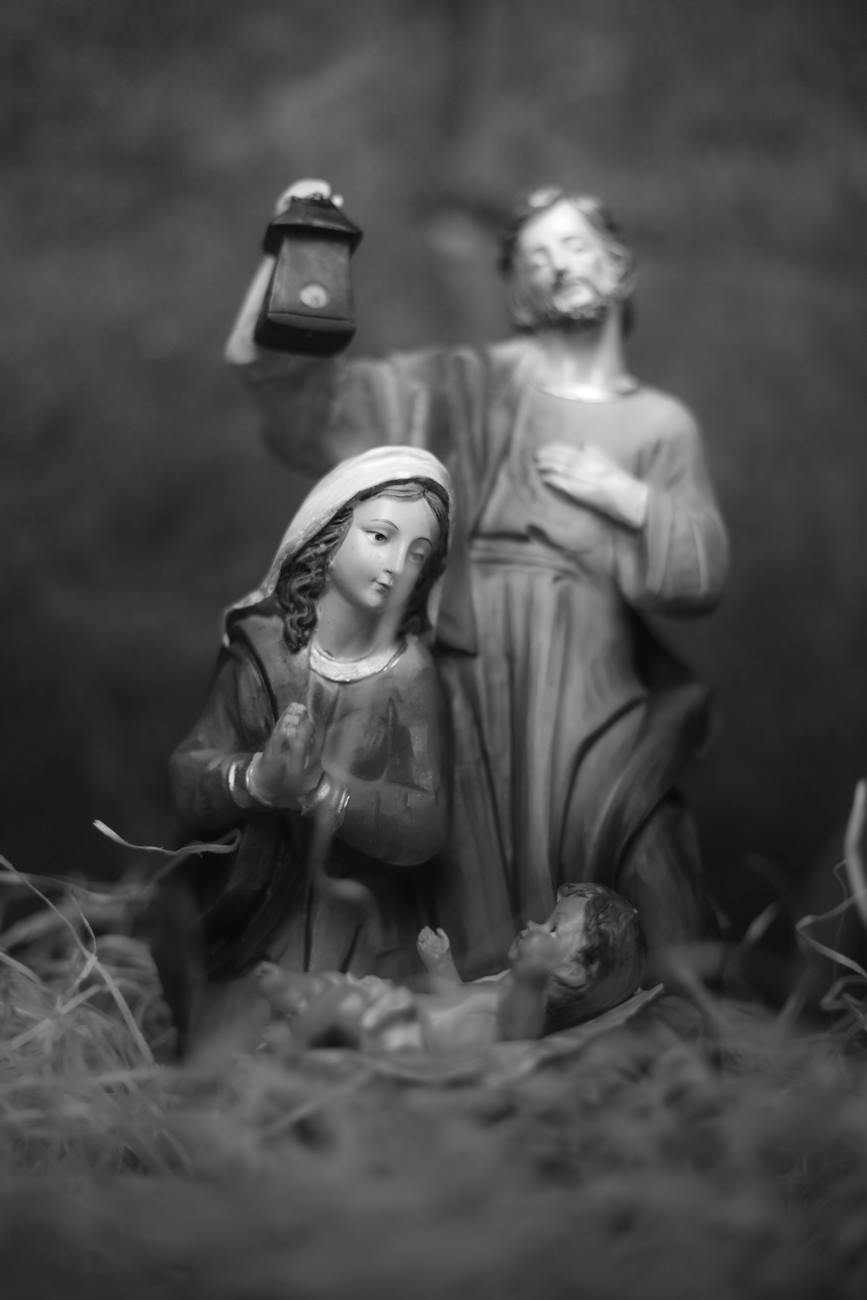
Several people over the years have asked me whether the virgin birth of Jesus is an essential element of the gospel message.
Emergent church leader Rob Bell, for example, asked the question of which parts of the biblical story of Jesus are essential to believe in order to be saved. He specifically questioned the necessity of belief in the virgin birth.
Additionally, this week I came across a discussion online of people arguing that instead of the original lyrics to the hymn Hark! The Herald Angels Sing, the line “offspring of the virgin’s womb” should be changed to “offspring of Mary’s womb.” The reason for this, they said, was that not saying Mary’s name, but instead identifying her according to her sexual status, takes away from her dignity. Therefore, we should say her name, and get rid of this “unnecessary” controversy regarding the virgin birth.
So, is the virgin birth essential to the gospel?
I believe it is. In this video, I explain the reasons why:
Recently at White Fields Church, we studied the Epistle of Jude, which contains a phrase which is also used in elsewhere the Bible: “Praying in the Holy Spirit”.
In this Sermon Extra video, Pastor Michael Payne and I discuss whether praying in the Spirit is the same thing as speaking in tongues, what speaking in tongues is, and what it means to pray in the Spirit.





 Theology for the People