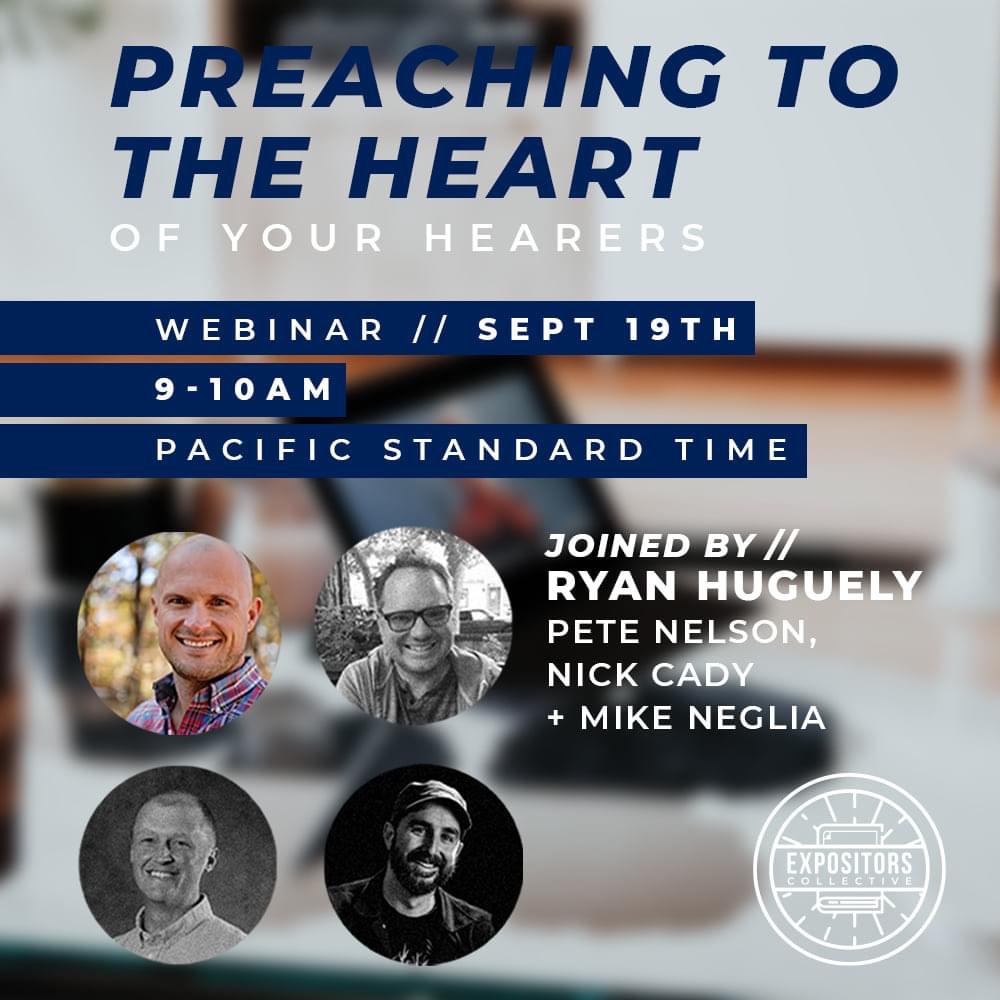
Men, join me September 11-12, 2020 in Cheyenne, Wyoming for a men’s conference. I will be teaching two messages from the life of Gideon in the Book of Judges.
Details about the conference are in the image below:

Men, join me September 11-12, 2020 in Cheyenne, Wyoming for a men’s conference. I will be teaching two messages from the life of Gideon in the Book of Judges.
Details about the conference are in the image below:


Looking for some light reading? How about an audio book for your next leisurely drive? This might not be it. If you’re looking for a short but extremely thoughtful book with intensely helpful cultural insights, then here you go:
I have been a fan of James K.A. Smith for several years now, and I recently read his book, How (Not) to Be Secular, which is a summary and study guide of Charles Taylor’s book, A Secular Age.
Smith’s purpose in writing a book about a book is that A Secular Age is both intimidating in its size and is written in a way which is inaccessible to many readers who would benefit from its content. I for one, though I am intrigued by Taylor’s book and its analysis of modern secular culture, balked at the 900+ page tome.
Smith’s book introduces you to Taylor’s key concepts and arguments, as well as some of his key terms, such as his analysis of the secular mindset as the “imminent frame.” This reminded me of a conversation I had with a relative years ago, who is my same age (an older millennial); when we started talking about the existence of God, she said, “Maybe God does exist, but: who cares?”
The imminent frame is only concerned with what is right in front of them, “the here and now”, and yet, Taylor explains that exclusive humanists who inhabit the imminent frame are “haunted by transcendence.” Smith points this out by quoting lyrics from The Postal Service:
And I’m looking through the glass
The Postal Service, “We Will Become Silhouettes”
Where the light bends at the cracks
And I’m screaming at the top of my lungs
Pretending the echoes belong to someone
Someone I used to know
Basically, no matter how much a person claims to not care whether God exists, or there is life after death, they are haunted by thoughts of it. I remember another family member describing how utterly terrified she was of dying, yet when I asked her what she believed about life after death, she said she doesn’t know, and assumes there is nothing. I don’t believe her: why be afraid of nothing? There is a nagging, haunting hunch in the heart and mind of every person, that there is something more than this life and this world… A God to whom they will answer, an existence beyond the grave.
Another aspect of the secular, exclusive humanism is the concept Taylor called “the buffered self”, which refers to the idea that an individual is an island unto themselves: that there is a firm boundary between the self and others, as opposed to the “porous self” which characterized people in previous eras.
James K.A. Smith’s book is not just a summary though, he also applies many of Taylor’s ideas to Christianity: both how Christianity contributed to and is influenced by this modern secular age.
I first listened to half of this book via audiobook on a drive to climb La Plata Peak, a Colorado 14-er. Later on, I picked up a hard copy to read as well, as there are some parts of the book which aren’t particularly well-suited for digesting properly listening at 1.5 speed while driving at dawn through the mountains.
One phrase Smith used, which my friend who was listening with me in the car ended up discussing for a while afterwards was: Epistemic Pelagianism. It’s the kind of phrase that forces you to hit the pause button and break it down in order to unpack what these two words together mean.
“Epistemic Pelagianism” therefore refers to the idea that as human beings, we are capable of figuring everything out by ourselves, without any help from God.
Epistemic pelagianism denies the fact that we don’t see everything clearly. It denies the idea that, apart from God’s intervention in our lives, we are fallen, limited beings whose hearts are not pure. It places far to much confidence, to the point of hubris, in our ability to accurately discern and interpret the data we take in, in a way that can lead us to all truth, apart from any intervention or help from God.
Rather than epistemic pelagianism, the Bible teaches us that without God’s help, we cannot see clearly, and are incapable of objectively assessing and interpreting things. We need God to remove the blinders from our eyes, in order for us to see clearly.
This biblical epistemology leads us to humility rather than hubris; it leads us to the conclusion that we can’t see or know everything, that we can be wrong.
The Bible teaches that we only see in part, as in a mirror dimly (1 Corinthians 13:12), that a natural person is incapable of comprehending all truth apart (1 Corinthians 1:14), that our hearts are fundamentally broken and have a tendency to mislead us (Jeremiah 17:9), and therefore it is possible to hear and not understand, to see and not perceive (Acts 28:26).
There are things that we can know (Romans 1:19), but even in those cases we have a tendency to suppress that knowledge if we don’t like the conclusions it would lead to (Romans 1:18)
Thus, confidence in our ability, or willingness for that matter, to comprehend and follow the truth, apart from God’s intervention, is misguided. Instead, we need to take a more realistic and humble view of ourselves, which admits that we need outside assistance in order to receive, comprehend, and appropriately respond to the truth.
Ultimately, we see that theology shapes the way you view all of life. Modern exclusive secularism is based, at least in some part, on bad theology which is clearly refuted in the Bible. Good, robust, comprehensive Biblical theology therefore, is an antidote to many modern philosophical pitfalls.
If you’re looking for an accessible book that helps you understand Charles Taylor’s piercing insights into the exclusive humanism which is prevalent in many of today’s Western cities, as well as the cracks in those theories, and ways in which the gospel uniquely speaks to people today, check out James K.A. Smith’s book How (Not) to Be Secular, but make sure to take the time to break down and digest each sentence.

Every summer Calvary Chapel puts on a conference for pastors and ministry leaders in Southern California. This year the conference has been moved online because of COVID, but one of the benefits is that this opens up the opportunity for those who can’t easily take a week off and travel to California to be able to join and be encouraged.
This year’s conference will be August 10-13, 2020. The cost is $10, which gives you access to all of the bonus content, including a seminar I was part of with Expositors Collective on the topic of expository and Christ-centered preaching and teaching.
We are using a platform for the conference which allows a lot of interaction as well as multiple “rooms” you can join during the conference for different seminars on topics those in ministry will surely find helpful and interesting for the areas where you lead.
Click this link for more information and to register: https://conference.calvarychapel.com
A friend mine recently walked away from his family and the church he was leading. This friend had graduated from Bible College and had dedicated his life to serving the Lord. Thankfully, his story isn’t over yet.
Here’s the thing about my friend though: as he has made these choices, and as he walking this path which is destructive both to his family and his own soul, he has not ceased believing that the core truths of Christianity are true.
In other words: it is possible to believe the right things, and yet not do the right things.
In 1 Kings 18, we see an example of this with both King Ahab and the people of Israel. They knew what God wanted them to do, yet they didn’t do it. Why not? There were several reasons, including fear and pride, but underlying these things is a question about what you truly love and desire.
You can watch or listen here to my message on 1 Kings 18:1-21: “The Cure for Your Limp”.
I have enjoyed the insights of James K.A. Smith over the past few years, particularly his books Desiring the Kingdom and You are What You Love. Smith is particularly influenced by Augustine of Hippo, the church father who wrote Confessions, City of God, and On Christian Doctrine to name a few of his works.
Augustine argued that the things which defines a person more than anything else, is not merely what they believe to be true (as important as this certainly is), but what they love and desire. Sin, he explained, can be understood as “disordered love,” and the way to change a person, therefore, is to change what they love.
The good news, is that you can cultivate love and desire for things through the practice of forming habits and doing actions. This is the role of spiritual disciplines in our lives. See: The Role of Habits in Transformation.
In this video, Mike and I discuss this and other ideas related to the importance of desires, not just beliefs, in our spiritual life and walk with God:
My friend Nate Morris is the pastor of a great church: Mountain Life Calvary Chapel, which has campuses in Edwards and Carbondale, Colorado, serving the communities of the Vail Valley and the Roaring Fork Valley.
Recently Nate started a podcast: the New Day Podcast, which aims, in his words, “to talk about the topics which you shouldn’t talk about around the dinner table,” such as religion, race, politics, and so on.
I was honored to be a guest on his podcast; you can check out our discussion here: Special Guest: Pastor Nick Cady – A Biblical discussion of current politics and where our true citizenship lies.
In the episode, we talk about how my decade as a missionary in Hungary has affected my views on politics, as well as my concerns and hopes for the church in our current political and social situation.
Check it out the episode and leave a comment on this post with your thoughts and reactions, and make sure to subscribe to the New Day Podcast with Pastor Nate Morris!

A few months ago, on a long car ride, a friend asked me an honest question: “If there is no pain in Heaven, how can there really be joy?”
He went on to explain how all of his deepest joys in this life have, in some way, included pain. Whether it was love, faithfulness, or comfort set upon a backdrop of heartache or suffering, or whether it was a great obstacle which was overcome, it seems – he said – that in order to have great joy, there must be some sort of pain involved.
At first, this might sound like a strange question; after all, who wants pain? Wouldn’t the absence of pain equal joy? Isn’t the great hope of Heaven the absence of pain?
But on further examination, it seems there may be something to my friend’s question.
I have friends who live in Southern California, where the weather is “perfect.” Year-round temperatures are mild. It’s dry, but not too dry. There’s an abundance of sunshine. Several times I have flown out of Denver in the snow, to arrive in SoCal to beautiful, warm, sunny weather – no matter what month of the year.
But that’s exactly it: the weather is the same all year long. It’s great – but there’s no variation. There’s no opportunity to wear coats, or layer up. They don’t experience four seasons.
It’s like playing a single note on the piano: it might be a wonderful note, but if there’s no variation, even the best note gets old…
Will Heaven be the same way: a single note on the piano? Even if it is the most beautiful, good, glorious note that has ever existed, won’t that single note get old after some time – much less for eternity? How will we appreciate goodness, if there is nothing bad to cause us to appreciate the good? Can there really be joy apart from pain?
Recently I’ve been climbing some of Colorado’s highest mountains. My goal is to climb all 54 of Colorado’s 14ers: peaks over 14,000 feet (4267 meters) above sea level. Every climb is difficult. It saps your energy. You end up hurting and tired. It takes days to recover. And yet, there is something great about it, something addictive and enjoyable – despite the pain.

This year I’m working on running 1000 miles by the end of the calendar year. Oftentimes when I head out the door I tell my wife, “I hate running.” It makes my heart beat out of my chest. I sweat. I breathe hard. It hurts. I can’t wear sandals because I have several missing toenails. And yet, I actually love running – just not when I’m walking out the door.
Whether it’s climbing mountains or running, or something you voluntarily do which involves choosing pain, the pain of those activities is not the result of the curse of sin and death.
The gospel, the core message of the Bible, is that the world, and all of us in it, have been corrupted by the curse of sin. This curse affects all of creation, and it affects us in myriad ways: physically, mentally, and spiritually. This curse is the cause of sickness, disorders, and death. It affects our very nature, to our ability to comprehend, to our ability to do what is right. It is what is at the root of racism, hatred, pride, and malice of all sorts. And the good news of the gospel, is that Jesus Christ came and took this curse upon Himself in order to put it to death and set us free from it.
The promise of the gospel is that the day is indeed coming when, because of what Jesus did, those who have received His grace by faith will dwell eternally with God, and “He will wipe away every tear from their eyes, and death shall be no more, neither shall there be mourning, nor crying, nor pain anymore, for the former things have passed away.” (Revelation 21:3-4)
Heaven is described as a garden city where we will dwell on a “new Earth.” In this city, we see the restoration of Eden from Genesis 1-3: the garden paradise God created for the people He made. In this New Jerusalem we will be reunited with the Tree of Life (Genesis 2:9, Revelation 22:2), which gives healing and life forever.
The New Jerusalem that awaits us, AKA Heaven, is not only the restoration of Eden, but the fulfillment of what Eden would have been if sin had never entered the world!
And here’s what is interesting: In Eden – God gave his people work to do! What this tells us, is that Heaven will not be an ethereal experience of floating on clouds, bored out of our minds for eternity, but it will be a tangible, physical place – a new Earth, but without sin and its curse!
In other words, we can expect that Heaven will be full of meaningful, fulfilling work, as well as opportunities for adventure and discovery.
I expect there will be hikes and games that make your legs burn! Physical work and activities which push your muscles to their limits. Yes: pain – but the kind of pain which is not the result of sin, rather that which accentuates and enables greater joy!
The ultimate joy of Heaven will be the immediate presence of the Lord. He will be our light! And the joys of this world are but a foretaste, a faint whiff of what is to come! Maranatha!
I had the opportunity this week to write for an online devotional called It Is Well – follow them on Instagram or Facebook.
My post was a shortened version of my message this past Sunday at White Fields from 1 Kings 17. Click here to listen to or watch that whole message.

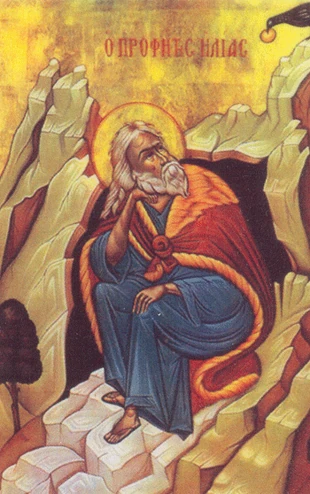
Elijah was called by God to pray that it would not rain. This was a direct challenge to the pagan god Baal, who was thought to be the god of rain – a resource as valuable as gold in the arid Middle East.
•
James 5:17 tells us that Elijah’s prayers were used by God to cause the drought, during which Elijah hung out at the brook Cherith, which provided him with water to drink (1 Kings 17:5).
•
But, after a while, the lack of rain caused the brook Cherith dried up (1 Kings 17:7).
•
So here is Elijah, doing what God called him to do: praying that it won’t rain. But by doing what God called him to do, the same prayers which brought God glory against Baal, also caused Elijah’s own resource, which he needed to survive, to dry up.
•
Similarly, there may be times when God calls you to do something, and the very act of obeying God may result in your financial resources drying up, or in your popularity to drying up.
•
I wonder if Elijah was ever tempted to stop doing what God called him to do, out of fear that his resources would run out if he kept doing it? Are you?
•
“For the eyes of the LORD roam throughout the earth to show himself strong for those who are wholeheartedly devoted to him.” (2 Chronicles 16:9 CSB)
•
Faith means: trusting God enough to do what He says. When you do, that is when you see God’s power and experience the evidence of His strength at work in your life.
•
Elijah experienced just that: as he continued to do what God called him to do, rather than dying of dehydration, God provided for him through a widow in Zaraphath. The widow herself was broke and hungry, having only enough oil and flour for one meal…but as she trusted God enough to do what He said, she experienced God’s power at work in her life, and her jars were never empty.
•
God has shown himself strong on your behalf in Jesus: “When we were weak, at just the right time, Christ died for sinners” (Romans 5:6). Therefore you can be sure that he will show Himself strong on your behalf whenever you trust Him enough to do what He says.

Here on the site there is a feature where you can Ask a Question or Suggest a Topic.
This question recently came in:
In John 1:51, Jesus told Nathanael that he would see heaven opened and the angels of God ascending and descending on the Son of Man. Was this ever fulfilled? If so, when?
That’s a good question, and there’s a great answer!
The passage you’re referring to is in the first chapter of John’s Gospel, where we read about Jesus calling his first disciples. Jesus called Philip, and then Philip went and told his friend Nathanael that “We have found him of whom Moses in the Law and also the prophets wrote, Jesus of Nazareth, the son of Joseph.” Nathanael was skeptical that the Messiah could be from Nazareth, to which Philip invited Nathanael to come and meet Jesus to see for himself.
When Jesus saw Nathanael coming towards him, he greeted him in a way that implied that Jesus already knew him. When Nathanael asked how Jesus already knew him, Jesus replied: “Before Philip called you, when you were under the fig tree, I saw you.”
Some scholars say that it was traditional for Jewish people to sit under a fig tree to read the Scriptures, but whatever happened with Nathanael under the fig tree must have been something so personal, and so private that Nathaniel was sure no one could have possibly seen or heard him. The fact that Jesus knew about it was enough to convince Nathaniel right there on the spot that Jesus was indeed the Messiah, and he immediately responded by saying: “Rabbi, you are the Son of God! You are the King of Israel!”
This brings us to the text in question.
Jesus answered him, “Because I said to you, ‘I saw you under the fig tree,’ do you believe? You will see greater things than these.”
And he said to him, “Truly, truly, I say to you, you will see heaven opened, and the angels of God ascending and descending on the Son of Man.”
John 1:50-51
If you look for a story in the gospels in which this happened, you won’t find one. The closest events you will find to this are:
However, while these examples include the heavens being opened, none of them include angels, much less Nathanael or anyone else seeing the angels ascending and descending on Jesus.
No. Rather, to expect this to be the promise of a literal vision of angels is to misunderstand what Jesus is saying, which is actually more significant than promising a vision of angels.
When Jesus tells Nathanael that he will see “the heavens opened and the angels of God ascending and descending on the Son of Man, Jesus is making reference to a story from the Old Testament.
In Genesis 28, Jacob, the grandson of Abraham, was on the run from his brother Esau, who wanted to kill him. One night while Jacob was sleeping in a field, with a rock for a pillow, God appeared to him in a vision as he slept.
In this vision, Jacob saw the heavens opened up and a ladder, or a bridge, spanning the gap between Heaven and Earth, and “the angels of God were ascending and descending on it” (Genesis 28:12).
You might remember that the people of Babel, in Genesis 11, had tried to “build a tower with its top reaching to the heavens” in order to make a name for themselves and to protect themselves. They had sought to span the gap between Heaven and Earth through their own strength, endeavors, and intellect – and they failed.
What Jacob saw in his vision, was that God alone can span the gap between Heaven and Earth. Whereas we are incapable of reaching Heaven by our own works, God has come down to us from Heaven, in order to lift us up into relationship with Him and eternal life.
If Jacob was in fact reading the Scriptures under the fig tree, could it be that this is the exact passage that Nathanael had been reading, and Jesus was interpreting it for him?
What Jesus was saying to Nathanael in John 1:51 is that HE is Jacob’s ladder! He is the bridge that spans the gap between Heaven and Earth that God pictured to Jacob in that vision! It is in Him that God has come from Heaven to Earth in order to do for us what we cannot do for ourselves: to lift us up into relationship with Him and give us eternal life.
Jesus is saying that He has come not just to point the way to Heaven, but to be the way to Heaven.
Now, you might be tempted to think: If it’s a ladder, that means I must need to climb as high as I can, and if I’m strong enough, and if I’ve got enough stamina to make it all the way, then I can reach God. But that’s not the idea behind this ladder. Listen to what Paul the Apostle has to say in Romans ch 10:
But the righteousness based on faith says, “Do not say in your heart, ‘Who will ascend into heaven?’” (that is, to bring Christ down) “or ‘Who will descend into the abyss?’” (that is, to bring Christ up from the dead). But what does it say? “The word is near you, in your mouth and in your heart” (that is, the word of faith that we proclaim); because, if you confess with your mouth that Jesus is Lord and believe in your heart that God raised him from the dead, you will be saved.
Romans 10:6-9
In other words: the message of the Gospel is not that you have to climb your way up to God, but that God has come down to you! This ladder is not the ladder by which we ascend to God – but rather the ladder by which God has come down to us, to lift us up to Himself.
Jesus is telling Nathanael, and us, in John 1:51 that Jacob’s ladder is a person, and that person is Him! What good news!
If you have any questions or topics you’d like me to address, fill out the form on this page: Ask a Question or Suggest a Topic.
It was the day after Thanksgiving in 2017, and we were in San Diego, where my wife Rosemary is from. The next day, Saturday, we were driving back to Colorado, so I could make it back for church on Sunday, which meant that I had one day to prepare my sermon for that Sunday.
Rosemary and the kids decided to go to the zoo, which gave me 12 hours to prepare. At this point, I usually spent 20-25 hours preparing each sermon, so this was a daunting task.
After they left our AirBnB for the day, I was scrolling Instagram (instead of studying!), and came across a post of someone holding a copy of the book: 8 Hours or Less: Writing Faithful Sermons Faster by Ryan Huguley.
I immediately did the math in my head: If this book could really help me do what the title claimed, then that would give me 3.5 hours to read the book, and 8 hours to write my sermon! I purchased the book on Amazon, read it, wrote my sermon, and made it back to Colorado on time for church that Sunday. That sermon can be found here: 5 Solas: Soli Deo Gloria (Colossians 3:16-24)
Since that time, I have implemented Ryan’s process, and shared about my growth in this area at the Expositors Collective training weekends.
Related post: How Much Time Should a Pastor Spend Preparing a Sermon?
Recently I had the opportunity to chat with Ryan over Zoom about doing ministry in Salt Lake City, his method for sermon preparation, and what advice he has for those who teach and preach.
The recording of that conversation was just released on the Expositors Collective Podcast. You can listen to it here: Expositors Collective Podcast: Writing Faithful Sermons Faster – Ryan Huguley, or click here to listen on Apple Podcasts or Spotify.
Check it out, and I’d love to hear your feedback on in the comments!

The standard joke among foreigners when I lived in Hungary was that Hungarian would be the language of Heaven, because it takes an eternity to learn.
But will there actually be diversity in Heaven? Will racial differences exist for eternity? Or will Heaven be homogenous?
As recent events have highlighted disparities and tensions between ethnic groups in the United States and beyond, one response from Christians has been to point out that the Bible teaches that all people come from one set of common ancestors. Therefore, they say, there is truly only one race: the human race.
In a recent episode of Calvary Live, Pastor Ed Taylor of Calvary Church in Aurora, Colorado spoke with John Moreland of Denver Christian Bible Church, who is an African American man. When Ed asked John his thoughts on the idea that there is really only one race, John said he was not sure if he fully agreed with that.
Why not? Because, while John would not disagree with the fact that all human beings descend from one common set of ancestors, he feels that saying that there is only one race detracts from the importance of racial diversity.
This past Sunday we studied 1 Kings 11 at White Fields – watch or listen to that message here. This chapter talks about how King Solomon married many foreign women, contrary to God’s command that the people of Israel not do that.
However, upon further examination of the Bible, what you realize is that this prohibition against marrying foreign women was about faith, not about race. Several of the female heroes of the Bible were women who were not ethnically Jewish, but they became followers and worshipers of Yahweh, the true and living God: Ruth was from Moab, Rahab was a Canaanite. In Jesus’ family tree in Matthew 1, five women are listed by name, and three of them are of non-Jewish origin.
In fact, if you look at the origin of the Jewish people, they were a nation chosen by God from among the nations. They were a manufactured nation, not created on the basis of a shared ethnicity, but on the basis of a shared faith in God. This is why there are Jews from places like Ethiopia and East Asia who are not ethnically descended from the Middle East, and yet they are full-fledged Jews. Essentially, anyone who wanted to be a follower of Yahweh was welcome, no matter where they were from.
Mike and I discussed this topic in this week’s Sermon Extra video: “Why Did Solomon Marry Foreign Women”
What made the early Christians unique was that, unlike most religions at that time, which were limited to a local ethnic group, Christianity – like Judaism – was a truly multi-ethnic faith. It claimed to the truth for all people everywhere, and it claimed that Jesus was the Savior not of only one group of people, but for the entire world.
This belief came from the Bible itself:
“Let the nations be glad and sing for joy, for you judge the peoples with equity and guide the nations upon earth.”
Psalm 67:4
Although in English we often use the word “nations” to speak of political or geographical entities, i.e. “countries.” The word “nations” in the Bible, however, is the Greek word ἔθνη (ethni, the plural form of ethnos), from which we get the English word: “ethnicity.”
So, the country of Russia, for example, is made up of 185 nations, i.e. ethnic groups. This is why in Canada, the indigenous people groups are called the “First Nations.”
So, what this passage is saying is, “Let all the [ethnicities] be glad,” because God judges all the ethnic groups of the world with equity and guides them.
In the “Great Commission,” Jesus instructed his disciples to preach the gospel to all “nations,” i.e. ethnic groups:
Go therefore and make disciples of all nations, baptizing them in the name of the Father and of the Son and of the Holy Spirit, teaching them to observe all that I have commanded you. And behold, I am with you always, to the end of the age.”
Matthew 28:19-20
In his address to the philosophers on Mars Hill in Athens, Paul the Apostle said:
And he made from one man every nation of mankind to live on all the face of the earth, having determined allotted periods and the boundaries of their dwelling place, that they should seek God, and perhaps feel their way toward him and find him. Yet he is actually not far from each one of us
Acts 17:26-27
Here Paul states that God, in His providence, has determined when and where people would live, with the goal that their setting and situations would drive them to seek Him.
Rather than being opposed to the plan of God, it would seem that diversity is part of God’s design and brings Him glory. In a fallen world, not all aspects of any culture will be good and reflect God’s character and heart, and every culture will have certain idolatries which are common to the people in that culture. Conversely, however, every culture will have some aspects which uniquely reflect God’s goodness and character (common grace), which will differ from the way other cultures reflect those things.
In John’s vision of Heaven in Revelation chapter 7, he writes:
After this I looked, and behold, a great multitude that no one could number, from every nation, from all tribes and peoples and languages, standing before the throne and before the Lamb, clothed in white robes, with palm branches in their hands, and crying out with a loud voice, “Salvation belongs to our God who sits on the throne, and to the Lamb!”
Revelation 7:9-10
John gives three descriptions of the diversity of the people around the throne and before the Lamb: tribes, peoples, and languages. This is an escalating list, which goes from smallest to largest: languages may be used by people of multiple ethnicities, and ethnic groups may contain many tribes.
All three of these designations are present around the throne; thus it seems likely that even with our new “heavenly bodies” (see 1 Corinthians 15:35-49), ethnic diversity seems to be maintained and apparent in Heaven, for eternity.
Whereas divisions and oppression will cease, it seems that diversity will not.
It seems that who you are, because of your ethnic and cultural background, will be maintained for eternity, to bring glory to God. While the negative aspects of a culture will be done away with, the good, God-honoring and glorifying diversity will continue to bring glory to God and enrich others.
As we await that day, may God help us to honor and value ethnic diversity, and glean from one another.