What is the Cross-like Symbol on Hezekiah’s Seal?

Recently at White Fields Church, we have been studying through the Book of Nehemiah (check out the entire series here). This past Sunday, Pastor Jason taught Nehemiah 11-12, and in his message he mentioned, and showed a picture of the “bulla” (seal) of Hezekiah.

As I looked at this picture, I saw on it a familiar symbol: it looks like a cross, but it has an oval on the top.
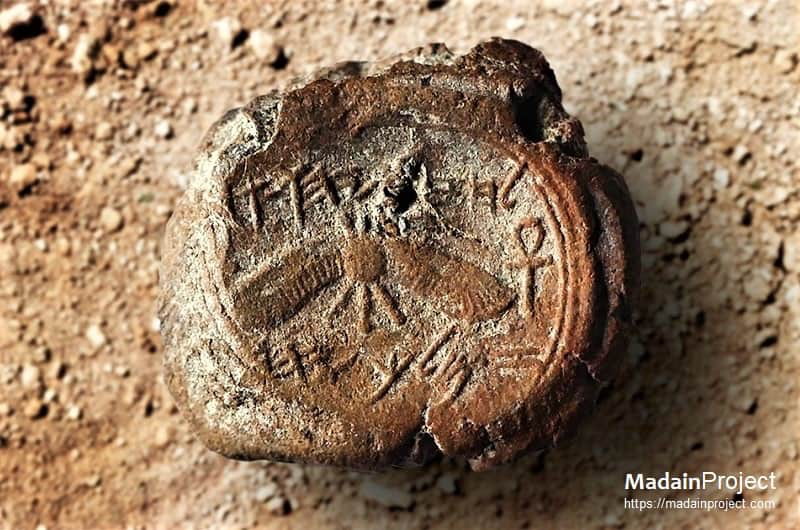
At first glance it might appear to be a version of a cross. However, King Hezekiah lived long before Jesus was born.

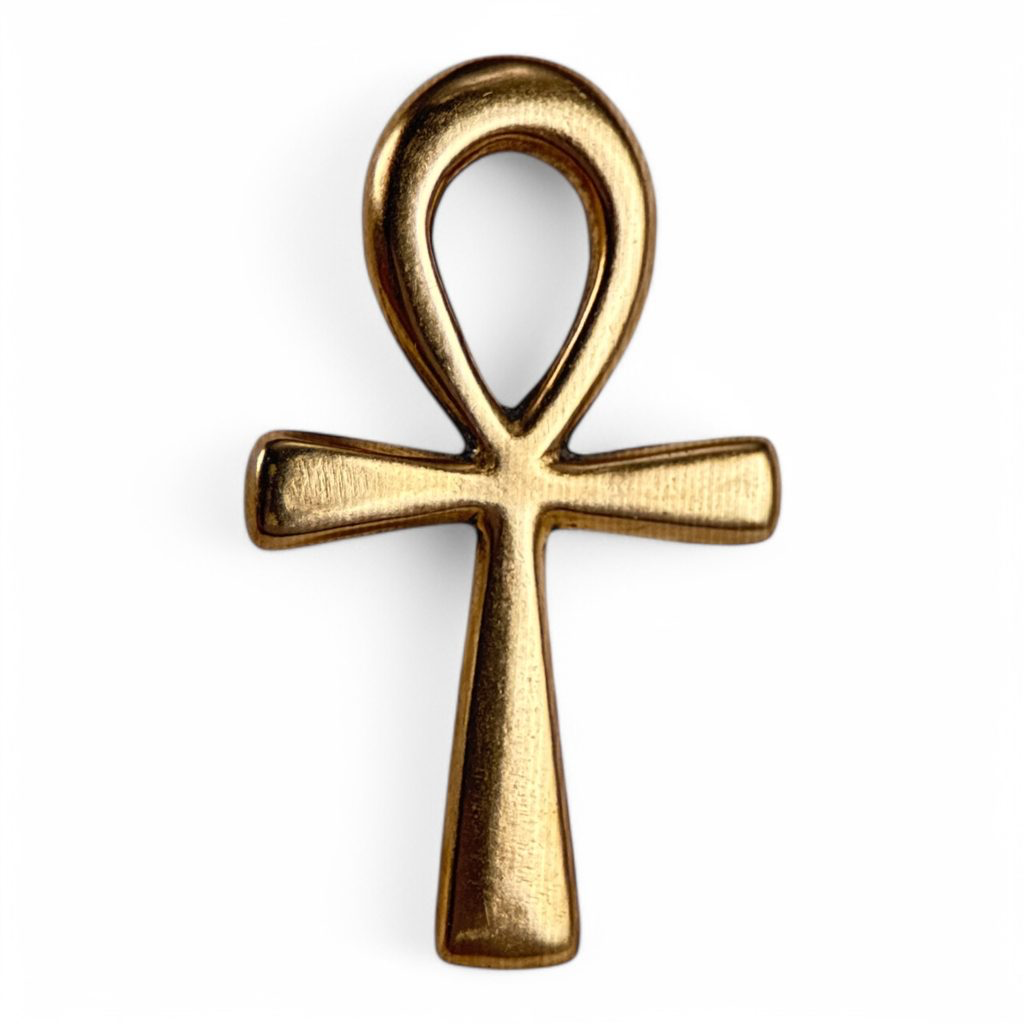
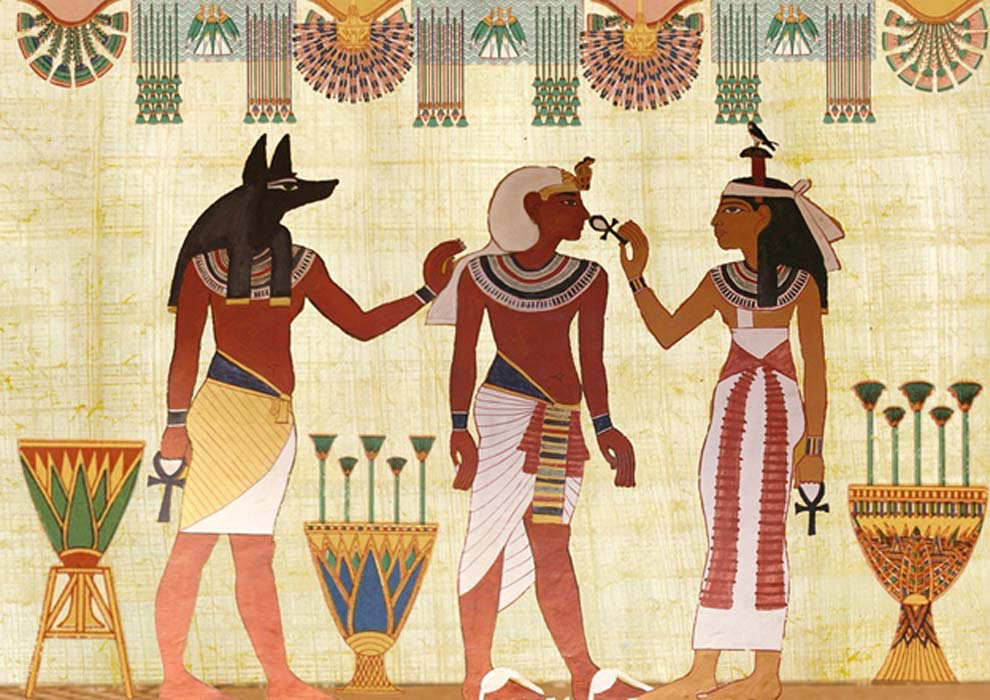
That symbol is not a cross, it is an ancient Egyptian hieroglyph called an “Ankh,” and it represents “life.”
So, you might wonder (as I did): “What is an Egyptian symbol doing on Hezekiah’s seal?”

The Discovery of Hezekiah’s Seal

King Hezekiah’s royal seal, or bulla, was discovered in 2015 near the foot of the Temple Mount in Jerusalem. It bears the inscription, “Belonging to Hezekiah [son of] Ahaz king of Judah,” and features a two-winged sun disk, flanked by an ankh. It is just one more in the long line of archaeological evidence which verifies the historicity of the biblical account.

Hezekiah (2 Kings 18-20, 2 Chronicles 29-32) reigned from about 715–686 BC, and he was one of Judah’s most righteous kings. He is praised for his unwavering devotion to the God of Israel and his radical reforms. He famously tore down the high places, smashed sacred stones, and cut down Asherah poles, all of which were associated with idolatrous worship that had become ingrained in Jewish society. He broke into pieces the bronze snake called “Nehushtan,” which Moses had made, because the people had started worshiping it (2 Kings 18:4).

In light of this, it seems confusing and even perplexing to see an Egyptian symbol, from a pagan culture, on King Hezekiah’s royal seal. How could a king so committed to removing pagan idolatry use an Egyptian emblem to identify himself?

The Ankh: The Egyptian Symbol of Life

The Ankh is one of the most recognizable symbols from ancient Egypt. It is a hieroglyph that translates to “life” and it served as a representation of both physical life on Earth and eternal life in the afterlife.

In Egyptian art, gods and goddesses, like Isis, Osiris, and Ra, were frequently depicted holding the ankh, often offering it to pharaohs as a “breath of life” or a bestowal of divine vitality and immortality. It was carved into temple walls, etched onto sarcophagi, and fashioned into amulets worn for protection and longevity.
Why Is There an Ankh on Hezekiah’s Seal?

We can’t be completely sure why Hezekiah chose to use this symbol on his royal seal, but there are three possible explanations:

1. Maybe the Ankh had changed into a cross-cultural symbol by Hezekiah’s time

By the 8th century BC, when Hezekiah was alive, some scholars say that the ankh had transcended its Egyptian religious context and become a more generalized, “loan-word” symbol for “life” or “good fortune” across the ancient Near East.

There are several examples we can think of today for reference, such as the “heart” symbol, used as a symbol for love. Furthermore, the swastika is an example of a symbol which had its origin in Hinduism, but now is seen as symbolizing the Nazi party and white supremacy. The Star of David is now universally acknowledged as representing the Jewish nation, but prior to its use in that way, it was used as a symbol in Buddhism. [1]

So, the meaning of symbols can change over time, and perhaps by the time of Hezekiah, the ankh may have become a secularized shorthand universally understood to represent vitality, prosperity, and longevity. On Hezekiah’s seal, this might have simply meant something like: “Long live the King.”

2. Maybe It Symbolized Hezekiah’s Miraculous Recovery

One theory suggests that the specific design on Hezekiah’s seal represents the pivotal event that took place towards the end of his life, when he fell mortally ill, but was then healed by God.

It is thought that perhaps the downturned wings of the sun disk and the ankh represent his fatal illness, and then his divine healing and the prolonging of his life. This seal, in that case, would have been used at the end of Hezekiah’s life, after his healing took place.

The story of Hezekiah’s illness and subsequent healing are found in 2 Kings 20 and Isaiah 38. After falling deathly ill, Hezekiah was told by the prophet Isaiah to set his house in order, because he was going to die. Hezekiah prayed, and God heard his plea, and gave him another 15 years of life. Sadly, those extra years were marked by lapses in judgment; during this time, he fathered Manasseh, who would grow up to be the most wicked king in Judah’s history, undoing nearly every godly reform his father had established. Also, when a Babylonian envoy visited, Hezekiah showed them all the all the treasures of the Temple and his kingdom, which led to a prophecy from Isaiah that all those riches, along with Hezekiah’s descendants, would one day be carried off into captivity in Babylon.

Some scholars believe that the two-winged sun disk is a symbol of divine protection, and may have been interpreted as a symbol of “the ‘Sun of Righteousness’ as in Malachi 4:2, which says “But for you who fear my name, the sun of righteousness shall rise with healing in its wings.”

If this is the case, then the ankh would be a symbol of life, as in: a memorial or statement that Hezekiah’s life was prolonged by God’s healing grace.

3. Maybe It Was an Attempt at Political Diplomacy

Other scholars suggest that since the Kingdom of Judah was a small state caught between the mighty empires of Assyria to the north and Egypt to the south, Hezekiah used the ankh symbol as a way to “fit in” on the world stage, or perhaps as a symbol of his alliance with Egypt – and being against Assyria.

Alas, one final option, related to this, is that perhaps Hezekiah’s use of this symbol was indeed a form of religious syncretism, either in a desire to win the favor of the Egyptians, or because he himself had begun to let pagan symbols, practices, or even beliefs creep into his heart.

Conclusion

The truth is, we don’t really know why the ankh was featured on Hezekiah’s seal, but considering the possible reasons for it leads you on a journey through the life of a man who was used greatly by God in his younger years, and who experienced incredible grace in the form of miraculous healing, but whose life ended tragically in unwise decisions that lacked faith in God.

Hezekiah could have heeded the words of the Prophet Isaiah warning him not to do those things and to repent. Hezekiah could have made continuing in and passing on the God-loving values of his younger years for the next generation. May God keep us from syncretism, and from the mistakes and failures of Hezekiah!
The Olivet Discourse: Jesus’ Most Debated Sermon – and Why It Matters

In this episode of the Theology for the People Podcast, I speak with Murray Smith of Christ College in Sydney, Australia about one of Jesus’ most debated teachings: the Olivet Discourse (Mark 13, Matthew 24-25, Luke 21).

Murray gives us his take on the state of evangelical Christianity in Australia, and then we turn to discussing Murray’s recent book: Jesus’ Speech on the Mount of Olives: a 12-Week Study, which is designed to help Christians read this passage with clarity and hope.

Murray lays out the three major interpretive approaches (preterist / futurist / “both-and”), he explains why “full preterism” is outside of orthodox Christian confession, and then he walks us through why he believes Jesus speaks about both the destruction of Jerusalem and the final return of Christ.

Additionally, we discuss:

  • Why this passage is so debated—and yet so important
  • How Jesus’ cosmic “signs” function as accompanying realities of His coming
  • What it means to “be ready” according to the parables in Matthew 24-25
  • Why healthy eschatology produces hope, urgency, discipleship, and mission

Though Murray and I have differences in how we interpret this passage, we both hope that studying it will help believers recover a living, formative, and practical hope in the return of Jesus.

Passages referenced: Mark 13; Matthew 24–25; Luke 21; Daniel 7; 1 Thessalonians 4; 2 Peter 3; Revelation 21–22

Links to my recent messages on the Olivet Discourse:

  1. ⁠The Great Tribulation & the King’s Return⁠
  2. ⁠Living Ready for Jesus’ Return⁠
  3. ⁠How to Prepare for the End of the World⁠
  4. ⁠What to Expect on Judgment Day

Follow Theology for the People on YouTube⁠https://www.youtube.com/@theologyforthepeople

Click here to listen to the episode, or listen in the embedded player below.

The Olivet Discourse: Jesus’ Most Debated Sermon, and Why It Matters – with Murray Smith Theology for the People

In this episode of Theology for the People, Nick Cady speaks with Murray Smith (Christ College, Sydney) to talk about one of Jesus’ most debated teachings: the Olivet Discourse (Mark 13, Matthew 24–25, Luke 21).Murray gives a candid snapshot of the state of evangelical Christianity in Australia, and from there, the conversation turns to Murray’s book Jesus’ Speech on the Mount of Olives, a 12-week study designed to help Christians read this passage with clarity and hope. Murray lays out the three major interpretive approaches (preterist / futurist / “both-and”), he explains why “full preterism” is outside orthodox Christian confession, and then walks us through why he believes Jesus speaks about both the destruction of Jerusalem and the final return of Christ.Nick and Murray also discuss:Why this passage is so debated—and yet so importantHow Jesus’ cosmic “signs” function as accompanying realities of His comingWhat it means to “be ready" according to the parables in Matthew 24–25Why healthy eschatology produces hope, urgency, discipleship, and missionThough Nick and Murray have differences in how they view this passage, they both hope that studying it will help believers recover a living, formative, practical hope in the return of Jesus.Passages referenced: Mark 13; Matthew 24–25; Luke 21; Daniel 7; 1 Thessalonians 4; 2 Peter 3; Revelation 21–22Links to Nick's recent messages on the Olivet Discourse:The Great Tribulation & the King's ReturnLiving Ready for Jesus' ReturnHow to Prepare for the End of the WorldWhat to Expect on Judgment Day

I have recently started posting more on the Theology for the People YouTube channel. You can watch this interview on video here:

Should Christians Practice Lent?

Today is Ash Wednesday, and the first day of Lent: the 40 day period leading up to Easter, which, for some Christians is a time of fasting and contrition.

Several friends recently asked me for my opinion on the practice of Lent. I have written on it previously (see here), but these questions prompted me to create a video in order to launch the sixth season of the Theology for the People Podcast.

What is Lent really about? Should evangelicals practice it? And did you know that the early church celebrated Easter for 40 days?

In this episode of the Theology for the People Podcast, I share about the fascinating history of Lent — from its origins in the early church to its evolution over the centuries. What began as a 40-day preparation for baptism eventually became a widespread season of fasting and penance. But along the way, something was lost: a 40-day season of celebration known as Eastertide.

This episode walks you through:

  • The early church practice of baptism on Easter
  • The rise of catechumens and Lent as preparation
  • The normalization of infant baptism
  • The influence of original sin and Christendom
  • Why Easter was once a 40-day feast of joy
  • Why many Christians emphasize penance but neglect celebration

Whether you observe Lent or not, this episode will challenge you to remember that celebration of what Christ has done for you should take precedence over focusing on what you do for Him.

Subscribe for upcoming episodes on:

  • The Olivet Discourse (Matthew 24–25)
  • Church planting in North Africa
  • The Jewish Seder and how it points to Jesus
  • And more!

Watch this episode here, or listen here or in the embedded player below.

The History of Lent & the Lost Celebration Theology for the People

What is Lent really about? Should evangelicals practice it? And did you know that the early church celebrated Easter for 40 days?In this episode of Theology for the People, Nick Cady explores the fascinating history of Lent — from its origins in the early church to its evolution over the centuries. What began as a 40-day preparation for baptism eventually became a widespread season of fasting and penance. But along the way, something was lost: a 40-day season of celebration known as Eastertide.Nick walks through:The early church practice of baptism on EasterThe rise of catechumens and Lent as preparationThe normalization of infant baptismThe influence of original sin and ChristendomWhy Easter was once a 40-day feast of joyWhy many Christians emphasize penance but neglect celebrationWhether you observe Lent or not, this episode will challenge you to remember that celebration of what Christ has done for you should take precedence over focusing on what you do for Him.📩 Have a theological question? Visit nickcady.org and click “Ask a Question.”Subscribe for upcoming episodes on:The Olivet Discourse (Matthew 24–25)Church planting in North AfricaThe Jewish Seder and how it points to JesusAnd more!

Reader Questions: How Will There Still Be Sin When Satan Is Bound?

There is a page on this site where readers can submit questions or suggest topics. Recently I received the following question:

We know Satan is the author of sin. So if he is bound for a thousand years (Revelation 20), how can sin still remain on the earth?

Great question! It touches on how we understand Satan, the nature of sin, and the condition of the human heart.

The short answer is: Satan tempts us and influences us sin, but human sin is not dependent on Satan, but on something inside of us – and since the fall, sin resides in the human heart.

The ultimate solution to sin is not even the binding of Satan (as good as that will be) — it is our completed and full redemption. What we need are new hearts and complete sanctification.

Revelation 20: Satan Bound for a Thousand Years

In Revelation 20:1-3 it says:

Then I saw an angel coming down from heaven, holding in his hand the key to the bottomless pit and a great chain. And he seized the dragon, that ancient serpent, who is the devil and Satan, and bound him for a thousand years, and threw him into the pit, and shut it and sealed it over him, so that he might not deceive the nations any longer, until the thousand years were ended. After that he must be released for a little while.

In Revelation, John the Apostle is recounting the vision he received from God, in which he was given a preview of the things which were to come in the future.

He goes on to say:

Also I saw the souls of those who had been beheaded for the testimony of Jesus and for the word of God, and those who had not worshiped the beast or its image and had not received its mark on their foreheads or their hands. They came to life and reigned with Christ for a thousand years. The rest of the dead did not come to life until the thousand years were ended. (Revelation 20:4b-5a)

Then, John goes on to say:

And when the thousand years are ended, Satan will be released from his prison and will come out to deceive the nations that are at the four corners of the earth, Gog and Magog, to gather them for battle; their number is like the sand of the sea. (Revelation 20:7-8)

Clearly what is being described is a time when Satan will be bound, and thereby prevented from deceiving the nations. Then, when he is released, he will deceive the nations once again – the result of which will be a rebellion and a multipolar attack on God’s people.

What this shows us is that, although during the thousand years, sin will be restrained by Christ’s rule – the capacity to sin, rebel, and attack will remain within people during that time, only waiting to be “activated” when the opportunity arises.

In other words: the problem of sin is deeper than demonic influence. It is rooted in human nature.

The Fall: When Sin Entered the Human Heart

In Genesis 3, Satan appears as the tempter. He deceives Eve and entices Adam into rebellion. In that sense, he plays a catalytic role. But notice something crucial: Satan does not force Adam and Eve to sin. He tempts them, but they willingly choose rebellion.

After the fall, something fundamental changes in humanity. Sin is no longer merely a possibility; it becomes part of our nature.

Genesis 6:5 describes the condition of humanity before the flood: “The Lord saw that the wickedness of man was great in the earth, and that every intention of the thoughts of his heart was only evil continually.”

Notice where the problem is located: “the thoughts of his heart.”

In other words: Sin is not merely environmental. It is internal.

The prophet Jeremiah later writes: “The heart is deceitful above all things, and desperately sick; who can understand it?” (Jeremiah 17:9)

And Jesus Himself makes this clear: “For from within, out of the heart of man, come evil thoughts, sexual immorality, theft, murder, adultery…” (Mark 7:21–23)

Sin is not just something that is “out there” – it is something that is “in here”: bound up within our very hearts.

Case Study: The Flood

Sometimes people wonder: “What if we could get rid of all the ‘bad people’ in the world, and start over with only ‘believers'”? Well, in Genesis 6-9, we see that that actually happened once! And it didn’t fix the problem of sin.

In Genesis 6–9, we read about the time when God judged the entire world; the unrepentant were destroyed, and only one righteous man and his believing family were spared. And yet, even after this “global reset” sin and evil somehow reemerged! But, how?!

What the story of the Flood shows us, is that sin is not just something that exists in society, or in certain wicked and unbelieving people. Rather, what the flood shows us is that sin resides inside of the human heart, and is even bound up with those of us who sincerely believe.

If sin were merely “out there” — then the flood should have permanently solved the problem. And yet what happens almost immediately after they exit the ark?

  • Noah becomes drunk (Genesis 9:21).
  • Ham dishonors his father.
  • A curse follows.
  • Within a few generations, humanity is united again in rebellion at Babel (Genesis 11).

Sin reemerges. Why? Because Noah and his family were descendants of Adam. The carried a fallen nature within them.

When Noah got on the ark, sin got on the ark with him. The only way to truly eradicate sin from the world, would be to eradicate humanity completely – and yet, that is not something God was willing to do.

This is why Nicholas Wolterstorff famously said, “The tears of God are the meaning of history.” What he was saying is that, the entire reason there has been human history, is because God refused to wipe us out, even though our sins caused Him grief (as it says in Genesis 6:6 that human sin “grieved Him to His heart.” Rather than wiping us out, God chose to suffer the grief caused by us to Him by our sins.

The flood proves that until we are transformed, sin will always resurface.

Satan’s Role: Tempter, Not Ultimate Source of Sin

Scripture calls Satan:

  • “A liar and the father of lies” (John 8:44)
  • The deceiver of the nations (Revelation 20:3)
  • The tempter (Matthew 4:3)

But the Bible never teaches that Satan is the sole originator of every sinful impulse. James makes this clear:

“Each person is tempted when he is lured and enticed by his own desire. Then desire when it has conceived gives birth to sin…” (James 1:14–15)

Notice the order:

  • Temptation connects with our own desire.
  • Desire gives birth to sin.

Satan can tempt. He can deceive. He can influence. But he works with something already present: the fallen human heart and our desire to sin.

Jesus shows us a different way; even though He was tempted (or “tested” – it’s the same word in Greek) in all ways as we are, He did not sin (Hebrews 4:15). When He was tempted in the wilderness after His baptism, Jesus resisted the temptations of the Devil and responded to him with the Word of God (cf. Matthew 4).

If there were no internal corruption (as we see with Jesus), external temptation would have nothing to attach itself to.

Furthermore, God has promised us that He will give us the strength to withstand whatever temptation we face in life, if we rely on His strength and step out in faith and obedience (1 Corinthians 10:13).

Original Sin and the Fallen Nature

The Apostle Paul writes:

“Therefore, just as sin came into the world through one man, and death through sin… so death spread to all men because all sinned.” (Romans 5:12)

Through Adam, sin entered humanity. We have inherited not only guilt, but a corrupted nature inclined toward self-rule rather than submission to God as Lord.

This is why even in ideal conditions, sin resurfaces.

  • Cleansed world after the flood? Sin.
  • Miraculous provision in the wilderness? Sin.
  • Kingdom of Israel under righteous kings? Sin.

And, as we see in Revelation: Millennial Kingdom? Sin will rear its head then too.

The Hope: A New Heart & a Completed Salvation

God promises in Ezekiel 36:26, speaking about the then future time of the Messiah who is to come, and what will happen to His people as a result: “I will give you a new heart, and a new spirit I will put within you.”

That promise is fulfilled in Jesus Christ. In Him we are: forgiven, justified, regenerated, and sealed with the Holy Spirit.

Paul says in 2 Corinthians 5:17: “If anyone is in Christ, he is a new creation.” The ultimate solution to sin is not merely the binding of Satan, it is the redemption of the human heart.

But even then, we still go through a process of sanctification, which will last all of our lives, and only be complete when we see Jesus face-to-face, and are finally “like Him”

Beloved, we are God’s children now, and what we will be has not yet appeared; but we know that when he appears we shall be like him, because we shall see him as he is. (1 John 3:2)

The good news of the gospel is something greater than simply that Satan will be bound – or even that he will ultimately be defeated (which he will! – see Revelation 20:10). The even greater news, is that God is transforming us from glory into greater glory, and that one day, not only will we be set free from the penalty of sin and the power of sin, but we will even be set free from the presence of sin – both from without AND from within!