
What Does It Mean That Jesus Reconciled “All Things” in Heaven and on Earth?

The Young Adults group at White Fields Church is currently studying through Colossians, and this question came up about Colossians 1:20:

Colossians 1:20 says that Jesus reconciled all things to Himself — including things in heaven. What does that mean? Why would things in heaven need reconciliation?

According to John McRay in his commentary on Colossians in the Evangelical Commentary on the Bible, the majority of exegetes today consider Colossians 1:15–20 to be a pre-Pauline hymn that Paul reworked for his own special application. [1]

A Cosmic Savior for a Cosmic Problem

Colossians 1:16 stated that all things were created in, through and for Christ. However, the unity of and harmony of the cosmos was affected by “the fall” and the introduction of sin into the world.

Colossians 1:19–20 says:

“For in him all the fullness of God was pleased to dwell, and through him to reconcile to himself all things, whether on earth or in heaven, making peace by the blood of his cross.”

Paul’s point in this section is to show that Jesus is not only the Savior of human souls, He is the redeemer of all creation.

Genesis 3 describes how sin didn’t only affect individual hearts, it also disrupted the harmony of the entire created order: “Cursed is the ground because of you…thorns and thistles it shall bring forth for you” – Genesis 3:17-28).

Romans 8:19–22 describes how creation itself has been “groaning” and longing for restoration. The world itself is broken, and the scope of Jesus’ redeeming work is as wide as the scope of the damage caused by sin.

It was God’s good pleasure to reconcile all things through Christ.

The Greek word used here, apokatallassō, refers to the act of restoring a relationship to harmony. The purpose of Christ’s work was to bring all things created by Him and for Him into harmonious relationship.

Peter O’Brian explains it like this: “Heaven and earth have been brought back to the order for which God made them. The universe is under its Lord, and cosmic peace has been restored. Reconciliation and making peace (which includes the idea of pacification, i.e. over-throwing evil) are used synonymously to describe the mighty work which Christ achieved in history through his death on the cross as a sacrifice (Rom. 3:25; 1 Cor. 11:25; Eph. 1:7).” [2]

Why “Things in Heaven”?

We might think of heaven as a place untouched by sin. So why does it say that Jesus reconciled “things in heaven”?

Sin in the Heavenly Realm

The Bible tells us that rebellion against God predated sin on earth; sin started in the heavenly realm, with Satan and other fallen angels (cf. Revelation 12:7–9). There was a fracture in the spiritual realm before humanity ever sinned, which is why we see the deceiving serpent in the garden, tempting the first man and woman to follow him in the way of sin.

Hebrews 9:23 talks about “heavenly things” being purified by Christ’s sacrifice. The cosmic order was disrupted by angelic rebellion, and Christ’s victory defeats and expels evil.

Christ’s Work Restores the Order of the Universe

Colossians 1 talks about spiritual powers (“thrones, dominions, rulers, authorities”). Later in the letter, Paul says that Jesus disarmed and triumphed over them (Colossians 2:15). Part of His reconciling work is bringing all spiritual powers back into proper relation to God — whether by willing obedience or final subjugation.

Peter O’Brien explains:

The peace which Christ has brought may be ‘freely accepted, or … compulsorily imposed’ (F. F. Bruce). The principalities and powers over whom God has triumphed (Colossians 2:15) did not gladly surrender to God’s grace. They were ‘pacified’. They continue to exist, opposed to men and women (cf. Rom. 8:38–39), but they cannot finally harm the person who is in Christ and their overthrow in the future is assured (1 Cor. 15:24–28; see on 2:15). [3]

A Hebrew expression for totality

The phrase “in heaven or on earth” may also be seen as a Hebrew way of saying “everything that exists,” like how in Genesis 1:1 it says that “the heavens and the earth.”

What This Verse Does Not Mean

This verse is not teaching “universalism” – the idea that everyone will eventually be saved. Throughout the Bible, and by Jesus Himself, it is clearly stated that some will reject God and face eternal judgment (e.g. Revelation 20; Matthew 25:46).

Again, O’Brien explains:

Further, it cannot be assumed from this verse that all sinful men and women have freely accepted the peace achieved through Christ’s death. Although all things will finally unite to bow in the name of Jesus and to acknowledge him as Lord (Phil. 2:10–11), it is not to be supposed that this will be done gladly by all, and to suggest that v 20 points to a universal reconciliation in which every person will finally enjoy the blessings of salvation is unwarranted. [4]

So “reconciliation” here means the restoration of Christ’s lordship over all, not salvation for all. As it says in Philippians 2:10-11, one day, at the name of Jesus every knee will bow, in heaven and on earth and under the earth, and every tongue will confess that Jesus Christ is Lord, to the glory of God the Father. In other words, every creature will acknowledge Jesus as Lord — either joyfully as Redeemer or reluctantly as Judge.

In Summary

What this means for us is that the gospel has bigger implications than many people often imagine: Jesus didn’t only come to save individual souls — He came to renew the universe.

Through Jesus’ saving work:

  • People are reconciled to God
  • Creation will one day be made new
  • Evil forces are defeated and brought into submission to Jesus
  • Cosmic peace will be achieved under Jesus’ reign

This means that the death and resurrection of Jesus was the turning point for the entire universe.

We now live in the “dawn” (2 Peter 1:19), in which the light of the new day has broken the darkness, and it is only a matter of time until the darkness is dispelled completely.

And if you belong to Jesus through faith in Him, you are already part of the new creation that He is bringing about!

Footnotes

  1. John McRay, “Colossians,” in Evangelical Commentary on the Bible, vol. 3, Baker Reference Library (Grand Rapids, MI: Baker Book House, 1995), 1053.
  2. Peter T. O’Brien, “Colossians,” in New Bible Commentary: 21st Century Edition, ed. D. A. Carson et al., 4th ed. (Leicester, England; Downers Grove, IL: Inter-Varsity Press, 1994), 1267.
  3. Ibid.
  4. Ibid.

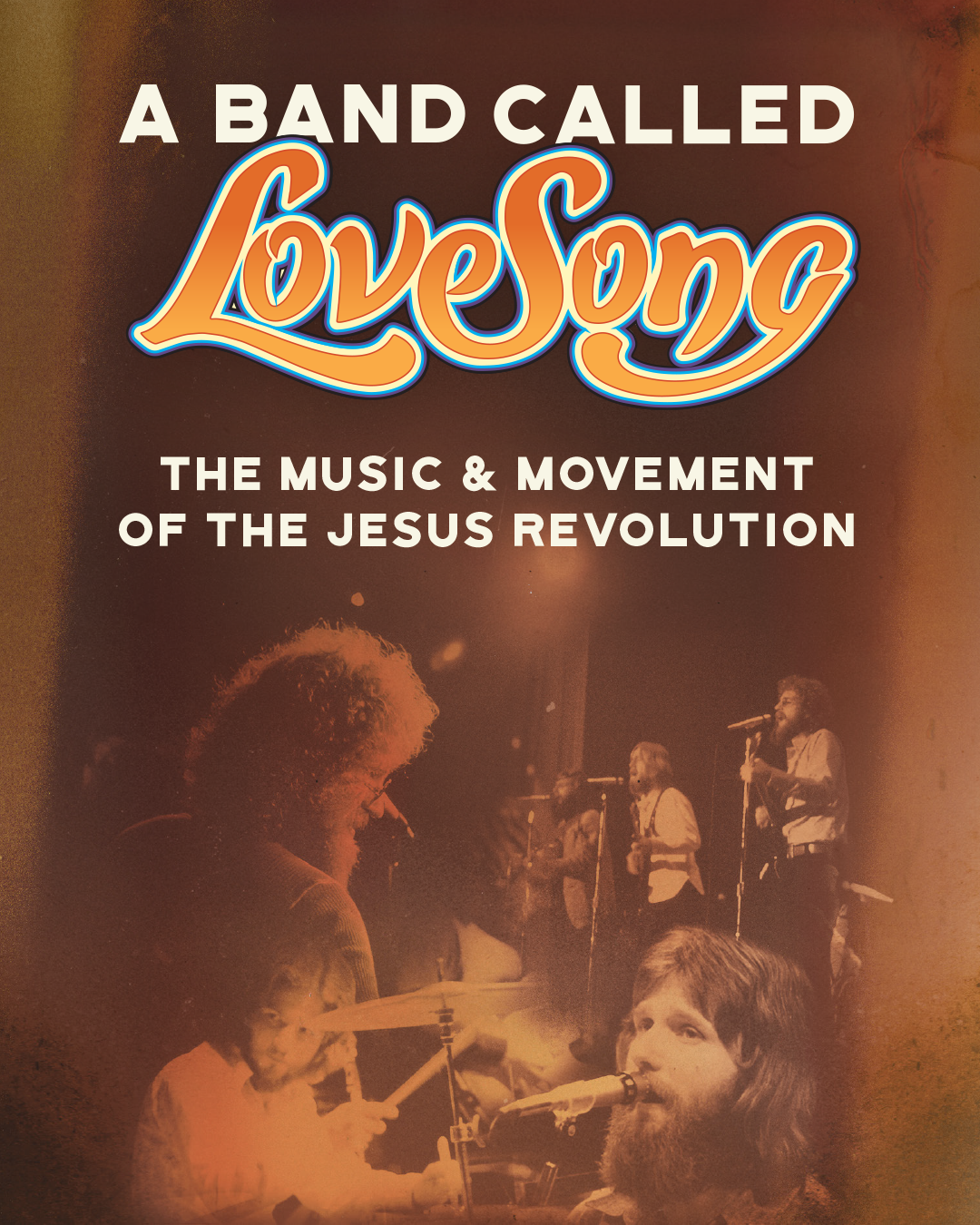
A Band Called LoveSong – Docuseries Out Now

As a young Christian, by God’s providence, I ended up in a church which had been founded as a result of the “Jesus Movement” of the 1960’s and 70’s, which many people have said was the last great revival of our recent times.

My pastor, Tom Stipe, was a big part of the Jesus Movement and the famous stories of “the tent” at Calvary Chapel in Costa Mesa, CA – which was the temporary sanctuary the church used while their new building was being built. During those times, Tom oversaw the Saturday night outreaches with Christian bands, and then he would share the gospel with those who had gathered to hear the bands. Tom went on to found Maranatha! Music before moving to Colorado to plant a church in Boulder, which later moved to Denver – and which I joined early in early 2000.

Recently a new documentary series came out about the music of the Jesus Movement, focused on one of the great bands from the era called LoveSong. The docuseries is out now on Amazon Prime Video and on SalemNOW. You can also find more information about it by visiting the aBandCalledLoveSong.com.

This documentary tells the story of the Jesus Movement through the eyes of the band, including their famous audition with Pastor Chuck Smith, and the birth of Contemporary Christian Music.

This docuseries reflects the essence and identity of the Calvary Chapel movement and the ongoing legacy of its ministry. I recommend that you check it out!

A Timeline of Jesus’ Post-Resurrection Appearances

At White Fields Church, I have been teaching through the Gospel of Matthew [listen to the series here] for almost two years, and this past Sunday we reached the final chapter.

After my sermon on Matthew 28:1-15, someone asked a great question:

“How does Mary Magdalene weeping at the tomb in John 20:11-18 fit with Matthew’s account of the women meeting Jesus on the way in Matthew 28:8-10?”

After looking into it, there’s a simple and satisfying explanation. But also, this question touches on a larger issue, of how the different Gospel accounts fit together. The different Gospel writers give different perspectives which ultimately complement, rather than contradict each other.

The Women Who Went to the Tomb

  • Mary Magdalene (Matthew 28:1, Mark 16:1, Luke 24:10, John 20:1)
  • The other Mary (Matthew 28:1; Mark 15:40; Luke 24:10) — most likely Mary the mother of James and Joseph (also called Joses; cf. Matthew 27:56)
    • This seems to be the same person Mark calls “Mary the mother of James” (Mark 16:1)
    • Some people believe this is Mary the Mother of Jesus, while others believe it’s a separate person.
  • Salome (mother of James and John, the sons of Zebedee) (Mark 16:1)
  • Joanna (wife of Chuza, a steward in Herod’s household) (Luke 24:10, cf. Luke 8:3)
  • Other unnamed women who had followed Jesus from Galilee (Luke 23:55; 24:10)

All four Gospel accounts mention Mary Magdalene. John’s Gospel only mentions Mary Magdalene, not to the exclusion of the other women, but only to focus on her previously undocumented encounter with Jesus at the tomb. The fact that Mary Magdalene was not alone is alluded to by John 20:2, “They have taken the Lord out of the tomb, and we do not know where they have laid him.” The plural “we” indicates she wasn’t alone.

The Women Arrive at the Tomb, but Mary Leaves Immediately

As this group of women arrived at the tomb with spices to anoint Jesus’ body, they saw that the stone had been rolled away. At this point, Mary Magdalene appears to separate from the group and run ahead. Having seen the open tomb, she assumes the worst: that someone has taken the Lord’s body (John 20:2). She runs to tell Peter and John, while the other women remain at the tomb.

The Women Encounter the Angel

Matthew 28:2–7; Mark 16:5–7; Luke 24:4–8: While Mary Magdalene is gone, the other women encounter angels at the tomb. Matthew focuses on one angel, who is sitting on the stone, while Mark and Luke mention two inside the tomb.

The angels proclaim the good news: Jesus has risen, just as He said. The women are told to go and tell the disciples that Jesus is alive and will meet them in Galilee. Shaken by what they had seen, and filled with joy, they rush off from the tomb to share the message with the disciples.

Peter and John Run to the Tomb

John 20:2-10; Luke 24:12: Meanwhile, Mary Magdalene reaches Peter and John with the news that, “They have taken the Lord out of the tomb, and we don’t know where they have laid Him.”

Peter and John sprint to the tomb. John arrives first, looks in, and sees the linen clothes. Peter then arrives; he goes in and notices the face-cloth folded up in a place by itself. This detail indicates that whatever happened in the tomb took place in an orderly manner, rather than a chaotic hurry.

Peter and John realize that something significant has happened, but they don’t yet understand that Jesus has risen. They then head back home (to the place where the disciples were staying in Jerusalem).

Mary Magdalene Weeping at the Tomb

John 20:11-18: Once Peter and John have left, Mary is alone at the tomb. She stands outside the tomb weeping. As she weeps, she stops to look inside the tomb. In the tomb, she sees two angels seated where Jesus’ body had lain. She speaks with the angels, but then turns around and sees Jesus standing there, but does not recognize that it is Him (possibly because of back-lighting, or possibly due to the difference in appearance of Jesus’ resurrection body).

Jesus asks Mary why she is weeping. Mary assumes that he is the gardener, but then Jesus speaks her name: “Mary.” Mary then recognizes that the person speaking to her is Jesus.

Mary embraces Jesus, but He tells her not to cling to Him, but to go and tell his “brothers” (disciples) that He is soon going to ascend to the Father.

It seems that Mary is the first eyewitness of the risen Jesus, and she tells the others that she has seen the Lord.

Jesus Appears to the Other Women

Matthew 28:8-10: As the other women are on the way from the tomb, sent by the angels to tell the disciples, Jesus meets them. The women fall at his feet and worship Him – grasping onto Him.

This likely happened shortly after Mary’s encounter. Jesus tells these women to go and tell the disciples to go to Galilee, promising that they will see Him there.

The Women Report to the Other Disciples

Luke 24:9-11; Mark 16:8-11: The women tell the disciples what they have seen, but their words seem like “an idle tale,” and the disciples are reluctant to believe it.

The Road to Emmaus

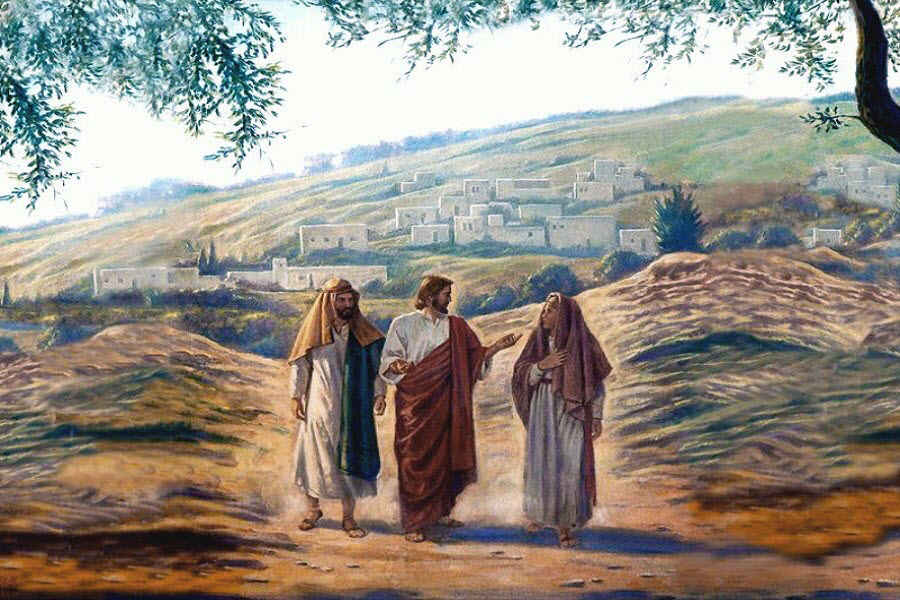
Luke 24:13-35: Later that day, two disciples are walking toward the village of Emmaus, talking about what happened to Jesus and trying to make sense of it. We don’t know who these disciples were, or if they belonged to “the eleven” or were part of the larger group of Jesus’ followers.

Jesus joins them as they walk and engages them in conversation. They explain their confusion: they had thought that Jesus was the Messiah, but when He was captured and killed, they began to doubt. They also mention the report of the women who had been to the tomb, and that they are struggling to know whether to believe it, because despite the women claiming to have seen the angels and Jesus, when the disciples (including Peter and John) went to check it out for themselves, they saw neither Jesus nor angels at the tomb.

Jesus then said to them, 25“O foolish ones, and slow of heart to believe all that the prophets have spoken! 26Was it not necessary that the Christ should suffer these things and enter into his glory?” 27And beginning with Moses and all the Prophets, he interpreted to them in all the Scriptures the things concerning himself. 

When the disciples arrive to their destination, Jesus acts as if He will go on further down the road, but they press Him to eat with them. 30When he was at table with them, he took the bread and blessed and broke it and gave it to them. 31And their eyes were opened, and they recognized him. And he vanished from their sight.

They then rush back to Jerusalem to tell the others.

Jesus Appears to the Disciples Behind Locked Doors in Jerusalem

Luke 24:36–43; John 20:19–23: On the evening of that same day, as the disciples were gathered together behind locked doors, Jesus appeared in the room with them.

Jesus showed them His hands and side. He ate with them. He then breathed on them, imparting the Holy Spirit to them (as promised in John 14:17), and conveyed His mission to them. Despite imparting the Spirit, He also tells them to wait in Jerusalem until they are clothed with power from on high – speaking of the empowerment they would receive on Pentecost (cf. Acts 1:8). Even though the disciples have been called to meet with Jesus in Galilee, they will return to Jerusalem for Jesus’ ascension (40 days after the resurrection) and to wait for this empowerment (received 50 days after the resurrection).

During this meeting, Jesus opened their minds to understand the Scriptures, and explained to them everything written about Him in the Law of Moses, the Prophets, and the Psalms (i.e. the entire Hebrew Bible, AKA “Old Testament”). By doing this, Jesus showed them the hermeneutical key to understanding the Bible; that it is a book about Him.

Thomas was not present on this occasion.

Jesus Appears to the Disciples with Thomas Present

John 20:26-29: Eight days later, apparently in the same location in Jerusalem, Jesus appears to the disciples again, this time with Thomas present.

Jesus calls Thomas to not disbelieve, but believe. Having seen Jesus’ wounds and heard His call to believe, Thomas exclaims a confession of faith in Jesus as “My Lord and my God!”

In Galilee

Matthew 28:16-20: Assumedly after the meeting in Jerusalem where Thomas was present, Jesus’ disciples meet Him on a mountain in Galilee, where the disciples worship Him, and Jesus commissions them to go and make disciples of all nations, baptizing them in the name of the Father, the Son, and Holy Spirit.

John 21:1-23: Jesus meets with the disciples on the shore of the Sea of Galilee, where they share breakfast and Jesus restores Peter to a leadership role after Peter’s denial of Jesus on the night of His arrest.

Other Appearances

In 1 Corinthians 15:5-7 Paul the Apostle lists some other appearances of Jesus, but we aren’t quite sure when or where they took place:

  • A private meeting with Peter (1 Corinthians 15:5)
  • A large group of over 500 people at one time (1 Corinthians 15:6)
  • A meeting with James — likely the half-brother of Jesus, who later became the leader of the Jerusalem church and the author of the Epistle of James – (1 Corinthians 15:7)
  • An appearance to “all the apostles” (apparently a broader group than just “the twelve” (cf. 1 Cor. 15:5)

Conclusion

By harmonizing the Gospel accounts, we get a three-dimensional picture of Jesus’ post-resurrection appearances.

For further study, check out the series of messages I taught a few years ago called “The Resurrected Life” – in which I preached about some of the post-resurrection passages: The Risen Life (2021)

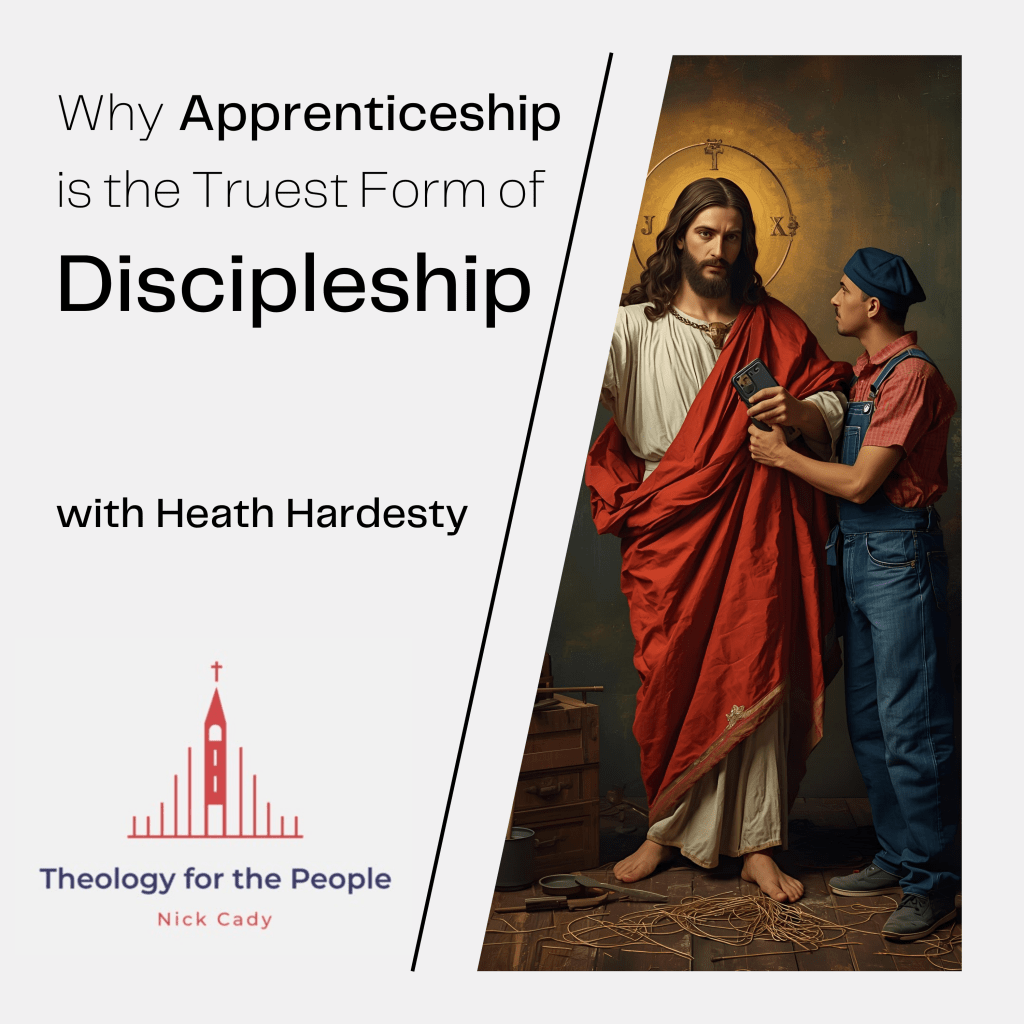
Why Apprenticeship is the Truest Form of Discipleship – with Heath Hardesty

What does it really mean to be an apprentice of Jesus in a fragmented world?

In this episode of the Theology for the People Podcast, Pastor Heath Hardesty shares how his years as an apprentice plumber shaped his vision for discipleship and following Jesus.

Heath is originally from Longmont, Colorado, where I pastor, and he now serves as Lead Pastor of Valley Community Church (VCC) in Pleasanton, California.

Prior to moving to California, when Heath lived in Longmont, he worked as a plumber, training as an apprentice under his father, a master plumber. From his time as a plumbing apprentice, Heath has seen many parallels between apprenticeship and being a disciple of Jesus.

Heath is the author of a new book, which releases October 14, 2025, titled, All Things Together: How Apprenticeship to Jesus Is the Way of Flourishing in a Fragmented World.

In this episode, we discuss:
• Why apprenticeship is a better paradigm for following Jesus than “just” discipleship classes
• The four pillars of apprenticeship: union, abiding, obeying, and imaging
• How sin fragments our lives and how Jesus reintegrates us
• Practical spiritual practices for ordinary Tuesdays
• Why following Jesus is a fully embodied way of life—not just information in our heads

Whether you are feeling spiritually stagnant or longing for a more integrated faith, this conversation will challenge and encourage you.

Follow Theology for the People on YouTube⁠https://www.youtube.com/@theologyforthepeople

Click here to listen to the episode, or listen in the embedded player below.

Why Apprenticeship is the Truest Form of Discipleship – with Heath Hardesty Theology for the People

What does it really mean to be an apprentice of Jesus in a fragmented world? In this episode of Theology for the People, Pastor Heath Hardesty shares how his years as an apprentice plumber shaped his vision for discipleship and following Jesus.Heath is the Lead Pastor of Valley Community Church (VCC) in Pleasanton, California, and the author of the recent book, All Things Together: How Apprenticeship to Jesus Is the Way of Flourishing in a Fragmented World.In this episode, we discuss:Why apprenticeship is a better paradigm for following Jesus than “just” discipleship classesThe four pillars of apprenticeship: union, abiding, obeying, and imagingHow sin fragments our lives and how Jesus reintegrates usPractical spiritual practices for ordinary TuesdaysWhy following Jesus is a fully embodied way of life—not just information in our headsWhether you’re feeling spiritually stagnant or longing for a more integrated faith, this conversation will challenge and encourage you.📖 All Things Together releases October 14 and is available wherever books are sold.

I have recently started posting more on the Theology for the People YouTube channel. You can watch this interview on video here: