Please Turn With Me in Your Phones… – Smart Phones and Tablets in Church

One of the first changes we made to the bulletins at White Fields when we redesigned them last year, was to get rid of a chunk of text which said: “Please turn off cell phones and pagers during service”.  First of all: pagers are only found in museums, so I don’t think we’ll have a big problem with those being on in service, and second: I don’t want people to turn off their phones in church. That’s right – you read that correctly. I don’t want them answering phone calls or sending texts – but I’d say that our technology culture has developed enough of an etiquette by now, that that goes without saying for most people.

Christianity Today published an article last week about a Barna poll which had shown how millennials use technology in their faith life. The title of the article was: “Watch Out, Pastors: Millennials are Fact-Checking Your Sermons”. First, let me say, that I think we make too much of a big deal over the term “Millennial” – to the point that we seem like we are studying a wild animal rather than dealing with individuals. The reality is, that it isn’t only young people who are connected; nowadays, everyone is connected. Some of the most tech-savvy people I know are in their 60’s. This week SNL’s Weekend Update reported on how Facebook’s stock share prices dropped because of a report that less and less teenagers are using the site. ‘”Really? I think Facebook is great” said moms.’ That’s right – moms are all over Facebook, and every other kind of social media. Because being connected to the internet is the new way to be human. And this isn’t just the case in the United States – reports show that the most connected countries in the world are outside of the United States – places like the Philippines. My experiences is that Hungarians are way more connected to Facebook than Americans. The internet, in many ways, serves as a great equalizer.

Being connected to the internet is the new way to be human.

And that brings us back to the point of the internet and church. The article I mentioned above warned pastors against fibbing, because some of the young people in their congregations might be on their phones fact-checking you as you speak. Here’s what I think: If you are fibbing or exaggerating, then you deserve to be found out! How dare anyone stand up and speak in God’s name and use half-truths and lies or non-credible information to bolster a point they are trying to make? That is an utter lack of respect for God and for the people you minister to. If you are going to teach something, then it better be true!

Pastors: If you are fibbing or exaggerating in your sermons, you deserve to be found out!

For example: earlier today, my cousin, who recently declared himself an outspoken atheist, jumped into a conversation I was having about something my son said about Jesus’ crucifixion, to ask if there are any non-Christian credible sources from antiquity that spoke of Jesus as a historical figure and a man who performed miracles. I was able to immediately send him an article which contained a collection of those writings, which he obviously assumed did not exist. Here’s the point: I am not afraid of the truth – because if what I believe is not true, then I don’t want to believe it!  And if what I believe is true, then I don’t need to be afraid of people investigating its veracity.

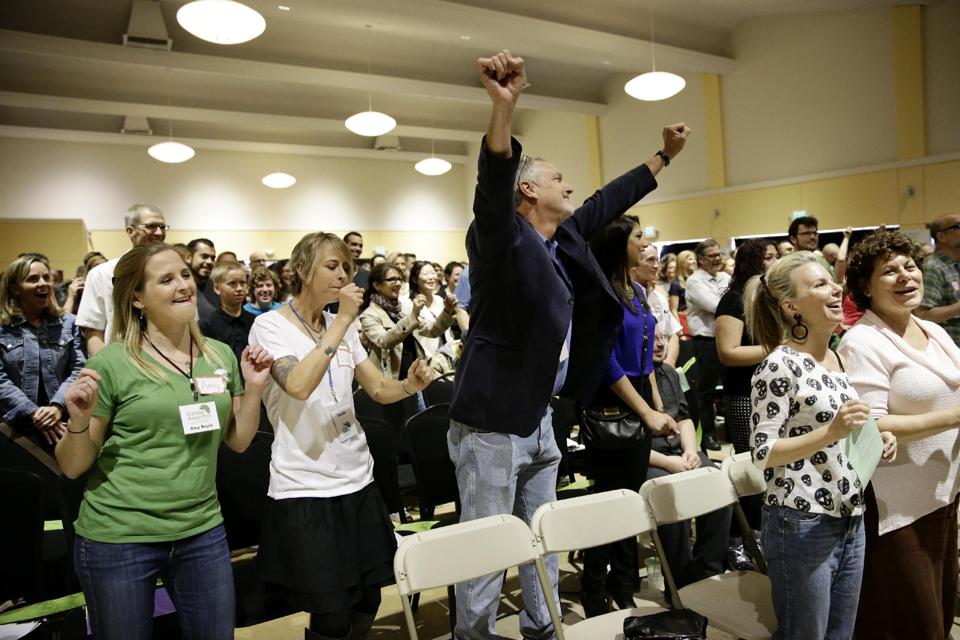
So here’s what I say: I WANT you to use your phone during my sermon! Don’t be texting people, don’t be surfing the web – be engaging and connecting with what we’re studying.  I WANT you to be posting to Facebook during my sermons; I WANT you to be tweeting – as long as you are posting and tweeting as a form of engagement. I love it when I come home from church on a Sunday afternoon, and I see that members of our church were tweeting out or Facebooking quotes from my sermon during the message!  That means that the words of my sermon will have a greater reach than they would have otherwise, because they get sent out to hundreds of thousands of people on those social networks.

For over two years now, I have preached from a tablet rather than printed out notes. At White Fields I don’t have a pulpit – I have a mic stand with an iKlip on it. On my iPad I have about 10 versions of the Bible available at my fingertips, and I read from them as I teach. For this reason, for quite a while, I didn’t bring a Bible with me up to the “pulpit” – since I would read the scriptures off of my iPad. Recently though, I did take an old-school paper Bible up with me and read from it, and I got comments right away about how people were happy to see that. So, ever since, I’ve started doing that again. I’ve also started carrying a paper Bible with me to counseling and discipleship meetings, whereas I previously only took my iPad and read scriptures from it. The reason I’ve made this change is because I realize the incredible symbolic value of the Bible as a book. Everyone carries an iPad or a smart phone, but not everyone carries a Bible. When I read my Bible in a coffee shop, people know what I’m reading – whereas they don’t when I read from an iPad.

What about you?  Do you read the Bible on your phone or tablet at church? Do you engage with the sermon while it’s being preached?

The danger of it of course is that if someone lacks self-control, they could easily be distracted from the sermon rather than engage with it on their device.

What do you think? How do we leverage getting greater engagement via smart phones and tablets without people getting distracted  by them? Is it possible?  Leave me a comment below about your experience.

The Cost of Community

“If you love deeply you're going to get hurt badly. But it's still worth it.” – CS Lewis

One of the things that my wife and I liked about Longmont when we were first moving here last year was that it wasn't a suburb of Denver or Boulder, but a stand-alone community. Whenever possible we choose to spend our money at local businesses and restaurants rather than at chains. Last year we had some friends visiting from California, and we took them out to eat on a Saturday night in downtown Longmont, where we walked around for a while trying to find a place to eat where we wouldn't have to wait an hour for to be seated. At one point this friend of ours asked us, “Don't you guys have any chain restaurants around here? I haven't seen any!” I think people in this area pride themselves on supporting the local community. That's why people here love Oscar Blues and Left Hand Brewing, because they are local businesses that love this community and pour back out into it. 'Community' is an increasingly popular concept all over America – just as it is here in Longmont. Its a good thing to be a local and to be a part of your community – which means knowing and being known, it means relationships and mutual support.

And community is at the heart of Christianity. The whole of the Bible centers not around isolated individuals who know God, but around families and nations – people living out a relationship with God in community. What we learn from the Bible is that community is essential to growing in the knowledge of God and living out your faith. The radically individualistic American culture has tried to take Christianity and make it into a private, personal thing that you can do on your own without any ties to anyone but God – but that's not what it was ever meant to be.

There has been an increasing resurgence of value for community in Christian circles in recent decades – with lots of books being written on the topic and books like Bonhoeffer's “Life Together” becoming popular. But the thing is: when you actually do it, you realize that there's a cost to community. And the reason there's a cost is because real life is messy and people are imperfect. So if you get close to people and you really, actually “do life” with them, and enter into their lives and allow them to enter in to the reality of your life, sooner or later you are going to see their mess and they will see yours. It's a lot easier and cleaner to keep people at arm's-length, and keep relationships superficial. That's what social media is great at: we are able to always put our best face forward and only show people what we want them to see about us. But that's not reality and that's not real community. In fact, neither is simply knowing your neighbors and shopping at the local store and gardening at the community garden.

The word the Bible uses is the über-Christianese word “fellowship”, but the original Greek word for it is super rich: Koinonea, which means 'sharing' or 'having in common' – the root word of 'community'. It says in Acts 2 that the early Christians had all things in common. They were dedicated to fellowship and they met in the temple daily and then met in each other's homes and ate together. This is the life of a community. Knowing and being known. Sharing and partaking. Life together.

And life together can be a rich and fulfilling experience – but the flip-side of that is that there is risk involved. Any time you choose to share your life with someone and get close to them and love them, you make yourself vulnerable – vulnerable to the pain of losing that relationship, vulnerable to the hurt of being betrayed by that person, which, the closer they are to you, the more it hurts. You make yourself vulnerable to their junk affecting your life and messing it up.

If true community has a cost and risk involved, then the question is: is it worth it? Why not just isolate yourself, keep your relationships superficial and your life private? You can still know your neighbors and shop local, but you don't have to get involved in other peoples lives nor will they get close enough to hurt you or cause you grief. The reason is, because the more you love, the greater your capacity for joy. It also increases your vulnerability to be hurt, but you can't get great returns without taking great risk. It's like having a child; there is a great amount of risk involved: your kids could turn out to be terrible people who hate your guts and ruin the world. But if you never take that chance, you'll never experience the depths of joy that kids can bring. Or like marriage: that one's a huge risk statistically! If you get married, there's a huge chance you could go through a painful and expensive divorce. But if you don't get married out of fear of those things, you will miss out on the depths of intimacy and fulfillment and joy that marriage can bring.

So, here's my 2 cents: let's not just like the idea of community – let's actually live life together. You'll be richer for it. Because those other people have something to give to you and to receive from you. There is a cost to community, and it can be substantial! When someone is close, their junk can affect you. But the risk is worth it, because it raises the ceiling on how much joy and growth you can experience.

Colorado Flood, the church & charity work, and the question ‘why?’

Flooding in Longmont – September 2013

Just last month, to the surprise of everyone in our community, Longmont and our surrounding area was the center of a national disaster when rain in the mountains filled up our rivers and flooded the towns along Colorado’s northern Front Range. At one point 7000 people in Longmont were evacuated, 2000 people in Lyons and 4000 in Boulder. Hundreds of homes were affected, the town of Lyons was shut down and cut off. Roads and bridges were washed out, cutting us off from nearby towns.

Churches in the community rallied volunteers to distribute food, house evacuees and help clean up and rebuild. It was an amazing thing to witness. Our church meets in a building that became an evacuation center, with up to 300 people making it their home for over a week. Since we weren’t able to have Sunday services because of that, we took the opportunity to work with the City of Longmont, who asked our congregation to help them set up a disaster recovery center in the Twin Peaks Mall. So that Sunday, in place of our usual service, our church met in an empty retail space at the mall; there were no chairs, so we stood and had a short Bible study and prayer and then got to work. Together with another church from town, we set up what became the first and largest disaster recovery center in Colorado and the epicenter for the relief efforts. We also organized work teams who went into The Greens neighborhood to muck out basements that were full of contaminated water. We helped people save photos and heirlooms that had been covered in mud and sewage. We also set up a disaster relief fund and are now working with a relief organization, Calvary Relief, to help with efforts in Lyons.

As good as all this sounds, I had someone ask me a few days into it: Why is the church putting so much effort and energy into this? Isn’t the government taking care of things?   In fact, this question came from a man who had traveled to our area to help with the relief efforts!  He was asking me what the point and purpose of all of this work was. At the root of his question was a fundamental question of what ‘the church’ is and what we exist to do. In other words: ‘what is our mission?’ and ‘does this fit into our mission, or should we leave this for others to do and focus on our mission?’

That isn’t a bad question actually. As I mentioned in my previous post, everything we do begs the question ‘why?’. Why should the church spend money and human resources on helping with disaster relief, when so many others are doing it already?  Should the church be focused on helping people in temporal ways – or should we be focused on helping people spiritually?

One answer that has historically been given, is that if you don’t meet people’s physical needs, then you will lose the opportunity to minister to their spiritual needs – thus, the reason we should do humanitarian work is so that we can open the door to talking to people about spiritual things.  After all, Jesus did say:  “For what does it profit a man to gain the whole world and forfeit his soul?”

Another take on it is to say that the church exists to represent the values of the Kingdom of God in this world in order to bring glory to God and to please God by acting according to His heart of love towards the people He created. Jesus said: “let your light shine before others, so that they may see your good works and give glory to your Father who is in heaven.” He said: ‘Truly, I say to you, as you did it to one of the least of these my brothers, you did it to me.’

So, on the one hand, it could be argued that if we as Christians uniquely have the message of eternal life in Jesus Christ, then our number 1 priority should be saving people’s souls rather than trying to make their lives be more comfortable here and now. Any one of the many NGO’s can help rebuild; shouldn’t we focus on preaching the Gospel so they can be saved eternally? On the other hand, it could also be argued that we are called to love our neighbor as ourselves – and I know if my house was flooded and I was displaced, I would want some help! After all, didn’t Jesus meet people’s temporal needs by healing them and feeding them?  Didn’t the disciples in the Book of Acts care for people’s temporal needs by feeding widows and collecting offerings to assist the poor?

What do you think?  Should the church do charity work, and if so, why?

I’ll tell you this much – if we don’t show people we love them in practical ways, we are misrepresenting God. We need to preach the Gospel, which is the power of God for salvation to all who believe, but we also need to serve and take care of hurting people. Striking this balance is something that Christians have been debating, and even dividing over for centuries.

In a recent sermon, I defined the mission of God as a mission of redemption and restoration of all things affected by sin, and that our mission as Christians is to join God in His mission.

What do you think?  Should the church be involved in charity work? If so, why? and to what degree?

Why…

I’ve come to learn that everything we do begs the question “Why?”. We innately have reasons for the things we do, but if we don’t stop to consider the “why”, then it’s easy to lose focus – not to mention the fact that if we want people to join us on a journey, they will want to know the answer to the question “why?”. ‘Why is this worth my time in a busy world, where there are plenty of options to choose from, where there are already too few minutes in a day?’.

So, why am I starting this blog? Because I want to provide a pastor’s perspective on local issues here in Longmont and the surrounding area of Boulder County, the Carbon Valley and the northern Front Range.

Stay tuned!