What is the Cross-like Symbol on Hezekiah’s Seal?

Recently at White Fields Church, we have been studying through the Book of Nehemiah (check out the entire series here). This past Sunday, Pastor Jason taught Nehemiah 11-12, and in his message he mentioned, and showed a picture of the “bulla” (seal) of Hezekiah.

As I looked at this picture, I saw on it a familiar symbol: it looks like a cross, but it has an oval on the top.
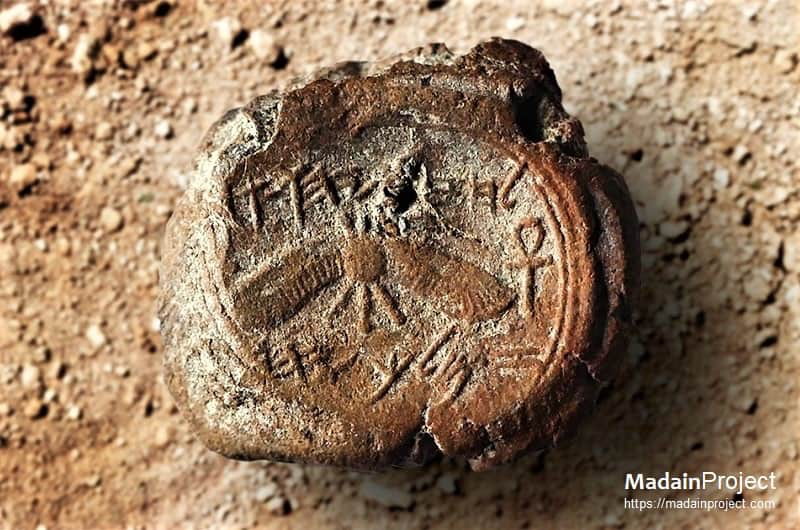
At first glance it might appear to be a version of a cross. However, King Hezekiah lived long before Jesus was born.

That symbol is not a cross, it is an ancient Egyptian hieroglyph called an “Ankh,” and it represents “life.”
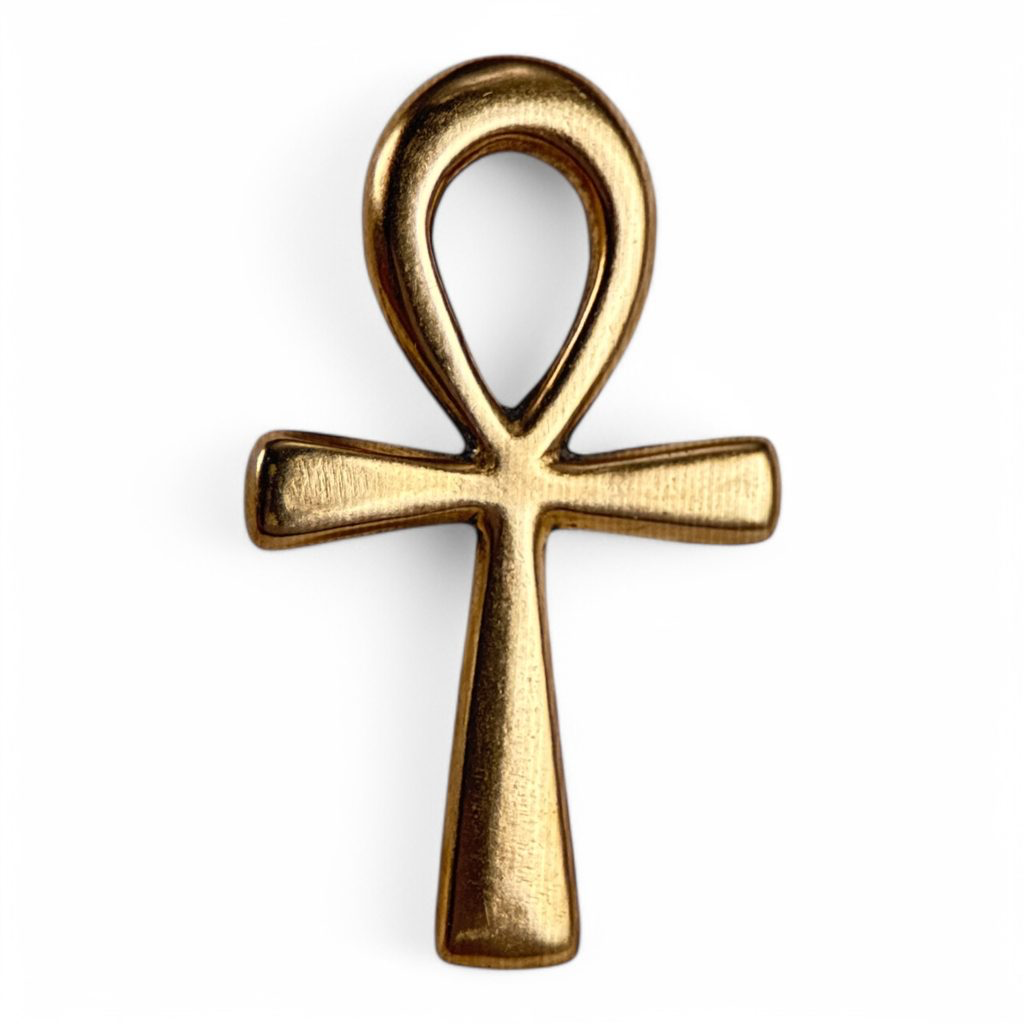
So, you might wonder (as I did): “What is an Egyptian symbol doing on Hezekiah’s seal?”

The Discovery of Hezekiah’s Seal

King Hezekiah’s royal seal, or bulla, was discovered in 2015 near the foot of the Temple Mount in Jerusalem. It bears the inscription, “Belonging to Hezekiah [son of] Ahaz king of Judah,” and features a two-winged sun disk, flanked by an ankh. It is just one more in the long line of archaeological evidence which verifies the historicity of the biblical account.

Hezekiah (2 Kings 18-20, 2 Chronicles 29-32) reigned from about 715–686 BC, and he was one of Judah’s most righteous kings. He is praised for his unwavering devotion to the God of Israel and his radical reforms. He famously tore down the high places, smashed sacred stones, and cut down Asherah poles, all of which were associated with idolatrous worship that had become ingrained in Jewish society. He broke into pieces the bronze snake called “Nehushtan,” which Moses had made, because the people had started worshiping it (2 Kings 18:4).

In light of this, it seems confusing and even perplexing to see an Egyptian symbol, from a pagan culture, on King Hezekiah’s royal seal. How could a king so committed to removing pagan idolatry use an Egyptian emblem to identify himself?

The Ankh: The Egyptian Symbol of Life

The Ankh is one of the most recognizable symbols from ancient Egypt. It is a hieroglyph that translates to “life” and it served as a representation of both physical life on Earth and eternal life in the afterlife.

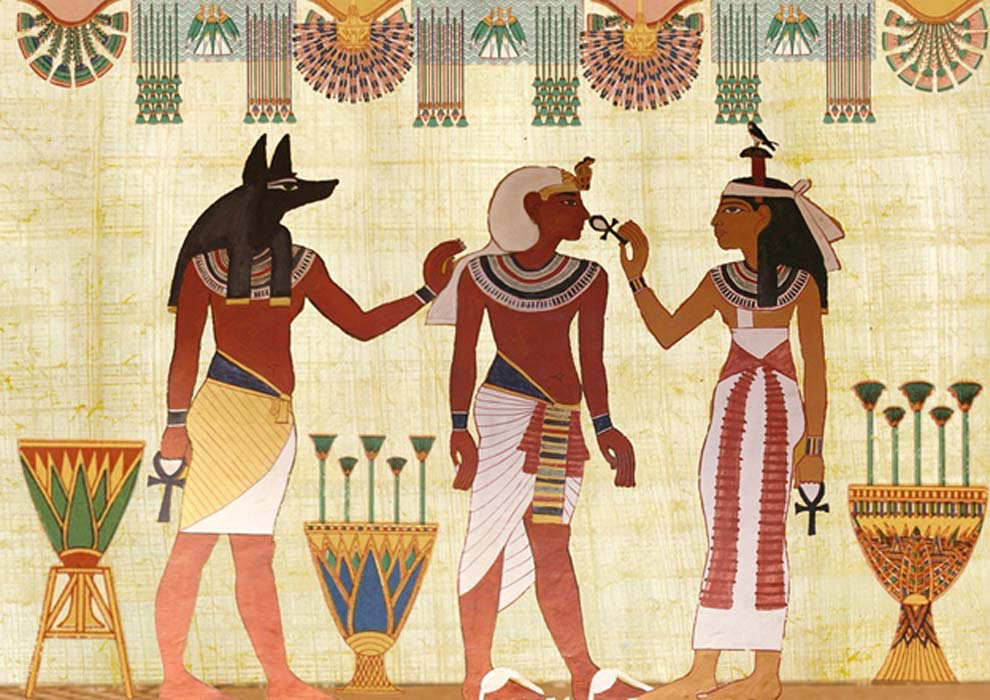
In Egyptian art, gods and goddesses, like Isis, Osiris, and Ra, were frequently depicted holding the ankh, often offering it to pharaohs as a “breath of life” or a bestowal of divine vitality and immortality. It was carved into temple walls, etched onto sarcophagi, and fashioned into amulets worn for protection and longevity.
Why Is There an Ankh on Hezekiah’s Seal?

We can’t be completely sure why Hezekiah chose to use this symbol on his royal seal, but there are three possible explanations:

1. Maybe the Ankh had changed into a cross-cultural symbol by Hezekiah’s time

By the 8th century BC, when Hezekiah was alive, some scholars say that the ankh had transcended its Egyptian religious context and become a more generalized, “loan-word” symbol for “life” or “good fortune” across the ancient Near East.

There are several examples we can think of today for reference, such as the “heart” symbol, used as a symbol for love. Furthermore, the swastika is an example of a symbol which had its origin in Hinduism, but now is seen as symbolizing the Nazi party and white supremacy. The Star of David is now universally acknowledged as representing the Jewish nation, but prior to its use in that way, it was used as a symbol in Buddhism. [1]

So, the meaning of symbols can change over time, and perhaps by the time of Hezekiah, the ankh may have become a secularized shorthand universally understood to represent vitality, prosperity, and longevity. On Hezekiah’s seal, this might have simply meant something like: “Long live the King.”

2. Maybe It Symbolized Hezekiah’s Miraculous Recovery

One theory suggests that the specific design on Hezekiah’s seal represents the pivotal event that took place towards the end of his life, when he fell mortally ill, but was then healed by God.

It is thought that perhaps the downturned wings of the sun disk and the ankh represent his fatal illness, and then his divine healing and the prolonging of his life. This seal, in that case, would have been used at the end of Hezekiah’s life, after his healing took place.

The story of Hezekiah’s illness and subsequent healing are found in 2 Kings 20 and Isaiah 38. After falling deathly ill, Hezekiah was told by the prophet Isaiah to set his house in order, because he was going to die. Hezekiah prayed, and God heard his plea, and gave him another 15 years of life. Sadly, those extra years were marked by lapses in judgment; during this time, he fathered Manasseh, who would grow up to be the most wicked king in Judah’s history, undoing nearly every godly reform his father had established. Also, when a Babylonian envoy visited, Hezekiah showed them all the all the treasures of the Temple and his kingdom, which led to a prophecy from Isaiah that all those riches, along with Hezekiah’s descendants, would one day be carried off into captivity in Babylon.

Some scholars believe that the two-winged sun disk is a symbol of divine protection, and may have been interpreted as a symbol of “the ‘Sun of Righteousness’ as in Malachi 4:2, which says “But for you who fear my name, the sun of righteousness shall rise with healing in its wings.”

If this is the case, then the ankh would be a symbol of life, as in: a memorial or statement that Hezekiah’s life was prolonged by God’s healing grace.

3. Maybe It Was an Attempt at Political Diplomacy

Other scholars suggest that since the Kingdom of Judah was a small state caught between the mighty empires of Assyria to the north and Egypt to the south, Hezekiah used the ankh symbol as a way to “fit in” on the world stage, or perhaps as a symbol of his alliance with Egypt – and being against Assyria.

Alas, one final option, related to this, is that perhaps Hezekiah’s use of this symbol was indeed a form of religious syncretism, either in a desire to win the favor of the Egyptians, or because he himself had begun to let pagan symbols, practices, or even beliefs creep into his heart.

Conclusion

The truth is, we don’t really know why the ankh was featured on Hezekiah’s seal, but considering the possible reasons for it leads you on a journey through the life of a man who was used greatly by God in his younger years, and who experienced incredible grace in the form of miraculous healing, but whose life ended tragically in unwise decisions that lacked faith in God.

Hezekiah could have heeded the words of the Prophet Isaiah warning him not to do those things and to repent. Hezekiah could have made continuing in and passing on the God-loving values of his younger years for the next generation. May God keep us from syncretism, and from the mistakes and failures of Hezekiah!
The British Museum, the Louvre, & the Bible

The British Museum in London is one of the greatest museums in the world. It includes the Roseta Stone, which broke the code to reading Egyptian Hieroglyphics, as well as Easter Island statues, and many things of biblical significance. It’s also completely free to the public!

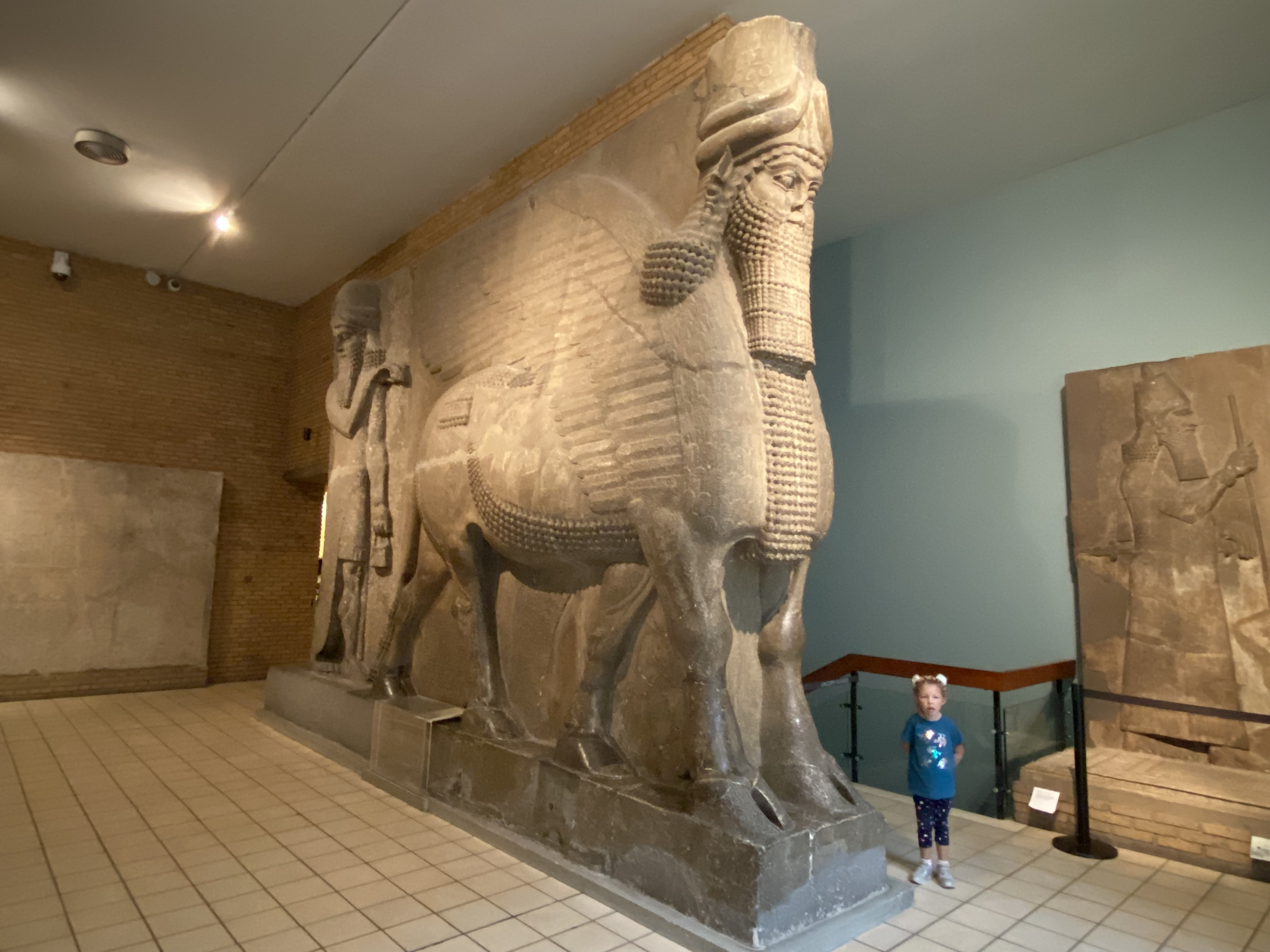
My daughter Hope in front of one of the winged bulls of Assyria at the British Museum

There are so many things of biblical significance in the British Museum that there are entire books dedicated to the subject, such as:

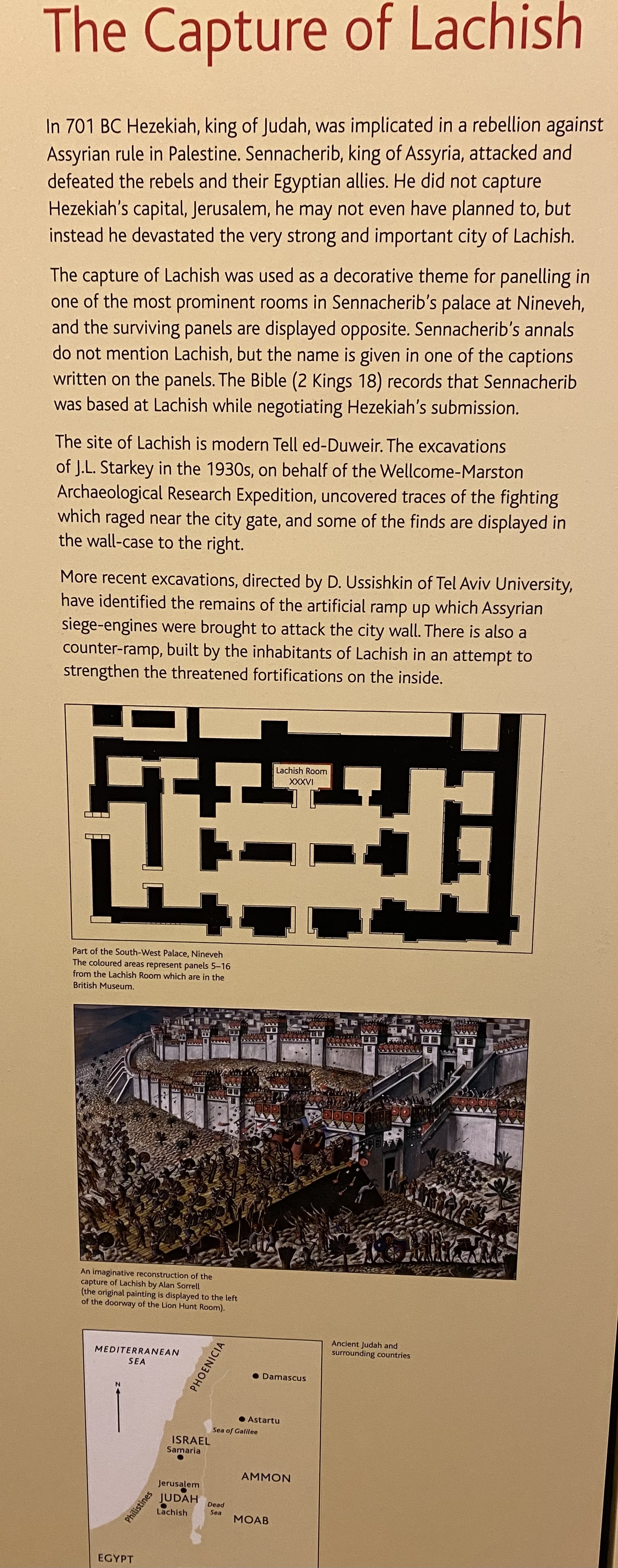
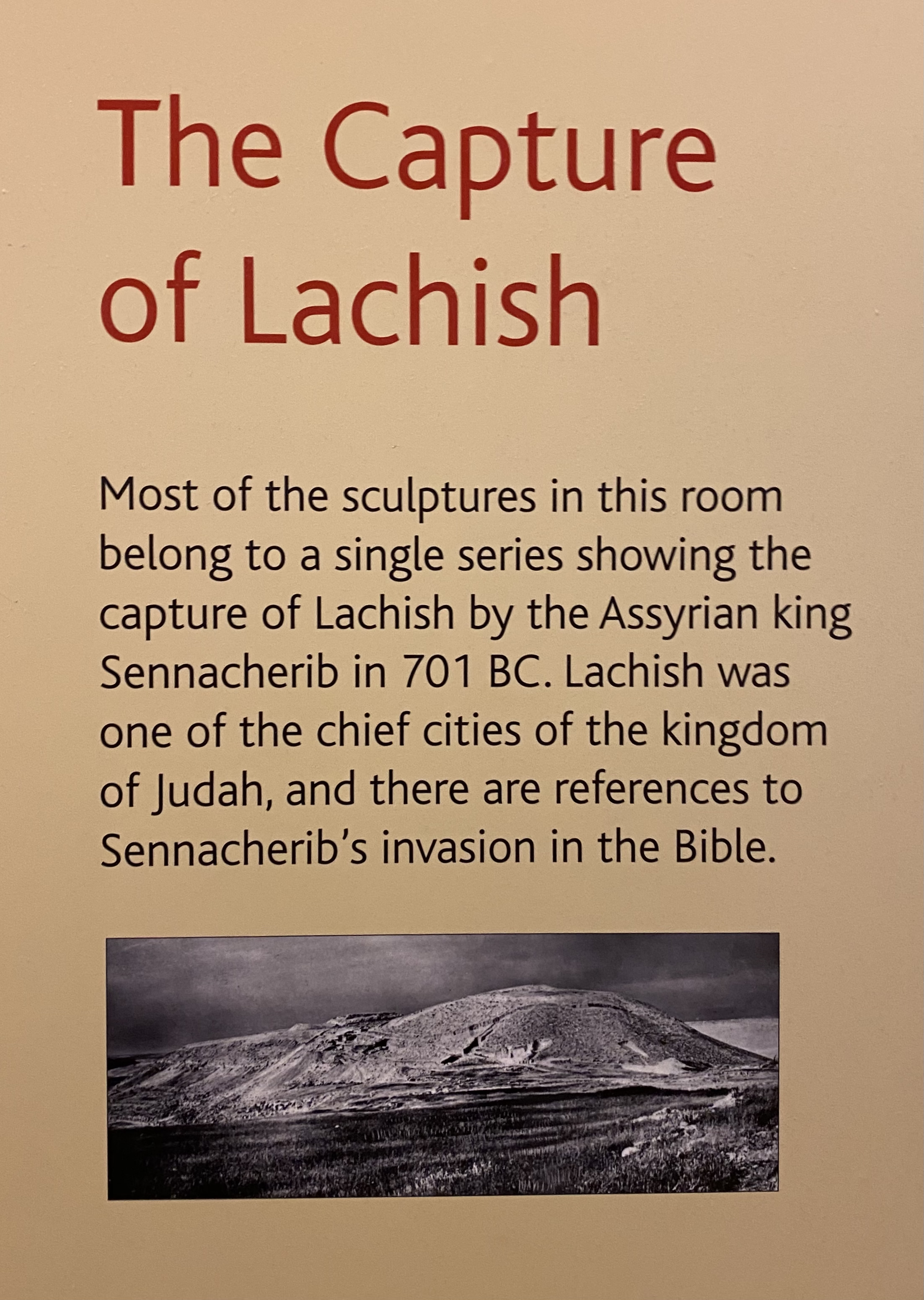
The British Museum: Depiction of the Capture of Lachish from Sennacharib’s Palace in Nineveh

In 2 Kings 18, the Bible tells the story of how Sennacharib, King of Assyria attacked Hezekiah, King of Judah, and that at this time, Sennacharib captured the city of Lachish (2 Kings 18:13) and made it his base of operations in Judah (2 Kings 18:14).

Sennacharib, 2 Kings 19 tells us, tried to intimidate Hezekiah into submission and sent him a threatening letter. The Prophet Isaiah encouraged Hezekiah to defy Sennacharib, and he prophesied Sennacharib’s fall.

In the British Museum, you can see sculptures and base reliefs from Sennacharib’s palace in Nineveh (the capital of Assyria, the same place where Jonah went and against which Nahum prophesied), which depict the Assyrian capture of Lachish.

Interestingly, another item which is held in the British Museum is the annals of Sennacharib, which describe his conquest of much of Judah. These annals mention how he made Jerusalem pay tribute to him (recorded in 2 Kings 18), but while they chronicle the many cities he succeeded in conquering, Jerusalem is left out of the list – which is exactly what the Bible says in 2 Kings 18-19.

The importance of these artifacts, in other words, is that the corroborate the fact that the Bible is historically accurate.

Here are the sermons I preached on 2 Kings 18 & 19 in our “Desiring the Kingdom” series:

The Louvre: The Moabite Stone

In a previous post I showed some of the famous paintings in the Louvre Museum in Paris which wrongly depict Bible stories: Bible Stories Gone Wrong in the Louvre

But the Louvre is more than just an art museum, it is also an archaeology museum, including items of incredible significance, such as Hammurabi’s Code and Tutankhamen’s sarcophagus.

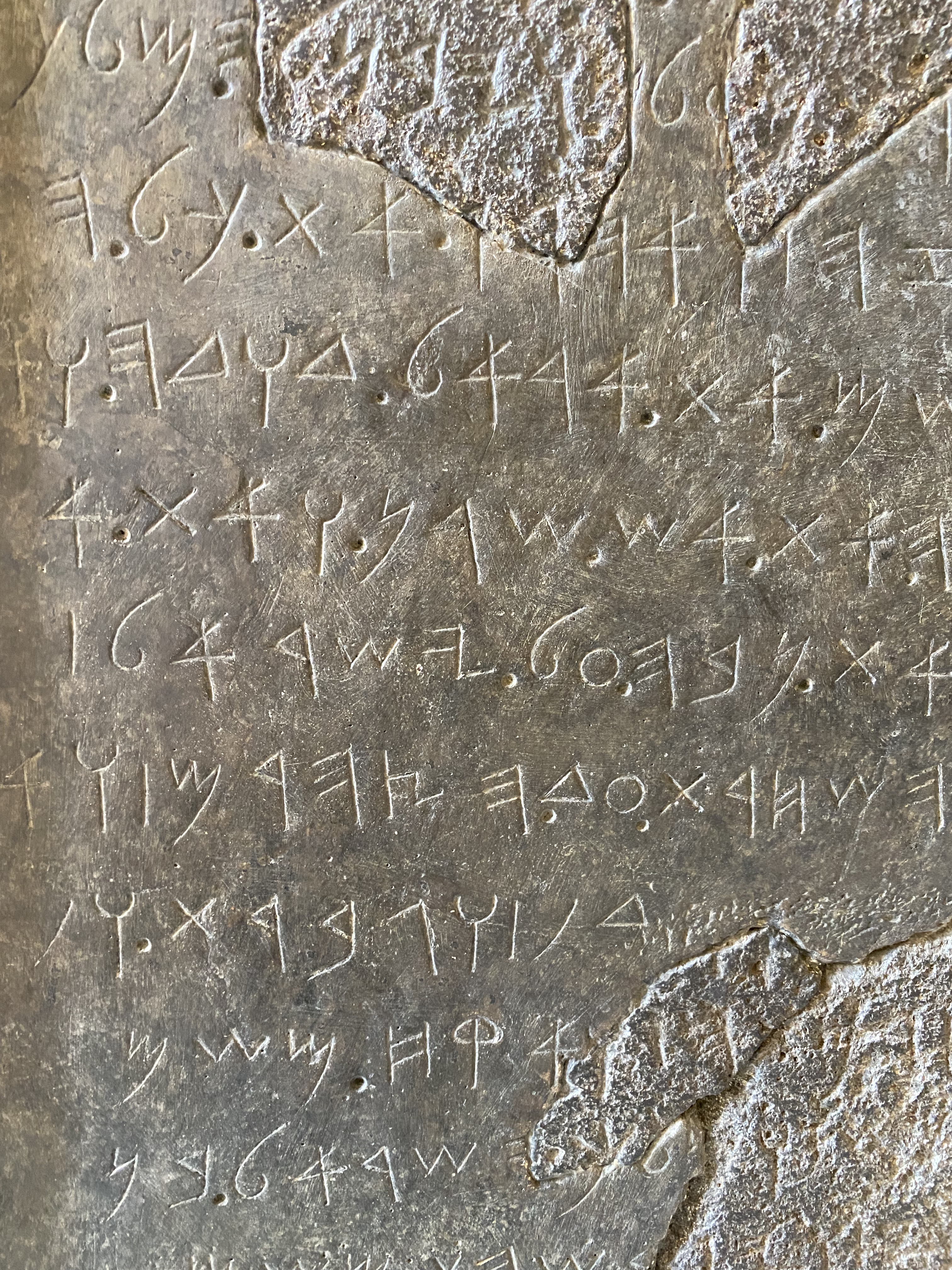
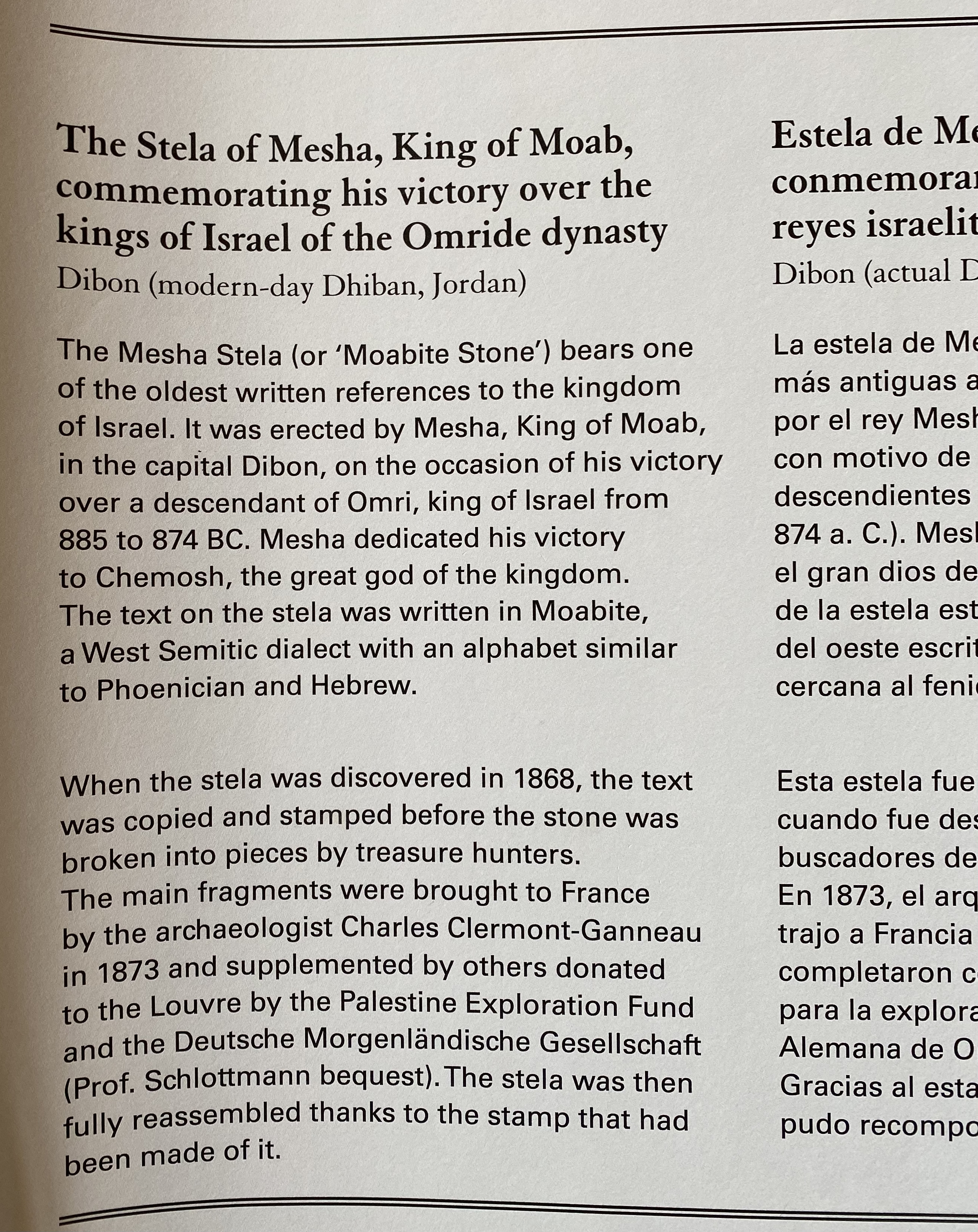
There are also items in the Louvre of biblical relevance, such as the “Moab Stone,” which bears one of the oldest written references to the Kingdom of Israel. It mentions specifically a victory which Moab had in a battle against the Israel, whom it refers to as the House of Omri.

This parallels a story found in 2 Kings 3.

Omri was the sixth king of Israel, and the most famous king to come from the House of Omri was Ahab, who famously tried to convert Israel into a pagan nation, with Baal worship as its official religion. Elijah confronted the prophets of Baal in 1 Kings 18, in which God sent fire from heaven upon a sacrifice as a sign that He alone is God.

Another important element of the Moabite Stone is that it refers to Yahweh as the God of Israel.

These and other items in these museums help us to see that the Bible is trustworthy and accurate, and as archaeologists make more discoveries, those discovers validate, rather than contradict, the historicity of the Biblical accounts.

Why Should Christians Visit Israel?

I have been in Israel for the past week with a group from White Fields and Calvary Chapel Brighton.

IMG_0823.jpeg

We spent the beginning of our trip on the coast, visiting Joppa and Caesarea, both important sites in the Book of Acts, and then headed up to the region of Galilee, where Jesus did the majority of his ministry. Then we drove to Jerusalem, following the Jordan River, and passing places such as Gilgal (see Joshua 4) and the site of Jesus’ baptism and the wilderness where he was tempted directly afterwards.

After seeing some important places in Jerusalem, including the Mount of Olives, the Garden of Gethsemane, the southern steps of the Temple and the Western Wall, we spent a day at the Dead Sea, visiting the place where Jesus was baptized in the Jordan River, seeing En Gedi where David hid from Saul in 1 Samuel 24, and going to Qumran where the Dead Sea scrolls were found and where John the Baptist was likely connected.

IMG_1177.jpeg
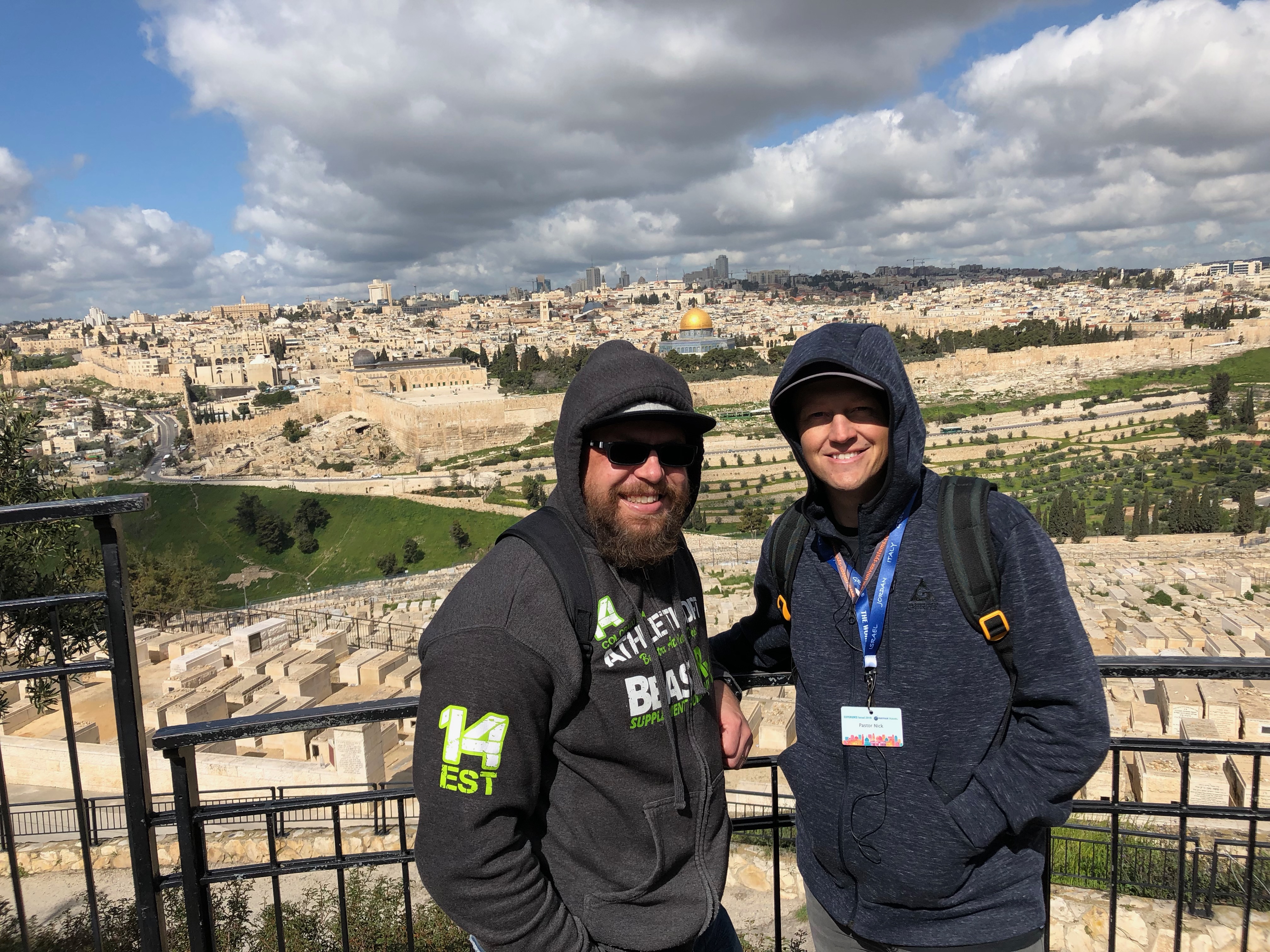
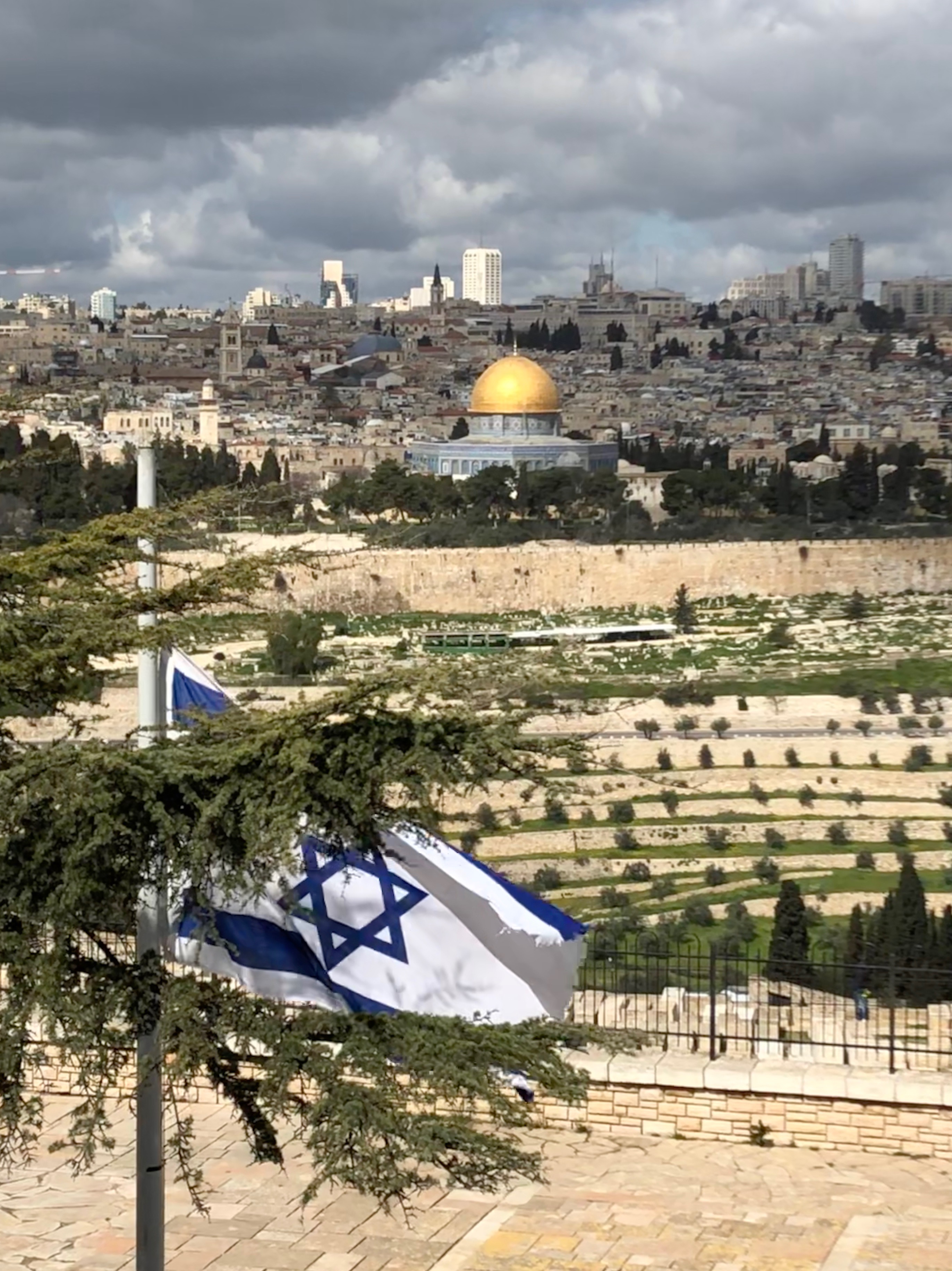
Jerusalem from the Mount of Olives, looking over the Kidron Valley

We will conclude the trip by visiting the Pool of Bethesda (John 5), following the way of the cross to Golgotha and seeing the garden tomb.

The trip has been incredible. I have particularly enjoyed getting the lay of the land and realizing the distances between places, and what they look like. Praying in the Garden of Gethsemane and standing where the church was born on Pentecost have been incredible experiences.

Why Should Christians Visit Israel?

Someone jokingly suggested that the benefit of visiting Jerusalem is that you can get the “before and after effect”: when the New Jerusalem comes (see Revelation 21), you will be able to compare it with the Old Jerusalem and see how much it’s improved! (Personally, I hope they clean up the Muslim Quarter a little bit…)

Interestingly, there is a neighborhood in Jerusalem called “New Jerusalem”. I went there, and it was nice, but not “streets of gold” nice. I’m looking forward to the real thing 🙂

All joking aside, there is one key reason why it is beneficial for Christians to visit Israel: Because, out of all world religions, what makes Christianity unique is that our faith is not based on abstract concepts, but on historical events which either happened or they didn’t.

What you learn from a tour of Israel, is that the New Testament accounts stand up to scrutiny. The New Testament talks about real places and real people and real events which had many witnesses, and which have been verified by archaeologists and historians. As Paul the Apostle said: “These things were not done in a corner!” (Acts 26:26)

In fact, because archaeology is a relatively young science, archaeologists are uncovering new findings all the time, and their findings corroborate rather than contradict New Testament accounts.

A visit to Israel is helpful for Christians, because it builds your faith in the historical events upon which Christian faith is based. This has been my first trip to Israel, but I expect it won’t be my last.

IMG_1205.jpeg
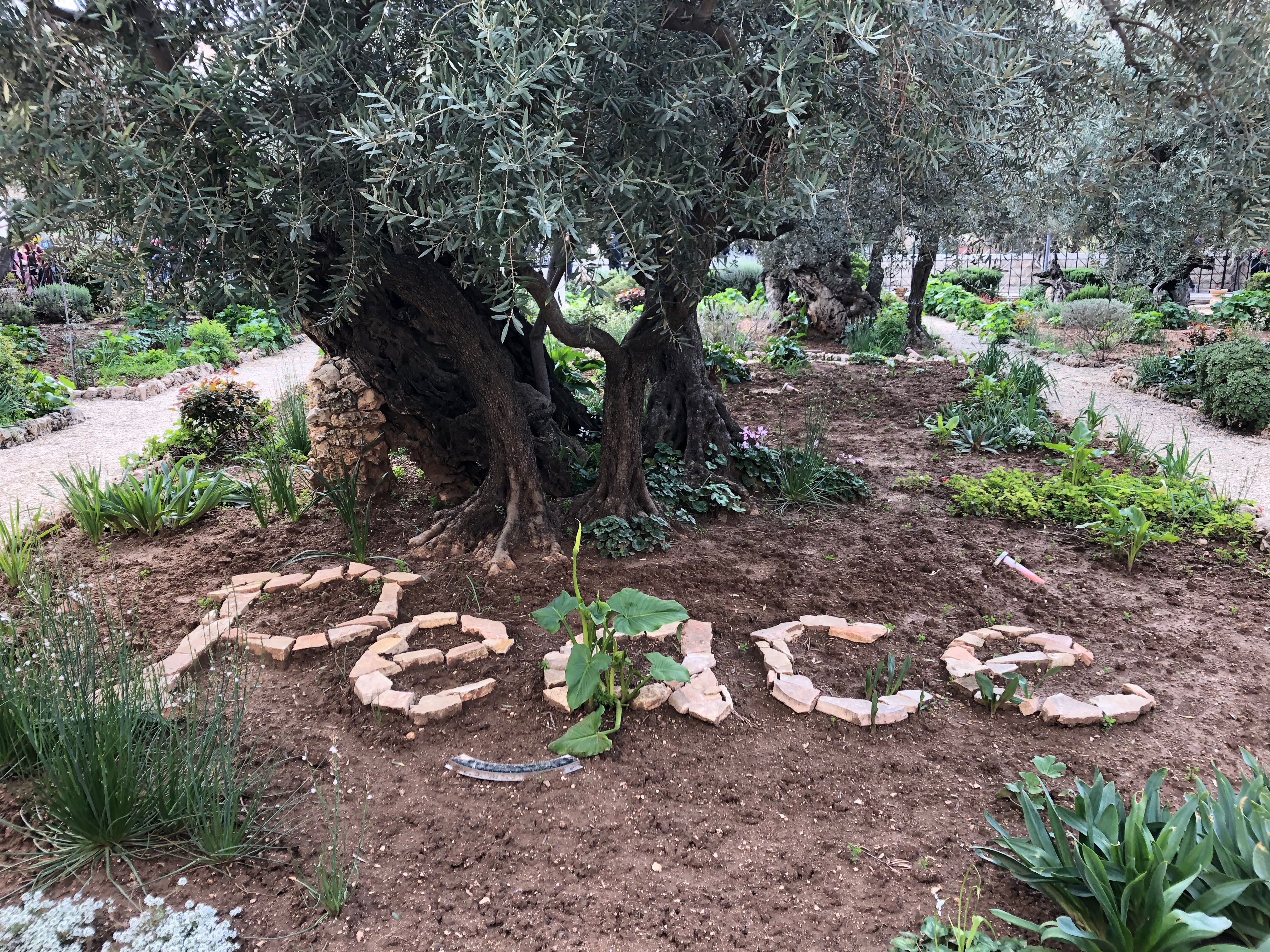
Olive Trees in the Garden of Gethsemane. Some are over 2000 years old. #eyewitnesses

Why the Dead Sea Scrolls Matter for Christians

list-6-things-you-may-not-know-about-the-dead-sea-scrolls-e

The Dead Sea Scrolls are currently on display at the Denver Museum of Nature and Science through September 3. This is the exhibit’s final display in the US before the artifacts will be taken back to Israel. (More information and tickets here)

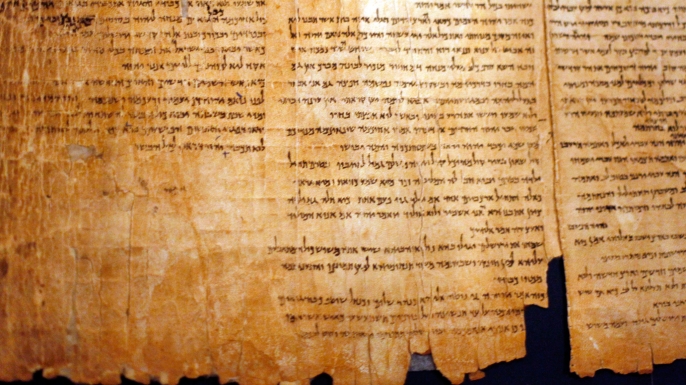
Discovered in 1946 in caves on the North-West of the Dead Sea, the Dead Sea Scrolls are made up of 981 different manuscripts dating from the third century BC to 68 AD. They have been called, “the greatest manuscript discovery of modern times,” and it has been said that they have “forever changed New Testament scholarship”1

Why do the Dead Sea Scrolls Matter?

1. They Verify That the Bible Is Reliable and Hasn’t Been Changed Over Time

“The older the copies, the closer we get chronologically to the autographs, the fewer copies there are between the original Old Testament writings and these copies that we have,” explains Ryan Stokes of Southwestern Seminary.

The Dead Sea Scrolls are hundreds of years older than the previously known oldest manuscripts, and they prove that the Old Testament text had been faithfully preserved over the centuries, and that the Hebrew text translated for modern Christians accurately represents the Bible that Jesus read and the Bible as it was originally written.

In at least one instance, the Dead Sea Scrolls helped to solve a mystery which has great theological significance regarding Jesus.

Psalm 22:16 says: a company of evildoers encircles me; they have pierced my hands and feet.

Christians have always considered Psalm 22 and this verse in particular to be a prophecy about Jesus’ crucifixion, which is all the more incredible since it written hundreds of years before crucifixion had even been invented.

However, there was some dispute historically over whether this was actually what the original text said, since the Masoretic text (the Hebrew Bible preserved from the Middle Ages, and the oldest known version of the Old Testament before the discovery of the DSS) read, “Like a lion are my hands and my feet.”

However, this problem was resolved when scholars discovered that the much older Dead Sea Scrolls confirmed the text indeed should say: “they have pierced my hands and feet.”

2. They Give Us Insight into Jewish Culture at the Time of Jesus

Before the discovery of the Dead Sea Scrolls, the historical veracity of the New Testament was often called into question. From the expectation of the Jews regarding the Messiah, to the world of Pharisees and preachers like John the Baptist, many claimed that the world the New Testament described was purely fictional. However, with the discovery of the DSS, it could be confirmed that the New Testament very accurately described the culture and history of first-century Israel.

Of the nearly 1000 scrolls which have been found, around 700 of them are non-biblical writings. These non-biblical writings include things like community rules and expectations regarding the Messiah. It is from this that we learn that certain Jewish communities practiced baptism for repentance (ala John the Baptist), and that they were expecting two Messiahs: one who would be an priest and the other who would be a king. Jesus ultimately did fulfill this biblical expectation, albeit not in the exact way they expected.

Of the 240 biblical scrolls from Qumran, 235 are written in Hebrew and 5 are in Greek. Of the 701 non-biblical scrolls, 548 are written in Hebrew, 137 in Aramaic, and 5 in Greek. This shows that Jews at the time of Jesus did indeed speak Greek, Hebrew and Aramaic, the three languages of the Bible.

Scholars believe that many of the scrolls were originally taken from Jerusalem, when a group of priests who believed that the temple worship and leadership had become corrupt, left Jerusalem, taking with them many of the scrolls from the temple, and formed an alternative “pure” community out in the desert, where they proceeded to make many more copies of the biblical texts.

This parallels exactly what the New Testament describes about the corruption at that time of the office of the high priest and the religious leaders in Jerusalem.

Other scrolls were taken from Jerusalem when the Romans attacked Jerusalem after the Jewish Uprising in 68 AD, and they took them with them as they fled to Masada near the Dead Sea, where they were able to successfully hide some of these scrolls.

The long and short of it: We can trust the Bible.

The Bible stands up to scrutiny, and the more scholarship and archeology discovers, the more the Bible is proven to be accurate and trustworthy.

For more on this topic, listen to this recent sermon I gave at White Fields about whether we can trust the Bible:

As well as this Sermon-Extra addressing a few more proofs of the Bible’s veracity:

A Seal from King Hezekiah found in Jerusalem by Archaeologists

CNN posted this today, that a seal from King Hezekiah has been discovered by archaeologists in Jerusalem.

Here’s an excerpt:

It is believed to be the first-ever seal — also referred to as a “bulla” — from an Israeli or Judean King to be discovered by archaeologists.

“The seal of the king was so important. It could have been a matter of life or death, so it’s hard to believe that anyone else had the permission to use the seal,” Eilat Mazar, who directs excavations at the City of David’s summit, told CNN.

“Therefore, it’s very reasonable to assume we are talking about an impression made by the King himself, using his own ring.

“This the greatest single item I have ever found,” added Mazar — a third generation archaeologist.

Archaeology continues to confirm the trustworthiness and historicity of the Bible.

As king of Judah, Hezekiah enacted reforms and brought the people back to the worship of Yahweh and put an end to the worship of idols in the temple.

You can read about the reign of Hezekiah in 2 Kings 18-20 as well as 2 Chronicles 29-32 and Isaiah 36-39.